Vi använder cookies för att ge dig bästa möjliga upplevelse. Välj vilka cookies du tillåter.
Läs mer i vår integritetspolicy
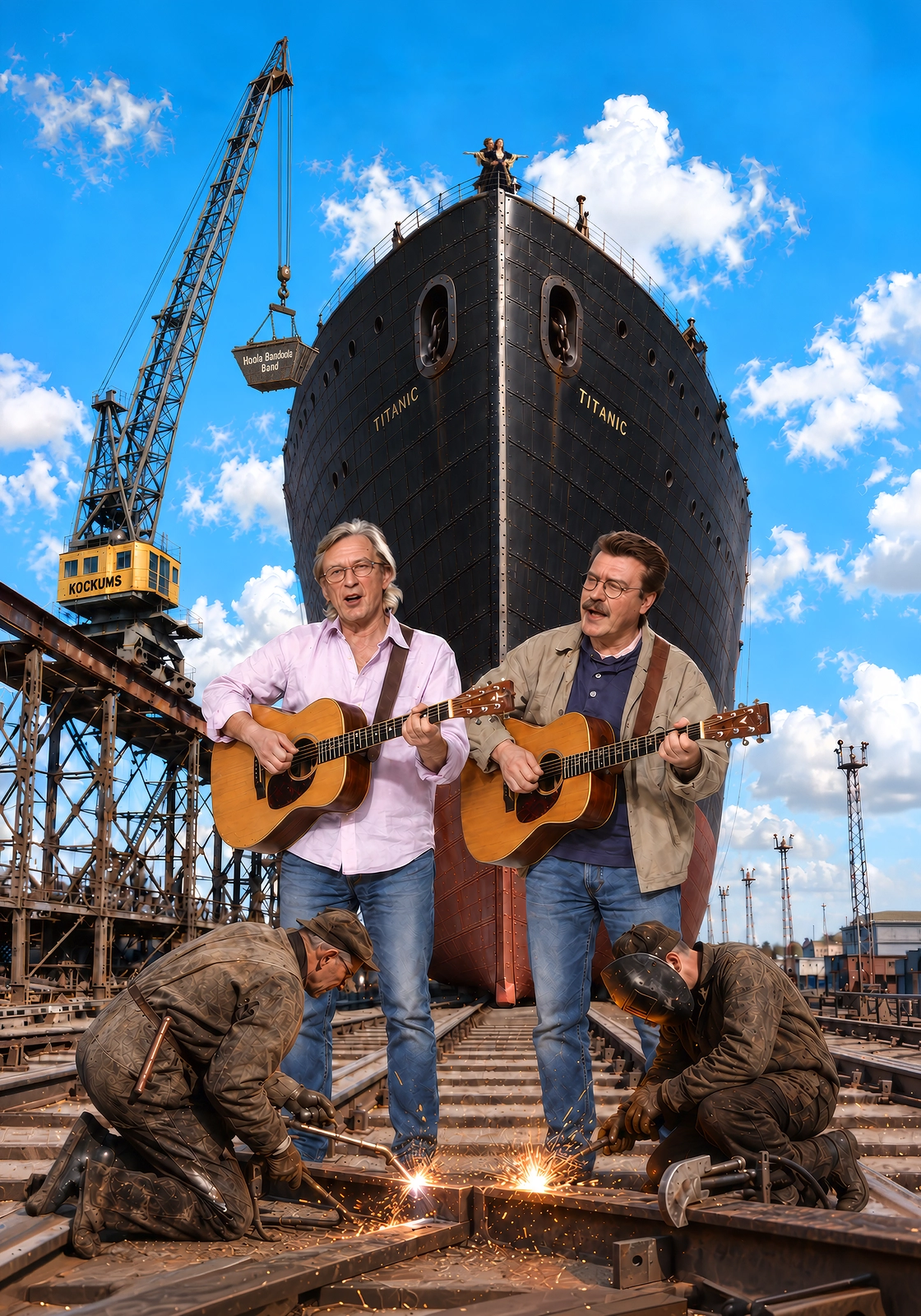
Jörgen Thornberg
Titanic, 2026
Digital
50 x 70 cm
2 900 kr
Titanic
INTRODUCTION – The Story We Already Know
Some disasters need explaining, and others seem to be part of our collective memory. Titanic belongs to the latter. We hardly need to be reminded of the iceberg, the insufficient lifeboats, the class differences or the orchestra that continued to play as the world’s most famous ship went down. Even people who have never opened a book about Titanic know the story.
Or think they do. Many have seen the film, while others have heard Wiehe’s song.
More than a hundred years have passed since the night of 15 April 1912, and another disaster has joined the real one. Eyewitness accounts have become stories, stories have become legends, and legends, through books, films and songs, have become so familiar that they are sometimes difficult to distinguish from what actually happened. Titanic is no longer merely a ship at the bottom of the Atlantic. It has become one of the great symbols of our time: of human hubris, of the class system, of the limitations of technology and of the peculiar human ability to carry on as usual even when disaster is already a fact.
That was why Mikael Wiehe had an unusually useful ship to board when, in 1977, he wrote “Titanic (The Second-Class Passenger’s Last Song)”. He did not need to tell the whole story. A few images were enough, and the listener already carried the rest within.
But Wiehe had not chosen Titanic as the subject of a song about a maritime disaster.
He had something quite different in mind.
“When Utopia sank
There was a time when we believed
the future had already chosen sides,
when every wall could bear a slogan
and every song could change a life.
We spoke of justice as a place
not far beyond the morning sun,
a country waiting to be built
when all of us became as one.
We filled the halls, we filled the streets,
we sang until the night was gone,
with borrowed guitars, battered drums
and faith enough to carry on.
The world was old, but we were young,
and history was on the move;
we did not ask if change would come.
We only asked how soon.
There would be no masters anymore,
no workers bent beneath their load,
no wealth behind the guarded gates,
no poor abandoned by the road.
The factories would serve us all,
the schools would teach the children free,
and no one would be left behind
in our new solidarity.
It was a beautiful Utopia.
Perhaps too beautiful to last.
For somewhere in the songs we sang
a different rhythm slowly grew.
The comrades who had marched as one
discovered different roads were true.
One faction split, another split,
each certain it alone could see
the proper road to paradise,
the purest form of liberty.
The meetings lasted half the night.
The arguments grew hard and cold.
Yesterday’s brother turned suspect,
and yesterday’s truths suddenly grew old.
We learned the smallest differences
could build the highest walls of all,
and those who dreamed of changing worlds
could quarrel over words.
Outside, another age arrived.
The shops grew bright, the music changed,
the mirror slowly faced the self.
The revolution lost its place
to other dreams upon the shelf.
The clenched fist opened, little by little,
the marching columns lost their pace,
and “we”, that once had seemed so strong,
gave way to “I” and “me”.
No iceberg marked the moment.
No single night destroyed the dream.
No captain cried that all was lost,
no siren sounded through the streets.
Utopia took on water
through a thousand tiny cracks,
while those who once had built it watched
the future turning back.
And still the songs remained.
Perhaps that was the strangest part.
The banners faded, groups dissolved,
old certainties came apart,
but somewhere in a meeting hall,
a record shop, a crowded bar,
the words survived the world that made them
and travelled on without it.
For dreams are difficult to bury.
They change their names, they change their clothes,
they disappear for twenty years
and surface where nobody knows.
And every generation seems
to build some shining world anew,
convinced that this time history
will make the old Utopia true.
We thought the future belonged to us.
Perhaps every generation does.”
Malmö, September 2026
PROLOGUE – Two Titanics
There are two Titanics in this essay.
One left Southampton on 10 April 1912, bound for New York with more than two thousand people aboard. Four days later, it struck an iceberg in the North Atlantic and sank. What remained was the wreck on the seabed, the survivors’ stories, and a catastrophe that, from the very beginning, seemed to contain all the material from which legends are usually made.
The other Titanic never left a harbour. Mikael Wiehe built it sixty-five years later, with the disintegration of the progressive music movement in mind and the real disaster as his stage. Aboard it, he placed an anonymous second-class passenger and his woman and let them experience the final hours of a ship they had been taught was unsinkable.
The two ships resemble each other so closely that it is easy to confuse them. The iceberg is there, as are the class system, the lifeboats, the orchestra and the incomprehensible calm of people facing a catastrophe that is slowly becoming impossible to deny. But when the details are compared, the ships begin to drift apart. Something that sounds completely self-evident in the song never happened, while reality elsewhere proves stranger, crueller and sometimes almost more improbable than anything Wiehe invented.
That does not make the song any worse. On the contrary, it may be precisely in the distance between the two ships that it becomes most interesting. Wiehe did not need to write a record of the night of 15 April 1912. He needed a story capable of carrying the larger story he wanted to tell.
But now the two ships will sail side by side. One through Mikael Wiehe’s song. The other is the night when the Titanic really sank.
A Long-Lived Song About a Sunken Ship
“Titanic (The Second-Class Passenger’s Last Song)” was written by Mikael Wiehe in 1977 and released the following year on the album “Sjömansvisor” together with Kabaréorkestern. It became one of his best-loved and best-known songs, and even today a few words are enough – “It began as a tremor on the lower deck…” – for many people to hear the rest of the melody in their minds.
It is easy to imagine that Wiehe had become fascinated by the world’s most famous maritime disaster. After all, the story of Titanic contained almost everything a songwriter could wish for: the enormous, seemingly unsinkable ship, the maiden voyage across the Atlantic, the iceberg in the cold April night, the insufficient lifeboats, the class system aboard, and the orchestra that continued playing as the catastrophe drew to a close.
But it was not the sinking of the Titanic that made Wiehe write Titanic. It was another shipwreck, one much closer to him.
When the song was written, the Swedish progressive music movement was in a very different position than it had been just a few years earlier. The optimism and collective faith in the future that had characterised the early 1970s were beginning to fade. The Left’s Utopia was cracking. Divisions within the Left had become more apparent, and the music movement that had grown up as an alternative to the commercial record industry was beginning to fragment. Hoola Bandoola Band, in which Wiehe himself had been a central figure, broke up in 1976, and much of what only a few years earlier had seemed new, strong, and directed towards the future was beginning to belong to an era that was coming to an end.
Wiehe himself has pointed to the disintegration of the music movement as the song's immediate background. Titanic therefore offered him an image that could hardly have been better: the great project that seemed capable of carrying people safely towards the future, but which suddenly began taking on water. There was no need for an explicit comparison between the progressive music movement and the famous ocean liner. The ship could speak for itself.
The musical device reinforced the feeling. Instead of turning Titanic into a dramatic disaster number, Wiehe lets the story move forward in what can best be described as an absent-minded tango. The music rocks gently onwards with almost detached elegance as the situation aboard becomes increasingly hopeless. There is something both comic and disturbing in the contrast: the catastrophe grows, yet the song refuses to panic.
It also helps explain why “Titanic” survived the political and musical environment in which it was born. The ship that originally reflected a progressive movement in dissolution proved capable of carrying far more meaning. When Sweden held its 1980 referendum on nuclear power, opponents used the song, which had taken on new meaning. Titanic could now symbolise humanity’s excessive faith in technology and our peculiar tendency to create increasingly complex systems and then convince ourselves they cannot fail. Nor should we overlook the fact that the music is hauntingly beautiful.
Wiehe had thereby achieved something few political songwriters manage. The song had broken free from the issue that had once given birth to it. The music movement could fade, the political battles of the 1970s could become history, and the nuclear-power debate could shift. Still, the image of the unsinkable ship that begins taking on water despite all assurances remained comprehensible. Every age, if it wished, could find its own Titanic.
Many years later, the song also took on a dark, personal meaning. When the passenger ferry Estonia sank in the Baltic Sea in 1994, Wiehe’s mother suffered a heart attack after learning the news and died. Wiehe has said that the event made it difficult for him to perform “Titanic” for a long time. A catastrophe from 1912, which he had used as a metaphor for an entirely different event, had suddenly acquired a reality and proximity that could no longer be kept at a poetic distance.
When Wiehe and Björn Afzelius performed together, Titanic became a recurring and much-appreciated part of their repertoire, and by then the song had long since moved beyond its original context. It had become a story about what happens when people discover that something they trusted no longer works as intended.
But there is something strange about all this. The more convincing Wiehe’s story sounds, the easier it is to forget that he is, after all, using a real disaster, a real ship, and real people to tell his own story. And so one question remains, a question much easier to ask than to answer:
How much of Mikael Wiehe’s Titanic is actually Titanic?
To find out, we must return to that cold April night in 1912 and let the song confront reality.
TITANIC– When the Song Meets Reality
“It began as a tremor on the lower deck.” That is how Mikael Wiehe’s Titanic begins, and it is hard to imagine a better opening. Within seconds, we are aboard. Something has happened, but no one quite knows what yet. The great ship continues through the night, people carry on with their lives, and somewhere far below, the catastrophe has already begun.
The problem is simply that it may not have started with a tremor.
On the night between 14 and 15 April 1912, different people reported very different experiences. Some felt almost nothing. Others heard a long scraping or grinding sound. Farther down in the ship, the collision was felt much more clearly. Many passengers realised something had happened only when the engines stopped.
That is really the first clue to the whole of Wiehe’s song. He does not tell the story of the Titanic as it actually unfolded. He tells the story as it ought to have unfolded to become a song.
The difference is considerable.
The Unsinkable Ship
In Wiehe’s account, the passengers emerge from their cabins without fully understanding why the ship is taking on water. They have, after all, been told they are aboard the most modern and unsinkable ship in the world.
Here, the song stands on considerably firmer historical ground.
White Star Line did not explicitly market the Titanic with the categorical promise that the ship could never sink. But the idea of a practically unsinkable ship existed. Its watertight compartments were presented as a technological marvel. At a time when electricity, telephones, motorcars, aeroplanes and wireless telegraphy seemed to push the boundaries of the possible every year, it was easy to believe that engineers had finally conquered the sea as well.
They had not.
Titanic had sixteen main watertight compartments. The problem was that the transverse bulkheads did not extend all the way up the ship. As the bow sank deeper, water could eventually spill over from one compartment into the next.
Like water between the compartments of a tilted ice-cube tray.
No single enormous gaping hole sank the Titanic. The iceberg damaged the hull on the starboard side, causing several compartments to flood simultaneously. The ship had been designed to survive certain combinations of flooded compartments.
Not this one.
Thomas Andrews, the Harland & Wolff ship designer who was aboard, soon grasped the consequences.
Titanic was going to sink. It was no longer a question of “if”, but of “when”.
The Sweater and the Jewellery
Wiehe’s narrator is not one of the famous passengers. He is neither a millionaire nor an emigrant, nor even a sailor. He seems a fairly ordinary man from the respectable middle class, probably travelling in second class with his wife.
It is an inspired choice.
He stands midway between Titanic’s two worlds.
Above him lie the first-class suites, the upper-class restaurants, smoking rooms and promenade decks. Below are the third-class emigrants, on their way to America and a new life.
When disaster strikes, the wife takes a photograph of their children, her jewellery and her hat.
The man takes a jumper. He thinks the sea is probably cold. On that point, he underestimates the situation. But the verse is deeply human, and something like it probably happened. Amid chaos, people are not always rational.
The water in the North Atlantic was near freezing, or slightly below. Anyone who ended up in it had little chance of surviving for long.
But the scene in which the couple see water rushing past outside their cabin is harder to reconcile with reality. The second-class cabins were mainly located further aft. When passengers there left their cabins, there was hardly any dramatic flow of water in the corridors.
There was much farther forward and farther down.
There, third-class passengers and crew members quickly realised that this was no ordinary incident.
Wiehe therefore moves the water, but for a good reason. A catastrophe that cannot yet be seen is difficult to sing about.
The Way Up
The couple then follow the arrows towards the lifeboats and reach the upper deck, which, according to the song, really belongs to first class. But there were no arrows.
Here Titanic’s actual geography begins to protest.
No simple system of arrows directed passengers to a particular lifeboat. Nor was the boat deck entirely reserved for first class.
But behind Wiehe’s simplification lies a more important truth.
Titanic was a class society built of steel. And Wiehe has a story he wants to tell.
First-, second-, and third-class passengers lived largely separate lives. They had different cabins, dining rooms, public rooms, and routes through the ship. When the evacuation began, they were therefore at different distances from the boat deck and had different opportunities to understand where they were supposed to go.
The result can be seen in the death toll.
Women and children were more likely to survive than men. But class also played a clear role. First-class passengers had far greater opportunities to escape than third-class passengers.
The catastrophe did not make everyone equal.
Not until they entered the water.
The Man from Third Class
On the boat deck, the atmosphere in the song is remarkably civilised. Everyone remains fairly calm, though only one gentleman from third class pushes forward rather foolishly.
It is a brief line, almost in passing, but it says a great deal.
From the very beginning, the story of the Titanic has been filled with tales of dignity, self-sacrifice and British discipline. Men stood aside. Women and children went first. The orchestra played on. The captain remained on the bridge. The upper classes faced death with their backs straight.
Reality was less carefully staged.
For most of the evacuation, there was surprisingly little panic, but towards the end, desperation increased. Crowding and conflict emerged, and eyewitness accounts sometimes contradicted one another.
Some people behaved heroically, while others thought only of themselves. Many probably did both that night.
Perhaps the remarkable thing is not that someone tried to push their way to the front. The remarkable thing is that so many did not.
The lifeboat that could not be lowered
Here, Wiehe takes a considerably larger step away from history.
In the song, the captain announces that their lifeboat cannot be lowered because something is wrong with the chains on the lowering mechanism. Someone has forgotten something.
It is a perfect image.
A ship representing the world’s finest technology goes down because someone overlooked one detail.
But that is not what happened.
Titanic had twenty boats: fourteen standard lifeboats, two smaller emergency cutters and four collapsible Engelhardt boats. The official British inquiry estimated their combined capacity at 1,178 people.
The absurdity, then, was not that one lifeboat became stuck, but that there had never been enough places for everyone in the first place. Worse still, not even all the places that did exist were used.
The United States Senate inquiry found that only about 700 people were saved in boats capable of carrying about 1,200. Several boats were lowered well below capacity. That is almost harder to comprehend than Wiehe’s invented lowering mechanism. A few chains were missing.
The truth is that Titanic had too few lifeboats, yet many of them left the ship with empty places.
A Glass of Champagne for the Empire
When their own lifeboat is no longer an option, Wiehe’s couple go to the bar. There they are served free champagne. They then raise their glasses to the Empire and to each other.
It is a brilliant scene. And almost certainly invented. Or perhaps people in those days really were made differently.
Titanic’s bars had already closed for the night before the collision. No evidence shows any organised distribution of free champagne as the ship was sinking. But it sounds good.
Alcohol certainly was consumed.
People drank when they realised what was happening. The most famous story concerns the ship’s chief baker, Charles Joughin, who said he had drunk liqueur before, became intoxicated, ended up in the freezing water, yet still survived.
But Wiehe’s champagne has nothing to do with drinks.
It is a symbol. Civilisation is going under, but before it does, it raises a glass to itself with expensive champagne, the drink of the upper classes.
The British Empire was at the height of its power. Titanic was British engineering, self-confidence and Edwardian social order condensed into 269 metres of steel.
Then came a piece of ice. A great deal of it. An entire iceberg.
The Calm Sea
Titanic now begins to list more and more heavily. People jump into the water.
The narrator and his wife decide to remain aboard because the sea is too vast, cold and wild.
But it was not rough—quite the opposite. The night was almost eerily calm. The sea was so smooth that no waves broke against the foot of the iceberg, making it easier to see.
It is one of the disaster’s many ironies. Titanic did not go down in a storm. No hurricane hurled the ship against the rocks. No enormous wave smashed the decks. It was a clear, cold, and almost windless night, with a sea that looked peaceful.
The Boats with the Empty Places
In the song, the couple look out at the lifeboats and realise there is no room for one more person.
It may be the song’s most tragic historical error. There was plenty of room.
According to the British inquiry, Titanic’s lifeboats could carry 1,178 people. The ship carried more than 2,200 people, so even if fully loaded, the boats would have left around a thousand people behind.
But they were not filled properly.
The American inquiry explicitly noted that several boats left the Titanic partly filled.
In the darkness, people could therefore stand aboard a dying ship and watch boats disappear across the black water, leaving empty places.
It is almost a stronger image than the one Wiehe invented. Once the Titanic had disappeared, the next tragedy became apparent. Hundreds of people had ended up in the freezing water.
Most of the lifeboats did not return. Those who had already been saved feared that desperate people would swamp or overturn the boats. So they stayed where they were—and listened—and suffered with the poor souls who were drowning. But did nothing. After a while, the cries grew fewer. Then there was silence.
“Nearer, My God, to Thee”
And so comes the scene without which almost no account of the Titanic seems complete.
The orchestra plays “Nearer, My God, to Thee”.
Here, old rumours must be corrected.
We know the musicians played while the evacuation was underway. All eight died. But which piece they played last remains disputed. Hymn 271, Nearer, My God, to Thee, was mentioned early and became part of the Titanic legend. Other testimony points to the popular waltz Songe d’Automne – Autumn. There is no definitive answer.
Perhaps that is better.
Here, we can see how a historical event becomes a myth while the people who experienced it are still alive.
As early as 1912, articles described the orchestra playing the hymn as the Titanic sank. At the great memorial concert at the Royal Albert Hall that same year, the programme ended with “Nearer, My God, to Thee”.
The legend had found its music. Wiehe used it again sixty years later.
Not because we know it is true, but because it feels true. And because, at least for religious people, it offers hope.
The Flag Goes Up
In the end, there is nothing left to do. The narrator and the woman hold hands. Hope is gone. As the ship goes down, the flag goes up.
There is no evidence of any such final flag-raising. But by this point, it hardly matters, for Wiehe has left Titanic. He is elsewhere. His ship has become a sinking society.
Aboard are the privileged and the less privileged, the obedient and the rebellious, those who give orders and those who obey. Eventually, everyone knows the ship is going down, yet the established order endures. People follow the signs. They wait their turn. They accept the message that the lifeboat will not work. They go to the bar. They raise a glass to the Empire.
In the end, they hold hands while the flag is raised. That is why the historical errors do not destroy the song. They build it.
EPILOGUE – The ship that never sank
Titanic sank beneath the Atlantic early on the morning of 15 April 1912.
But the other Titanic never sank and lives on in the form of the song. It is the ship Wiehe built afterwards and set to music.
There, the orchestra plays ”Nearer, My God, to Thee”. There, Captain Smith stands, erect, on the bridge. There, millionaires dress for dinner while the water rises. There, women and children go first. There, locked gates separate the poor from the rich. There, the saloons are still ablaze with light while the bow is already disappearing into the darkness.
Some of it is true. Some of it is half true. Some of it never happened. Or perhaps it did. Who cares when the message arrives and the music is hauntingly beautiful? And somewhere between history and myth, Mikael Wiehe places his anonymous couple.
Perhaps they could not see the water from their cabin. They followed no arrows to a particular lifeboat, for there were none. No lifeboat was left behind because someone had forgotten the chains. The bar did not hand out free champagne. The sea was not wild. The boats were not full. We do not know which melody the orchestra played last. And no flag went up.
Almost the entire scene is wrong, yet it works. The words remain etched in memory.
“Titanic” is ultimately not about what happened at 11.40 p.m. on 14 April 1912.
It is about people who discover that the system they have trusted can no longer save them – yet continue to behave as though it were still working.
The real Titanic went down when steel met ice. Wiehe’s Titanic goes down because the people aboard continue to believe in the ship.
And perhaps that is why we are still listening, because the song is a work of genius.
P.S. Mikael Wiehe’s deep friendship and musical collaboration with Björn Afzelius is one of the best-known relationships in Swedish music history. When Afzelius died in 1999, he left an enormous void. After Afzelius was diagnosed with cancer, Wiehe wrote the song “Den jag kunde va” for his friend.
INTRODUKTION – Historien vi redan känner
Det finns katastrofer som måste förklaras och det finns katastrofer som tycks vara en del av vårt gemensamma minne. Titanic tillhör de senare. Vi behöver knappast påminnas om isberget, de otillräckliga livbåtarna, klasskillnaderna eller orkestern som fortsatte spela medan världens mest berömda fartyg gick mot botten. Till och med människor som aldrig har öppnat en bok om Titanic känner till historien.
Eller tror att de gör det. Många har sett filmen. Andra hört Wiehes vis.
För under de drygt hundra år som gått sedan natten den 15 april 1912 har den verkliga katastrofen fått sällskap av en annan. Vittnesmål har blivit berättelser, berättelser har blivit legender och legender har, genom böcker, filmer och sånger, blivit så välbekanta att de ibland är svåra att skilja från det som faktiskt hände. Titanic är inte längre bara ett fartyg på Atlantens botten. Det har blivit en av vår tids stora symboler för människans övermod, för klassamhället, för teknikens begränsningar och för den egendomliga mänskliga förmågan att fortsätta som vanligt när katastrofen redan är ett faktum.
Det var därför Mikael Wiehe hade ett ovanligt tacksamt fartyg att gå ombord på när han 1977 skrev Titanic (Andraklasspassagerarens sista sång). Han behövde inte berätta hela historien. Några få bilder räckte, och resten bar lyssnaren redan med sig.
Men Wiehe hade inte valt Titanic för att skriva en visa om en fartygskatastrof.
Han hade något helt annat i tankarna.
PROLOG – Två Titanic
Det finns alltså två Titanic i den här essän.
Det ena lämnade Southampton den 10 april 1912 med New York som destination och drygt två tusen människor ombord. Fyra dygn senare träffade det ett isberg i Nordatlanten och sjönk. Kvar blev vraket på havsbottnen, de överlevandes berättelser och en katastrof som redan från början tycktes innehålla allt det stoff som legender brukar byggas av.
Det andra Titanic lämnade aldrig någon hamn. Det byggdes sextiofem år senare av Mikael Wiehe, med den progressiva musikrörelsens sönderfall i tankarna och den verkliga katastrofen som scen. Ombord placerade han en anonym andraklasspassagerare och hans kvinna och lät dem uppleva de sista timmarna på ett fartyg som de hade fått lära sig var osänkbart.
De båda fartygen liknar varandra så mycket att det är lätt att förväxla dem. Isberget finns där, liksom klassamhället, livbåtarna, orkestern och människornas obegripliga lugn inför en katastrof som långsamt blir omöjlig att förneka. Men när man börjar jämföra detaljerna glider fartygen isär. Något som låter fullständigt självklart i visan inträffade aldrig, medan verkligheten på andra ställen visar sig vara märkligare, grymmare och ibland nästan mer osannolik än det Wiehe diktade.
Det gör inte visan sämre. Tvärtom är det kanske just i avståndet mellan de båda fartygen som den blir som mest intressant. Wiehe behövde inte skriva protokoll över natten till den 15 april 1912. Han behövde en berättelse som bar den större historien han ville berätta.
Men nu ska de två fartygen få segla bredvid varandra. Det ena genom Mikael Wiehes visa. Det andra var den natt då Titanic verkligen sjönk.
En långlivad visa om ett sjunket fartyg
”Titanic (Andraklasspassagerarens sista sång)” skrevs av Mikael Wiehe 1977 och gavs ut året därpå på albumet ”Sjömansvisor” tillsammans med Kabaréorkestern. Den kom att bli en av hans mest älskade och kända sånger, och fortfarande räcker det med några få ord – ”Det började som en skakning på nedre däck…” – för att många ska höra resten av melodin inom sig.
Det ligger nära till hands att tro att Wiehe helt enkelt hade fascinerats av världens mest berömda fartygskatastrof. Historien om Titanic innehöll trots allt nästan allt en visdiktare kunde önska sig: det väldiga och till synes osänkbara fartyget, jungfruresan över Atlanten, isberget i den kalla aprilnatten, de otillräckliga livbåtarna, klassamhället ombord och orkestern som fortsatte spela medan katastrofen närmade sig sitt slut.
Men det var egentligen inte Titanics undergång som fick Wiehe att skriva ”Titanic”. Det var ett annat skeppsbrott, betydligt närmare honom själv.
När sången kom till befann sig den svenska progressiva musikrörelsen i ett helt annat läge än för bara några år sedan. Den optimism och kollektiva framtidstro som hade präglat det tidiga 1970-talet höll på att mattas av. Det Utopia som vänstern målat upp krackelerade. Motsättningarna inom vänstern hade blivit tydligare, och den musikrörelse som hade vuxit fram som ett alternativ till den kommersiella skivindustrin började splittras. Hoola Bandoola Band, där Wiehe själv varit en av de centrala gestalterna, hade upplösts 1976, och mycket av det som för några år sedan hade känts nytt, starkt och framtidsinriktat började tillhöra en epok som var på väg att ta slut.
Wiehe har själv pekat på musikrörelsens sönderfall som den direkta bakgrunden till sången. Titanic erbjöd honom därmed en bild som knappast kunde ha varit bättre: det stora projektet som tycktes kunna bära människorna tryggt mot framtiden, men som plötsligt började ta in vatten. Det behövdes ingen uttalad jämförelse mellan den progressiva musikrörelsen och den berömda oceanångaren. Fartyget kunde tala för sig självt.
Det musikaliska greppet förstärkte känslan. I stället för att göra ”Titanic” till ett dramatiskt katastrofnummer lät Wiehe berättelsen röra sig framåt i något som närmast kan beskrivas som en förströdd tango. Musiken vaggar vidare med en nästan oberörd elegans medan situationen ombord blir alltmer hopplös. Det finns något både komiskt och obehagligt i kontrasten: katastrofen växer, men sången vägrar att bli panikslagen.
Det är också en viktig förklaring till att ”Titanic” kom att överleva den politiska och musikaliska miljö där den föddes. Det fartyg som från början kunde spegla en progressiv rörelse i upplösning visade sig kunna bära betydligt fler betydelser. När Sverige gick till folkomröstning om kärnkraften 1980 användes sången av kärnkraftsmotståndarna och fick en ny innebörd. Nu kunde Titanic symbolisera människans övertro på tekniken och vår märkliga benägenhet att skapa alltmer komplicerade system för att sedan övertyga oss själva om att de inte kan haverera. Sedan får vi inte bortse från att musiken är bedövande vacker.
Därmed hade Wiehe åstadkommit något som få politiska visdiktare lyckas med. Sången hade lösgjort sig från den fråga som en gång födde den. Musikrörelsen kunde försvinna, 1970-talets politiska strider kunde bli historia och kärnkraftsdebatten kunde förändras, men bilden av det osänkbara fartyget som trots alla försäkringar börjar ta in vatten förblev begriplig. Varje tid kunde, om den ville, hitta sitt eget Titanic.
Många år senare fick sången dessutom en mörk och personlig efterbörd. När passagerarfärjan ”Estonia” förliste i Östersjön 1994 drabbades Wiehes mor av en hjärtinfarkt efter att ha tagit del av nyheten och avled. Wiehe har berättat att händelsen gjorde det svårt för honom att under lång tid framföra ”Titanic”. En katastrof från 1912, som han hade använt som metafor för ett helt annat skeende, hade plötsligt fått en verklighet och närhet som inte längre gick att hålla på ett poetiskt avstånd.
När Wiehe och Björn Afzelius uppträdde tillsammans blev ”Titanic” ett återkommande och uppskattat inslag i deras repertoar, och vid det laget hade sången sedan länge vuxit bortom sin ursprungliga bakgrund. Den hade blivit en berättelse om vad som händer när människor upptäcker att någonting de har litat på inte längre fungerar som det var tänkt.
Men det finns en märklig sak med allt detta. Ju mer övertygande Wiehes berättelse låter, desto lättare är det att glömma att han trots allt använder en verklig katastrof, med ett verkligt fartyg och verkliga människor, för att berätta sin egen historia. Därför återstår en fråga som är betydligt enklare att ställa än att besvara:
Hur mycket av Mikael Wiehes ”Titanic” är egentligen Titanic?
För att få veta det måste vi återvända till den kalla aprilnatten 1912 och låta visan möta verkligheten.
TITANIC - När visan möter verkligheten
”Det började som en skakning på nedre däck.” Så börjar Mikael Wiehes ”Titanic”, och det är svårt att tänka sig en bättre inledning. På några sekunder befinner vi oss ombord. Någonting har hänt, men ännu vet ingen riktigt vad. Det stora fartyget fortsätter genom natten, människorna fortsätter med sina liv och någonstans långt r nere har katastrofen redan börjat.
Problemet är bara att det kanske inte började med någon skakning.
Natten mellan den 14 och 15 april 1912 berättade olika människor om helt olika saker. Några kände knappt någonting. Andra hörde ett långt skrapande eller malande ljud. Längre ner i fartyget uppfattades sammanstötningen betydligt tydligare. Och många passagerare förstod att något hade inträffat först när maskinerna stannade.
Det är egentligen den första ledtråden till hela Wiehes visa. Han berättar inte historien om Titanic som den verkligen utspelade sig. Han berättar historien som den borde ha utspelat sig för att kunna bli en visa.
Och skillnaden är betydande.
Det osänkbara skeppet
I Wiehes berättelse kommer passagerarna ut ur sina hytter utan att riktigt förstå varför fartyget tar in vatten. De har ju fått veta att de befinner sig på världens modernaste och osänkbara skepp.
Här står visan betydligt stadigare på historisk mark.
Titanic marknadsfördes inte uttryckligen av White Star Line med det kategoriska löftet att fartyget aldrig skulle kunna sjunka. Men föreställningen om det praktiskt taget osänkbara fartyget fanns. Konstruktionen med vattentäta avdelningar framställdes som ett tekniskt underverk, och i en tid när elektricitet, telefoner, bilar, flygmaskiner och trådlös telegrafi tycktes flytta gränsen för det möjliga varje år var det lätt att tro att ingenjörerna till slut också hade besegrat havet.
Det hade de inte.
Titanic hade sexton vattentäta huvudavdelningar. Problemet var att de tvärgående skotten inte fortsatte hela vägen upp genom fartyget. När fören sjönk allt djupare kunde vattnet därför så småningom rinna över från en avdelning till nästa.
Som vatten mellan facken i en lutande låda med iskuber.
Det var inte ett stort gapande hål som sänkte Titanic. Isberget skadade skrovet längs styrbordssidan så att flera avdelningar började ta in vatten samtidigt. Fartyget var konstruerat för att överleva vissa kombinationer av översvämmade avdelningar.
Inte denna.
Thomas Andrews, konstruktören från Harland & Wolff som befann sig ombord, insåg snart konsekvenserna.
Titanic skulle sjunka. Det var nu inte längre en fråga om ”om”. Bara om ”när”.
Tröjan och smyckena
Wiehes berättare är ingen av de berömda passagerarna. Han är varken miljonär, emigrant eller ens sjöman. Han tycks vara en ganska vanlig man ur den respektabla medelklassen, sannolikt resande i andra klass tillsammans med sin hustru.
Det är ett genialt val.
Han står mitt emellan Titanics båda världar.
vanför honom finns förstklassviterna, överklassens restauranger, rökrum och promenaddäck. Nedanför finns emigranterna i tredje klass, på väg mot Amerika och ett nytt liv.
När katastrofen inträffar tar hustrun fotografiet av barnen, sina smycken och sin hatt.
Mannen tar en tröja. Han tänker att havet säkert är kallt. På den punkten underskattar han situationen. Men strofen är djupt mänsklig och har förmodligen hänt. Mitt i kaoset är människor inte alltid rationella.
Vattnet i Nordatlanten låg omkring fryspunkten eller strax därunder. En människa som hamnade där hade små möjligheter att överleva någon längre tid.
Men scenen med paret som ser vattnet strömma in utanför hytten är svårare att förena med verkligheten. Andraklasshytterna låg huvudsakligen längre akterut. När passagerarna där började lämna sina hytter fanns det knappt något dramatiskt vattenflöde i korridorerna.
Det fanns desto mer längre fram och längre ner.
Där började tredjeklasspassagerare och besättningsmän tidigt förstå att det inte var någon vanlig incident.
Wiehe flyttar alltså vattnet. Men han gör det av ett gott skäl. En katastrof som ännu inte syns är svår att sjunga om.
Vägen upp
Sedan följer paret pilarna mot räddningsbåtarna och kommer upp på översta däck, som enligt visan egentligen tillhör första klass.
Här börjar Titanics verkliga geografi protestera.
Något enkelt system av pilar som ledde passagerarna till en bestämd livbåt fanns inte. Inte heller var båtdäcket i sin helhet ett exklusivt område för första klass.
Men bakom Wiehes förenkling finns en betydligt viktigare sanning.
Titanic var ett klassamhälle byggt av stål. Och Wiehe har en historia han vill berätta.
Första, andra och tredje klassen levde i stor utsträckning åtskilda. De hade olika hytter, olika matsalar, olika sällskapsrum och olika vägar genom fartyget. När evakueringen började befann de sig därför också på olika avstånd från båtdäcket och hade olika goda möjligheter att förstå vart de skulle ta vägen.
Och resultatet syns i dödstalen.
Kvinnor och barn hade större chans att överleva än män. Men klass spelade också en tydlig roll. Förstaklasspassagerare hade betydligt större möjligheter att komma undan än passagerare i tredje klass.
Katastrofen gjorde inte alla jämlika.
Inte förrän de hamnade i vattnet.
Mannen från tredje klass
På båtdäcket är stämningen i visan märkvärdigt civiliserad. Alla tar det ganska lugnt. Det är bara en herre från tredje klass som tränger sig lite dumt.
Det är en liten rad, nästan i förbigående, men den säger mycket.
Historien om Titanic har ända från början varit fylld av berättelser om värdighet, självuppoffring och brittisk disciplin. Män stod tillbaka. Kvinnor och barn gick först. Orkestern spelade. Kaptenen stod på bryggan. Överklassen mötte döden med rak rygg.
Verkligheten var mindre välregisserad.
Under större delen av evakueringen rådde förvånansvärt lite panik, men mot slutet ökade desperationen. Det förekom trängsel och konflikter, och vittnesmålen motsäger ibland varandra.
Det fanns människor som uppträdde heroiskt och de som tänkte på sig själva. Och det fanns förmodligen väldigt många som gjorde båda sakerna under samma natt.
Det märkliga är kanske inte att någon försökte tränga sig före. Det märkliga är att så många inte gjorde det.
Livbåten som inte gick att få i sjön
Här tar Wiehe ett betydligt större kliv bort från historien.
I visan meddelar kaptenen att deras livbåt inte går att få ner eftersom något är fel med kedjorna till hissanordningen. Någon har glömt något.
Det är en perfekt bild.
Ett fartyg som representerar världens främsta teknik går under därför att någon har glömt en detalj.
Men så gick det inte till.
Titanic hade tjugo båtar: fjorton vanliga livbåtar, två mindre nödbåtar och fyra hopfällbara Engelhardt-båtar. Den officiella brittiska utredningen uppskattade en sammanlagd kapacitet på 1 178 personer.
Det absurda var alltså inte att en livbåt fastnade utan att det från början inte fanns båtplatser åt alla. Ännu värre: inte ens de platser som fanns användes.
Den amerikanska senatsutredningen konstaterade att bara omkring 700 människor räddades i båtar som hade kapacitet för omkring 1 200. Flera båtar sattes i sjön långt ifrån fulla. Det är nästan svårare att ta in än Wiehes påhittade hissanordning. Att några kedjor saknades.
Sanningen är att Titanic hade för få livbåtar. Och ändå lämnade många fartyget med tomma platser.
Ett glas champagne för imperiet
När den egna livbåten inte längre är ett alternativ går Wiehes par till baren. Där får de gratis champagne. Sedan skålar de för imperiet och för varandra.
Det är en lysande scen. Och nästan säkert påhittad. Eller så hände det verkligen att människor på den tiden var annorlunda funtade.
Titanics barer hade stängt för kvällen redan före kollisionen. Det finns inget belägg för någon organiserad gratisutskänkning av champagne medan fartyget sjönk. Men det låter bra.
Alkohol förekom däremot.
Människor drack när de insåg vad som höll på att hända. Den mest berömda historien gäller fartygets chefsbagare Charles Joughin, som berättade att han drack likör innan han, berusad, hamnade i det iskalla vattnet och ändå överlevde.
Men Wiehes champagne har egentligen ingenting med drycker att göra.
Det är en symbol. Civilisationen går under, men innan den gör det höjer den glaset för sig själv. Med dyrbar champagne. Överklassens dryck.
Det brittiska imperiet befann sig nära sin höjdpunkt av makt. Titanic var brittisk ingenjörskonst, brittiskt självförtroende och edvardiansk samhällsordning koncentrerade till 269 meter stål.
Sedan kom ett stycke is. Mycket is. Ett helt isberg.
Det lugna havet
Nu börjar Titanic luta allt mer. Människor hoppar i vattnet.
Berättaren och hans hustru beslutar att stanna kvar eftersom havet är för stort, kallt och vilt.
Men det var inte upprört. Tvärtom. Natten var nästan kusligt stilla. Havet låg så blankt att det saknades vågor som kunde bryta mot isbergets fot och göra det lättare att upptäcka.
Det är en av katastrofens många ironier. Titanic gick inte under i en storm. Ingen orkan kastade fartyget mot klipporna. Ingen enorm våg slog sönder däcken. Det var en klar, kall och nästan vindstilla natt. Och ett hav som såg fredligt ut.
Båtarna med de tomma platserna
I visan tittar paret ut mot livbåtarna och konstaterar att det inte finns plats för en enda människa till.
Det är kanske sångens mest tragiska historiska fel. Där fanns plats. Mycket plats.
Titanics båtar kunde enligt den brittiska utredningen ta 1 178 personer. Fartyget hade drygt 2 200 människor ombord, så även perfekt fyllda båtar skulle ha lämnat omkring tusen människor kvar.
Men de fylldes inte perfekt.
Den amerikanska utredningen noterade uttryckligen att flera båtar lämnade Titanic delvis fyllda.
I mörkret kunde alltså människor stå kvar på ett döende fartyg och se båtar försvinna bort över det svarta vattnet med tomma platser.
Det är nästan en starkare bild än den Wiehe hittade på. När Titanic väl hade försvunnit blev nästa tragedi uppenbar. Hundratals människor hade hamnat i det iskalla vattnet.
De flesta livbåtarna vände inte tillbaka. De som redan hade räddats fruktade att desperata människor skulle välta eller överfylla båtarna. Så de satt kvar. Och lyssnade. Och led med stackarna som drunknade. Men gjorde ingenting. Efter en stund blev ropen färre. Sedan blev det tyst.
”Närmare, Gud, till dig”
Och så kommer den scen som nästan ingen berättelse om Titanic klarar sig utan.
Orkestern spelar ”Närmare Gud till dig”.
Här måste gamla rykten korrigeras.
Vi vet att musiken spelades medan evakueringen pågick. Alla åtta omkom. Men vilket stycke som spelades sist är fortfarande omtvistat. Psalmen 271 ”Närmare, Gud, till dig” (Nearer, My God, to Thee) nämndes tidigt och blev en del av Titanic-legenden. Andra vittnesmål pekar på den populära valsen ”Songe d'Automne” – ”Autumn”. Något säkert svar finns inte.
Det är nästan bättre så.
För här ser man hur en historisk händelse förvandlas till en myt medan människorna som upplevde den fortfarande lever.
Redan 1912 skrevs det artiklar om orkestern som spelade psalmer medan Titanic sjönk. Vid den stora minneskonserten i Royal Albert Hall samma år avslutades programmet med just ”Nearer, My God, to Thee”.
Legenden hade hittat sin musik. Wiehe använder den igen sextio år senare.
Inte därför att vi vet att den är sann. Utan att den känns sann. Och att den åtminstone inger hopp hos religiösa.
Flaggan går i topp
Till slut finns det ingenting kvar att göra. Berättaren och kvinnan håller varandra i handen. Hoppet är borta. Och medan fartyget går till botten går flaggan i topp.
Det finns inga belägg för någon sådan sista flagghissning. Men vid det här laget spelar det nästan ingen roll. För Wiehe har lämnat Titanic. Han befinner sig någon annanstans. Hans fartyg har blivit ett sjunkande samhälle.
Ombord finns de privilegierade och de mindre privilegierade, de lydiga och de upproriska, de som bestämmer och de som fogar sig. Alla vet så småningom att skeppet är på väg ner, men ordningen fortsätter ändå. Man följer skyltarna. Man väntar på sin tur. Man accepterar beskedet att livbåten inte fungerar. Man går till baren. Man skålar för imperiet.
Och till sist håller man varandra i handen medan flaggan hissas. Det är därför de historiska felen inte förstör visan. De bygger den.
EPILOG – Det fartyg som aldrig sjönk
Titanic försvann under Atlantens yta tidigt på morgonen den 15 april 1912.
Men det andra: Titanic sjönk aldrig utan lever vidare i sångens form. Det är fartyget som Wiehe har byggt efteråt och tonsatt.
Där spelar orkestern ”Närmare Gud till dig”. Där står kapten Smith, rakryggad, på bryggan. Där klär sig miljonärerna till middag medan vattnet stiger. Där gäller kvinnor och barn först. Där skiljer låsta grindar de fattiga från de rika. Där lyser salongerna ännu medan fören redan försvunnit ner i mörkret.
En del är sant. En del är halvsant. En del har aldrig hänt. Eller kanske. Vem bryr sig när budskapet går fram och musiken är bedövande vacker? Och någonstans mitt emellan historien och myten placerar Mikael Wiehe sitt anonyma par.
De kunde kanske inte ha sett vattnet från sin hytt. De följde inga pilar till en bestämd räddningsbåt. För några sådana fanns inte. Ingen livbåt blev kvar eftersom någon hade glömt kedjorna. Baren delade inte ut gratis champagne. Havet var inte vilt. Båtarna var inte fulla. Vi vet inte vilken melodi orkestern spelade sist. Och någon flagga gick inte i topp.
Nästan hela scenen är fel. Ändå fungerar den. Orden etsar sig fast i minnet.
För ”Titanic” handlar till sist inte om vad som hände klockan 23.40 den 14 april 1912.
Den handlar om människor som upptäcker att det system de har litat på inte längre kan rädda dem – och som trots detta fortsätter att uppföra sig som om systemet fortfarande fungerade.
Det verkliga Titanic gick under när stål mötte is. Wiehes Titanic går under därför att människorna ombord fortsätter att tro på skeppet.
Och kanske är det därför vi fortfarande lyssnar. Och för att visan är genialisk.
PS. Mikael Wiehes djupa vänskap och musikaliska samarbete med Björn Afzelius är en av svensk musikhistorias mest kända relationer. När Afzelius gick bort 1999 lämnade det ett enormt tomrum efter sig. Wiehe skrev sången ”Den jag kunde va” till vännen Afzelius när denne drabbades av cancer.
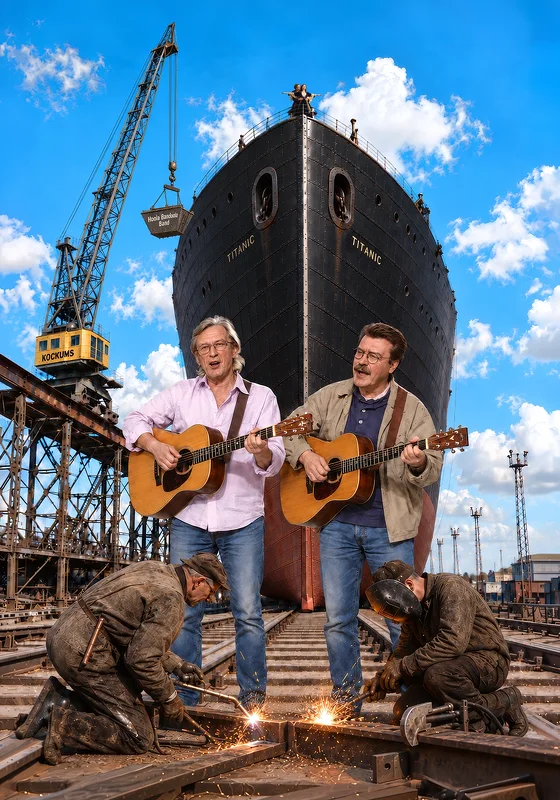
Jörgen Thornberg
Titanic, 2026
Digital
50 x 70 cm
2 900 kr
Titanic
INTRODUCTION – The Story We Already Know
Some disasters need explaining, and others seem to be part of our collective memory. Titanic belongs to the latter. We hardly need to be reminded of the iceberg, the insufficient lifeboats, the class differences or the orchestra that continued to play as the world’s most famous ship went down. Even people who have never opened a book about Titanic know the story.
Or think they do. Many have seen the film, while others have heard Wiehe’s song.
More than a hundred years have passed since the night of 15 April 1912, and another disaster has joined the real one. Eyewitness accounts have become stories, stories have become legends, and legends, through books, films and songs, have become so familiar that they are sometimes difficult to distinguish from what actually happened. Titanic is no longer merely a ship at the bottom of the Atlantic. It has become one of the great symbols of our time: of human hubris, of the class system, of the limitations of technology and of the peculiar human ability to carry on as usual even when disaster is already a fact.
That was why Mikael Wiehe had an unusually useful ship to board when, in 1977, he wrote “Titanic (The Second-Class Passenger’s Last Song)”. He did not need to tell the whole story. A few images were enough, and the listener already carried the rest within.
But Wiehe had not chosen Titanic as the subject of a song about a maritime disaster.
He had something quite different in mind.
“When Utopia sank
There was a time when we believed
the future had already chosen sides,
when every wall could bear a slogan
and every song could change a life.
We spoke of justice as a place
not far beyond the morning sun,
a country waiting to be built
when all of us became as one.
We filled the halls, we filled the streets,
we sang until the night was gone,
with borrowed guitars, battered drums
and faith enough to carry on.
The world was old, but we were young,
and history was on the move;
we did not ask if change would come.
We only asked how soon.
There would be no masters anymore,
no workers bent beneath their load,
no wealth behind the guarded gates,
no poor abandoned by the road.
The factories would serve us all,
the schools would teach the children free,
and no one would be left behind
in our new solidarity.
It was a beautiful Utopia.
Perhaps too beautiful to last.
For somewhere in the songs we sang
a different rhythm slowly grew.
The comrades who had marched as one
discovered different roads were true.
One faction split, another split,
each certain it alone could see
the proper road to paradise,
the purest form of liberty.
The meetings lasted half the night.
The arguments grew hard and cold.
Yesterday’s brother turned suspect,
and yesterday’s truths suddenly grew old.
We learned the smallest differences
could build the highest walls of all,
and those who dreamed of changing worlds
could quarrel over words.
Outside, another age arrived.
The shops grew bright, the music changed,
the mirror slowly faced the self.
The revolution lost its place
to other dreams upon the shelf.
The clenched fist opened, little by little,
the marching columns lost their pace,
and “we”, that once had seemed so strong,
gave way to “I” and “me”.
No iceberg marked the moment.
No single night destroyed the dream.
No captain cried that all was lost,
no siren sounded through the streets.
Utopia took on water
through a thousand tiny cracks,
while those who once had built it watched
the future turning back.
And still the songs remained.
Perhaps that was the strangest part.
The banners faded, groups dissolved,
old certainties came apart,
but somewhere in a meeting hall,
a record shop, a crowded bar,
the words survived the world that made them
and travelled on without it.
For dreams are difficult to bury.
They change their names, they change their clothes,
they disappear for twenty years
and surface where nobody knows.
And every generation seems
to build some shining world anew,
convinced that this time history
will make the old Utopia true.
We thought the future belonged to us.
Perhaps every generation does.”
Malmö, September 2026
PROLOGUE – Two Titanics
There are two Titanics in this essay.
One left Southampton on 10 April 1912, bound for New York with more than two thousand people aboard. Four days later, it struck an iceberg in the North Atlantic and sank. What remained was the wreck on the seabed, the survivors’ stories, and a catastrophe that, from the very beginning, seemed to contain all the material from which legends are usually made.
The other Titanic never left a harbour. Mikael Wiehe built it sixty-five years later, with the disintegration of the progressive music movement in mind and the real disaster as his stage. Aboard it, he placed an anonymous second-class passenger and his woman and let them experience the final hours of a ship they had been taught was unsinkable.
The two ships resemble each other so closely that it is easy to confuse them. The iceberg is there, as are the class system, the lifeboats, the orchestra and the incomprehensible calm of people facing a catastrophe that is slowly becoming impossible to deny. But when the details are compared, the ships begin to drift apart. Something that sounds completely self-evident in the song never happened, while reality elsewhere proves stranger, crueller and sometimes almost more improbable than anything Wiehe invented.
That does not make the song any worse. On the contrary, it may be precisely in the distance between the two ships that it becomes most interesting. Wiehe did not need to write a record of the night of 15 April 1912. He needed a story capable of carrying the larger story he wanted to tell.
But now the two ships will sail side by side. One through Mikael Wiehe’s song. The other is the night when the Titanic really sank.
A Long-Lived Song About a Sunken Ship
“Titanic (The Second-Class Passenger’s Last Song)” was written by Mikael Wiehe in 1977 and released the following year on the album “Sjömansvisor” together with Kabaréorkestern. It became one of his best-loved and best-known songs, and even today a few words are enough – “It began as a tremor on the lower deck…” – for many people to hear the rest of the melody in their minds.
It is easy to imagine that Wiehe had become fascinated by the world’s most famous maritime disaster. After all, the story of Titanic contained almost everything a songwriter could wish for: the enormous, seemingly unsinkable ship, the maiden voyage across the Atlantic, the iceberg in the cold April night, the insufficient lifeboats, the class system aboard, and the orchestra that continued playing as the catastrophe drew to a close.
But it was not the sinking of the Titanic that made Wiehe write Titanic. It was another shipwreck, one much closer to him.
When the song was written, the Swedish progressive music movement was in a very different position than it had been just a few years earlier. The optimism and collective faith in the future that had characterised the early 1970s were beginning to fade. The Left’s Utopia was cracking. Divisions within the Left had become more apparent, and the music movement that had grown up as an alternative to the commercial record industry was beginning to fragment. Hoola Bandoola Band, in which Wiehe himself had been a central figure, broke up in 1976, and much of what only a few years earlier had seemed new, strong, and directed towards the future was beginning to belong to an era that was coming to an end.
Wiehe himself has pointed to the disintegration of the music movement as the song's immediate background. Titanic therefore offered him an image that could hardly have been better: the great project that seemed capable of carrying people safely towards the future, but which suddenly began taking on water. There was no need for an explicit comparison between the progressive music movement and the famous ocean liner. The ship could speak for itself.
The musical device reinforced the feeling. Instead of turning Titanic into a dramatic disaster number, Wiehe lets the story move forward in what can best be described as an absent-minded tango. The music rocks gently onwards with almost detached elegance as the situation aboard becomes increasingly hopeless. There is something both comic and disturbing in the contrast: the catastrophe grows, yet the song refuses to panic.
It also helps explain why “Titanic” survived the political and musical environment in which it was born. The ship that originally reflected a progressive movement in dissolution proved capable of carrying far more meaning. When Sweden held its 1980 referendum on nuclear power, opponents used the song, which had taken on new meaning. Titanic could now symbolise humanity’s excessive faith in technology and our peculiar tendency to create increasingly complex systems and then convince ourselves they cannot fail. Nor should we overlook the fact that the music is hauntingly beautiful.
Wiehe had thereby achieved something few political songwriters manage. The song had broken free from the issue that had once given birth to it. The music movement could fade, the political battles of the 1970s could become history, and the nuclear-power debate could shift. Still, the image of the unsinkable ship that begins taking on water despite all assurances remained comprehensible. Every age, if it wished, could find its own Titanic.
Many years later, the song also took on a dark, personal meaning. When the passenger ferry Estonia sank in the Baltic Sea in 1994, Wiehe’s mother suffered a heart attack after learning the news and died. Wiehe has said that the event made it difficult for him to perform “Titanic” for a long time. A catastrophe from 1912, which he had used as a metaphor for an entirely different event, had suddenly acquired a reality and proximity that could no longer be kept at a poetic distance.
When Wiehe and Björn Afzelius performed together, Titanic became a recurring and much-appreciated part of their repertoire, and by then the song had long since moved beyond its original context. It had become a story about what happens when people discover that something they trusted no longer works as intended.
But there is something strange about all this. The more convincing Wiehe’s story sounds, the easier it is to forget that he is, after all, using a real disaster, a real ship, and real people to tell his own story. And so one question remains, a question much easier to ask than to answer:
How much of Mikael Wiehe’s Titanic is actually Titanic?
To find out, we must return to that cold April night in 1912 and let the song confront reality.
TITANIC– When the Song Meets Reality
“It began as a tremor on the lower deck.” That is how Mikael Wiehe’s Titanic begins, and it is hard to imagine a better opening. Within seconds, we are aboard. Something has happened, but no one quite knows what yet. The great ship continues through the night, people carry on with their lives, and somewhere far below, the catastrophe has already begun.
The problem is simply that it may not have started with a tremor.
On the night between 14 and 15 April 1912, different people reported very different experiences. Some felt almost nothing. Others heard a long scraping or grinding sound. Farther down in the ship, the collision was felt much more clearly. Many passengers realised something had happened only when the engines stopped.
That is really the first clue to the whole of Wiehe’s song. He does not tell the story of the Titanic as it actually unfolded. He tells the story as it ought to have unfolded to become a song.
The difference is considerable.
The Unsinkable Ship
In Wiehe’s account, the passengers emerge from their cabins without fully understanding why the ship is taking on water. They have, after all, been told they are aboard the most modern and unsinkable ship in the world.
Here, the song stands on considerably firmer historical ground.
White Star Line did not explicitly market the Titanic with the categorical promise that the ship could never sink. But the idea of a practically unsinkable ship existed. Its watertight compartments were presented as a technological marvel. At a time when electricity, telephones, motorcars, aeroplanes and wireless telegraphy seemed to push the boundaries of the possible every year, it was easy to believe that engineers had finally conquered the sea as well.
They had not.
Titanic had sixteen main watertight compartments. The problem was that the transverse bulkheads did not extend all the way up the ship. As the bow sank deeper, water could eventually spill over from one compartment into the next.
Like water between the compartments of a tilted ice-cube tray.
No single enormous gaping hole sank the Titanic. The iceberg damaged the hull on the starboard side, causing several compartments to flood simultaneously. The ship had been designed to survive certain combinations of flooded compartments.
Not this one.
Thomas Andrews, the Harland & Wolff ship designer who was aboard, soon grasped the consequences.
Titanic was going to sink. It was no longer a question of “if”, but of “when”.
The Sweater and the Jewellery
Wiehe’s narrator is not one of the famous passengers. He is neither a millionaire nor an emigrant, nor even a sailor. He seems a fairly ordinary man from the respectable middle class, probably travelling in second class with his wife.
It is an inspired choice.
He stands midway between Titanic’s two worlds.
Above him lie the first-class suites, the upper-class restaurants, smoking rooms and promenade decks. Below are the third-class emigrants, on their way to America and a new life.
When disaster strikes, the wife takes a photograph of their children, her jewellery and her hat.
The man takes a jumper. He thinks the sea is probably cold. On that point, he underestimates the situation. But the verse is deeply human, and something like it probably happened. Amid chaos, people are not always rational.
The water in the North Atlantic was near freezing, or slightly below. Anyone who ended up in it had little chance of surviving for long.
But the scene in which the couple see water rushing past outside their cabin is harder to reconcile with reality. The second-class cabins were mainly located further aft. When passengers there left their cabins, there was hardly any dramatic flow of water in the corridors.
There was much farther forward and farther down.
There, third-class passengers and crew members quickly realised that this was no ordinary incident.
Wiehe therefore moves the water, but for a good reason. A catastrophe that cannot yet be seen is difficult to sing about.
The Way Up
The couple then follow the arrows towards the lifeboats and reach the upper deck, which, according to the song, really belongs to first class. But there were no arrows.
Here Titanic’s actual geography begins to protest.
No simple system of arrows directed passengers to a particular lifeboat. Nor was the boat deck entirely reserved for first class.
But behind Wiehe’s simplification lies a more important truth.
Titanic was a class society built of steel. And Wiehe has a story he wants to tell.
First-, second-, and third-class passengers lived largely separate lives. They had different cabins, dining rooms, public rooms, and routes through the ship. When the evacuation began, they were therefore at different distances from the boat deck and had different opportunities to understand where they were supposed to go.
The result can be seen in the death toll.
Women and children were more likely to survive than men. But class also played a clear role. First-class passengers had far greater opportunities to escape than third-class passengers.
The catastrophe did not make everyone equal.
Not until they entered the water.
The Man from Third Class
On the boat deck, the atmosphere in the song is remarkably civilised. Everyone remains fairly calm, though only one gentleman from third class pushes forward rather foolishly.
It is a brief line, almost in passing, but it says a great deal.
From the very beginning, the story of the Titanic has been filled with tales of dignity, self-sacrifice and British discipline. Men stood aside. Women and children went first. The orchestra played on. The captain remained on the bridge. The upper classes faced death with their backs straight.
Reality was less carefully staged.
For most of the evacuation, there was surprisingly little panic, but towards the end, desperation increased. Crowding and conflict emerged, and eyewitness accounts sometimes contradicted one another.
Some people behaved heroically, while others thought only of themselves. Many probably did both that night.
Perhaps the remarkable thing is not that someone tried to push their way to the front. The remarkable thing is that so many did not.
The lifeboat that could not be lowered
Here, Wiehe takes a considerably larger step away from history.
In the song, the captain announces that their lifeboat cannot be lowered because something is wrong with the chains on the lowering mechanism. Someone has forgotten something.
It is a perfect image.
A ship representing the world’s finest technology goes down because someone overlooked one detail.
But that is not what happened.
Titanic had twenty boats: fourteen standard lifeboats, two smaller emergency cutters and four collapsible Engelhardt boats. The official British inquiry estimated their combined capacity at 1,178 people.
The absurdity, then, was not that one lifeboat became stuck, but that there had never been enough places for everyone in the first place. Worse still, not even all the places that did exist were used.
The United States Senate inquiry found that only about 700 people were saved in boats capable of carrying about 1,200. Several boats were lowered well below capacity. That is almost harder to comprehend than Wiehe’s invented lowering mechanism. A few chains were missing.
The truth is that Titanic had too few lifeboats, yet many of them left the ship with empty places.
A Glass of Champagne for the Empire
When their own lifeboat is no longer an option, Wiehe’s couple go to the bar. There they are served free champagne. They then raise their glasses to the Empire and to each other.
It is a brilliant scene. And almost certainly invented. Or perhaps people in those days really were made differently.
Titanic’s bars had already closed for the night before the collision. No evidence shows any organised distribution of free champagne as the ship was sinking. But it sounds good.
Alcohol certainly was consumed.
People drank when they realised what was happening. The most famous story concerns the ship’s chief baker, Charles Joughin, who said he had drunk liqueur before, became intoxicated, ended up in the freezing water, yet still survived.
But Wiehe’s champagne has nothing to do with drinks.
It is a symbol. Civilisation is going under, but before it does, it raises a glass to itself with expensive champagne, the drink of the upper classes.
The British Empire was at the height of its power. Titanic was British engineering, self-confidence and Edwardian social order condensed into 269 metres of steel.
Then came a piece of ice. A great deal of it. An entire iceberg.
The Calm Sea
Titanic now begins to list more and more heavily. People jump into the water.
The narrator and his wife decide to remain aboard because the sea is too vast, cold and wild.
But it was not rough—quite the opposite. The night was almost eerily calm. The sea was so smooth that no waves broke against the foot of the iceberg, making it easier to see.
It is one of the disaster’s many ironies. Titanic did not go down in a storm. No hurricane hurled the ship against the rocks. No enormous wave smashed the decks. It was a clear, cold, and almost windless night, with a sea that looked peaceful.
The Boats with the Empty Places
In the song, the couple look out at the lifeboats and realise there is no room for one more person.
It may be the song’s most tragic historical error. There was plenty of room.
According to the British inquiry, Titanic’s lifeboats could carry 1,178 people. The ship carried more than 2,200 people, so even if fully loaded, the boats would have left around a thousand people behind.
But they were not filled properly.
The American inquiry explicitly noted that several boats left the Titanic partly filled.
In the darkness, people could therefore stand aboard a dying ship and watch boats disappear across the black water, leaving empty places.
It is almost a stronger image than the one Wiehe invented. Once the Titanic had disappeared, the next tragedy became apparent. Hundreds of people had ended up in the freezing water.
Most of the lifeboats did not return. Those who had already been saved feared that desperate people would swamp or overturn the boats. So they stayed where they were—and listened—and suffered with the poor souls who were drowning. But did nothing. After a while, the cries grew fewer. Then there was silence.
“Nearer, My God, to Thee”
And so comes the scene without which almost no account of the Titanic seems complete.
The orchestra plays “Nearer, My God, to Thee”.
Here, old rumours must be corrected.
We know the musicians played while the evacuation was underway. All eight died. But which piece they played last remains disputed. Hymn 271, Nearer, My God, to Thee, was mentioned early and became part of the Titanic legend. Other testimony points to the popular waltz Songe d’Automne – Autumn. There is no definitive answer.
Perhaps that is better.
Here, we can see how a historical event becomes a myth while the people who experienced it are still alive.
As early as 1912, articles described the orchestra playing the hymn as the Titanic sank. At the great memorial concert at the Royal Albert Hall that same year, the programme ended with “Nearer, My God, to Thee”.
The legend had found its music. Wiehe used it again sixty years later.
Not because we know it is true, but because it feels true. And because, at least for religious people, it offers hope.
The Flag Goes Up
In the end, there is nothing left to do. The narrator and the woman hold hands. Hope is gone. As the ship goes down, the flag goes up.
There is no evidence of any such final flag-raising. But by this point, it hardly matters, for Wiehe has left Titanic. He is elsewhere. His ship has become a sinking society.
Aboard are the privileged and the less privileged, the obedient and the rebellious, those who give orders and those who obey. Eventually, everyone knows the ship is going down, yet the established order endures. People follow the signs. They wait their turn. They accept the message that the lifeboat will not work. They go to the bar. They raise a glass to the Empire.
In the end, they hold hands while the flag is raised. That is why the historical errors do not destroy the song. They build it.
EPILOGUE – The ship that never sank
Titanic sank beneath the Atlantic early on the morning of 15 April 1912.
But the other Titanic never sank and lives on in the form of the song. It is the ship Wiehe built afterwards and set to music.
There, the orchestra plays ”Nearer, My God, to Thee”. There, Captain Smith stands, erect, on the bridge. There, millionaires dress for dinner while the water rises. There, women and children go first. There, locked gates separate the poor from the rich. There, the saloons are still ablaze with light while the bow is already disappearing into the darkness.
Some of it is true. Some of it is half true. Some of it never happened. Or perhaps it did. Who cares when the message arrives and the music is hauntingly beautiful? And somewhere between history and myth, Mikael Wiehe places his anonymous couple.
Perhaps they could not see the water from their cabin. They followed no arrows to a particular lifeboat, for there were none. No lifeboat was left behind because someone had forgotten the chains. The bar did not hand out free champagne. The sea was not wild. The boats were not full. We do not know which melody the orchestra played last. And no flag went up.
Almost the entire scene is wrong, yet it works. The words remain etched in memory.
“Titanic” is ultimately not about what happened at 11.40 p.m. on 14 April 1912.
It is about people who discover that the system they have trusted can no longer save them – yet continue to behave as though it were still working.
The real Titanic went down when steel met ice. Wiehe’s Titanic goes down because the people aboard continue to believe in the ship.
And perhaps that is why we are still listening, because the song is a work of genius.
P.S. Mikael Wiehe’s deep friendship and musical collaboration with Björn Afzelius is one of the best-known relationships in Swedish music history. When Afzelius died in 1999, he left an enormous void. After Afzelius was diagnosed with cancer, Wiehe wrote the song “Den jag kunde va” for his friend.
INTRODUKTION – Historien vi redan känner
Det finns katastrofer som måste förklaras och det finns katastrofer som tycks vara en del av vårt gemensamma minne. Titanic tillhör de senare. Vi behöver knappast påminnas om isberget, de otillräckliga livbåtarna, klasskillnaderna eller orkestern som fortsatte spela medan världens mest berömda fartyg gick mot botten. Till och med människor som aldrig har öppnat en bok om Titanic känner till historien.
Eller tror att de gör det. Många har sett filmen. Andra hört Wiehes vis.
För under de drygt hundra år som gått sedan natten den 15 april 1912 har den verkliga katastrofen fått sällskap av en annan. Vittnesmål har blivit berättelser, berättelser har blivit legender och legender har, genom böcker, filmer och sånger, blivit så välbekanta att de ibland är svåra att skilja från det som faktiskt hände. Titanic är inte längre bara ett fartyg på Atlantens botten. Det har blivit en av vår tids stora symboler för människans övermod, för klassamhället, för teknikens begränsningar och för den egendomliga mänskliga förmågan att fortsätta som vanligt när katastrofen redan är ett faktum.
Det var därför Mikael Wiehe hade ett ovanligt tacksamt fartyg att gå ombord på när han 1977 skrev Titanic (Andraklasspassagerarens sista sång). Han behövde inte berätta hela historien. Några få bilder räckte, och resten bar lyssnaren redan med sig.
Men Wiehe hade inte valt Titanic för att skriva en visa om en fartygskatastrof.
Han hade något helt annat i tankarna.
PROLOG – Två Titanic
Det finns alltså två Titanic i den här essän.
Det ena lämnade Southampton den 10 april 1912 med New York som destination och drygt två tusen människor ombord. Fyra dygn senare träffade det ett isberg i Nordatlanten och sjönk. Kvar blev vraket på havsbottnen, de överlevandes berättelser och en katastrof som redan från början tycktes innehålla allt det stoff som legender brukar byggas av.
Det andra Titanic lämnade aldrig någon hamn. Det byggdes sextiofem år senare av Mikael Wiehe, med den progressiva musikrörelsens sönderfall i tankarna och den verkliga katastrofen som scen. Ombord placerade han en anonym andraklasspassagerare och hans kvinna och lät dem uppleva de sista timmarna på ett fartyg som de hade fått lära sig var osänkbart.
De båda fartygen liknar varandra så mycket att det är lätt att förväxla dem. Isberget finns där, liksom klassamhället, livbåtarna, orkestern och människornas obegripliga lugn inför en katastrof som långsamt blir omöjlig att förneka. Men när man börjar jämföra detaljerna glider fartygen isär. Något som låter fullständigt självklart i visan inträffade aldrig, medan verkligheten på andra ställen visar sig vara märkligare, grymmare och ibland nästan mer osannolik än det Wiehe diktade.
Det gör inte visan sämre. Tvärtom är det kanske just i avståndet mellan de båda fartygen som den blir som mest intressant. Wiehe behövde inte skriva protokoll över natten till den 15 april 1912. Han behövde en berättelse som bar den större historien han ville berätta.
Men nu ska de två fartygen få segla bredvid varandra. Det ena genom Mikael Wiehes visa. Det andra var den natt då Titanic verkligen sjönk.
En långlivad visa om ett sjunket fartyg
”Titanic (Andraklasspassagerarens sista sång)” skrevs av Mikael Wiehe 1977 och gavs ut året därpå på albumet ”Sjömansvisor” tillsammans med Kabaréorkestern. Den kom att bli en av hans mest älskade och kända sånger, och fortfarande räcker det med några få ord – ”Det började som en skakning på nedre däck…” – för att många ska höra resten av melodin inom sig.
Det ligger nära till hands att tro att Wiehe helt enkelt hade fascinerats av världens mest berömda fartygskatastrof. Historien om Titanic innehöll trots allt nästan allt en visdiktare kunde önska sig: det väldiga och till synes osänkbara fartyget, jungfruresan över Atlanten, isberget i den kalla aprilnatten, de otillräckliga livbåtarna, klassamhället ombord och orkestern som fortsatte spela medan katastrofen närmade sig sitt slut.
Men det var egentligen inte Titanics undergång som fick Wiehe att skriva ”Titanic”. Det var ett annat skeppsbrott, betydligt närmare honom själv.
När sången kom till befann sig den svenska progressiva musikrörelsen i ett helt annat läge än för bara några år sedan. Den optimism och kollektiva framtidstro som hade präglat det tidiga 1970-talet höll på att mattas av. Det Utopia som vänstern målat upp krackelerade. Motsättningarna inom vänstern hade blivit tydligare, och den musikrörelse som hade vuxit fram som ett alternativ till den kommersiella skivindustrin började splittras. Hoola Bandoola Band, där Wiehe själv varit en av de centrala gestalterna, hade upplösts 1976, och mycket av det som för några år sedan hade känts nytt, starkt och framtidsinriktat började tillhöra en epok som var på väg att ta slut.
Wiehe har själv pekat på musikrörelsens sönderfall som den direkta bakgrunden till sången. Titanic erbjöd honom därmed en bild som knappast kunde ha varit bättre: det stora projektet som tycktes kunna bära människorna tryggt mot framtiden, men som plötsligt började ta in vatten. Det behövdes ingen uttalad jämförelse mellan den progressiva musikrörelsen och den berömda oceanångaren. Fartyget kunde tala för sig självt.
Det musikaliska greppet förstärkte känslan. I stället för att göra ”Titanic” till ett dramatiskt katastrofnummer lät Wiehe berättelsen röra sig framåt i något som närmast kan beskrivas som en förströdd tango. Musiken vaggar vidare med en nästan oberörd elegans medan situationen ombord blir alltmer hopplös. Det finns något både komiskt och obehagligt i kontrasten: katastrofen växer, men sången vägrar att bli panikslagen.
Det är också en viktig förklaring till att ”Titanic” kom att överleva den politiska och musikaliska miljö där den föddes. Det fartyg som från början kunde spegla en progressiv rörelse i upplösning visade sig kunna bära betydligt fler betydelser. När Sverige gick till folkomröstning om kärnkraften 1980 användes sången av kärnkraftsmotståndarna och fick en ny innebörd. Nu kunde Titanic symbolisera människans övertro på tekniken och vår märkliga benägenhet att skapa alltmer komplicerade system för att sedan övertyga oss själva om att de inte kan haverera. Sedan får vi inte bortse från att musiken är bedövande vacker.
Därmed hade Wiehe åstadkommit något som få politiska visdiktare lyckas med. Sången hade lösgjort sig från den fråga som en gång födde den. Musikrörelsen kunde försvinna, 1970-talets politiska strider kunde bli historia och kärnkraftsdebatten kunde förändras, men bilden av det osänkbara fartyget som trots alla försäkringar börjar ta in vatten förblev begriplig. Varje tid kunde, om den ville, hitta sitt eget Titanic.
Många år senare fick sången dessutom en mörk och personlig efterbörd. När passagerarfärjan ”Estonia” förliste i Östersjön 1994 drabbades Wiehes mor av en hjärtinfarkt efter att ha tagit del av nyheten och avled. Wiehe har berättat att händelsen gjorde det svårt för honom att under lång tid framföra ”Titanic”. En katastrof från 1912, som han hade använt som metafor för ett helt annat skeende, hade plötsligt fått en verklighet och närhet som inte längre gick att hålla på ett poetiskt avstånd.
När Wiehe och Björn Afzelius uppträdde tillsammans blev ”Titanic” ett återkommande och uppskattat inslag i deras repertoar, och vid det laget hade sången sedan länge vuxit bortom sin ursprungliga bakgrund. Den hade blivit en berättelse om vad som händer när människor upptäcker att någonting de har litat på inte längre fungerar som det var tänkt.
Men det finns en märklig sak med allt detta. Ju mer övertygande Wiehes berättelse låter, desto lättare är det att glömma att han trots allt använder en verklig katastrof, med ett verkligt fartyg och verkliga människor, för att berätta sin egen historia. Därför återstår en fråga som är betydligt enklare att ställa än att besvara:
Hur mycket av Mikael Wiehes ”Titanic” är egentligen Titanic?
För att få veta det måste vi återvända till den kalla aprilnatten 1912 och låta visan möta verkligheten.
TITANIC - När visan möter verkligheten
”Det började som en skakning på nedre däck.” Så börjar Mikael Wiehes ”Titanic”, och det är svårt att tänka sig en bättre inledning. På några sekunder befinner vi oss ombord. Någonting har hänt, men ännu vet ingen riktigt vad. Det stora fartyget fortsätter genom natten, människorna fortsätter med sina liv och någonstans långt r nere har katastrofen redan börjat.
Problemet är bara att det kanske inte började med någon skakning.
Natten mellan den 14 och 15 april 1912 berättade olika människor om helt olika saker. Några kände knappt någonting. Andra hörde ett långt skrapande eller malande ljud. Längre ner i fartyget uppfattades sammanstötningen betydligt tydligare. Och många passagerare förstod att något hade inträffat först när maskinerna stannade.
Det är egentligen den första ledtråden till hela Wiehes visa. Han berättar inte historien om Titanic som den verkligen utspelade sig. Han berättar historien som den borde ha utspelat sig för att kunna bli en visa.
Och skillnaden är betydande.
Det osänkbara skeppet
I Wiehes berättelse kommer passagerarna ut ur sina hytter utan att riktigt förstå varför fartyget tar in vatten. De har ju fått veta att de befinner sig på världens modernaste och osänkbara skepp.
Här står visan betydligt stadigare på historisk mark.
Titanic marknadsfördes inte uttryckligen av White Star Line med det kategoriska löftet att fartyget aldrig skulle kunna sjunka. Men föreställningen om det praktiskt taget osänkbara fartyget fanns. Konstruktionen med vattentäta avdelningar framställdes som ett tekniskt underverk, och i en tid när elektricitet, telefoner, bilar, flygmaskiner och trådlös telegrafi tycktes flytta gränsen för det möjliga varje år var det lätt att tro att ingenjörerna till slut också hade besegrat havet.
Det hade de inte.
Titanic hade sexton vattentäta huvudavdelningar. Problemet var att de tvärgående skotten inte fortsatte hela vägen upp genom fartyget. När fören sjönk allt djupare kunde vattnet därför så småningom rinna över från en avdelning till nästa.
Som vatten mellan facken i en lutande låda med iskuber.
Det var inte ett stort gapande hål som sänkte Titanic. Isberget skadade skrovet längs styrbordssidan så att flera avdelningar började ta in vatten samtidigt. Fartyget var konstruerat för att överleva vissa kombinationer av översvämmade avdelningar.
Inte denna.
Thomas Andrews, konstruktören från Harland & Wolff som befann sig ombord, insåg snart konsekvenserna.
Titanic skulle sjunka. Det var nu inte längre en fråga om ”om”. Bara om ”när”.
Tröjan och smyckena
Wiehes berättare är ingen av de berömda passagerarna. Han är varken miljonär, emigrant eller ens sjöman. Han tycks vara en ganska vanlig man ur den respektabla medelklassen, sannolikt resande i andra klass tillsammans med sin hustru.
Det är ett genialt val.
Han står mitt emellan Titanics båda världar.
vanför honom finns förstklassviterna, överklassens restauranger, rökrum och promenaddäck. Nedanför finns emigranterna i tredje klass, på väg mot Amerika och ett nytt liv.
När katastrofen inträffar tar hustrun fotografiet av barnen, sina smycken och sin hatt.
Mannen tar en tröja. Han tänker att havet säkert är kallt. På den punkten underskattar han situationen. Men strofen är djupt mänsklig och har förmodligen hänt. Mitt i kaoset är människor inte alltid rationella.
Vattnet i Nordatlanten låg omkring fryspunkten eller strax därunder. En människa som hamnade där hade små möjligheter att överleva någon längre tid.
Men scenen med paret som ser vattnet strömma in utanför hytten är svårare att förena med verkligheten. Andraklasshytterna låg huvudsakligen längre akterut. När passagerarna där började lämna sina hytter fanns det knappt något dramatiskt vattenflöde i korridorerna.
Det fanns desto mer längre fram och längre ner.
Där började tredjeklasspassagerare och besättningsmän tidigt förstå att det inte var någon vanlig incident.
Wiehe flyttar alltså vattnet. Men han gör det av ett gott skäl. En katastrof som ännu inte syns är svår att sjunga om.
Vägen upp
Sedan följer paret pilarna mot räddningsbåtarna och kommer upp på översta däck, som enligt visan egentligen tillhör första klass.
Här börjar Titanics verkliga geografi protestera.
Något enkelt system av pilar som ledde passagerarna till en bestämd livbåt fanns inte. Inte heller var båtdäcket i sin helhet ett exklusivt område för första klass.
Men bakom Wiehes förenkling finns en betydligt viktigare sanning.
Titanic var ett klassamhälle byggt av stål. Och Wiehe har en historia han vill berätta.
Första, andra och tredje klassen levde i stor utsträckning åtskilda. De hade olika hytter, olika matsalar, olika sällskapsrum och olika vägar genom fartyget. När evakueringen började befann de sig därför också på olika avstånd från båtdäcket och hade olika goda möjligheter att förstå vart de skulle ta vägen.
Och resultatet syns i dödstalen.
Kvinnor och barn hade större chans att överleva än män. Men klass spelade också en tydlig roll. Förstaklasspassagerare hade betydligt större möjligheter att komma undan än passagerare i tredje klass.
Katastrofen gjorde inte alla jämlika.
Inte förrän de hamnade i vattnet.
Mannen från tredje klass
På båtdäcket är stämningen i visan märkvärdigt civiliserad. Alla tar det ganska lugnt. Det är bara en herre från tredje klass som tränger sig lite dumt.
Det är en liten rad, nästan i förbigående, men den säger mycket.
Historien om Titanic har ända från början varit fylld av berättelser om värdighet, självuppoffring och brittisk disciplin. Män stod tillbaka. Kvinnor och barn gick först. Orkestern spelade. Kaptenen stod på bryggan. Överklassen mötte döden med rak rygg.
Verkligheten var mindre välregisserad.
Under större delen av evakueringen rådde förvånansvärt lite panik, men mot slutet ökade desperationen. Det förekom trängsel och konflikter, och vittnesmålen motsäger ibland varandra.
Det fanns människor som uppträdde heroiskt och de som tänkte på sig själva. Och det fanns förmodligen väldigt många som gjorde båda sakerna under samma natt.
Det märkliga är kanske inte att någon försökte tränga sig före. Det märkliga är att så många inte gjorde det.
Livbåten som inte gick att få i sjön
Här tar Wiehe ett betydligt större kliv bort från historien.
I visan meddelar kaptenen att deras livbåt inte går att få ner eftersom något är fel med kedjorna till hissanordningen. Någon har glömt något.
Det är en perfekt bild.
Ett fartyg som representerar världens främsta teknik går under därför att någon har glömt en detalj.
Men så gick det inte till.
Titanic hade tjugo båtar: fjorton vanliga livbåtar, två mindre nödbåtar och fyra hopfällbara Engelhardt-båtar. Den officiella brittiska utredningen uppskattade en sammanlagd kapacitet på 1 178 personer.
Det absurda var alltså inte att en livbåt fastnade utan att det från början inte fanns båtplatser åt alla. Ännu värre: inte ens de platser som fanns användes.
Den amerikanska senatsutredningen konstaterade att bara omkring 700 människor räddades i båtar som hade kapacitet för omkring 1 200. Flera båtar sattes i sjön långt ifrån fulla. Det är nästan svårare att ta in än Wiehes påhittade hissanordning. Att några kedjor saknades.
Sanningen är att Titanic hade för få livbåtar. Och ändå lämnade många fartyget med tomma platser.
Ett glas champagne för imperiet
När den egna livbåten inte längre är ett alternativ går Wiehes par till baren. Där får de gratis champagne. Sedan skålar de för imperiet och för varandra.
Det är en lysande scen. Och nästan säkert påhittad. Eller så hände det verkligen att människor på den tiden var annorlunda funtade.
Titanics barer hade stängt för kvällen redan före kollisionen. Det finns inget belägg för någon organiserad gratisutskänkning av champagne medan fartyget sjönk. Men det låter bra.
Alkohol förekom däremot.
Människor drack när de insåg vad som höll på att hända. Den mest berömda historien gäller fartygets chefsbagare Charles Joughin, som berättade att han drack likör innan han, berusad, hamnade i det iskalla vattnet och ändå överlevde.
Men Wiehes champagne har egentligen ingenting med drycker att göra.
Det är en symbol. Civilisationen går under, men innan den gör det höjer den glaset för sig själv. Med dyrbar champagne. Överklassens dryck.
Det brittiska imperiet befann sig nära sin höjdpunkt av makt. Titanic var brittisk ingenjörskonst, brittiskt självförtroende och edvardiansk samhällsordning koncentrerade till 269 meter stål.
Sedan kom ett stycke is. Mycket is. Ett helt isberg.
Det lugna havet
Nu börjar Titanic luta allt mer. Människor hoppar i vattnet.
Berättaren och hans hustru beslutar att stanna kvar eftersom havet är för stort, kallt och vilt.
Men det var inte upprört. Tvärtom. Natten var nästan kusligt stilla. Havet låg så blankt att det saknades vågor som kunde bryta mot isbergets fot och göra det lättare att upptäcka.
Det är en av katastrofens många ironier. Titanic gick inte under i en storm. Ingen orkan kastade fartyget mot klipporna. Ingen enorm våg slog sönder däcken. Det var en klar, kall och nästan vindstilla natt. Och ett hav som såg fredligt ut.
Båtarna med de tomma platserna
I visan tittar paret ut mot livbåtarna och konstaterar att det inte finns plats för en enda människa till.
Det är kanske sångens mest tragiska historiska fel. Där fanns plats. Mycket plats.
Titanics båtar kunde enligt den brittiska utredningen ta 1 178 personer. Fartyget hade drygt 2 200 människor ombord, så även perfekt fyllda båtar skulle ha lämnat omkring tusen människor kvar.
Men de fylldes inte perfekt.
Den amerikanska utredningen noterade uttryckligen att flera båtar lämnade Titanic delvis fyllda.
I mörkret kunde alltså människor stå kvar på ett döende fartyg och se båtar försvinna bort över det svarta vattnet med tomma platser.
Det är nästan en starkare bild än den Wiehe hittade på. När Titanic väl hade försvunnit blev nästa tragedi uppenbar. Hundratals människor hade hamnat i det iskalla vattnet.
De flesta livbåtarna vände inte tillbaka. De som redan hade räddats fruktade att desperata människor skulle välta eller överfylla båtarna. Så de satt kvar. Och lyssnade. Och led med stackarna som drunknade. Men gjorde ingenting. Efter en stund blev ropen färre. Sedan blev det tyst.
”Närmare, Gud, till dig”
Och så kommer den scen som nästan ingen berättelse om Titanic klarar sig utan.
Orkestern spelar ”Närmare Gud till dig”.
Här måste gamla rykten korrigeras.
Vi vet att musiken spelades medan evakueringen pågick. Alla åtta omkom. Men vilket stycke som spelades sist är fortfarande omtvistat. Psalmen 271 ”Närmare, Gud, till dig” (Nearer, My God, to Thee) nämndes tidigt och blev en del av Titanic-legenden. Andra vittnesmål pekar på den populära valsen ”Songe d'Automne” – ”Autumn”. Något säkert svar finns inte.
Det är nästan bättre så.
För här ser man hur en historisk händelse förvandlas till en myt medan människorna som upplevde den fortfarande lever.
Redan 1912 skrevs det artiklar om orkestern som spelade psalmer medan Titanic sjönk. Vid den stora minneskonserten i Royal Albert Hall samma år avslutades programmet med just ”Nearer, My God, to Thee”.
Legenden hade hittat sin musik. Wiehe använder den igen sextio år senare.
Inte därför att vi vet att den är sann. Utan att den känns sann. Och att den åtminstone inger hopp hos religiösa.
Flaggan går i topp
Till slut finns det ingenting kvar att göra. Berättaren och kvinnan håller varandra i handen. Hoppet är borta. Och medan fartyget går till botten går flaggan i topp.
Det finns inga belägg för någon sådan sista flagghissning. Men vid det här laget spelar det nästan ingen roll. För Wiehe har lämnat Titanic. Han befinner sig någon annanstans. Hans fartyg har blivit ett sjunkande samhälle.
Ombord finns de privilegierade och de mindre privilegierade, de lydiga och de upproriska, de som bestämmer och de som fogar sig. Alla vet så småningom att skeppet är på väg ner, men ordningen fortsätter ändå. Man följer skyltarna. Man väntar på sin tur. Man accepterar beskedet att livbåten inte fungerar. Man går till baren. Man skålar för imperiet.
Och till sist håller man varandra i handen medan flaggan hissas. Det är därför de historiska felen inte förstör visan. De bygger den.
EPILOG – Det fartyg som aldrig sjönk
Titanic försvann under Atlantens yta tidigt på morgonen den 15 april 1912.
Men det andra: Titanic sjönk aldrig utan lever vidare i sångens form. Det är fartyget som Wiehe har byggt efteråt och tonsatt.
Där spelar orkestern ”Närmare Gud till dig”. Där står kapten Smith, rakryggad, på bryggan. Där klär sig miljonärerna till middag medan vattnet stiger. Där gäller kvinnor och barn först. Där skiljer låsta grindar de fattiga från de rika. Där lyser salongerna ännu medan fören redan försvunnit ner i mörkret.
En del är sant. En del är halvsant. En del har aldrig hänt. Eller kanske. Vem bryr sig när budskapet går fram och musiken är bedövande vacker? Och någonstans mitt emellan historien och myten placerar Mikael Wiehe sitt anonyma par.
De kunde kanske inte ha sett vattnet från sin hytt. De följde inga pilar till en bestämd räddningsbåt. För några sådana fanns inte. Ingen livbåt blev kvar eftersom någon hade glömt kedjorna. Baren delade inte ut gratis champagne. Havet var inte vilt. Båtarna var inte fulla. Vi vet inte vilken melodi orkestern spelade sist. Och någon flagga gick inte i topp.
Nästan hela scenen är fel. Ändå fungerar den. Orden etsar sig fast i minnet.
För ”Titanic” handlar till sist inte om vad som hände klockan 23.40 den 14 april 1912.
Den handlar om människor som upptäcker att det system de har litat på inte längre kan rädda dem – och som trots detta fortsätter att uppföra sig som om systemet fortfarande fungerade.
Det verkliga Titanic gick under när stål mötte is. Wiehes Titanic går under därför att människorna ombord fortsätter att tro på skeppet.
Och kanske är det därför vi fortfarande lyssnar. Och för att visan är genialisk.
PS. Mikael Wiehes djupa vänskap och musikaliska samarbete med Björn Afzelius är en av svensk musikhistorias mest kända relationer. När Afzelius gick bort 1999 lämnade det ett enormt tomrum efter sig. Wiehe skrev sången ”Den jag kunde va” till vännen Afzelius när denne drabbades av cancer.
2 900 kr

Jörgen Thornberg
Malmö
Lite om bilder och mig. Translation in English at the end.
Jag är en nyfiken person som ser allt i bilder, även det jag fäster i ord, gärna tillsammans för bakom alla mina bilder finns en berättelse. Till vissa bilder hör en kortare eller längre novell som följer med bilden.
Bilder berättar historier. Jag omges av naturlig skönhet, intressanta människor och historia var jag än går. Jag använder min kamera för att dokumentera världen och blanda det jag ser med vad jag känner för att fånga den dolda magin.
Mina bilder berättar mina historier. Genom mina bilder, tryck och berättelser. Jag bjuder in dig att ta del av dessa berättelser, in i ditt liv och hem och dela min mycket personliga syn på vår värld. Mer än vad ögat ser. Jag tänker i bilder, drömmer och skriver och pratar om dem; följaktligen måste jag också skapa bilder. De blir vad jag ser, inte nödvändigtvis begränsade till verkligheten. Det finns en bild runt varje hörn. Jag hoppas att du kommer att se vad jag såg och gilla det.
Jag är också en skrivande person och till många bilder hör en kortare eller längre essay. Den följer med tavlan, tryckt på fint papper och med en personlig hälsning från mig.
Flertalet bilder startar sin resa i min kamera. Enkelt förklarat beskriver jag bilden jag ser i mitt inre, upplevd eller fantiserad. Bilden uppstår inom mig redan innan jag fått okularet till ögat. På bråkdelen av ett ögonblick ser jag vad jag vill ha och vad som kan göras med bilden. Här skall jag stoppa in en giraff, stålmannen, Titanic eller vad det är min fantasi finner ut. Ännu märkligare är att jag kommer ihåg minnesbilden långt efteråt när det blir tid att skapa verket. Om jag lyckas eller inte, är upp till betraktaren, oftast präglat av en stråk av svart humor – meningen är att man skall bli underhållen. Mina bilder blir ofta en snackis där de hänger.
Jag föredrar bilder som förmedlar ett budskap i flera lager. Vid första anblicken fylld av feel-good, en vacker utsikt, fint väder, solen skiner, blommor på ängen eller vattnet som ligger förrädiskt spegelblankt. I en sådan bild kan jag gömma min egentliga berättelse, mitt förakt för förtryckare och våldsverkare, rasister och fördomsfulla människor - ett gärna återkommande motiv mer eller mindre dolt i det vackra motivet. Jag försöker förena dem i ett gemensamt narrativ.
Bild och formgivning har löpt som en röd tråd genom livet. Fotokonst känns som en värdig final som jag gärna delar med mig.
Min genre är vid som framgår av mina bilder, temat en blandning av pop- och gatukonst i kollage som kan bestå av hundratals lager. Vissa bilder kan ta veckor, andra någon dag innan det är dags att överlämna resultatet till printverkstaden. Fine Art Prints är digitala fotocollage. I dessa kollage sker rivandet, klippandet, pusslandet, målandet, ritandet och sprayningen digitalt. Det jag monterar in kan vara hundratals år gamla bilder som jag omsorgsfullt frilägger så att de ser ut att vara en del av tavlan men också bilder skapade av mig själv efter min egen fantasi. Därefter besöks printstudion och för vissa bilder numrera en limiterad upplaga (oftast 7 exemplar) och signera för hand. Vissa bilder kan köpas i olika format. Det är bara att fråga efter vilka. Gillar man en bild som är 70x100 men inte har plats på väggen, går den kanske att få i 50x70 cm istället. Frågan är fri.
Metoden Giclée eller Fine Art Print som det också kallas är det moderna sättet för framställning av grafisk konst. Villkoret för denna typ av utskrifter är att en högkvalitativ storformatskrivare används med åldersbeständigt färgpigment och konstnärspapper eller i förekommande fall på duk. Pappret som används möter de krav på livslängd som ställs av museer och gallerier. Normalt säljer jag mina bilder oinramade så att den nya ägaren själv kan bestämma hur de skall se ut, med eller utan passepartout färg på ram, med eller utan glas etc..
Under många år ställde jag bara ut på nätet, i valda grupper och på min egen Facebooksida - https://www.facebook.com/jorgen.thornberg.9
Jag finns också på en egen hemsida som tyvärr inte alltid är uppdaterad – https://www.jth.life/ Där kan du också läsa en del av de berättelser som följer med bilden.
UTSTÄLLNINGAR
Luftkastellet, oktober 2022
Konst i Lund, november 2022
Luftkastellet, mars 2023
Engleson Galleri Caroli, april 2023
Hydra, Greece June 2023
Engleson Galleri Caroli, oktober 2023
Toppen, Höllviken december 2023
Luftkastellet, mars 2024
Torups Galleri, mars 2024
Venice, May 2024
Luftkastellet, oktober 2024
Konst i Advent, December 2024
Galleri Engleson, Caroli December 2024
Jäger & Jansson Galleri, april 2025
A bit about pictures and me.
I'm a curious person who sees everything in pictures, even what I express in words, often combining them, for behind all my pictures lies a story. These narratives, some as short as a single image and others as long as a novel, are the heart and soul of my work.
Pictures tell stories. Wherever I go, I'm surrounded by natural beauty, exciting people, and history. I use my camera to document the world and blend what I see with what I feel to capture the hidden magic.
My images tell my stories. Through my pictures, prints, and narratives, I invite you to partake in these stories in your life and home and share my deeply personal perspective of our world. More than meets the eye. I think in pictures, dream, write, and talk about them; consequently, I must create images too. They become what I see, not necessarily confined to reality. There's a picture around every corner. I hope you'll see what I saw and enjoy it.
I'm also a writer, and many images come with a shorter or longer essay. It accompanies the painting, printed on fine paper with my personal greeting.
Many pictures start their journey on my camera. Simply put, I describe the image I see in my mind, experienced or imagined. The image arises within me even before I bring the eyepiece to my eye. In a fraction of a moment, I see what I want and what can be done with the picture. Here, I'll insert a giraffe, Superman, the Titanic, or whatever my imagination conjures up. Even stranger is that I remember the mental image long after it's time to create the work. Whether I succeed is up to the observer, often imbued with a streak of black humour – the aim is to entertain. My pictures usually become a talking point wherever they hang.
I prefer pictures that convey a message in multiple layers. At first glance, they're filled with feel-good vibes, a beautiful view, lovely weather, the sun shining, flowers in the meadow, or the water lying deceptively calm. But beneath this surface beauty, I often conceal a deeper story, a narrative that challenges societal norms or explores the human condition. I invite you to delve into these hidden narratives and discover the layers of meaning within my work.
Picture and design have been a thread running through my life. Photographic art feels like a fitting finale, and I'm happy to share it.
My genre is varied, as seen in my pictures; the theme is a blend of pop and street art in collages that can consist of hundreds of layers. Some images can take weeks, others just a day before it's time to hand over the result to the print workshop. Fine Art Prints are digital photo collages. In these collages, tearing, cutting, puzzling, painting, drawing, and spraying happen digitally. What I insert can be images hundreds of years old that I carefully extract so they appear to be part of the painting, but also images created by myself, now also generated from my imagination. Next, visit the print studio and, for certain images, number a limited edition (usually 7 copies) and sign them by hand. Some images may be available in other formats. Just ask which ones. If you like an image that's 70x100 but doesn't have space on the wall, you might be able to get it in 50x70 cm instead. The question is open.
The Giclée method, or Fine Art Print as it's also called, is the modern way of producing graphic art. This method ensures the highest quality and longevity of the artwork, using a high-quality large-format printer with archival pigment inks and artist paper or, in some cases, canvas. The paper used meets the longevity requirements set by museums and galleries. I sell my pictures unframed, allowing the new owner to personalise their artwork, confident in the lasting value and quality of the piece.
For many years, I only exhibited online, in selected groups, and on my Facebook page - https://www.facebook.com/jorgen.thornberg.9. I also have my website, which unfortunately is not constantly updated - https://www.jth.life/. You can also read some of the stories accompanying the pictures there.
EXHIBITIONS
Luftkastellet, October 2022
Art in Lund, November 2022
Luftkastellet, March 2023
Engleson Gallery Caroli, April 2023
Hydra, Greece June 2023
Engleson Gallery Caroli, October 2023
Toppen, Höllviken December 2023
Luftkastellet, March 2024
Torup Gallery, March 2024
Venice, May 2024
UTSTÄLLNINGAR
Luftkastellet, oktober 2022
Konst i Lund, november 2022
Luftkastellet, mars 2023
Engleson Galleri Caroli, april 2023
Hydra, Greece June 2023
Engleson Galleri Caroli, oktober 2023
Toppen, Höllviken december 2023
Luftkastellet, mars 2024
Torups Galleri, mars 2024
Venice, May 2024
Luftkastellet, October 2024
Konst i Advent, December 2024
Galleri Engleson, Caroli December 2024
Jäger & Jansson Galleri, April 2025
Utbildning
Autodidakt
Medlem i konstnärsförening
Öppna Sinnen
Med i konstrunda
Konstrundan i Skåne
Utställningar
Luftkastellet, October 2022
Art in Lund, November 2022
Luftkastellet, March 2023
Engleson Gallery Caroli, April 2023
Hydra, Greece June 2023
Engleson Gallery Caroli, October 2023
Toppen, Höllviken December 2023
Luftkastellet, March 2024
Torup Gallery, March 2024
Venice, May 2024