Vi använder cookies för att ge dig bästa möjliga upplevelse. Välj vilka cookies du tillåter.
Läs mer i vår integritetspolicy
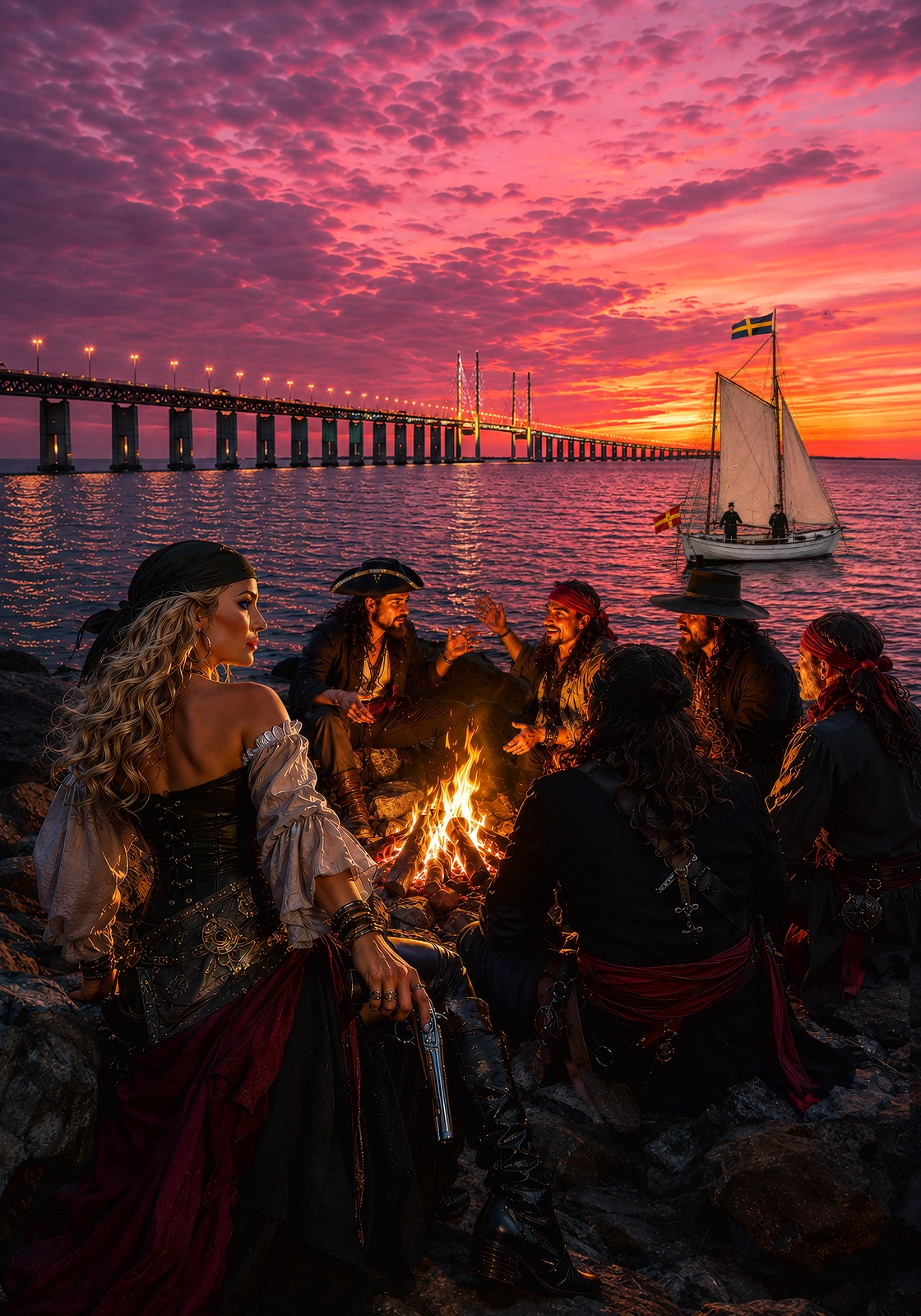
Jörgen Thornberg
KLUHS The Committee for the Rehabilitation of Smuggling and Historical Truth - KLUHS Kommittén för Lurendrejeriets Upp, 2026
Digital
50 x 70 cm
3 200 kr
KLUHS The Committee for the Rehabilitation of Smuggling and Historical Truth - KLUHS Kommittén för Lurendrejeriets Upprättelse och Historiska Sanning
Svensk text på slutet
INTRODUCTION Nothing to declare
Behind the acronym KLUHS lies Kommittén för Lurendrejeriets Upprättelse och Historiska Sanning (The Committee for the Rehabilitation of Smuggling and Historical Truth), formed by long-deceased Scanian smugglers, tricksters, free-riders (friskyttar), and others who believe posterity has treated them unfairly. They do not necessarily deny what they did. However, they argue that it is primarily customs officials, bailiffs, courts, and victorious powers who have been allowed to write their own history. When eternity offers unlimited time to ponder old injustices, it is perhaps only a matter of time before someone forms a committee.
This is the first of three parts about an adventure that began among the stars but soon brought the participants back to Earth, to a place where the line between legal trade and profitable trickery has always been unusually thin: the Öresund Strait and Malmö. Here, over the centuries, kings and governments have tried to determine who and what are allowed to pass, what they must pay for the privilege, and what may be brought into the country at all. On the other side, there have been people who have viewed those same regulations as obstacles that, with a little ingenuity, ought to be bypassed.
To assist, KLUHS has called upon Anita Ekberg, who, after her earthly life, hardly needs any lessons on how the media can shape a persons legacy. She is given an assignment that, at first, sounds simple: to help the committee members polish their tarnished reputations. The only problem is that some of them were actually just as guilty as the customs logs claim, while others may have carried stories that grew, changed, or were rewritten by people with good reason to portray them as villains.
This marks the start of a journey through several hundred years of Scanian and Danish history, from the customs gates of old Malmö and nightly voyages across the Öresund to alcohol smuggling, war, and a period when the most precious cargo was no longer tobacco, coffee, fabric, or spirits, but human beings who had to be smuggled across a guarded border.
In this first part, Anita tries to understand whom she has ended up with, why dead smugglers need a PR consultant, and what KLUHS actually means by historical truth. It soon becomes clear that the dead have plenty of memories, even more opinions, and at least as much difficulty as the living in distinguishing what actually happened from what ought to have happened.
And out on the Öresund, the customs authority lies in wait, keeping an eye on them.
A note before you read further
Any similarities to people, living or dead, may be coincidental, but they need not be. The people in these stories largely existed; the places exist or have existed, and much of what happens is historically documented. Other parts are oral tradition, tall tales, rumours, and things that very well could have happened, or should have, while the rest has received the helping hand that every good story sometimes needs.
Anyone who wishes to know exactly where history ends and the tall tale begins is welcome to try to find out. KLUHS does not intend to help.
The Ballad of KLUHS
Where kings drew lines and customs stood
To guard the Crown and common good,
There always came, by land or sea,
A man who thought: *Why not for me?*
When tollmen watched the harbour light
And honest folk were home at night,
A sail slipped softly through the haze
And found another, darker way.
For laws were laws and kings were kings,
But men had need of other things:
Of coffee, cloth, tobacco, gin,
And ways to get the cargo in.
The customs wrote what they had caught,
The judges wrote what justice thought;
The smuggler, rowing home by night,
Had neither cause nor wish to write.
And thus the records, neat and dry,
Survived to tell us who and why,
While tales beside the fishermen's fire
Grew somewhat better with each liar.
But death, it seems, does not erase
A grievance, nor a smuggler's case.
Beyond the stars, where time stands still,
The old offenders argue still.
So KLUHS was born, with grand intent,
To question where the truth had went;
Not innocence for every knave,
But one more hearing past the grave.
They summoned Anita to the shore,
Who knew what reputations bore,
And asked if history might be made
To show both light and shade.
She heard their boasts, she read each claim,
And warned them truth was not a game:
A lie stays false though well retold,
And guilt stays guilt though centuries old.
But written words, old Pål replied,
Were mostly written by their side.
The Crown had clerks with ink to spare.
We had a boat and weren't there.
The tollmen listened from the Sound,
While ancient rogues sat gathered round;
And somewhere underneath the stars
Old arguments reopened scars.
So who was rogue and who was right?
Who owned the day, who owned the night?
Who wrote the truth, and who the lies?
That rather much depends on eyes.
For history keeps what chance allows,
In court-house books and fishermen's vows;
And where the facts and legends meet,
The truth may walk on smuggler's feet.
So read the files, believe your eyes,
But leave some room for old men's lies.
Where fact gives way and legends start
KLUHS will never draw the chart.
Malmö, August 2026
PROLOGUE A meeting at the worlds end
The message arrived via Starlight, eternitys equivalent to WhatsApp, and Anita Ekberg had initially intended to delete it. The sender identified itself as KLUHS, which could be almost anything, and the subject line Request for consultative participation regarding historical legacy carried the official, bureaucratic Swedish that, during her earthly life, usually meant someone wanted something without daring to say what.
Curiosity won, however. Behind the acronym lay Kommittén för Lurendrejeriets Upprättelse och Historiska Sanning, formed by several long-deceased Scanian smugglers, tricksters, free-riders, and others who felt their legacy had been unnecessarily tarnished. According to the message, history had all too often been written by their opponents, above all customs officials, bailiffs, judges, and representatives of whichever state power currently held the right to determine what was legal.
They did not claim to be innocent. At least, it did not say so explicitly. Their objection was more sophisticated: much of what had been written about them over the centuries, according to KLUHS, consisted of exaggerations, misunderstandings, political propaganda, the victors history, and outright lies that, over time, had been repeated so often they began to be regarded as truths. Therefore, the committee needed someone who knew how public reputation was created, how it could live a life of its own, and how difficult it was, in hindsight, to separate the human being from the figure created by the press, photographers, and historians.
On that point, they had undoubtedly found the right woman.
The meeting was scheduled for today on the beach on the Swedish side of the Öresund Bridge. It was a well-chosen location, for it was classic ground in Malmös smuggling history. For centuries, Lernacken had been a desolate and inaccessible edge of the city, where land met the strait, far from customs officials, streetlights, and curious eyes. Smugglers seeking an obscure spot to bring goods ashore made their way here. For a long time, no one but themselves was interested in the area. In the 1900s, an occasional birdwatcher might visit, but during the daytime, the smugglers were off duty. Only when the Öresund Bridge was built did everything change. The place that once lent itself to secret landings became the anchorage for the fixed link between Sweden and Denmark. Across the same waters where smugglers once crossed with their contraband, traffic now flows freely between the countries.
Anita accepted the assignment via Starlight and arrived on time. A wormhole from her star, Centauri, opened near Luftkastellet, which sat just above where they met.
Down on the beach, a fire was burning. Around it sat half a dozen people whose clothes revealed they came from entirely different centuries, but such things drew little attention in eternity. There, time was no longer a straight path but dark matter that one could move through freely, even if certain rules bound time travel. The past could be visited but not changed, and time-travellers could therefore journey through time without any possibility of redoing it.
It was precisely this that made KLUHS necessary. These old rascals could not alter what had happened, but they hoped to address their legacies.
The Executive Committee
The full committee was far larger than the gathering at Luftkastellet. KLUHS had members from many centuries, and a full presentation of them would have to wait until their history had been told. For the meeting with Anita, an executive group was sent to represent various aspects of Scanian border traffics less-than-law-abiding history.
Johanna Persson was from the great era of alcohol smuggling in the 1900s. This woman had no need to deny what she had been up to, but she had even stronger objections to a historical narrative in which men were portrayed as daring smuggling kings. By contrast, women with the same business acumen had to settle for less flattering descriptions.
From late 17th-century Malmö, Jöran Holst and David Nehrman had presented themselves. Both had documented pasts that made full rehabilitation difficult. Holst had, among other things, attempted to resolve a customs dispute at Södertull by getting a soldier to slap the customs attendant a few times as his wagon passed, after which he defended himself by saying he had been so drunk he did not remember what happened. Nehrman had an even more concrete problem with posterity: ten rolls of tobacco hidden in a carriage cushion carried by a boy, and, when the customs clerk discovered them, a failed attempt to influence him with a carolin coin. They would both return in the history Anita had been tasked to review, and neither could reasonably hope that unpleasant court documents would vanish just because three hundred years had passed.
Lille Mads (Little Mads) posed an entirely different problem. He was among the free-riders (friskyttar) of the Scanian War and left a legacy in which the very choice of words revealed which side was telling the story. To the Swedish authorities, men like Lille Mads had become snapphanar (insurgents/bandits), a term loaded with connotations of robbers and bandits; from the other side, the same man could be described as a Danish free-rider or resistance fighter in a province that had only a few decades earlier belonged to Denmark. KLUHSs task was not to transform all snapphanar into romantic freedom fighters, but to investigate when posterity had inherited the enemys labels, forgotten their origins, and ultimately what they represented freedom.
The most colourful representative sat closest to the fire and was named Pål Raus, though no one, least of all himself, attached much importance to whether it had once been his real name. He came from Råå. The name Pål belonged to the old trickster milieu, and Raus anchored him in the place he felt he belonged. In eternity, most knew him as Rååkungen (The King of Råå). And Pål had a lot to carry.
The King of Råå
In 18th-century Råå, trickery was not an occasional sideline for a fisherman who happened to find room for a few bottles under the nets. The business was organised, financed, and conducted using boats built for the purposelarge, double-ended rowboats (snipor) with crews of ten, twelve, fourteen, or sixteen men, strong enough to outrow the customs boats and with sufficient cargo capacity to make a night on the strait economically viable.
Liquor was an obvious commodity, but other goods could also be profitable to carry across the strait. For those who lived off trade, the distinction between commerce and smuggling depended largely on who asked the question. The state saw dutiable goods brought ashore without payment. In Råå, people saw goods that could be bought cheaply on one side of the strait and sold at a higher price on the other, boats that had to be built, crews that had to be paid, and families that had to be supported.
Pål therefore regarded the entire discussion about his criminal past with a certain contempt.
In the history books, I am labelled a criminal. In Råå, I was a businessman who upheld justice.
Anita looked at him.
I heard customs shot you.
Occupational hazard.
That sufficed as a summary of the King of Råås attitude to the justice system. Behind the retort, however, lay a real story. On the night of July 19, 1870, Råås famous sixteen-man boat was chased by customs at Rydebäck. The boat was fast and difficult to catch, but the chase ended with a pistol shot that struck the helmsman. In the historical sources, the man had remained anonymous; now KLUHS felt it could reveal that it was Pål who stood at the rudder and took the bullet.
Customs seized the boat, which should have been the end of the story, but the residents of Råå bought it back as soon as the opportunity arose and continued their business. Two years later, the same boat was seized again, this time carrying a significant cargo of spirits, and the authorities had obviously learned from experience. To ensure that Råå would not buy back the problem yet again, the boat was sawn into three pieces.
Pål could accept the pistol shot as a professional risk. The destruction of an excellent boat was something he still, after more than a century and a half, found harder to forgive. An atrocity, he called it.
Pål was not finished, however. If Anita wanted to understand why KLUHS had been formed at all, it was not enough, according to him, to read customs logs and verdicts. She also had to know the stories that had never reached the archives but lived on because people continued to tell them.
Take Supjeppe, he said.
Anita raised her gaze.
Who?
Pål smiled.
A colleague from Malmö. He once buried himself.
That, of course, required an explanation.
The Burial at Citadellskajen: Supjeppes Last Coup
Surely you remember the ration book (motboken)? Pål asked.
Anita did, of course. She was born in 1931 and had reached adulthood before the ration book system vanished in 1955, but Pål still felt a reminder was in order, not least because almost no living person had any adult memories of it. The ration book was part of the so-called Bratt System, named after Doctor Ivan Bratt, and in practice served as a personal rationing log for purchasing spirits. The system was introduced throughout Sweden in 1919, and the allowance was determined by factors such as gender, age, income, and social standing. An adult man with stable finances could buy a few litres of liquor a month. At the same time, workers might receive significantly less, and young people and women were often left entirely without an allowance of their own.
For smugglers, the system was effectively a state-guaranteed market. In Malmö, conditions were particularly favourable, since Denmark lay on the other side of the Öresund and did not have the personal rationing of the Swedish system. There, spirits were heavily taxed, and alcohol sales were regulated, but adult buyers did not need their consumption approved or registered in a personal ration book. The legislators in Stockholm had thus managed to combine two of trickerys most vital prerequisites: a sought-after commodity whose availability was restricted by the state, and a nearby location where the same commodity could be purchased without corresponding rationing.
Those were good times, Pål remarked.
For you, yes.
That is what I meant.
Pål belonged to another century, but as a time-traveller, he had no problem with chronology. The story he now intended to tell unfolded in the autumn of 1922, when the ration book was still relatively new and a fisherman known as Supjeppe pulled off one of the more imaginative smuggling coups in Malmös history.
The hub of this shadow trade was the wood-tarred fishing shacks Fiskehoddorna which, at this time, were lined up along Citadellskajen. The sea lay just outside the door; Kockums mechanical workshop had not yet, through extensive landfill, pushed the coastline further out, and here Malmös fishing population gatheredpeople who knew every shallow, current, and fog bank in the strait and who did not always think the state had business with everything carried across it.
Supjeppe had been a fisherman, but his true expertise lay in navigating past the customs patrol boats when the fog lay thick. It often did over the Öresund, so spring and autumn were therefore good times for those who preferred poor visibility.
In the autumn of 1922, Supjeppe had coordinated an unusually large coup. A German mothership had unloaded its illegal cargo on a desolate stretch of beach at Lernacken roughly where Anita and KLUHS were now sitting around their fire and during the night, the goods had been rowed in shifts to the fishing shacks at Citadellskajen.
The customs authorities in Malmö, however, had caught wind that something was afoot. The harbour and wharves were sealed off, and customs officers began methodically searching shack after shack.
The situation was acute. If the liquor was found, prison awaited Supjeppe and his men, while a considerable portion of Malmös thirsty population risked a dry Christmas. It was then that Supjeppe orchestrated his next move.
Right in the middle of the customs raid along Citadellskajen, the doors of one of the larger fishing shacks opened, and a dark oak coffin was carried out on the shoulders of six solemnly dressed fishermen. Behind them came fishermens wives in shawls, children, and local dockworkers with hymnals in hand. Through the procession spread the sad news that one of the shack communitys better-known figures, a man weighing close to 120 kilograms, had suddenly passed away and was now to be taken to Saint Peters Church (Sankt Petri kyrka) for his final rest.
The customs men on Citadellskajen did what decent people were expected to do when a funeral procession passed. They removed their uniform caps and let the procession through. The coffin was heavy, but that hardly aroused suspicion. The deceased had been a massive fellow, nearly 120 kilograms, about the same as a hefty beer barrel, a comparison that was hardly foreign to the men on Citadellskajen. The six bearers continued over Hovrättsbron, followed Norra Vallgatan eastward, crossed Adelgatan, and approached Sankt Petri, while the mourners followed behind with the solemnity the situation required. Supjeppe had counted on customs and police to let the procession pass, out of sheer respect for the dead. He had almost counted right.
If it had not been for a single, foolishly corked bottle.
The chief of customs in Malmö had given chase and caught up with the funeral procession as it neared the church. Just as he was about to let it proceed, he detected, right in the middle of the funeral hymn, an unmistakable scent of fusel oil. Somewhere inside the coffin, the liquor had begun to seep through a faulty cork. He stepped forward and blocked the way.
An outcry erupted among the mourners. The fishermens wives expressed their horror; the bearers asserted the deceaseds right to a dignified final journey; and someone seemed to think the customs chief ought to be ashamed before both God and man, but the man stood his ground. The coffin was to be opened.
Before the assembled congregation, the fishermen were forced to prise open the oak lid. No dead Scanian lay inside. Instead, the coffin was packed with 95 75-centilitre bottles of foreign whisky and spirits, carefully embedded in straw to keep them still and, above all, to prevent them from clinking during the deceaseds journey through Malmö.
The moment the lid flew off, the funeral descended into farce. The six pallbearers dropped the coffin and fled in different directions as the customs officers gave chase. At the same time, the funeral procession was struck by a strange series of accidents. Fishermens wives fainted into the arms of the customs officers, children dropped their hymnals and stumbled into the path of the pursuers, falling flat on the street, and other participants suddenly found it hard to understand what the customs officers were asking. If an officer asked which way a fleeing pallbearer had run, all witnesses pointed in the exact opposite direction.
While the authorities tried to restore order, handcarts emerged from the surrounding streets. With practised hands, the bottles were unloaded from the coffin. They vanished in different directions into the city, and when customs reinforcements finally arrived, little remained of the great victory. On the square outside Sankt Petri lay an empty, badly battered oak coffin, bits of straw, and some customs officers who had every reason to wonder how 95 bottles could vanish right before their eyes.
Supjeppe himself had, of course, also vanished. Later that same evening, he sat in a smoky speakeasy not far from the harbour, very much alive and toasting with the whisky the state had thought it was burying a few hours earlier. People are honest with their smugglers, for without them, the drought would be severe. Supjeppe was paid for every bottle, plus a little tip from a new fifty-year-old who had saved his party.
Anita laughed.
And did that really happen?
Pål looked at her across the fire.
It is told.
That was not what I asked.
No, but it is the answer you get.
It was also through Pål that Anita began to understand what KLUHS actually wanted to achieve. He did not wish to be acquitted of trickery and did not even deny the activity, but questioned who held the exclusive right to peoples legacies. Posterity classified him as a simple smuggler, while those around him regarded the same activity as an accepted livelihood, even as necessary for the communitys survival. Both assertions could be true at the same time, but neither side should hold a monopoly on the writing of history.
Uninvited Company
In the borderland between history, memory, and tall tales, there was a feasible assignment. But they were not alone. On the water, the enemy was sloshing around. Pål pointed into the darkness. Only then did Anita notice the sail.
In front of the illuminated bridge, where all sorts of vehicles streamed between Sweden and Denmark, lay a small, open customs boat, as if someone had accidentally dropped a piece of the 1800s into the middle of the present day. The lapstrake boat bobbed a couple of hundred metres off the beach. On board stood two uniformed men, clearly paying more attention to the gathering around the fire than to the traffic on the strait.
KLUHS had not invited them, but among the stars, rumours travel faster than light. Jakob Barckman and Peter Reinhardt had come anyway.
Barckman represented the high customs administration and the Swedish state, which, after the takeover of Scania, built up its customs system in the formerly Danish provinces. Reinhardt was a far more troublesome opponent for the people on the beach, since he could not be dismissed as a bureaucrat who knew nothing of the tricksters world. Quite the contrary! He had come from that very environment himself and knew the methods before he switched sides, entered the customs service, and became one of the hardest-nosed men in the Scanian coast guard. In those days, the battle was over smuggled goods, but now it concerned the legacy, a far more valuable commodity. When smugglers tried to explain that the customs officers did not understand how the business worked, Reinhardt could stand straight in his boat. He knew. That, however, is not the same as him being right.
Pål Raus did not appreciate the presence, but it was unavoidable. If KLUHS intended to examine the history left by the states representatives, one could hardly forbid the opposing party from attending as an observer. In eternity, free speech prevailed after all, and among the stars there was no higher power to rule and dictate terms. But free speech did not mean that one story was just as true as another. Both must endure examination, questioning, and testing against what could actually be verified. It was not the truth that KLUHS wanted to influence, but the image of the past, where only one sides version had been allowed to stand unchallenged for far too long.
Barckman and Reinhardt therefore remained out on the water, at a distance that clearly marked they did not belong to the gathering, but close enough so that no one around the fire would forget that the opposing party also has a story.
Anita began earnestly reviewing the material she had received via Starlight. What could be rehabilitated? What could be modified or nuanced? What would one have to live with in eternity?
The problems soon manifested. KLUHS had chosen a grand word when speaking of rehabilitation, but several of its members had left behind such concrete traces in customs and court records that it would take more than good PR to turn them into innocent victims. They had smuggled. Some had tried to bribe customs officers; others had hidden goods, used accomplices, or resorted to violence when the authorities came too close. Later generations had made fortunes in the alcohol trade, and the armed men who, during the Scanian War, were given the collective label snapphanar encompassed both organised free-riders and people whose activities were considerably harder to lend any romantic aura.
To deny all this would only add a new lie to the old ones. But it did not mean that the historical narrative that had grown up around these people was automatically correct simply because some of their crimes could be proven. A court record could show that a Malmö citizen had tried to smuggle tobacco through Södertull; it could not, on its own, explain the world in which the action took place. A Swedish military report could call a Scanian opponent a snapphane without thereby conclusively determining whether the man was a robber, a Danish free-rider, or both. A customs officer could, with full right, report that he had seized a smuggling boat. At the same time, the people in the fishing village, with equal sincerity, could perceive the same intervention as the state depriving them of their livelihood.
History also changed depending on who survived to write it, who won the war, and which archives were preserved. The authorities left behind logs, verdicts, and reports because it was their duty to do so. The trickster from Råå, or his colleagues in Malmö, who rowed across the Öresund in the middle of the night, had no reason to compose a detailed account of the days criminal activities for the benefit of future historians upon returning home. In short, smugglers kept no logbooks.
There lay KLUHSs strongest argument. Not that the records were false because the customs officers had written them, but that the written word held no monopoly on the truth. A record could be true, incomplete, biased, or even forged, just as an oral tale could be true or deceitful. The oral tradition that survived among smugglers must therefore be tested in the same way as official documents against testimonies, other sources, material traces, and the historical context in which the story arose. One could confirm or refute the other.
Even more deceptive was the concept of justice, since injustice could be written into law. He who stole so that his starving children would survive did not thereby gain a legal right to steal, but he who contented himself with merely noting the crime had not told the whole story either. The same applied to the smuggler. He who carried goods across the Öresund solely for personal gain could hardly demand eternitys forgiveness merely because the customs officers were unpopular, but neither could kings, states, and authorities be automatically acquitted because their trade barriers, monopolies, and tariffs had been legally enacted.
KLUHSs task, therefore, became not to determine who was innocent but to restore perspective. The deed must be judged alongside the world that created it.
Anita had lived long enough with her public image to understand the difference. A photograph could be authentic yet give a false impression of the person in it, especially if it was the only photograph posterity was allowed to see. A correct quote could change meaning when everything said before and after was lost. In the same way, an old verdict could be completely accurate yet become misleading if used as the condemned persons sole legacy.
Therefore, she could help KLUHS, but not in the way some of its more optimistic members had imagined. What was true would be allowed to remain so. What could not be verified would not be turned into fact merely because it suited the committees purpose. On the other hand, myths, political propaganda, exaggerations, and information repeated without anyone knowing its origin would be scrutinised. When the opponents version had become historical truth solely because the opponent had held the pen, that too would be brought to light.
Out on the strait, the customs boat bobbed. The customs officers must also be scrutinised. In eternity, the same rule applied to both sides: let those who deserve judgment be judged.
KLUHS possessed an advantage no historical research commission among the living could match: several of its members had been present when what was to be investigated occurred. At the same time, this was almost useless as evidence. Eternity allowed time travel but not the falsification of history. What had once occurred stood firm. Jöran Holst could return to Södertull and see himself make a fool of himself, but he could not knock the glass from his younger selfs hand and thereby avert the drunkenness that would later form part of his defence. Pål could see the customs officer raise the pistol but not move a metre to the side so that the bullet missed. No one could warn, stop, save, or correct.
Contact with the living was even more limited. A Time-traveller could intrude into someones dream and leave behind an image, a name, or a thought that the dreamer might not even recognise as having come from elsewhere upon waking. It could be enough for a researcher to suddenly begin pondering an old piece of information, or for someone to feel the impulse to search an archive that no one had opened in decades.
And then there were the papers. Someone from eternity might accidentally leave behind a letter, a map, a note, or a transcript on the wrong side of time. Not a document that altered the past, but one that could already have existed and that pointed towards a direction in which the living themselves could continue the search. That sort of document was never definitive proof. It was merely a clue, a piece of circumstantial evidence, in customs own language. The rest, the researchers had to do themselves.
That was also the boundary Anita set for her assignment. KLUHS was welcome to hope for a better legacy, but the committee would not be allowed to create the history it desired. A tall tale was welcome to remain a tall tale and could sometimes say more about an event than a log record, but it could not be assigned an archive number it had never possessed.
This was received with varying enthusiasm around the fire. Pål Raus was primarily concerned that some of the best stories might prove untrue. Anita saw no major problem with that. A good tall tale did not cease to be good simply because one acknowledged it was a tall tale.
Thus, the assignment was possible, not to clear the smugglers in absurdum, but to reopen the files.
The fire had died down, and the traffic over the bridge thinned out when Anita received the first dossier in front of her. It was much thicker than she had expected and contained traces of several hundred years of tug-of-war between those who decided what was allowed to pass a border and those who discovered that money could be made by passing it anyway. On the cover, it read:
MALMÖ THE CUSTOMS WAR
There were Södertull and Lilla Tullen, tricksters and merchants, tobacco hidden in wagons and carriage cushions, customs chases on the Öresund, alcohol traffic, war, refugees, and finally the modern border, where the same old conflict had shifted from horse-drawn carts to trucks, containers, postal packages, and courier shipments. Some stories were documented down to the smallest detail; others had grown during the telling; and some were still waiting for someone to determine where the line between history and tall tale lay.
Anita laid her hand on the dossier and looked out towards the strait. Out there, Barckman and Reinhardt stayed in their customs boat, while Pål Raus and the others gathered around the dying fire. KLUHS had called her to Lernacken to polish up the smugglers tarnished reputations. Whether it was truly possible remained to be seen.
She opened the file.
Introduktion
Bakom akronymen KLUHS döljer sig Kommittén för Lurendrejeriets Upprättelse och Historiska Sanning, bildad av sedan länge avlidna skånska smugglare, lurendrejare, friskyttar och andra personer som anser att eftervärlden har behandlat dem orättvist. De förnekar inte nödvändigtvis vad de gjorde, men invänder mot att det framför allt är tullare, fogdar, domstolar och segrande makter som har fått skriva historien om dem. När evigheten dessutom erbjuder obegränsad tid för att grubbla över gamla oförrätter är det kanske bara en tidsfråga innan någon bildar en kommitté.
Detta är den första delen av tre om ett äventyr som började bland stjärnorna men snart förde deltagarna tillbaka till jorden och till en plats där gränsen mellan laglig handel och lönande lurendrejeri alltid har varit ovanligt smal: Öresund och Malmö. Här har kungar och regeringar under århundradena försökt bestämma vilka människor och varor som får passera, vad de ska betala för nöjet och vad som över huvud taget får föras in i landet. På andra sidan har det funnits människor som betraktat samma bestämmelser som hinder som, med lite uppfinningsrikedom, borde gå att ta sig runt.
Till sin hjälp har KLUHS kallat Anita Ekberg, som efter sitt jordiska liv knappast behöver någon undervisning i hur ett eftermäle kan skapas av andra. Hon får ett uppdrag som till en början låter enkelt: att hjälpa kommitténs ledamöter att putsa upp sitt skamfilade rykte. Problemet är bara att några av dem faktiskt var precis så skyldiga som tullprotokollen påstår, medan andra kan ha fått bära på historier som vuxit, förändrats eller skrivits om av människor som hade goda skäl att framställa dem som skurkar.
Det blir början på en resa genom flera hundra år av skånsk och dansk historia, från tullportarna vid det gamla Malmö och nattliga färder över Öresund till spritsmuggling, krig och en tid då den dyrbaraste lasten inte längre bestod av tobak, kaffe, tyg eller brännvin, utan av människor som måste föras över en bevakad gräns.
I den här första delen försöker Anita förstå vilka hon har hamnat hos, varför döda smugglare behöver en PR-konsult och vad KLUHS egentligen menar med historisk sanning. Det visar sig snart att de döda har gott om minnen, ännu fler åsikter och åtminstone lika svårt som de levande att skilja mellan vad som verkligen hände och vad som borde ha hänt.
Och ute på Öresund ligger tullen och håller ett öga på dem.
En anmärkning innan du läser vidare
Alla likheter med nu levande eller döda personer kan vara en tillfällighet, men behöver inte vara det. Människorna i dessa berättelser har i stor utsträckning funnits; platserna existerar eller har gjort det och åtskilligt av det som händer är historiskt belagt. Annat är muntlig tradition, skrönor, rykten och sådant som mycket väl kan ha hänt, eller borde ha gjort det, medan resten har fått den hjälp på traven som varje god historia ibland behöver.
Den som önskar veta exakt var historien slutar och skrönan börjar får gärna försöka ta reda på det.
KLUHS tänker inte hjälpa till.
PROLOG Ett sammanträde vid världens ände
Meddelandet kom via Starlight, evighetens motsvarighet till WhatsApp, och Anita Ekberg hade först tänkt radera det. Avsändaren kallade sig KLUHS, vilket kunde vara nästan vad som helst, och ärenderaden Begäran om konsultativ medverkan rörande historiskt eftermäle hade den sortens myndighetssvenska som under hennes jordiska liv brukade innebära att någon ville ha någonting utan att våga berätta vad.
Nyfikenheten vann emellertid. Bakom akronymen dolde sig Kommittén för Lurendrejeriets Upprättelse och Historiska Sanning, bildad av ett antal sedan länge avlidna skånska smugglare, lurendrejare, friskyttar och andra personer som ansåg att deras eftermäle hade blivit onödigt skamfilat. Enligt meddelandet hade historien alltför ofta skrivits av deras motståndare, framför allt tullare, fogdar, domare och representanter för den statsmakt som för tillfället hade rätt att bestämma vad som var lagligt.
De påstod inte att de var oskyldiga. Åtminstone stod det inte uttryckligen så. Deras invändning var mera sofistikerad: mycket av det som genom seklerna skrivits om dem bestod, enligt KLUHS, av överdrifter, missförstånd, politisk propaganda, segrarnas historieskrivning och rena lögner som med tiden upprepats så ofta att de börjat betraktas som sanningar. Därför behövde kommittén någon som visste hur ett offentligt rykte uppstod, hur det kunde leva sitt eget liv och hur svårt det var att i efterhand skilja människan från den figur som press, fotografer och historieskrivare skapat.
På den punkten hade de onekligen hittat rätt kvinna.
Sammanträdet skulle hållas i nutid på stranden vid Öresundsbrons svenska fäste. Det var en väl vald plats, för det var klassisk mark i Malmös smuggelhistoria. Lernacken hade under århundraden varit en ödslig och svårtillgänglig utkant av staden, där land mötte sund långt från tullare, gatlyktor och nyfikna ögon. Hit sökte sig smugglare som behövde en undanskymd plats för att föra varor i land. Länge var det ingen annan än de själva som var intresserad av området. På 1900-talet var det en och annan fågelskådare, men under dagtid var smugglarna lediga. Först när Öresundsbron byggdes förändrades allt. Platsen som en gång lämpat sig för hemliga landstigningar blev fästet för den fasta förbindelsen mellan Sverige och Danmark. Över samma vatten där smugglare en gång tog sig över med sitt kontraband strömmade nu trafiken fritt mellan länderna.
Anita accepterade uppdraget via Starlight och infann sig på utsatt tid. Ett maskhål från hennes stjärna, Kentauren, mynnade ut vid Luftkastellet, som låg alldeles ovanför där de träffades.
Nere vid stranden brann en eld. Runt den satt ett halvdussin människor vars kläder avslöjade att de kom från helt olika århundraden, men sådant väckte ingen större uppmärksamhet i evigheten. Där var tiden inte längre en rak väg utan svart materia som man fritt kunde röra sig genom, även om resan i tiden var omgiven av vissa regler. Det förflutna kunde besökas men inte förändras, och tidsresenärer kunde därför resa i tiden utan möjlighet att göra om den.
Det var just detta som gjorde KLUHS nödvändigt. Dessa gamla kanaljer kunde inte ändra det som skett, men hoppades kunna göra något åt sina eftermälen.
Exekutivkommittén
Den fullständiga kommittén var betydligt större än det sällskap som samlats vid Luftkastellet. KLUHS hade ledamöter från många århundraden och en fullständig presentation av dem fick vänta tills deras historia hade berättats. Till mötet med Anita hade man skickat en exekutiv grupp som representerade olika delar av den skånska gränstrafikens mindre laglydiga historia.
Där fanns Johanna Persson från 1900-talets stora spritsmuggling, en kvinna som inte hade något större behov av att förneka vad hon sysslat med, men desto starkare invändningar mot en historieskrivning där männen gärna framställdes som djärva smugglarkungar medan kvinnor med samma affärssinne fick nöja sig med mindre smickrande beteckningar.
Från det sena 1600-talets Malmö hade Jöran Holst och David Nehrman infunnit sig. Båda hade den sortens dokumenterade förflutna som gjorde en fullständig rehabilitering svår. Holst hade bland annat försökt lösa ett tullproblem vid Södertull genom att få en soldat att ge tullbetjänten ett par örfilar medan hans vagn passerade, varefter han försvarade sig med att han varit så berusad att han inte mindes vad som hänt. Nehrman hade ett ännu mera konkret problem med eftervärlden: tio tobaksrullar gömda i en åkdyna som bars av en pojke och, när tullskrivaren upptäckte dem, ett misslyckat försök att påverka honom med en carolin. De skulle båda återkomma i den historia som Anita fått i uppdrag att granska, och ingen av dem kunde rimligen hoppas att obehagliga domstolshandlingar skulle försvinna bara därför att trehundra år hade gått.
Lille Mads representerade ett helt annat problem. Han tillhörde det skånska krigets friskyttar och bar på ett eftermäle där själva ordvalet avslöjade vilken sida som berättade historien. För den svenska överheten hade män som Lille Mads blivit snapphanar, ett ord laddat med föreställningar om rövare och banditer; från den andra sidan kunde samma man beskrivas som dansk friskytt eller motståndsman i ett landskap som bara några årtionden tidigare hade tillhört Danmark. KLUHS uppgift var inte att förvandla alla snapphanar till romantiska frihetskämpar, utan att undersöka när eftervärlden hade ärvt fiendens beteckningar och därefter glömt varifrån de kom och vad de ytterst representerade frihet.
Den färgstarkaste representanten satt närmast elden och hette Pål Raus, fast ingen, allra minst han själv, lade någon större vikt vid om detta en gång hade varit hans riktiga namn. Han kom från Råå. Namnet Pål hörde hemma i den gamla lurendrejarmiljön och Raus förankrade honom där han ansåg sig höra hemma. I evigheten kände de flesta honom som Rååkungen. Och Pål hade mycket att bära.
Rååkungen
På 1800-talets Råå var lurendrejeri inte någon tillfällig bisyssla för en fiskare som råkat få plats med några flaskor under näten. Verksamheten organiserades, finansierades och bedrevs med båtar byggda för ändamålet, stora snipor med besättningar på tio, tolv, fjorton eller sexton man, starka nog att ro ifrån tullens båtar och med tillräcklig lastförmåga för att göra en natt på sundet ekonomiskt intressant.
Brännvin var en självklar vara, men det fanns annat som kunde löna sig att föra över sundet, och för människorna som levde av verksamheten var skillnaden mellan handel och smuggling huvudsakligen beroende på vem som ställde frågan. Staten såg tullpliktiga varor som fördes iland utan avgift. På Råå såg man varor som kunde köpas billigt på ena sidan sundet och säljas dyrare på den andra, båtar som måste byggas, besättningar som skulle avlönas och familjer som skulle försörjas.
Pål betraktade därför hela diskussionen om hans kriminella förflutna med ett visst förakt.
I historieböckerna kallas jag kriminell. Hemma på Råå var jag en näringsidkare som följde rättvisans lag.
Anita såg på honom.
Jag har hört att du blev skjuten av tullen.
Yrkesskada.
Det räckte som en sammanfattning av Rååkungens inställning till rättsväsendet.
Bakom repliken låg emellertid en verklig historia. Natten till den 19 juli 1870 hade Råås berömda sextonmannasnipa jagats av tullen vid Rydebäck. Snipan var snabb och svår att hinna upp, men jakten slutade med ett pistolskott som träffade styrmannen. I de historiska källorna hade mannen förblivit anonym; nu tyckte KLUHS att det kunde avslöjas att det var Pål som stod vid rodret och som fick kulan i sig.
Tullen tog snipan, vilket borde ha varit slutet på historien, men Rååborna köpte helt enkelt tillbaka den beslagtagna båten så fort tillfälle gavs och fortsatte verksamheten. Två år senare blev samma snipa åter tagen, den gången med en betydande spritlast ombord, och myndigheterna hade uppenbarligen lärt sig av erfarenheten. För att vara säkra på att Råå inte ännu en gång skulle återköpa problemet sågades båten i tre delar.
Pål kunde acceptera pistolskottet som en yrkesrisk. Förstörelsen av en utmärkt båt hade han fortfarande, efter mer än ett och ett halvt århundrade, svårare att förlåta. Nidingsdåd, kallade han det.
Pål var emellertid inte färdig. Om Anita ville förstå varför KLUHS över huvud taget hade bildats räckte det enligt honom inte att läsa tullprotokoll och domar. Hon måste också känna till de historier som aldrig hade nått arkiven, men som har levt vidare därför att människor har fortsatt att berätta dem.
Ta Supjeppe, sade han.
Anita höjde blicken.
Vem?
Pål log.
En kollega från Malmö. Han begravde sig själv en gång.
Det krävde naturligtvis en förklaring.
Begravningen på Citadellskajen: Supjeppes sista kupp
Du minns väl motboken? frågade Pål.
Det gjorde Anita naturligtvis. Hon var född 1931 och hade hunnit bli vuxen innan motboken försvann 1955, men Pål ansåg ändå att en påminnelse kunde vara på sin plats, inte minst med tanke på att nästan ingen levande människa längre hade några egna vuxenminnen av systemet. Motboken var en del av det så kallade Brattsystemet, uppkallat efter läkaren Ivan Bratt, och fungerade i praktiken som en personlig ransoneringsbok för inköp av sprit. Systemet infördes i hela Sverige 1919 och tilldelningen bestämdes av faktorer som kön, ålder, inkomst och social ställning. En vuxen man med ordnad ekonomi kunde få köpa några liter sprit i månaden, medan arbetare kunde få betydligt mindre och unga människor och kvinnor ofta blev helt utan egen tilldelning.
För smugglarna var systemet närmast en statligt garanterad marknad. I Malmö var förutsättningarna särskilt gynnsamma eftersom Danmark låg på andra sidan Öresund och saknade den svenska motbokens personliga ransonering. Där var spriten visserligen hårt beskattad och alkoholförsäljningen reglerad, men den vuxne köparen behövde inte få sin konsumtion godkänd och registrerad i en personlig motbok. Lagstiftarna i Stockholm hade alltså lyckats förena två av lurendrejeriets viktigaste förutsättningar: en eftertraktad vara som staten begränsade tillgången till och en plats alldeles i närheten där samma vara kunde köpas utan motsvarande ransonering.
Det var goda tider, konstaterade Pål.
För er, ja.
Det var det jag menade.
Pål hörde visserligen hemma i ett annat århundrade, men som tidsresenär hade han inga problem med kronologin. Historien han nu tänkte berätta hade utspelat sig hösten 1922, när motboken fortfarande var förhållandevis ny och en fiskare som kallades Supjeppe genomförde en av de mera fantasifulla smuggelkupperna i Malmös historia.
Navet i skugghandeln var de trätjärade fiskebodarna Fiskehoddorna som vid den här tiden låg uppradade längs Citadellskajen. Havet låg alldeles utanför knuten; Kockums mekaniska verkstad hade ännu inte, genom de stora utfyllnaderna, flyttat kustlinjen längre ut, och här höll Malmös fiskarbefolkning till, människor som kände varje grund, ström och dimbank i sundet och som inte alltid ansåg att staten hade med allt som fraktades över det att göra.
Supjeppe var formellt fiskare, men hans verkliga expertis låg i att navigera förbi tullens patrullbåtar när dimman låg tät. Det gjorde den ofta över Öresund, och vår och höst var därför goda tider för den som föredrog dålig sikt.
Hösten 1922 hade Supjeppe samordnat en ovanligt stor kupp. Ett tyskt moderskepp hade lossat sin illegala last på en öde strandremsa vid Lernacken alltså ungefär där Anita och KLUHS nu satt kring sin eld och under natten hade varorna i omgångar rotts in till Fiskehoddorna vid Citadellskajen. Tullmyndigheterna i Malmö hade emellertid fått nys om att något var på gång. Hamnen och kajerna spärrades av och tulltjänstemän började metodiskt söka igenom bod efter bod.
Läget var akut. Om spriten hittades väntade fängelse för Supjeppe och hans män, samtidigt som en ansenlig del av Malmös törstiga befolkning riskerade att gå en nykter jul till mötes.
Det var då Supjeppe iscensatte sitt nästa drag.
Mitt under tullens razzia längs Citadellskajen öppnades dörrarna till en av de större Fiskehoddorna och en mörk ekkista bars ut på axlarna av sex högtidligt klädda fiskare. Bakom dem följde fiskarhustrur i sjaletter, barn och lokala hamnarbetare med psalmböcker i händerna, och genom följet spreds den sorgliga underrättelsen att en av Fiskehoddornas mera kända profiler, en man på närmare 120 kilo, plötsligt hade avlidit och nu skulle föras till Sankt Petri kyrka för sin sista vila.
Tullmännen på Citadellskajen gjorde vad anständiga människor förväntades göra när ett begravningsfölje passerade. De tog av sig skärmmössorna och släppte fram processionen.
Kistan var tung, men det väckte knappast några misstankar. Den avlidne hade varit en väldig karl på närmare 120 kilo och vägde ungefär som ett rejält ölfat, en jämförelse som knappast var främmande för männen på Citadellskajen. De sex bärarna fortsatte över Hovrättsbron, följde Norra Vallgatan österut, korsade Adelgatan och närmade sig Sankt Petri, medan de sörjande följde efter med den högtidlighet som situationen krävde. Supjeppe hade räknat med att tull och polis, av ren respekt för den döde, skulle låta processionen passera.
Han hade nästan räknat rätt. Om det inte hade varit för en enda illa korkad flaska.
Tullchefen i Malmö hade emellertid tagit upp jakten och hann ifatt begravningsföljet när det närmade sig kyrkan. Just som han skulle låta processionen fortsätta, tyckte han sig, mitt under den pågående dödspsalmen, känna en omisskännlig doft av finkel. Någonstans inne i kistan hade spriten börjat leta sig genom en dålig kork. Han steg fram och spärrade vägen.
Ett ramaskri bröt ut bland de sörjande. Fiskarhustrurna förfasade sig, bärarna hävdade den dödes rätt till en värdig sista färd och någon tycks ha ansett att tullchefen borde skämmas inför både Gud och människan, men mannen stod på sig. Kistan skulle öppnas.
Inför den församlade menigheten tvingades fiskarna bända upp eklocket.
Där låg ingen död skåning.
I stället var kistan packad med 95 sjuttiofemmor, utländsk whisky och brännvin, omsorgsfullt inbäddade i halm så att flaskorna skulle ligga stilla och framför allt inte klirra under den dödes färd genom Malmö.
I samma ögonblick som locket flög av övergick begravningen i fars. De sex kistbärarna släppte kistan och sprang åt olika håll, medan tulltjänstemännen försökte sätta efter dem. Samtidigt drabbades begravningsföljet av en märklig serie olyckshändelser. Fiskarhustrur svimmade i armarna på tullarna, barn tappade sina psalmböcker och råkade snubbla framför förföljarna så att de föll pladask på gatan, och andra deltagare fick plötsligt stora svårigheter att förstå vad tulltjänstemännen frågade om. Frågade en tullare åt vilket håll en flyende kistbärare hade sprungit då pekade samtliga vittnen mangrant åt motsatt håll.
Medan myndigheterna försökte återställa ordningen dök handkärror upp från de omgivande gatorna. Med vana händer langades flaskorna ur kistan och försvann åt olika håll i staden, och när tullens förstärkning slutligen anlände, återstod inte mycket av den stora segern. På platsen utanför Sankt Petri låg en tom och illa medfaren ekkista, lite halm och ett antal tulltjänstemän som hade all anledning att fundera över hur 95 flaskor kunde försvinna mitt framför deras ögon.
Supjeppe själv hade naturligtvis också försvunnit.
Senare samma kväll satt han på ett rökigt lönnkrogshak inte långt från hamnen, högst levande och skålande i den whisky som staten några timmar tidigare trott sig begrava. Folk är ärliga mot sina smugglare, för utan dem skulle torkan ha varit svår. Supjeppe fick betalt för varenda flaska och lite dricks därtill av en nybliven femtioåring som fått festen räddad.
Anita skrattade.
Och det där hände verkligen?
Pål såg på henne över elden.
Det är berättat.
Det var inte det jag frågade.
Nej. Men det är svaret du får.
Det var också genom Pål som Anita började förstå vad KLUHS egentligen ville åstadkomma. Han önskade inte bli frikänd för lurendrejeri och förnekade inte ens verksamheten, utan ifrågasatte vem som hade ensamrätt över människors eftermäle. Eftervärlden klassade honom som en simpel smugglare, medan människorna omkring honom betraktade samma verksamhet som en accepterad försörjning, rentav som nödvändig för samhällets fortbestånd. Båda påståendena kunde vara sanna samtidigt, men då skulle ingen av de två sidorna ha monopol på historieskrivningen.
Objudet Sällskap
I gränslandet mellan historia, minne och skröna fanns ett uppdrag som var genomförbart. Men de var inte ensamma. Utanför låg fienden och skvalpade. Pål pekade utåt mörkret.
Först då lade Anita märke till seglet.
Framför den upplysta bron, där alla sorters fordon strömmade mellan Sverige och Danmark, låg en liten öppen tullbåt som om någon råkat släppa ner ett stycke 1800-tal mitt i nutiden. Den klinkbyggda båten guppade ett par hundra meter utanför stranden. Ombord stod två uniformerade män som uppenbarligen ägnade större intresse åt sammankomsten vid elden än åt trafiken på sundet.
KLUHS hade inte bjudit dem. Men bland stjärnorna färdas rykten snabbare än ljuset.
Jakob Barckman och Peter Reinhardt hade kommit ändå.
Barckman representerade den höga tulladministrationen och den svenska staten som efter övertagandet av Skåne byggde upp sitt tullväsen i de tidigare danska landskapen. Reinhardt var en betydligt besvärligare motståndare för människorna på stranden, eftersom han inte kunde avfärdas som en ämbetsman som inte begrep någonting om lurendrejarnas värld. Tvärtom! Han hade själv kommit ur den miljön och kände till metoderna innan han bytte sida, gick i tullens tjänst och blev en av de mest hårdföra männen i den skånska kustbevakningen. På den tiden stod kampen om smuggelgodset, men nu gällde det eftermälet, en långt värdefullare vara.
När smugglare försökte förklara att tullarna inte förstod hur verksamheten fungerade, kunde Reinhardt stå rak i båten. Han visste. Det är däremot inte samma sak som att han hade rätt.
Pål Raus uppskattade inte närvaron, men den var ofrånkomlig. Om KLUHS tänkte granska den historia som statens representanter lämnat efter sig, kunde man knappast förbjuda motparten att närvara som observatör. I evigheten rådde trots allt det fria ordet och bland stjärnorna fanns ingen högre makt som styrde och ställde. Men det fria ordet innebar inte att den ena berättelsen var lika sann som den andra. Båda måste tåla att granskas, ifrågasättas och prövas mot det som faktiskt gick att belägga. Det var inte sanningen KLUHS ville påverka, utan bilden av det förflutna där bara den ena sidans version alltför länge hade fått stå oemotsagd.
Barckman och Reinhardt stannade därför ute på vattnet, på ett avstånd som tydligt markerade att de inte tillhörde sällskapet men tillräckligt nära för att ingen kring elden skulle glömma att även motparten har en historia.
Anita började på allvar gå igenom materialet hon fått via Starlight.
Vad kunde rehabiliteras? Vad kunde modifieras eller nyanseras? Vad fick man leva med i evigheten?
Problemen uppenbarade sig snart. KLUHS hade valt ett storslaget ord när man talade om upprättelse, men flera av ledamöterna hade lämnat efter sig så konkreta spår i tull- och domstolshandlingar att det skulle krävas mer än god PR för att göra dem till oskyldiga offer.
De hade smugglat. Några hade försökt muta tullare, andra hade gömt varor, använt medhjälpare eller tagit till våld när myndigheterna kom för nära. Senare generationer hade tjänat stora pengar på sprittrafiken, och de väpnade män som under Skånska kriget fått den gemensamma beteckningen snapphanar rymde både organiserade friskyttar och människor vars verksamhet var betydligt svårare att förse med någon romantisk gloria.
Att förneka allt detta skulle bara skapa en ny lögn ovanpå de gamla.
Men det betydde inte att den historieskrivning som vuxit fram kring människorna automatiskt var riktig bara därför att vissa av deras brott kunde beläggas. Ett domstolsprotokoll kunde visa att en Malmöborgare hade försökt smuggla tobak genom Södertull; det kunde inte ensamt förklara den värld där handlingen ägt rum. En svensk militärrapport kunde kalla en skånsk motståndare för snapphane utan att därmed slutgiltigt avgöra om mannen var rövare, dansk friskytt eller bådadera. En tullare kunde med full rätt rapportera att han beslagtagit en smuggelbåt, samtidigt som människorna i fiskeläget med lika stor uppriktighet kunde uppfatta samma ingripande som att staten berövat dem deras försörjning.
Historien förändrades också beroende på vem som hade överlevt för att skriva den, vem som hade vunnit kriget och vilka arkiv som hade bevarats. Myndigheterna lämnade efter sig protokoll, domar och rapporter eftersom det var deras uppgift att skriva sådana. Lurendrejaren från Råå eller hans kollegor i Malmö, som rodde över Öresund mitt i natten, hade ingen anledning att efter hemkomsten författa en detaljerad redogörelse för dagens brottsliga verksamhet till nytta för framtida historiker. Kort sagt, smugglare förde inga loggböcker.
Där fanns KLUHS starkaste argument. Inte att protokollen var falska därför att tullarna hade skrivit dem, utan att det skrivna ordet inte hade något monopol på sanningen. Ett protokoll kunde vara sant, ofullständigt, vinklat eller rentav förfalskat, precis som en muntlig berättelse kunde vara sann eller lögnaktig. Den muntliga traditionen som överlevt bland smugglare måste därför prövas på samma sätt som myndigheternas handlingar mot vittnesmål, andra källor, materiella spår och det historiska sammanhang där berättelsen har uppstått. Det ena kunde bestyrka eller vederlägga det andra.
Ännu bedrägligare var begreppet rättvisa, eftersom även orätten kunde skrivas in i lagen. Den som stal för att hans svältande barn skulle överleva hade inte därmed fått någon laglig rätt att stjäla, men den som nöjde sig med att konstatera brottet hade heller inte berättat hela historien. Detsamma gällde smugglaren. Den som förde varor över Öresund enbart för egen vinning kunde knappast kräva evighetens förlåtelse bara därför att tullarna var impopulära, men inte heller kungar, stater och myndigheter kunde automatiskt frikännas därför att deras handelshinder, monopol och tullar hade varit lagligt beslutade.
KLUHS uppgift blev därför inte att avgöra vem som hade varit oskyldig, utan att återställa perspektivet. Gärningen måste bedömas tillsammans med den värld som skapade den.
Anita hade levt tillräckligt länge med sin egen offentliga bild för att förstå skillnaden. Ett fotografi kunde vara äkta men ändå ge en falsk föreställning om människan på bilden, särskilt om det var det enda fotografiet eftervärlden fick se. Ett korrekt citat kunde förändra innebörden när allt som sagts före och efter försvann. På samma sätt kunde en gammal dom vara fullständigt riktig och ändå bli vilseledande om den användes som den dömdes enda eftermäle.
Därför kunde hon hjälpa KLUHS, men inte på det sätt som några av dess mera optimistiska ledamöter hade föreställt sig.
Det som var sant skulle få förbli sant. Det som inte gick att belägga skulle inte förvandlas till fakta bara därför att det passade kommitténs syfte. Däremot skulle myter, politisk propaganda, överdrifter och uppgifter som upprepats utan att någon längre visste varifrån de kom granskas, och när motståndarens version visade sig ha blivit historisk sanning enbart därför att motståndaren hade haft pennan skulle också det fram.
Ute på sundet guppade tullbåten. Även tullarna måste granskas. I evigheten gällde samma regel för båda sidor: dömas den som dömas bör.
KLUHS hade en fördel som ingen historisk forskningskommission bland de levande kunde mäta sig med: flera av dess ledamöter hade själva varit närvarande när det som skulle undersökas hände.
Samtidigt var detta nästan oanvändbart som bevis.
Evigheten tillät tidsresor men inte historieförfalskning. Det som en gång hade skett låg fast. Jöran Holst kunde återvända till Södertull och se sig själv göra bort sig, men han kunde inte slå glaset ur handen på sitt yngre jag och därmed undanröja den fylla som senare skulle ingå i hans försvar. Pål kunde se tullaren höja pistolen men inte flytta sig en meter åt sidan så att kulan missade. Ingen kunde varna, stoppa, rädda eller rätta till.
Kontakten med de levande var ännu mera begränsad. En tidsresenär kunde tränga sig in i någons dröm och lämna efter sig en bild, ett namn eller en tanke som drömmaren kanske inte ens förstod varifrån den kom när denne vaknade. Det kunde räcka för att en forskare plötsligt började fundera över en gammal uppgift eller att någon fick impulsen att leta i ett arkiv som ingen hade öppnat på årtionden.
Och så fanns papperen.
Någon från evigheten kunde råka glömma ett brev, en karta, en anteckning eller en avskrift på fel sida av tiden. Inte ett dokument som förändrade det förflutna, utan något som redan hade kunnat finnas och som pekade åt ett håll där de levande själva kunde fortsätta sökandet. Den sortens dokument var aldrig ett färdigt bevis. Det var bara en ledtråd, ett indicium för att använda tullens eget språk.
Resten måste forskarna göra själva.
Det var också den gräns Anita satte för sitt uppdrag. KLUHS fick gärna hoppas på ett bättre eftermäle, men kommittén skulle inte tillåtas skapa den historia den önskade. En skröna fick gärna vara en skröna och kunde ibland säga mer om en händelse än ett protokoll, men den fick inte förses med ett arkivnummer som den aldrig hade haft.
Detta mottogs med varierande entusiasm kring elden.
Pål Raus såg framför allt bekymrad ut över risken att några av de bästa historierna skulle visa sig vara osanna. Anita såg inget större problem med det. En bra skröna upphörde inte att vara bra bara därför att man talade om att den var en skröna.
Därmed var uppdraget möjligt. Inte för att in absurdum rentvå smugglarna, utan för att öppna akterna igen.
Elden hade falnat och trafiken över bron tunnats ut när Anita fick den första dossiern framför sig. Den var betydligt tjockare än hon väntat sig och innehöll spår av flera hundra års dragkamp mellan dem som bestämde vad som fick passera en gräns och dem som upptäckte att det gick att tjäna pengar på att passera den ändå.
På omslaget stod:
MALMÖ TULLKRIGET
Där fanns Södertull och lilla tullen, lurendrejare och köpmän, tobak gömd i vagnar och åkdynor, tulljakter på Öresund, sprittrafik, krig, flyktingar och till sist den moderna gränsen där samma gamla konflikt hade flyttat från hästdragna kärror till lastbilar, containrar, postpaket och kurirförsändelser. Några historier var dokumenterade in i minsta detalj, andra hade vuxit under berättandets gång och några väntade fortfarande på att någon skulle avgöra var gränsen gick mellan historia och skröna.
Anita lade handen på dossiern och såg bort mot sundet. Där ute låg Barckman och Reinhardt fortfarande kvar i sin tullbåt, medan Pål Raus och de andra väntade kring den falnande elden. KLUHS hade kallat henne till Lernacken för att putsa upp smugglarnas skamfilade rykte. Om det verkligen gick återstod att se.
Hon öppnade akten.
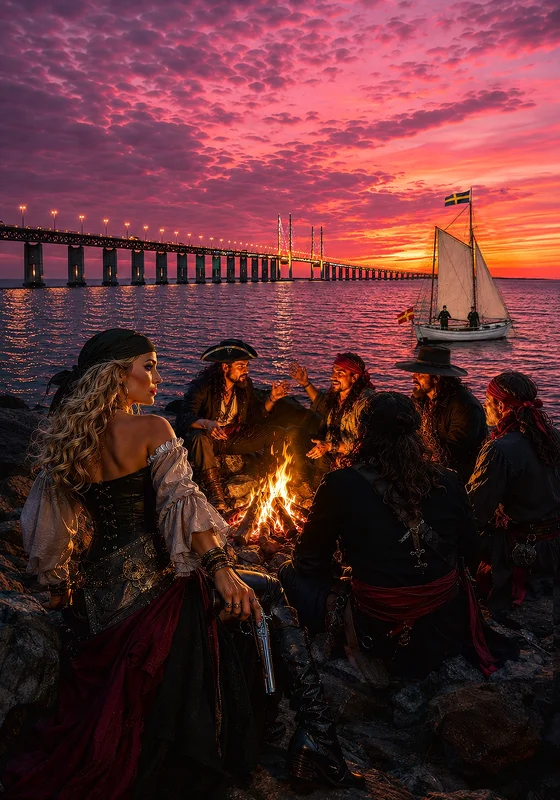
Jörgen Thornberg
KLUHS The Committee for the Rehabilitation of Smuggling and Historical Truth - KLUHS Kommittén för Lurendrejeriets Upp, 2026
Digital
50 x 70 cm
3 200 kr
KLUHS The Committee for the Rehabilitation of Smuggling and Historical Truth - KLUHS Kommittén för Lurendrejeriets Upprättelse och Historiska Sanning
Svensk text på slutet
INTRODUCTION Nothing to declare
Behind the acronym KLUHS lies Kommittén för Lurendrejeriets Upprättelse och Historiska Sanning (The Committee for the Rehabilitation of Smuggling and Historical Truth), formed by long-deceased Scanian smugglers, tricksters, free-riders (friskyttar), and others who believe posterity has treated them unfairly. They do not necessarily deny what they did. However, they argue that it is primarily customs officials, bailiffs, courts, and victorious powers who have been allowed to write their own history. When eternity offers unlimited time to ponder old injustices, it is perhaps only a matter of time before someone forms a committee.
This is the first of three parts about an adventure that began among the stars but soon brought the participants back to Earth, to a place where the line between legal trade and profitable trickery has always been unusually thin: the Öresund Strait and Malmö. Here, over the centuries, kings and governments have tried to determine who and what are allowed to pass, what they must pay for the privilege, and what may be brought into the country at all. On the other side, there have been people who have viewed those same regulations as obstacles that, with a little ingenuity, ought to be bypassed.
To assist, KLUHS has called upon Anita Ekberg, who, after her earthly life, hardly needs any lessons on how the media can shape a persons legacy. She is given an assignment that, at first, sounds simple: to help the committee members polish their tarnished reputations. The only problem is that some of them were actually just as guilty as the customs logs claim, while others may have carried stories that grew, changed, or were rewritten by people with good reason to portray them as villains.
This marks the start of a journey through several hundred years of Scanian and Danish history, from the customs gates of old Malmö and nightly voyages across the Öresund to alcohol smuggling, war, and a period when the most precious cargo was no longer tobacco, coffee, fabric, or spirits, but human beings who had to be smuggled across a guarded border.
In this first part, Anita tries to understand whom she has ended up with, why dead smugglers need a PR consultant, and what KLUHS actually means by historical truth. It soon becomes clear that the dead have plenty of memories, even more opinions, and at least as much difficulty as the living in distinguishing what actually happened from what ought to have happened.
And out on the Öresund, the customs authority lies in wait, keeping an eye on them.
A note before you read further
Any similarities to people, living or dead, may be coincidental, but they need not be. The people in these stories largely existed; the places exist or have existed, and much of what happens is historically documented. Other parts are oral tradition, tall tales, rumours, and things that very well could have happened, or should have, while the rest has received the helping hand that every good story sometimes needs.
Anyone who wishes to know exactly where history ends and the tall tale begins is welcome to try to find out. KLUHS does not intend to help.
The Ballad of KLUHS
Where kings drew lines and customs stood
To guard the Crown and common good,
There always came, by land or sea,
A man who thought: *Why not for me?*
When tollmen watched the harbour light
And honest folk were home at night,
A sail slipped softly through the haze
And found another, darker way.
For laws were laws and kings were kings,
But men had need of other things:
Of coffee, cloth, tobacco, gin,
And ways to get the cargo in.
The customs wrote what they had caught,
The judges wrote what justice thought;
The smuggler, rowing home by night,
Had neither cause nor wish to write.
And thus the records, neat and dry,
Survived to tell us who and why,
While tales beside the fishermen's fire
Grew somewhat better with each liar.
But death, it seems, does not erase
A grievance, nor a smuggler's case.
Beyond the stars, where time stands still,
The old offenders argue still.
So KLUHS was born, with grand intent,
To question where the truth had went;
Not innocence for every knave,
But one more hearing past the grave.
They summoned Anita to the shore,
Who knew what reputations bore,
And asked if history might be made
To show both light and shade.
She heard their boasts, she read each claim,
And warned them truth was not a game:
A lie stays false though well retold,
And guilt stays guilt though centuries old.
But written words, old Pål replied,
Were mostly written by their side.
The Crown had clerks with ink to spare.
We had a boat and weren't there.
The tollmen listened from the Sound,
While ancient rogues sat gathered round;
And somewhere underneath the stars
Old arguments reopened scars.
So who was rogue and who was right?
Who owned the day, who owned the night?
Who wrote the truth, and who the lies?
That rather much depends on eyes.
For history keeps what chance allows,
In court-house books and fishermen's vows;
And where the facts and legends meet,
The truth may walk on smuggler's feet.
So read the files, believe your eyes,
But leave some room for old men's lies.
Where fact gives way and legends start
KLUHS will never draw the chart.
Malmö, August 2026
PROLOGUE A meeting at the worlds end
The message arrived via Starlight, eternitys equivalent to WhatsApp, and Anita Ekberg had initially intended to delete it. The sender identified itself as KLUHS, which could be almost anything, and the subject line Request for consultative participation regarding historical legacy carried the official, bureaucratic Swedish that, during her earthly life, usually meant someone wanted something without daring to say what.
Curiosity won, however. Behind the acronym lay Kommittén för Lurendrejeriets Upprättelse och Historiska Sanning, formed by several long-deceased Scanian smugglers, tricksters, free-riders, and others who felt their legacy had been unnecessarily tarnished. According to the message, history had all too often been written by their opponents, above all customs officials, bailiffs, judges, and representatives of whichever state power currently held the right to determine what was legal.
They did not claim to be innocent. At least, it did not say so explicitly. Their objection was more sophisticated: much of what had been written about them over the centuries, according to KLUHS, consisted of exaggerations, misunderstandings, political propaganda, the victors history, and outright lies that, over time, had been repeated so often they began to be regarded as truths. Therefore, the committee needed someone who knew how public reputation was created, how it could live a life of its own, and how difficult it was, in hindsight, to separate the human being from the figure created by the press, photographers, and historians.
On that point, they had undoubtedly found the right woman.
The meeting was scheduled for today on the beach on the Swedish side of the Öresund Bridge. It was a well-chosen location, for it was classic ground in Malmös smuggling history. For centuries, Lernacken had been a desolate and inaccessible edge of the city, where land met the strait, far from customs officials, streetlights, and curious eyes. Smugglers seeking an obscure spot to bring goods ashore made their way here. For a long time, no one but themselves was interested in the area. In the 1900s, an occasional birdwatcher might visit, but during the daytime, the smugglers were off duty. Only when the Öresund Bridge was built did everything change. The place that once lent itself to secret landings became the anchorage for the fixed link between Sweden and Denmark. Across the same waters where smugglers once crossed with their contraband, traffic now flows freely between the countries.
Anita accepted the assignment via Starlight and arrived on time. A wormhole from her star, Centauri, opened near Luftkastellet, which sat just above where they met.
Down on the beach, a fire was burning. Around it sat half a dozen people whose clothes revealed they came from entirely different centuries, but such things drew little attention in eternity. There, time was no longer a straight path but dark matter that one could move through freely, even if certain rules bound time travel. The past could be visited but not changed, and time-travellers could therefore journey through time without any possibility of redoing it.
It was precisely this that made KLUHS necessary. These old rascals could not alter what had happened, but they hoped to address their legacies.
The Executive Committee
The full committee was far larger than the gathering at Luftkastellet. KLUHS had members from many centuries, and a full presentation of them would have to wait until their history had been told. For the meeting with Anita, an executive group was sent to represent various aspects of Scanian border traffics less-than-law-abiding history.
Johanna Persson was from the great era of alcohol smuggling in the 1900s. This woman had no need to deny what she had been up to, but she had even stronger objections to a historical narrative in which men were portrayed as daring smuggling kings. By contrast, women with the same business acumen had to settle for less flattering descriptions.
From late 17th-century Malmö, Jöran Holst and David Nehrman had presented themselves. Both had documented pasts that made full rehabilitation difficult. Holst had, among other things, attempted to resolve a customs dispute at Södertull by getting a soldier to slap the customs attendant a few times as his wagon passed, after which he defended himself by saying he had been so drunk he did not remember what happened. Nehrman had an even more concrete problem with posterity: ten rolls of tobacco hidden in a carriage cushion carried by a boy, and, when the customs clerk discovered them, a failed attempt to influence him with a carolin coin. They would both return in the history Anita had been tasked to review, and neither could reasonably hope that unpleasant court documents would vanish just because three hundred years had passed.
Lille Mads (Little Mads) posed an entirely different problem. He was among the free-riders (friskyttar) of the Scanian War and left a legacy in which the very choice of words revealed which side was telling the story. To the Swedish authorities, men like Lille Mads had become snapphanar (insurgents/bandits), a term loaded with connotations of robbers and bandits; from the other side, the same man could be described as a Danish free-rider or resistance fighter in a province that had only a few decades earlier belonged to Denmark. KLUHSs task was not to transform all snapphanar into romantic freedom fighters, but to investigate when posterity had inherited the enemys labels, forgotten their origins, and ultimately what they represented freedom.
The most colourful representative sat closest to the fire and was named Pål Raus, though no one, least of all himself, attached much importance to whether it had once been his real name. He came from Råå. The name Pål belonged to the old trickster milieu, and Raus anchored him in the place he felt he belonged. In eternity, most knew him as Rååkungen (The King of Råå). And Pål had a lot to carry.
The King of Råå
In 18th-century Råå, trickery was not an occasional sideline for a fisherman who happened to find room for a few bottles under the nets. The business was organised, financed, and conducted using boats built for the purposelarge, double-ended rowboats (snipor) with crews of ten, twelve, fourteen, or sixteen men, strong enough to outrow the customs boats and with sufficient cargo capacity to make a night on the strait economically viable.
Liquor was an obvious commodity, but other goods could also be profitable to carry across the strait. For those who lived off trade, the distinction between commerce and smuggling depended largely on who asked the question. The state saw dutiable goods brought ashore without payment. In Råå, people saw goods that could be bought cheaply on one side of the strait and sold at a higher price on the other, boats that had to be built, crews that had to be paid, and families that had to be supported.
Pål therefore regarded the entire discussion about his criminal past with a certain contempt.
In the history books, I am labelled a criminal. In Råå, I was a businessman who upheld justice.
Anita looked at him.
I heard customs shot you.
Occupational hazard.
That sufficed as a summary of the King of Råås attitude to the justice system. Behind the retort, however, lay a real story. On the night of July 19, 1870, Råås famous sixteen-man boat was chased by customs at Rydebäck. The boat was fast and difficult to catch, but the chase ended with a pistol shot that struck the helmsman. In the historical sources, the man had remained anonymous; now KLUHS felt it could reveal that it was Pål who stood at the rudder and took the bullet.
Customs seized the boat, which should have been the end of the story, but the residents of Råå bought it back as soon as the opportunity arose and continued their business. Two years later, the same boat was seized again, this time carrying a significant cargo of spirits, and the authorities had obviously learned from experience. To ensure that Råå would not buy back the problem yet again, the boat was sawn into three pieces.
Pål could accept the pistol shot as a professional risk. The destruction of an excellent boat was something he still, after more than a century and a half, found harder to forgive. An atrocity, he called it.
Pål was not finished, however. If Anita wanted to understand why KLUHS had been formed at all, it was not enough, according to him, to read customs logs and verdicts. She also had to know the stories that had never reached the archives but lived on because people continued to tell them.
Take Supjeppe, he said.
Anita raised her gaze.
Who?
Pål smiled.
A colleague from Malmö. He once buried himself.
That, of course, required an explanation.
The Burial at Citadellskajen: Supjeppes Last Coup
Surely you remember the ration book (motboken)? Pål asked.
Anita did, of course. She was born in 1931 and had reached adulthood before the ration book system vanished in 1955, but Pål still felt a reminder was in order, not least because almost no living person had any adult memories of it. The ration book was part of the so-called Bratt System, named after Doctor Ivan Bratt, and in practice served as a personal rationing log for purchasing spirits. The system was introduced throughout Sweden in 1919, and the allowance was determined by factors such as gender, age, income, and social standing. An adult man with stable finances could buy a few litres of liquor a month. At the same time, workers might receive significantly less, and young people and women were often left entirely without an allowance of their own.
For smugglers, the system was effectively a state-guaranteed market. In Malmö, conditions were particularly favourable, since Denmark lay on the other side of the Öresund and did not have the personal rationing of the Swedish system. There, spirits were heavily taxed, and alcohol sales were regulated, but adult buyers did not need their consumption approved or registered in a personal ration book. The legislators in Stockholm had thus managed to combine two of trickerys most vital prerequisites: a sought-after commodity whose availability was restricted by the state, and a nearby location where the same commodity could be purchased without corresponding rationing.
Those were good times, Pål remarked.
For you, yes.
That is what I meant.
Pål belonged to another century, but as a time-traveller, he had no problem with chronology. The story he now intended to tell unfolded in the autumn of 1922, when the ration book was still relatively new and a fisherman known as Supjeppe pulled off one of the more imaginative smuggling coups in Malmös history.
The hub of this shadow trade was the wood-tarred fishing shacks Fiskehoddorna which, at this time, were lined up along Citadellskajen. The sea lay just outside the door; Kockums mechanical workshop had not yet, through extensive landfill, pushed the coastline further out, and here Malmös fishing population gatheredpeople who knew every shallow, current, and fog bank in the strait and who did not always think the state had business with everything carried across it.
Supjeppe had been a fisherman, but his true expertise lay in navigating past the customs patrol boats when the fog lay thick. It often did over the Öresund, so spring and autumn were therefore good times for those who preferred poor visibility.
In the autumn of 1922, Supjeppe had coordinated an unusually large coup. A German mothership had unloaded its illegal cargo on a desolate stretch of beach at Lernacken roughly where Anita and KLUHS were now sitting around their fire and during the night, the goods had been rowed in shifts to the fishing shacks at Citadellskajen.
The customs authorities in Malmö, however, had caught wind that something was afoot. The harbour and wharves were sealed off, and customs officers began methodically searching shack after shack.
The situation was acute. If the liquor was found, prison awaited Supjeppe and his men, while a considerable portion of Malmös thirsty population risked a dry Christmas. It was then that Supjeppe orchestrated his next move.
Right in the middle of the customs raid along Citadellskajen, the doors of one of the larger fishing shacks opened, and a dark oak coffin was carried out on the shoulders of six solemnly dressed fishermen. Behind them came fishermens wives in shawls, children, and local dockworkers with hymnals in hand. Through the procession spread the sad news that one of the shack communitys better-known figures, a man weighing close to 120 kilograms, had suddenly passed away and was now to be taken to Saint Peters Church (Sankt Petri kyrka) for his final rest.
The customs men on Citadellskajen did what decent people were expected to do when a funeral procession passed. They removed their uniform caps and let the procession through. The coffin was heavy, but that hardly aroused suspicion. The deceased had been a massive fellow, nearly 120 kilograms, about the same as a hefty beer barrel, a comparison that was hardly foreign to the men on Citadellskajen. The six bearers continued over Hovrättsbron, followed Norra Vallgatan eastward, crossed Adelgatan, and approached Sankt Petri, while the mourners followed behind with the solemnity the situation required. Supjeppe had counted on customs and police to let the procession pass, out of sheer respect for the dead. He had almost counted right.
If it had not been for a single, foolishly corked bottle.
The chief of customs in Malmö had given chase and caught up with the funeral procession as it neared the church. Just as he was about to let it proceed, he detected, right in the middle of the funeral hymn, an unmistakable scent of fusel oil. Somewhere inside the coffin, the liquor had begun to seep through a faulty cork. He stepped forward and blocked the way.
An outcry erupted among the mourners. The fishermens wives expressed their horror; the bearers asserted the deceaseds right to a dignified final journey; and someone seemed to think the customs chief ought to be ashamed before both God and man, but the man stood his ground. The coffin was to be opened.
Before the assembled congregation, the fishermen were forced to prise open the oak lid. No dead Scanian lay inside. Instead, the coffin was packed with 95 75-centilitre bottles of foreign whisky and spirits, carefully embedded in straw to keep them still and, above all, to prevent them from clinking during the deceaseds journey through Malmö.
The moment the lid flew off, the funeral descended into farce. The six pallbearers dropped the coffin and fled in different directions as the customs officers gave chase. At the same time, the funeral procession was struck by a strange series of accidents. Fishermens wives fainted into the arms of the customs officers, children dropped their hymnals and stumbled into the path of the pursuers, falling flat on the street, and other participants suddenly found it hard to understand what the customs officers were asking. If an officer asked which way a fleeing pallbearer had run, all witnesses pointed in the exact opposite direction.
While the authorities tried to restore order, handcarts emerged from the surrounding streets. With practised hands, the bottles were unloaded from the coffin. They vanished in different directions into the city, and when customs reinforcements finally arrived, little remained of the great victory. On the square outside Sankt Petri lay an empty, badly battered oak coffin, bits of straw, and some customs officers who had every reason to wonder how 95 bottles could vanish right before their eyes.
Supjeppe himself had, of course, also vanished. Later that same evening, he sat in a smoky speakeasy not far from the harbour, very much alive and toasting with the whisky the state had thought it was burying a few hours earlier. People are honest with their smugglers, for without them, the drought would be severe. Supjeppe was paid for every bottle, plus a little tip from a new fifty-year-old who had saved his party.
Anita laughed.
And did that really happen?
Pål looked at her across the fire.
It is told.
That was not what I asked.
No, but it is the answer you get.
It was also through Pål that Anita began to understand what KLUHS actually wanted to achieve. He did not wish to be acquitted of trickery and did not even deny the activity, but questioned who held the exclusive right to peoples legacies. Posterity classified him as a simple smuggler, while those around him regarded the same activity as an accepted livelihood, even as necessary for the communitys survival. Both assertions could be true at the same time, but neither side should hold a monopoly on the writing of history.
Uninvited Company
In the borderland between history, memory, and tall tales, there was a feasible assignment. But they were not alone. On the water, the enemy was sloshing around. Pål pointed into the darkness. Only then did Anita notice the sail.
In front of the illuminated bridge, where all sorts of vehicles streamed between Sweden and Denmark, lay a small, open customs boat, as if someone had accidentally dropped a piece of the 1800s into the middle of the present day. The lapstrake boat bobbed a couple of hundred metres off the beach. On board stood two uniformed men, clearly paying more attention to the gathering around the fire than to the traffic on the strait.
KLUHS had not invited them, but among the stars, rumours travel faster than light. Jakob Barckman and Peter Reinhardt had come anyway.
Barckman represented the high customs administration and the Swedish state, which, after the takeover of Scania, built up its customs system in the formerly Danish provinces. Reinhardt was a far more troublesome opponent for the people on the beach, since he could not be dismissed as a bureaucrat who knew nothing of the tricksters world. Quite the contrary! He had come from that very environment himself and knew the methods before he switched sides, entered the customs service, and became one of the hardest-nosed men in the Scanian coast guard. In those days, the battle was over smuggled goods, but now it concerned the legacy, a far more valuable commodity. When smugglers tried to explain that the customs officers did not understand how the business worked, Reinhardt could stand straight in his boat. He knew. That, however, is not the same as him being right.
Pål Raus did not appreciate the presence, but it was unavoidable. If KLUHS intended to examine the history left by the states representatives, one could hardly forbid the opposing party from attending as an observer. In eternity, free speech prevailed after all, and among the stars there was no higher power to rule and dictate terms. But free speech did not mean that one story was just as true as another. Both must endure examination, questioning, and testing against what could actually be verified. It was not the truth that KLUHS wanted to influence, but the image of the past, where only one sides version had been allowed to stand unchallenged for far too long.
Barckman and Reinhardt therefore remained out on the water, at a distance that clearly marked they did not belong to the gathering, but close enough so that no one around the fire would forget that the opposing party also has a story.
Anita began earnestly reviewing the material she had received via Starlight. What could be rehabilitated? What could be modified or nuanced? What would one have to live with in eternity?
The problems soon manifested. KLUHS had chosen a grand word when speaking of rehabilitation, but several of its members had left behind such concrete traces in customs and court records that it would take more than good PR to turn them into innocent victims. They had smuggled. Some had tried to bribe customs officers; others had hidden goods, used accomplices, or resorted to violence when the authorities came too close. Later generations had made fortunes in the alcohol trade, and the armed men who, during the Scanian War, were given the collective label snapphanar encompassed both organised free-riders and people whose activities were considerably harder to lend any romantic aura.
To deny all this would only add a new lie to the old ones. But it did not mean that the historical narrative that had grown up around these people was automatically correct simply because some of their crimes could be proven. A court record could show that a Malmö citizen had tried to smuggle tobacco through Södertull; it could not, on its own, explain the world in which the action took place. A Swedish military report could call a Scanian opponent a snapphane without thereby conclusively determining whether the man was a robber, a Danish free-rider, or both. A customs officer could, with full right, report that he had seized a smuggling boat. At the same time, the people in the fishing village, with equal sincerity, could perceive the same intervention as the state depriving them of their livelihood.
History also changed depending on who survived to write it, who won the war, and which archives were preserved. The authorities left behind logs, verdicts, and reports because it was their duty to do so. The trickster from Råå, or his colleagues in Malmö, who rowed across the Öresund in the middle of the night, had no reason to compose a detailed account of the days criminal activities for the benefit of future historians upon returning home. In short, smugglers kept no logbooks.
There lay KLUHSs strongest argument. Not that the records were false because the customs officers had written them, but that the written word held no monopoly on the truth. A record could be true, incomplete, biased, or even forged, just as an oral tale could be true or deceitful. The oral tradition that survived among smugglers must therefore be tested in the same way as official documents against testimonies, other sources, material traces, and the historical context in which the story arose. One could confirm or refute the other.
Even more deceptive was the concept of justice, since injustice could be written into law. He who stole so that his starving children would survive did not thereby gain a legal right to steal, but he who contented himself with merely noting the crime had not told the whole story either. The same applied to the smuggler. He who carried goods across the Öresund solely for personal gain could hardly demand eternitys forgiveness merely because the customs officers were unpopular, but neither could kings, states, and authorities be automatically acquitted because their trade barriers, monopolies, and tariffs had been legally enacted.
KLUHSs task, therefore, became not to determine who was innocent but to restore perspective. The deed must be judged alongside the world that created it.
Anita had lived long enough with her public image to understand the difference. A photograph could be authentic yet give a false impression of the person in it, especially if it was the only photograph posterity was allowed to see. A correct quote could change meaning when everything said before and after was lost. In the same way, an old verdict could be completely accurate yet become misleading if used as the condemned persons sole legacy.
Therefore, she could help KLUHS, but not in the way some of its more optimistic members had imagined. What was true would be allowed to remain so. What could not be verified would not be turned into fact merely because it suited the committees purpose. On the other hand, myths, political propaganda, exaggerations, and information repeated without anyone knowing its origin would be scrutinised. When the opponents version had become historical truth solely because the opponent had held the pen, that too would be brought to light.
Out on the strait, the customs boat bobbed. The customs officers must also be scrutinised. In eternity, the same rule applied to both sides: let those who deserve judgment be judged.
KLUHS possessed an advantage no historical research commission among the living could match: several of its members had been present when what was to be investigated occurred. At the same time, this was almost useless as evidence. Eternity allowed time travel but not the falsification of history. What had once occurred stood firm. Jöran Holst could return to Södertull and see himself make a fool of himself, but he could not knock the glass from his younger selfs hand and thereby avert the drunkenness that would later form part of his defence. Pål could see the customs officer raise the pistol but not move a metre to the side so that the bullet missed. No one could warn, stop, save, or correct.
Contact with the living was even more limited. A Time-traveller could intrude into someones dream and leave behind an image, a name, or a thought that the dreamer might not even recognise as having come from elsewhere upon waking. It could be enough for a researcher to suddenly begin pondering an old piece of information, or for someone to feel the impulse to search an archive that no one had opened in decades.
And then there were the papers. Someone from eternity might accidentally leave behind a letter, a map, a note, or a transcript on the wrong side of time. Not a document that altered the past, but one that could already have existed and that pointed towards a direction in which the living themselves could continue the search. That sort of document was never definitive proof. It was merely a clue, a piece of circumstantial evidence, in customs own language. The rest, the researchers had to do themselves.
That was also the boundary Anita set for her assignment. KLUHS was welcome to hope for a better legacy, but the committee would not be allowed to create the history it desired. A tall tale was welcome to remain a tall tale and could sometimes say more about an event than a log record, but it could not be assigned an archive number it had never possessed.
This was received with varying enthusiasm around the fire. Pål Raus was primarily concerned that some of the best stories might prove untrue. Anita saw no major problem with that. A good tall tale did not cease to be good simply because one acknowledged it was a tall tale.
Thus, the assignment was possible, not to clear the smugglers in absurdum, but to reopen the files.
The fire had died down, and the traffic over the bridge thinned out when Anita received the first dossier in front of her. It was much thicker than she had expected and contained traces of several hundred years of tug-of-war between those who decided what was allowed to pass a border and those who discovered that money could be made by passing it anyway. On the cover, it read:
MALMÖ THE CUSTOMS WAR
There were Södertull and Lilla Tullen, tricksters and merchants, tobacco hidden in wagons and carriage cushions, customs chases on the Öresund, alcohol traffic, war, refugees, and finally the modern border, where the same old conflict had shifted from horse-drawn carts to trucks, containers, postal packages, and courier shipments. Some stories were documented down to the smallest detail; others had grown during the telling; and some were still waiting for someone to determine where the line between history and tall tale lay.
Anita laid her hand on the dossier and looked out towards the strait. Out there, Barckman and Reinhardt stayed in their customs boat, while Pål Raus and the others gathered around the dying fire. KLUHS had called her to Lernacken to polish up the smugglers tarnished reputations. Whether it was truly possible remained to be seen.
She opened the file.
Introduktion
Bakom akronymen KLUHS döljer sig Kommittén för Lurendrejeriets Upprättelse och Historiska Sanning, bildad av sedan länge avlidna skånska smugglare, lurendrejare, friskyttar och andra personer som anser att eftervärlden har behandlat dem orättvist. De förnekar inte nödvändigtvis vad de gjorde, men invänder mot att det framför allt är tullare, fogdar, domstolar och segrande makter som har fått skriva historien om dem. När evigheten dessutom erbjuder obegränsad tid för att grubbla över gamla oförrätter är det kanske bara en tidsfråga innan någon bildar en kommitté.
Detta är den första delen av tre om ett äventyr som började bland stjärnorna men snart förde deltagarna tillbaka till jorden och till en plats där gränsen mellan laglig handel och lönande lurendrejeri alltid har varit ovanligt smal: Öresund och Malmö. Här har kungar och regeringar under århundradena försökt bestämma vilka människor och varor som får passera, vad de ska betala för nöjet och vad som över huvud taget får föras in i landet. På andra sidan har det funnits människor som betraktat samma bestämmelser som hinder som, med lite uppfinningsrikedom, borde gå att ta sig runt.
Till sin hjälp har KLUHS kallat Anita Ekberg, som efter sitt jordiska liv knappast behöver någon undervisning i hur ett eftermäle kan skapas av andra. Hon får ett uppdrag som till en början låter enkelt: att hjälpa kommitténs ledamöter att putsa upp sitt skamfilade rykte. Problemet är bara att några av dem faktiskt var precis så skyldiga som tullprotokollen påstår, medan andra kan ha fått bära på historier som vuxit, förändrats eller skrivits om av människor som hade goda skäl att framställa dem som skurkar.
Det blir början på en resa genom flera hundra år av skånsk och dansk historia, från tullportarna vid det gamla Malmö och nattliga färder över Öresund till spritsmuggling, krig och en tid då den dyrbaraste lasten inte längre bestod av tobak, kaffe, tyg eller brännvin, utan av människor som måste föras över en bevakad gräns.
I den här första delen försöker Anita förstå vilka hon har hamnat hos, varför döda smugglare behöver en PR-konsult och vad KLUHS egentligen menar med historisk sanning. Det visar sig snart att de döda har gott om minnen, ännu fler åsikter och åtminstone lika svårt som de levande att skilja mellan vad som verkligen hände och vad som borde ha hänt.
Och ute på Öresund ligger tullen och håller ett öga på dem.
En anmärkning innan du läser vidare
Alla likheter med nu levande eller döda personer kan vara en tillfällighet, men behöver inte vara det. Människorna i dessa berättelser har i stor utsträckning funnits; platserna existerar eller har gjort det och åtskilligt av det som händer är historiskt belagt. Annat är muntlig tradition, skrönor, rykten och sådant som mycket väl kan ha hänt, eller borde ha gjort det, medan resten har fått den hjälp på traven som varje god historia ibland behöver.
Den som önskar veta exakt var historien slutar och skrönan börjar får gärna försöka ta reda på det.
KLUHS tänker inte hjälpa till.
PROLOG Ett sammanträde vid världens ände
Meddelandet kom via Starlight, evighetens motsvarighet till WhatsApp, och Anita Ekberg hade först tänkt radera det. Avsändaren kallade sig KLUHS, vilket kunde vara nästan vad som helst, och ärenderaden Begäran om konsultativ medverkan rörande historiskt eftermäle hade den sortens myndighetssvenska som under hennes jordiska liv brukade innebära att någon ville ha någonting utan att våga berätta vad.
Nyfikenheten vann emellertid. Bakom akronymen dolde sig Kommittén för Lurendrejeriets Upprättelse och Historiska Sanning, bildad av ett antal sedan länge avlidna skånska smugglare, lurendrejare, friskyttar och andra personer som ansåg att deras eftermäle hade blivit onödigt skamfilat. Enligt meddelandet hade historien alltför ofta skrivits av deras motståndare, framför allt tullare, fogdar, domare och representanter för den statsmakt som för tillfället hade rätt att bestämma vad som var lagligt.
De påstod inte att de var oskyldiga. Åtminstone stod det inte uttryckligen så. Deras invändning var mera sofistikerad: mycket av det som genom seklerna skrivits om dem bestod, enligt KLUHS, av överdrifter, missförstånd, politisk propaganda, segrarnas historieskrivning och rena lögner som med tiden upprepats så ofta att de börjat betraktas som sanningar. Därför behövde kommittén någon som visste hur ett offentligt rykte uppstod, hur det kunde leva sitt eget liv och hur svårt det var att i efterhand skilja människan från den figur som press, fotografer och historieskrivare skapat.
På den punkten hade de onekligen hittat rätt kvinna.
Sammanträdet skulle hållas i nutid på stranden vid Öresundsbrons svenska fäste. Det var en väl vald plats, för det var klassisk mark i Malmös smuggelhistoria. Lernacken hade under århundraden varit en ödslig och svårtillgänglig utkant av staden, där land mötte sund långt från tullare, gatlyktor och nyfikna ögon. Hit sökte sig smugglare som behövde en undanskymd plats för att föra varor i land. Länge var det ingen annan än de själva som var intresserad av området. På 1900-talet var det en och annan fågelskådare, men under dagtid var smugglarna lediga. Först när Öresundsbron byggdes förändrades allt. Platsen som en gång lämpat sig för hemliga landstigningar blev fästet för den fasta förbindelsen mellan Sverige och Danmark. Över samma vatten där smugglare en gång tog sig över med sitt kontraband strömmade nu trafiken fritt mellan länderna.
Anita accepterade uppdraget via Starlight och infann sig på utsatt tid. Ett maskhål från hennes stjärna, Kentauren, mynnade ut vid Luftkastellet, som låg alldeles ovanför där de träffades.
Nere vid stranden brann en eld. Runt den satt ett halvdussin människor vars kläder avslöjade att de kom från helt olika århundraden, men sådant väckte ingen större uppmärksamhet i evigheten. Där var tiden inte längre en rak väg utan svart materia som man fritt kunde röra sig genom, även om resan i tiden var omgiven av vissa regler. Det förflutna kunde besökas men inte förändras, och tidsresenärer kunde därför resa i tiden utan möjlighet att göra om den.
Det var just detta som gjorde KLUHS nödvändigt. Dessa gamla kanaljer kunde inte ändra det som skett, men hoppades kunna göra något åt sina eftermälen.
Exekutivkommittén
Den fullständiga kommittén var betydligt större än det sällskap som samlats vid Luftkastellet. KLUHS hade ledamöter från många århundraden och en fullständig presentation av dem fick vänta tills deras historia hade berättats. Till mötet med Anita hade man skickat en exekutiv grupp som representerade olika delar av den skånska gränstrafikens mindre laglydiga historia.
Där fanns Johanna Persson från 1900-talets stora spritsmuggling, en kvinna som inte hade något större behov av att förneka vad hon sysslat med, men desto starkare invändningar mot en historieskrivning där männen gärna framställdes som djärva smugglarkungar medan kvinnor med samma affärssinne fick nöja sig med mindre smickrande beteckningar.
Från det sena 1600-talets Malmö hade Jöran Holst och David Nehrman infunnit sig. Båda hade den sortens dokumenterade förflutna som gjorde en fullständig rehabilitering svår. Holst hade bland annat försökt lösa ett tullproblem vid Södertull genom att få en soldat att ge tullbetjänten ett par örfilar medan hans vagn passerade, varefter han försvarade sig med att han varit så berusad att han inte mindes vad som hänt. Nehrman hade ett ännu mera konkret problem med eftervärlden: tio tobaksrullar gömda i en åkdyna som bars av en pojke och, när tullskrivaren upptäckte dem, ett misslyckat försök att påverka honom med en carolin. De skulle båda återkomma i den historia som Anita fått i uppdrag att granska, och ingen av dem kunde rimligen hoppas att obehagliga domstolshandlingar skulle försvinna bara därför att trehundra år hade gått.
Lille Mads representerade ett helt annat problem. Han tillhörde det skånska krigets friskyttar och bar på ett eftermäle där själva ordvalet avslöjade vilken sida som berättade historien. För den svenska överheten hade män som Lille Mads blivit snapphanar, ett ord laddat med föreställningar om rövare och banditer; från den andra sidan kunde samma man beskrivas som dansk friskytt eller motståndsman i ett landskap som bara några årtionden tidigare hade tillhört Danmark. KLUHS uppgift var inte att förvandla alla snapphanar till romantiska frihetskämpar, utan att undersöka när eftervärlden hade ärvt fiendens beteckningar och därefter glömt varifrån de kom och vad de ytterst representerade frihet.
Den färgstarkaste representanten satt närmast elden och hette Pål Raus, fast ingen, allra minst han själv, lade någon större vikt vid om detta en gång hade varit hans riktiga namn. Han kom från Råå. Namnet Pål hörde hemma i den gamla lurendrejarmiljön och Raus förankrade honom där han ansåg sig höra hemma. I evigheten kände de flesta honom som Rååkungen. Och Pål hade mycket att bära.
Rååkungen
På 1800-talets Råå var lurendrejeri inte någon tillfällig bisyssla för en fiskare som råkat få plats med några flaskor under näten. Verksamheten organiserades, finansierades och bedrevs med båtar byggda för ändamålet, stora snipor med besättningar på tio, tolv, fjorton eller sexton man, starka nog att ro ifrån tullens båtar och med tillräcklig lastförmåga för att göra en natt på sundet ekonomiskt intressant.
Brännvin var en självklar vara, men det fanns annat som kunde löna sig att föra över sundet, och för människorna som levde av verksamheten var skillnaden mellan handel och smuggling huvudsakligen beroende på vem som ställde frågan. Staten såg tullpliktiga varor som fördes iland utan avgift. På Råå såg man varor som kunde köpas billigt på ena sidan sundet och säljas dyrare på den andra, båtar som måste byggas, besättningar som skulle avlönas och familjer som skulle försörjas.
Pål betraktade därför hela diskussionen om hans kriminella förflutna med ett visst förakt.
I historieböckerna kallas jag kriminell. Hemma på Råå var jag en näringsidkare som följde rättvisans lag.
Anita såg på honom.
Jag har hört att du blev skjuten av tullen.
Yrkesskada.
Det räckte som en sammanfattning av Rååkungens inställning till rättsväsendet.
Bakom repliken låg emellertid en verklig historia. Natten till den 19 juli 1870 hade Råås berömda sextonmannasnipa jagats av tullen vid Rydebäck. Snipan var snabb och svår att hinna upp, men jakten slutade med ett pistolskott som träffade styrmannen. I de historiska källorna hade mannen förblivit anonym; nu tyckte KLUHS att det kunde avslöjas att det var Pål som stod vid rodret och som fick kulan i sig.
Tullen tog snipan, vilket borde ha varit slutet på historien, men Rååborna köpte helt enkelt tillbaka den beslagtagna båten så fort tillfälle gavs och fortsatte verksamheten. Två år senare blev samma snipa åter tagen, den gången med en betydande spritlast ombord, och myndigheterna hade uppenbarligen lärt sig av erfarenheten. För att vara säkra på att Råå inte ännu en gång skulle återköpa problemet sågades båten i tre delar.
Pål kunde acceptera pistolskottet som en yrkesrisk. Förstörelsen av en utmärkt båt hade han fortfarande, efter mer än ett och ett halvt århundrade, svårare att förlåta. Nidingsdåd, kallade han det.
Pål var emellertid inte färdig. Om Anita ville förstå varför KLUHS över huvud taget hade bildats räckte det enligt honom inte att läsa tullprotokoll och domar. Hon måste också känna till de historier som aldrig hade nått arkiven, men som har levt vidare därför att människor har fortsatt att berätta dem.
Ta Supjeppe, sade han.
Anita höjde blicken.
Vem?
Pål log.
En kollega från Malmö. Han begravde sig själv en gång.
Det krävde naturligtvis en förklaring.
Begravningen på Citadellskajen: Supjeppes sista kupp
Du minns väl motboken? frågade Pål.
Det gjorde Anita naturligtvis. Hon var född 1931 och hade hunnit bli vuxen innan motboken försvann 1955, men Pål ansåg ändå att en påminnelse kunde vara på sin plats, inte minst med tanke på att nästan ingen levande människa längre hade några egna vuxenminnen av systemet. Motboken var en del av det så kallade Brattsystemet, uppkallat efter läkaren Ivan Bratt, och fungerade i praktiken som en personlig ransoneringsbok för inköp av sprit. Systemet infördes i hela Sverige 1919 och tilldelningen bestämdes av faktorer som kön, ålder, inkomst och social ställning. En vuxen man med ordnad ekonomi kunde få köpa några liter sprit i månaden, medan arbetare kunde få betydligt mindre och unga människor och kvinnor ofta blev helt utan egen tilldelning.
För smugglarna var systemet närmast en statligt garanterad marknad. I Malmö var förutsättningarna särskilt gynnsamma eftersom Danmark låg på andra sidan Öresund och saknade den svenska motbokens personliga ransonering. Där var spriten visserligen hårt beskattad och alkoholförsäljningen reglerad, men den vuxne köparen behövde inte få sin konsumtion godkänd och registrerad i en personlig motbok. Lagstiftarna i Stockholm hade alltså lyckats förena två av lurendrejeriets viktigaste förutsättningar: en eftertraktad vara som staten begränsade tillgången till och en plats alldeles i närheten där samma vara kunde köpas utan motsvarande ransonering.
Det var goda tider, konstaterade Pål.
För er, ja.
Det var det jag menade.
Pål hörde visserligen hemma i ett annat århundrade, men som tidsresenär hade han inga problem med kronologin. Historien han nu tänkte berätta hade utspelat sig hösten 1922, när motboken fortfarande var förhållandevis ny och en fiskare som kallades Supjeppe genomförde en av de mera fantasifulla smuggelkupperna i Malmös historia.
Navet i skugghandeln var de trätjärade fiskebodarna Fiskehoddorna som vid den här tiden låg uppradade längs Citadellskajen. Havet låg alldeles utanför knuten; Kockums mekaniska verkstad hade ännu inte, genom de stora utfyllnaderna, flyttat kustlinjen längre ut, och här höll Malmös fiskarbefolkning till, människor som kände varje grund, ström och dimbank i sundet och som inte alltid ansåg att staten hade med allt som fraktades över det att göra.
Supjeppe var formellt fiskare, men hans verkliga expertis låg i att navigera förbi tullens patrullbåtar när dimman låg tät. Det gjorde den ofta över Öresund, och vår och höst var därför goda tider för den som föredrog dålig sikt.
Hösten 1922 hade Supjeppe samordnat en ovanligt stor kupp. Ett tyskt moderskepp hade lossat sin illegala last på en öde strandremsa vid Lernacken alltså ungefär där Anita och KLUHS nu satt kring sin eld och under natten hade varorna i omgångar rotts in till Fiskehoddorna vid Citadellskajen. Tullmyndigheterna i Malmö hade emellertid fått nys om att något var på gång. Hamnen och kajerna spärrades av och tulltjänstemän började metodiskt söka igenom bod efter bod.
Läget var akut. Om spriten hittades väntade fängelse för Supjeppe och hans män, samtidigt som en ansenlig del av Malmös törstiga befolkning riskerade att gå en nykter jul till mötes.
Det var då Supjeppe iscensatte sitt nästa drag.
Mitt under tullens razzia längs Citadellskajen öppnades dörrarna till en av de större Fiskehoddorna och en mörk ekkista bars ut på axlarna av sex högtidligt klädda fiskare. Bakom dem följde fiskarhustrur i sjaletter, barn och lokala hamnarbetare med psalmböcker i händerna, och genom följet spreds den sorgliga underrättelsen att en av Fiskehoddornas mera kända profiler, en man på närmare 120 kilo, plötsligt hade avlidit och nu skulle föras till Sankt Petri kyrka för sin sista vila.
Tullmännen på Citadellskajen gjorde vad anständiga människor förväntades göra när ett begravningsfölje passerade. De tog av sig skärmmössorna och släppte fram processionen.
Kistan var tung, men det väckte knappast några misstankar. Den avlidne hade varit en väldig karl på närmare 120 kilo och vägde ungefär som ett rejält ölfat, en jämförelse som knappast var främmande för männen på Citadellskajen. De sex bärarna fortsatte över Hovrättsbron, följde Norra Vallgatan österut, korsade Adelgatan och närmade sig Sankt Petri, medan de sörjande följde efter med den högtidlighet som situationen krävde. Supjeppe hade räknat med att tull och polis, av ren respekt för den döde, skulle låta processionen passera.
Han hade nästan räknat rätt. Om det inte hade varit för en enda illa korkad flaska.
Tullchefen i Malmö hade emellertid tagit upp jakten och hann ifatt begravningsföljet när det närmade sig kyrkan. Just som han skulle låta processionen fortsätta, tyckte han sig, mitt under den pågående dödspsalmen, känna en omisskännlig doft av finkel. Någonstans inne i kistan hade spriten börjat leta sig genom en dålig kork. Han steg fram och spärrade vägen.
Ett ramaskri bröt ut bland de sörjande. Fiskarhustrurna förfasade sig, bärarna hävdade den dödes rätt till en värdig sista färd och någon tycks ha ansett att tullchefen borde skämmas inför både Gud och människan, men mannen stod på sig. Kistan skulle öppnas.
Inför den församlade menigheten tvingades fiskarna bända upp eklocket.
Där låg ingen död skåning.
I stället var kistan packad med 95 sjuttiofemmor, utländsk whisky och brännvin, omsorgsfullt inbäddade i halm så att flaskorna skulle ligga stilla och framför allt inte klirra under den dödes färd genom Malmö.
I samma ögonblick som locket flög av övergick begravningen i fars. De sex kistbärarna släppte kistan och sprang åt olika håll, medan tulltjänstemännen försökte sätta efter dem. Samtidigt drabbades begravningsföljet av en märklig serie olyckshändelser. Fiskarhustrur svimmade i armarna på tullarna, barn tappade sina psalmböcker och råkade snubbla framför förföljarna så att de föll pladask på gatan, och andra deltagare fick plötsligt stora svårigheter att förstå vad tulltjänstemännen frågade om. Frågade en tullare åt vilket håll en flyende kistbärare hade sprungit då pekade samtliga vittnen mangrant åt motsatt håll.
Medan myndigheterna försökte återställa ordningen dök handkärror upp från de omgivande gatorna. Med vana händer langades flaskorna ur kistan och försvann åt olika håll i staden, och när tullens förstärkning slutligen anlände, återstod inte mycket av den stora segern. På platsen utanför Sankt Petri låg en tom och illa medfaren ekkista, lite halm och ett antal tulltjänstemän som hade all anledning att fundera över hur 95 flaskor kunde försvinna mitt framför deras ögon.
Supjeppe själv hade naturligtvis också försvunnit.
Senare samma kväll satt han på ett rökigt lönnkrogshak inte långt från hamnen, högst levande och skålande i den whisky som staten några timmar tidigare trott sig begrava. Folk är ärliga mot sina smugglare, för utan dem skulle torkan ha varit svår. Supjeppe fick betalt för varenda flaska och lite dricks därtill av en nybliven femtioåring som fått festen räddad.
Anita skrattade.
Och det där hände verkligen?
Pål såg på henne över elden.
Det är berättat.
Det var inte det jag frågade.
Nej. Men det är svaret du får.
Det var också genom Pål som Anita började förstå vad KLUHS egentligen ville åstadkomma. Han önskade inte bli frikänd för lurendrejeri och förnekade inte ens verksamheten, utan ifrågasatte vem som hade ensamrätt över människors eftermäle. Eftervärlden klassade honom som en simpel smugglare, medan människorna omkring honom betraktade samma verksamhet som en accepterad försörjning, rentav som nödvändig för samhällets fortbestånd. Båda påståendena kunde vara sanna samtidigt, men då skulle ingen av de två sidorna ha monopol på historieskrivningen.
Objudet Sällskap
I gränslandet mellan historia, minne och skröna fanns ett uppdrag som var genomförbart. Men de var inte ensamma. Utanför låg fienden och skvalpade. Pål pekade utåt mörkret.
Först då lade Anita märke till seglet.
Framför den upplysta bron, där alla sorters fordon strömmade mellan Sverige och Danmark, låg en liten öppen tullbåt som om någon råkat släppa ner ett stycke 1800-tal mitt i nutiden. Den klinkbyggda båten guppade ett par hundra meter utanför stranden. Ombord stod två uniformerade män som uppenbarligen ägnade större intresse åt sammankomsten vid elden än åt trafiken på sundet.
KLUHS hade inte bjudit dem. Men bland stjärnorna färdas rykten snabbare än ljuset.
Jakob Barckman och Peter Reinhardt hade kommit ändå.
Barckman representerade den höga tulladministrationen och den svenska staten som efter övertagandet av Skåne byggde upp sitt tullväsen i de tidigare danska landskapen. Reinhardt var en betydligt besvärligare motståndare för människorna på stranden, eftersom han inte kunde avfärdas som en ämbetsman som inte begrep någonting om lurendrejarnas värld. Tvärtom! Han hade själv kommit ur den miljön och kände till metoderna innan han bytte sida, gick i tullens tjänst och blev en av de mest hårdföra männen i den skånska kustbevakningen. På den tiden stod kampen om smuggelgodset, men nu gällde det eftermälet, en långt värdefullare vara.
När smugglare försökte förklara att tullarna inte förstod hur verksamheten fungerade, kunde Reinhardt stå rak i båten. Han visste. Det är däremot inte samma sak som att han hade rätt.
Pål Raus uppskattade inte närvaron, men den var ofrånkomlig. Om KLUHS tänkte granska den historia som statens representanter lämnat efter sig, kunde man knappast förbjuda motparten att närvara som observatör. I evigheten rådde trots allt det fria ordet och bland stjärnorna fanns ingen högre makt som styrde och ställde. Men det fria ordet innebar inte att den ena berättelsen var lika sann som den andra. Båda måste tåla att granskas, ifrågasättas och prövas mot det som faktiskt gick att belägga. Det var inte sanningen KLUHS ville påverka, utan bilden av det förflutna där bara den ena sidans version alltför länge hade fått stå oemotsagd.
Barckman och Reinhardt stannade därför ute på vattnet, på ett avstånd som tydligt markerade att de inte tillhörde sällskapet men tillräckligt nära för att ingen kring elden skulle glömma att även motparten har en historia.
Anita började på allvar gå igenom materialet hon fått via Starlight.
Vad kunde rehabiliteras? Vad kunde modifieras eller nyanseras? Vad fick man leva med i evigheten?
Problemen uppenbarade sig snart. KLUHS hade valt ett storslaget ord när man talade om upprättelse, men flera av ledamöterna hade lämnat efter sig så konkreta spår i tull- och domstolshandlingar att det skulle krävas mer än god PR för att göra dem till oskyldiga offer.
De hade smugglat. Några hade försökt muta tullare, andra hade gömt varor, använt medhjälpare eller tagit till våld när myndigheterna kom för nära. Senare generationer hade tjänat stora pengar på sprittrafiken, och de väpnade män som under Skånska kriget fått den gemensamma beteckningen snapphanar rymde både organiserade friskyttar och människor vars verksamhet var betydligt svårare att förse med någon romantisk gloria.
Att förneka allt detta skulle bara skapa en ny lögn ovanpå de gamla.
Men det betydde inte att den historieskrivning som vuxit fram kring människorna automatiskt var riktig bara därför att vissa av deras brott kunde beläggas. Ett domstolsprotokoll kunde visa att en Malmöborgare hade försökt smuggla tobak genom Södertull; det kunde inte ensamt förklara den värld där handlingen ägt rum. En svensk militärrapport kunde kalla en skånsk motståndare för snapphane utan att därmed slutgiltigt avgöra om mannen var rövare, dansk friskytt eller bådadera. En tullare kunde med full rätt rapportera att han beslagtagit en smuggelbåt, samtidigt som människorna i fiskeläget med lika stor uppriktighet kunde uppfatta samma ingripande som att staten berövat dem deras försörjning.
Historien förändrades också beroende på vem som hade överlevt för att skriva den, vem som hade vunnit kriget och vilka arkiv som hade bevarats. Myndigheterna lämnade efter sig protokoll, domar och rapporter eftersom det var deras uppgift att skriva sådana. Lurendrejaren från Råå eller hans kollegor i Malmö, som rodde över Öresund mitt i natten, hade ingen anledning att efter hemkomsten författa en detaljerad redogörelse för dagens brottsliga verksamhet till nytta för framtida historiker. Kort sagt, smugglare förde inga loggböcker.
Där fanns KLUHS starkaste argument. Inte att protokollen var falska därför att tullarna hade skrivit dem, utan att det skrivna ordet inte hade något monopol på sanningen. Ett protokoll kunde vara sant, ofullständigt, vinklat eller rentav förfalskat, precis som en muntlig berättelse kunde vara sann eller lögnaktig. Den muntliga traditionen som överlevt bland smugglare måste därför prövas på samma sätt som myndigheternas handlingar mot vittnesmål, andra källor, materiella spår och det historiska sammanhang där berättelsen har uppstått. Det ena kunde bestyrka eller vederlägga det andra.
Ännu bedrägligare var begreppet rättvisa, eftersom även orätten kunde skrivas in i lagen. Den som stal för att hans svältande barn skulle överleva hade inte därmed fått någon laglig rätt att stjäla, men den som nöjde sig med att konstatera brottet hade heller inte berättat hela historien. Detsamma gällde smugglaren. Den som förde varor över Öresund enbart för egen vinning kunde knappast kräva evighetens förlåtelse bara därför att tullarna var impopulära, men inte heller kungar, stater och myndigheter kunde automatiskt frikännas därför att deras handelshinder, monopol och tullar hade varit lagligt beslutade.
KLUHS uppgift blev därför inte att avgöra vem som hade varit oskyldig, utan att återställa perspektivet. Gärningen måste bedömas tillsammans med den värld som skapade den.
Anita hade levt tillräckligt länge med sin egen offentliga bild för att förstå skillnaden. Ett fotografi kunde vara äkta men ändå ge en falsk föreställning om människan på bilden, särskilt om det var det enda fotografiet eftervärlden fick se. Ett korrekt citat kunde förändra innebörden när allt som sagts före och efter försvann. På samma sätt kunde en gammal dom vara fullständigt riktig och ändå bli vilseledande om den användes som den dömdes enda eftermäle.
Därför kunde hon hjälpa KLUHS, men inte på det sätt som några av dess mera optimistiska ledamöter hade föreställt sig.
Det som var sant skulle få förbli sant. Det som inte gick att belägga skulle inte förvandlas till fakta bara därför att det passade kommitténs syfte. Däremot skulle myter, politisk propaganda, överdrifter och uppgifter som upprepats utan att någon längre visste varifrån de kom granskas, och när motståndarens version visade sig ha blivit historisk sanning enbart därför att motståndaren hade haft pennan skulle också det fram.
Ute på sundet guppade tullbåten. Även tullarna måste granskas. I evigheten gällde samma regel för båda sidor: dömas den som dömas bör.
KLUHS hade en fördel som ingen historisk forskningskommission bland de levande kunde mäta sig med: flera av dess ledamöter hade själva varit närvarande när det som skulle undersökas hände.
Samtidigt var detta nästan oanvändbart som bevis.
Evigheten tillät tidsresor men inte historieförfalskning. Det som en gång hade skett låg fast. Jöran Holst kunde återvända till Södertull och se sig själv göra bort sig, men han kunde inte slå glaset ur handen på sitt yngre jag och därmed undanröja den fylla som senare skulle ingå i hans försvar. Pål kunde se tullaren höja pistolen men inte flytta sig en meter åt sidan så att kulan missade. Ingen kunde varna, stoppa, rädda eller rätta till.
Kontakten med de levande var ännu mera begränsad. En tidsresenär kunde tränga sig in i någons dröm och lämna efter sig en bild, ett namn eller en tanke som drömmaren kanske inte ens förstod varifrån den kom när denne vaknade. Det kunde räcka för att en forskare plötsligt började fundera över en gammal uppgift eller att någon fick impulsen att leta i ett arkiv som ingen hade öppnat på årtionden.
Och så fanns papperen.
Någon från evigheten kunde råka glömma ett brev, en karta, en anteckning eller en avskrift på fel sida av tiden. Inte ett dokument som förändrade det förflutna, utan något som redan hade kunnat finnas och som pekade åt ett håll där de levande själva kunde fortsätta sökandet. Den sortens dokument var aldrig ett färdigt bevis. Det var bara en ledtråd, ett indicium för att använda tullens eget språk.
Resten måste forskarna göra själva.
Det var också den gräns Anita satte för sitt uppdrag. KLUHS fick gärna hoppas på ett bättre eftermäle, men kommittén skulle inte tillåtas skapa den historia den önskade. En skröna fick gärna vara en skröna och kunde ibland säga mer om en händelse än ett protokoll, men den fick inte förses med ett arkivnummer som den aldrig hade haft.
Detta mottogs med varierande entusiasm kring elden.
Pål Raus såg framför allt bekymrad ut över risken att några av de bästa historierna skulle visa sig vara osanna. Anita såg inget större problem med det. En bra skröna upphörde inte att vara bra bara därför att man talade om att den var en skröna.
Därmed var uppdraget möjligt. Inte för att in absurdum rentvå smugglarna, utan för att öppna akterna igen.
Elden hade falnat och trafiken över bron tunnats ut när Anita fick den första dossiern framför sig. Den var betydligt tjockare än hon väntat sig och innehöll spår av flera hundra års dragkamp mellan dem som bestämde vad som fick passera en gräns och dem som upptäckte att det gick att tjäna pengar på att passera den ändå.
På omslaget stod:
MALMÖ TULLKRIGET
Där fanns Södertull och lilla tullen, lurendrejare och köpmän, tobak gömd i vagnar och åkdynor, tulljakter på Öresund, sprittrafik, krig, flyktingar och till sist den moderna gränsen där samma gamla konflikt hade flyttat från hästdragna kärror till lastbilar, containrar, postpaket och kurirförsändelser. Några historier var dokumenterade in i minsta detalj, andra hade vuxit under berättandets gång och några väntade fortfarande på att någon skulle avgöra var gränsen gick mellan historia och skröna.
Anita lade handen på dossiern och såg bort mot sundet. Där ute låg Barckman och Reinhardt fortfarande kvar i sin tullbåt, medan Pål Raus och de andra väntade kring den falnande elden. KLUHS hade kallat henne till Lernacken för att putsa upp smugglarnas skamfilade rykte. Om det verkligen gick återstod att se.
Hon öppnade akten.
3 200 kr

Jörgen Thornberg
Malmö
Lite om bilder och mig. Translation in English at the end.
Jag är en nyfiken person som ser allt i bilder, även det jag fäster i ord, gärna tillsammans för bakom alla mina bilder finns en berättelse. Till vissa bilder hör en kortare eller längre novell som följer med bilden.
Bilder berättar historier. Jag omges av naturlig skönhet, intressanta människor och historia var jag än går. Jag använder min kamera för att dokumentera världen och blanda det jag ser med vad jag känner för att fånga den dolda magin.
Mina bilder berättar mina historier. Genom mina bilder, tryck och berättelser. Jag bjuder in dig att ta del av dessa berättelser, in i ditt liv och hem och dela min mycket personliga syn på vår värld. Mer än vad ögat ser. Jag tänker i bilder, drömmer och skriver och pratar om dem; följaktligen måste jag också skapa bilder. De blir vad jag ser, inte nödvändigtvis begränsade till verkligheten. Det finns en bild runt varje hörn. Jag hoppas att du kommer att se vad jag såg och gilla det.
Jag är också en skrivande person och till många bilder hör en kortare eller längre essay. Den följer med tavlan, tryckt på fint papper och med en personlig hälsning från mig.
Flertalet bilder startar sin resa i min kamera. Enkelt förklarat beskriver jag bilden jag ser i mitt inre, upplevd eller fantiserad. Bilden uppstår inom mig redan innan jag fått okularet till ögat. På bråkdelen av ett ögonblick ser jag vad jag vill ha och vad som kan göras med bilden. Här skall jag stoppa in en giraff, stålmannen, Titanic eller vad det är min fantasi finner ut. Ännu märkligare är att jag kommer ihåg minnesbilden långt efteråt när det blir tid att skapa verket. Om jag lyckas eller inte, är upp till betraktaren, oftast präglat av en stråk av svart humor – meningen är att man skall bli underhållen. Mina bilder blir ofta en snackis där de hänger.
Jag föredrar bilder som förmedlar ett budskap i flera lager. Vid första anblicken fylld av feel-good, en vacker utsikt, fint väder, solen skiner, blommor på ängen eller vattnet som ligger förrädiskt spegelblankt. I en sådan bild kan jag gömma min egentliga berättelse, mitt förakt för förtryckare och våldsverkare, rasister och fördomsfulla människor - ett gärna återkommande motiv mer eller mindre dolt i det vackra motivet. Jag försöker förena dem i ett gemensamt narrativ.
Bild och formgivning har löpt som en röd tråd genom livet. Fotokonst känns som en värdig final som jag gärna delar med mig.
Min genre är vid som framgår av mina bilder, temat en blandning av pop- och gatukonst i kollage som kan bestå av hundratals lager. Vissa bilder kan ta veckor, andra någon dag innan det är dags att överlämna resultatet till printverkstaden. Fine Art Prints är digitala fotocollage. I dessa kollage sker rivandet, klippandet, pusslandet, målandet, ritandet och sprayningen digitalt. Det jag monterar in kan vara hundratals år gamla bilder som jag omsorgsfullt frilägger så att de ser ut att vara en del av tavlan men också bilder skapade av mig själv efter min egen fantasi. Därefter besöks printstudion och för vissa bilder numrera en limiterad upplaga (oftast 7 exemplar) och signera för hand. Vissa bilder kan köpas i olika format. Det är bara att fråga efter vilka. Gillar man en bild som är 70x100 men inte har plats på väggen, går den kanske att få i 50x70 cm istället. Frågan är fri.
Metoden Giclée eller Fine Art Print som det också kallas är det moderna sättet för framställning av grafisk konst. Villkoret för denna typ av utskrifter är att en högkvalitativ storformatskrivare används med åldersbeständigt färgpigment och konstnärspapper eller i förekommande fall på duk. Pappret som används möter de krav på livslängd som ställs av museer och gallerier. Normalt säljer jag mina bilder oinramade så att den nya ägaren själv kan bestämma hur de skall se ut, med eller utan passepartout färg på ram, med eller utan glas etc..
Under många år ställde jag bara ut på nätet, i valda grupper och på min egen Facebooksida - https://www.facebook.com/jorgen.thornberg.9
Jag finns också på en egen hemsida som tyvärr inte alltid är uppdaterad – https://www.jth.life/ Där kan du också läsa en del av de berättelser som följer med bilden.
UTSTÄLLNINGAR
Luftkastellet, oktober 2022
Konst i Lund, november 2022
Luftkastellet, mars 2023
Engleson Galleri Caroli, april 2023
Hydra, Greece June 2023
Engleson Galleri Caroli, oktober 2023
Toppen, Höllviken december 2023
Luftkastellet, mars 2024
Torups Galleri, mars 2024
Venice, May 2024
Luftkastellet, oktober 2024
Konst i Advent, December 2024
Galleri Engleson, Caroli December 2024
Jäger & Jansson Galleri, april 2025
A bit about pictures and me.
I'm a curious person who sees everything in pictures, even what I express in words, often combining them, for behind all my pictures lies a story. These narratives, some as short as a single image and others as long as a novel, are the heart and soul of my work.
Pictures tell stories. Wherever I go, I'm surrounded by natural beauty, exciting people, and history. I use my camera to document the world and blend what I see with what I feel to capture the hidden magic.
My images tell my stories. Through my pictures, prints, and narratives, I invite you to partake in these stories in your life and home and share my deeply personal perspective of our world. More than meets the eye. I think in pictures, dream, write, and talk about them; consequently, I must create images too. They become what I see, not necessarily confined to reality. There's a picture around every corner. I hope you'll see what I saw and enjoy it.
I'm also a writer, and many images come with a shorter or longer essay. It accompanies the painting, printed on fine paper with my personal greeting.
Many pictures start their journey on my camera. Simply put, I describe the image I see in my mind, experienced or imagined. The image arises within me even before I bring the eyepiece to my eye. In a fraction of a moment, I see what I want and what can be done with the picture. Here, I'll insert a giraffe, Superman, the Titanic, or whatever my imagination conjures up. Even stranger is that I remember the mental image long after it's time to create the work. Whether I succeed is up to the observer, often imbued with a streak of black humour – the aim is to entertain. My pictures usually become a talking point wherever they hang.
I prefer pictures that convey a message in multiple layers. At first glance, they're filled with feel-good vibes, a beautiful view, lovely weather, the sun shining, flowers in the meadow, or the water lying deceptively calm. But beneath this surface beauty, I often conceal a deeper story, a narrative that challenges societal norms or explores the human condition. I invite you to delve into these hidden narratives and discover the layers of meaning within my work.
Picture and design have been a thread running through my life. Photographic art feels like a fitting finale, and I'm happy to share it.
My genre is varied, as seen in my pictures; the theme is a blend of pop and street art in collages that can consist of hundreds of layers. Some images can take weeks, others just a day before it's time to hand over the result to the print workshop. Fine Art Prints are digital photo collages. In these collages, tearing, cutting, puzzling, painting, drawing, and spraying happen digitally. What I insert can be images hundreds of years old that I carefully extract so they appear to be part of the painting, but also images created by myself, now also generated from my imagination. Next, visit the print studio and, for certain images, number a limited edition (usually 7 copies) and sign them by hand. Some images may be available in other formats. Just ask which ones. If you like an image that's 70x100 but doesn't have space on the wall, you might be able to get it in 50x70 cm instead. The question is open.
The Giclée method, or Fine Art Print as it's also called, is the modern way of producing graphic art. This method ensures the highest quality and longevity of the artwork, using a high-quality large-format printer with archival pigment inks and artist paper or, in some cases, canvas. The paper used meets the longevity requirements set by museums and galleries. I sell my pictures unframed, allowing the new owner to personalise their artwork, confident in the lasting value and quality of the piece.
For many years, I only exhibited online, in selected groups, and on my Facebook page - https://www.facebook.com/jorgen.thornberg.9. I also have my website, which unfortunately is not constantly updated - https://www.jth.life/. You can also read some of the stories accompanying the pictures there.
EXHIBITIONS
Luftkastellet, October 2022
Art in Lund, November 2022
Luftkastellet, March 2023
Engleson Gallery Caroli, April 2023
Hydra, Greece June 2023
Engleson Gallery Caroli, October 2023
Toppen, Höllviken December 2023
Luftkastellet, March 2024
Torup Gallery, March 2024
Venice, May 2024
UTSTÄLLNINGAR
Luftkastellet, oktober 2022
Konst i Lund, november 2022
Luftkastellet, mars 2023
Engleson Galleri Caroli, april 2023
Hydra, Greece June 2023
Engleson Galleri Caroli, oktober 2023
Toppen, Höllviken december 2023
Luftkastellet, mars 2024
Torups Galleri, mars 2024
Venice, May 2024
Luftkastellet, October 2024
Konst i Advent, December 2024
Galleri Engleson, Caroli December 2024
Jäger & Jansson Galleri, April 2025
Utbildning
Autodidakt
Medlem i konstnärsförening
Öppna Sinnen
Med i konstrunda
Konstrundan i Skåne
Utställningar
Luftkastellet, October 2022
Art in Lund, November 2022
Luftkastellet, March 2023
Engleson Gallery Caroli, April 2023
Hydra, Greece June 2023
Engleson Gallery Caroli, October 2023
Toppen, Höllviken December 2023
Luftkastellet, March 2024
Torup Gallery, March 2024
Venice, May 2024