Vi använder cookies för att ge dig bästa möjliga upplevelse. Välj vilka cookies du tillåter.
Läs mer i vår integritetspolicy
Jörgen Thornberg
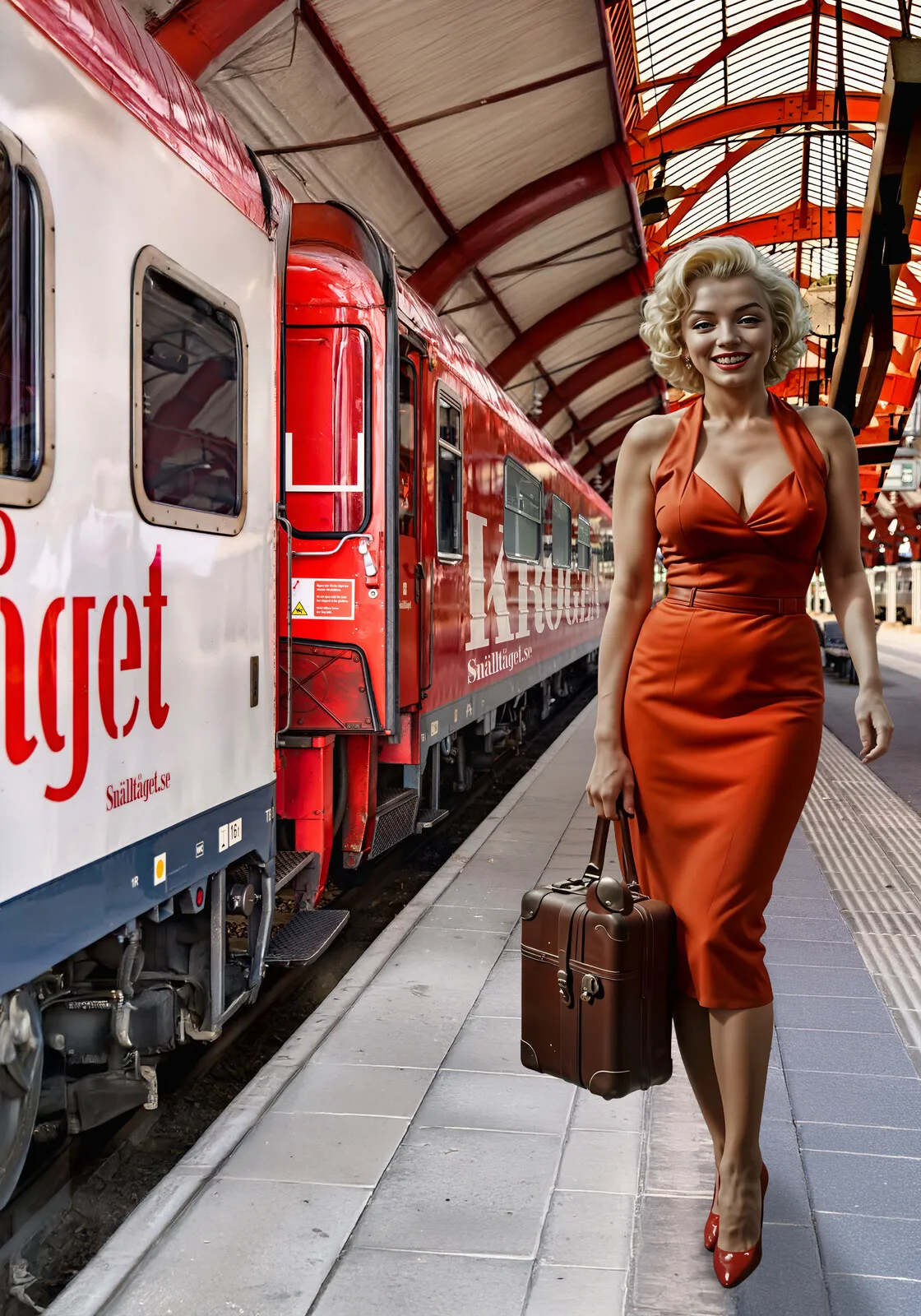
When Need is greatest, the Pub is nearest - När Nöden är som störst finns Krogen som närmast, 2025
Digital
50 x 70 cm
3 200 kr
When Need is greatest, the Pub is nearest - När Nöden är som störst finns Krogen som närmast
The old Swedish proverb “När nöden är som störst är hjälpen som närmast” — “When need is greatest, help is nearest” — is a timeless gem that has resonated with the human spirit for centuries. It speaks to a universal truth that transcends time and culture, a reality that we all can relate to: in the face of apparent despair — illness, loss, disaster — there is always a glimmer of hope, a quiet faith that rescue, in one form or another, is already on its way.
At times, the proverb is seen through a theological lens, promising divine presence in times of suffering. Other times, it serves as a humanist reminder not to give up until the last card is played. In this essay, the proverb takes on a new, playful perspective. The parody “When need is greatest, the pub is nearest” shifts the ancient message of spiritual comfort into an ironic commentary on modern relief-seeking. This shift is not meant to diminish the original meaning of the proverb, but to offer a lighthearted take on how we, in our contemporary society, often seek comfort in more tangible forms. Instead of turning to prayer, we seek solace in a glass of wine and a warm meal. This expression was born on Sweden’s Snälltåget, where the bistro carriage is aptly named The Pub — one of the last places on the railway where food is prepared and served at a table. The setting is both nostalgic and symbolic: a moving sanctuary between Malmö and Stockholm, where the pace of travel slows enough for a conversation, a meal, or a brief moment of rest.
The image of Marilyn Monroe, smiling serenely before her journey north, captures the tone of the entire reflection — it is a delicate balance between humour and seriousness. This balance keeps the audience engaged and entertained, between human frailty and quiet resilience. It reminds us that even in motion, even at full speed, there are pockets of stillness where comfort can be found.
The title of this essay invites a broader reflection on the concept of finding comfort in difficult times. Throughout history, humans have always sought their own 'pub' — a place of refuge, whether sacred or secular, where courage, consolation, or creativity can be renewed. This essay encourages us to consider our own 'pub' and how it provides a significant sanctuary in times of need. It's a call to introspection, to identify those places or activities that bring us comfort and strength when we need it most.
This essay navigates between the literal and the symbolic, the sacred and the mundane. It delves into how an ancient proverb about faith and providence has gained a new and ironic significance in our era. It reminds us that when need is at its peak, help is not always divine. Sometimes, it takes human form — in a gesture, a glance, or a waiter silently passing through the dawn light with a tray of coffee cups and hope. This navigation between the literal and the symbolic adds depth to the analysis, making the essay more intriguing and thought-provoking.
“When Need Is Greatest
When need is greatest, silence hums —
a thin, electric thread between despair and dawn.
The air itself holds its breath,
waiting for something — a word, a wingbeat,
a hand on the shoulder, saying, "Stay."
Sometimes help comes roaring,
a fleet of boats crossing darkened seas,
a bridge of light above the ruins.
Sometimes it tiptoes in unnoticed,
in the steam of morning coffee,
in the warmth of a stranger’s smile.
When need is greatest, invention wakes —
tape and string become salvation,
a whisper becomes a command.
The heart, cornered and trembling,
remembers how to build a fire.
And when help does not come at all,
still we imagine it —
And by that act, we keep breathing.
For even in the empty doorway,
hope is standing there —
waiting for us to see it.”
Malmö. October 2025
When Need Is Greatest, the Pub Is Nearest – An Old Truth Reimagined
The old Swedish proverb “När nöden är som störst är hjälpen som närmast” — “When need is greatest, help is nearest” — is a testament to the unwavering resilience of the human spirit. These words, spoken in times of apparent despair — illness, loss, disaster — express a belief in the imminent arrival of rescue. Sometimes, the proverb is interpreted theologically, as a promise of divine presence during hardship. At other times, it functions as a kind of everyday philosophy: a reassurance not to give up before the last card has been played. This enduring resilience, as depicted in the proverb, is a source of inspiration and hope in the face of adversity.
In this essay, the proverb takes an intriguing turn, reflecting the profound societal changes of our times. The playful parody “When need is greatest, the pub is nearest” shifts the original's religious comfort into an ironic comment on how modern people seek relief — not in prayer, but in a glass of wine and a hot meal. The saying was inspired by the Swedish railway company ‘Snälltåget’, whose bistro carriage is literally called ‘The Pub’ — one of the last places on the railway where food is still freshly prepared and served at a table. The image of Marilyn Monroe, smiling contentedly before her journey to Stockholm, sets the tone: caught between seriousness and humour, between distress and delight.
The title also prompts a broader reflection: in times of crisis, humans have always sought their own 'pub,' their refuge — a place where courage, consolation, or creativity can be renewed. In earlier days, it might have been a church, a shelter, or the warmth of a community; today, it could be a train bistro, a café, or a friend’s kitchen table. This essay thus moves between the literal and the symbolic — from the proverb’s spiritual roots to its secular, modern echo. The train, in this context, becomes a powerful metaphor for change, for the journey we all undertake in times of need.
History shows that when need is greatest, help is not always divine. It can come from people, from machines, from coincidence — or from a waiter with a menu trolley, passing quietly through the dawn light.
Language, Speed, and Irony – On the Word ‘Snäll’
To fully grasp the title, we must pause at the train itself — Snälltåget — and at the Swedish word snäll, which has a history as paradoxical as human nature. Today, it means “kind,” “gentle,” or “friendly.” However, in older Swedish, it meant the opposite: quick, brisk, efficient. A snällseglare was a fast sailor; a snällpost was mail that arrived on time. The word, like much of the railway vocabulary, derives from German — schnell, meaning “swift.” This linguistic shift from 'swift' to 'kind' is a profound metaphor for society itself: a transition from the industrial faith in progress to a renewed longing for empathy, for a human speed limit, inviting reflection and amusement. The evolution of language, as seen in the transformation of 'snäll', reflects the changing values and priorities of society, stimulating intellectual curiosity and reflection.
When snälltågen were introduced in the nineteenth century, they were the fastest trains on the rails, reserved for passengers, mail, and sometimes express freight, requiring a special supplement ticket. They stopped only at major junctions, racing past the small stations—symbols of a new rhythm of modernity—the age of efficiency. This 'age of efficiency' was a period marked by rapid industrialisation and technological advancement, where the focus was on speed, productivity, and progress. The introduction of these fast trains was a testament to this societal shift, representing a journey toward the future at express speed, inspiring hope and a sense of progress.
It's intriguing to note that what we now call “snäll” — kind — originally meant exactly that: quick, forward, decisive. The irony is that our language has turned the meaning inward. The swift have become the gentle. The one who hurries forward has become the one who pauses to listen. In that linguistic shift — from “rapid” to “kind” — lies a profound metaphor for society itself: a transition from the industrial faith in progress to a renewed longing for empathy, for a human speed limit, inviting reflection and amusement.
In Snälltåget’s bistro carriage, these two meanings coexist. The train speeds through the landscape, its German etymology resonating in the name, while inside The Pub, the pace has already slowed. Warm food, wine, and conversation are offered in contrast to the electronic hum outside. In a sense, The Pub is the very place where language confronts its own irony: the swift becomes gentle, the hurried finds comfort.
And perhaps, when necessity is most significant — when the Wi-Fi fails, the timetable unravels, and the world feels overwhelmed — it is precisely there, in the moving restaurant car, that help is found: a fleeting moment of stillness in motion. The 'moving restaurant car' serves as a powerful metaphor for finding comfort and stability in the midst of chaos, drawing a parallel to the proverb's message of finding help when it's most needed. The car, constantly in motion, represents the ever-changing nature of crises, while the comfort and stability it provides symbolise the resilience and adaptability of the human spirit in the face of adversity.
Necessity and Invention – When Crisis Forces Action
“Necessity is the mother of invention.” This age-old adage has proven its validity time and again, both in the annals of history and in our daily lives. It is in those critical moments when resources are scarce, margins are non-existent, and every decision is made on instinct that human ingenuity comes to the fore. Necessity and creativity are not just related; they are inseparable—both fueled by the energy of scarcity. This concept of 'Necessity and Invention' is deeply intertwined with the central theme of the essay, as it underscores the importance of resilience and adaptability in times of crisis. While abundance may lull us into a sense of comfort, crisis compels us to think and innovate, often leading to the creation of new solutions and the discovery of untapped potential.
History provides countless examples of how adversity has awakened humanity’s hidden potential for cooperation and innovation. When Apollo 13’s oxygen tank exploded in 1970 and the astronauts were hundreds of thousands of kilometres from Earth, a form of concentrated genius emerged at NASA’s mission control: engineers crafted a carbon dioxide filter from plastic bags, duct tape, and spare parts. When the Berlin blockade paralysed the city in 1948, Allied pilots filled the skies with food and coal, minute by minute, in what became known as the Berlin Airlift. During the Chilean mining accident of 2010, when thirty-three men were trapped underground for sixty-nine days, a rescue capsule was designed and built in record time—a feat of engineering as much as a moral miracle.
But invention isn't always about machines. The mother of necessity also leads to empathy, imagination, and spiritual determination. Those who find ways to comfort, organise, or rescue others are often creating something just as crucial as technology—a new kind of human solidarity. This solidarity, born out of shared crisis and the need to survive, is a powerful force that can unite people in the face of adversity. During New York’s 9/11 “Boatlift,” hundreds of private citizens launched their boats and spontaneously turned the Hudson River into an evacuation route. No orders were issued, no plan was in place—but help emerged at the very moment the need became apparent.
Perhaps that is what the proverb truly signifies: not the miracle itself, but the human tendency to create miracles when there is no other option. In a crisis, it is not only solutions that emerge, but also meaning. The person who acts in a moment of peril gains, if only temporarily, a role greater than themselves.
So, when we say that help is nearest when need is greatest, we may not be referring to some external force, but to something within: a latent preparedness, a creative impulse, a moral strength that awakens precisely when everything else seems lost.
When All Seems Lost – Biblical Stories of the Final Hour
Before the hero sagas of cinema and the rescue dramas of literature, there was the Bible—humanity’s oldest archive of stories about peril, waiting, and salvation at the last moment. It is filled with scenes where people reach their limits, and where a helping hand—often unexpected—enters the drama just as hope begins to fade. These narratives have shaped our collective imagination of what help truly means: not only deliverance from external danger but also proof that the world still contains grace.
When Abraham is prepared to sacrifice his son, Isaac, an angel intervenes at the very moment the knife is raised. When Daniel is cast into the lions’ den and the sentence appears final, God’s presence manifests as calm among the beasts. Paul, whose ship breaks apart in a storm, guides his crew safely to land—not through a miracle in the literal sense, but through discipline and steadiness amid chaos. Paul's story underscores the importance of maintaining composure and order in the face of crisis, as these qualities can often be the difference between life and death.
Perhaps the most human story of assistance in distress in the Bible is that of the Good Samaritan. It does not speak of divine intervention but of a person who, according to the social order of the time, should have turned away. Here, the miracle comes not from heaven but from compassion itself. It remains one of the most radical episodes in the Gospels: help does not come from the priest, nor from power, but from the unexpected stranger by the roadside.
Even Jesus’ life is filled with moments when all seems lost—the storm is calmed, Lazarus is raised, and the cross becomes a symbol of victory over death. In all these stories, the same rhythm runs: despair – waiting – breakthrough. It is this rhythm that shapes both our mythology and modern storytelling, from fairy tales to disaster films.
Perhaps that is why the proverb “When need is greatest, help is nearest” feels so deeply ingrained in us. It echoes an ancient narrative pattern—the dramatic logic found in the earliest texts. When all seems lost, that is when it occurs. When darkness falls, a light emerges. It is not just religion—it is dramaturgy, human psychology, and a belief that the world, somehow, maintains a balance.
The Eleventh Hour of Fiction – Help as a Dramatic Engine
If the Bible provided the blueprint for hope’s dramaturgy, literature and film have transformed it into an art form. The entire Western narrative tradition relies on this pattern: when all seems lost, the turning point occurs. Help arrives at the eleventh hour, a term derived from the biblical parable of the workers in the vineyard, which signifies the last possible moment—sometimes as a miracle, sometimes as the result of human change. It is a timeless pattern that continually moves us because it touches our deepest longing—that life, against all odds, might still be merciful.
In Les Misérables, the hardened Valjean encounters a bishop whose act of mercy transforms everything; in a single moment of forgiveness, the thief becomes a saviour. Dickens’ A Tale of Two Cities follows a similar logic: Sydney Carton, weary and wasted, sacrifices himself for another and finds in death a kind of resurrection. Both stories demonstrate that help is not always physical — it can be moral, spiritual, or emotional: the restoration of human worth.
The film Casablanca captures the same late-blooming courage. When Rick lets Ilsa go in the final scene, it happens in a blend of sacrifice and rediscovered honour. “Here’s looking at you, kid” can be interpreted as both a farewell and an acknowledgement of their transformed relationship. Here, help does not mean saving a life, but preserving a soul. In It’s a Wonderful Life, the rescue is collective: when George Bailey stands on the bridge, poised to end his life, the entire town gathers—an imperfect but loving community demonstrating that no one truly stands alone.
In contemporary fiction, “help in the nick of time” has become a visual motif. We recognise the cry “The Eagles are coming!” from Tolkien’s The Lord of the Rings, or Han Solo’s sudden return in Star Wars: A New Hope—classic examples of the deus ex machina in popular storytelling. In The Martian, salvation becomes a feat of engineering, a technological miracle rather than a divine one. And in Children of Men, the boat Tomorrow emerges from the mist at the exact moment when the world seems to have surrendered.
There is something deeply comforting in these tales, but also something revealing. Help, as a dramatic force, shows that we cannot survive complete hopelessness. We seek rescue, light, or a sign of life. In fiction, it might appear as love, coincidence, faith, or mere chance — but the pattern remains the same: despair, pause, renewal.
It is the same rhythm as in the proverb. Help is always at the door—unseen until we are ready to recognise it. In fiction, it becomes catharsis; in real life, it might be nothing more than a breath, a hand, or a phone call arriving at the right moment. Nevertheless, the effect is the same: the darkness lifts.
Reality Outdoing Fiction – The Triumph of Help
If art depends on hope, history shows that reality can sometimes exceed fiction in its ability to mobilise aid in times of extreme danger. There are moments in human history when the entire world seems to hold its breath — and something almost unbelievable occurs, not through magic, but through the indomitable spirit of humanity. It is then that the proverb “When need is greatest, help is nearest” takes on its most real and human form, inspiring us with the resilience and courage of the human spirit, filling us with a sense of inspiration and uplift.
At Dunkirk in 1940, when over four hundred thousand British and French soldiers were trapped between the sea and the enemy, destruction seemed inevitable. Then, civilian boats of every kind — fishing vessels, tugboats, sailboats — set out towards the coast. A spontaneous armada rescued an entire army. A few years later, over Berlin, another act of heroism illuminated the skies: the Airlift of 1948–49. For nearly a year, pilots flew in food, coal, and medicine every ten minutes, keeping a whole city alive. Help took wing, and human endurance quite literally soared.
When Apollo 13’s oxygen tank exploded in space in 1970, the Earth itself became a rescue station. NASA’s engineers crafted a solution out of tape, plastic, and prayer — and the crew returned safely. Deep beneath the surface, in a different kind of darkness, thirty-three Chilean miners were rescued after sixty-nine days underground, lifted one by one in a steel capsule that resembled an elevator to resurrection.
There is also aid that remains unseen until much later. During the 9/11 “Boatlift” in New York, civilian boats spontaneously sailed towards Manhattan, evacuating half a million people — the most significant maritime rescue in modern history. When the tsunami of 2004 devastated the coasts of Southeast Asia, the world mobilised on an unprecedented scale. And in Thailand’s Tham Luang caves in 2018, when thirteen boys and their coach were trapped in water and darkness, experts from around the world gathered. The rescue required divers, doctors, planning, courage — and, as always, a dash of luck.
In all these stories, the core idea remains unchanged: help is not mystical but human. It appears when someone chooses to act — despite fear, despite seemingly impossible odds. At that moment, the proverb proves true. Help does not come from above; it comes from each other, reinforcing the power of human connection in times of need and making us feel part of a larger community.
Perhaps that is why such events are filmed and retold again and again. They remind us of something we all too easily forget: that help is not always something one receives, but something one offers. And it is in that moment — when need is greatest — that humanity shows its most beautiful face.
From Emergency to Leisure – The Modern Irony
After all these stories of courage and survival, it feels almost comical — yet deeply human — that our version of “help in need” often comes with a served plate and a glass of wine. The parody “When need is greatest, the pub is nearest” is not just a joke; it reflects our culture. Where earlier generations sought solace in prayer, we find it in a cappuccino, a Wi-Fi signal, a glass of red wine, or a quick chat with a stranger. Help has become everyday, accessible — and sometimes commercial. Even in the digital age, technology has become a tool for aid, connecting people and resources in times of need. From emergency hotlines to social media platforms, technology has revolutionised the way we offer and receive help, making it more immediate and widespread than ever before, fostering a sense of connection and reassurance.
Onboard Snälltåget, where The Pub still exists as a physical space, this irony is most vivid. There, somewhere between Malmö and Stockholm, between stress and stillness, the human pause button remains. When the train stops, time itself seems to pause. People talk, laugh, and fall silent. One person orders food, while another types an email that will never be sent. It is as if the motion of the train — the ceaseless rush forward — is balanced by this small carriage where things are still allowed to take their time. This 'human pause button' serves as a reminder that, amidst our busy lives, taking a break to connect with others and appreciate small moments of stillness and reflection is crucial for recharging and regaining perspective.
The irony exists in both directions. The pub serves as a symbol of refuge in a world consumed by the need to escape worries, news, deadlines, and excess. But it also embodies our survival skill: creating small oases in a desert of demands when necessity peaks — when the world feels overwhelming, and the future shivers — there are still places where we can breathe again: a café, a train bistro, a conversation across a table.
The humour of the title carries a subtle seriousness. It reminds us that sometimes all it takes to restore balance is something simple: a piece of bread, a glass of water, someone willing to listen. It is the everyday counterpart to grand rescue dramas — a form of quiet humanism, as genuine as the Airlift or Apollo 13, but in miniature. This emphasis on everyday kindness makes us feel valued and appreciated, reinforcing the importance of these small acts in our lives.
We may no longer wait for miracles, but we have learned to create small ones. When need is at its deepest — when the train stops, the phone runs out of battery, and life suddenly feels overwhelming — help might arrive in the form of someone asking, “Would you like anything else?”
Epilogue – Comfort, Faith, and Patience
When help is needed most, it is said to be closest. But perhaps it is not always rescue that appears at the door, but understanding. Through centuries of storytelling, from the angels of the Bible to NASA’s engineers and the waiter in the train’s bistro, the same theme persists: humanity is never truly alone. Help can take many forms — a voice, an idea, an action, a quiet gesture — but it consistently embodies the same warmth of human connection. This universal need for help and the comfort it brings is something that transcends cultures and time periods, uniting us all in our shared humanity. It is a reminder that we are all part of a larger community, bound by our everyday experiences and our shared need for help and understanding.
In old proverbs, help was often associated with God, fate, or the invisible hand that guides. In our secular age, the miracle has shifted—into human hands, and the willingness to act. In every rescue operation, in every act of kindness, resides the belief that even the impossible can be changed. However, it's essential to acknowledge that the potential for abuse or misuse of aid exists, and ethical considerations should always be at the forefront of our minds when offering or receiving help. Help has become something we create together, but we must do so with integrity and respect for all involved.
The parody “When need is greatest, the pub is nearest” therefore takes on an unexpected seriousness. It is not just a joke about wine and relaxation, but a modern take on hope. The pub becomes a symbol of community — the place where we gather when the world shudders. It is where our conversations develop, our confessions and our laughter. It is where daily grace is born — the quiet, domestic version of Dunkirk or the Berlin Airlift — where help arrives not by aeroplane, but with a smile and a simple “How are you?”
Perhaps this is the prayer of our time: not directed upward, but outward. Not waiting for miracles, but the ability to create them in small moments — in cafés, on trains, in waiting rooms, in those brief encounters between strangers who happen to notice each other. It is there, in life’s everyday pauses, that comfort resides.
So when need once again knocks on the door, and the world rushes by at two hundred kilometres per hour, one might think of Marilyn sitting in Snälltåget’s bistro, wearing a quiet smile and holding a glass of wine. Help may not be heroic or dramatic. But it is present, human, and sufficient.
And sometimes — when all else fails — that is precisely what saves us.
Jörgen Thornberg
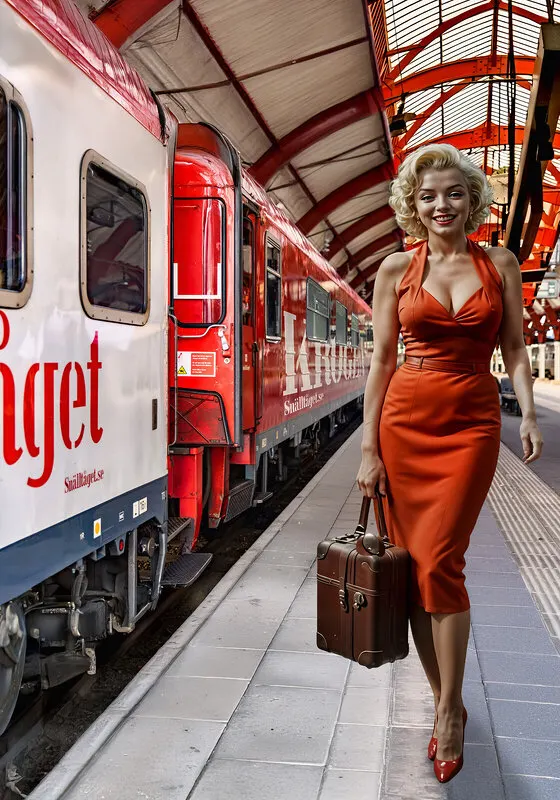
When Need is greatest, the Pub is nearest - När Nöden är som störst finns Krogen som närmast, 2025
Digital
50 x 70 cm
3 200 kr
When Need is greatest, the Pub is nearest - När Nöden är som störst finns Krogen som närmast
The old Swedish proverb “När nöden är som störst är hjälpen som närmast” — “When need is greatest, help is nearest” — is a timeless gem that has resonated with the human spirit for centuries. It speaks to a universal truth that transcends time and culture, a reality that we all can relate to: in the face of apparent despair — illness, loss, disaster — there is always a glimmer of hope, a quiet faith that rescue, in one form or another, is already on its way.
At times, the proverb is seen through a theological lens, promising divine presence in times of suffering. Other times, it serves as a humanist reminder not to give up until the last card is played. In this essay, the proverb takes on a new, playful perspective. The parody “When need is greatest, the pub is nearest” shifts the ancient message of spiritual comfort into an ironic commentary on modern relief-seeking. This shift is not meant to diminish the original meaning of the proverb, but to offer a lighthearted take on how we, in our contemporary society, often seek comfort in more tangible forms. Instead of turning to prayer, we seek solace in a glass of wine and a warm meal. This expression was born on Sweden’s Snälltåget, where the bistro carriage is aptly named The Pub — one of the last places on the railway where food is prepared and served at a table. The setting is both nostalgic and symbolic: a moving sanctuary between Malmö and Stockholm, where the pace of travel slows enough for a conversation, a meal, or a brief moment of rest.
The image of Marilyn Monroe, smiling serenely before her journey north, captures the tone of the entire reflection — it is a delicate balance between humour and seriousness. This balance keeps the audience engaged and entertained, between human frailty and quiet resilience. It reminds us that even in motion, even at full speed, there are pockets of stillness where comfort can be found.
The title of this essay invites a broader reflection on the concept of finding comfort in difficult times. Throughout history, humans have always sought their own 'pub' — a place of refuge, whether sacred or secular, where courage, consolation, or creativity can be renewed. This essay encourages us to consider our own 'pub' and how it provides a significant sanctuary in times of need. It's a call to introspection, to identify those places or activities that bring us comfort and strength when we need it most.
This essay navigates between the literal and the symbolic, the sacred and the mundane. It delves into how an ancient proverb about faith and providence has gained a new and ironic significance in our era. It reminds us that when need is at its peak, help is not always divine. Sometimes, it takes human form — in a gesture, a glance, or a waiter silently passing through the dawn light with a tray of coffee cups and hope. This navigation between the literal and the symbolic adds depth to the analysis, making the essay more intriguing and thought-provoking.
“When Need Is Greatest
When need is greatest, silence hums —
a thin, electric thread between despair and dawn.
The air itself holds its breath,
waiting for something — a word, a wingbeat,
a hand on the shoulder, saying, "Stay."
Sometimes help comes roaring,
a fleet of boats crossing darkened seas,
a bridge of light above the ruins.
Sometimes it tiptoes in unnoticed,
in the steam of morning coffee,
in the warmth of a stranger’s smile.
When need is greatest, invention wakes —
tape and string become salvation,
a whisper becomes a command.
The heart, cornered and trembling,
remembers how to build a fire.
And when help does not come at all,
still we imagine it —
And by that act, we keep breathing.
For even in the empty doorway,
hope is standing there —
waiting for us to see it.”
Malmö. October 2025
When Need Is Greatest, the Pub Is Nearest – An Old Truth Reimagined
The old Swedish proverb “När nöden är som störst är hjälpen som närmast” — “When need is greatest, help is nearest” — is a testament to the unwavering resilience of the human spirit. These words, spoken in times of apparent despair — illness, loss, disaster — express a belief in the imminent arrival of rescue. Sometimes, the proverb is interpreted theologically, as a promise of divine presence during hardship. At other times, it functions as a kind of everyday philosophy: a reassurance not to give up before the last card has been played. This enduring resilience, as depicted in the proverb, is a source of inspiration and hope in the face of adversity.
In this essay, the proverb takes an intriguing turn, reflecting the profound societal changes of our times. The playful parody “When need is greatest, the pub is nearest” shifts the original's religious comfort into an ironic comment on how modern people seek relief — not in prayer, but in a glass of wine and a hot meal. The saying was inspired by the Swedish railway company ‘Snälltåget’, whose bistro carriage is literally called ‘The Pub’ — one of the last places on the railway where food is still freshly prepared and served at a table. The image of Marilyn Monroe, smiling contentedly before her journey to Stockholm, sets the tone: caught between seriousness and humour, between distress and delight.
The title also prompts a broader reflection: in times of crisis, humans have always sought their own 'pub,' their refuge — a place where courage, consolation, or creativity can be renewed. In earlier days, it might have been a church, a shelter, or the warmth of a community; today, it could be a train bistro, a café, or a friend’s kitchen table. This essay thus moves between the literal and the symbolic — from the proverb’s spiritual roots to its secular, modern echo. The train, in this context, becomes a powerful metaphor for change, for the journey we all undertake in times of need.
History shows that when need is greatest, help is not always divine. It can come from people, from machines, from coincidence — or from a waiter with a menu trolley, passing quietly through the dawn light.
Language, Speed, and Irony – On the Word ‘Snäll’
To fully grasp the title, we must pause at the train itself — Snälltåget — and at the Swedish word snäll, which has a history as paradoxical as human nature. Today, it means “kind,” “gentle,” or “friendly.” However, in older Swedish, it meant the opposite: quick, brisk, efficient. A snällseglare was a fast sailor; a snällpost was mail that arrived on time. The word, like much of the railway vocabulary, derives from German — schnell, meaning “swift.” This linguistic shift from 'swift' to 'kind' is a profound metaphor for society itself: a transition from the industrial faith in progress to a renewed longing for empathy, for a human speed limit, inviting reflection and amusement. The evolution of language, as seen in the transformation of 'snäll', reflects the changing values and priorities of society, stimulating intellectual curiosity and reflection.
When snälltågen were introduced in the nineteenth century, they were the fastest trains on the rails, reserved for passengers, mail, and sometimes express freight, requiring a special supplement ticket. They stopped only at major junctions, racing past the small stations—symbols of a new rhythm of modernity—the age of efficiency. This 'age of efficiency' was a period marked by rapid industrialisation and technological advancement, where the focus was on speed, productivity, and progress. The introduction of these fast trains was a testament to this societal shift, representing a journey toward the future at express speed, inspiring hope and a sense of progress.
It's intriguing to note that what we now call “snäll” — kind — originally meant exactly that: quick, forward, decisive. The irony is that our language has turned the meaning inward. The swift have become the gentle. The one who hurries forward has become the one who pauses to listen. In that linguistic shift — from “rapid” to “kind” — lies a profound metaphor for society itself: a transition from the industrial faith in progress to a renewed longing for empathy, for a human speed limit, inviting reflection and amusement.
In Snälltåget’s bistro carriage, these two meanings coexist. The train speeds through the landscape, its German etymology resonating in the name, while inside The Pub, the pace has already slowed. Warm food, wine, and conversation are offered in contrast to the electronic hum outside. In a sense, The Pub is the very place where language confronts its own irony: the swift becomes gentle, the hurried finds comfort.
And perhaps, when necessity is most significant — when the Wi-Fi fails, the timetable unravels, and the world feels overwhelmed — it is precisely there, in the moving restaurant car, that help is found: a fleeting moment of stillness in motion. The 'moving restaurant car' serves as a powerful metaphor for finding comfort and stability in the midst of chaos, drawing a parallel to the proverb's message of finding help when it's most needed. The car, constantly in motion, represents the ever-changing nature of crises, while the comfort and stability it provides symbolise the resilience and adaptability of the human spirit in the face of adversity.
Necessity and Invention – When Crisis Forces Action
“Necessity is the mother of invention.” This age-old adage has proven its validity time and again, both in the annals of history and in our daily lives. It is in those critical moments when resources are scarce, margins are non-existent, and every decision is made on instinct that human ingenuity comes to the fore. Necessity and creativity are not just related; they are inseparable—both fueled by the energy of scarcity. This concept of 'Necessity and Invention' is deeply intertwined with the central theme of the essay, as it underscores the importance of resilience and adaptability in times of crisis. While abundance may lull us into a sense of comfort, crisis compels us to think and innovate, often leading to the creation of new solutions and the discovery of untapped potential.
History provides countless examples of how adversity has awakened humanity’s hidden potential for cooperation and innovation. When Apollo 13’s oxygen tank exploded in 1970 and the astronauts were hundreds of thousands of kilometres from Earth, a form of concentrated genius emerged at NASA’s mission control: engineers crafted a carbon dioxide filter from plastic bags, duct tape, and spare parts. When the Berlin blockade paralysed the city in 1948, Allied pilots filled the skies with food and coal, minute by minute, in what became known as the Berlin Airlift. During the Chilean mining accident of 2010, when thirty-three men were trapped underground for sixty-nine days, a rescue capsule was designed and built in record time—a feat of engineering as much as a moral miracle.
But invention isn't always about machines. The mother of necessity also leads to empathy, imagination, and spiritual determination. Those who find ways to comfort, organise, or rescue others are often creating something just as crucial as technology—a new kind of human solidarity. This solidarity, born out of shared crisis and the need to survive, is a powerful force that can unite people in the face of adversity. During New York’s 9/11 “Boatlift,” hundreds of private citizens launched their boats and spontaneously turned the Hudson River into an evacuation route. No orders were issued, no plan was in place—but help emerged at the very moment the need became apparent.
Perhaps that is what the proverb truly signifies: not the miracle itself, but the human tendency to create miracles when there is no other option. In a crisis, it is not only solutions that emerge, but also meaning. The person who acts in a moment of peril gains, if only temporarily, a role greater than themselves.
So, when we say that help is nearest when need is greatest, we may not be referring to some external force, but to something within: a latent preparedness, a creative impulse, a moral strength that awakens precisely when everything else seems lost.
When All Seems Lost – Biblical Stories of the Final Hour
Before the hero sagas of cinema and the rescue dramas of literature, there was the Bible—humanity’s oldest archive of stories about peril, waiting, and salvation at the last moment. It is filled with scenes where people reach their limits, and where a helping hand—often unexpected—enters the drama just as hope begins to fade. These narratives have shaped our collective imagination of what help truly means: not only deliverance from external danger but also proof that the world still contains grace.
When Abraham is prepared to sacrifice his son, Isaac, an angel intervenes at the very moment the knife is raised. When Daniel is cast into the lions’ den and the sentence appears final, God’s presence manifests as calm among the beasts. Paul, whose ship breaks apart in a storm, guides his crew safely to land—not through a miracle in the literal sense, but through discipline and steadiness amid chaos. Paul's story underscores the importance of maintaining composure and order in the face of crisis, as these qualities can often be the difference between life and death.
Perhaps the most human story of assistance in distress in the Bible is that of the Good Samaritan. It does not speak of divine intervention but of a person who, according to the social order of the time, should have turned away. Here, the miracle comes not from heaven but from compassion itself. It remains one of the most radical episodes in the Gospels: help does not come from the priest, nor from power, but from the unexpected stranger by the roadside.
Even Jesus’ life is filled with moments when all seems lost—the storm is calmed, Lazarus is raised, and the cross becomes a symbol of victory over death. In all these stories, the same rhythm runs: despair – waiting – breakthrough. It is this rhythm that shapes both our mythology and modern storytelling, from fairy tales to disaster films.
Perhaps that is why the proverb “When need is greatest, help is nearest” feels so deeply ingrained in us. It echoes an ancient narrative pattern—the dramatic logic found in the earliest texts. When all seems lost, that is when it occurs. When darkness falls, a light emerges. It is not just religion—it is dramaturgy, human psychology, and a belief that the world, somehow, maintains a balance.
The Eleventh Hour of Fiction – Help as a Dramatic Engine
If the Bible provided the blueprint for hope’s dramaturgy, literature and film have transformed it into an art form. The entire Western narrative tradition relies on this pattern: when all seems lost, the turning point occurs. Help arrives at the eleventh hour, a term derived from the biblical parable of the workers in the vineyard, which signifies the last possible moment—sometimes as a miracle, sometimes as the result of human change. It is a timeless pattern that continually moves us because it touches our deepest longing—that life, against all odds, might still be merciful.
In Les Misérables, the hardened Valjean encounters a bishop whose act of mercy transforms everything; in a single moment of forgiveness, the thief becomes a saviour. Dickens’ A Tale of Two Cities follows a similar logic: Sydney Carton, weary and wasted, sacrifices himself for another and finds in death a kind of resurrection. Both stories demonstrate that help is not always physical — it can be moral, spiritual, or emotional: the restoration of human worth.
The film Casablanca captures the same late-blooming courage. When Rick lets Ilsa go in the final scene, it happens in a blend of sacrifice and rediscovered honour. “Here’s looking at you, kid” can be interpreted as both a farewell and an acknowledgement of their transformed relationship. Here, help does not mean saving a life, but preserving a soul. In It’s a Wonderful Life, the rescue is collective: when George Bailey stands on the bridge, poised to end his life, the entire town gathers—an imperfect but loving community demonstrating that no one truly stands alone.
In contemporary fiction, “help in the nick of time” has become a visual motif. We recognise the cry “The Eagles are coming!” from Tolkien’s The Lord of the Rings, or Han Solo’s sudden return in Star Wars: A New Hope—classic examples of the deus ex machina in popular storytelling. In The Martian, salvation becomes a feat of engineering, a technological miracle rather than a divine one. And in Children of Men, the boat Tomorrow emerges from the mist at the exact moment when the world seems to have surrendered.
There is something deeply comforting in these tales, but also something revealing. Help, as a dramatic force, shows that we cannot survive complete hopelessness. We seek rescue, light, or a sign of life. In fiction, it might appear as love, coincidence, faith, or mere chance — but the pattern remains the same: despair, pause, renewal.
It is the same rhythm as in the proverb. Help is always at the door—unseen until we are ready to recognise it. In fiction, it becomes catharsis; in real life, it might be nothing more than a breath, a hand, or a phone call arriving at the right moment. Nevertheless, the effect is the same: the darkness lifts.
Reality Outdoing Fiction – The Triumph of Help
If art depends on hope, history shows that reality can sometimes exceed fiction in its ability to mobilise aid in times of extreme danger. There are moments in human history when the entire world seems to hold its breath — and something almost unbelievable occurs, not through magic, but through the indomitable spirit of humanity. It is then that the proverb “When need is greatest, help is nearest” takes on its most real and human form, inspiring us with the resilience and courage of the human spirit, filling us with a sense of inspiration and uplift.
At Dunkirk in 1940, when over four hundred thousand British and French soldiers were trapped between the sea and the enemy, destruction seemed inevitable. Then, civilian boats of every kind — fishing vessels, tugboats, sailboats — set out towards the coast. A spontaneous armada rescued an entire army. A few years later, over Berlin, another act of heroism illuminated the skies: the Airlift of 1948–49. For nearly a year, pilots flew in food, coal, and medicine every ten minutes, keeping a whole city alive. Help took wing, and human endurance quite literally soared.
When Apollo 13’s oxygen tank exploded in space in 1970, the Earth itself became a rescue station. NASA’s engineers crafted a solution out of tape, plastic, and prayer — and the crew returned safely. Deep beneath the surface, in a different kind of darkness, thirty-three Chilean miners were rescued after sixty-nine days underground, lifted one by one in a steel capsule that resembled an elevator to resurrection.
There is also aid that remains unseen until much later. During the 9/11 “Boatlift” in New York, civilian boats spontaneously sailed towards Manhattan, evacuating half a million people — the most significant maritime rescue in modern history. When the tsunami of 2004 devastated the coasts of Southeast Asia, the world mobilised on an unprecedented scale. And in Thailand’s Tham Luang caves in 2018, when thirteen boys and their coach were trapped in water and darkness, experts from around the world gathered. The rescue required divers, doctors, planning, courage — and, as always, a dash of luck.
In all these stories, the core idea remains unchanged: help is not mystical but human. It appears when someone chooses to act — despite fear, despite seemingly impossible odds. At that moment, the proverb proves true. Help does not come from above; it comes from each other, reinforcing the power of human connection in times of need and making us feel part of a larger community.
Perhaps that is why such events are filmed and retold again and again. They remind us of something we all too easily forget: that help is not always something one receives, but something one offers. And it is in that moment — when need is greatest — that humanity shows its most beautiful face.
From Emergency to Leisure – The Modern Irony
After all these stories of courage and survival, it feels almost comical — yet deeply human — that our version of “help in need” often comes with a served plate and a glass of wine. The parody “When need is greatest, the pub is nearest” is not just a joke; it reflects our culture. Where earlier generations sought solace in prayer, we find it in a cappuccino, a Wi-Fi signal, a glass of red wine, or a quick chat with a stranger. Help has become everyday, accessible — and sometimes commercial. Even in the digital age, technology has become a tool for aid, connecting people and resources in times of need. From emergency hotlines to social media platforms, technology has revolutionised the way we offer and receive help, making it more immediate and widespread than ever before, fostering a sense of connection and reassurance.
Onboard Snälltåget, where The Pub still exists as a physical space, this irony is most vivid. There, somewhere between Malmö and Stockholm, between stress and stillness, the human pause button remains. When the train stops, time itself seems to pause. People talk, laugh, and fall silent. One person orders food, while another types an email that will never be sent. It is as if the motion of the train — the ceaseless rush forward — is balanced by this small carriage where things are still allowed to take their time. This 'human pause button' serves as a reminder that, amidst our busy lives, taking a break to connect with others and appreciate small moments of stillness and reflection is crucial for recharging and regaining perspective.
The irony exists in both directions. The pub serves as a symbol of refuge in a world consumed by the need to escape worries, news, deadlines, and excess. But it also embodies our survival skill: creating small oases in a desert of demands when necessity peaks — when the world feels overwhelming, and the future shivers — there are still places where we can breathe again: a café, a train bistro, a conversation across a table.
The humour of the title carries a subtle seriousness. It reminds us that sometimes all it takes to restore balance is something simple: a piece of bread, a glass of water, someone willing to listen. It is the everyday counterpart to grand rescue dramas — a form of quiet humanism, as genuine as the Airlift or Apollo 13, but in miniature. This emphasis on everyday kindness makes us feel valued and appreciated, reinforcing the importance of these small acts in our lives.
We may no longer wait for miracles, but we have learned to create small ones. When need is at its deepest — when the train stops, the phone runs out of battery, and life suddenly feels overwhelming — help might arrive in the form of someone asking, “Would you like anything else?”
Epilogue – Comfort, Faith, and Patience
When help is needed most, it is said to be closest. But perhaps it is not always rescue that appears at the door, but understanding. Through centuries of storytelling, from the angels of the Bible to NASA’s engineers and the waiter in the train’s bistro, the same theme persists: humanity is never truly alone. Help can take many forms — a voice, an idea, an action, a quiet gesture — but it consistently embodies the same warmth of human connection. This universal need for help and the comfort it brings is something that transcends cultures and time periods, uniting us all in our shared humanity. It is a reminder that we are all part of a larger community, bound by our everyday experiences and our shared need for help and understanding.
In old proverbs, help was often associated with God, fate, or the invisible hand that guides. In our secular age, the miracle has shifted—into human hands, and the willingness to act. In every rescue operation, in every act of kindness, resides the belief that even the impossible can be changed. However, it's essential to acknowledge that the potential for abuse or misuse of aid exists, and ethical considerations should always be at the forefront of our minds when offering or receiving help. Help has become something we create together, but we must do so with integrity and respect for all involved.
The parody “When need is greatest, the pub is nearest” therefore takes on an unexpected seriousness. It is not just a joke about wine and relaxation, but a modern take on hope. The pub becomes a symbol of community — the place where we gather when the world shudders. It is where our conversations develop, our confessions and our laughter. It is where daily grace is born — the quiet, domestic version of Dunkirk or the Berlin Airlift — where help arrives not by aeroplane, but with a smile and a simple “How are you?”
Perhaps this is the prayer of our time: not directed upward, but outward. Not waiting for miracles, but the ability to create them in small moments — in cafés, on trains, in waiting rooms, in those brief encounters between strangers who happen to notice each other. It is there, in life’s everyday pauses, that comfort resides.
So when need once again knocks on the door, and the world rushes by at two hundred kilometres per hour, one might think of Marilyn sitting in Snälltåget’s bistro, wearing a quiet smile and holding a glass of wine. Help may not be heroic or dramatic. But it is present, human, and sufficient.
And sometimes — when all else fails — that is precisely what saves us.
3 200 kr

Jörgen Thornberg
Malmö
Lite om bilder och mig. Translation in English at the end.
Jag är en nyfiken person som ser allt i bilder, även det jag fäster i ord, gärna tillsammans för bakom alla mina bilder finns en berättelse. Till vissa bilder hör en kortare eller längre novell som följer med bilden.
Bilder berättar historier. Jag omges av naturlig skönhet, intressanta människor och historia var jag än går. Jag använder min kamera för att dokumentera världen och blanda det jag ser med vad jag känner för att fånga den dolda magin.
Mina bilder berättar mina historier. Genom mina bilder, tryck och berättelser. Jag bjuder in dig att ta del av dessa berättelser, in i ditt liv och hem och dela min mycket personliga syn på vår värld. Mer än vad ögat ser. Jag tänker i bilder, drömmer och skriver och pratar om dem; följaktligen måste jag också skapa bilder. De blir vad jag ser, inte nödvändigtvis begränsade till verkligheten. Det finns en bild runt varje hörn. Jag hoppas att du kommer att se vad jag såg och gilla det.
Jag är också en skrivande person och till många bilder hör en kortare eller längre essay. Den följer med tavlan, tryckt på fint papper och med en personlig hälsning från mig.
Flertalet bilder startar sin resa i min kamera. Enkelt förklarat beskriver jag bilden jag ser i mitt inre, upplevd eller fantiserad. Bilden uppstår inom mig redan innan jag fått okularet till ögat. På bråkdelen av ett ögonblick ser jag vad jag vill ha och vad som kan göras med bilden. Här skall jag stoppa in en giraff, stålmannen, Titanic eller vad det är min fantasi finner ut. Ännu märkligare är att jag kommer ihåg minnesbilden långt efteråt när det blir tid att skapa verket. Om jag lyckas eller inte, är upp till betraktaren, oftast präglat av en stråk av svart humor – meningen är att man skall bli underhållen. Mina bilder blir ofta en snackis där de hänger.
Jag föredrar bilder som förmedlar ett budskap i flera lager. Vid första anblicken fylld av feel-good, en vacker utsikt, fint väder, solen skiner, blommor på ängen eller vattnet som ligger förrädiskt spegelblankt. I en sådan bild kan jag gömma min egentliga berättelse, mitt förakt för förtryckare och våldsverkare, rasister och fördomsfulla människor - ett gärna återkommande motiv mer eller mindre dolt i det vackra motivet. Jag försöker förena dem i ett gemensamt narrativ.
Bild och formgivning har löpt som en röd tråd genom livet. Fotokonst känns som en värdig final som jag gärna delar med mig.
Min genre är vid som framgår av mina bilder, temat en blandning av pop- och gatukonst i kollage som kan bestå av hundratals lager. Vissa bilder kan ta veckor, andra någon dag innan det är dags att överlämna resultatet till printverkstaden. Fine Art Prints är digitala fotocollage. I dessa kollage sker rivandet, klippandet, pusslandet, målandet, ritandet och sprayningen digitalt. Det jag monterar in kan vara hundratals år gamla bilder som jag omsorgsfullt frilägger så att de ser ut att vara en del av tavlan men också bilder skapade av mig själv efter min egen fantasi. Därefter besöks printstudion och för vissa bilder numrera en limiterad upplaga (oftast 7 exemplar) och signera för hand. Vissa bilder kan köpas i olika format. Det är bara att fråga efter vilka. Gillar man en bild som är 70x100 men inte har plats på väggen, går den kanske att få i 50x70 cm istället. Frågan är fri.
Metoden Giclée eller Fine Art Print som det också kallas är det moderna sättet för framställning av grafisk konst. Villkoret för denna typ av utskrifter är att en högkvalitativ storformatskrivare används med åldersbeständigt färgpigment och konstnärspapper eller i förekommande fall på duk. Pappret som används möter de krav på livslängd som ställs av museer och gallerier. Normalt säljer jag mina bilder oinramade så att den nya ägaren själv kan bestämma hur de skall se ut, med eller utan passepartout färg på ram, med eller utan glas etc..
Under många år ställde jag bara ut på nätet, i valda grupper och på min egen Facebooksida - https://www.facebook.com/jorgen.thornberg.9
Jag finns också på en egen hemsida som tyvärr inte alltid är uppdaterad – https://www.jth.life/ Där kan du också läsa en del av de berättelser som följer med bilden.
UTSTÄLLNINGAR
Luftkastellet, oktober 2022
Konst i Lund, november 2022
Luftkastellet, mars 2023
Engleson Galleri Caroli, april 2023
Hydra, Greece June 2023
Engleson Galleri Caroli, oktober 2023
Toppen, Höllviken december 2023
Luftkastellet, mars 2024
Torups Galleri, mars 2024
Venice, May 2024
Luftkastellet, oktober 2024
Konst i Advent, December 2024
Galleri Engleson, Caroli December 2024
Jäger & Jansson Galleri, april 2025
A bit about pictures and me.
I'm a curious person who sees everything in pictures, even what I express in words, often combining them, for behind all my pictures lies a story. These narratives, some as short as a single image and others as long as a novel, are the heart and soul of my work.
Pictures tell stories. Wherever I go, I'm surrounded by natural beauty, exciting people, and history. I use my camera to document the world and blend what I see with what I feel to capture the hidden magic.
My images tell my stories. Through my pictures, prints, and narratives, I invite you to partake in these stories in your life and home and share my deeply personal perspective of our world. More than meets the eye. I think in pictures, dream, write, and talk about them; consequently, I must create images too. They become what I see, not necessarily confined to reality. There's a picture around every corner. I hope you'll see what I saw and enjoy it.
I'm also a writer, and many images come with a shorter or longer essay. It accompanies the painting, printed on fine paper with my personal greeting.
Many pictures start their journey on my camera. Simply put, I describe the image I see in my mind, experienced or imagined. The image arises within me even before I bring the eyepiece to my eye. In a fraction of a moment, I see what I want and what can be done with the picture. Here, I'll insert a giraffe, Superman, the Titanic, or whatever my imagination conjures up. Even stranger is that I remember the mental image long after it's time to create the work. Whether I succeed is up to the observer, often imbued with a streak of black humour – the aim is to entertain. My pictures usually become a talking point wherever they hang.
I prefer pictures that convey a message in multiple layers. At first glance, they're filled with feel-good vibes, a beautiful view, lovely weather, the sun shining, flowers in the meadow, or the water lying deceptively calm. But beneath this surface beauty, I often conceal a deeper story, a narrative that challenges societal norms or explores the human condition. I invite you to delve into these hidden narratives and discover the layers of meaning within my work.
Picture and design have been a thread running through my life. Photographic art feels like a fitting finale, and I'm happy to share it.
My genre is varied, as seen in my pictures; the theme is a blend of pop and street art in collages that can consist of hundreds of layers. Some images can take weeks, others just a day before it's time to hand over the result to the print workshop. Fine Art Prints are digital photo collages. In these collages, tearing, cutting, puzzling, painting, drawing, and spraying happen digitally. What I insert can be images hundreds of years old that I carefully extract so they appear to be part of the painting, but also images created by myself, now also generated from my imagination. Next, visit the print studio and, for certain images, number a limited edition (usually 7 copies) and sign them by hand. Some images may be available in other formats. Just ask which ones. If you like an image that's 70x100 but doesn't have space on the wall, you might be able to get it in 50x70 cm instead. The question is open.
The Giclée method, or Fine Art Print as it's also called, is the modern way of producing graphic art. This method ensures the highest quality and longevity of the artwork, using a high-quality large-format printer with archival pigment inks and artist paper or, in some cases, canvas. The paper used meets the longevity requirements set by museums and galleries. I sell my pictures unframed, allowing the new owner to personalise their artwork, confident in the lasting value and quality of the piece.
For many years, I only exhibited online, in selected groups, and on my Facebook page - https://www.facebook.com/jorgen.thornberg.9. I also have my website, which unfortunately is not constantly updated - https://www.jth.life/. You can also read some of the stories accompanying the pictures there.
EXHIBITIONS
Luftkastellet, October 2022
Art in Lund, November 2022
Luftkastellet, March 2023
Engleson Gallery Caroli, April 2023
Hydra, Greece June 2023
Engleson Gallery Caroli, October 2023
Toppen, Höllviken December 2023
Luftkastellet, March 2024
Torup Gallery, March 2024
Venice, May 2024
UTSTÄLLNINGAR
Luftkastellet, oktober 2022
Konst i Lund, november 2022
Luftkastellet, mars 2023
Engleson Galleri Caroli, april 2023
Hydra, Greece June 2023
Engleson Galleri Caroli, oktober 2023
Toppen, Höllviken december 2023
Luftkastellet, mars 2024
Torups Galleri, mars 2024
Venice, May 2024
Luftkastellet, October 2024
Konst i Advent, December 2024
Galleri Engleson, Caroli December 2024
Jäger & Jansson Galleri, April 2025
Utbildning
Autodidakt
Medlem i konstnärsförening
Öppna Sinnen
Med i konstrunda
Konstrundan i Skåne
Utställningar
Luftkastellet, October 2022
Art in Lund, November 2022
Luftkastellet, March 2023
Engleson Gallery Caroli, April 2023
Hydra, Greece June 2023
Engleson Gallery Caroli, October 2023
Toppen, Höllviken December 2023
Luftkastellet, March 2024
Torup Gallery, March 2024
Venice, May 2024