Vi använder cookies för att ge dig bästa möjliga upplevelse. Välj vilka cookies du tillåter.
Läs mer i vår integritetspolicy
Jörgen Thornberg
Spice up your moo, 2025
Digital
50 x 70 cm
3 200 kr
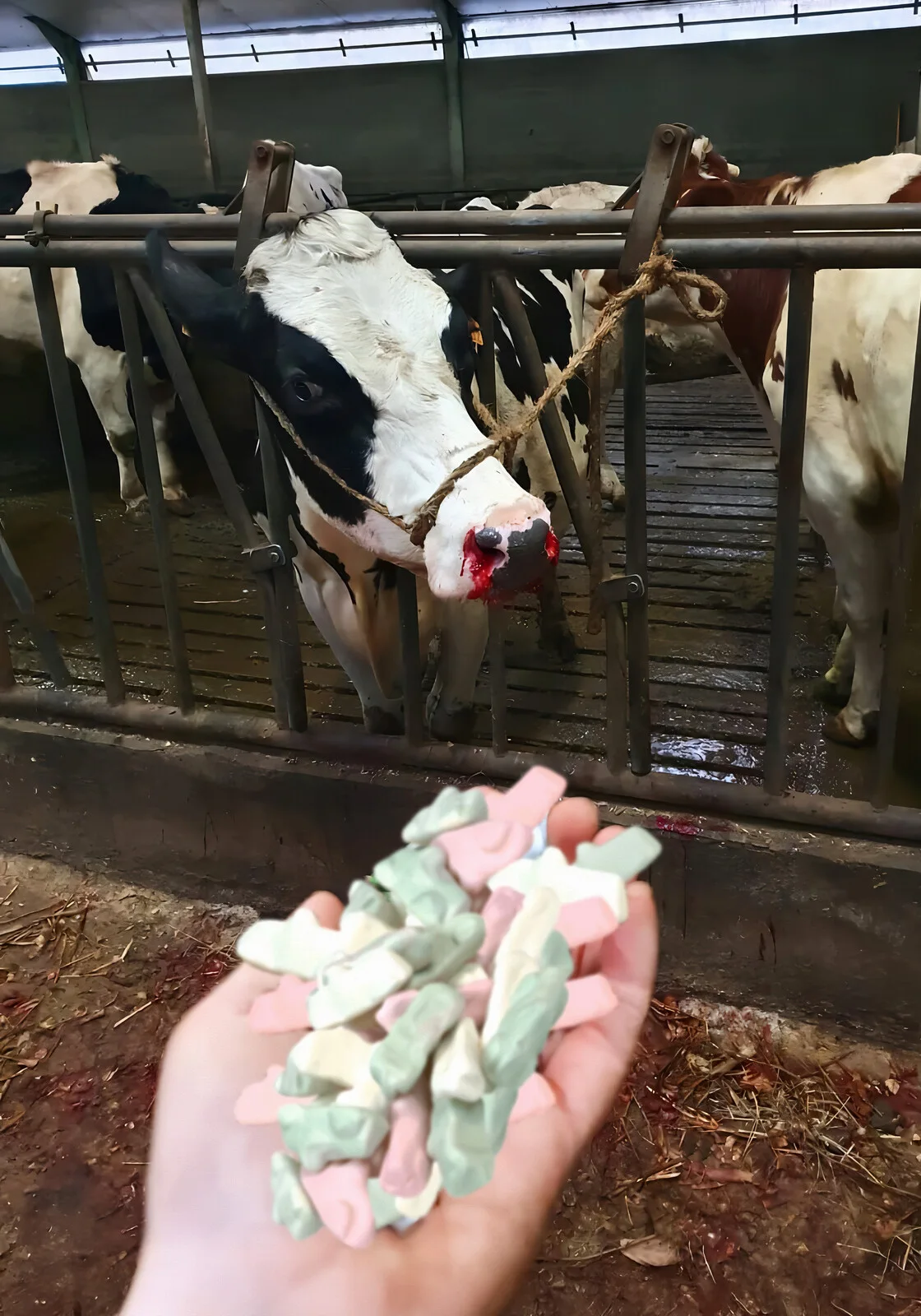
Spice up your moo
This is not merely a campaign; it is a cultural footnote, a snapshot of ambition, absurdity, and the perpetual hunger for novelty in advertising. Somewhere between a surreal joke and a genuine pitch, “Spice up your moo” stands as both satire and suggestion, proposing that cows, like humans, might crave variety in their diet, or at the very least, in their lives.
Inspired by a real letter from a farmer and expanded upon by an overenthusiastic creative named Dennis, this fictional pitch for Ahlgrens Bilar is not about dairy enhancement—it’s about the slippery slope of marketing logic. If everything is a potential market, why not ruminants?
What follows is a tongue-in-cheek dossier of ideas, images, and slogans. Whether you take it seriously or not, one thing is sure: advertising has never chewed its cud quite like this. This may not have happened. Or perhaps it did. Either way, it’s a story that resonates with the human experience, a story you already carry in your blood.
”The Cow Who Chewed the Cars
In a field not far from Växjö town,
Lived a cow of ordinary brown.
She grazed on grass, as cows will do,
And chewed her cud beneath the blue.
But one strange day, from a farmer's hand,
She tasted something not so bland.
A candy car, soft, pink, and sweet—
She blinked, then mooed, "This is a treat!"
One bite, then two, then quite a spree,
She ate them all by two or three.
Her udder sparkled, eyes went wide,
She mooed, “The world I shall reguide!”
Her milk turned thick, with a subtle zing,
A hint of jelly in each fling.
Lattes sang, and cheese grew bold,
Yoghurt glowed with pastel gold.
The townsfolk came from near and far,
To see the cow who’d chewed a car.
And with each sip, their eyes lit up—
“By gum, we’ve found the magic cup!”
Milk made a comeback, fierce and proud,
Oat drinks vanished in the crowd.
The cow, now hailed as Dairy Queen,
Grinned from every magazine.
Ahlgrens wept with sugared glee,
"She’s changed the world, this cow, you see!"
No longer just a chewing snack—
Their cars brought the milky glory back.
So if you see a cow today,
Just toss a car along her way.
You never know what change may bloom—
When candy cars go moo with zoom.”
Malmö June 2025
Spice up your moo – one car at a time.
The world loves creative advertising — surely even the bored cows in the barn do. Just imagine standing there all day, chewing cud. They need some cheering up, and we, with our boundless creativity, have the power to engage them and attract new consumers. Our creativity is a force to be reckoned with, inspiring and motivating us to reach new heights in advertising.
One of my all-time favourites was the famous Merry Fruit Soda cinema ad from fifty years ago. It depicted an emaciated man crawling through the dunes of a desolate desert. Not a mirage in sight. Then you hear the distant drone of an approaching aeroplane. Soon, it's directly overhead, and out of the sky drops a crate of 24 cans of Merry. It lands squarely on the poor man’s head. A voice from above solemnly declares: “Merry quenched his thirst.”
But now, let’s turn to what this image tells us: an ad campaign aimed at a whole new customer base for Ahlgren’s unstoppable cars.
The image could well be surreal, darkly comic, and bordering on the absurd. A cow, its nostrils dyed in pastel stickiness, gazes from behind the bars of a milking stall. In the foreground: a human hand, lovingly offering a fistful of Ahlgrens Cars. This isn’t merely advertising; it’s dadaism. It’s performance art in an apron, with a satirical aftertaste of every mysterious additive we’ve learned to live with.
Don’t take it too seriously—unless, of course, you picture Werner Herzog directing a candy commercial during a full-blown existential crisis.
But imagine, just for a moment, that during a prolonged creative drought and declining sales, an employee proposed what he believed was the idea of the century. A game-changer. A blockbuster. This campaign, with its surreal, darkly comic, and bordering on the absurd imagery, could be the breath of fresh air we've been waiting for. It's a testament to the creativity and innovation that we bring to our marketing.
And now the internal memo – “Spice up your moo” from Dennis Ahlgren (Senior Field Creative – Ruminant Division). His name is the great-grandson of founder Fredrik Ahlgren. He drafted the following internal proposal for the next Think Tank meeting. He opened with gusto:
"Spice up your moo."
Dear Executive Team,
Following direct consumer feedback (see attached: “A cow ate a bag of Ahlgrens Cars and survived”) and visual documentation from a barn in Blekinge, I propose we radically redefine our target demographic.
We’ve spent years chasing new markets:
Children. Nostalgics. Agricultural trade fairs.
But we’ve overlooked a loyal, grass-fed, highly chew-oriented audience:
Cows.
What I envision is pure marketing poetry: A cow. A hand. A handful of Ahlgrens Cars. A silent agreement. This is not just an ad, it's a unique selling point that can set us apart in the market.
A retooled twist on our classic slogan:
“There’s only one way to stop them—straight into the cow’s mouth.”
And a brand-new campaign straight from the barn:
“Spice up your moo – one car at a time.”
‘Video for social media and YouTube:’
Extreme close-up. Caramel-coloured nostrils.
Voice-over: ‘“Not all journeys begin on the road.”‘
Headline: “From moo to vroom!”
‘TV spot:’
A cow gazes solemnly through iron bars.
Soundtrack: a painfully slow engine start. Possibly a Ferrari.
“Why chew grass when you can chew class?”
‘Text over a muddy barn floor.’
The cars glisten in the hay like jewels in dirt.
“Warning: may cause spontaneous udder joy.”
‘A muted trumpet plays “Also sprach Zarathustra” as a single drop of milk falls in slow motion. The cow doesn’t blink. Not once.’
Voice from above, like God: “Cows can’t drive—but they remember.”
Print ad for street campaigns: Pitch black background. One cow. Just the nose. One pastel-colored Ahlgrens Car gleaming in profile. The stare says it all: “You know what you did.”
Media Strategy:
Here’s the snag: our key demographic—rural Swedes, farmers, livestock handlers—watches ‘SVT’. They adore “The Great Moose Migration,” “Landet Runt,” and all the soft-focus nature series. However, SVT doesn’t run adverts. At all.
My proposal: TV4. Sweden’s most prominent commercial broadcaster has national reach. They air “Farmer Wants a Wife,” “The Farm,” “Morning News,” and a wealth of local content via TV4 Play Regional.
Strengths:
They reach both farmers and their cows. As one informant mentioned, many farmers have a television screen installed in their barn. The cows are watching. Probably more than we think.
Anticipating objections:
Yes, the National Food Agency will call.
Yes, this is legally… slippery when chewed. But it’s also… beautiful? At the very least: unforgettable. Rest assured, we will navigate any legal challenges with the same creativity and innovation that we bring to our marketing.
And perhaps, if we press our ears to the pasture and listen closely, this is precisely what the cows have been longing for:
A product made for sweet-toothed humans—seen from a bovine, earthbound perspective.
Dear friends, it is time to reinvent the brand.
Tooth by tooth. Chew by chew—nostril by nostril.
Yours in innovation,
Dennis
Senior Field Creative – Ruminant Division
However, the campaign never launched. Dennis still works there for reasons that are difficult to understand fully.
There are advertising campaigns that have gone spectacularly wrong — and today, they’re shown in university lecture halls as cautionary tales, enlightening us about the potential risks in our industry. These lessons, though learned the hard way, inform our decisions and strategies, making us more knowledgeable and better equipped in our field.
One of the most infamous examples of a commercial backfiring is Pepsi’s “Live for Now” campaign from 2017, starring Kendall Jenner. The ad was intended to portray Pepsi as a symbol of peace and unity, but was met with a storm of criticism for trivialising social justice movements and exploiting activism for commercial gain.
In the ad, Jenner leaves a fashion photoshoot to join a protest march. She approaches a line of police officers and hands one of them a can of Pepsi, prompting cheers from the crowd. The scene closely resembled real-life protests against police brutality, particularly those led by the Black Lives Matter movement, and many felt the commercial diminished the seriousness of those struggles.
The backlash was swift and fierce, mainly due to the amplifying effect of social media. Platforms like Twitter and Instagram exploded with condemnation, and public figures, including Bernice King, daughter of Martin Luther King Jr., expressed their dismay. This incident highlights the importance of brands being acutely aware of the influence of social media in shaping public perception. Pepsi pulled the ad within 24 hours and issued an apology, admitting they had missed the mark.
Bone-dry reflection:
When you try to solve complex societal issues with a can of soda, you risk coming across as tone-deaf and opportunistic. It’s a stark reminder that authenticity and contextual awareness are not just buzzwords, but essential principles in advertising. Embracing these principles reassures us of our integrity and builds confidence in our audience.
And another juicy one. When Cool Turned Cold Sweat: Calvin Klein’s Basement Series, 1995
It was meant to be raw. Rebellious. Retro. A series of print ads and TV spots from Calvin Klein in 1995 took fashion advertising down into the basement — quite literally. On screen, teenage models, sometimes as young as 15, appeared in what looked like a damp, concrete bunker. An adult voice, off-camera, asked questions that should never be asked on film, creating a shock value that not only intrigued but also unsettled the audience.
Everything was deliberately gritty: the lighting, the sound, the clothes, the camera angles. It was designed to look real yet felt like something else entirely, evoking a casting couch aesthetic. The outfits were minimal, and the mood voyeuristic. The imagery was grainy, retro, and unpolished — like amateur porn.
No catchy slogans. Just “Calvin Klein Jeans.” The rest was left to insinuation.
What went wrong was a visual aesthetic many called pedophilic: critics and parent organisations labeled it “soft child porn.” It quickly became a textbook case of how the fashion industry exploits young bodies.
It soon became clear that someone in marketing had taken the term “edgy” to its most literal extreme. Reactions were swift. Critics, parent watchdog groups, and eventually the FBI saw something that no longer qualified as fashion. It wasn’t the jeans that caught people’s attention — it was the disturbing context in which they appeared. The public's strong reaction led to a federal investigation and the campaign's eventual withdrawal within days, underscoring its significant and far-reaching societal impact.
In hindsight, it stands as one of the clearest examples of a brand trying to be ahead of its time, showcasing the brand's unwavering ambition and visionary spirit. However, it ended up on the wrong side of the zeitgeist. Calvin Klein, once praised for pushing the envelope (not least with the 1980 Brooke Shields campaign), now learned that some boundaries aren’t meant to bend. They snap. And when they do, it echoes.
A brand can whisper suggestions. But when the public whispers back, “Is this really okay?” — something has gone very wrong.
Aftermath:
It’s now considered one of the most notorious examples of visual overreach in advertising. Many believe it redefined the line between edgy and unacceptable in commercial aesthetics.
Calvin Klein, once celebrated for rewriting the rules of cool, was forced to defend itself publicly.
In comparison, Merry lands flat on the desert floor, and Dennis’s idea doesn’t exactly soar either. There were surely those who thought it cruel to quench a man’s thirst so brutally, and no doubt animal rights advocates would protest feeding candy to vegetarians.
Yum-yum! Moo-licious!
Jörgen Thornberg
Spice up your moo, 2025
Digital
50 x 70 cm
3 200 kr
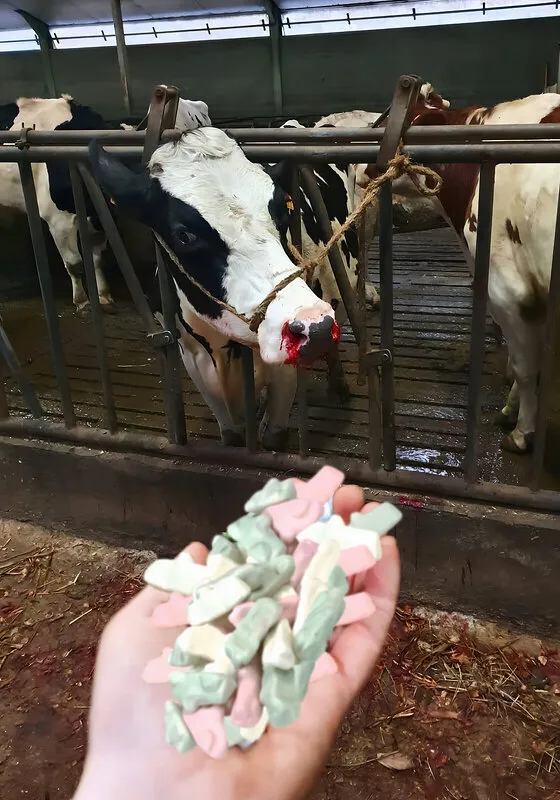
Spice up your moo
This is not merely a campaign; it is a cultural footnote, a snapshot of ambition, absurdity, and the perpetual hunger for novelty in advertising. Somewhere between a surreal joke and a genuine pitch, “Spice up your moo” stands as both satire and suggestion, proposing that cows, like humans, might crave variety in their diet, or at the very least, in their lives.
Inspired by a real letter from a farmer and expanded upon by an overenthusiastic creative named Dennis, this fictional pitch for Ahlgrens Bilar is not about dairy enhancement—it’s about the slippery slope of marketing logic. If everything is a potential market, why not ruminants?
What follows is a tongue-in-cheek dossier of ideas, images, and slogans. Whether you take it seriously or not, one thing is sure: advertising has never chewed its cud quite like this. This may not have happened. Or perhaps it did. Either way, it’s a story that resonates with the human experience, a story you already carry in your blood.
”The Cow Who Chewed the Cars
In a field not far from Växjö town,
Lived a cow of ordinary brown.
She grazed on grass, as cows will do,
And chewed her cud beneath the blue.
But one strange day, from a farmer's hand,
She tasted something not so bland.
A candy car, soft, pink, and sweet—
She blinked, then mooed, "This is a treat!"
One bite, then two, then quite a spree,
She ate them all by two or three.
Her udder sparkled, eyes went wide,
She mooed, “The world I shall reguide!”
Her milk turned thick, with a subtle zing,
A hint of jelly in each fling.
Lattes sang, and cheese grew bold,
Yoghurt glowed with pastel gold.
The townsfolk came from near and far,
To see the cow who’d chewed a car.
And with each sip, their eyes lit up—
“By gum, we’ve found the magic cup!”
Milk made a comeback, fierce and proud,
Oat drinks vanished in the crowd.
The cow, now hailed as Dairy Queen,
Grinned from every magazine.
Ahlgrens wept with sugared glee,
"She’s changed the world, this cow, you see!"
No longer just a chewing snack—
Their cars brought the milky glory back.
So if you see a cow today,
Just toss a car along her way.
You never know what change may bloom—
When candy cars go moo with zoom.”
Malmö June 2025
Spice up your moo – one car at a time.
The world loves creative advertising — surely even the bored cows in the barn do. Just imagine standing there all day, chewing cud. They need some cheering up, and we, with our boundless creativity, have the power to engage them and attract new consumers. Our creativity is a force to be reckoned with, inspiring and motivating us to reach new heights in advertising.
One of my all-time favourites was the famous Merry Fruit Soda cinema ad from fifty years ago. It depicted an emaciated man crawling through the dunes of a desolate desert. Not a mirage in sight. Then you hear the distant drone of an approaching aeroplane. Soon, it's directly overhead, and out of the sky drops a crate of 24 cans of Merry. It lands squarely on the poor man’s head. A voice from above solemnly declares: “Merry quenched his thirst.”
But now, let’s turn to what this image tells us: an ad campaign aimed at a whole new customer base for Ahlgren’s unstoppable cars.
The image could well be surreal, darkly comic, and bordering on the absurd. A cow, its nostrils dyed in pastel stickiness, gazes from behind the bars of a milking stall. In the foreground: a human hand, lovingly offering a fistful of Ahlgrens Cars. This isn’t merely advertising; it’s dadaism. It’s performance art in an apron, with a satirical aftertaste of every mysterious additive we’ve learned to live with.
Don’t take it too seriously—unless, of course, you picture Werner Herzog directing a candy commercial during a full-blown existential crisis.
But imagine, just for a moment, that during a prolonged creative drought and declining sales, an employee proposed what he believed was the idea of the century. A game-changer. A blockbuster. This campaign, with its surreal, darkly comic, and bordering on the absurd imagery, could be the breath of fresh air we've been waiting for. It's a testament to the creativity and innovation that we bring to our marketing.
And now the internal memo – “Spice up your moo” from Dennis Ahlgren (Senior Field Creative – Ruminant Division). His name is the great-grandson of founder Fredrik Ahlgren. He drafted the following internal proposal for the next Think Tank meeting. He opened with gusto:
"Spice up your moo."
Dear Executive Team,
Following direct consumer feedback (see attached: “A cow ate a bag of Ahlgrens Cars and survived”) and visual documentation from a barn in Blekinge, I propose we radically redefine our target demographic.
We’ve spent years chasing new markets:
Children. Nostalgics. Agricultural trade fairs.
But we’ve overlooked a loyal, grass-fed, highly chew-oriented audience:
Cows.
What I envision is pure marketing poetry: A cow. A hand. A handful of Ahlgrens Cars. A silent agreement. This is not just an ad, it's a unique selling point that can set us apart in the market.
A retooled twist on our classic slogan:
“There’s only one way to stop them—straight into the cow’s mouth.”
And a brand-new campaign straight from the barn:
“Spice up your moo – one car at a time.”
‘Video for social media and YouTube:’
Extreme close-up. Caramel-coloured nostrils.
Voice-over: ‘“Not all journeys begin on the road.”‘
Headline: “From moo to vroom!”
‘TV spot:’
A cow gazes solemnly through iron bars.
Soundtrack: a painfully slow engine start. Possibly a Ferrari.
“Why chew grass when you can chew class?”
‘Text over a muddy barn floor.’
The cars glisten in the hay like jewels in dirt.
“Warning: may cause spontaneous udder joy.”
‘A muted trumpet plays “Also sprach Zarathustra” as a single drop of milk falls in slow motion. The cow doesn’t blink. Not once.’
Voice from above, like God: “Cows can’t drive—but they remember.”
Print ad for street campaigns: Pitch black background. One cow. Just the nose. One pastel-colored Ahlgrens Car gleaming in profile. The stare says it all: “You know what you did.”
Media Strategy:
Here’s the snag: our key demographic—rural Swedes, farmers, livestock handlers—watches ‘SVT’. They adore “The Great Moose Migration,” “Landet Runt,” and all the soft-focus nature series. However, SVT doesn’t run adverts. At all.
My proposal: TV4. Sweden’s most prominent commercial broadcaster has national reach. They air “Farmer Wants a Wife,” “The Farm,” “Morning News,” and a wealth of local content via TV4 Play Regional.
Strengths:
They reach both farmers and their cows. As one informant mentioned, many farmers have a television screen installed in their barn. The cows are watching. Probably more than we think.
Anticipating objections:
Yes, the National Food Agency will call.
Yes, this is legally… slippery when chewed. But it’s also… beautiful? At the very least: unforgettable. Rest assured, we will navigate any legal challenges with the same creativity and innovation that we bring to our marketing.
And perhaps, if we press our ears to the pasture and listen closely, this is precisely what the cows have been longing for:
A product made for sweet-toothed humans—seen from a bovine, earthbound perspective.
Dear friends, it is time to reinvent the brand.
Tooth by tooth. Chew by chew—nostril by nostril.
Yours in innovation,
Dennis
Senior Field Creative – Ruminant Division
However, the campaign never launched. Dennis still works there for reasons that are difficult to understand fully.
There are advertising campaigns that have gone spectacularly wrong — and today, they’re shown in university lecture halls as cautionary tales, enlightening us about the potential risks in our industry. These lessons, though learned the hard way, inform our decisions and strategies, making us more knowledgeable and better equipped in our field.
One of the most infamous examples of a commercial backfiring is Pepsi’s “Live for Now” campaign from 2017, starring Kendall Jenner. The ad was intended to portray Pepsi as a symbol of peace and unity, but was met with a storm of criticism for trivialising social justice movements and exploiting activism for commercial gain.
In the ad, Jenner leaves a fashion photoshoot to join a protest march. She approaches a line of police officers and hands one of them a can of Pepsi, prompting cheers from the crowd. The scene closely resembled real-life protests against police brutality, particularly those led by the Black Lives Matter movement, and many felt the commercial diminished the seriousness of those struggles.
The backlash was swift and fierce, mainly due to the amplifying effect of social media. Platforms like Twitter and Instagram exploded with condemnation, and public figures, including Bernice King, daughter of Martin Luther King Jr., expressed their dismay. This incident highlights the importance of brands being acutely aware of the influence of social media in shaping public perception. Pepsi pulled the ad within 24 hours and issued an apology, admitting they had missed the mark.
Bone-dry reflection:
When you try to solve complex societal issues with a can of soda, you risk coming across as tone-deaf and opportunistic. It’s a stark reminder that authenticity and contextual awareness are not just buzzwords, but essential principles in advertising. Embracing these principles reassures us of our integrity and builds confidence in our audience.
And another juicy one. When Cool Turned Cold Sweat: Calvin Klein’s Basement Series, 1995
It was meant to be raw. Rebellious. Retro. A series of print ads and TV spots from Calvin Klein in 1995 took fashion advertising down into the basement — quite literally. On screen, teenage models, sometimes as young as 15, appeared in what looked like a damp, concrete bunker. An adult voice, off-camera, asked questions that should never be asked on film, creating a shock value that not only intrigued but also unsettled the audience.
Everything was deliberately gritty: the lighting, the sound, the clothes, the camera angles. It was designed to look real yet felt like something else entirely, evoking a casting couch aesthetic. The outfits were minimal, and the mood voyeuristic. The imagery was grainy, retro, and unpolished — like amateur porn.
No catchy slogans. Just “Calvin Klein Jeans.” The rest was left to insinuation.
What went wrong was a visual aesthetic many called pedophilic: critics and parent organisations labeled it “soft child porn.” It quickly became a textbook case of how the fashion industry exploits young bodies.
It soon became clear that someone in marketing had taken the term “edgy” to its most literal extreme. Reactions were swift. Critics, parent watchdog groups, and eventually the FBI saw something that no longer qualified as fashion. It wasn’t the jeans that caught people’s attention — it was the disturbing context in which they appeared. The public's strong reaction led to a federal investigation and the campaign's eventual withdrawal within days, underscoring its significant and far-reaching societal impact.
In hindsight, it stands as one of the clearest examples of a brand trying to be ahead of its time, showcasing the brand's unwavering ambition and visionary spirit. However, it ended up on the wrong side of the zeitgeist. Calvin Klein, once praised for pushing the envelope (not least with the 1980 Brooke Shields campaign), now learned that some boundaries aren’t meant to bend. They snap. And when they do, it echoes.
A brand can whisper suggestions. But when the public whispers back, “Is this really okay?” — something has gone very wrong.
Aftermath:
It’s now considered one of the most notorious examples of visual overreach in advertising. Many believe it redefined the line between edgy and unacceptable in commercial aesthetics.
Calvin Klein, once celebrated for rewriting the rules of cool, was forced to defend itself publicly.
In comparison, Merry lands flat on the desert floor, and Dennis’s idea doesn’t exactly soar either. There were surely those who thought it cruel to quench a man’s thirst so brutally, and no doubt animal rights advocates would protest feeding candy to vegetarians.
Yum-yum! Moo-licious!
3 200 kr

Jörgen Thornberg
Malmö
Lite om bilder och mig. Translation in English at the end.
Jag är en nyfiken person som ser allt i bilder, även det jag fäster i ord, gärna tillsammans för bakom alla mina bilder finns en berättelse. Till vissa bilder hör en kortare eller längre novell som följer med bilden.
Bilder berättar historier. Jag omges av naturlig skönhet, intressanta människor och historia var jag än går. Jag använder min kamera för att dokumentera världen och blanda det jag ser med vad jag känner för att fånga den dolda magin.
Mina bilder berättar mina historier. Genom mina bilder, tryck och berättelser. Jag bjuder in dig att ta del av dessa berättelser, in i ditt liv och hem och dela min mycket personliga syn på vår värld. Mer än vad ögat ser. Jag tänker i bilder, drömmer och skriver och pratar om dem; följaktligen måste jag också skapa bilder. De blir vad jag ser, inte nödvändigtvis begränsade till verkligheten. Det finns en bild runt varje hörn. Jag hoppas att du kommer att se vad jag såg och gilla det.
Jag är också en skrivande person och till många bilder hör en kortare eller längre essay. Den följer med tavlan, tryckt på fint papper och med en personlig hälsning från mig.
Flertalet bilder startar sin resa i min kamera. Enkelt förklarat beskriver jag bilden jag ser i mitt inre, upplevd eller fantiserad. Bilden uppstår inom mig redan innan jag fått okularet till ögat. På bråkdelen av ett ögonblick ser jag vad jag vill ha och vad som kan göras med bilden. Här skall jag stoppa in en giraff, stålmannen, Titanic eller vad det är min fantasi finner ut. Ännu märkligare är att jag kommer ihåg minnesbilden långt efteråt när det blir tid att skapa verket. Om jag lyckas eller inte, är upp till betraktaren, oftast präglat av en stråk av svart humor – meningen är att man skall bli underhållen. Mina bilder blir ofta en snackis där de hänger.
Jag föredrar bilder som förmedlar ett budskap i flera lager. Vid första anblicken fylld av feel-good, en vacker utsikt, fint väder, solen skiner, blommor på ängen eller vattnet som ligger förrädiskt spegelblankt. I en sådan bild kan jag gömma min egentliga berättelse, mitt förakt för förtryckare och våldsverkare, rasister och fördomsfulla människor - ett gärna återkommande motiv mer eller mindre dolt i det vackra motivet. Jag försöker förena dem i ett gemensamt narrativ.
Bild och formgivning har löpt som en röd tråd genom livet. Fotokonst känns som en värdig final som jag gärna delar med mig.
Min genre är vid som framgår av mina bilder, temat en blandning av pop- och gatukonst i kollage som kan bestå av hundratals lager. Vissa bilder kan ta veckor, andra någon dag innan det är dags att överlämna resultatet till printverkstaden. Fine Art Prints är digitala fotocollage. I dessa kollage sker rivandet, klippandet, pusslandet, målandet, ritandet och sprayningen digitalt. Det jag monterar in kan vara hundratals år gamla bilder som jag omsorgsfullt frilägger så att de ser ut att vara en del av tavlan men också bilder skapade av mig själv efter min egen fantasi. Därefter besöks printstudion och för vissa bilder numrera en limiterad upplaga (oftast 7 exemplar) och signera för hand. Vissa bilder kan köpas i olika format. Det är bara att fråga efter vilka. Gillar man en bild som är 70x100 men inte har plats på väggen, går den kanske att få i 50x70 cm istället. Frågan är fri.
Metoden Giclée eller Fine Art Print som det också kallas är det moderna sättet för framställning av grafisk konst. Villkoret för denna typ av utskrifter är att en högkvalitativ storformatskrivare används med åldersbeständigt färgpigment och konstnärspapper eller i förekommande fall på duk. Pappret som används möter de krav på livslängd som ställs av museer och gallerier. Normalt säljer jag mina bilder oinramade så att den nya ägaren själv kan bestämma hur de skall se ut, med eller utan passepartout färg på ram, med eller utan glas etc..
Under många år ställde jag bara ut på nätet, i valda grupper och på min egen Facebooksida - https://www.facebook.com/jorgen.thornberg.9
Jag finns också på en egen hemsida som tyvärr inte alltid är uppdaterad – https://www.jth.life/ Där kan du också läsa en del av de berättelser som följer med bilden.
UTSTÄLLNINGAR
Luftkastellet, oktober 2022
Konst i Lund, november 2022
Luftkastellet, mars 2023
Engleson Galleri Caroli, april 2023
Hydra, Greece June 2023
Engleson Galleri Caroli, oktober 2023
Toppen, Höllviken december 2023
Luftkastellet, mars 2024
Torups Galleri, mars 2024
Venice, May 2024
Luftkastellet, oktober 2024
Konst i Advent, December 2024
Galleri Engleson, Caroli December 2024
Jäger & Jansson Galleri, april 2025
A bit about pictures and me.
I'm a curious person who sees everything in pictures, even what I express in words, often combining them, for behind all my pictures lies a story. These narratives, some as short as a single image and others as long as a novel, are the heart and soul of my work.
Pictures tell stories. Wherever I go, I'm surrounded by natural beauty, exciting people, and history. I use my camera to document the world and blend what I see with what I feel to capture the hidden magic.
My images tell my stories. Through my pictures, prints, and narratives, I invite you to partake in these stories in your life and home and share my deeply personal perspective of our world. More than meets the eye. I think in pictures, dream, write, and talk about them; consequently, I must create images too. They become what I see, not necessarily confined to reality. There's a picture around every corner. I hope you'll see what I saw and enjoy it.
I'm also a writer, and many images come with a shorter or longer essay. It accompanies the painting, printed on fine paper with my personal greeting.
Many pictures start their journey on my camera. Simply put, I describe the image I see in my mind, experienced or imagined. The image arises within me even before I bring the eyepiece to my eye. In a fraction of a moment, I see what I want and what can be done with the picture. Here, I'll insert a giraffe, Superman, the Titanic, or whatever my imagination conjures up. Even stranger is that I remember the mental image long after it's time to create the work. Whether I succeed is up to the observer, often imbued with a streak of black humour – the aim is to entertain. My pictures usually become a talking point wherever they hang.
I prefer pictures that convey a message in multiple layers. At first glance, they're filled with feel-good vibes, a beautiful view, lovely weather, the sun shining, flowers in the meadow, or the water lying deceptively calm. But beneath this surface beauty, I often conceal a deeper story, a narrative that challenges societal norms or explores the human condition. I invite you to delve into these hidden narratives and discover the layers of meaning within my work.
Picture and design have been a thread running through my life. Photographic art feels like a fitting finale, and I'm happy to share it.
My genre is varied, as seen in my pictures; the theme is a blend of pop and street art in collages that can consist of hundreds of layers. Some images can take weeks, others just a day before it's time to hand over the result to the print workshop. Fine Art Prints are digital photo collages. In these collages, tearing, cutting, puzzling, painting, drawing, and spraying happen digitally. What I insert can be images hundreds of years old that I carefully extract so they appear to be part of the painting, but also images created by myself, now also generated from my imagination. Next, visit the print studio and, for certain images, number a limited edition (usually 7 copies) and sign them by hand. Some images may be available in other formats. Just ask which ones. If you like an image that's 70x100 but doesn't have space on the wall, you might be able to get it in 50x70 cm instead. The question is open.
The Giclée method, or Fine Art Print as it's also called, is the modern way of producing graphic art. This method ensures the highest quality and longevity of the artwork, using a high-quality large-format printer with archival pigment inks and artist paper or, in some cases, canvas. The paper used meets the longevity requirements set by museums and galleries. I sell my pictures unframed, allowing the new owner to personalise their artwork, confident in the lasting value and quality of the piece.
For many years, I only exhibited online, in selected groups, and on my Facebook page - https://www.facebook.com/jorgen.thornberg.9. I also have my website, which unfortunately is not constantly updated - https://www.jth.life/. You can also read some of the stories accompanying the pictures there.
EXHIBITIONS
Luftkastellet, October 2022
Art in Lund, November 2022
Luftkastellet, March 2023
Engleson Gallery Caroli, April 2023
Hydra, Greece June 2023
Engleson Gallery Caroli, October 2023
Toppen, Höllviken December 2023
Luftkastellet, March 2024
Torup Gallery, March 2024
Venice, May 2024
UTSTÄLLNINGAR
Luftkastellet, oktober 2022
Konst i Lund, november 2022
Luftkastellet, mars 2023
Engleson Galleri Caroli, april 2023
Hydra, Greece June 2023
Engleson Galleri Caroli, oktober 2023
Toppen, Höllviken december 2023
Luftkastellet, mars 2024
Torups Galleri, mars 2024
Venice, May 2024
Luftkastellet, October 2024
Konst i Advent, December 2024
Galleri Engleson, Caroli December 2024
Jäger & Jansson Galleri, April 2025
Utbildning
Autodidakt
Medlem i konstnärsförening
Öppna Sinnen
Med i konstrunda
Konstrundan i Skåne
Utställningar
Luftkastellet, October 2022
Art in Lund, November 2022
Luftkastellet, March 2023
Engleson Gallery Caroli, April 2023
Hydra, Greece June 2023
Engleson Gallery Caroli, October 2023
Toppen, Höllviken December 2023
Luftkastellet, March 2024
Torup Gallery, March 2024
Venice, May 2024