Vi använder cookies för att ge dig bästa möjliga upplevelse. Välj vilka cookies du tillåter.
Läs mer i vår integritetspolicy
Jörgen Thornberg
Champagne and Cunning, 2025
Digital
50 x 70 cm
3 200 kr
Champagne and Cunning
Despite its serious undertones, this text becomes increasingly entertaining. Stay with us until the end and discover the shocking saga of how the arch-swindler Carlo Stronzi and his equally appalling wife Alessandra deceived grieving pet owners by promising their beloved animals a dignified farewell. The twists and turns of this narrative will keep you captivated.
Unravel the mystery and learn more about the pets' final journey. This tale, filled with suspense, will keep you on the edge of your seat, eager to know more.
"A Hymn to the Heavenly Dump (or: Stronzi’s Funeral March in Verse)
In Milan’s shadows, where greed takes root,
lived Carlo, a swindler in a funeral suit.
By his side, with a smile carved from stone,
Alessandra, whose morals were wholly unknown.
They offered the grieving a sweet, sacred rite,
A farewell for Fluffy was bathed in soft light.
With incense and organ in a sombre display,
they ushered the pets to their final "away."
A chapel of plywood, a bell made of tape,
a coffin of splendour—a grand velvet drape.
A false priest who sprayed paint, a mourner on hire,
fake tears and fake flames and a soundtracked fire.
From poodles to parakeets, turtles and more,
all rolled on a belt through the soap factory's door.
A mattress below for the final descent,
then off to the landfill, their bodies were sent.
The owners received a receipt and a nod,
believing their pets were safe with God.
But God, if involved, must have laughed till He cried,
for the truth lay beneath where old fridges died.
Then came the zebra, majestic and striped,
whose tragic end left the scam overhyped.
A single striped leg poked up from the waste
like justice herself had returned in distaste.
The bereaved doctor spotted the hoof and the hide
and summoned the law with revenge in his stride.
Thus ended the reign of the pet funeral lords—
not with fire but with hooves breaching landfill hoards.
So beware of a send-off that seems heaven-sent—
check the back gate and where the chimney's bent.
For Stronzi and wife were no angels of grace
but recyclers of coffins—and shame's resting place.“
Malmö, March 2025
Champagne and Cunning
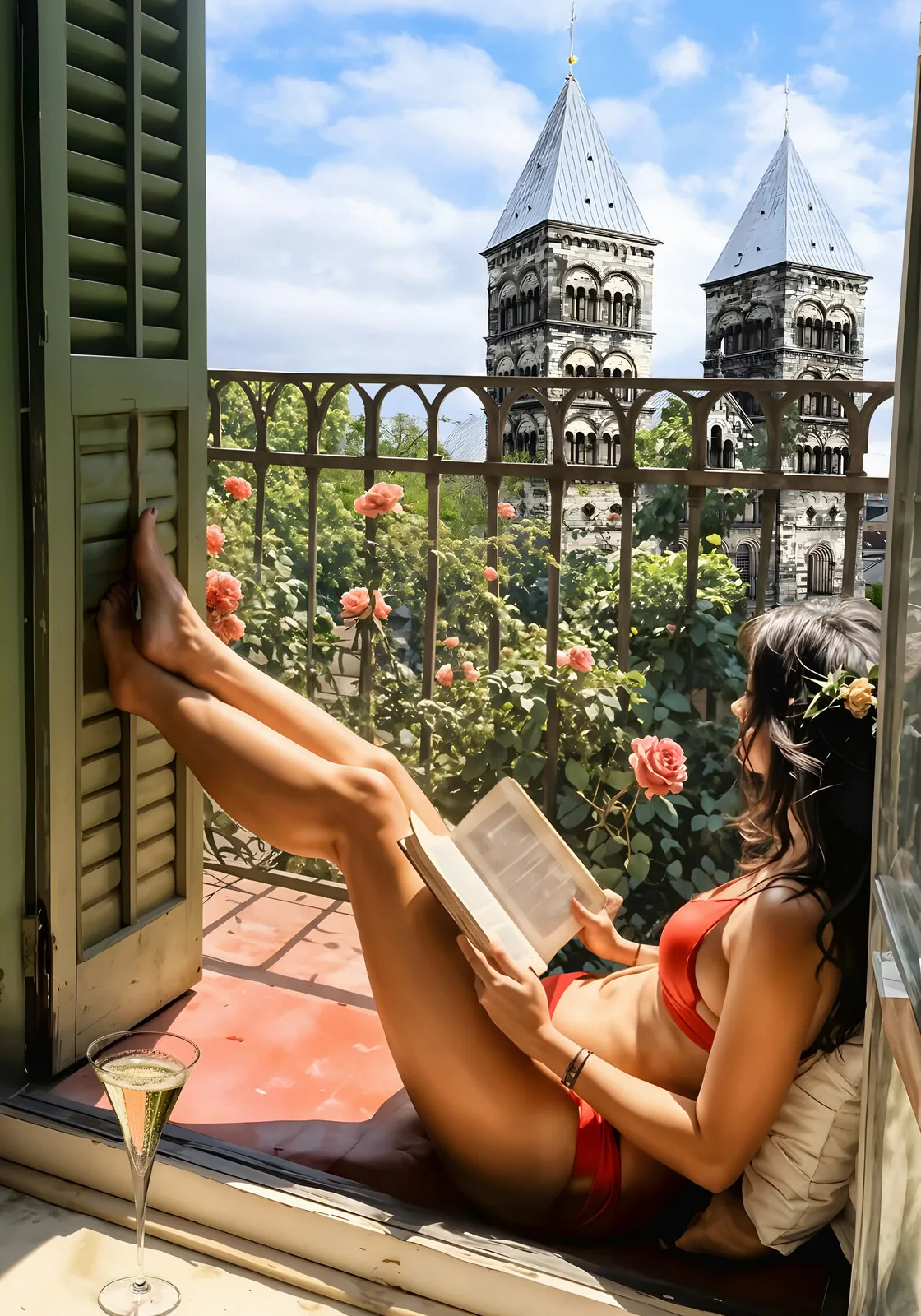
The title should not be misunderstood. The young lady on the balcony, a book resting in her lap and a glass of champagne at her feet, was relishing a lovely early summer’s day. She was reading her own printed exam paper—an essay on cunning business deals, far too shrewd to benefit more than one party. This deceptively idyllic image bore little relation to the content of her thesis.
Maxine Turner, a bright and dedicated student, was pursuing her studies in economics at LUSEM—Lund’s globally renowned business school. She was enrolled in the International Business Bachelor’s Programme, a rigorous course that delved into cross-border, cross-cultural international business, trade, law, and economics, primarily focusing on global financial crime. Her academic journey led her to encounter master fraudsters like Charles Ponzi and his many successors.
The champagne was intended to set the mood—after all, that drink is one of a con artist’s finest weapons. “Where wine flows in, sense flows out,” as the saying goes, so Maxine limited herself to just one glass. Bacchus has drowned more souls than Neptune. Still, even if the topic was serious, months of hard work warranted a celebration.
Ponzi was such a skilled con man that his signature fraud now bears his name: The Ponzi scheme lures investors and pays profits to earlier investors using funds from more recent ones. Ponzi didn’t invent the idea of “robbing Peter to pay Paul,” but he perfected it and gave it a name.
Even though Ponzi’s company amassed massive sums daily, a simple financial analysis would have revealed it was operating at a loss. Existing investors could be paid as long as new money kept pouring in. That was Ponzi’s only way of providing returns since he made no effort to generate profit.
His promises of gold-paved paths ruined countless lives—primarily ordinary people simply hoping to add a golden edge to their lives, and the faster, the better.
There have been many like him, both before and after—some even more dangerous. One of Ponzi’s most notorious imitators, Bernie Madoff, orchestrated a similar scheme that collapsed in 2008 and cost his investors around $18 billion—53 times the losses in Ponzi’s original scam. Many of Madoff’s victims could afford the loss; unlike Ponzi’s, these were already wealthy. Greed drove them: they didn’t need to amass more; they desired more—ideally, the most.
Despite their ruthless crimes, these two conmen shared one thing in common: They were still perceived as gentlemen who knew how to conduct themselves. That couldn’t be said for the subject of Maxine’s study—Italian financier Carlo Stronzi and his equally appalling wife, Alessandra.
Stronzi built his criminal empire on bold promises—promises he did keep, but always in ways that ensured someone else would pay the price—practically everyone but himself. His criminal toolkit included threats and blackmail, and his path was littered with despair, broken lives, and even suicides. The epicentre of operations was his brokerage firm, ‘Stronzi Turbo Finanza’—a name that should’ve raised a red flag for any sane investor.
Stronzi’s business idea was as simple as it was diabolical. Maxine encapsulated his scheme in one paragraph:
“Build a personal brand, utilise it to attract other people’s money—whether through quick wins on the stock market, illegal insider trading, undervalued real estate, speculative licensing deals, trendy TV shows, or political influence—and ensure he always profits, even when everyone else loses.”
If anyone suspects this paragraph describes Mr. Trump, the man who’s entered the White House for a second time—they wouldn’t be entirely mistaken. In a footnote, Maxine observes that although the two men never met, they had plenty in common.
“If it sounds too fantastic to be true—why do we still fall for the obvious scams?”
That wasn't Stronzi’s style. He was a different breed of financial gangster who steered clear of Ponzi-style schemes precisely because they always concluded the same: deep personal debt, bankruptcy, and years behind bars. Stronzi’s approach was more sophisticated and insidious. He operated in the shadows, manipulating markets, influencing politics, and ruining lives without getting his hands dirty. More on that later.
The brief answer to the question, “Why do people fall for this?” is greed, hope, and the illusion of a shortcut to wealth and independence. This illusion serves as a powerful motivator, promising a life of luxury, freedom from financial worries, and the respect of others. It's a seductive fantasy, one that scammers exploit to the fullest. Sometimes, vanity—the desire to be seen with the right crowd—plays a role. Many would shake hands with the devil if it meant acquiring riches (which rarely occurs).
If it sounds too good to be true, it probably is.
Some believe they’re smarter than the scam and can disembark just in time. A few succeed. There is a small contingent who can smell a con artist from afar and who knows that riding their coattails early can yield quick profits. The trick lies in knowing when to jump off—before the hysteria takes hold.
Maxine concluded that humans are not wholly rational. We are hopeful, vulnerable, and occasionally lazy. Ponzi, Madoff, Stronzi, and their ilk deftly exploit four core human weaknesses: the dream of a quick breakthrough, social status and herd behaviour, the allure of financial scams, and the belief that charisma trumps morality.
---
1. The dream of a quick breakthrough
Most of us have fantasised about a financial windfall that could liberate us from the constraints of everyday life. Scammers don’t merely sell returns—they sell hope. They promise the kind of returns capable of purchasing a mansion, a yacht, or a private jet, often accompanied by numbers, glossy brochures, and exclusive invitations. It’s the dream of being “on the inside”—finally being recognised as a winner.
2. Social status and herd behaviour
People trust people—not just prospectuses. The more others are involved, the safer it seems. “My accountant, my brother-in-law, even the bishop is in…” Ponzi and Madoff understood this and orchestrated queues. Nothing signals success like scarcity.
3. Charisma trumps morality
Maxine accurately identified a sharp truth: con artists are still considered gentlemen. A paradox, indeed. Success, style, and confidence can conceal a complete absence of conscience. We don’t always trust those most moral; we are drawn to the most persuasive.
4. We want to believe
Perhaps the saddest truth is that we want it to be true. Ponzi “delivered” on his promises—but with other people’s money. He made it work—until it didn’t—and always left destruction in his wake.
These felons make it appear effective. We buy in, and we ignore the warning signs because we are hungry for a slice of the pie.
The Ponzi model inevitably ends in bankruptcy and imprisonment. When the influx of new investors ceases, or the police come knocking, the debt catches up—and the house of cards collapses.
---
So why do people engage with these crooks?
Because they’re selling something more alluring than money, the illusion of independence in an uncertain world may be the most refined crime.
---
However, Maxine’s central thesis highlights the most dangerous kind of financial criminal—not the gentleman but the smiling gangster. Stronzi exploited the same human weaknesses as Ponzi but escalated matters when charm wasn’t sufficient.
Financial criminals who lack the gentleman’s facade operate in an entirely different realm—violence, threats, and sheer ruthlessness are wielded as tools alongside spreadsheets, inflated numbers, cooked books, and fraudulent business plans.
Stronzi combined people’s naivety and greed with power strategies taken straight from the underworld.
Maxine continued with an in-depth analysis of the methods employed by Stronzi and his ilk.
Threats and extortion: If you don’t pay, testify, stay silent or do as you’re told—something will happen to you, your company, and your family. It’s rarely stated outright, but always in such a way that the message is unmistakable.
Breach of contract as a strategy: They’re willing to sign contracts—but never to honour them. When the other party protests, they are met with shameless counterclaims, false witnesses, and an army of well-paid lawyers.
Litigation as a weapon: They know that justice is costly—and use it to their advantage. They pursue exhausting lawsuits, employing delays at every turn. Ultimately, the other party concedes—not because they are incorrect, but because they cannot afford to be right.
Shell companies and leads: The money flows through a labyrinth of companies, often in tax havens, where no actual owners can be traced. Frontmen—typically impoverished or with criminal records—are appointed as signatories.
Bought witnesses and bribed officials: They have no qualms about influencing the police, the courts, and the financial authorities—especially in nations where the legal system is feeble or corruption is rampant.
Business idea: Absolute ruthlessness. They construct their empires on fear, lies, and the fact that many individuals are too intimidated to speak out. Essentially, they adhere to the same principle as Ponzi schemes—but with brass knuckles in their back pockets and no shame in their bones. This not only perpetuates a culture of fear and silence but also exploits the vulnerabilities of those unable to defend themselves.
They are not in business. They are at war. And their weapons are legal codes, threats—and our silence. The presence of someone like Stronzi in the very heart of Milan’s financial world rendered him extraordinarily dangerous.
One who operates on the edge of this category, with a career marked by lawsuits and the ruin of others, is Mr Trump, who has ascended as far as possible in the U.S., ultimately becoming president of the entire country. A majority of voters fit Maxine’s profile of the duped.
As an appendix, Maxine recounted one of Stronzi’s early escapades. It culminated in a fiasco, compelling him and his wife to flee the country until the attention subsided. The tale is not particularly violent, but it demonstrates that Stronzi was already adept at knowing which strings to pull early in his career. The scam is nearly laughable, even if Stronzi shamelessly exploited people’s grief. This exploitation is sure to incite outrage among the audience.
Appendix to the thesis:
On giving animals a dignified burial – The story of how the Stronzis, whilst studying economics at university, ventured into the funeral business and elevated waste disposal to a social level.
It’s challenging to pinpoint individual deals since they all follow a similar pattern and are always at someone else’s expense. Nonetheless, Carlo and Alessandra’s experiences in the funeral business are pretty illustrative. Entering the human burial industry entailed too much interaction with the Church, which imposed strict regulations and oversight. The state also closely monitored the sector, adding another layer of complexity and potential scrutiny. Furthermore, it didn’t provide immediate returns—just steady income since everyone eventually dies.
Instead, they shifted their focus to what, with rising prosperity, had become a booming market—pets.
Alessandra calculated that there ought to be at least one pet per ten inhabitants in the Milan area. In other words, over three hundred thousand cats, dogs, parakeets, turtles, and God knows what else, all of which would someday cease to be someone’s joyful companion. “Animals don’t live as long as humans, and the wealthy go through several litters during their long lives,” she observed greedily. Perhaps as much as twenty per cent of people’s pets die each year, and these lack a dignified burial form. Up to sixty thousand funerals annually, of which a quarter could be deemed losses among the upper class of pets. “We can make a fortune from just a handful,” Alessandra stated coldly. Carlo always concurred with her business ideas and could only applaud such a callous and distasteful notion.
The firm ‘Institute for the Righteous Pathway to Heaven for Beloved Pets’ was registered with a down-and-out resident living under a city bridge and was listed as acting chairperson. They secured a location, procured props, and printed elegant stationery. Special attention was given to ensuring the business cards conveyed an appropriately formal appearance. A logo easily mistaken for the Vatican’s seal was developed to enhance the image of lofty connections further.
Advertisements with headlines such as “Give your beloved pet a dignified burial,” “The Heavenly Meadows Cemetery,” and “Angel Farm for Your Darling” regularly appeared in a few strategically chosen publications. The responses were meticulously analysed through documents and calendars to identify which customers would be “honoured” with their services. Most respondents exceeded what the Stronzis dared to handle and received only a polite letter of regret. This explained that, unfortunately, the institute could not care for their dearly departed but welcomed them back upon the passing of their next little darling. Those who made it through the eye of the needle all had the correct address and social status—preferably of an age that allowed them to avoid wider social circles or those assumed too busy or otherwise indisposed to investigate their pet’s final resting place energetically.
Carlo vividly recalls the stream of people who came to the institute with their beloved companions. Alessandra constantly mourns the loss of the easy money from her youth—so much so on this very day, as she lies struggling for her life at a neighbouring doctor’s office for an afternoon liposuction. These moments inspire her for new ventures, always compared to past profit-and-loss statements.
Limousines had pulled up to the modestly renovated old soap factory. The deceased pets arrived as suitably as they had lived. If the owner couldn’t supply an appropriate vehicle, the institute took care of that, too—for a fee. For this purpose, an old funeral car had been restored and adorned with the institute’s symbol.
The premises were ideal for the concept. Minor adjustments to the façade and visible interiors hardly dented the bank account. Gates and doors were given the character of a medieval church using salvaged materials. Above the main entrance, a fake bell tower was installed. The majestic chimes were produced using Carlo’s old stereo and a synthesiser. The soap factory’s tall chimney suggested the presence of an underlying crematorium, though no real smoke would ever rise. If any was required, it was arranged with a mix of weed killer and sugar. Two old furnace doors had been relocated to a newly erected wall dividing the former loading ramp and packing hall into two rooms. The outer room, with a seven-metre ceiling, was styled as a chapel, complete with two altars, a reception desk, and a few chairs—that was all. Behind the old iron doors, one was meant to sense decay. A transistor radio crackled behind the panels, imitating the hiss of burning gas, while the artificial glow of a fake fireplace behind mica windows cast light over the fires of obliteration. Not a single eye would remain dry—especially not the Stronzis’, who, with the help of onion juice, could produce torrents of sympathy for the humblest canary and oceans if it was something more extensive like a pony.
Once, when Italy played Spain in football, a former assistant had mistakenly tuned the radio to a live sports commentary. The dramatic play-by-play of a match greeted surprised mourners just as the doors were opened for the coffin’s final journey into the "crematorium." Such blunders had to be accepted, and Carlo’s gift of gab swiftly resolved the unfortunate incident. The football enthusiast’s career in pet burials was terminated, and appropriate steps were taken to ensure his future silence.
The facility bordered two parallel one-way streets, enabling discreet transport without unpleasant encounters. The closest mourners entered through the grand front gate into an air-conditioned room filled with pleasant incense and soft sacred music. Often, they brought the deceased pet along for the first visit. This suited the rational Stronzis perfectly and ensured minimal social contact with their clients. They were received by the tuxedoed Carlo, bowing servilely, washing his hands, and expressing deep condolences before leading them to Alessandra, who had the onion juice ready. She received them in mourning black behind a sandstone counter in the outer room. Torn with grief on behalf of the customers, she could still efficiently steer the proceedings toward a suitably rational moment of devotion. The animal was laid to rest on an opulent altar opposite, beneath a crucifix, flanked by a mourning Madonna and the shepherd with the dead lamb against his chest, laid upon a cloth of black terry with the discreet marking InterContinental Milano in the bottom corner.
The black marble bench allowed the pet to await its final rest while the owners were gently convinced of its exclusivity. After selecting the ceremonial level, casket type—expensive, more expensive, or outrageous; musical tone—sacred or secular, minor or significant; whether or not to include a priest and attendants; possible processional and its size, the formalities began: signing a contract and providing the much-appreciated advance payment. Advance payment? Naturally! “Death doesn’t give credit. Gone is gone, and it’s standard in this business,” Carlo would explain with a discreet nod toward the black iron doors hiding what was supposed to be the cremation chamber. The customers were so understanding, and nothing was spared to give their loved ones the dignified send-off the Stronzis’ adverts had promised.
For instance, the dog Charley spent his days in a grand city palace in central Milan. His days of sweetbread ended when the poor animal swallowed a bumblebee. The playful moment in the palace garden concluded in a minor key when the overfed Charley choked on a sting to the throat. His master, a stroke-stricken nobleman and the last of his line, had been persuaded by his wife not to bury the animal in the family garden. The mistress, slightly more mobile than her husband, had noticed one of the institute’s adverts. It didn’t take much to convince her of the future burial site over the phone. Unfortunately, like all cemeteries, it was pretty far from the city centre—but much closer to God than downtown Milan, Carlo had assured her. Just as humans had their city of the dead, pets had their final resting place, awaiting the last judgment.
Charley, like all dogs destined for heaven, where trees and lampposts stood as densely as in the deep forest, was placed in a splendid coffin. It often turned out far more expensive than the owners had anticipated. Charley rested at home in his gilded basket, cushioned in satin and positioned to appear as if he were lightly dozing. After a tender farewell—while Carlo impatiently waited to close the lid—the dog could commence his final journey on the old conveyor belt that had once been used for soap crates. At the start of the belt stood a simple, freestanding altar made of the same type of sandstone as the reception desk, draped with an altar cloth either bought or possibly stolen from EuroDisney outside Paris. The cloth depicted a scene from the film *Snow White*, where all the forest animals—dogs and cats included—paid homage to Snow White at her wedding.
If the pet’s owner desired clerical assistance, a faux priest could be contracted just a block away. In his civilian life, he was a car painter, and he and an assistant were more than happy to officiate in exchange for a day's wage and a vow of silence. Similarly, a nearby laundry service could provide procession staff, acting as professional mourners or “processions,” much like in the old days. Since the laundry had agreements with churches in southern Milan, the necessary garments and robes were always readily available. Little Charley was honoured with the complete package by his grieving owners.
After a simple ceremony, a bit of mumbling by the “priest,” and an “Amen” from the assistant, the procession would hoist the coffin onto the belt with a Hallelujah. With a final “Ave,” the casket disappeared through the open doors to the hissing sound of FM 108.2 and the glow of a fake fireplace purchased from a hardware store for €475. The doors closed, extinguishing the fire and the radio simultaneously as the casket set off. Charley rolled down to a basement level and was gently stopped by a worn-out mattress, which was to be returned to the institute by truck.
While organ music filled the owners' hearts with peace, a staff member loaded their beloved’s remains into an old covered military truck. As slowly and reverently as the pet had begun its final journey, it ended up on a boarded truck bed just as quickly and brutally. The padded, sealed coffin—whether made of ebony, whitewashed cherry, or some other costly wood—was now being recycled in line with modern trends. The fake priest gave a touching farewell to the deeply moved old couple, Carlo coldly welcomed them back, and Alessandra waved goodbye with the cheque in hand. Each ceremony was meticulously time-managed. Charley's funeral was completed in fifteen minutes, and the old couple was ushered out through a side door with a vaguely worded receipt for €6,555.
Outside, a cat that had choked on a bird was already waiting, estimated to be interred within about fifteen minutes. Larger animals took longer due to the physical logistics, but their journey was priced accordingly. On the other side of the old soap factory lay a loading dock. It was discreetly positioned behind a wall and high iron gates topped with spikes. There was zero visibility unless one counted a forgotten factory chimney in the neighbourhood. Here, the conveyor belt ended, with it, the animals’ sanctity. With a dull thud, they landed on the truck bed for the fastest possible transport to a suitable dump site. Stronzi distributed the disposal locations to avoid attracting attention from curious health inspectors regarding a sudden mass death at any one of Milan’s dumping grounds. That could have caused problems.
A dump! Carlo relished the very idea. He looked back on that time with a kind of nostalgia. The word itself gave him pleasure. That’s where things went that were no longer good for anything—and to life’s immaterial dump, he had since consigned much of what was unfit for life: people, their businesses. He viewed this waste management as a cleansing ritual for his soul. He assumed he had one, even if many claimed otherwise. To this virtual landfill, he sent the ballast of his own life. There lay scruples, lies, and the misery of others. He had once read somewhere that the Japanese say one can throw oneself into freedom. “Then I must be a free man,” he laughed, satisfied with his thoughts.
At the financial dump, Carlo could discard other people’s inventions, which had become valuable to him by being abandoned—despite ruining their creators. Among shredded papers, wood, burnable and non-burnable items, discarded clothing, garden waste, white goods, and illegal batteries vanished designs and projects the world might have needed. People’s reluctance to throw away something important often made him rich. Carlo laughed cruelly at the thought. He had even been offered the chance to acquire an entire village in the mountains. Though abandoned, it had become a popular tourist destination and a pilgrimage site since the Madonna was reportedly seen walking through its alleys. He planned to raze the village and build a private reserve for the ultra-wealthy. Behind heavy walls, they could revel in the spectacular views and clean air. “The Madonna will just have to move,” he thought grimly. Then his mind wandered back to when that damned zebra showed up and ruined the funeral business.
Despite generous bribes to professors and examiners, the operation had been proceeding so smoothly that even their studies were at risk. Advanced plans were being developed for expansion through franchising. Life was good for the Stronzis—at least when it came to funerals.
Then came Dr Ravelli and his zebra. The animal was just as deceased as Stronzis’ other clients, but it would live on forever in their memory. Many peculiar human companions had enriched the Stronzis during the institute’s successful eighteen months. Some custom coffins hadn’t even been reused due to a lack of suitable clients. A deceased boa constrictor had nearly blocked the soap conveyor and had gotten stuck with its rear end between the iron doors. That coffin lay dusty in storage, and the institute had since limited snake length to six and a half metres. Waiting in storage were speciality coffins: a hummingbird coffin encrusted with sapphires as fake as Alessandra’s soul, like new and only used twice; a round coffin for sea turtles, once adorned with a previous client, awaited another of its kind. Elephants, rhinos, and other unwieldy animals had been declined for practical reasons—just like an old giraffe who had outlived its circus and was kept on a small estate near Como. The size limit was drawn at ponies.
The zebra had been a borderline case, but persuaded by the doctor’s wealth, they accepted the service. Such large animals couldn’t take the usual path, so it was laid to rest temporarily in a converted mahogany wing cabinet. After the doctor had cried himself to sleep and only moths fluttered over Corso Buenos Aires, the assistant and the car painter hoisted the zebra’s remains onto the truck bed. Under Lombard nightfall, it was driven to its final resting place at the heavenly meadows of one of Milan’s municipal dumping grounds. There, in a corner hidden by old fridges, rusty bicycles, and layers of human waste, rested the Stronzis’ clients. A bribed municipal dump worker used a bulldozer’s blade to cover their final resting place.
The story could have ended there, and the Stronzis might have continued as established funeral entrepreneurs. The Milan stock exchange might have been spared a villain, and the dump site could have been used well. The car painter could have renovated his hazardous workplace, and the laundry staff might have enjoyed a little extra luxury thanks to funeral money.
But it was not to be. The bribed dump workers joined a sympathy strike with the transport workers’ union, and the matter of animal burial was postponed. An article in a medical journal concerning the hygienic dangers of outdated composting alerted Dr Ravelli that a zebra lay buried at a dump near Linate, a suburb of Milan. The carcass revealed itself by a single zebra leg sticking mockingly upward from the refuse heap! Like a striped exclamation mark, this led to a chain of events that brought down the institute. The doctor, who missed his daily zebra rides, believed he recognised the stripes. Just as no two fingerprints are identical, neither are the stripes. A quick comparison between a Christmas card photo of the doctor in English hunting attire atop the zebra confirmed the suspicion instantly.
Dr Ravelli was no ordinary man—he was a man of influence. After three phone calls, he had half the police force mobilised, the Vatican alerted, and the Minister of Defence informed. In other words, Stronzi had made a powerful enemy. Without Alessandra’s foresight to sense the possibility, things could have gone very badly. Luckily, a carefully bribed and strategically placed informant worked in the police department’s communications unit. The Stronzis received a twenty-minute head start. That was enough, as their retreat had been just as carefully planned as the grand opening with the burial of an entire litter of drowned kittens to the sound of Mozart’s *Requiem* and a boys’ choir just before puberty. The tip from the police cadet came just as they had buried a three-legged Pekingese and were about to handle an overfed Siamese cat. Fortunately, the Pekingese’s owner had already left, and the cat’s owner, who has palsy, had already paid. The wretched feline lay already lit de parade in its costly coffin. There it would remain, for the Stronzis slipped out the back and made their getaway at high speed in the funeral car.
The police searched long for the foundation’s chairman, who had swapped his Milanese bridge for a similar address in Rome. It was strange how quickly the bum had changed clothes and found the means to travel to Rome on his own Vespa. His fate remained unknown to the Stronzis for a long time, but their paths would cross again in a much more enclosed setting. The enterprising couple had effectively shielded their real identities from their representatives and employees. Naturally, these missed their extra income, but they were thankful that the police never found them.
The couple hastily abandoned their funeral clothes and coffins, dumped the car in a river, and decided to focus on their studies full-time, at least for a while. The abrupt closure of the institute caused some outrage among newspaper readers and animal lovers across Italy. But new scandals and headlines soon cast a pleasant forgetfulness over the Stronzis’ youthful transgression.

Jörgen Thornberg
Champagne and Cunning, 2025
Digital
50 x 70 cm
3 200 kr
Champagne and Cunning
Despite its serious undertones, this text becomes increasingly entertaining. Stay with us until the end and discover the shocking saga of how the arch-swindler Carlo Stronzi and his equally appalling wife Alessandra deceived grieving pet owners by promising their beloved animals a dignified farewell. The twists and turns of this narrative will keep you captivated.
Unravel the mystery and learn more about the pets' final journey. This tale, filled with suspense, will keep you on the edge of your seat, eager to know more.
"A Hymn to the Heavenly Dump (or: Stronzi’s Funeral March in Verse)
In Milan’s shadows, where greed takes root,
lived Carlo, a swindler in a funeral suit.
By his side, with a smile carved from stone,
Alessandra, whose morals were wholly unknown.
They offered the grieving a sweet, sacred rite,
A farewell for Fluffy was bathed in soft light.
With incense and organ in a sombre display,
they ushered the pets to their final "away."
A chapel of plywood, a bell made of tape,
a coffin of splendour—a grand velvet drape.
A false priest who sprayed paint, a mourner on hire,
fake tears and fake flames and a soundtracked fire.
From poodles to parakeets, turtles and more,
all rolled on a belt through the soap factory's door.
A mattress below for the final descent,
then off to the landfill, their bodies were sent.
The owners received a receipt and a nod,
believing their pets were safe with God.
But God, if involved, must have laughed till He cried,
for the truth lay beneath where old fridges died.
Then came the zebra, majestic and striped,
whose tragic end left the scam overhyped.
A single striped leg poked up from the waste
like justice herself had returned in distaste.
The bereaved doctor spotted the hoof and the hide
and summoned the law with revenge in his stride.
Thus ended the reign of the pet funeral lords—
not with fire but with hooves breaching landfill hoards.
So beware of a send-off that seems heaven-sent—
check the back gate and where the chimney's bent.
For Stronzi and wife were no angels of grace
but recyclers of coffins—and shame's resting place.“
Malmö, March 2025
Champagne and Cunning
The title should not be misunderstood. The young lady on the balcony, a book resting in her lap and a glass of champagne at her feet, was relishing a lovely early summer’s day. She was reading her own printed exam paper—an essay on cunning business deals, far too shrewd to benefit more than one party. This deceptively idyllic image bore little relation to the content of her thesis.
Maxine Turner, a bright and dedicated student, was pursuing her studies in economics at LUSEM—Lund’s globally renowned business school. She was enrolled in the International Business Bachelor’s Programme, a rigorous course that delved into cross-border, cross-cultural international business, trade, law, and economics, primarily focusing on global financial crime. Her academic journey led her to encounter master fraudsters like Charles Ponzi and his many successors.
The champagne was intended to set the mood—after all, that drink is one of a con artist’s finest weapons. “Where wine flows in, sense flows out,” as the saying goes, so Maxine limited herself to just one glass. Bacchus has drowned more souls than Neptune. Still, even if the topic was serious, months of hard work warranted a celebration.
Ponzi was such a skilled con man that his signature fraud now bears his name: The Ponzi scheme lures investors and pays profits to earlier investors using funds from more recent ones. Ponzi didn’t invent the idea of “robbing Peter to pay Paul,” but he perfected it and gave it a name.
Even though Ponzi’s company amassed massive sums daily, a simple financial analysis would have revealed it was operating at a loss. Existing investors could be paid as long as new money kept pouring in. That was Ponzi’s only way of providing returns since he made no effort to generate profit.
His promises of gold-paved paths ruined countless lives—primarily ordinary people simply hoping to add a golden edge to their lives, and the faster, the better.
There have been many like him, both before and after—some even more dangerous. One of Ponzi’s most notorious imitators, Bernie Madoff, orchestrated a similar scheme that collapsed in 2008 and cost his investors around $18 billion—53 times the losses in Ponzi’s original scam. Many of Madoff’s victims could afford the loss; unlike Ponzi’s, these were already wealthy. Greed drove them: they didn’t need to amass more; they desired more—ideally, the most.
Despite their ruthless crimes, these two conmen shared one thing in common: They were still perceived as gentlemen who knew how to conduct themselves. That couldn’t be said for the subject of Maxine’s study—Italian financier Carlo Stronzi and his equally appalling wife, Alessandra.
Stronzi built his criminal empire on bold promises—promises he did keep, but always in ways that ensured someone else would pay the price—practically everyone but himself. His criminal toolkit included threats and blackmail, and his path was littered with despair, broken lives, and even suicides. The epicentre of operations was his brokerage firm, ‘Stronzi Turbo Finanza’—a name that should’ve raised a red flag for any sane investor.
Stronzi’s business idea was as simple as it was diabolical. Maxine encapsulated his scheme in one paragraph:
“Build a personal brand, utilise it to attract other people’s money—whether through quick wins on the stock market, illegal insider trading, undervalued real estate, speculative licensing deals, trendy TV shows, or political influence—and ensure he always profits, even when everyone else loses.”
If anyone suspects this paragraph describes Mr. Trump, the man who’s entered the White House for a second time—they wouldn’t be entirely mistaken. In a footnote, Maxine observes that although the two men never met, they had plenty in common.
“If it sounds too fantastic to be true—why do we still fall for the obvious scams?”
That wasn't Stronzi’s style. He was a different breed of financial gangster who steered clear of Ponzi-style schemes precisely because they always concluded the same: deep personal debt, bankruptcy, and years behind bars. Stronzi’s approach was more sophisticated and insidious. He operated in the shadows, manipulating markets, influencing politics, and ruining lives without getting his hands dirty. More on that later.
The brief answer to the question, “Why do people fall for this?” is greed, hope, and the illusion of a shortcut to wealth and independence. This illusion serves as a powerful motivator, promising a life of luxury, freedom from financial worries, and the respect of others. It's a seductive fantasy, one that scammers exploit to the fullest. Sometimes, vanity—the desire to be seen with the right crowd—plays a role. Many would shake hands with the devil if it meant acquiring riches (which rarely occurs).
If it sounds too good to be true, it probably is.
Some believe they’re smarter than the scam and can disembark just in time. A few succeed. There is a small contingent who can smell a con artist from afar and who knows that riding their coattails early can yield quick profits. The trick lies in knowing when to jump off—before the hysteria takes hold.
Maxine concluded that humans are not wholly rational. We are hopeful, vulnerable, and occasionally lazy. Ponzi, Madoff, Stronzi, and their ilk deftly exploit four core human weaknesses: the dream of a quick breakthrough, social status and herd behaviour, the allure of financial scams, and the belief that charisma trumps morality.
---
1. The dream of a quick breakthrough
Most of us have fantasised about a financial windfall that could liberate us from the constraints of everyday life. Scammers don’t merely sell returns—they sell hope. They promise the kind of returns capable of purchasing a mansion, a yacht, or a private jet, often accompanied by numbers, glossy brochures, and exclusive invitations. It’s the dream of being “on the inside”—finally being recognised as a winner.
2. Social status and herd behaviour
People trust people—not just prospectuses. The more others are involved, the safer it seems. “My accountant, my brother-in-law, even the bishop is in…” Ponzi and Madoff understood this and orchestrated queues. Nothing signals success like scarcity.
3. Charisma trumps morality
Maxine accurately identified a sharp truth: con artists are still considered gentlemen. A paradox, indeed. Success, style, and confidence can conceal a complete absence of conscience. We don’t always trust those most moral; we are drawn to the most persuasive.
4. We want to believe
Perhaps the saddest truth is that we want it to be true. Ponzi “delivered” on his promises—but with other people’s money. He made it work—until it didn’t—and always left destruction in his wake.
These felons make it appear effective. We buy in, and we ignore the warning signs because we are hungry for a slice of the pie.
The Ponzi model inevitably ends in bankruptcy and imprisonment. When the influx of new investors ceases, or the police come knocking, the debt catches up—and the house of cards collapses.
---
So why do people engage with these crooks?
Because they’re selling something more alluring than money, the illusion of independence in an uncertain world may be the most refined crime.
---
However, Maxine’s central thesis highlights the most dangerous kind of financial criminal—not the gentleman but the smiling gangster. Stronzi exploited the same human weaknesses as Ponzi but escalated matters when charm wasn’t sufficient.
Financial criminals who lack the gentleman’s facade operate in an entirely different realm—violence, threats, and sheer ruthlessness are wielded as tools alongside spreadsheets, inflated numbers, cooked books, and fraudulent business plans.
Stronzi combined people’s naivety and greed with power strategies taken straight from the underworld.
Maxine continued with an in-depth analysis of the methods employed by Stronzi and his ilk.
Threats and extortion: If you don’t pay, testify, stay silent or do as you’re told—something will happen to you, your company, and your family. It’s rarely stated outright, but always in such a way that the message is unmistakable.
Breach of contract as a strategy: They’re willing to sign contracts—but never to honour them. When the other party protests, they are met with shameless counterclaims, false witnesses, and an army of well-paid lawyers.
Litigation as a weapon: They know that justice is costly—and use it to their advantage. They pursue exhausting lawsuits, employing delays at every turn. Ultimately, the other party concedes—not because they are incorrect, but because they cannot afford to be right.
Shell companies and leads: The money flows through a labyrinth of companies, often in tax havens, where no actual owners can be traced. Frontmen—typically impoverished or with criminal records—are appointed as signatories.
Bought witnesses and bribed officials: They have no qualms about influencing the police, the courts, and the financial authorities—especially in nations where the legal system is feeble or corruption is rampant.
Business idea: Absolute ruthlessness. They construct their empires on fear, lies, and the fact that many individuals are too intimidated to speak out. Essentially, they adhere to the same principle as Ponzi schemes—but with brass knuckles in their back pockets and no shame in their bones. This not only perpetuates a culture of fear and silence but also exploits the vulnerabilities of those unable to defend themselves.
They are not in business. They are at war. And their weapons are legal codes, threats—and our silence. The presence of someone like Stronzi in the very heart of Milan’s financial world rendered him extraordinarily dangerous.
One who operates on the edge of this category, with a career marked by lawsuits and the ruin of others, is Mr Trump, who has ascended as far as possible in the U.S., ultimately becoming president of the entire country. A majority of voters fit Maxine’s profile of the duped.
As an appendix, Maxine recounted one of Stronzi’s early escapades. It culminated in a fiasco, compelling him and his wife to flee the country until the attention subsided. The tale is not particularly violent, but it demonstrates that Stronzi was already adept at knowing which strings to pull early in his career. The scam is nearly laughable, even if Stronzi shamelessly exploited people’s grief. This exploitation is sure to incite outrage among the audience.
Appendix to the thesis:
On giving animals a dignified burial – The story of how the Stronzis, whilst studying economics at university, ventured into the funeral business and elevated waste disposal to a social level.
It’s challenging to pinpoint individual deals since they all follow a similar pattern and are always at someone else’s expense. Nonetheless, Carlo and Alessandra’s experiences in the funeral business are pretty illustrative. Entering the human burial industry entailed too much interaction with the Church, which imposed strict regulations and oversight. The state also closely monitored the sector, adding another layer of complexity and potential scrutiny. Furthermore, it didn’t provide immediate returns—just steady income since everyone eventually dies.
Instead, they shifted their focus to what, with rising prosperity, had become a booming market—pets.
Alessandra calculated that there ought to be at least one pet per ten inhabitants in the Milan area. In other words, over three hundred thousand cats, dogs, parakeets, turtles, and God knows what else, all of which would someday cease to be someone’s joyful companion. “Animals don’t live as long as humans, and the wealthy go through several litters during their long lives,” she observed greedily. Perhaps as much as twenty per cent of people’s pets die each year, and these lack a dignified burial form. Up to sixty thousand funerals annually, of which a quarter could be deemed losses among the upper class of pets. “We can make a fortune from just a handful,” Alessandra stated coldly. Carlo always concurred with her business ideas and could only applaud such a callous and distasteful notion.
The firm ‘Institute for the Righteous Pathway to Heaven for Beloved Pets’ was registered with a down-and-out resident living under a city bridge and was listed as acting chairperson. They secured a location, procured props, and printed elegant stationery. Special attention was given to ensuring the business cards conveyed an appropriately formal appearance. A logo easily mistaken for the Vatican’s seal was developed to enhance the image of lofty connections further.
Advertisements with headlines such as “Give your beloved pet a dignified burial,” “The Heavenly Meadows Cemetery,” and “Angel Farm for Your Darling” regularly appeared in a few strategically chosen publications. The responses were meticulously analysed through documents and calendars to identify which customers would be “honoured” with their services. Most respondents exceeded what the Stronzis dared to handle and received only a polite letter of regret. This explained that, unfortunately, the institute could not care for their dearly departed but welcomed them back upon the passing of their next little darling. Those who made it through the eye of the needle all had the correct address and social status—preferably of an age that allowed them to avoid wider social circles or those assumed too busy or otherwise indisposed to investigate their pet’s final resting place energetically.
Carlo vividly recalls the stream of people who came to the institute with their beloved companions. Alessandra constantly mourns the loss of the easy money from her youth—so much so on this very day, as she lies struggling for her life at a neighbouring doctor’s office for an afternoon liposuction. These moments inspire her for new ventures, always compared to past profit-and-loss statements.
Limousines had pulled up to the modestly renovated old soap factory. The deceased pets arrived as suitably as they had lived. If the owner couldn’t supply an appropriate vehicle, the institute took care of that, too—for a fee. For this purpose, an old funeral car had been restored and adorned with the institute’s symbol.
The premises were ideal for the concept. Minor adjustments to the façade and visible interiors hardly dented the bank account. Gates and doors were given the character of a medieval church using salvaged materials. Above the main entrance, a fake bell tower was installed. The majestic chimes were produced using Carlo’s old stereo and a synthesiser. The soap factory’s tall chimney suggested the presence of an underlying crematorium, though no real smoke would ever rise. If any was required, it was arranged with a mix of weed killer and sugar. Two old furnace doors had been relocated to a newly erected wall dividing the former loading ramp and packing hall into two rooms. The outer room, with a seven-metre ceiling, was styled as a chapel, complete with two altars, a reception desk, and a few chairs—that was all. Behind the old iron doors, one was meant to sense decay. A transistor radio crackled behind the panels, imitating the hiss of burning gas, while the artificial glow of a fake fireplace behind mica windows cast light over the fires of obliteration. Not a single eye would remain dry—especially not the Stronzis’, who, with the help of onion juice, could produce torrents of sympathy for the humblest canary and oceans if it was something more extensive like a pony.
Once, when Italy played Spain in football, a former assistant had mistakenly tuned the radio to a live sports commentary. The dramatic play-by-play of a match greeted surprised mourners just as the doors were opened for the coffin’s final journey into the "crematorium." Such blunders had to be accepted, and Carlo’s gift of gab swiftly resolved the unfortunate incident. The football enthusiast’s career in pet burials was terminated, and appropriate steps were taken to ensure his future silence.
The facility bordered two parallel one-way streets, enabling discreet transport without unpleasant encounters. The closest mourners entered through the grand front gate into an air-conditioned room filled with pleasant incense and soft sacred music. Often, they brought the deceased pet along for the first visit. This suited the rational Stronzis perfectly and ensured minimal social contact with their clients. They were received by the tuxedoed Carlo, bowing servilely, washing his hands, and expressing deep condolences before leading them to Alessandra, who had the onion juice ready. She received them in mourning black behind a sandstone counter in the outer room. Torn with grief on behalf of the customers, she could still efficiently steer the proceedings toward a suitably rational moment of devotion. The animal was laid to rest on an opulent altar opposite, beneath a crucifix, flanked by a mourning Madonna and the shepherd with the dead lamb against his chest, laid upon a cloth of black terry with the discreet marking InterContinental Milano in the bottom corner.
The black marble bench allowed the pet to await its final rest while the owners were gently convinced of its exclusivity. After selecting the ceremonial level, casket type—expensive, more expensive, or outrageous; musical tone—sacred or secular, minor or significant; whether or not to include a priest and attendants; possible processional and its size, the formalities began: signing a contract and providing the much-appreciated advance payment. Advance payment? Naturally! “Death doesn’t give credit. Gone is gone, and it’s standard in this business,” Carlo would explain with a discreet nod toward the black iron doors hiding what was supposed to be the cremation chamber. The customers were so understanding, and nothing was spared to give their loved ones the dignified send-off the Stronzis’ adverts had promised.
For instance, the dog Charley spent his days in a grand city palace in central Milan. His days of sweetbread ended when the poor animal swallowed a bumblebee. The playful moment in the palace garden concluded in a minor key when the overfed Charley choked on a sting to the throat. His master, a stroke-stricken nobleman and the last of his line, had been persuaded by his wife not to bury the animal in the family garden. The mistress, slightly more mobile than her husband, had noticed one of the institute’s adverts. It didn’t take much to convince her of the future burial site over the phone. Unfortunately, like all cemeteries, it was pretty far from the city centre—but much closer to God than downtown Milan, Carlo had assured her. Just as humans had their city of the dead, pets had their final resting place, awaiting the last judgment.
Charley, like all dogs destined for heaven, where trees and lampposts stood as densely as in the deep forest, was placed in a splendid coffin. It often turned out far more expensive than the owners had anticipated. Charley rested at home in his gilded basket, cushioned in satin and positioned to appear as if he were lightly dozing. After a tender farewell—while Carlo impatiently waited to close the lid—the dog could commence his final journey on the old conveyor belt that had once been used for soap crates. At the start of the belt stood a simple, freestanding altar made of the same type of sandstone as the reception desk, draped with an altar cloth either bought or possibly stolen from EuroDisney outside Paris. The cloth depicted a scene from the film *Snow White*, where all the forest animals—dogs and cats included—paid homage to Snow White at her wedding.
If the pet’s owner desired clerical assistance, a faux priest could be contracted just a block away. In his civilian life, he was a car painter, and he and an assistant were more than happy to officiate in exchange for a day's wage and a vow of silence. Similarly, a nearby laundry service could provide procession staff, acting as professional mourners or “processions,” much like in the old days. Since the laundry had agreements with churches in southern Milan, the necessary garments and robes were always readily available. Little Charley was honoured with the complete package by his grieving owners.
After a simple ceremony, a bit of mumbling by the “priest,” and an “Amen” from the assistant, the procession would hoist the coffin onto the belt with a Hallelujah. With a final “Ave,” the casket disappeared through the open doors to the hissing sound of FM 108.2 and the glow of a fake fireplace purchased from a hardware store for €475. The doors closed, extinguishing the fire and the radio simultaneously as the casket set off. Charley rolled down to a basement level and was gently stopped by a worn-out mattress, which was to be returned to the institute by truck.
While organ music filled the owners' hearts with peace, a staff member loaded their beloved’s remains into an old covered military truck. As slowly and reverently as the pet had begun its final journey, it ended up on a boarded truck bed just as quickly and brutally. The padded, sealed coffin—whether made of ebony, whitewashed cherry, or some other costly wood—was now being recycled in line with modern trends. The fake priest gave a touching farewell to the deeply moved old couple, Carlo coldly welcomed them back, and Alessandra waved goodbye with the cheque in hand. Each ceremony was meticulously time-managed. Charley's funeral was completed in fifteen minutes, and the old couple was ushered out through a side door with a vaguely worded receipt for €6,555.
Outside, a cat that had choked on a bird was already waiting, estimated to be interred within about fifteen minutes. Larger animals took longer due to the physical logistics, but their journey was priced accordingly. On the other side of the old soap factory lay a loading dock. It was discreetly positioned behind a wall and high iron gates topped with spikes. There was zero visibility unless one counted a forgotten factory chimney in the neighbourhood. Here, the conveyor belt ended, with it, the animals’ sanctity. With a dull thud, they landed on the truck bed for the fastest possible transport to a suitable dump site. Stronzi distributed the disposal locations to avoid attracting attention from curious health inspectors regarding a sudden mass death at any one of Milan’s dumping grounds. That could have caused problems.
A dump! Carlo relished the very idea. He looked back on that time with a kind of nostalgia. The word itself gave him pleasure. That’s where things went that were no longer good for anything—and to life’s immaterial dump, he had since consigned much of what was unfit for life: people, their businesses. He viewed this waste management as a cleansing ritual for his soul. He assumed he had one, even if many claimed otherwise. To this virtual landfill, he sent the ballast of his own life. There lay scruples, lies, and the misery of others. He had once read somewhere that the Japanese say one can throw oneself into freedom. “Then I must be a free man,” he laughed, satisfied with his thoughts.
At the financial dump, Carlo could discard other people’s inventions, which had become valuable to him by being abandoned—despite ruining their creators. Among shredded papers, wood, burnable and non-burnable items, discarded clothing, garden waste, white goods, and illegal batteries vanished designs and projects the world might have needed. People’s reluctance to throw away something important often made him rich. Carlo laughed cruelly at the thought. He had even been offered the chance to acquire an entire village in the mountains. Though abandoned, it had become a popular tourist destination and a pilgrimage site since the Madonna was reportedly seen walking through its alleys. He planned to raze the village and build a private reserve for the ultra-wealthy. Behind heavy walls, they could revel in the spectacular views and clean air. “The Madonna will just have to move,” he thought grimly. Then his mind wandered back to when that damned zebra showed up and ruined the funeral business.
Despite generous bribes to professors and examiners, the operation had been proceeding so smoothly that even their studies were at risk. Advanced plans were being developed for expansion through franchising. Life was good for the Stronzis—at least when it came to funerals.
Then came Dr Ravelli and his zebra. The animal was just as deceased as Stronzis’ other clients, but it would live on forever in their memory. Many peculiar human companions had enriched the Stronzis during the institute’s successful eighteen months. Some custom coffins hadn’t even been reused due to a lack of suitable clients. A deceased boa constrictor had nearly blocked the soap conveyor and had gotten stuck with its rear end between the iron doors. That coffin lay dusty in storage, and the institute had since limited snake length to six and a half metres. Waiting in storage were speciality coffins: a hummingbird coffin encrusted with sapphires as fake as Alessandra’s soul, like new and only used twice; a round coffin for sea turtles, once adorned with a previous client, awaited another of its kind. Elephants, rhinos, and other unwieldy animals had been declined for practical reasons—just like an old giraffe who had outlived its circus and was kept on a small estate near Como. The size limit was drawn at ponies.
The zebra had been a borderline case, but persuaded by the doctor’s wealth, they accepted the service. Such large animals couldn’t take the usual path, so it was laid to rest temporarily in a converted mahogany wing cabinet. After the doctor had cried himself to sleep and only moths fluttered over Corso Buenos Aires, the assistant and the car painter hoisted the zebra’s remains onto the truck bed. Under Lombard nightfall, it was driven to its final resting place at the heavenly meadows of one of Milan’s municipal dumping grounds. There, in a corner hidden by old fridges, rusty bicycles, and layers of human waste, rested the Stronzis’ clients. A bribed municipal dump worker used a bulldozer’s blade to cover their final resting place.
The story could have ended there, and the Stronzis might have continued as established funeral entrepreneurs. The Milan stock exchange might have been spared a villain, and the dump site could have been used well. The car painter could have renovated his hazardous workplace, and the laundry staff might have enjoyed a little extra luxury thanks to funeral money.
But it was not to be. The bribed dump workers joined a sympathy strike with the transport workers’ union, and the matter of animal burial was postponed. An article in a medical journal concerning the hygienic dangers of outdated composting alerted Dr Ravelli that a zebra lay buried at a dump near Linate, a suburb of Milan. The carcass revealed itself by a single zebra leg sticking mockingly upward from the refuse heap! Like a striped exclamation mark, this led to a chain of events that brought down the institute. The doctor, who missed his daily zebra rides, believed he recognised the stripes. Just as no two fingerprints are identical, neither are the stripes. A quick comparison between a Christmas card photo of the doctor in English hunting attire atop the zebra confirmed the suspicion instantly.
Dr Ravelli was no ordinary man—he was a man of influence. After three phone calls, he had half the police force mobilised, the Vatican alerted, and the Minister of Defence informed. In other words, Stronzi had made a powerful enemy. Without Alessandra’s foresight to sense the possibility, things could have gone very badly. Luckily, a carefully bribed and strategically placed informant worked in the police department’s communications unit. The Stronzis received a twenty-minute head start. That was enough, as their retreat had been just as carefully planned as the grand opening with the burial of an entire litter of drowned kittens to the sound of Mozart’s *Requiem* and a boys’ choir just before puberty. The tip from the police cadet came just as they had buried a three-legged Pekingese and were about to handle an overfed Siamese cat. Fortunately, the Pekingese’s owner had already left, and the cat’s owner, who has palsy, had already paid. The wretched feline lay already lit de parade in its costly coffin. There it would remain, for the Stronzis slipped out the back and made their getaway at high speed in the funeral car.
The police searched long for the foundation’s chairman, who had swapped his Milanese bridge for a similar address in Rome. It was strange how quickly the bum had changed clothes and found the means to travel to Rome on his own Vespa. His fate remained unknown to the Stronzis for a long time, but their paths would cross again in a much more enclosed setting. The enterprising couple had effectively shielded their real identities from their representatives and employees. Naturally, these missed their extra income, but they were thankful that the police never found them.
The couple hastily abandoned their funeral clothes and coffins, dumped the car in a river, and decided to focus on their studies full-time, at least for a while. The abrupt closure of the institute caused some outrage among newspaper readers and animal lovers across Italy. But new scandals and headlines soon cast a pleasant forgetfulness over the Stronzis’ youthful transgression.
3 200 kr

Jörgen Thornberg
Malmö
Lite om bilder och mig. Translation in English at the end.
Jag är en nyfiken person som ser allt i bilder, även det jag fäster i ord, gärna tillsammans för bakom alla mina bilder finns en berättelse. Till vissa bilder hör en kortare eller längre novell som följer med bilden.
Bilder berättar historier. Jag omges av naturlig skönhet, intressanta människor och historia var jag än går. Jag använder min kamera för att dokumentera världen och blanda det jag ser med vad jag känner för att fånga den dolda magin.
Mina bilder berättar mina historier. Genom mina bilder, tryck och berättelser. Jag bjuder in dig att ta del av dessa berättelser, in i ditt liv och hem och dela min mycket personliga syn på vår värld. Mer än vad ögat ser. Jag tänker i bilder, drömmer och skriver och pratar om dem; följaktligen måste jag också skapa bilder. De blir vad jag ser, inte nödvändigtvis begränsade till verkligheten. Det finns en bild runt varje hörn. Jag hoppas att du kommer att se vad jag såg och gilla det.
Jag är också en skrivande person och till många bilder hör en kortare eller längre essay. Den följer med tavlan, tryckt på fint papper och med en personlig hälsning från mig.
Flertalet bilder startar sin resa i min kamera. Enkelt förklarat beskriver jag bilden jag ser i mitt inre, upplevd eller fantiserad. Bilden uppstår inom mig redan innan jag fått okularet till ögat. På bråkdelen av ett ögonblick ser jag vad jag vill ha och vad som kan göras med bilden. Här skall jag stoppa in en giraff, stålmannen, Titanic eller vad det är min fantasi finner ut. Ännu märkligare är att jag kommer ihåg minnesbilden långt efteråt när det blir tid att skapa verket. Om jag lyckas eller inte, är upp till betraktaren, oftast präglat av en stråk av svart humor – meningen är att man skall bli underhållen. Mina bilder blir ofta en snackis där de hänger.
Jag föredrar bilder som förmedlar ett budskap i flera lager. Vid första anblicken fylld av feel-good, en vacker utsikt, fint väder, solen skiner, blommor på ängen eller vattnet som ligger förrädiskt spegelblankt. I en sådan bild kan jag gömma min egentliga berättelse, mitt förakt för förtryckare och våldsverkare, rasister och fördomsfulla människor - ett gärna återkommande motiv mer eller mindre dolt i det vackra motivet. Jag försöker förena dem i ett gemensamt narrativ.
Bild och formgivning har löpt som en röd tråd genom livet. Fotokonst känns som en värdig final som jag gärna delar med mig.
Min genre är vid som framgår av mina bilder, temat en blandning av pop- och gatukonst i kollage som kan bestå av hundratals lager. Vissa bilder kan ta veckor, andra någon dag innan det är dags att överlämna resultatet till printverkstaden. Fine Art Prints är digitala fotocollage. I dessa kollage sker rivandet, klippandet, pusslandet, målandet, ritandet och sprayningen digitalt. Det jag monterar in kan vara hundratals år gamla bilder som jag omsorgsfullt frilägger så att de ser ut att vara en del av tavlan men också bilder skapade av mig själv efter min egen fantasi. Därefter besöks printstudion och för vissa bilder numrera en limiterad upplaga (oftast 7 exemplar) och signera för hand. Vissa bilder kan köpas i olika format. Det är bara att fråga efter vilka. Gillar man en bild som är 70x100 men inte har plats på väggen, går den kanske att få i 50x70 cm istället. Frågan är fri.
Metoden Giclée eller Fine Art Print som det också kallas är det moderna sättet för framställning av grafisk konst. Villkoret för denna typ av utskrifter är att en högkvalitativ storformatskrivare används med åldersbeständigt färgpigment och konstnärspapper eller i förekommande fall på duk. Pappret som används möter de krav på livslängd som ställs av museer och gallerier. Normalt säljer jag mina bilder oinramade så att den nya ägaren själv kan bestämma hur de skall se ut, med eller utan passepartout färg på ram, med eller utan glas etc..
Under många år ställde jag bara ut på nätet, i valda grupper och på min egen Facebooksida - https://www.facebook.com/jorgen.thornberg.9
Jag finns också på en egen hemsida som tyvärr inte alltid är uppdaterad – https://www.jth.life/ Där kan du också läsa en del av de berättelser som följer med bilden.
UTSTÄLLNINGAR
Luftkastellet, oktober 2022
Konst i Lund, november 2022
Luftkastellet, mars 2023
Engleson Galleri Caroli, april 2023
Hydra, Greece June 2023
Engleson Galleri Caroli, oktober 2023
Toppen, Höllviken december 2023
Luftkastellet, mars 2024
Torups Galleri, mars 2024
Venice, May 2024
Luftkastellet, oktober 2024
Konst i Advent, December 2024
Galleri Engleson, Caroli December 2024
Jäger & Jansson Galleri, april 2025
A bit about pictures and me.
I'm a curious person who sees everything in pictures, even what I express in words, often combining them, for behind all my pictures lies a story. These narratives, some as short as a single image and others as long as a novel, are the heart and soul of my work.
Pictures tell stories. Wherever I go, I'm surrounded by natural beauty, exciting people, and history. I use my camera to document the world and blend what I see with what I feel to capture the hidden magic.
My images tell my stories. Through my pictures, prints, and narratives, I invite you to partake in these stories in your life and home and share my deeply personal perspective of our world. More than meets the eye. I think in pictures, dream, write, and talk about them; consequently, I must create images too. They become what I see, not necessarily confined to reality. There's a picture around every corner. I hope you'll see what I saw and enjoy it.
I'm also a writer, and many images come with a shorter or longer essay. It accompanies the painting, printed on fine paper with my personal greeting.
Many pictures start their journey on my camera. Simply put, I describe the image I see in my mind, experienced or imagined. The image arises within me even before I bring the eyepiece to my eye. In a fraction of a moment, I see what I want and what can be done with the picture. Here, I'll insert a giraffe, Superman, the Titanic, or whatever my imagination conjures up. Even stranger is that I remember the mental image long after it's time to create the work. Whether I succeed is up to the observer, often imbued with a streak of black humour – the aim is to entertain. My pictures usually become a talking point wherever they hang.
I prefer pictures that convey a message in multiple layers. At first glance, they're filled with feel-good vibes, a beautiful view, lovely weather, the sun shining, flowers in the meadow, or the water lying deceptively calm. But beneath this surface beauty, I often conceal a deeper story, a narrative that challenges societal norms or explores the human condition. I invite you to delve into these hidden narratives and discover the layers of meaning within my work.
Picture and design have been a thread running through my life. Photographic art feels like a fitting finale, and I'm happy to share it.
My genre is varied, as seen in my pictures; the theme is a blend of pop and street art in collages that can consist of hundreds of layers. Some images can take weeks, others just a day before it's time to hand over the result to the print workshop. Fine Art Prints are digital photo collages. In these collages, tearing, cutting, puzzling, painting, drawing, and spraying happen digitally. What I insert can be images hundreds of years old that I carefully extract so they appear to be part of the painting, but also images created by myself, now also generated from my imagination. Next, visit the print studio and, for certain images, number a limited edition (usually 7 copies) and sign them by hand. Some images may be available in other formats. Just ask which ones. If you like an image that's 70x100 but doesn't have space on the wall, you might be able to get it in 50x70 cm instead. The question is open.
The Giclée method, or Fine Art Print as it's also called, is the modern way of producing graphic art. This method ensures the highest quality and longevity of the artwork, using a high-quality large-format printer with archival pigment inks and artist paper or, in some cases, canvas. The paper used meets the longevity requirements set by museums and galleries. I sell my pictures unframed, allowing the new owner to personalise their artwork, confident in the lasting value and quality of the piece.
For many years, I only exhibited online, in selected groups, and on my Facebook page - https://www.facebook.com/jorgen.thornberg.9. I also have my website, which unfortunately is not constantly updated - https://www.jth.life/. You can also read some of the stories accompanying the pictures there.
EXHIBITIONS
Luftkastellet, October 2022
Art in Lund, November 2022
Luftkastellet, March 2023
Engleson Gallery Caroli, April 2023
Hydra, Greece June 2023
Engleson Gallery Caroli, October 2023
Toppen, Höllviken December 2023
Luftkastellet, March 2024
Torup Gallery, March 2024
Venice, May 2024
UTSTÄLLNINGAR
Luftkastellet, oktober 2022
Konst i Lund, november 2022
Luftkastellet, mars 2023
Engleson Galleri Caroli, april 2023
Hydra, Greece June 2023
Engleson Galleri Caroli, oktober 2023
Toppen, Höllviken december 2023
Luftkastellet, mars 2024
Torups Galleri, mars 2024
Venice, May 2024
Luftkastellet, October 2024
Konst i Advent, December 2024
Galleri Engleson, Caroli December 2024
Jäger & Jansson Galleri, April 2025
Utbildning
Autodidakt
Medlem i konstnärsförening
Öppna Sinnen
Med i konstrunda
Konstrundan i Skåne
Utställningar
Luftkastellet, October 2022
Art in Lund, November 2022
Luftkastellet, March 2023
Engleson Gallery Caroli, April 2023
Hydra, Greece June 2023
Engleson Gallery Caroli, October 2023
Toppen, Höllviken December 2023
Luftkastellet, March 2024
Torup Gallery, March 2024
Venice, May 2024