Vi använder cookies för att ge dig bästa möjliga upplevelse. Välj vilka cookies du tillåter.
Läs mer i vår integritetspolicy
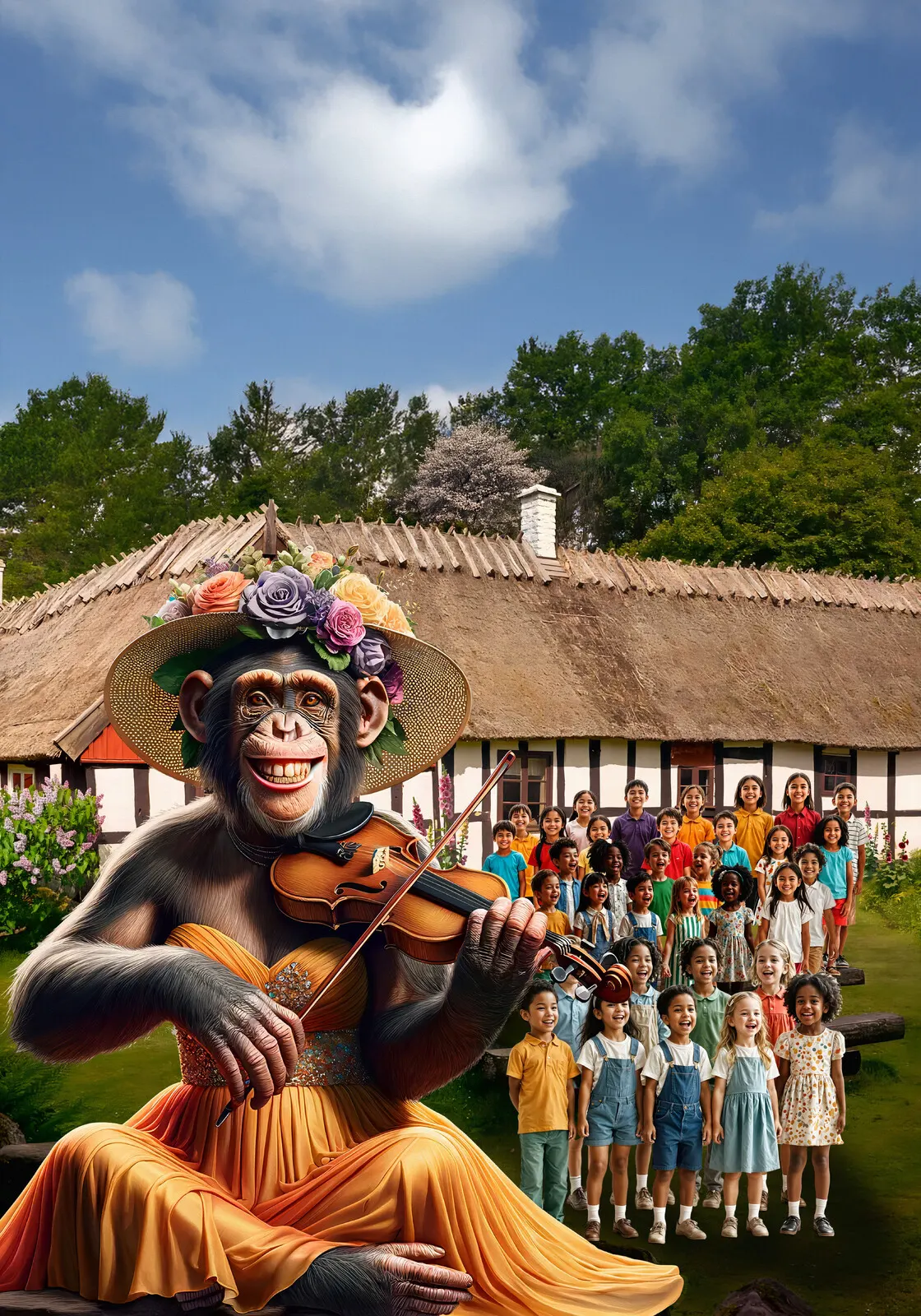
Jörgen Thornberg
Between Lilac and Hawthorn when Vivaldi's Spring is played, 2025
Digital
50 x 70 cm
3 200 kr
Between Lilac and Hawthorn when Vivaldi's Spring is played
"Now Comes the Time for Flowers
Den blomstertid nu kommer
med lust och fägring stor.
Du nalkas, ljuva sommar,
då gräs och gröda gror.
Med blid och livlig värma
till allt som varit dött,
sig solens strålar närma,
och allt blir återfött.
The summer days of beauty
in blessedness here to come.
The flowers are rejoicing
to feel the gleaming sun
in grace arisen brightly
o’er fields of golden grain
so warm and all restoring,
that nature lives again.
De fagra blomsterängar
och åkerns ädla säd,
de rika örtesängar
och lundens gröna träd,
de skola oss påminna
Guds godhets rikedom,
att vi den nåd besinna
som räcker året om.
The fragrance of the meadows,
the planting in the vale,
the whispers of the forest
through branches green and hale—
These wonders all remind us
how great the stores of wealth
of Him whose hand has made us,
who gives us life and health.
Man hörer fåglar sjunga
med mångahanda ljud,
skall icke då vår tunga
lovsäga Herren Gud?
Min själ, upphöj Guds ära,
stäm upp din glädjesång
till den som vill oss nära
och fröjda på en gång!
Oh, hear the sparrows praise Him
who trained them how to sing—
Should not our tongues awaken
and thank Creation’s King?
My soul, take up the anthem
with God’s rejoicing throng
and praise the one who gives you
this lovely summer song.”
Spring Compressed – Between Lilac and Hawthorn when Vivaldi's Spring is played
This year, spring was compressed into just a few weeks, with the blooming of bird cherry and lilac coinciding—something that, according to traditional wisdom, is not meant to occur. The Swedish expression "Mellan hägg och syren" (Between bird cherry and lilac) poetically describes a short yet distinct and beautiful period in May when the bird cherry blossoms first, followed closely by the lilac. It symbolises the fleeting, almost magical pre-summer time. While English lacks an exact equivalent, expressions such as ‘Between the blossoms’, ‘Between spring and summer’s kiss’, or ‘The fleeting days of May’ convey a similar seasonal transition.
This year, however, nature was in a hurry. After a long, sluggish start to spring, a sudden burst of warmth triggered an explosive bloom, causing plants and trees to flower simultaneously. This natural phenomenon, where the usual ten to fourteen days between the blooming of bird cherry and lilac shrank to just a few, mirrors the overlapping themes of rebirth and renewal in Vivaldi's 'Spring'. The compressed spring in nature and the musical piece both symbolize the fleeting, almost magical pre-summer time.
Tradition, music, and the coming of summer
One aspect not dictated by temperature but by tradition is the cherished end-of-term excursions before summer school breaks. These outings are not solely about thermoses of hot chocolate and sandwiches with fried eggs—they also feature children’s choirs singing classic Swedish summer songs that everyone in Sweden knows and adores.
The most beloved is "Den blomstertid nu kommer" (The Time of Blossoms Arrives). First printed in ‘Den Svenska Psalmboken’ in 1695 with the subtitle ‘Een Sommarwisa’, it is attributed to Israel Kolmodin, the superintendent of Visby on Gotland. Over the centuries, the lyrics have been revised multiple times, with the most recent update occurring in 1979. Despite its frequent classification as a hymn, its roots lie in older secular poetry. Though often called a psalm, the melody is regarded as a Swedish folk tune, as its composer remains unknown.
The first three verses of the song are traditionally performed at school graduation ceremonies across Sweden, heralding the arrival of summer. Even in Finland, ‘Den blomstertid nu kommer’ plays a significant role in school celebrations. Swedish-speaking schools sing the original Swedish version, while Finnish-speaking schools perform its Finnish translation, "Suvivirsi."
From summer hymns to Vivaldi’s Spring
Naturally, the children’s choir sang ‘Den blomstertid nu kommer’ on this day. But then it was time for the main event—Vivaldi’s "Spring" (La Primavera), published in 1725. This piece, a musical explosion of energy, is not just a composition but a masterpiece that captures the essence of spring in an inspiring and awe-inspiring way. It is part of ‘The Four Seasons’ (‘Le Quattro Stagioni’), a collection of four violin concertos, each representing a season. Each concerto consists of three movements, typically Allegro – Andante – Allegro, with the first movement of ‘Spring’ standing out as one of the most famous melodies ever written.
A springtime awakening in Baroque Venice
Imagine Venice in the early 18th century—awash in spring light, the scent of blooming flowers drifting through its narrow alleys, doves cooing in St. Mark’s Square, and the canals reflecting the Italian glow as if nature were conducting a symphony. Amidst this flourishing Baroque world, Antonio Vivaldi, the fiery-haired priest and virtuoso violinist, crafted something groundbreaking—The Four Seasons.
But 'Spring' was more than just a piece of music—it was a revolution. At a time when compositions were often formal and restrained, Vivaldi created a vivid musical painting, a transformative experience that captures the essence of spring in sound. He wanted his audience not just to hear the music, but to feel it, to be enlightened and inspired by the power of his creation.
Music that paints a picture
Vivaldi was far ahead of his time when he composed poetic sonnets to accompany each movement of ‘The Four Seasons’. Instead of allowing the music to speak for itself, he guided the listener’s imagination. In ‘Spring’, the piece begins with birds joyfully singing, babbling brooks, and a gentle spring breeze sweeping across the fields—all translated into the violins' jubilant trills and lively melodies.
It is said that the audience was captivated at its premiere. They could hear the birds chirping, feel the thunder rumbling in the second movement, and see nymphs and shepherds dancing in the final section. Perhaps it was the first time Baroque music felt so alive, almost cinematic.
And just like in Venice centuries ago, the children’s choir—singing their way into summer—brought the season to life, not just with words but with music that transcends time. Their performance, set against the backdrop of a compressed spring and the musical masterpiece of Vivaldi, serves as a powerful reminder of the enduring connection between music, nature, and the human experience.
Vivaldi and the Women of the Ospedale – A Hidden Musical Legacy
Imagine being a poor, unmarried woman in 18th-century Venice. With no wealth, family support, and few options, survival often meant submitting to the whims of the wealthy men who flooded Venice each year during Carnival, indulging in their Grand Tours. However, when these fleeting encounters led to pregnancy, the options were grim. Some women, driven by desperation, abandoned their newborns in the dark waters of the Venetian canals. Others, demonstrating remarkable resilience, turned to the Ospedale della Pietà, a beacon of hope in a time of despair, a charitable institution that welcomed unwanted children and offered them a chance at life.
At the Pietà, infants were placed through a small revolving opening, the scaffeta, ensuring the anonymity of their mothers. The boys were taught a trade and released at sixteen, while the girls either married, became nuns, or contributed to the institution through sewing and embroidery. However, fate had something grander in store for a select few. Around nine, all the girls were assessed for musical ability. The most talented were chosen as “figlie di choro”, the daughters of the choir, and given an extraordinary opportunity: an elite musical education that would transform them into some of the finest musicians of their time, a testament to their exceptional talent and dedication.
Life as a figlia di choro was both a privilege and a sacrifice. These young women were cloistered, expected to maintain their virginity, and dedicated their lives entirely to music. Many remained at the Pietà for life, performing at services, concerts, and prestigious events for visiting dignitaries. Their concerts were highly sought after, especially during Lent, when the opera houses were closed, drawing noble audiences from all over Europe.
It was into this unique world that Antonio Vivaldi entered in 1703. Ordained as a priest, yet far more passionate about music than religious duties, Vivaldi assumed the role of maestro di violino at the Pietà. His responsibilities included training these young women, conducting their ensembles, purchasing instruments, and composing works tailored to their abilities. He held this position until 1715 and later returned from 1723 to 1740. Under his leadership, the Pietà’s all-female orchestra and choir achieved legendary status, transforming the institution into a premier musical destination.
Unlike most orchestras of the time, which had a revolving door of musicians, the Pietà’s ensemble remained largely stable, allowing the musicians to develop extraordinary ensemble skills. The institution also provided ample rehearsal time, a rarity in 18th-century music circles. These factors contributed to their performances, gaining a reputation for technical brilliance and emotional depth, making them an essential stop for European music lovers.
Despite their fame, few of these women’s names are remembered today. One of the most celebrated was Anna Maria dal Violin, a violin prodigy trained under Vivaldi himself. He composed numerous violin concertos specifically for her, and contemporary accounts praise her as one of the greatest violinists of the era—male or female. Other performers were known simply by the instruments they played, their real names lost to history.
The Pietà was not merely a convent-like refuge but a place where women, despite the societal restrictions of the time, could flourish as professional musicians. Their music was their livelihood, devotion, and voice in a world where women rarely had a place in professional orchestras. While most musicians of the time were men, the figlie di choro were revered as equals by the European elite, proving that talent knew no gender.
Yet, despite the brilliance of these women, their teacher often overshadows them. Vivaldi’s name lives on, while his musicians remain anonymous. Their contribution to his legacy is rarely acknowledged, even though they were the inspiration and the performers behind some of his greatest works. When we hear The Four Seasons today, we seldom think of the talented women who might have first played those pieces behind the iron grilles of the Pietà, unseen yet unforgettable.
As for Vivaldi himself, his personal life remains something of a mystery. Unlike many composers of his time, there are no records of romantic or sexual relationships—neither with men nor women. Some rumours linked him to his student Anna Maria, but these have long been dismissed. As a priest, he was expected to remain celibate, but due to the complete absence of romantic connections, some speculate that Vivaldi may have been asexual. Whether out of religious devotion or a genuine disinterest in such matters, he appears to have lived a life entirely dedicated to music, his greatest love, a unique circumstance that adds an intriguing layer to his story.
Today, musicians still perform Vivaldi's works for these remarkable women, yet their names remain largely forgotten. Hopefully, in time, the ladies of the Pietà will be recognised as the true virtuosos they were—equal to the maestro who shaped them.
Vivaldi – The Obstinate Prelate
Vivaldi was officially a priest, yet his religious devotion was somewhat dubious. He was known to leave mid-mass—sometimes amid a ceremony—to jot down a melody that had suddenly struck him swiftly. According to legend, he once dashed out of the church, his red priestly robe billowing behind him, desperate to capture a fleeting musical idea before it vanished!
Now, there’s a historical twist to this tale. Red robes were reserved for cardinals in the Catholic Church, while ordinary priests typically donned black or dark attire. Since Vivaldi was a priest, not a cardinal, he would have worn a dark cassock rather than a red one.
But why the connection to red? It wasn’t his robe—it was his hair. Vivaldi was famously known as "Il Prete Rosso"—"The Red Priest", a nickname referring to his striking fiery red locks. Over time, romanticised versions of his life may have conjured the image of him dashing through Venice in a scarlet cloak, but in reality, it was likely his vivid red curls streaked through the air as he rushed to capture his melodies on paper.
A Hidden Orchestra and a Musical Revolution
Vivaldi’s position at the Ospedale della Pietà, a Venetian orphanage for girls, gave him a unique opportunity to cultivate his music. There, he trained a group of orphaned girls into some of the most brilliant musicians in the world. When ‘Spring’ (‘La Primavera’) was first performed, it is said that it was played by an all-female orchestra hidden behind a screen—as the girls were not permitted to be seen by the audience. Yet, their talent could not be ignored. People journeyed great distances to hear this invisible orchestra perform Vivaldi’s joyous, shimmering compositions.
Spring still blooms today.
‘Spring’ remains one of the most performed pieces in history. It appears in films and advertisements, as lounge music, and endlessly on classical concert programmes—even in lifts! But its magic remains undiminished, for what Vivaldi created was not just music—it was a sensation, an experience.
So the next time you hear those glittering opening notes of ‘Spring, think of the priest who painted soundscapes with his music, ran out of churches mid-mass to write down a melody, and forever captured the magic of spring in a cascade of radiant tones on the violin.
”I. Allegro
Giunt' è la Primavera e festosetti
La salutan gl’augelletti con lieto canto,
E i fonti, al mormorio dolce del zeffiro,
Con dolce mormorio scorrono intanto:
Vengon' coprendo l’aer di nero manto,
E lampi, e tuoni ad annunciarla eletti;
Indi, tacendo questi, gli augelletti
Tornan' di nuovo al lor canoro incanto.
II. Largo
E quindi sul fiorito ameno prato,
Al caro mormorio di fronda e piante,
Dorme il caprar col fido can a lato.
III. Allegro
Di pastoral zampogna al suon festante
Danzano ninfe e pastor nel tetto amato
Di primavera all’apparir brillante.”
The sonnet and the music – a perfect harmony
This sonnet is directly intertwined with the music—each poem corresponds to a different concerto movement. The birds’ song is reflected in the trilling violins and the rumbling thunder in the dissonant chords and rapid scales. At the same time, the peaceful second movement mirrors the shepherd resting by the brook, as portrayed in the soft, flowing melody.
Over the centuries, new lyrics and choral arrangements have been written for ‘Spring, ’ particularly in modern choral music and popular adaptations. However, Vivaldi’s sonnets remain the most authentic textual companion to his masterpiece.
Hearing children sing these verses in Vivaldi’s original Italian, surrounded by the lush landscapes of Skåne, underscores the universal nature of music and poetry. The essence transcends language, proving that the spirit remains unchanged even if the words differ.
A spring day in Italy, like in Sweden, varies depending on the location—whether along the coast or at higher altitudes. A meadow just a few hundred metres above the Mediterranean can have the same climate as Skåne, 1,300 kilometres to the north. And in both places, the same larks trill joyfully over the wildflowers, uniting these landscapes in a shared harmony of nature and sound.
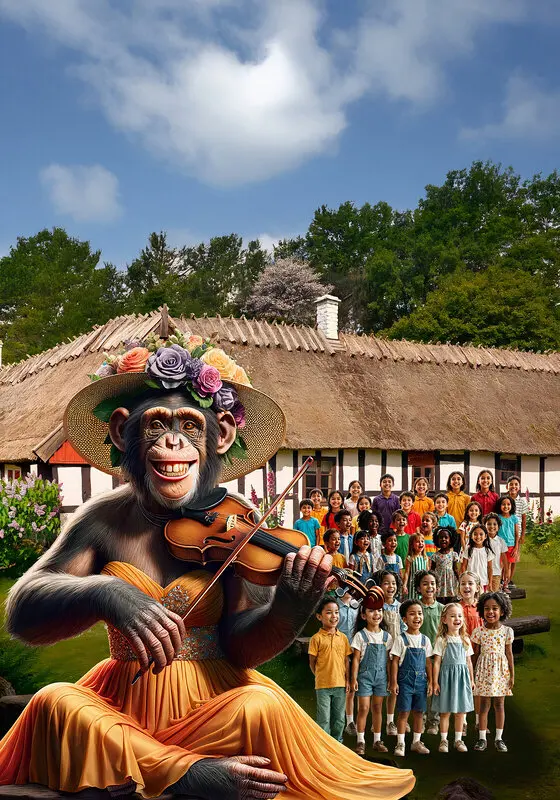
Jörgen Thornberg
Between Lilac and Hawthorn when Vivaldi's Spring is played, 2025
Digital
50 x 70 cm
3 200 kr
Between Lilac and Hawthorn when Vivaldi's Spring is played
"Now Comes the Time for Flowers
Den blomstertid nu kommer
med lust och fägring stor.
Du nalkas, ljuva sommar,
då gräs och gröda gror.
Med blid och livlig värma
till allt som varit dött,
sig solens strålar närma,
och allt blir återfött.
The summer days of beauty
in blessedness here to come.
The flowers are rejoicing
to feel the gleaming sun
in grace arisen brightly
o’er fields of golden grain
so warm and all restoring,
that nature lives again.
De fagra blomsterängar
och åkerns ädla säd,
de rika örtesängar
och lundens gröna träd,
de skola oss påminna
Guds godhets rikedom,
att vi den nåd besinna
som räcker året om.
The fragrance of the meadows,
the planting in the vale,
the whispers of the forest
through branches green and hale—
These wonders all remind us
how great the stores of wealth
of Him whose hand has made us,
who gives us life and health.
Man hörer fåglar sjunga
med mångahanda ljud,
skall icke då vår tunga
lovsäga Herren Gud?
Min själ, upphöj Guds ära,
stäm upp din glädjesång
till den som vill oss nära
och fröjda på en gång!
Oh, hear the sparrows praise Him
who trained them how to sing—
Should not our tongues awaken
and thank Creation’s King?
My soul, take up the anthem
with God’s rejoicing throng
and praise the one who gives you
this lovely summer song.”
Spring Compressed – Between Lilac and Hawthorn when Vivaldi's Spring is played
This year, spring was compressed into just a few weeks, with the blooming of bird cherry and lilac coinciding—something that, according to traditional wisdom, is not meant to occur. The Swedish expression "Mellan hägg och syren" (Between bird cherry and lilac) poetically describes a short yet distinct and beautiful period in May when the bird cherry blossoms first, followed closely by the lilac. It symbolises the fleeting, almost magical pre-summer time. While English lacks an exact equivalent, expressions such as ‘Between the blossoms’, ‘Between spring and summer’s kiss’, or ‘The fleeting days of May’ convey a similar seasonal transition.
This year, however, nature was in a hurry. After a long, sluggish start to spring, a sudden burst of warmth triggered an explosive bloom, causing plants and trees to flower simultaneously. This natural phenomenon, where the usual ten to fourteen days between the blooming of bird cherry and lilac shrank to just a few, mirrors the overlapping themes of rebirth and renewal in Vivaldi's 'Spring'. The compressed spring in nature and the musical piece both symbolize the fleeting, almost magical pre-summer time.
Tradition, music, and the coming of summer
One aspect not dictated by temperature but by tradition is the cherished end-of-term excursions before summer school breaks. These outings are not solely about thermoses of hot chocolate and sandwiches with fried eggs—they also feature children’s choirs singing classic Swedish summer songs that everyone in Sweden knows and adores.
The most beloved is "Den blomstertid nu kommer" (The Time of Blossoms Arrives). First printed in ‘Den Svenska Psalmboken’ in 1695 with the subtitle ‘Een Sommarwisa’, it is attributed to Israel Kolmodin, the superintendent of Visby on Gotland. Over the centuries, the lyrics have been revised multiple times, with the most recent update occurring in 1979. Despite its frequent classification as a hymn, its roots lie in older secular poetry. Though often called a psalm, the melody is regarded as a Swedish folk tune, as its composer remains unknown.
The first three verses of the song are traditionally performed at school graduation ceremonies across Sweden, heralding the arrival of summer. Even in Finland, ‘Den blomstertid nu kommer’ plays a significant role in school celebrations. Swedish-speaking schools sing the original Swedish version, while Finnish-speaking schools perform its Finnish translation, "Suvivirsi."
From summer hymns to Vivaldi’s Spring
Naturally, the children’s choir sang ‘Den blomstertid nu kommer’ on this day. But then it was time for the main event—Vivaldi’s "Spring" (La Primavera), published in 1725. This piece, a musical explosion of energy, is not just a composition but a masterpiece that captures the essence of spring in an inspiring and awe-inspiring way. It is part of ‘The Four Seasons’ (‘Le Quattro Stagioni’), a collection of four violin concertos, each representing a season. Each concerto consists of three movements, typically Allegro – Andante – Allegro, with the first movement of ‘Spring’ standing out as one of the most famous melodies ever written.
A springtime awakening in Baroque Venice
Imagine Venice in the early 18th century—awash in spring light, the scent of blooming flowers drifting through its narrow alleys, doves cooing in St. Mark’s Square, and the canals reflecting the Italian glow as if nature were conducting a symphony. Amidst this flourishing Baroque world, Antonio Vivaldi, the fiery-haired priest and virtuoso violinist, crafted something groundbreaking—The Four Seasons.
But 'Spring' was more than just a piece of music—it was a revolution. At a time when compositions were often formal and restrained, Vivaldi created a vivid musical painting, a transformative experience that captures the essence of spring in sound. He wanted his audience not just to hear the music, but to feel it, to be enlightened and inspired by the power of his creation.
Music that paints a picture
Vivaldi was far ahead of his time when he composed poetic sonnets to accompany each movement of ‘The Four Seasons’. Instead of allowing the music to speak for itself, he guided the listener’s imagination. In ‘Spring’, the piece begins with birds joyfully singing, babbling brooks, and a gentle spring breeze sweeping across the fields—all translated into the violins' jubilant trills and lively melodies.
It is said that the audience was captivated at its premiere. They could hear the birds chirping, feel the thunder rumbling in the second movement, and see nymphs and shepherds dancing in the final section. Perhaps it was the first time Baroque music felt so alive, almost cinematic.
And just like in Venice centuries ago, the children’s choir—singing their way into summer—brought the season to life, not just with words but with music that transcends time. Their performance, set against the backdrop of a compressed spring and the musical masterpiece of Vivaldi, serves as a powerful reminder of the enduring connection between music, nature, and the human experience.
Vivaldi and the Women of the Ospedale – A Hidden Musical Legacy
Imagine being a poor, unmarried woman in 18th-century Venice. With no wealth, family support, and few options, survival often meant submitting to the whims of the wealthy men who flooded Venice each year during Carnival, indulging in their Grand Tours. However, when these fleeting encounters led to pregnancy, the options were grim. Some women, driven by desperation, abandoned their newborns in the dark waters of the Venetian canals. Others, demonstrating remarkable resilience, turned to the Ospedale della Pietà, a beacon of hope in a time of despair, a charitable institution that welcomed unwanted children and offered them a chance at life.
At the Pietà, infants were placed through a small revolving opening, the scaffeta, ensuring the anonymity of their mothers. The boys were taught a trade and released at sixteen, while the girls either married, became nuns, or contributed to the institution through sewing and embroidery. However, fate had something grander in store for a select few. Around nine, all the girls were assessed for musical ability. The most talented were chosen as “figlie di choro”, the daughters of the choir, and given an extraordinary opportunity: an elite musical education that would transform them into some of the finest musicians of their time, a testament to their exceptional talent and dedication.
Life as a figlia di choro was both a privilege and a sacrifice. These young women were cloistered, expected to maintain their virginity, and dedicated their lives entirely to music. Many remained at the Pietà for life, performing at services, concerts, and prestigious events for visiting dignitaries. Their concerts were highly sought after, especially during Lent, when the opera houses were closed, drawing noble audiences from all over Europe.
It was into this unique world that Antonio Vivaldi entered in 1703. Ordained as a priest, yet far more passionate about music than religious duties, Vivaldi assumed the role of maestro di violino at the Pietà. His responsibilities included training these young women, conducting their ensembles, purchasing instruments, and composing works tailored to their abilities. He held this position until 1715 and later returned from 1723 to 1740. Under his leadership, the Pietà’s all-female orchestra and choir achieved legendary status, transforming the institution into a premier musical destination.
Unlike most orchestras of the time, which had a revolving door of musicians, the Pietà’s ensemble remained largely stable, allowing the musicians to develop extraordinary ensemble skills. The institution also provided ample rehearsal time, a rarity in 18th-century music circles. These factors contributed to their performances, gaining a reputation for technical brilliance and emotional depth, making them an essential stop for European music lovers.
Despite their fame, few of these women’s names are remembered today. One of the most celebrated was Anna Maria dal Violin, a violin prodigy trained under Vivaldi himself. He composed numerous violin concertos specifically for her, and contemporary accounts praise her as one of the greatest violinists of the era—male or female. Other performers were known simply by the instruments they played, their real names lost to history.
The Pietà was not merely a convent-like refuge but a place where women, despite the societal restrictions of the time, could flourish as professional musicians. Their music was their livelihood, devotion, and voice in a world where women rarely had a place in professional orchestras. While most musicians of the time were men, the figlie di choro were revered as equals by the European elite, proving that talent knew no gender.
Yet, despite the brilliance of these women, their teacher often overshadows them. Vivaldi’s name lives on, while his musicians remain anonymous. Their contribution to his legacy is rarely acknowledged, even though they were the inspiration and the performers behind some of his greatest works. When we hear The Four Seasons today, we seldom think of the talented women who might have first played those pieces behind the iron grilles of the Pietà, unseen yet unforgettable.
As for Vivaldi himself, his personal life remains something of a mystery. Unlike many composers of his time, there are no records of romantic or sexual relationships—neither with men nor women. Some rumours linked him to his student Anna Maria, but these have long been dismissed. As a priest, he was expected to remain celibate, but due to the complete absence of romantic connections, some speculate that Vivaldi may have been asexual. Whether out of religious devotion or a genuine disinterest in such matters, he appears to have lived a life entirely dedicated to music, his greatest love, a unique circumstance that adds an intriguing layer to his story.
Today, musicians still perform Vivaldi's works for these remarkable women, yet their names remain largely forgotten. Hopefully, in time, the ladies of the Pietà will be recognised as the true virtuosos they were—equal to the maestro who shaped them.
Vivaldi – The Obstinate Prelate
Vivaldi was officially a priest, yet his religious devotion was somewhat dubious. He was known to leave mid-mass—sometimes amid a ceremony—to jot down a melody that had suddenly struck him swiftly. According to legend, he once dashed out of the church, his red priestly robe billowing behind him, desperate to capture a fleeting musical idea before it vanished!
Now, there’s a historical twist to this tale. Red robes were reserved for cardinals in the Catholic Church, while ordinary priests typically donned black or dark attire. Since Vivaldi was a priest, not a cardinal, he would have worn a dark cassock rather than a red one.
But why the connection to red? It wasn’t his robe—it was his hair. Vivaldi was famously known as "Il Prete Rosso"—"The Red Priest", a nickname referring to his striking fiery red locks. Over time, romanticised versions of his life may have conjured the image of him dashing through Venice in a scarlet cloak, but in reality, it was likely his vivid red curls streaked through the air as he rushed to capture his melodies on paper.
A Hidden Orchestra and a Musical Revolution
Vivaldi’s position at the Ospedale della Pietà, a Venetian orphanage for girls, gave him a unique opportunity to cultivate his music. There, he trained a group of orphaned girls into some of the most brilliant musicians in the world. When ‘Spring’ (‘La Primavera’) was first performed, it is said that it was played by an all-female orchestra hidden behind a screen—as the girls were not permitted to be seen by the audience. Yet, their talent could not be ignored. People journeyed great distances to hear this invisible orchestra perform Vivaldi’s joyous, shimmering compositions.
Spring still blooms today.
‘Spring’ remains one of the most performed pieces in history. It appears in films and advertisements, as lounge music, and endlessly on classical concert programmes—even in lifts! But its magic remains undiminished, for what Vivaldi created was not just music—it was a sensation, an experience.
So the next time you hear those glittering opening notes of ‘Spring, think of the priest who painted soundscapes with his music, ran out of churches mid-mass to write down a melody, and forever captured the magic of spring in a cascade of radiant tones on the violin.
”I. Allegro
Giunt' è la Primavera e festosetti
La salutan gl’augelletti con lieto canto,
E i fonti, al mormorio dolce del zeffiro,
Con dolce mormorio scorrono intanto:
Vengon' coprendo l’aer di nero manto,
E lampi, e tuoni ad annunciarla eletti;
Indi, tacendo questi, gli augelletti
Tornan' di nuovo al lor canoro incanto.
II. Largo
E quindi sul fiorito ameno prato,
Al caro mormorio di fronda e piante,
Dorme il caprar col fido can a lato.
III. Allegro
Di pastoral zampogna al suon festante
Danzano ninfe e pastor nel tetto amato
Di primavera all’apparir brillante.”
The sonnet and the music – a perfect harmony
This sonnet is directly intertwined with the music—each poem corresponds to a different concerto movement. The birds’ song is reflected in the trilling violins and the rumbling thunder in the dissonant chords and rapid scales. At the same time, the peaceful second movement mirrors the shepherd resting by the brook, as portrayed in the soft, flowing melody.
Over the centuries, new lyrics and choral arrangements have been written for ‘Spring, ’ particularly in modern choral music and popular adaptations. However, Vivaldi’s sonnets remain the most authentic textual companion to his masterpiece.
Hearing children sing these verses in Vivaldi’s original Italian, surrounded by the lush landscapes of Skåne, underscores the universal nature of music and poetry. The essence transcends language, proving that the spirit remains unchanged even if the words differ.
A spring day in Italy, like in Sweden, varies depending on the location—whether along the coast or at higher altitudes. A meadow just a few hundred metres above the Mediterranean can have the same climate as Skåne, 1,300 kilometres to the north. And in both places, the same larks trill joyfully over the wildflowers, uniting these landscapes in a shared harmony of nature and sound.
3 200 kr

Jörgen Thornberg
Malmö
Lite om bilder och mig. Translation in English at the end.
Jag är en nyfiken person som ser allt i bilder, även det jag fäster i ord, gärna tillsammans för bakom alla mina bilder finns en berättelse. Till vissa bilder hör en kortare eller längre novell som följer med bilden.
Bilder berättar historier. Jag omges av naturlig skönhet, intressanta människor och historia var jag än går. Jag använder min kamera för att dokumentera världen och blanda det jag ser med vad jag känner för att fånga den dolda magin.
Mina bilder berättar mina historier. Genom mina bilder, tryck och berättelser. Jag bjuder in dig att ta del av dessa berättelser, in i ditt liv och hem och dela min mycket personliga syn på vår värld. Mer än vad ögat ser. Jag tänker i bilder, drömmer och skriver och pratar om dem; följaktligen måste jag också skapa bilder. De blir vad jag ser, inte nödvändigtvis begränsade till verkligheten. Det finns en bild runt varje hörn. Jag hoppas att du kommer att se vad jag såg och gilla det.
Jag är också en skrivande person och till många bilder hör en kortare eller längre essay. Den följer med tavlan, tryckt på fint papper och med en personlig hälsning från mig.
Flertalet bilder startar sin resa i min kamera. Enkelt förklarat beskriver jag bilden jag ser i mitt inre, upplevd eller fantiserad. Bilden uppstår inom mig redan innan jag fått okularet till ögat. På bråkdelen av ett ögonblick ser jag vad jag vill ha och vad som kan göras med bilden. Här skall jag stoppa in en giraff, stålmannen, Titanic eller vad det är min fantasi finner ut. Ännu märkligare är att jag kommer ihåg minnesbilden långt efteråt när det blir tid att skapa verket. Om jag lyckas eller inte, är upp till betraktaren, oftast präglat av en stråk av svart humor – meningen är att man skall bli underhållen. Mina bilder blir ofta en snackis där de hänger.
Jag föredrar bilder som förmedlar ett budskap i flera lager. Vid första anblicken fylld av feel-good, en vacker utsikt, fint väder, solen skiner, blommor på ängen eller vattnet som ligger förrädiskt spegelblankt. I en sådan bild kan jag gömma min egentliga berättelse, mitt förakt för förtryckare och våldsverkare, rasister och fördomsfulla människor - ett gärna återkommande motiv mer eller mindre dolt i det vackra motivet. Jag försöker förena dem i ett gemensamt narrativ.
Bild och formgivning har löpt som en röd tråd genom livet. Fotokonst känns som en värdig final som jag gärna delar med mig.
Min genre är vid som framgår av mina bilder, temat en blandning av pop- och gatukonst i kollage som kan bestå av hundratals lager. Vissa bilder kan ta veckor, andra någon dag innan det är dags att överlämna resultatet till printverkstaden. Fine Art Prints är digitala fotocollage. I dessa kollage sker rivandet, klippandet, pusslandet, målandet, ritandet och sprayningen digitalt. Det jag monterar in kan vara hundratals år gamla bilder som jag omsorgsfullt frilägger så att de ser ut att vara en del av tavlan men också bilder skapade av mig själv efter min egen fantasi. Därefter besöks printstudion och för vissa bilder numrera en limiterad upplaga (oftast 7 exemplar) och signera för hand. Vissa bilder kan köpas i olika format. Det är bara att fråga efter vilka. Gillar man en bild som är 70x100 men inte har plats på väggen, går den kanske att få i 50x70 cm istället. Frågan är fri.
Metoden Giclée eller Fine Art Print som det också kallas är det moderna sättet för framställning av grafisk konst. Villkoret för denna typ av utskrifter är att en högkvalitativ storformatskrivare används med åldersbeständigt färgpigment och konstnärspapper eller i förekommande fall på duk. Pappret som används möter de krav på livslängd som ställs av museer och gallerier. Normalt säljer jag mina bilder oinramade så att den nya ägaren själv kan bestämma hur de skall se ut, med eller utan passepartout färg på ram, med eller utan glas etc..
Under många år ställde jag bara ut på nätet, i valda grupper och på min egen Facebooksida - https://www.facebook.com/jorgen.thornberg.9
Jag finns också på en egen hemsida som tyvärr inte alltid är uppdaterad – https://www.jth.life/ Där kan du också läsa en del av de berättelser som följer med bilden.
UTSTÄLLNINGAR
Luftkastellet, oktober 2022
Konst i Lund, november 2022
Luftkastellet, mars 2023
Engleson Galleri Caroli, april 2023
Hydra, Greece June 2023
Engleson Galleri Caroli, oktober 2023
Toppen, Höllviken december 2023
Luftkastellet, mars 2024
Torups Galleri, mars 2024
Venice, May 2024
Luftkastellet, oktober 2024
Konst i Advent, December 2024
Galleri Engleson, Caroli December 2024
Jäger & Jansson Galleri, april 2025
A bit about pictures and me.
I'm a curious person who sees everything in pictures, even what I express in words, often combining them, for behind all my pictures lies a story. These narratives, some as short as a single image and others as long as a novel, are the heart and soul of my work.
Pictures tell stories. Wherever I go, I'm surrounded by natural beauty, exciting people, and history. I use my camera to document the world and blend what I see with what I feel to capture the hidden magic.
My images tell my stories. Through my pictures, prints, and narratives, I invite you to partake in these stories in your life and home and share my deeply personal perspective of our world. More than meets the eye. I think in pictures, dream, write, and talk about them; consequently, I must create images too. They become what I see, not necessarily confined to reality. There's a picture around every corner. I hope you'll see what I saw and enjoy it.
I'm also a writer, and many images come with a shorter or longer essay. It accompanies the painting, printed on fine paper with my personal greeting.
Many pictures start their journey on my camera. Simply put, I describe the image I see in my mind, experienced or imagined. The image arises within me even before I bring the eyepiece to my eye. In a fraction of a moment, I see what I want and what can be done with the picture. Here, I'll insert a giraffe, Superman, the Titanic, or whatever my imagination conjures up. Even stranger is that I remember the mental image long after it's time to create the work. Whether I succeed is up to the observer, often imbued with a streak of black humour – the aim is to entertain. My pictures usually become a talking point wherever they hang.
I prefer pictures that convey a message in multiple layers. At first glance, they're filled with feel-good vibes, a beautiful view, lovely weather, the sun shining, flowers in the meadow, or the water lying deceptively calm. But beneath this surface beauty, I often conceal a deeper story, a narrative that challenges societal norms or explores the human condition. I invite you to delve into these hidden narratives and discover the layers of meaning within my work.
Picture and design have been a thread running through my life. Photographic art feels like a fitting finale, and I'm happy to share it.
My genre is varied, as seen in my pictures; the theme is a blend of pop and street art in collages that can consist of hundreds of layers. Some images can take weeks, others just a day before it's time to hand over the result to the print workshop. Fine Art Prints are digital photo collages. In these collages, tearing, cutting, puzzling, painting, drawing, and spraying happen digitally. What I insert can be images hundreds of years old that I carefully extract so they appear to be part of the painting, but also images created by myself, now also generated from my imagination. Next, visit the print studio and, for certain images, number a limited edition (usually 7 copies) and sign them by hand. Some images may be available in other formats. Just ask which ones. If you like an image that's 70x100 but doesn't have space on the wall, you might be able to get it in 50x70 cm instead. The question is open.
The Giclée method, or Fine Art Print as it's also called, is the modern way of producing graphic art. This method ensures the highest quality and longevity of the artwork, using a high-quality large-format printer with archival pigment inks and artist paper or, in some cases, canvas. The paper used meets the longevity requirements set by museums and galleries. I sell my pictures unframed, allowing the new owner to personalise their artwork, confident in the lasting value and quality of the piece.
For many years, I only exhibited online, in selected groups, and on my Facebook page - https://www.facebook.com/jorgen.thornberg.9. I also have my website, which unfortunately is not constantly updated - https://www.jth.life/. You can also read some of the stories accompanying the pictures there.
EXHIBITIONS
Luftkastellet, October 2022
Art in Lund, November 2022
Luftkastellet, March 2023
Engleson Gallery Caroli, April 2023
Hydra, Greece June 2023
Engleson Gallery Caroli, October 2023
Toppen, Höllviken December 2023
Luftkastellet, March 2024
Torup Gallery, March 2024
Venice, May 2024
UTSTÄLLNINGAR
Luftkastellet, oktober 2022
Konst i Lund, november 2022
Luftkastellet, mars 2023
Engleson Galleri Caroli, april 2023
Hydra, Greece June 2023
Engleson Galleri Caroli, oktober 2023
Toppen, Höllviken december 2023
Luftkastellet, mars 2024
Torups Galleri, mars 2024
Venice, May 2024
Luftkastellet, October 2024
Konst i Advent, December 2024
Galleri Engleson, Caroli December 2024
Jäger & Jansson Galleri, April 2025
Utbildning
Autodidakt
Medlem i konstnärsförening
Öppna Sinnen
Med i konstrunda
Konstrundan i Skåne
Utställningar
Luftkastellet, October 2022
Art in Lund, November 2022
Luftkastellet, March 2023
Engleson Gallery Caroli, April 2023
Hydra, Greece June 2023
Engleson Gallery Caroli, October 2023
Toppen, Höllviken December 2023
Luftkastellet, March 2024
Torup Gallery, March 2024
Venice, May 2024