Vi använder cookies för att ge dig bästa möjliga upplevelse. Välj vilka cookies du tillåter.
Läs mer i vår integritetspolicy
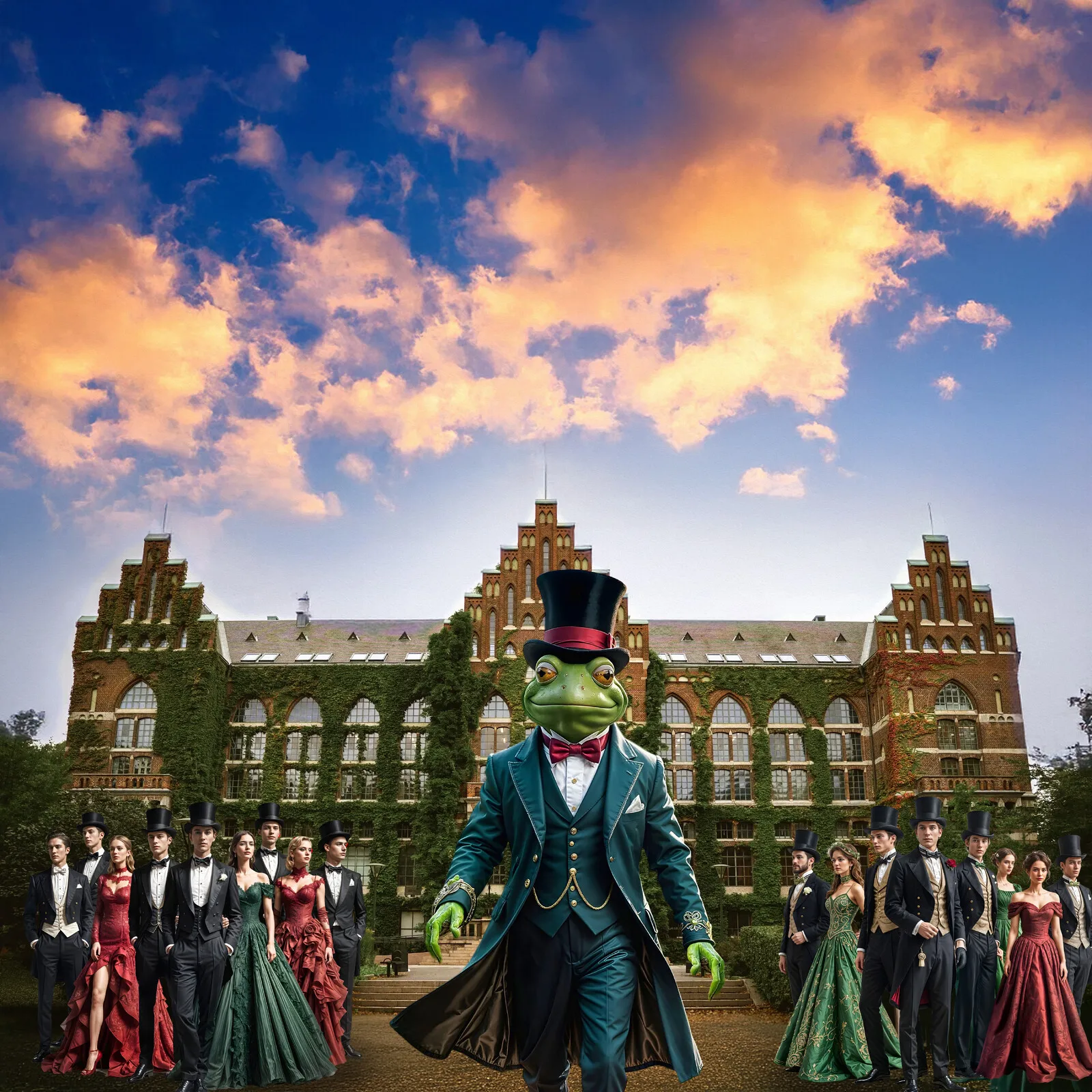
Jörgen Thornberg
Doctor Kermit, I presume, 2025
Digital
70 x 70 cm
3 400 kr
Doctor Kermit, I presume
Kermit a doctor
The journey to earning a doctorate is as diverse as the individuals who embark upon it. It can result from years of research and academic dedication or may be an honorary recognition for outstanding contributions in another field. Take Kermit the Frog, who was awarded an honorary doctorate in amphibious studies—a charming and humorous reminder of the broad interpretations of the term "doctor." However, it is essential to remember that while some receive the title as a mark of distinction, others may resort to dishonest means to obtain it.
Throughout history, academic titles have carried significant prestige but have also attracted fraudsters. From forged credentials to the purchase of fake doctorates, the title of "doctor" has been subject to varying interpretations. In this exploration, we delve into the historical context of doctoral conferment, shedding light on women’s struggles for academic recognition and some of the most scandalous cases of academic fraud. This historical perspective will provide a deeper understanding of the complexities and implications of earning a doctorate.
Continue reading to learn more about how Kermit became a doctor
"Dr Kermit – A Frog’s Tale
From the swampy waters, green and bright,
to Muppet stages, bathed in limelight.
With banjo in hand and dreams held high,
He sang ‘Rainbow Connection’, and we still sigh.
He kept the chaos well in hand,
while Muppets ran wild across the land.
A host, reporter, a ship’s captain, too,
with wit and charm, he led his crew.
On ‘Sesame Street’, with mic in tow,
he broke the news in fairy-tale glow.
In Hollywood’s shine, he took the stage,
as Bob Cratchit, Smollett—he set the gauge.
A doctor now, by honored decree,
his title stands for all to see.
No fraud, no fake, it’s his to own,
awarded in truth, forever known.
But now retired, no more the show,
his greatest role? To let love grow.
With Miss Piggy near, he’s set for life—
no scripts, no cues, just frog and wife.”
Malmö, March 2025
Kermit the Frog and His Versatile Career.
Kermit the Frog, the master of versatility and humour, has worn many hats over the years, both as himself and in various characters. His ability to bring a smile to our faces is unparalleled, and it's no joke that he's even been awarded an honorary doctorate in amphibious studies. More on that later.
Here are some of his most unique and memorable roles, each showcasing his versatility, though none as a professor. The unexpectedness of these roles will surely surprise and intrigue you.
Host and Central Figure of The Muppet Show
In The Muppet Show (1976–1981), Kermit, with his composed demeanour and undeniable charm, was the host who endeavoured to keep the chaotic ensemble of Muppets in check. His introductions, backstage problem-solving, and role as the only reasonable figure in a world of madness all added to his endearing charm, entertaining and amusing the audience.
Journalist on Sesame Street
On Sesame Street, Kermit was not merely a recurring character but a respected journalist for Sesame Street News Flash. He interviewed fairy tale characters and covered classic stories with a humorous twist.
Actor in Muppet Movies
Kermit has undertaken numerous film roles, portraying everything from a version of himself to classic literary characters:
• "The Muppet Movie" (1979) – An aspiring artist venturing on a road trip to Hollywood.
• "The Great Muppet Caper" (1981) – A journalist examining a jewel heist.
• "The Muppet Christmas Carol" (1992) – Portrayed Bob Cratchit, the kind yet impoverished employee of Ebenezer Scrooge.
• "Muppet Treasure Island" (1996) – Assumed the role of Captain Smollett, the leader of the expedition.
• "Muppets Most Wanted" (2014) – Featured in a dual role, embodying both himself and his malevolent doppelgänger Constantine.
Musician and Singer
Kermit's musical career should not be underestimated. His most renowned song, "Rainbow Connection" from The Muppet Movie (1979), has become a cherished classic. He has also performed in numerous other productions, both on The Muppet Show and in the films.
Parodies and Cameo Appearances
He has appeared in numerous parodies and memorable performances, from playing Hamlet on The Muppet Show to imitating famous film characters in various sketches.
As Himself – A Pop Culture Icon
Beyond all these roles, Kermit has also become a symbol of humour and kindness. He has appeared on talk shows and social media (where his memes are incredibly popular) and has even been awarded an honorary doctorate in amphibious studies—for real!
In 1996, Southampton College in Long Island, New York, awarded Kermit an Honorary Doctorate of Amphibious Letters. The ceremony was humorous, but the title itself was official. The university sought to recognise Kermit's influence as a positive role model and his contributions to disseminating knowledge and entertainment. This honorary doctorate, a rare and prestigious recognition, was a testament to Kermit's impact on popular culture and his ability to transcend the boundaries of fiction and reality.
During the ceremony, Kermit gave a speech, humouring that it was a great honour, especially since it was difficult for a frog to gain recognition in the academic world. He concluded with the now-famous line:
"It’s not easy being green, but sometimes it’s even harder to be taken seriously."
Although the event had a humorous element, a university genuinely conferred the title! As we all know, the colour doesn't wash off.
He has even been referred to as ‘Professor Kermit’. In various sketches on The Muppet Show and Sesame Street, Kermit appears as a professor or scientist, often in amusing and chaotic situations. This 'Professor Kermit' persona, a playful yet respectful nod to the academic world, reflects the enduring influence of Kermit's character and the universal appeal of his humour. As is well known, the academic world can sometimes reflect that.
Kermit boasts a broad and varied "career" and remains one of the most cherished characters in popular culture.
From Ancient Times to Lund University: The Tradition of Doctoral Conferment
The roots of the doctoral conferment ceremony extend back to the earliest universities in medieval Europe, but its ceremonial elements have even deeper origins. As early as ancient Greece and Rome, academic and philosophical schools existed where students were initiated into higher knowledge through symbolic rites. Plato's Academy in Athens and Aristotle’s Lyceum were institutions where knowledge and wisdom were formalised through hierarchies and ceremonies.
The Roman Empire perpetuated this tradition through schools of rhetoric and law, where teachers and students upheld a profound respect for education. This deep-rooted respect for education is something we can all appreciate and respect.
The Long Road to the Doctoral Hat
Achieving a doctoral degree is a lengthy and demanding process that requires years of study, research, and academic work. After completing an undergraduate and often a master’s degree, a student applies to a doctoral programme. The doctoral period typically lasts four to six years and involves extensive research within a specific field, writing a doctoral dissertation, and participating in seminars and teaching.
The doctoral candidate receives supervision from experienced scholars and often participates in international conferences to present their research findings. The final step in the process is the public defence of the dissertation, where the candidate presents and defends their work before an opponent and an academic committee. Upon approval of the dissertation, the individual is formally awarded the title of Doctor and can partake in the doctoral conferment ceremony at their university.
The Symbolism and Traditions of Doctoral Conferment
The doctoral conferment is more than merely an academic formality; it is a symbolic celebration enriched with traditions that reflect the historical evolution of universities. Many elements of the ceremony bear medieval heritage:
Latin Traditions
Numerous universities continue to conduct parts of the ceremony in Latin, the language that once served as the lingua franca of science. Promoters recite Latin phrases when conferring the doctoral degree.
Insignia and Attire
The doctoral hat, laurel wreath, and ceremonial sword denote academic dignity. In Sweden, doctors from the Faculty of Philosophy don a black doctoral hat, while those from the Faculty of Medicine are presented with a laurel wreath. This practice is rooted in ancient Greece, where the laurel wreath symbolised victory and wisdom.
The Sword and Dagger
Doctors receive a ceremonial sword at certain universities, especially in Finland and some older Swedish institutions, signifying their duty to "defend science."
Processions and Rituals
Doctors enter in a formal academic procession, led by senior faculty members and professors, often accompanied by marching music or fanfares.
Academic Banquets and Celebrations
A traditional banquet follows the ceremony, featuring academic speeches and songs. This celebration is a modern continuation of medieval university feasts.
Honorary Doctors
Many universities appoint honorary doctors (doctor honoris causa) alongside those who earn their title through academic research and study. An honorary doctorate is awarded to individuals who have made outstanding contributions in science, culture, society, or other areas the university wishes to recognise. Unlike regular doctorates, an honorary doctorate does not require a dissertation or formal academic study at the doctoral level.
Historically, honorary doctors have included distinguished scientists, artists, writers, politicians, and public intellectuals. Lund University has conferred honorary doctorates upon many notable individuals, highlighting its role in broader society and its connection to science and culture.
Lund University and Its Historical Roots
Founded in 1666, Lund University occupies a special place in Swedish academic history, and its traditions of doctoral conferment are among the most deeply rooted in the Nordic region. The university was established shortly after Skåne became Swedish through the Treaty of Roskilde (1658). However, the region had long been one of Denmark’s most prosperous and significant areas, with strong ties to the Danish Church and scientific traditions.
As early as the Middle Ages, Lund was a centre of learning, home to the Cathedral School, which was associated with Lund Cathedral, an important religious and academic hub in the Danish kingdom. The foundation of Lund University played a key role in Sweden’s efforts to integrate Skåne into its educational and administrative structures.
Summary
The doctoral conferment is one of the most tradition-rich academic ceremonies, with roots stretching back to antiquity and the Middle Ages. The ceremony has evolved from the first universities in Bologna, Paris, and Oxford to the Nordic institutions while retaining its symbolic significance.
Exclusion from Higher Education
For centuries, universities were an exclusively male domain. While men were free to study, earn doctoral degrees, and become professors, women were systematically excluded from academia. The arguments against women’s education varied—some asserted it would damage their health, while others believed that intellectual pursuits were incompatible with their "natural" roles as wives and mothers.
In the 19th century, women slowly began to gain access to some universities, but obtaining a doctoral degree remained a significant challenge. Women who wished to pursue higher education often had to do so unofficially or abroad.
The First Female Doctorates
Elena Cornaro Piscopia (1646–1684)
The first woman in the world to receive a doctoral degree. She earned her PhD in Philosophy from the University of Padua, Italy, in 1678. Despite her intellectual abilities, she was not permitted to defend a dissertation in theology, which was her original ambition.
Nadezhda Suslova (1843–1918)
She was the first female doctor in Russia. She studied medicine in Switzerland, as Russian universities did not yet allow women to pursue medical degrees.
Maria Sklodowska-Curie (1867–1934)
In 1903, Marie Curie became the first woman in France to earn a PhD in Physics from Sorbonne University. That same year, she shared the Nobel Prize in Physics with her husband, Pierre Curie, and Henri Becquerel.
Ellen Fries (1855–1900)
Sweden’s first female doctorate holder. She defended her PhD in History at Uppsala University in 1883, paving the way for more Swedish women in academia.
International Breakthroughs
During the 19th and early 20th centuries, many universities in Europe and North America began to admit female students. In some countries, such as the United Kingdom, women were allowed to study but not to receive degrees. It was not until 1878 that the University of London became the first British university to grant women full academic rights.
In Sweden, women were granted access to universities in 1870, yet they took much longer to hold academic positions. Elsa Eschelsson became Sweden’s first female docent in 1898, but she was prevented from becoming a professor.
The Importance of Women’s Academic Recognition
Women’s entry into academia was crucial to the struggle for gender equality. The first women to earn doctoral degrees became pioneers and role models, paving the way for future generations of female researchers and academics. Despite this, they often faced institutional and social resistance, and it was not until the 20th century that women were granted full rights to conduct research and teach on equal terms with men.
Women at Lund University
At Lund University, the journey to obtaining a doctoral degree for women was long and fraught with obstacles, much like at other Swedish universities.
The first woman to defend a doctoral dissertation at Lund was Hedda Andersson (1861–1950), who became a physician and one of Sweden’s first female medical doctors. She was the second woman in Sweden to earn a medical degree, following Karolina Widerström. Andersson enrolled at Lund University in 1880, when women were first permitted to enter Swedish medical programmes.
Another significant woman associated with Lund University was Sonja Kovalevsky (1850–1891), a Russian mathematician who, although she did not receive her doctorate there, maintained close ties to Swedish academia. She became the first woman in the world to hold a professorship in mathematics (at Stockholm University College), and her presence greatly influenced the perception of women in the natural sciences in Sweden.
The first woman to attain a PhD at Lund University was Anna Bugge Wicksell (1862–1928), a feminist and lawyer among Sweden’s first female diplomats. Her academic contributions laid the groundwork for her political and legal advocacy.
During the early 20th century, more women began to defend their dissertations at Lund; however, it took much longer before they could pursue academic careers on equal terms with men. Elsa Eschelsson at Uppsala University became a cautionary example—despite her qualifications, she was denied a professorship, which may have adversely affected opportunities for women nationwide, including at Lund.
The Honorary Doctorate
The honorary doctorate is an academic distinction universities award to individuals who have significantly contributed to science, culture, society, or other fields. The title does not represent a formal educational degree but serves as a means for universities to recognise outstanding achievements. The tradition of awarding honorary doctorates originated at European universities, particularly in England and Germany, and has since spread globally.
Criticism and Controversy
Over the years, the honorary doctorate has been the subject of debate. Critics argue that the title is sometimes conferred for populist or political reasons rather than genuine academic merit. Some claim that such appointments undermine the credibility of academia, mainly when used to attract influential figures instead of honouring scientific or cultural achievements.
Arguments For and Against
For: Honorary doctorates recognise individuals who have made outstanding contributions outside academia. They can enhance a university’s reputation and help foster meaningful connections between academia and society.
Against: The awards can sometimes appear arbitrary and, in some cases, may be perceived as a marketing tool for universities rather than a genuine academic honour.
Significance
The symbolic weight of an honorary doctorate varies depending on the context. For recipients, it can signify increased prestige and recognition, while for universities, it serves as a means to position themselves internationally. At the same time, the value of the award is questioned when controversial figures or commercial entities are honoured.
Fake Doctors: Fraudsters Who Shook Academia
A doctoral title signifies academic expertise, years of research, and the ability to contribute to human knowledge. However, throughout history, numerous individuals have falsely claimed to hold doctoral degrees without undergoing the rigorous process required. Some have forged their credentials, while others have successfully deceived universities, employers, and even entire societies. These cases have often led to academic scandals, questioning the credibility of institutions and prompting stricter verification measures.
Early Examples of Fake Doctors
The phenomenon of fake academic credentials is not a recent development. As early as the 17th and 18th centuries, individuals seeking to project an air of erudition would adopt fabricated titles.
One early example is the Italian adventurer Giuseppe Balsamo, better known as Cagliostro (1743–1795). He claimed to be a doctor and alchemist with secret knowledge, but in reality, he was a fraud who exploited others' gullibility.
During the 19th century, fake doctoral titles became increasingly common as academic credentials became a vital influence pathway. Some individuals managed to maintain the illusion for years, but they often faced significant repercussions once their lack of knowledge was exposed.
Modern Times: Major Scandals
During the 20th and 21st centuries, several spectacular cases of fake doctors were unveiled, often attracting significant media attention. In recent years, individuals have claimed to be doctors and researchers, securing high-profile positions and even publishing articles, only to be later exposed as frauds.
John Brinkley (1885–1942) is one of British history's most notorious fake doctors. He claimed to be a doctor and developed a controversial and unscientific treatment involving the transplantation of goat testicles into men suffering from impotence. Ultimately, he was exposed and lost his medical licence.
Frank Abagnale (born 1948) – Best known from the film Catch Me If You Can, Abagnale was a con artist who, in the 1960s, falsely claimed to be a doctor, lawyer, and pilot without any genuine qualifications. He worked at a hospital for a year before being caught.
Joseph Connors (1904–1975) – A British fraudster who, for several decades, pretended to be a doctor and researcher. Despite lacking a medical education, he secured hospital positions and published articles.
Political Scandals and Fake Doctoral Dissertations
Numerous politicians and public figures have been entangled in scandals involving fake or plagiarised doctoral titles. These incidents tarnish the reputation of the individuals involved and undermine the academic community's credibility as a whole.
Karl-Theodor zu Guttenberg – The German Minister of Defence was compelled to resign in 2011 after it was revealed that he had plagiarised substantial portions of his doctoral dissertation. The scandal shook Germany and sparked a national debate on academic integrity.
Annette Schavan – Another German politician who, in 2013, lost her doctoral degree due to academic misconduct.
Paul Wolfowitz and other high-ranking officials have historically been accused of endorsing academics with questionable or manipulated credentials.
Purchased Doctoral Titles and Diploma Mills
Another form of academic fraud is the emergence of diploma mills or fake universities, which sell doctoral degrees without any academic merit. These institutions offer counterfeit diplomas that appear authentic yet lack academic legitimacy. Individuals seeking to impress employers or the public can purchase a doctorate and utilise it in professional contexts.
Consequences and Control Mechanisms
The revelation of fake doctors often leads to serious consequences for individuals and the institutions involved. Such scandals can tarnish universities' reputations and result in stricter verification of academic credentials.
In today's digital age, perpetrating fraud has become increasingly difficult. Universities can readily verify doctoral degrees through sophisticated software and databases, and numerous academic works are accessible for public scrutiny online. Nevertheless, fraudulent credentials continue to surface, indicating that some individuals still find ways to deceive society.
Conclusion
Regardless of their intentions, most of these individuals are ultimately exposed, frequently with dramatic consequences, which reassures us of the system's capacity to identify and address such fraud.
As academic scrutiny intensifies, opportunities for future fraudsters diminish. However, history demonstrates that vigilance remains essential, reminding us of our collective responsibility to uphold the integrity of academia.
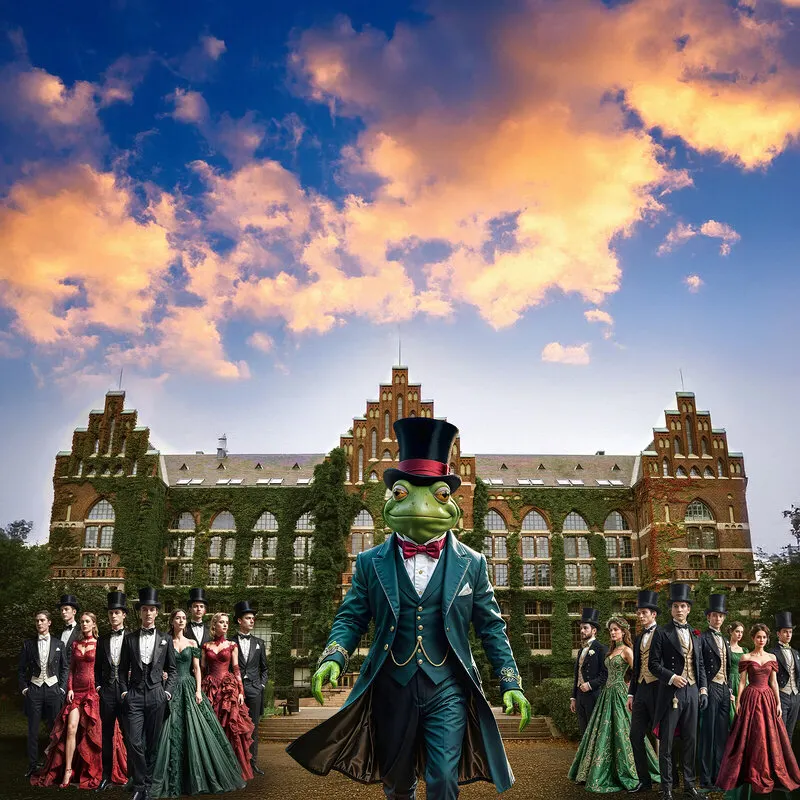
Jörgen Thornberg
Doctor Kermit, I presume, 2025
Digital
70 x 70 cm
3 400 kr
Doctor Kermit, I presume
Kermit a doctor
The journey to earning a doctorate is as diverse as the individuals who embark upon it. It can result from years of research and academic dedication or may be an honorary recognition for outstanding contributions in another field. Take Kermit the Frog, who was awarded an honorary doctorate in amphibious studies—a charming and humorous reminder of the broad interpretations of the term "doctor." However, it is essential to remember that while some receive the title as a mark of distinction, others may resort to dishonest means to obtain it.
Throughout history, academic titles have carried significant prestige but have also attracted fraudsters. From forged credentials to the purchase of fake doctorates, the title of "doctor" has been subject to varying interpretations. In this exploration, we delve into the historical context of doctoral conferment, shedding light on women’s struggles for academic recognition and some of the most scandalous cases of academic fraud. This historical perspective will provide a deeper understanding of the complexities and implications of earning a doctorate.
Continue reading to learn more about how Kermit became a doctor
"Dr Kermit – A Frog’s Tale
From the swampy waters, green and bright,
to Muppet stages, bathed in limelight.
With banjo in hand and dreams held high,
He sang ‘Rainbow Connection’, and we still sigh.
He kept the chaos well in hand,
while Muppets ran wild across the land.
A host, reporter, a ship’s captain, too,
with wit and charm, he led his crew.
On ‘Sesame Street’, with mic in tow,
he broke the news in fairy-tale glow.
In Hollywood’s shine, he took the stage,
as Bob Cratchit, Smollett—he set the gauge.
A doctor now, by honored decree,
his title stands for all to see.
No fraud, no fake, it’s his to own,
awarded in truth, forever known.
But now retired, no more the show,
his greatest role? To let love grow.
With Miss Piggy near, he’s set for life—
no scripts, no cues, just frog and wife.”
Malmö, March 2025
Kermit the Frog and His Versatile Career.
Kermit the Frog, the master of versatility and humour, has worn many hats over the years, both as himself and in various characters. His ability to bring a smile to our faces is unparalleled, and it's no joke that he's even been awarded an honorary doctorate in amphibious studies. More on that later.
Here are some of his most unique and memorable roles, each showcasing his versatility, though none as a professor. The unexpectedness of these roles will surely surprise and intrigue you.
Host and Central Figure of The Muppet Show
In The Muppet Show (1976–1981), Kermit, with his composed demeanour and undeniable charm, was the host who endeavoured to keep the chaotic ensemble of Muppets in check. His introductions, backstage problem-solving, and role as the only reasonable figure in a world of madness all added to his endearing charm, entertaining and amusing the audience.
Journalist on Sesame Street
On Sesame Street, Kermit was not merely a recurring character but a respected journalist for Sesame Street News Flash. He interviewed fairy tale characters and covered classic stories with a humorous twist.
Actor in Muppet Movies
Kermit has undertaken numerous film roles, portraying everything from a version of himself to classic literary characters:
• "The Muppet Movie" (1979) – An aspiring artist venturing on a road trip to Hollywood.
• "The Great Muppet Caper" (1981) – A journalist examining a jewel heist.
• "The Muppet Christmas Carol" (1992) – Portrayed Bob Cratchit, the kind yet impoverished employee of Ebenezer Scrooge.
• "Muppet Treasure Island" (1996) – Assumed the role of Captain Smollett, the leader of the expedition.
• "Muppets Most Wanted" (2014) – Featured in a dual role, embodying both himself and his malevolent doppelgänger Constantine.
Musician and Singer
Kermit's musical career should not be underestimated. His most renowned song, "Rainbow Connection" from The Muppet Movie (1979), has become a cherished classic. He has also performed in numerous other productions, both on The Muppet Show and in the films.
Parodies and Cameo Appearances
He has appeared in numerous parodies and memorable performances, from playing Hamlet on The Muppet Show to imitating famous film characters in various sketches.
As Himself – A Pop Culture Icon
Beyond all these roles, Kermit has also become a symbol of humour and kindness. He has appeared on talk shows and social media (where his memes are incredibly popular) and has even been awarded an honorary doctorate in amphibious studies—for real!
In 1996, Southampton College in Long Island, New York, awarded Kermit an Honorary Doctorate of Amphibious Letters. The ceremony was humorous, but the title itself was official. The university sought to recognise Kermit's influence as a positive role model and his contributions to disseminating knowledge and entertainment. This honorary doctorate, a rare and prestigious recognition, was a testament to Kermit's impact on popular culture and his ability to transcend the boundaries of fiction and reality.
During the ceremony, Kermit gave a speech, humouring that it was a great honour, especially since it was difficult for a frog to gain recognition in the academic world. He concluded with the now-famous line:
"It’s not easy being green, but sometimes it’s even harder to be taken seriously."
Although the event had a humorous element, a university genuinely conferred the title! As we all know, the colour doesn't wash off.
He has even been referred to as ‘Professor Kermit’. In various sketches on The Muppet Show and Sesame Street, Kermit appears as a professor or scientist, often in amusing and chaotic situations. This 'Professor Kermit' persona, a playful yet respectful nod to the academic world, reflects the enduring influence of Kermit's character and the universal appeal of his humour. As is well known, the academic world can sometimes reflect that.
Kermit boasts a broad and varied "career" and remains one of the most cherished characters in popular culture.
From Ancient Times to Lund University: The Tradition of Doctoral Conferment
The roots of the doctoral conferment ceremony extend back to the earliest universities in medieval Europe, but its ceremonial elements have even deeper origins. As early as ancient Greece and Rome, academic and philosophical schools existed where students were initiated into higher knowledge through symbolic rites. Plato's Academy in Athens and Aristotle’s Lyceum were institutions where knowledge and wisdom were formalised through hierarchies and ceremonies.
The Roman Empire perpetuated this tradition through schools of rhetoric and law, where teachers and students upheld a profound respect for education. This deep-rooted respect for education is something we can all appreciate and respect.
The Long Road to the Doctoral Hat
Achieving a doctoral degree is a lengthy and demanding process that requires years of study, research, and academic work. After completing an undergraduate and often a master’s degree, a student applies to a doctoral programme. The doctoral period typically lasts four to six years and involves extensive research within a specific field, writing a doctoral dissertation, and participating in seminars and teaching.
The doctoral candidate receives supervision from experienced scholars and often participates in international conferences to present their research findings. The final step in the process is the public defence of the dissertation, where the candidate presents and defends their work before an opponent and an academic committee. Upon approval of the dissertation, the individual is formally awarded the title of Doctor and can partake in the doctoral conferment ceremony at their university.
The Symbolism and Traditions of Doctoral Conferment
The doctoral conferment is more than merely an academic formality; it is a symbolic celebration enriched with traditions that reflect the historical evolution of universities. Many elements of the ceremony bear medieval heritage:
Latin Traditions
Numerous universities continue to conduct parts of the ceremony in Latin, the language that once served as the lingua franca of science. Promoters recite Latin phrases when conferring the doctoral degree.
Insignia and Attire
The doctoral hat, laurel wreath, and ceremonial sword denote academic dignity. In Sweden, doctors from the Faculty of Philosophy don a black doctoral hat, while those from the Faculty of Medicine are presented with a laurel wreath. This practice is rooted in ancient Greece, where the laurel wreath symbolised victory and wisdom.
The Sword and Dagger
Doctors receive a ceremonial sword at certain universities, especially in Finland and some older Swedish institutions, signifying their duty to "defend science."
Processions and Rituals
Doctors enter in a formal academic procession, led by senior faculty members and professors, often accompanied by marching music or fanfares.
Academic Banquets and Celebrations
A traditional banquet follows the ceremony, featuring academic speeches and songs. This celebration is a modern continuation of medieval university feasts.
Honorary Doctors
Many universities appoint honorary doctors (doctor honoris causa) alongside those who earn their title through academic research and study. An honorary doctorate is awarded to individuals who have made outstanding contributions in science, culture, society, or other areas the university wishes to recognise. Unlike regular doctorates, an honorary doctorate does not require a dissertation or formal academic study at the doctoral level.
Historically, honorary doctors have included distinguished scientists, artists, writers, politicians, and public intellectuals. Lund University has conferred honorary doctorates upon many notable individuals, highlighting its role in broader society and its connection to science and culture.
Lund University and Its Historical Roots
Founded in 1666, Lund University occupies a special place in Swedish academic history, and its traditions of doctoral conferment are among the most deeply rooted in the Nordic region. The university was established shortly after Skåne became Swedish through the Treaty of Roskilde (1658). However, the region had long been one of Denmark’s most prosperous and significant areas, with strong ties to the Danish Church and scientific traditions.
As early as the Middle Ages, Lund was a centre of learning, home to the Cathedral School, which was associated with Lund Cathedral, an important religious and academic hub in the Danish kingdom. The foundation of Lund University played a key role in Sweden’s efforts to integrate Skåne into its educational and administrative structures.
Summary
The doctoral conferment is one of the most tradition-rich academic ceremonies, with roots stretching back to antiquity and the Middle Ages. The ceremony has evolved from the first universities in Bologna, Paris, and Oxford to the Nordic institutions while retaining its symbolic significance.
Exclusion from Higher Education
For centuries, universities were an exclusively male domain. While men were free to study, earn doctoral degrees, and become professors, women were systematically excluded from academia. The arguments against women’s education varied—some asserted it would damage their health, while others believed that intellectual pursuits were incompatible with their "natural" roles as wives and mothers.
In the 19th century, women slowly began to gain access to some universities, but obtaining a doctoral degree remained a significant challenge. Women who wished to pursue higher education often had to do so unofficially or abroad.
The First Female Doctorates
Elena Cornaro Piscopia (1646–1684)
The first woman in the world to receive a doctoral degree. She earned her PhD in Philosophy from the University of Padua, Italy, in 1678. Despite her intellectual abilities, she was not permitted to defend a dissertation in theology, which was her original ambition.
Nadezhda Suslova (1843–1918)
She was the first female doctor in Russia. She studied medicine in Switzerland, as Russian universities did not yet allow women to pursue medical degrees.
Maria Sklodowska-Curie (1867–1934)
In 1903, Marie Curie became the first woman in France to earn a PhD in Physics from Sorbonne University. That same year, she shared the Nobel Prize in Physics with her husband, Pierre Curie, and Henri Becquerel.
Ellen Fries (1855–1900)
Sweden’s first female doctorate holder. She defended her PhD in History at Uppsala University in 1883, paving the way for more Swedish women in academia.
International Breakthroughs
During the 19th and early 20th centuries, many universities in Europe and North America began to admit female students. In some countries, such as the United Kingdom, women were allowed to study but not to receive degrees. It was not until 1878 that the University of London became the first British university to grant women full academic rights.
In Sweden, women were granted access to universities in 1870, yet they took much longer to hold academic positions. Elsa Eschelsson became Sweden’s first female docent in 1898, but she was prevented from becoming a professor.
The Importance of Women’s Academic Recognition
Women’s entry into academia was crucial to the struggle for gender equality. The first women to earn doctoral degrees became pioneers and role models, paving the way for future generations of female researchers and academics. Despite this, they often faced institutional and social resistance, and it was not until the 20th century that women were granted full rights to conduct research and teach on equal terms with men.
Women at Lund University
At Lund University, the journey to obtaining a doctoral degree for women was long and fraught with obstacles, much like at other Swedish universities.
The first woman to defend a doctoral dissertation at Lund was Hedda Andersson (1861–1950), who became a physician and one of Sweden’s first female medical doctors. She was the second woman in Sweden to earn a medical degree, following Karolina Widerström. Andersson enrolled at Lund University in 1880, when women were first permitted to enter Swedish medical programmes.
Another significant woman associated with Lund University was Sonja Kovalevsky (1850–1891), a Russian mathematician who, although she did not receive her doctorate there, maintained close ties to Swedish academia. She became the first woman in the world to hold a professorship in mathematics (at Stockholm University College), and her presence greatly influenced the perception of women in the natural sciences in Sweden.
The first woman to attain a PhD at Lund University was Anna Bugge Wicksell (1862–1928), a feminist and lawyer among Sweden’s first female diplomats. Her academic contributions laid the groundwork for her political and legal advocacy.
During the early 20th century, more women began to defend their dissertations at Lund; however, it took much longer before they could pursue academic careers on equal terms with men. Elsa Eschelsson at Uppsala University became a cautionary example—despite her qualifications, she was denied a professorship, which may have adversely affected opportunities for women nationwide, including at Lund.
The Honorary Doctorate
The honorary doctorate is an academic distinction universities award to individuals who have significantly contributed to science, culture, society, or other fields. The title does not represent a formal educational degree but serves as a means for universities to recognise outstanding achievements. The tradition of awarding honorary doctorates originated at European universities, particularly in England and Germany, and has since spread globally.
Criticism and Controversy
Over the years, the honorary doctorate has been the subject of debate. Critics argue that the title is sometimes conferred for populist or political reasons rather than genuine academic merit. Some claim that such appointments undermine the credibility of academia, mainly when used to attract influential figures instead of honouring scientific or cultural achievements.
Arguments For and Against
For: Honorary doctorates recognise individuals who have made outstanding contributions outside academia. They can enhance a university’s reputation and help foster meaningful connections between academia and society.
Against: The awards can sometimes appear arbitrary and, in some cases, may be perceived as a marketing tool for universities rather than a genuine academic honour.
Significance
The symbolic weight of an honorary doctorate varies depending on the context. For recipients, it can signify increased prestige and recognition, while for universities, it serves as a means to position themselves internationally. At the same time, the value of the award is questioned when controversial figures or commercial entities are honoured.
Fake Doctors: Fraudsters Who Shook Academia
A doctoral title signifies academic expertise, years of research, and the ability to contribute to human knowledge. However, throughout history, numerous individuals have falsely claimed to hold doctoral degrees without undergoing the rigorous process required. Some have forged their credentials, while others have successfully deceived universities, employers, and even entire societies. These cases have often led to academic scandals, questioning the credibility of institutions and prompting stricter verification measures.
Early Examples of Fake Doctors
The phenomenon of fake academic credentials is not a recent development. As early as the 17th and 18th centuries, individuals seeking to project an air of erudition would adopt fabricated titles.
One early example is the Italian adventurer Giuseppe Balsamo, better known as Cagliostro (1743–1795). He claimed to be a doctor and alchemist with secret knowledge, but in reality, he was a fraud who exploited others' gullibility.
During the 19th century, fake doctoral titles became increasingly common as academic credentials became a vital influence pathway. Some individuals managed to maintain the illusion for years, but they often faced significant repercussions once their lack of knowledge was exposed.
Modern Times: Major Scandals
During the 20th and 21st centuries, several spectacular cases of fake doctors were unveiled, often attracting significant media attention. In recent years, individuals have claimed to be doctors and researchers, securing high-profile positions and even publishing articles, only to be later exposed as frauds.
John Brinkley (1885–1942) is one of British history's most notorious fake doctors. He claimed to be a doctor and developed a controversial and unscientific treatment involving the transplantation of goat testicles into men suffering from impotence. Ultimately, he was exposed and lost his medical licence.
Frank Abagnale (born 1948) – Best known from the film Catch Me If You Can, Abagnale was a con artist who, in the 1960s, falsely claimed to be a doctor, lawyer, and pilot without any genuine qualifications. He worked at a hospital for a year before being caught.
Joseph Connors (1904–1975) – A British fraudster who, for several decades, pretended to be a doctor and researcher. Despite lacking a medical education, he secured hospital positions and published articles.
Political Scandals and Fake Doctoral Dissertations
Numerous politicians and public figures have been entangled in scandals involving fake or plagiarised doctoral titles. These incidents tarnish the reputation of the individuals involved and undermine the academic community's credibility as a whole.
Karl-Theodor zu Guttenberg – The German Minister of Defence was compelled to resign in 2011 after it was revealed that he had plagiarised substantial portions of his doctoral dissertation. The scandal shook Germany and sparked a national debate on academic integrity.
Annette Schavan – Another German politician who, in 2013, lost her doctoral degree due to academic misconduct.
Paul Wolfowitz and other high-ranking officials have historically been accused of endorsing academics with questionable or manipulated credentials.
Purchased Doctoral Titles and Diploma Mills
Another form of academic fraud is the emergence of diploma mills or fake universities, which sell doctoral degrees without any academic merit. These institutions offer counterfeit diplomas that appear authentic yet lack academic legitimacy. Individuals seeking to impress employers or the public can purchase a doctorate and utilise it in professional contexts.
Consequences and Control Mechanisms
The revelation of fake doctors often leads to serious consequences for individuals and the institutions involved. Such scandals can tarnish universities' reputations and result in stricter verification of academic credentials.
In today's digital age, perpetrating fraud has become increasingly difficult. Universities can readily verify doctoral degrees through sophisticated software and databases, and numerous academic works are accessible for public scrutiny online. Nevertheless, fraudulent credentials continue to surface, indicating that some individuals still find ways to deceive society.
Conclusion
Regardless of their intentions, most of these individuals are ultimately exposed, frequently with dramatic consequences, which reassures us of the system's capacity to identify and address such fraud.
As academic scrutiny intensifies, opportunities for future fraudsters diminish. However, history demonstrates that vigilance remains essential, reminding us of our collective responsibility to uphold the integrity of academia.
3 400 kr

Jörgen Thornberg
Malmö
Lite om bilder och mig. Translation in English at the end.
Jag är en nyfiken person som ser allt i bilder, även det jag fäster i ord, gärna tillsammans för bakom alla mina bilder finns en berättelse. Till vissa bilder hör en kortare eller längre novell som följer med bilden.
Bilder berättar historier. Jag omges av naturlig skönhet, intressanta människor och historia var jag än går. Jag använder min kamera för att dokumentera världen och blanda det jag ser med vad jag känner för att fånga den dolda magin.
Mina bilder berättar mina historier. Genom mina bilder, tryck och berättelser. Jag bjuder in dig att ta del av dessa berättelser, in i ditt liv och hem och dela min mycket personliga syn på vår värld. Mer än vad ögat ser. Jag tänker i bilder, drömmer och skriver och pratar om dem; följaktligen måste jag också skapa bilder. De blir vad jag ser, inte nödvändigtvis begränsade till verkligheten. Det finns en bild runt varje hörn. Jag hoppas att du kommer att se vad jag såg och gilla det.
Jag är också en skrivande person och till många bilder hör en kortare eller längre essay. Den följer med tavlan, tryckt på fint papper och med en personlig hälsning från mig.
Flertalet bilder startar sin resa i min kamera. Enkelt förklarat beskriver jag bilden jag ser i mitt inre, upplevd eller fantiserad. Bilden uppstår inom mig redan innan jag fått okularet till ögat. På bråkdelen av ett ögonblick ser jag vad jag vill ha och vad som kan göras med bilden. Här skall jag stoppa in en giraff, stålmannen, Titanic eller vad det är min fantasi finner ut. Ännu märkligare är att jag kommer ihåg minnesbilden långt efteråt när det blir tid att skapa verket. Om jag lyckas eller inte, är upp till betraktaren, oftast präglat av en stråk av svart humor – meningen är att man skall bli underhållen. Mina bilder blir ofta en snackis där de hänger.
Jag föredrar bilder som förmedlar ett budskap i flera lager. Vid första anblicken fylld av feel-good, en vacker utsikt, fint väder, solen skiner, blommor på ängen eller vattnet som ligger förrädiskt spegelblankt. I en sådan bild kan jag gömma min egentliga berättelse, mitt förakt för förtryckare och våldsverkare, rasister och fördomsfulla människor - ett gärna återkommande motiv mer eller mindre dolt i det vackra motivet. Jag försöker förena dem i ett gemensamt narrativ.
Bild och formgivning har löpt som en röd tråd genom livet. Fotokonst känns som en värdig final som jag gärna delar med mig.
Min genre är vid som framgår av mina bilder, temat en blandning av pop- och gatukonst i kollage som kan bestå av hundratals lager. Vissa bilder kan ta veckor, andra någon dag innan det är dags att överlämna resultatet till printverkstaden. Fine Art Prints är digitala fotocollage. I dessa kollage sker rivandet, klippandet, pusslandet, målandet, ritandet och sprayningen digitalt. Det jag monterar in kan vara hundratals år gamla bilder som jag omsorgsfullt frilägger så att de ser ut att vara en del av tavlan men också bilder skapade av mig själv efter min egen fantasi. Därefter besöks printstudion och för vissa bilder numrera en limiterad upplaga (oftast 7 exemplar) och signera för hand. Vissa bilder kan köpas i olika format. Det är bara att fråga efter vilka. Gillar man en bild som är 70x100 men inte har plats på väggen, går den kanske att få i 50x70 cm istället. Frågan är fri.
Metoden Giclée eller Fine Art Print som det också kallas är det moderna sättet för framställning av grafisk konst. Villkoret för denna typ av utskrifter är att en högkvalitativ storformatskrivare används med åldersbeständigt färgpigment och konstnärspapper eller i förekommande fall på duk. Pappret som används möter de krav på livslängd som ställs av museer och gallerier. Normalt säljer jag mina bilder oinramade så att den nya ägaren själv kan bestämma hur de skall se ut, med eller utan passepartout färg på ram, med eller utan glas etc..
Under många år ställde jag bara ut på nätet, i valda grupper och på min egen Facebooksida - https://www.facebook.com/jorgen.thornberg.9
Jag finns också på en egen hemsida som tyvärr inte alltid är uppdaterad – https://www.jth.life/ Där kan du också läsa en del av de berättelser som följer med bilden.
UTSTÄLLNINGAR
Luftkastellet, oktober 2022
Konst i Lund, november 2022
Luftkastellet, mars 2023
Engleson Galleri Caroli, april 2023
Hydra, Greece June 2023
Engleson Galleri Caroli, oktober 2023
Toppen, Höllviken december 2023
Luftkastellet, mars 2024
Torups Galleri, mars 2024
Venice, May 2024
Luftkastellet, oktober 2024
Konst i Advent, December 2024
Galleri Engleson, Caroli December 2024
Jäger & Jansson Galleri, april 2025
A bit about pictures and me.
I'm a curious person who sees everything in pictures, even what I express in words, often combining them, for behind all my pictures lies a story. These narratives, some as short as a single image and others as long as a novel, are the heart and soul of my work.
Pictures tell stories. Wherever I go, I'm surrounded by natural beauty, exciting people, and history. I use my camera to document the world and blend what I see with what I feel to capture the hidden magic.
My images tell my stories. Through my pictures, prints, and narratives, I invite you to partake in these stories in your life and home and share my deeply personal perspective of our world. More than meets the eye. I think in pictures, dream, write, and talk about them; consequently, I must create images too. They become what I see, not necessarily confined to reality. There's a picture around every corner. I hope you'll see what I saw and enjoy it.
I'm also a writer, and many images come with a shorter or longer essay. It accompanies the painting, printed on fine paper with my personal greeting.
Many pictures start their journey on my camera. Simply put, I describe the image I see in my mind, experienced or imagined. The image arises within me even before I bring the eyepiece to my eye. In a fraction of a moment, I see what I want and what can be done with the picture. Here, I'll insert a giraffe, Superman, the Titanic, or whatever my imagination conjures up. Even stranger is that I remember the mental image long after it's time to create the work. Whether I succeed is up to the observer, often imbued with a streak of black humour – the aim is to entertain. My pictures usually become a talking point wherever they hang.
I prefer pictures that convey a message in multiple layers. At first glance, they're filled with feel-good vibes, a beautiful view, lovely weather, the sun shining, flowers in the meadow, or the water lying deceptively calm. But beneath this surface beauty, I often conceal a deeper story, a narrative that challenges societal norms or explores the human condition. I invite you to delve into these hidden narratives and discover the layers of meaning within my work.
Picture and design have been a thread running through my life. Photographic art feels like a fitting finale, and I'm happy to share it.
My genre is varied, as seen in my pictures; the theme is a blend of pop and street art in collages that can consist of hundreds of layers. Some images can take weeks, others just a day before it's time to hand over the result to the print workshop. Fine Art Prints are digital photo collages. In these collages, tearing, cutting, puzzling, painting, drawing, and spraying happen digitally. What I insert can be images hundreds of years old that I carefully extract so they appear to be part of the painting, but also images created by myself, now also generated from my imagination. Next, visit the print studio and, for certain images, number a limited edition (usually 7 copies) and sign them by hand. Some images may be available in other formats. Just ask which ones. If you like an image that's 70x100 but doesn't have space on the wall, you might be able to get it in 50x70 cm instead. The question is open.
The Giclée method, or Fine Art Print as it's also called, is the modern way of producing graphic art. This method ensures the highest quality and longevity of the artwork, using a high-quality large-format printer with archival pigment inks and artist paper or, in some cases, canvas. The paper used meets the longevity requirements set by museums and galleries. I sell my pictures unframed, allowing the new owner to personalise their artwork, confident in the lasting value and quality of the piece.
For many years, I only exhibited online, in selected groups, and on my Facebook page - https://www.facebook.com/jorgen.thornberg.9. I also have my website, which unfortunately is not constantly updated - https://www.jth.life/. You can also read some of the stories accompanying the pictures there.
EXHIBITIONS
Luftkastellet, October 2022
Art in Lund, November 2022
Luftkastellet, March 2023
Engleson Gallery Caroli, April 2023
Hydra, Greece June 2023
Engleson Gallery Caroli, October 2023
Toppen, Höllviken December 2023
Luftkastellet, March 2024
Torup Gallery, March 2024
Venice, May 2024
UTSTÄLLNINGAR
Luftkastellet, oktober 2022
Konst i Lund, november 2022
Luftkastellet, mars 2023
Engleson Galleri Caroli, april 2023
Hydra, Greece June 2023
Engleson Galleri Caroli, oktober 2023
Toppen, Höllviken december 2023
Luftkastellet, mars 2024
Torups Galleri, mars 2024
Venice, May 2024
Luftkastellet, October 2024
Konst i Advent, December 2024
Galleri Engleson, Caroli December 2024
Jäger & Jansson Galleri, April 2025
Utbildning
Autodidakt
Medlem i konstnärsförening
Öppna Sinnen
Med i konstrunda
Konstrundan i Skåne
Utställningar
Luftkastellet, October 2022
Art in Lund, November 2022
Luftkastellet, March 2023
Engleson Gallery Caroli, April 2023
Hydra, Greece June 2023
Engleson Gallery Caroli, October 2023
Toppen, Höllviken December 2023
Luftkastellet, March 2024
Torup Gallery, March 2024
Venice, May 2024