Vi använder cookies för att ge dig bästa möjliga upplevelse. Välj vilka cookies du tillåter.
Läs mer i vår integritetspolicy
Jörgen Thornberg
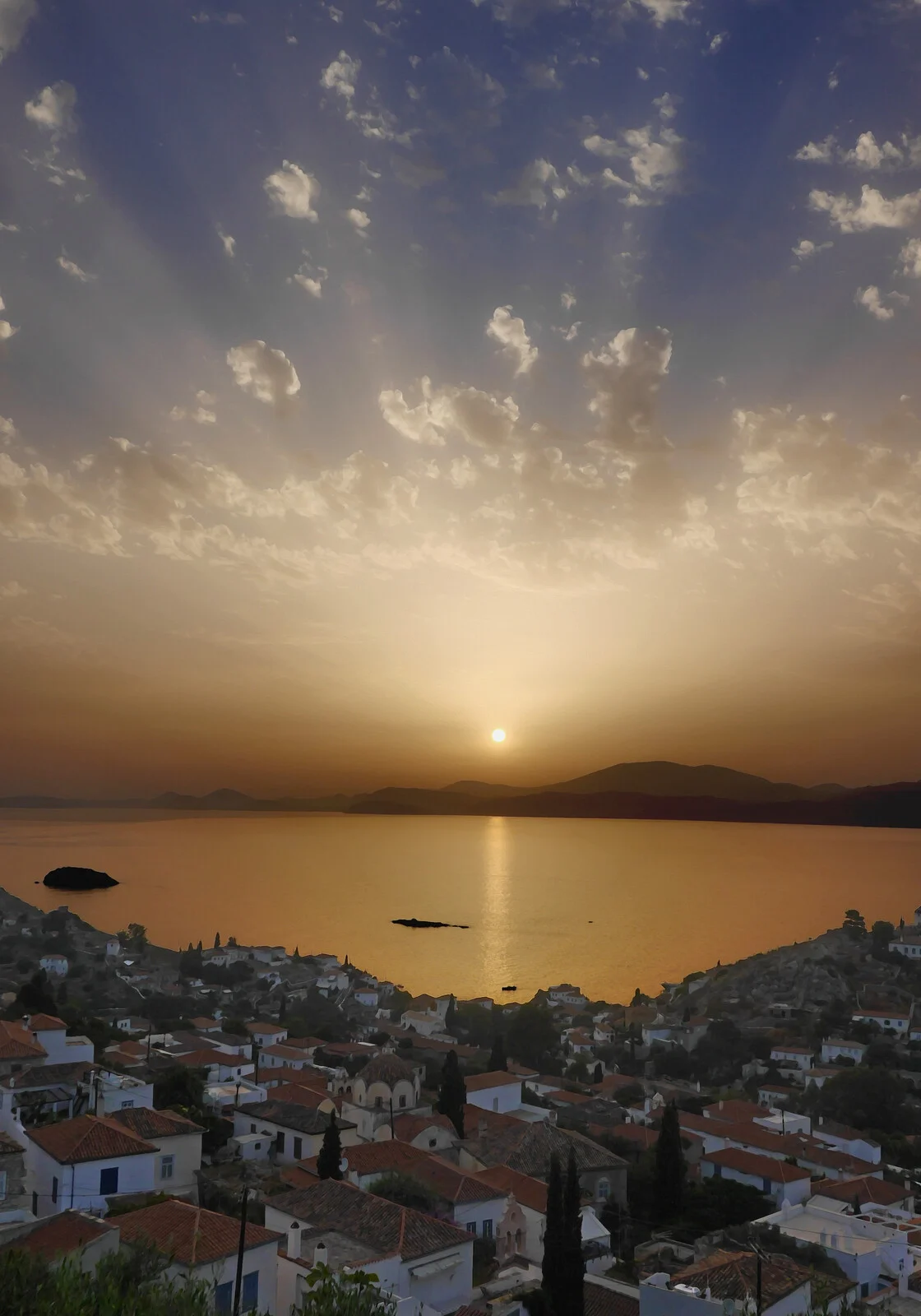
Fireworks with sparkling clouds, 2018
Digital
50 x 70 cm
A still summer evening, with a clear blue sky like an endless pink and blue canvas, heaven suddenly transformed into a living painting of colour and light. The stark contrast between the serene, natural setting and the explosive bursts of fireworks was a sight to behold. Firework explosions spread like puffs of cloud across the sky, each a symphony of sparkling colours.
As the sun cast long shadows over the mountains of the Peloponnese and painted the horizon in muted shades of pink and gold, it had only a few minutes left before it could take refuge behind the mountains from the magnificent firework display it had set off.
One by one, the fireworks burst into the sky, their brilliance fleeting but memorable. The reds, stretching out and bursting into bright, warm tones, were the first to paint the sky, followed by blue and green stars swirling in a mesmerising kaleidoscopic pattern. Each explosion was a stroke of a master painter, filling the sky with glittering patterns that slowly dissolved and vanished, leaving only the memory of their breathtaking beauty.
The light from the fireworks reflected in the surrounding sea, mirroring the magical spectacle above. Streaks of silver and gold danced through the sky, and each explosion left a faint scent of ozone in the warm evening air.
It was as if the fireworks and the setting sun had a final, harmonious dance before night took over. When the last fireworks burst, and the puffs of cloud had dissolved, the sky calmed, backlit by the first stars timidly appearing on the darkening canvas. The audience was left with a profound sense of tranquillity, as if they had witnessed a moment of pure beauty amid the world's chaotic pace.
The silhouette of the Peloponnese stood there, quiet and respectful, as on all nights before. The people who witnessed this magnificent spectacle could live with the profound feeling of being part of an event more significant than life itself, something only a Greek summer evening sky can offer.
Six years ago, on June 9 at 13:44, a firework exploded in the sky above Hydra, the largest in all categories through the ages. It stretched from the sun, approximately 149.6 million kilometres away, to Mount Eros, Hydra's highest point.
All other fireworks anywhere on Earth paled in comparison, including Hydra's own. What are the explosions in the sky during Independence Day (Evangelismos), Easter (Pascha), the Midsummer Miaouli Festival, The Feast of the Dormition of the Virgin Mary (Dekapentavgoustos), Ohi Day, and all other occasions when Hydra sets off rockets into the sky?
Hydra's and Greece's festivals and holidays are a vibrant tapestry of religious devotion, historical remembrance, and communal joy. Yet all paled before this gigantic firework arranged by nature, or perhaps the ancient Greek gods had a hand in the play.
Fireworks, a spectacle enthralling humanity for centuries, paint the night sky with a mesmerising array of colours and resounding booms that inspire awe and celebration. Yet, their origins are as unassuming as they are ancient, tracing back to a fortuitous discovery in China that would revolutionise how we commemorate our most significant events.
Origins in China due to an accidental invention
China is credited with the invention of fireworks, an innovation born from a culinary mishap. Legend tells of a Chinese cook who combined charcoal, sulfur, and saltpetre (potassium nitrate) while experimenting in the kitchen. This accidental mixture was compressed into a bamboo tube, resulting in a surprising explosion. What began as a kitchen experiment quickly evolved into a tool for celebration and warfare, with early uses of fireworks involving frightening off evil spirits and signalling in military contexts.
Fireworks Spread Across the World
As trade routes expanded, so did the knowledge and use of fireworks. By the Middle Ages, fireworks had made their way to Europe, where they were quickly adopted for public celebrations and royal events. The Italians, in particular, became renowned for their firework displays, developing new colours and effects by adding metal salts to the mixtures. Copper produced blues, strontium gave reds, and barium created greens, enhancing the visual splendour of firework displays. This cultural adaptation of fireworks showcases how different regions have embraced and personalised this ancient invention.
Notable Firework Displays Through History
Specific firework displays have stood out throughout history due to their grandeur or the surrounding circumstances. One such event was the celebration of the marriage of the Dauphin of France on May 16, 1770. The display beside the Seine River was intended to be a magnificent spectacle. Unfortunately, it turned tragic when a misfire caused chaos, leading to the deaths of around 800 people. This disaster highlighted both the beauty and the danger of pyrotechnic displays.
Despite such tragedies, the allure of fireworks continued to grow. In the United States, fireworks became synonymous with Independence Day celebrations. The first Fourth of July celebration in 1777, just a year after the Declaration of Independence was signed, featured fireworks as a symbol of the young nation's hopes and dreams.
From Celebration to Warfare: The Dual Use of Fireworks
Fireworks have not only been used for celebrations but have also played a role in warfare. The same principles that create dazzling displays in the sky can be applied to military technology. For example, the rocket technology used in fireworks laid the groundwork for early missile development. During the 19th century, rockets were used in conflicts such as the Napoleonic Wars and the War of 1812. The line "the rockets' red glare" from the United States national anthem, "The Star-Spangled Banner," refers to these military rockets. This dual use of fireworks underscores their versatility and impact on cultural and military spheres.
Anecdotes and Oddities
Fireworks have produced numerous anecdotes and odd occurrences throughout history. One of the most humorous involves the famous physicist Isaac Newton, who was reportedly a pyrotechnic enthusiast. According to tales, he once attempted to create a more powerful firework using his knowledge of chemistry. The explosion was so intense that it blew off his wig and caused a small fire in his laboratory. Luckily, he survived to make his most important invention, which explained gravity.
Another interesting anecdote comes from Italy, where a tradition known as "La Girandola" has been practised since the Renaissance. This event in Rome features a unique fireworks display launched from the Castel Sant'Angelo. The tradition dates back to Pope Paul V, who, in 1481, ordered a grand display to celebrate the end of the plague.
Modern Fireworks: Art and Science
Today, fireworks are a sophisticated blend of art and science. Pyrotechnicians carefully design each display, choreographing explosions to music and crafting intricate shapes and patterns in the sky. Modern technology has even introduced computer programming into the mix, allowing for precise timing and synchronisation that would have been impossible in the past. This fusion of art and science in modern fireworks showcases this field's ongoing evolution and innovation.
Countries worldwide continue to compete in grand fireworks displays, showcasing their cultural pride and technological prowess. Events like the New Year's Eve celebration in Sydney, Australia, the International Fireworks Competition in Montreal, Canada, and the annual Fourth of July celebrations in the United States demonstrate the global fascination with these explosive works of art.
Fireworks, from serendipitous discovery to an integral part of global celebrations, have a history that is a tapestry of triumph, tragedy, innovation, and tradition. Whether heralding a new year, commemorating national independence, or simply bringing joy to onlookers, fireworks illuminate our skies and ignite our imaginations. Their enduring allure lies in their ability to metamorphose the night into a canvas of light and sound, reminding us of the beauty and wonder that can emerge from the most unexpected places.
The World's Greatest Fireworks Display a symphony of light and colour. Regarding grand fireworks displays, several events worldwide stand out for their scale, artistry, and sheer spectacle. These displays not only celebrate significant occasions but also push the boundaries of pyrotechnic technology, showcasing an array of colours and types of fireworks that captivate millions of spectators.
Sydney New Year's Eve Fireworks
One of the most iconic fireworks displays in the world is the Sydney New Year's Eve celebration. Over a million people gather yearly around Sydney Harbour to witness the stunning show while millions watch on television. The display features over seven tons of fireworks launched from the Sydney Harbour Bridge, the Opera House, and barges on the water. The choreographed spectacle includes a dazzling array of colours and patterns, from brilliant reds and greens to shimmering golds and blues, all set to a carefully selected musical soundtrack. The grand finale is a breathtaking cascade of fireworks that lights up the entire harbour, marking the start of the new year.
Tokyo Disneyland's Fireworks Fantasy
Tokyo Disneyland is renowned for its nightly fireworks display, Fireworks Fantasy. This show combines state-of-the-art pyrotechnics with beloved Disney music and themes, creating a magical experience for visitors. The display includes various fireworks, from traditional starbursts and chrysanthemums to more elaborate shapes like hearts and Mickey Mouse heads. The vibrant colours and synchronised bursts are designed to enhance the fairytale atmosphere of the park, providing a fitting end to a day of enchantment and adventure.
Dubai's New Year Fireworks at Burj Khalifa
Dubai is known for its opulence and grandeur, and the New Year fireworks at the Burj Khalifa are no exception. The world's tallest building becomes the centrepiece of a spectacular show that features fireworks launched from various levels of the skyscraper. The display includes a mix of pyrotechnic effects, from rapid-fire sequences to slow, cascading showers of sparks. The colours range from brilliant whites and silvers to deep blues and purples, creating a mesmerising visual feast. The Burj Khalifa display often records the most fireworks launched in a single event, reflecting Dubai's ambition and flair for the dramatic.
Macy's Fourth of July Fireworks
The Macy's Fourth of July Fireworks in New York City is one of the largest Independence Day celebrations in the United States. Held over the East River, the display features over 75,000 shells launched from barges, illuminating the skyline with vibrant colours and patterns. The show includes classic pyrotechnic effects like peonies, willows, brocades and innovative designs such as smiley faces and patriotic red, white, and blue bursts. The event is synchronised with a musical score that includes patriotic songs and contemporary hits, creating a festive atmosphere that celebrates American independence.
Montreal International Fireworks Competition
The Montreal International Fireworks Competition, or L'International des Feux Loto-Québec, is the world's largest and most prestigious fireworks competition. Held annually at La Ronde amusement park, the event features pyrotechnic teams from around the globe, each presenting a 30-minute display set to music. The competition showcases various fireworks, from ground-based fountains and Roman candles to high-altitude shells and multi-break rockets. The displays are judged on creativity, synchronisation, and overall impact, with teams vying for the coveted Gold, Silver, and Bronze Jupiter awards.
Types of Fireworks and Their Colors
Fireworks displays comprise various pyrotechnic devices designed to create specific effects and colours. Some of the most common types include:
- Aerial Shells: These are the most familiar type of fireworks, launched into the sky to explode in mid-air. They produce various effects, such as starbursts, peonies, and chrysanthemums, and come in multiple colours.
Rockets: Similar to aerial shells, rockets are propelled into the sky by a thrust charge and explode at their peak. In addition to their visual effects, rockets often produce whistling or crackling sounds.
- Roman Candles: These fireworks eject one or more stars or bursts at intervals, creating a series of colourful explosions. They are typically held in the ground or on a sturdy base.
- Fountains: Ground-based fireworks emitting sparks and colour spray, resembling a water fountain. They can produce effects like crackling, whistling, and changing colours.
- Mines: These fireworks launch a shower of sparks and stars from the ground upward, creating a dramatic column of light and colour.
- Cakes: Also known as multi-shot aerials, cakes are composed of multiple tubes linked together, rapidly firing a sequence of effects. They are famous for creating complex displays with minimal setup.
The colours in fireworks are achieved by using different metal salts and chemical compounds. For example, strontium salts produce red, barium salts create green, copper compounds yield blue, and sodium salts give off yellow. By combining these compounds, pyrotechnicians can make a full spectrum of vibrant colours and intricate effects.
From their accidental invention in ancient China to the grand spectacles that light up modern skies, fireworks have a rich and storied history. They continue to evolve, combining art and science to create unforgettable experiences. Whether celebrating a new year, a national holiday, or a personal milestone, fireworks bring joy and wonder, reminding us of the beauty and excitement that can be found in a burst of light.
The Japanese "Yonshakudama" is one of the largest fireworks in the world, creating an explosion in the sky that stretches nearly a kilometre. Weighing an impressive 422 kilograms and boasting an incredible 122-centimeter diameter, the Yonshakudama is recognised as the world's largest single fireworks.
New Year's Eve fireworks
For those who love fireworks, New Year's Eve is the perfect occasion to indulge in a dazzling display of pyrotechnic artistry in a global spectacle. As the clock strikes midnight, cities around the world light up their skies, creating a breathtaking global spectacle that can be followed on television, hour by hour, as each time zone welcomes the new year.
The journey begins in the Pacific, with small islands like Tonga and Samoa among the first to usher in the new year. Despite their size, these islands don't hold back on their celebrations, launching vibrant fireworks that set the tone for the rest of the world.
As the new year progresses westward, the iconic skyline of Sydney, Australia, comes alive with one of the most famous fireworks displays in the world. The Sydney Harbour Bridge and Opera House provide a stunning backdrop as millions of viewers tune in to watch the extravagant show. The brilliant bursts of colour reflected in the harbour waters create a mesmerising sight that captivates audiences locally and globally.
Moving across Asia, major cities like Tokyo, Beijing, and Bangkok each offer unique takes on the celebration. In Tokyo, the fireworks are often accompanied by traditional Japanese performances, blending the old with the new in a harmonious display. Beijing's fireworks light up the night sky above historical landmarks like the Forbidden City, strikingly contrasting the ancient and the contemporary.
As the celebration continues westward, Dubai's Burj Khalifa, the tallest building in the world, serves as the centrepiece for one of the most abundant fireworks displays. The sheer scale and synchronisation of the fireworks, combined with laser light shows, create a spectacle that is nothing short of awe-inspiring.
Europe's major cities each bring their flair to the festivities. In London, the fireworks over the Thames River, with the London Eye and Big Ben in the background, provide a quintessentially British picturesque setting. Paris lights up the Eiffel Tower, while Berlin hosts a massive party at the Brandenburg Gate with a spectacular pyrotechnic display.
As New Year's Eve moves across the Atlantic, cities like Rio de Janeiro and Buenos Aires keep momentum with their vibrant celebrations. Rio's Copacabana Beach becomes a sea of revellers dressed in white, a traditional colour symbolising peace, as fireworks light up the night sky over the Atlantic Ocean.
Finally, the journey culminates in North America, with Times Square in New York City being the most iconic destination. The descent of the glittering ball is followed by a cascade of fireworks, confetti, and cheers from the crowd gathered below. On the West Coast, cities like Los Angeles and San Francisco offer stunning displays, bringing the global celebration full circle.
Watching the fireworks unfold around the world, one can't help but feel a sense of unity and shared joy. While unique to its location, each display contributes to a collective experience that transcends borders and cultures. For a few hours, the entire world is united in celebration, with the magic of fireworks lighting up the sky and our hearts.
Baron Munchausen—the legendary figure known for his outlandish and whimsical tales. It must be him if a man ever had a grand adventure with fireworks. Let's dive into an unbelievable story of how the Baron had his most explosive escapade yet - The astonishing firework fiasco of Baron Munchausen.
In one of his many extraordinary adventures, the inimitable Baron Munchausen was invited to a grand celebration in the heart of China. Known far and wide for his exploits, the Baron was asked to partake in the most magnificent firework display the world had ever seen. This wasn't just any display; it was to celebrate the Emperor's birthday, and the Chinese, having invented fireworks, were determined to outdo themselves. Fireworks, in Chinese culture, symbolise joy and prosperity, and their invention dates back to the Tang Dynasty.
Arriving in Beijing, the Baron was greeted with the usual fanfare, and as he walked through the city, he couldn't help but notice the elaborate preparations. There were bamboo tubes, heaps of colourful powders, and artisans meticulously crafting rockets and firecrackers.
One evening, the curious and inventive Baron decided to lend a hand as the preparations were in full swing. After all, who better to help with a spectacle than the man known for riding cannonballs and pulling himself out of a swamp by his hair? He approached the lead pyrotechnician, a wise and somewhat nervous older man named Mr. Bang, and offered assistance. 'Mr. Bang, my good man, I believe we can create something extraordinary together,' the Baron said with a mischievous twinkle.
Mr. Bang, though initially hesitant, was soon won over by the Baron's charisma. Together, they concocted a plan to create the most spectacular fireworks ever—an enormous rocket that would light up the entire sky and spell out the Emperor's name in blazing colours. The Baron's enthusiasm was infectious, and Mr. Bang was overwhelmed by the excitement and challenge of creating something extraordinary.
The Baron, never one to shy away from a challenge, insisted on testing the rocket himself. So, they constructed the Yonshakudama, the biggest firework in the world, weighing nearly half a ton, and designed it to create an explosion visible from space. The day of the test arrived, and the Baron, with his usual bravado and a twinkle in his eye, climbed atop the rocket, ready to embark on another daring adventure.
With a dramatic countdown, the fuse was lit, and the rocket shot into the sky with the Baron astride. Higher and higher, it soared, trailing a spectacular plume of sparks. As it reached its zenith, the rocket exploded with such force that the night turned to day. The sky was ablaze with colours, and the Emperor's name shimmered across the heavens true to their design, leaving the crowd breathless with awe.
However, the story doesn't end there. For, you see, the Baron had neglected to consider how he might return to Earth. As he descended, he cleverly manoeuvred using his coat as a makeshift parachute, a comical sight with the crowd in stitches. He floated gently down, landing gracefully amidst the cheering crowd. The Emperor's laughter echoing through the night was so impressed that he declared the Baron an honorary citizen of China and presented him with a golden dragon, a token of his appreciation for the Baron's unique and entertaining antics.
But the Baron's adventures with fireworks didn't stop there. He went on to tour the world, bringing his unique flair to firework displays in every major city. In Paris, he orchestrated a grand display that outshone the Eiffel Tower. In London, his fireworks danced above Big Ben, forming shapes of lions and unicorns.
One of his most infamous escapades occurred during a display in Venice. The Baron, deciding that the fireworks needed an extra element of surprise, rigged a gondola to appear like a fiery dragon. As it floated down the Grand Canal, the crowd gasped in astonishment, their eyes wide with wonder, believing they were witnessing a mythical beast. The Baron, of course, revelled in the spectacle, knowing that the true magic lay in his ability to inspire wonder.
And so, Baron Munchausen's legacy as a master of fireworks was cemented in the annals of history. His stories of fireworks-fueled adventures grew more elaborate with each retelling, becoming a staple of his legendary exploits. Whether he was truly there to invent the world's largest fireworks or add flair to the art, one thing was sure: wherever the Baron went, fireworks followed, and the night sky was never the same. The sky was a canvas, and the fireworks, his brush, painting a masterpiece of light and colour that would be remembered for generations.
That leads us to the most incredible fireworks that never were but are still remembered more than all those that happened. Speaking of grand and unrealised explosions, let's not forget Guy Fawkes and his infamous Gunpowder Plot of 1605. Unlike the Baron's successful pyrotechnic endeavours, Fawkes' attempt to blow up the House of Lords was foiled at the last minute. But what if it had succeeded? The Gunpowder Plot was a significant event in British history, marking a failed attempt to assassinate King James I and the Protestant aristocracy. It led to the creation of Bonfire Night, a celebration of the plot's failure, and the use of fireworks to symbolise the thwarted explosion.
The night sky of London would have witnessed the most unexpected display of all time. Instead, Guy Fawkes was caught, and the most enormous explosion in British history turned into a yearly celebration known as Bonfire Night. Ironically, Fawkes' failure led to the creation of one of the most celebrated nights of fireworks. Every November 5, the UK lights up with bonfires, fireworks, and effigies of Fawkes, reminding everyone of the most famous plot that never came to fruition. The night is filled with anticipation and excitement as the fireworks light up the sky, symbolising the thwarted explosion and celebrating the plot's failure.
Guy Fawkes had an explosive idea. Along with a group of co-conspirators, he plotted to blow up the House of Lords in London during the State Opening of Parliament. Their aim? To assassinate King James I and restore a Catholic monarch to the throne. But, as we all know, things didn't go as planned.
Guy, the man of the hour, was caught red-handed guarding 36 barrels of gunpowder in the cellar beneath the House of Lords. Talk about being in the wrong place at the wrong time! His plot was foiled, and instead of going down in history as the man who blew up Parliament, Guy became famous for the most prominent "firework show" that never happened. Fawkes was sentenced to be hanged, drawn and quartered. However, at his execution on January 31, he died when his neck was broken as he was hanged, with some sources claiming that he deliberately jumped to make this happen; he thus avoided the agony of his sentence.
Fast-forward to today, and Guy Fawkes Night, also known as Bonfire Night, is celebrated every year on November 5. The irony? It's now one of the biggest fireworks celebrations in the UK! Instead of mourning the failed plot, people celebrate it enthusiastically and light the sky with spectacular fireworks displays.
Picture kids running around with sparklers, families gathered around bonfires, and Guy Fawkes effigies being tossed into the flames as if to say, "Nice try, but we prefer our Parliament un-exploded." It's a night filled with fun, food, and, of course, fireworks.
But let's not forget the fireworks! The displays are spectacular, with rockets whizzing into the night sky, exploding into dazzling patterns of reds, blues, greens, and gold. Catherine's wheels spin with wild abandon, fountains of sparks light up backyards, and the grand finale always leaves the crowd in awe.
One of the most memorable Guy Fawkes Night celebrations occurs in Lewes, East Sussex. Known for its elaborate processions, bonfires, and fireworks, the town goes all out to commemorate the failed plot. It mixes history, pyrotechnics, and a good dose of British eccentricity.
So, while Guy Fawkes might not have succeeded in his original mission, he certainly succeeded in giving us an annual excuse to light up the sky. Every November 5, as we watch the fireworks burst overhead, we can't help but chuckle at the twist of fate that turned a treasonous plot into a national night of celebration.
Remember, remember, November 5,
Gunpowder, treason and plot.
I see no reason
Why gunpowder treason
It should never be forgotten.
Guy Fawkes, Guy Fawkes, 'twas his intent
To blow up the King and the Parliament
Three score barrels of powder below
Poor old England to overthrow
By God's providence, he was catch'd
With a dark lantern and burning match
Holler boys, holler boys, let the bells ring
Holler boys, holler boys
God save the King!
So, from Baron Munchausen's fantastical displays to Guy Fawkes's historical misfire, fireworks can light up our imaginations just as much as they light up the sky.
Jörgen Thornberg
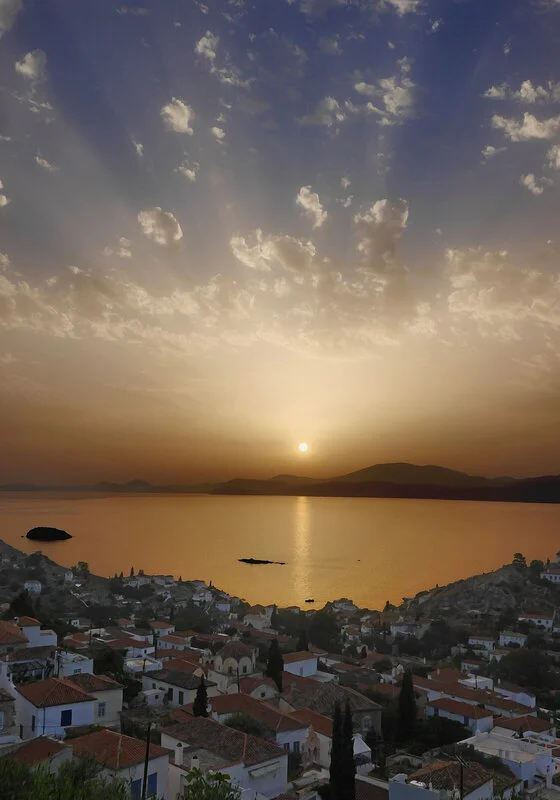
Fireworks with sparkling clouds, 2018
Digital
50 x 70 cm
A still summer evening, with a clear blue sky like an endless pink and blue canvas, heaven suddenly transformed into a living painting of colour and light. The stark contrast between the serene, natural setting and the explosive bursts of fireworks was a sight to behold. Firework explosions spread like puffs of cloud across the sky, each a symphony of sparkling colours.
As the sun cast long shadows over the mountains of the Peloponnese and painted the horizon in muted shades of pink and gold, it had only a few minutes left before it could take refuge behind the mountains from the magnificent firework display it had set off.
One by one, the fireworks burst into the sky, their brilliance fleeting but memorable. The reds, stretching out and bursting into bright, warm tones, were the first to paint the sky, followed by blue and green stars swirling in a mesmerising kaleidoscopic pattern. Each explosion was a stroke of a master painter, filling the sky with glittering patterns that slowly dissolved and vanished, leaving only the memory of their breathtaking beauty.
The light from the fireworks reflected in the surrounding sea, mirroring the magical spectacle above. Streaks of silver and gold danced through the sky, and each explosion left a faint scent of ozone in the warm evening air.
It was as if the fireworks and the setting sun had a final, harmonious dance before night took over. When the last fireworks burst, and the puffs of cloud had dissolved, the sky calmed, backlit by the first stars timidly appearing on the darkening canvas. The audience was left with a profound sense of tranquillity, as if they had witnessed a moment of pure beauty amid the world's chaotic pace.
The silhouette of the Peloponnese stood there, quiet and respectful, as on all nights before. The people who witnessed this magnificent spectacle could live with the profound feeling of being part of an event more significant than life itself, something only a Greek summer evening sky can offer.
Six years ago, on June 9 at 13:44, a firework exploded in the sky above Hydra, the largest in all categories through the ages. It stretched from the sun, approximately 149.6 million kilometres away, to Mount Eros, Hydra's highest point.
All other fireworks anywhere on Earth paled in comparison, including Hydra's own. What are the explosions in the sky during Independence Day (Evangelismos), Easter (Pascha), the Midsummer Miaouli Festival, The Feast of the Dormition of the Virgin Mary (Dekapentavgoustos), Ohi Day, and all other occasions when Hydra sets off rockets into the sky?
Hydra's and Greece's festivals and holidays are a vibrant tapestry of religious devotion, historical remembrance, and communal joy. Yet all paled before this gigantic firework arranged by nature, or perhaps the ancient Greek gods had a hand in the play.
Fireworks, a spectacle enthralling humanity for centuries, paint the night sky with a mesmerising array of colours and resounding booms that inspire awe and celebration. Yet, their origins are as unassuming as they are ancient, tracing back to a fortuitous discovery in China that would revolutionise how we commemorate our most significant events.
Origins in China due to an accidental invention
China is credited with the invention of fireworks, an innovation born from a culinary mishap. Legend tells of a Chinese cook who combined charcoal, sulfur, and saltpetre (potassium nitrate) while experimenting in the kitchen. This accidental mixture was compressed into a bamboo tube, resulting in a surprising explosion. What began as a kitchen experiment quickly evolved into a tool for celebration and warfare, with early uses of fireworks involving frightening off evil spirits and signalling in military contexts.
Fireworks Spread Across the World
As trade routes expanded, so did the knowledge and use of fireworks. By the Middle Ages, fireworks had made their way to Europe, where they were quickly adopted for public celebrations and royal events. The Italians, in particular, became renowned for their firework displays, developing new colours and effects by adding metal salts to the mixtures. Copper produced blues, strontium gave reds, and barium created greens, enhancing the visual splendour of firework displays. This cultural adaptation of fireworks showcases how different regions have embraced and personalised this ancient invention.
Notable Firework Displays Through History
Specific firework displays have stood out throughout history due to their grandeur or the surrounding circumstances. One such event was the celebration of the marriage of the Dauphin of France on May 16, 1770. The display beside the Seine River was intended to be a magnificent spectacle. Unfortunately, it turned tragic when a misfire caused chaos, leading to the deaths of around 800 people. This disaster highlighted both the beauty and the danger of pyrotechnic displays.
Despite such tragedies, the allure of fireworks continued to grow. In the United States, fireworks became synonymous with Independence Day celebrations. The first Fourth of July celebration in 1777, just a year after the Declaration of Independence was signed, featured fireworks as a symbol of the young nation's hopes and dreams.
From Celebration to Warfare: The Dual Use of Fireworks
Fireworks have not only been used for celebrations but have also played a role in warfare. The same principles that create dazzling displays in the sky can be applied to military technology. For example, the rocket technology used in fireworks laid the groundwork for early missile development. During the 19th century, rockets were used in conflicts such as the Napoleonic Wars and the War of 1812. The line "the rockets' red glare" from the United States national anthem, "The Star-Spangled Banner," refers to these military rockets. This dual use of fireworks underscores their versatility and impact on cultural and military spheres.
Anecdotes and Oddities
Fireworks have produced numerous anecdotes and odd occurrences throughout history. One of the most humorous involves the famous physicist Isaac Newton, who was reportedly a pyrotechnic enthusiast. According to tales, he once attempted to create a more powerful firework using his knowledge of chemistry. The explosion was so intense that it blew off his wig and caused a small fire in his laboratory. Luckily, he survived to make his most important invention, which explained gravity.
Another interesting anecdote comes from Italy, where a tradition known as "La Girandola" has been practised since the Renaissance. This event in Rome features a unique fireworks display launched from the Castel Sant'Angelo. The tradition dates back to Pope Paul V, who, in 1481, ordered a grand display to celebrate the end of the plague.
Modern Fireworks: Art and Science
Today, fireworks are a sophisticated blend of art and science. Pyrotechnicians carefully design each display, choreographing explosions to music and crafting intricate shapes and patterns in the sky. Modern technology has even introduced computer programming into the mix, allowing for precise timing and synchronisation that would have been impossible in the past. This fusion of art and science in modern fireworks showcases this field's ongoing evolution and innovation.
Countries worldwide continue to compete in grand fireworks displays, showcasing their cultural pride and technological prowess. Events like the New Year's Eve celebration in Sydney, Australia, the International Fireworks Competition in Montreal, Canada, and the annual Fourth of July celebrations in the United States demonstrate the global fascination with these explosive works of art.
Fireworks, from serendipitous discovery to an integral part of global celebrations, have a history that is a tapestry of triumph, tragedy, innovation, and tradition. Whether heralding a new year, commemorating national independence, or simply bringing joy to onlookers, fireworks illuminate our skies and ignite our imaginations. Their enduring allure lies in their ability to metamorphose the night into a canvas of light and sound, reminding us of the beauty and wonder that can emerge from the most unexpected places.
The World's Greatest Fireworks Display a symphony of light and colour. Regarding grand fireworks displays, several events worldwide stand out for their scale, artistry, and sheer spectacle. These displays not only celebrate significant occasions but also push the boundaries of pyrotechnic technology, showcasing an array of colours and types of fireworks that captivate millions of spectators.
Sydney New Year's Eve Fireworks
One of the most iconic fireworks displays in the world is the Sydney New Year's Eve celebration. Over a million people gather yearly around Sydney Harbour to witness the stunning show while millions watch on television. The display features over seven tons of fireworks launched from the Sydney Harbour Bridge, the Opera House, and barges on the water. The choreographed spectacle includes a dazzling array of colours and patterns, from brilliant reds and greens to shimmering golds and blues, all set to a carefully selected musical soundtrack. The grand finale is a breathtaking cascade of fireworks that lights up the entire harbour, marking the start of the new year.
Tokyo Disneyland's Fireworks Fantasy
Tokyo Disneyland is renowned for its nightly fireworks display, Fireworks Fantasy. This show combines state-of-the-art pyrotechnics with beloved Disney music and themes, creating a magical experience for visitors. The display includes various fireworks, from traditional starbursts and chrysanthemums to more elaborate shapes like hearts and Mickey Mouse heads. The vibrant colours and synchronised bursts are designed to enhance the fairytale atmosphere of the park, providing a fitting end to a day of enchantment and adventure.
Dubai's New Year Fireworks at Burj Khalifa
Dubai is known for its opulence and grandeur, and the New Year fireworks at the Burj Khalifa are no exception. The world's tallest building becomes the centrepiece of a spectacular show that features fireworks launched from various levels of the skyscraper. The display includes a mix of pyrotechnic effects, from rapid-fire sequences to slow, cascading showers of sparks. The colours range from brilliant whites and silvers to deep blues and purples, creating a mesmerising visual feast. The Burj Khalifa display often records the most fireworks launched in a single event, reflecting Dubai's ambition and flair for the dramatic.
Macy's Fourth of July Fireworks
The Macy's Fourth of July Fireworks in New York City is one of the largest Independence Day celebrations in the United States. Held over the East River, the display features over 75,000 shells launched from barges, illuminating the skyline with vibrant colours and patterns. The show includes classic pyrotechnic effects like peonies, willows, brocades and innovative designs such as smiley faces and patriotic red, white, and blue bursts. The event is synchronised with a musical score that includes patriotic songs and contemporary hits, creating a festive atmosphere that celebrates American independence.
Montreal International Fireworks Competition
The Montreal International Fireworks Competition, or L'International des Feux Loto-Québec, is the world's largest and most prestigious fireworks competition. Held annually at La Ronde amusement park, the event features pyrotechnic teams from around the globe, each presenting a 30-minute display set to music. The competition showcases various fireworks, from ground-based fountains and Roman candles to high-altitude shells and multi-break rockets. The displays are judged on creativity, synchronisation, and overall impact, with teams vying for the coveted Gold, Silver, and Bronze Jupiter awards.
Types of Fireworks and Their Colors
Fireworks displays comprise various pyrotechnic devices designed to create specific effects and colours. Some of the most common types include:
- Aerial Shells: These are the most familiar type of fireworks, launched into the sky to explode in mid-air. They produce various effects, such as starbursts, peonies, and chrysanthemums, and come in multiple colours.
Rockets: Similar to aerial shells, rockets are propelled into the sky by a thrust charge and explode at their peak. In addition to their visual effects, rockets often produce whistling or crackling sounds.
- Roman Candles: These fireworks eject one or more stars or bursts at intervals, creating a series of colourful explosions. They are typically held in the ground or on a sturdy base.
- Fountains: Ground-based fireworks emitting sparks and colour spray, resembling a water fountain. They can produce effects like crackling, whistling, and changing colours.
- Mines: These fireworks launch a shower of sparks and stars from the ground upward, creating a dramatic column of light and colour.
- Cakes: Also known as multi-shot aerials, cakes are composed of multiple tubes linked together, rapidly firing a sequence of effects. They are famous for creating complex displays with minimal setup.
The colours in fireworks are achieved by using different metal salts and chemical compounds. For example, strontium salts produce red, barium salts create green, copper compounds yield blue, and sodium salts give off yellow. By combining these compounds, pyrotechnicians can make a full spectrum of vibrant colours and intricate effects.
From their accidental invention in ancient China to the grand spectacles that light up modern skies, fireworks have a rich and storied history. They continue to evolve, combining art and science to create unforgettable experiences. Whether celebrating a new year, a national holiday, or a personal milestone, fireworks bring joy and wonder, reminding us of the beauty and excitement that can be found in a burst of light.
The Japanese "Yonshakudama" is one of the largest fireworks in the world, creating an explosion in the sky that stretches nearly a kilometre. Weighing an impressive 422 kilograms and boasting an incredible 122-centimeter diameter, the Yonshakudama is recognised as the world's largest single fireworks.
New Year's Eve fireworks
For those who love fireworks, New Year's Eve is the perfect occasion to indulge in a dazzling display of pyrotechnic artistry in a global spectacle. As the clock strikes midnight, cities around the world light up their skies, creating a breathtaking global spectacle that can be followed on television, hour by hour, as each time zone welcomes the new year.
The journey begins in the Pacific, with small islands like Tonga and Samoa among the first to usher in the new year. Despite their size, these islands don't hold back on their celebrations, launching vibrant fireworks that set the tone for the rest of the world.
As the new year progresses westward, the iconic skyline of Sydney, Australia, comes alive with one of the most famous fireworks displays in the world. The Sydney Harbour Bridge and Opera House provide a stunning backdrop as millions of viewers tune in to watch the extravagant show. The brilliant bursts of colour reflected in the harbour waters create a mesmerising sight that captivates audiences locally and globally.
Moving across Asia, major cities like Tokyo, Beijing, and Bangkok each offer unique takes on the celebration. In Tokyo, the fireworks are often accompanied by traditional Japanese performances, blending the old with the new in a harmonious display. Beijing's fireworks light up the night sky above historical landmarks like the Forbidden City, strikingly contrasting the ancient and the contemporary.
As the celebration continues westward, Dubai's Burj Khalifa, the tallest building in the world, serves as the centrepiece for one of the most abundant fireworks displays. The sheer scale and synchronisation of the fireworks, combined with laser light shows, create a spectacle that is nothing short of awe-inspiring.
Europe's major cities each bring their flair to the festivities. In London, the fireworks over the Thames River, with the London Eye and Big Ben in the background, provide a quintessentially British picturesque setting. Paris lights up the Eiffel Tower, while Berlin hosts a massive party at the Brandenburg Gate with a spectacular pyrotechnic display.
As New Year's Eve moves across the Atlantic, cities like Rio de Janeiro and Buenos Aires keep momentum with their vibrant celebrations. Rio's Copacabana Beach becomes a sea of revellers dressed in white, a traditional colour symbolising peace, as fireworks light up the night sky over the Atlantic Ocean.
Finally, the journey culminates in North America, with Times Square in New York City being the most iconic destination. The descent of the glittering ball is followed by a cascade of fireworks, confetti, and cheers from the crowd gathered below. On the West Coast, cities like Los Angeles and San Francisco offer stunning displays, bringing the global celebration full circle.
Watching the fireworks unfold around the world, one can't help but feel a sense of unity and shared joy. While unique to its location, each display contributes to a collective experience that transcends borders and cultures. For a few hours, the entire world is united in celebration, with the magic of fireworks lighting up the sky and our hearts.
Baron Munchausen—the legendary figure known for his outlandish and whimsical tales. It must be him if a man ever had a grand adventure with fireworks. Let's dive into an unbelievable story of how the Baron had his most explosive escapade yet - The astonishing firework fiasco of Baron Munchausen.
In one of his many extraordinary adventures, the inimitable Baron Munchausen was invited to a grand celebration in the heart of China. Known far and wide for his exploits, the Baron was asked to partake in the most magnificent firework display the world had ever seen. This wasn't just any display; it was to celebrate the Emperor's birthday, and the Chinese, having invented fireworks, were determined to outdo themselves. Fireworks, in Chinese culture, symbolise joy and prosperity, and their invention dates back to the Tang Dynasty.
Arriving in Beijing, the Baron was greeted with the usual fanfare, and as he walked through the city, he couldn't help but notice the elaborate preparations. There were bamboo tubes, heaps of colourful powders, and artisans meticulously crafting rockets and firecrackers.
One evening, the curious and inventive Baron decided to lend a hand as the preparations were in full swing. After all, who better to help with a spectacle than the man known for riding cannonballs and pulling himself out of a swamp by his hair? He approached the lead pyrotechnician, a wise and somewhat nervous older man named Mr. Bang, and offered assistance. 'Mr. Bang, my good man, I believe we can create something extraordinary together,' the Baron said with a mischievous twinkle.
Mr. Bang, though initially hesitant, was soon won over by the Baron's charisma. Together, they concocted a plan to create the most spectacular fireworks ever—an enormous rocket that would light up the entire sky and spell out the Emperor's name in blazing colours. The Baron's enthusiasm was infectious, and Mr. Bang was overwhelmed by the excitement and challenge of creating something extraordinary.
The Baron, never one to shy away from a challenge, insisted on testing the rocket himself. So, they constructed the Yonshakudama, the biggest firework in the world, weighing nearly half a ton, and designed it to create an explosion visible from space. The day of the test arrived, and the Baron, with his usual bravado and a twinkle in his eye, climbed atop the rocket, ready to embark on another daring adventure.
With a dramatic countdown, the fuse was lit, and the rocket shot into the sky with the Baron astride. Higher and higher, it soared, trailing a spectacular plume of sparks. As it reached its zenith, the rocket exploded with such force that the night turned to day. The sky was ablaze with colours, and the Emperor's name shimmered across the heavens true to their design, leaving the crowd breathless with awe.
However, the story doesn't end there. For, you see, the Baron had neglected to consider how he might return to Earth. As he descended, he cleverly manoeuvred using his coat as a makeshift parachute, a comical sight with the crowd in stitches. He floated gently down, landing gracefully amidst the cheering crowd. The Emperor's laughter echoing through the night was so impressed that he declared the Baron an honorary citizen of China and presented him with a golden dragon, a token of his appreciation for the Baron's unique and entertaining antics.
But the Baron's adventures with fireworks didn't stop there. He went on to tour the world, bringing his unique flair to firework displays in every major city. In Paris, he orchestrated a grand display that outshone the Eiffel Tower. In London, his fireworks danced above Big Ben, forming shapes of lions and unicorns.
One of his most infamous escapades occurred during a display in Venice. The Baron, deciding that the fireworks needed an extra element of surprise, rigged a gondola to appear like a fiery dragon. As it floated down the Grand Canal, the crowd gasped in astonishment, their eyes wide with wonder, believing they were witnessing a mythical beast. The Baron, of course, revelled in the spectacle, knowing that the true magic lay in his ability to inspire wonder.
And so, Baron Munchausen's legacy as a master of fireworks was cemented in the annals of history. His stories of fireworks-fueled adventures grew more elaborate with each retelling, becoming a staple of his legendary exploits. Whether he was truly there to invent the world's largest fireworks or add flair to the art, one thing was sure: wherever the Baron went, fireworks followed, and the night sky was never the same. The sky was a canvas, and the fireworks, his brush, painting a masterpiece of light and colour that would be remembered for generations.
That leads us to the most incredible fireworks that never were but are still remembered more than all those that happened. Speaking of grand and unrealised explosions, let's not forget Guy Fawkes and his infamous Gunpowder Plot of 1605. Unlike the Baron's successful pyrotechnic endeavours, Fawkes' attempt to blow up the House of Lords was foiled at the last minute. But what if it had succeeded? The Gunpowder Plot was a significant event in British history, marking a failed attempt to assassinate King James I and the Protestant aristocracy. It led to the creation of Bonfire Night, a celebration of the plot's failure, and the use of fireworks to symbolise the thwarted explosion.
The night sky of London would have witnessed the most unexpected display of all time. Instead, Guy Fawkes was caught, and the most enormous explosion in British history turned into a yearly celebration known as Bonfire Night. Ironically, Fawkes' failure led to the creation of one of the most celebrated nights of fireworks. Every November 5, the UK lights up with bonfires, fireworks, and effigies of Fawkes, reminding everyone of the most famous plot that never came to fruition. The night is filled with anticipation and excitement as the fireworks light up the sky, symbolising the thwarted explosion and celebrating the plot's failure.
Guy Fawkes had an explosive idea. Along with a group of co-conspirators, he plotted to blow up the House of Lords in London during the State Opening of Parliament. Their aim? To assassinate King James I and restore a Catholic monarch to the throne. But, as we all know, things didn't go as planned.
Guy, the man of the hour, was caught red-handed guarding 36 barrels of gunpowder in the cellar beneath the House of Lords. Talk about being in the wrong place at the wrong time! His plot was foiled, and instead of going down in history as the man who blew up Parliament, Guy became famous for the most prominent "firework show" that never happened. Fawkes was sentenced to be hanged, drawn and quartered. However, at his execution on January 31, he died when his neck was broken as he was hanged, with some sources claiming that he deliberately jumped to make this happen; he thus avoided the agony of his sentence.
Fast-forward to today, and Guy Fawkes Night, also known as Bonfire Night, is celebrated every year on November 5. The irony? It's now one of the biggest fireworks celebrations in the UK! Instead of mourning the failed plot, people celebrate it enthusiastically and light the sky with spectacular fireworks displays.
Picture kids running around with sparklers, families gathered around bonfires, and Guy Fawkes effigies being tossed into the flames as if to say, "Nice try, but we prefer our Parliament un-exploded." It's a night filled with fun, food, and, of course, fireworks.
But let's not forget the fireworks! The displays are spectacular, with rockets whizzing into the night sky, exploding into dazzling patterns of reds, blues, greens, and gold. Catherine's wheels spin with wild abandon, fountains of sparks light up backyards, and the grand finale always leaves the crowd in awe.
One of the most memorable Guy Fawkes Night celebrations occurs in Lewes, East Sussex. Known for its elaborate processions, bonfires, and fireworks, the town goes all out to commemorate the failed plot. It mixes history, pyrotechnics, and a good dose of British eccentricity.
So, while Guy Fawkes might not have succeeded in his original mission, he certainly succeeded in giving us an annual excuse to light up the sky. Every November 5, as we watch the fireworks burst overhead, we can't help but chuckle at the twist of fate that turned a treasonous plot into a national night of celebration.
Remember, remember, November 5,
Gunpowder, treason and plot.
I see no reason
Why gunpowder treason
It should never be forgotten.
Guy Fawkes, Guy Fawkes, 'twas his intent
To blow up the King and the Parliament
Three score barrels of powder below
Poor old England to overthrow
By God's providence, he was catch'd
With a dark lantern and burning match
Holler boys, holler boys, let the bells ring
Holler boys, holler boys
God save the King!
So, from Baron Munchausen's fantastical displays to Guy Fawkes's historical misfire, fireworks can light up our imaginations just as much as they light up the sky.

Jörgen Thornberg
Malmö
Lite om bilder och mig. Translation in English at the end.
Jag är en nyfiken person som ser allt i bilder, även det jag fäster i ord, gärna tillsammans för bakom alla mina bilder finns en berättelse. Till vissa bilder hör en kortare eller längre novell som följer med bilden.
Bilder berättar historier. Jag omges av naturlig skönhet, intressanta människor och historia var jag än går. Jag använder min kamera för att dokumentera världen och blanda det jag ser med vad jag känner för att fånga den dolda magin.
Mina bilder berättar mina historier. Genom mina bilder, tryck och berättelser. Jag bjuder in dig att ta del av dessa berättelser, in i ditt liv och hem och dela min mycket personliga syn på vår värld. Mer än vad ögat ser. Jag tänker i bilder, drömmer och skriver och pratar om dem; följaktligen måste jag också skapa bilder. De blir vad jag ser, inte nödvändigtvis begränsade till verkligheten. Det finns en bild runt varje hörn. Jag hoppas att du kommer att se vad jag såg och gilla det.
Jag är också en skrivande person och till många bilder hör en kortare eller längre essay. Den följer med tavlan, tryckt på fint papper och med en personlig hälsning från mig.
Flertalet bilder startar sin resa i min kamera. Enkelt förklarat beskriver jag bilden jag ser i mitt inre, upplevd eller fantiserad. Bilden uppstår inom mig redan innan jag fått okularet till ögat. På bråkdelen av ett ögonblick ser jag vad jag vill ha och vad som kan göras med bilden. Här skall jag stoppa in en giraff, stålmannen, Titanic eller vad det är min fantasi finner ut. Ännu märkligare är att jag kommer ihåg minnesbilden långt efteråt när det blir tid att skapa verket. Om jag lyckas eller inte, är upp till betraktaren, oftast präglat av en stråk av svart humor – meningen är att man skall bli underhållen. Mina bilder blir ofta en snackis där de hänger.
Jag föredrar bilder som förmedlar ett budskap i flera lager. Vid första anblicken fylld av feel-good, en vacker utsikt, fint väder, solen skiner, blommor på ängen eller vattnet som ligger förrädiskt spegelblankt. I en sådan bild kan jag gömma min egentliga berättelse, mitt förakt för förtryckare och våldsverkare, rasister och fördomsfulla människor - ett gärna återkommande motiv mer eller mindre dolt i det vackra motivet. Jag försöker förena dem i ett gemensamt narrativ.
Bild och formgivning har löpt som en röd tråd genom livet. Fotokonst känns som en värdig final som jag gärna delar med mig.
Min genre är vid som framgår av mina bilder, temat en blandning av pop- och gatukonst i kollage som kan bestå av hundratals lager. Vissa bilder kan ta veckor, andra någon dag innan det är dags att överlämna resultatet till printverkstaden. Fine Art Prints är digitala fotocollage. I dessa kollage sker rivandet, klippandet, pusslandet, målandet, ritandet och sprayningen digitalt. Det jag monterar in kan vara hundratals år gamla bilder som jag omsorgsfullt frilägger så att de ser ut att vara en del av tavlan men också bilder skapade av mig själv efter min egen fantasi. Därefter besöks printstudion och för vissa bilder numrera en limiterad upplaga (oftast 7 exemplar) och signera för hand. Vissa bilder kan köpas i olika format. Det är bara att fråga efter vilka. Gillar man en bild som är 70x100 men inte har plats på väggen, går den kanske att få i 50x70 cm istället. Frågan är fri.
Metoden Giclée eller Fine Art Print som det också kallas är det moderna sättet för framställning av grafisk konst. Villkoret för denna typ av utskrifter är att en högkvalitativ storformatskrivare används med åldersbeständigt färgpigment och konstnärspapper eller i förekommande fall på duk. Pappret som används möter de krav på livslängd som ställs av museer och gallerier. Normalt säljer jag mina bilder oinramade så att den nya ägaren själv kan bestämma hur de skall se ut, med eller utan passepartout färg på ram, med eller utan glas etc..
Under många år ställde jag bara ut på nätet, i valda grupper och på min egen Facebooksida - https://www.facebook.com/jorgen.thornberg.9
Jag finns också på en egen hemsida som tyvärr inte alltid är uppdaterad – https://www.jth.life/ Där kan du också läsa en del av de berättelser som följer med bilden.
UTSTÄLLNINGAR
Luftkastellet, oktober 2022
Konst i Lund, november 2022
Luftkastellet, mars 2023
Engleson Galleri Caroli, april 2023
Hydra, Greece June 2023
Engleson Galleri Caroli, oktober 2023
Toppen, Höllviken december 2023
Luftkastellet, mars 2024
Torups Galleri, mars 2024
Venice, May 2024
Luftkastellet, oktober 2024
Konst i Advent, December 2024
Galleri Engleson, Caroli December 2024
Jäger & Jansson Galleri, april 2025
A bit about pictures and me.
I'm a curious person who sees everything in pictures, even what I express in words, often combining them, for behind all my pictures lies a story. These narratives, some as short as a single image and others as long as a novel, are the heart and soul of my work.
Pictures tell stories. Wherever I go, I'm surrounded by natural beauty, exciting people, and history. I use my camera to document the world and blend what I see with what I feel to capture the hidden magic.
My images tell my stories. Through my pictures, prints, and narratives, I invite you to partake in these stories in your life and home and share my deeply personal perspective of our world. More than meets the eye. I think in pictures, dream, write, and talk about them; consequently, I must create images too. They become what I see, not necessarily confined to reality. There's a picture around every corner. I hope you'll see what I saw and enjoy it.
I'm also a writer, and many images come with a shorter or longer essay. It accompanies the painting, printed on fine paper with my personal greeting.
Many pictures start their journey on my camera. Simply put, I describe the image I see in my mind, experienced or imagined. The image arises within me even before I bring the eyepiece to my eye. In a fraction of a moment, I see what I want and what can be done with the picture. Here, I'll insert a giraffe, Superman, the Titanic, or whatever my imagination conjures up. Even stranger is that I remember the mental image long after it's time to create the work. Whether I succeed is up to the observer, often imbued with a streak of black humour – the aim is to entertain. My pictures usually become a talking point wherever they hang.
I prefer pictures that convey a message in multiple layers. At first glance, they're filled with feel-good vibes, a beautiful view, lovely weather, the sun shining, flowers in the meadow, or the water lying deceptively calm. But beneath this surface beauty, I often conceal a deeper story, a narrative that challenges societal norms or explores the human condition. I invite you to delve into these hidden narratives and discover the layers of meaning within my work.
Picture and design have been a thread running through my life. Photographic art feels like a fitting finale, and I'm happy to share it.
My genre is varied, as seen in my pictures; the theme is a blend of pop and street art in collages that can consist of hundreds of layers. Some images can take weeks, others just a day before it's time to hand over the result to the print workshop. Fine Art Prints are digital photo collages. In these collages, tearing, cutting, puzzling, painting, drawing, and spraying happen digitally. What I insert can be images hundreds of years old that I carefully extract so they appear to be part of the painting, but also images created by myself, now also generated from my imagination. Next, visit the print studio and, for certain images, number a limited edition (usually 7 copies) and sign them by hand. Some images may be available in other formats. Just ask which ones. If you like an image that's 70x100 but doesn't have space on the wall, you might be able to get it in 50x70 cm instead. The question is open.
The Giclée method, or Fine Art Print as it's also called, is the modern way of producing graphic art. This method ensures the highest quality and longevity of the artwork, using a high-quality large-format printer with archival pigment inks and artist paper or, in some cases, canvas. The paper used meets the longevity requirements set by museums and galleries. I sell my pictures unframed, allowing the new owner to personalise their artwork, confident in the lasting value and quality of the piece.
For many years, I only exhibited online, in selected groups, and on my Facebook page - https://www.facebook.com/jorgen.thornberg.9. I also have my website, which unfortunately is not constantly updated - https://www.jth.life/. You can also read some of the stories accompanying the pictures there.
EXHIBITIONS
Luftkastellet, October 2022
Art in Lund, November 2022
Luftkastellet, March 2023
Engleson Gallery Caroli, April 2023
Hydra, Greece June 2023
Engleson Gallery Caroli, October 2023
Toppen, Höllviken December 2023
Luftkastellet, March 2024
Torup Gallery, March 2024
Venice, May 2024
UTSTÄLLNINGAR
Luftkastellet, oktober 2022
Konst i Lund, november 2022
Luftkastellet, mars 2023
Engleson Galleri Caroli, april 2023
Hydra, Greece June 2023
Engleson Galleri Caroli, oktober 2023
Toppen, Höllviken december 2023
Luftkastellet, mars 2024
Torups Galleri, mars 2024
Venice, May 2024
Luftkastellet, October 2024
Konst i Advent, December 2024
Galleri Engleson, Caroli December 2024
Jäger & Jansson Galleri, April 2025
Utbildning
Autodidakt
Medlem i konstnärsförening
Öppna Sinnen
Med i konstrunda
Konstrundan i Skåne
Utställningar
Luftkastellet, October 2022
Art in Lund, November 2022
Luftkastellet, March 2023
Engleson Gallery Caroli, April 2023
Hydra, Greece June 2023
Engleson Gallery Caroli, October 2023
Toppen, Höllviken December 2023
Luftkastellet, March 2024
Torup Gallery, March 2024
Venice, May 2024