Vi använder cookies för att ge dig bästa möjliga upplevelse. Välj vilka cookies du tillåter.
Läs mer i vår integritetspolicy
Jörgen Thornberg
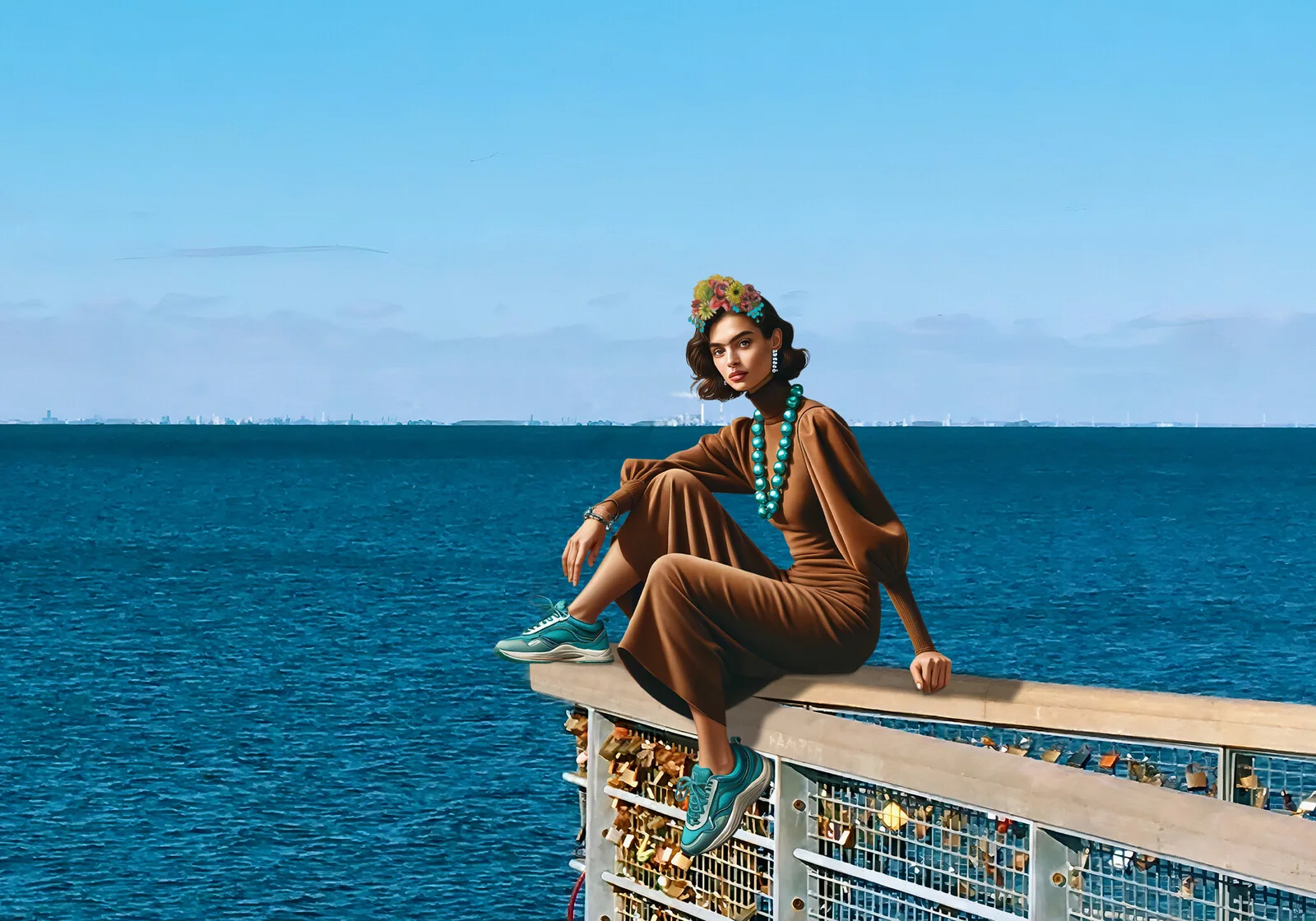
Frida - Malmö Lovelock viewpoint, 2023
Digital
70 x 50 cm
3 200 kr
My picture captures the time-travelling Frida Kahlo as a young woman on a spiritual visit to Malmö at the viewpoint filled with love locks with the Øresund in the background. In her hair, she wears her beloved hair ornament, a wreath of flowers. Eternity starts here by the sea. Frida, just like anyone else, couldn't lock love in place.
Mexican painter and self-portrait artist Frida Kahlo (1907–1954) is a towering figure in 20th-century art. She is celebrated for her emotional self-portraits that delve into themes of physical suffering, political activism, and cultural identity. Despite her relatively short lifespan and limited work, Kahlo's paintings have left an indelible mark on the art world, inspiring countless individuals across generations. Let's explore Frida Kahlo's life, her feminist legacy, and the enduring impact of her artistic vision.
Frida Kahlo's significance transcends mere artistic talent. She emerged as a defiant figure challenging conventional gender norms and societal expectations. Her self-portraits, imbued with raw emotion and symbolism, provide a profound insight into her inner world and serve as a testament to her resilience and strength in adversity.
Born to a German father and a Mexican mother on July 6, 1907, Kahlo grew up in a culturally diverse environment that would later influence her art. Her childhood was marked by hardship, including contracting polio at a young age, which left her with a lifelong limp. Despite her physical challenges, Kahlo excelled academically and harboured aspirations of becoming a doctor.
However, fate had other plans for Kahlo. On September 17, 1925, a tragic bus accident altered the course of her life forever. The collision left Kahlo with severe injuries, including a broken spine, pelvis, and multiple fractures. During her detailed recovery, Kahlo turned to painting as a form of self-expression and catharsis.
Supported by her family, Kahlo embarked on a journey of artistic exploration, honing her unique style that combined elements of Mexican folk art, surrealism, and realism. Her paintings often featured vivid colours, intricate symbolism, and haunting imagery drawn from Mexican mythology and culture.
At the heart of Kahlo's art lay a profound exploration of identity, femininity, and the human experience. Her self-portraits, which she once described as "the most sincere and real thing that I could do," captured her innermost thoughts, emotions, and physical struggles with unparalleled honesty and vulnerability.
Kahlo's personal life was as tumultuous as her art. Her marriage to fellow artist Diego Rivera was marked by passion, infidelity, and intense emotional highs and lows. Despite their turbulent relationship, Kahlo and Rivera shared a deep bond rooted in mutual admiration and artistic collaboration.
Kahlo remained an ardent advocate for social justice and political activism throughout her life. She aligned herself with leftist and feminist movements, using her art as a powerful tool for protest and advocacy. Her paintings often addressed themes of inequality, oppression, and the struggle for human rights, earning her a reputation as a fierce defender of the marginalised and disenfranchised.
Kahlo's feminist legacy is perhaps best encapsulated by her unapologetic embrace of her identity and physical appearance. Rejecting conventional beauty standards, she proudly displayed her unibrow, traditional Mexican attire, and distinctive features, challenging society's narrow definitions of femininity and beauty.
In her final years, Kahlo continued to create art despite declining health, using her paintings to grapple with mortality and existential questions. Her final self-portraits, imbued with a sense of introspection and acceptance, serve as a poignant reflection on the human condition and the inevitability of death.
Among Kahlo's most renowned paintings is "Self-Portrait with Thorn Necklace and Hummingbird," created after her divorce from Diego Rivera. This powerful work depicts Kahlo adorned with a thorn necklace, symbolising her anguish and suffering. Perched on her shoulders are a black cat and a monkey, representing mischief and cunning. The painting, with its dual self-portrait motif and exposed hearts connected by veins, is a poignant expression of Kahlo's emotional turmoil and desire for healing.
Another iconic piece, "The Two Fridas," painted in 1939 during a tumultuous period in Kahlo's life, showcases two versions of herself holding hands, their hearts exposed and intertwined. This masterpiece is often interpreted as a symbol of Kahlo's inner struggle and resilience in adversity.
In "Portrait of Frida Kahlo with Monkey," Kahlo exudes confidence and self-assurance as she holds a pet monkey on her shoulder. The monkey, a symbol of playfulness and mischief, adds a sense of lightness to the painting, contrasting with Kahlo's stoic expression.
Kahlo's paintings are distinguished by their surreal imagery, vivid colours, and incorporation of Mexican cultural references. Her self-portraits, in particular, offer a unique insight into her identity, feelings, and physical challenges, making up a significant portion of her body of work.
Frida Kahlo's art continues to captivate audiences worldwide, transcending time, culture, and geography boundaries. Her fearless exploration of identity, femininity, and the human experience has inspired generations of artists and thinkers, cementing her status as a feminist icon and artistic visionary.
As we reflect on Kahlo's life and legacy, let us celebrate her as not only a pioneering artist but also a fearless feminist who defied the odds, challenged the status quo and paved the way for future generations of women to embrace their own unique identities and creative potential. Her legacy will forever be a beacon of empowerment and inspiration for all those who dare to dream and defy convention.
In her own words, Kahlo once said, "I hope the exit is joyful, and I hope never to return." Though she may have left this world, her spirit lives on through her art, reminding us of the enduring power of creativity, resilience, and the human spirit.
Frida Kahlo's role as a feminist icon transcends the boundaries of art, resonating deeply with individuals who champion gender equality and empowerment. By steadfastly refusing to adhere to traditional gender norms and representations of women in art, Kahlo emerged as a trailblazer who fearlessly challenged societal expectations.
Her self-portraits, characterised by their raw emotion and unapologetic authenticity, offered a stark departure from the idealised depictions of women prevalent in mainstream art at the time. Through her art, Kahlo captured her viewpoint, feelings, and emotions in a revolutionary and empowering manner, paving the way for future artists to explore their identities and experiences.
Kahlo's works frequently interrogated conventional gender roles, dismantling stereotypes and offering alternative narratives celebrating women's experiences' complexity and diversity. Her legacy as a feminist icon continues to inspire and empower women from all walks of life, serving as a reminder of the transformative power of creativity and self-expression.
Whether one identifies as an artist, a feminist, or simply an admirer of Kahlo's artistry, her contributions to the feminist movement are undeniable. Through her refusal to conform and unwavering commitment to authenticity, Kahlo shattered barriers and challenged the status quo, leaving a legacy that continues to shape conversations around gender, identity, and creativity. In a world where women's voices are often marginalised and silenced, Kahlo's voice remains a powerful reminder of the importance of standing firm in one's truth and embracing the full spectrum of human experience.
Love locks, what do they symbolise? Good or bad? It depends. Statistics talk against them. A tradition born from the depths of romantic gestures, love locks are a poignant symbol of the unbreakable bond between two individuals. Once fastened onto a structure, typically a bridge or railing, the key is discarded, sealing the couple's love forever in theory and a rosy glow. But as endearing as this tradition may seem, it has drawbacks. Throwing metal keys into natural environments, such as the Grand Canyon and Mount Everest, poses a significant threat to wildlife.
The origins of love locks are shrouded in mystery, with various stories claiming different beginnings. Some attribute the tradition to ancient Chinese folklore, where lovers locked padlocks onto 'auspicious locations believed to bring good luck or fortune to symbolise eternal love. Others think it originated in Vrnjacka Banja, Serbia, inspired by the tragic love story of a school teacher named Nada and an army officer named Relja during World War I. Regardless of their origins, love locks have become a global phenomenon, adorning bridges and landmarks worldwide.
One of the most iconic locations associated with love locks is the Pont des Arts in Paris, affectionately known as Love Lock Bridge. This pedestrian bridge over the River Seine was once adorned with thousands of padlocks, each symbolising a unique love story. However, in 2015, a section of the bridge collapsed under the weight of the locks, prompting authorities to remove them and install glass panels in the metal frame's place. The removal process was not easy, as it required a significant amount of time and resources. While the tradition may have ended on the Pont des Arts, the sentiment of locking one's love lives on in the hearts of romantics everywhere.
Love locks serve as a tangible expression of devotion, a testament to the enduring power of love. But as with any tradition, it's essential to consider its impact on the environment and infrastructure. While locking one's love may be romantic, it's crucial to do so responsibly, ensuring that our expressions of affection don't cause harm to the places we hold dear. After all, love should lift us, not weigh us down. It's in our hands to preserve the beauty of our world while celebrating our love.
Alice, a woman in her seventies who travelled half the world just to cut a love lock, inspires us all. She recently embarked on a journey from London to Nepal, reaching the base camp at Mount Everest, at 5,364 meters. In 1982, she and her ex-husband had fastened a love lock onto a metal railing at an inaccessible location high above the base camp at the Khumbu Glacier, Mushroom Rock, 8,549 meters above sea level and just three hundred meters below the summit. This inaccessible spot was where George Mallory's ill-fated 1924 expedition had their final camp, with the breathtaking view of Mount Everest's peak. In the sunset of a June day in the summer of 1982, she and her ex-husband placed the lock on a railing that Mallory had once driven into the mountain. In 2022, almost forty years later, the now seventy-four-year-old woman returned to remove all evidence of the act—the power of love and the force of hate. Let me tell you the whole story.
Alice visited her doctor for her biennial check-up. After a thorough examination, the doctor remarked, "It looks like you get a fair bit of exercise. You've improved since we last saw each other nearly two years ago."
Alice replied, "Oh yes, I just returned from a trip to Nepal two weeks ago. I wanted to make the journey just like I did forty years ago. No driving halfway or flying by helicopter, but precisely as before, travelling on foot, camping in simple camps. It takes almost two weeks to reach the base camp. It involves a strenuous hike from Old Tingri to Basecamp. I climbed down and up canyon after canyon over rugged terrain of rocks and trees. I also waded along the edges of two rushing rivers, pushing through bushes and thistles, and even slid down rocky slopes while scratching my legs, falling, and hitting my hip. But I made it all the way to base camp. My backpack carried a heavy bolt cutter, oxygen tanks, and other necessities.
The doctor was quite impressed. "I know you used to climb mountains when you were young, but surely you gave that up decades ago. Now, it's your grandchildren who climb on you. Well, you are certainly a dedicated outdoor enthusiast for your age."
Alice replied, "Not really, doctor. I'm just a recently divorced woman. After thirty years of marriage, I discovered my husband had been with another woman for fifteen years. Everyone else knew except me. I met my husband in Kathmandu, and we fell in love and promised each other eternal fidelity. As proof, we placed a lock at a mushroom-like cliff a few hundred meters below Mount Everest's peak. I felt I needed to sever all memories, and besides burning photos, I felt it was necessary to cut the lock on the mountain. We threw the two keys up there. But with the help of the bolt cutter in my backpack, I broke all the ties. Now I am free."
Jörgen Thornberg
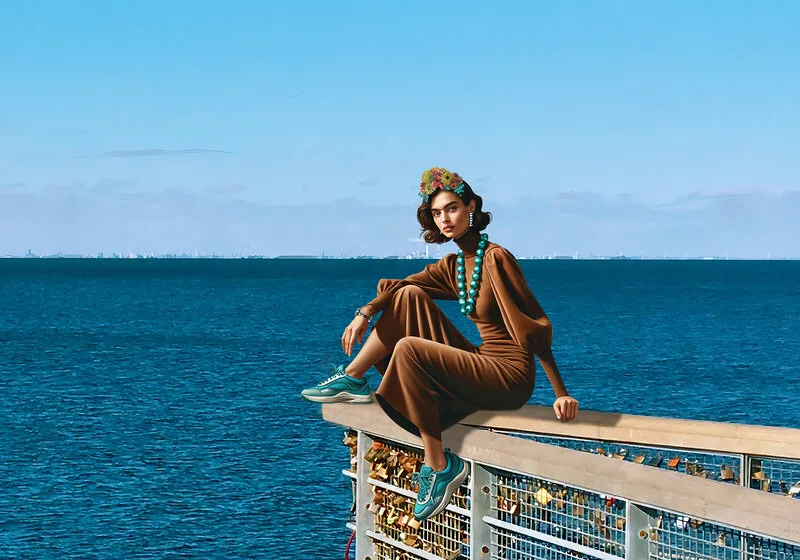
Frida - Malmö Lovelock viewpoint, 2023
Digital
70 x 50 cm
3 200 kr
My picture captures the time-travelling Frida Kahlo as a young woman on a spiritual visit to Malmö at the viewpoint filled with love locks with the Øresund in the background. In her hair, she wears her beloved hair ornament, a wreath of flowers. Eternity starts here by the sea. Frida, just like anyone else, couldn't lock love in place.
Mexican painter and self-portrait artist Frida Kahlo (1907–1954) is a towering figure in 20th-century art. She is celebrated for her emotional self-portraits that delve into themes of physical suffering, political activism, and cultural identity. Despite her relatively short lifespan and limited work, Kahlo's paintings have left an indelible mark on the art world, inspiring countless individuals across generations. Let's explore Frida Kahlo's life, her feminist legacy, and the enduring impact of her artistic vision.
Frida Kahlo's significance transcends mere artistic talent. She emerged as a defiant figure challenging conventional gender norms and societal expectations. Her self-portraits, imbued with raw emotion and symbolism, provide a profound insight into her inner world and serve as a testament to her resilience and strength in adversity.
Born to a German father and a Mexican mother on July 6, 1907, Kahlo grew up in a culturally diverse environment that would later influence her art. Her childhood was marked by hardship, including contracting polio at a young age, which left her with a lifelong limp. Despite her physical challenges, Kahlo excelled academically and harboured aspirations of becoming a doctor.
However, fate had other plans for Kahlo. On September 17, 1925, a tragic bus accident altered the course of her life forever. The collision left Kahlo with severe injuries, including a broken spine, pelvis, and multiple fractures. During her detailed recovery, Kahlo turned to painting as a form of self-expression and catharsis.
Supported by her family, Kahlo embarked on a journey of artistic exploration, honing her unique style that combined elements of Mexican folk art, surrealism, and realism. Her paintings often featured vivid colours, intricate symbolism, and haunting imagery drawn from Mexican mythology and culture.
At the heart of Kahlo's art lay a profound exploration of identity, femininity, and the human experience. Her self-portraits, which she once described as "the most sincere and real thing that I could do," captured her innermost thoughts, emotions, and physical struggles with unparalleled honesty and vulnerability.
Kahlo's personal life was as tumultuous as her art. Her marriage to fellow artist Diego Rivera was marked by passion, infidelity, and intense emotional highs and lows. Despite their turbulent relationship, Kahlo and Rivera shared a deep bond rooted in mutual admiration and artistic collaboration.
Kahlo remained an ardent advocate for social justice and political activism throughout her life. She aligned herself with leftist and feminist movements, using her art as a powerful tool for protest and advocacy. Her paintings often addressed themes of inequality, oppression, and the struggle for human rights, earning her a reputation as a fierce defender of the marginalised and disenfranchised.
Kahlo's feminist legacy is perhaps best encapsulated by her unapologetic embrace of her identity and physical appearance. Rejecting conventional beauty standards, she proudly displayed her unibrow, traditional Mexican attire, and distinctive features, challenging society's narrow definitions of femininity and beauty.
In her final years, Kahlo continued to create art despite declining health, using her paintings to grapple with mortality and existential questions. Her final self-portraits, imbued with a sense of introspection and acceptance, serve as a poignant reflection on the human condition and the inevitability of death.
Among Kahlo's most renowned paintings is "Self-Portrait with Thorn Necklace and Hummingbird," created after her divorce from Diego Rivera. This powerful work depicts Kahlo adorned with a thorn necklace, symbolising her anguish and suffering. Perched on her shoulders are a black cat and a monkey, representing mischief and cunning. The painting, with its dual self-portrait motif and exposed hearts connected by veins, is a poignant expression of Kahlo's emotional turmoil and desire for healing.
Another iconic piece, "The Two Fridas," painted in 1939 during a tumultuous period in Kahlo's life, showcases two versions of herself holding hands, their hearts exposed and intertwined. This masterpiece is often interpreted as a symbol of Kahlo's inner struggle and resilience in adversity.
In "Portrait of Frida Kahlo with Monkey," Kahlo exudes confidence and self-assurance as she holds a pet monkey on her shoulder. The monkey, a symbol of playfulness and mischief, adds a sense of lightness to the painting, contrasting with Kahlo's stoic expression.
Kahlo's paintings are distinguished by their surreal imagery, vivid colours, and incorporation of Mexican cultural references. Her self-portraits, in particular, offer a unique insight into her identity, feelings, and physical challenges, making up a significant portion of her body of work.
Frida Kahlo's art continues to captivate audiences worldwide, transcending time, culture, and geography boundaries. Her fearless exploration of identity, femininity, and the human experience has inspired generations of artists and thinkers, cementing her status as a feminist icon and artistic visionary.
As we reflect on Kahlo's life and legacy, let us celebrate her as not only a pioneering artist but also a fearless feminist who defied the odds, challenged the status quo and paved the way for future generations of women to embrace their own unique identities and creative potential. Her legacy will forever be a beacon of empowerment and inspiration for all those who dare to dream and defy convention.
In her own words, Kahlo once said, "I hope the exit is joyful, and I hope never to return." Though she may have left this world, her spirit lives on through her art, reminding us of the enduring power of creativity, resilience, and the human spirit.
Frida Kahlo's role as a feminist icon transcends the boundaries of art, resonating deeply with individuals who champion gender equality and empowerment. By steadfastly refusing to adhere to traditional gender norms and representations of women in art, Kahlo emerged as a trailblazer who fearlessly challenged societal expectations.
Her self-portraits, characterised by their raw emotion and unapologetic authenticity, offered a stark departure from the idealised depictions of women prevalent in mainstream art at the time. Through her art, Kahlo captured her viewpoint, feelings, and emotions in a revolutionary and empowering manner, paving the way for future artists to explore their identities and experiences.
Kahlo's works frequently interrogated conventional gender roles, dismantling stereotypes and offering alternative narratives celebrating women's experiences' complexity and diversity. Her legacy as a feminist icon continues to inspire and empower women from all walks of life, serving as a reminder of the transformative power of creativity and self-expression.
Whether one identifies as an artist, a feminist, or simply an admirer of Kahlo's artistry, her contributions to the feminist movement are undeniable. Through her refusal to conform and unwavering commitment to authenticity, Kahlo shattered barriers and challenged the status quo, leaving a legacy that continues to shape conversations around gender, identity, and creativity. In a world where women's voices are often marginalised and silenced, Kahlo's voice remains a powerful reminder of the importance of standing firm in one's truth and embracing the full spectrum of human experience.
Love locks, what do they symbolise? Good or bad? It depends. Statistics talk against them. A tradition born from the depths of romantic gestures, love locks are a poignant symbol of the unbreakable bond between two individuals. Once fastened onto a structure, typically a bridge or railing, the key is discarded, sealing the couple's love forever in theory and a rosy glow. But as endearing as this tradition may seem, it has drawbacks. Throwing metal keys into natural environments, such as the Grand Canyon and Mount Everest, poses a significant threat to wildlife.
The origins of love locks are shrouded in mystery, with various stories claiming different beginnings. Some attribute the tradition to ancient Chinese folklore, where lovers locked padlocks onto 'auspicious locations believed to bring good luck or fortune to symbolise eternal love. Others think it originated in Vrnjacka Banja, Serbia, inspired by the tragic love story of a school teacher named Nada and an army officer named Relja during World War I. Regardless of their origins, love locks have become a global phenomenon, adorning bridges and landmarks worldwide.
One of the most iconic locations associated with love locks is the Pont des Arts in Paris, affectionately known as Love Lock Bridge. This pedestrian bridge over the River Seine was once adorned with thousands of padlocks, each symbolising a unique love story. However, in 2015, a section of the bridge collapsed under the weight of the locks, prompting authorities to remove them and install glass panels in the metal frame's place. The removal process was not easy, as it required a significant amount of time and resources. While the tradition may have ended on the Pont des Arts, the sentiment of locking one's love lives on in the hearts of romantics everywhere.
Love locks serve as a tangible expression of devotion, a testament to the enduring power of love. But as with any tradition, it's essential to consider its impact on the environment and infrastructure. While locking one's love may be romantic, it's crucial to do so responsibly, ensuring that our expressions of affection don't cause harm to the places we hold dear. After all, love should lift us, not weigh us down. It's in our hands to preserve the beauty of our world while celebrating our love.
Alice, a woman in her seventies who travelled half the world just to cut a love lock, inspires us all. She recently embarked on a journey from London to Nepal, reaching the base camp at Mount Everest, at 5,364 meters. In 1982, she and her ex-husband had fastened a love lock onto a metal railing at an inaccessible location high above the base camp at the Khumbu Glacier, Mushroom Rock, 8,549 meters above sea level and just three hundred meters below the summit. This inaccessible spot was where George Mallory's ill-fated 1924 expedition had their final camp, with the breathtaking view of Mount Everest's peak. In the sunset of a June day in the summer of 1982, she and her ex-husband placed the lock on a railing that Mallory had once driven into the mountain. In 2022, almost forty years later, the now seventy-four-year-old woman returned to remove all evidence of the act—the power of love and the force of hate. Let me tell you the whole story.
Alice visited her doctor for her biennial check-up. After a thorough examination, the doctor remarked, "It looks like you get a fair bit of exercise. You've improved since we last saw each other nearly two years ago."
Alice replied, "Oh yes, I just returned from a trip to Nepal two weeks ago. I wanted to make the journey just like I did forty years ago. No driving halfway or flying by helicopter, but precisely as before, travelling on foot, camping in simple camps. It takes almost two weeks to reach the base camp. It involves a strenuous hike from Old Tingri to Basecamp. I climbed down and up canyon after canyon over rugged terrain of rocks and trees. I also waded along the edges of two rushing rivers, pushing through bushes and thistles, and even slid down rocky slopes while scratching my legs, falling, and hitting my hip. But I made it all the way to base camp. My backpack carried a heavy bolt cutter, oxygen tanks, and other necessities.
The doctor was quite impressed. "I know you used to climb mountains when you were young, but surely you gave that up decades ago. Now, it's your grandchildren who climb on you. Well, you are certainly a dedicated outdoor enthusiast for your age."
Alice replied, "Not really, doctor. I'm just a recently divorced woman. After thirty years of marriage, I discovered my husband had been with another woman for fifteen years. Everyone else knew except me. I met my husband in Kathmandu, and we fell in love and promised each other eternal fidelity. As proof, we placed a lock at a mushroom-like cliff a few hundred meters below Mount Everest's peak. I felt I needed to sever all memories, and besides burning photos, I felt it was necessary to cut the lock on the mountain. We threw the two keys up there. But with the help of the bolt cutter in my backpack, I broke all the ties. Now I am free."
3 200 kr

Jörgen Thornberg
Malmö
Lite om bilder och mig. Translation in English at the end.
Jag är en nyfiken person som ser allt i bilder, även det jag fäster i ord, gärna tillsammans för bakom alla mina bilder finns en berättelse. Till vissa bilder hör en kortare eller längre novell som följer med bilden.
Bilder berättar historier. Jag omges av naturlig skönhet, intressanta människor och historia var jag än går. Jag använder min kamera för att dokumentera världen och blanda det jag ser med vad jag känner för att fånga den dolda magin.
Mina bilder berättar mina historier. Genom mina bilder, tryck och berättelser. Jag bjuder in dig att ta del av dessa berättelser, in i ditt liv och hem och dela min mycket personliga syn på vår värld. Mer än vad ögat ser. Jag tänker i bilder, drömmer och skriver och pratar om dem; följaktligen måste jag också skapa bilder. De blir vad jag ser, inte nödvändigtvis begränsade till verkligheten. Det finns en bild runt varje hörn. Jag hoppas att du kommer att se vad jag såg och gilla det.
Jag är också en skrivande person och till många bilder hör en kortare eller längre essay. Den följer med tavlan, tryckt på fint papper och med en personlig hälsning från mig.
Flertalet bilder startar sin resa i min kamera. Enkelt förklarat beskriver jag bilden jag ser i mitt inre, upplevd eller fantiserad. Bilden uppstår inom mig redan innan jag fått okularet till ögat. På bråkdelen av ett ögonblick ser jag vad jag vill ha och vad som kan göras med bilden. Här skall jag stoppa in en giraff, stålmannen, Titanic eller vad det är min fantasi finner ut. Ännu märkligare är att jag kommer ihåg minnesbilden långt efteråt när det blir tid att skapa verket. Om jag lyckas eller inte, är upp till betraktaren, oftast präglat av en stråk av svart humor – meningen är att man skall bli underhållen. Mina bilder blir ofta en snackis där de hänger.
Jag föredrar bilder som förmedlar ett budskap i flera lager. Vid första anblicken fylld av feel-good, en vacker utsikt, fint väder, solen skiner, blommor på ängen eller vattnet som ligger förrädiskt spegelblankt. I en sådan bild kan jag gömma min egentliga berättelse, mitt förakt för förtryckare och våldsverkare, rasister och fördomsfulla människor - ett gärna återkommande motiv mer eller mindre dolt i det vackra motivet. Jag försöker förena dem i ett gemensamt narrativ.
Bild och formgivning har löpt som en röd tråd genom livet. Fotokonst känns som en värdig final som jag gärna delar med mig.
Min genre är vid som framgår av mina bilder, temat en blandning av pop- och gatukonst i kollage som kan bestå av hundratals lager. Vissa bilder kan ta veckor, andra någon dag innan det är dags att överlämna resultatet till printverkstaden. Fine Art Prints är digitala fotocollage. I dessa kollage sker rivandet, klippandet, pusslandet, målandet, ritandet och sprayningen digitalt. Det jag monterar in kan vara hundratals år gamla bilder som jag omsorgsfullt frilägger så att de ser ut att vara en del av tavlan men också bilder skapade av mig själv efter min egen fantasi. Därefter besöks printstudion och för vissa bilder numrera en limiterad upplaga (oftast 7 exemplar) och signera för hand. Vissa bilder kan köpas i olika format. Det är bara att fråga efter vilka. Gillar man en bild som är 70x100 men inte har plats på väggen, går den kanske att få i 50x70 cm istället. Frågan är fri.
Metoden Giclée eller Fine Art Print som det också kallas är det moderna sättet för framställning av grafisk konst. Villkoret för denna typ av utskrifter är att en högkvalitativ storformatskrivare används med åldersbeständigt färgpigment och konstnärspapper eller i förekommande fall på duk. Pappret som används möter de krav på livslängd som ställs av museer och gallerier. Normalt säljer jag mina bilder oinramade så att den nya ägaren själv kan bestämma hur de skall se ut, med eller utan passepartout färg på ram, med eller utan glas etc..
Under många år ställde jag bara ut på nätet, i valda grupper och på min egen Facebooksida - https://www.facebook.com/jorgen.thornberg.9
Jag finns också på en egen hemsida som tyvärr inte alltid är uppdaterad – https://www.jth.life/ Där kan du också läsa en del av de berättelser som följer med bilden.
UTSTÄLLNINGAR
Luftkastellet, oktober 2022
Konst i Lund, november 2022
Luftkastellet, mars 2023
Engleson Galleri Caroli, april 2023
Hydra, Greece June 2023
Engleson Galleri Caroli, oktober 2023
Toppen, Höllviken december 2023
Luftkastellet, mars 2024
Torups Galleri, mars 2024
Venice, May 2024
Luftkastellet, oktober 2024
Konst i Advent, December 2024
Galleri Engleson, Caroli December 2024
Jäger & Jansson Galleri, april 2025
A bit about pictures and me.
I'm a curious person who sees everything in pictures, even what I express in words, often combining them, for behind all my pictures lies a story. These narratives, some as short as a single image and others as long as a novel, are the heart and soul of my work.
Pictures tell stories. Wherever I go, I'm surrounded by natural beauty, exciting people, and history. I use my camera to document the world and blend what I see with what I feel to capture the hidden magic.
My images tell my stories. Through my pictures, prints, and narratives, I invite you to partake in these stories in your life and home and share my deeply personal perspective of our world. More than meets the eye. I think in pictures, dream, write, and talk about them; consequently, I must create images too. They become what I see, not necessarily confined to reality. There's a picture around every corner. I hope you'll see what I saw and enjoy it.
I'm also a writer, and many images come with a shorter or longer essay. It accompanies the painting, printed on fine paper with my personal greeting.
Many pictures start their journey on my camera. Simply put, I describe the image I see in my mind, experienced or imagined. The image arises within me even before I bring the eyepiece to my eye. In a fraction of a moment, I see what I want and what can be done with the picture. Here, I'll insert a giraffe, Superman, the Titanic, or whatever my imagination conjures up. Even stranger is that I remember the mental image long after it's time to create the work. Whether I succeed is up to the observer, often imbued with a streak of black humour – the aim is to entertain. My pictures usually become a talking point wherever they hang.
I prefer pictures that convey a message in multiple layers. At first glance, they're filled with feel-good vibes, a beautiful view, lovely weather, the sun shining, flowers in the meadow, or the water lying deceptively calm. But beneath this surface beauty, I often conceal a deeper story, a narrative that challenges societal norms or explores the human condition. I invite you to delve into these hidden narratives and discover the layers of meaning within my work.
Picture and design have been a thread running through my life. Photographic art feels like a fitting finale, and I'm happy to share it.
My genre is varied, as seen in my pictures; the theme is a blend of pop and street art in collages that can consist of hundreds of layers. Some images can take weeks, others just a day before it's time to hand over the result to the print workshop. Fine Art Prints are digital photo collages. In these collages, tearing, cutting, puzzling, painting, drawing, and spraying happen digitally. What I insert can be images hundreds of years old that I carefully extract so they appear to be part of the painting, but also images created by myself, now also generated from my imagination. Next, visit the print studio and, for certain images, number a limited edition (usually 7 copies) and sign them by hand. Some images may be available in other formats. Just ask which ones. If you like an image that's 70x100 but doesn't have space on the wall, you might be able to get it in 50x70 cm instead. The question is open.
The Giclée method, or Fine Art Print as it's also called, is the modern way of producing graphic art. This method ensures the highest quality and longevity of the artwork, using a high-quality large-format printer with archival pigment inks and artist paper or, in some cases, canvas. The paper used meets the longevity requirements set by museums and galleries. I sell my pictures unframed, allowing the new owner to personalise their artwork, confident in the lasting value and quality of the piece.
For many years, I only exhibited online, in selected groups, and on my Facebook page - https://www.facebook.com/jorgen.thornberg.9. I also have my website, which unfortunately is not constantly updated - https://www.jth.life/. You can also read some of the stories accompanying the pictures there.
EXHIBITIONS
Luftkastellet, October 2022
Art in Lund, November 2022
Luftkastellet, March 2023
Engleson Gallery Caroli, April 2023
Hydra, Greece June 2023
Engleson Gallery Caroli, October 2023
Toppen, Höllviken December 2023
Luftkastellet, March 2024
Torup Gallery, March 2024
Venice, May 2024
UTSTÄLLNINGAR
Luftkastellet, oktober 2022
Konst i Lund, november 2022
Luftkastellet, mars 2023
Engleson Galleri Caroli, april 2023
Hydra, Greece June 2023
Engleson Galleri Caroli, oktober 2023
Toppen, Höllviken december 2023
Luftkastellet, mars 2024
Torups Galleri, mars 2024
Venice, May 2024
Luftkastellet, October 2024
Konst i Advent, December 2024
Galleri Engleson, Caroli December 2024
Jäger & Jansson Galleri, April 2025
Utbildning
Autodidakt
Medlem i konstnärsförening
Öppna Sinnen
Med i konstrunda
Konstrundan i Skåne
Utställningar
Luftkastellet, October 2022
Art in Lund, November 2022
Luftkastellet, March 2023
Engleson Gallery Caroli, April 2023
Hydra, Greece June 2023
Engleson Gallery Caroli, October 2023
Toppen, Höllviken December 2023
Luftkastellet, March 2024
Torup Gallery, March 2024
Venice, May 2024