Vi använder cookies för att ge dig bästa möjliga upplevelse. Välj vilka cookies du tillåter.
Läs mer i vår integritetspolicy
Jörgen Thornberg
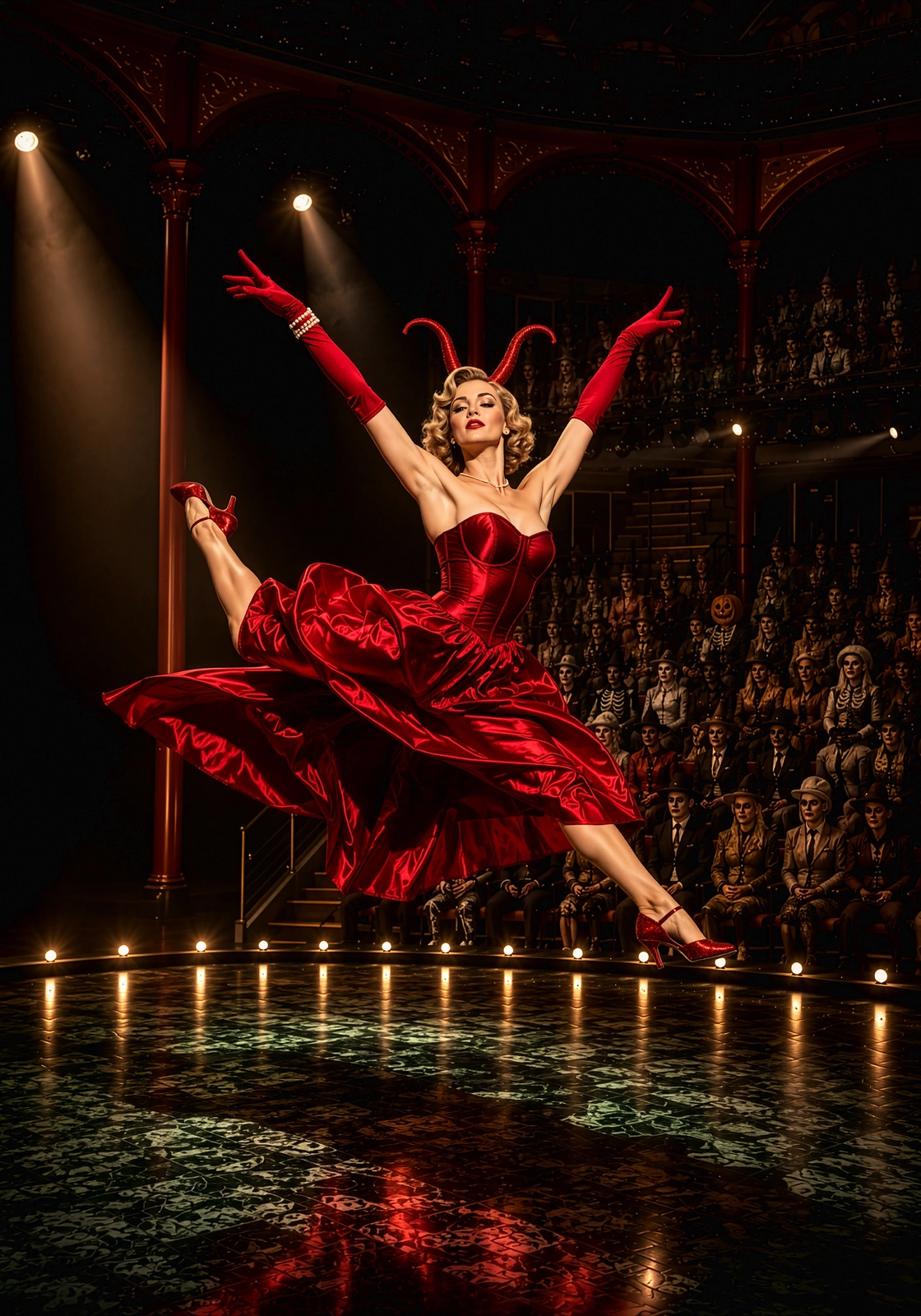
The Ghost Sonata - Spöksonaten, 2026
Digital
50 x 70 cm
3 200 kr
The Ghost Sonata - Spöksonaten
Svensk text på slutet
Introduction
What happens when one of Strindbergs darkest chamber plays ends up in the hands of Anita Ekberg and one of Malmös most notorious ghosts?
At the Hippodrome, Karna Jönsdotter already has a bit of a head start. She haunted the place long before there was a theatre, and now that she and Anita are performing August Strindbergs The Ghost Sonata, she doesnt have to worry about finding the right audience. The auditorium is filled to the last seat with her ghostly acquaintances.
Strindbergs 1907 drama unfolds across three rooms and three acts, from the houses beautiful facade to its innermost darkness. Anita dances the role of the young Lady, first seen from a distance as the Students unattainable ideal, then trapped among the living dead at the ghost supper, and finally revealed as she truly is in the hyacinth room.
For the ballet, Anita and Karna have adapted Beethovens Piano Sonata No. 17 in D minor, Op. 31 No. 2 the sonata Strindberg himself associated with ghost voices and called The Ghost Sonata. Its three movements correspond to the dramas three acts, allowing Strindbergs words to translate into movement.
It begins on the street in front of a beautiful house. Behind one of the windows, a young woman dances among the hyacinths. The Student sees her and believes he has caught sight of the life he has longed for. He does not yet know that he is standing outside a house full of ghosts.
The Ghost Sonata
Behind the glass the hyacinths grow,
A girl moves softly in the light;
The Student watches from below,
And dreams that beauty must be right.
But through the door the shadows creep,
Around the table ghosts remain;
They dine in silence, secrets keep,
While Beethoven begins again.
The masks fall, the old lies wake,
The living haunt the living still;
And every heart must give or take,
As love is bent to someones will.
Deep in the house the flowers breathe,
The Cook steals life from bread and air;
The girl grows pale, the dancers weave
Their tightening circle round her there.
Then suddenly the pattern breaks.
She spreads her arms and leaves the floor;
One final flight is all it takes
The house can hold her nevermore.
And high above the haunted stage,
While Karnas ghosts look on below,
The dying girl escapes her cage
And flies where living cannot go.
Malmö, September 2026
PROLOGUE Karnas Ghost Sonata
In the 18th century, a mill and a brewery stood on the site where Hipp stands today. The brewer Per Nilsson Möller was married to Karna Jönsdotter, who, after giving birth to ten children over ten years, died under mysterious circumstances. When Per remarried Ingeborg from Svenstorp, Karna found no peace.
Soon, hauntings began on Kalendegatan. Karna was said to float along the street, dressed only in her shroud, with dark hollows for eyes. Dogs with glowing jaws were said to have run through the neighbourhoods. Roof tiles flew from the roofs, and people came close to having their skulls crushed. Eventually, Karnas body was dug up, and at the nearby Saint Peters Church, incantations were read over the dead millers wife.
Not even that seems to have helped. At Pers wake, Karnas spirit is said to have returned to invite her husband to a final dance.
The haunting was taken so seriously that for nearly thirty years, during Sunday services in Malmös churches, they prayed the Prayer in Malmö Congregations Against Satans Haunting to protect the city from Karna Möllers revenant. The stories then persisted among old Malmö residents well into the 1900s as the devils haunting on Kalendegatan.
When the Hippodrome later rose on the site, the stories did not disappear. Employees at the theatre have spoken of streaks of ice-cold air through the rooms, doors that open and close on their own, and footsteps across the stage floor when the auditorium is empty. Technical mishaps at premieres have been readily attributed to Hipps theatre ghosts. A technician reported hearing a little girl call for her mother through his headset. Perhaps it was one of Karnas many children still looking for her.
The small elevator next to the stage is also one of the houses peculiarities. It is said to start moving up or down without anyone pressing a button. On one occasion, about twenty-five people were in a meeting in the tech room and, through the opening towards the hall, saw the lift doors open for no apparent reason.
If Karna has now received an entire theatre house on top of her old estate, there is, of course, no reason for her to settle for opening doors and taking the stairs. Together with Anita Ekberg, she has therefore turned August Strindbergs The Ghost Sonata into a ballet. The music is an adaptation of Beethovens Piano Sonata No. 17 in D minor, Op. 31 No. 2, internationally best known as The Tempest. Strindberg himself called the sonata The Ghost Sonata, and it, along with Beethovens so-called Ghost Trio, formed part of the musical associations behind the title of his chamber play from 1907.
Karna has also taken care of the audience. When the curtain rises, Hipp is filled to the last seat with her ghostly acquaintances. They have come to see Anita dance Strindbergs young Lady through the three worlds of the house from the beautiful figure behind the window, through the living dead at the ghost supper, and finally into the innermost hyacinth room.
And who would be better suited to turn The Ghost Sonata into a ballet than a woman whose most famous performance was a dance with a dead man? Two dancing ghosts,
ACT I THE FACADE
Outside the house
The first act of August Strindbergs The Ghost Sonata unfolds on the street in front of a modern, respectable apartment building in Stockholm. It is the morning after a disaster: a house has collapsed nearby, people have been killed, and the young Student has taken part in the rescue efforts. From the outset, the drama is set on the borderland between the living and the dead. The Student can see things that others cannot. Among other things, he sees the Milkmaid, who turns out to be dead.
On the street, he meets the old Director Hummel, a decrepit and enigmatic man in a wheelchair. Hummel knows about the Students family and, step by step, draws him into his own world. He tells him about the people in the beautiful house and lets the Student understand that the respectable facade hides a completely different reality. Hummel seems to know everyones secrets and has his own unresolved ties to those who live there.
But the Student still sees above all the beautiful. Through the house, he catches sight of the Lady, the Colonels young daughter, surrounded by her hyacinths. To him, she quickly becomes the epitome of the world he longs for: youth, beauty, wealth, and love. He observes her from the outside and does not yet know her. Therefore, the Lady he falls in love with is as much his own idea of her as a real woman.
That is the decisive conflict of the first act. The Student stands on the street, seeing a radiant world through the windows, while Hummel already knows what lies behind the walls. What the Student perceives as a home filled with beauty is a house where identities, relationships, and fortunes are built on lies and old wrongs. The act therefore becomes a movement towards the threshold. Hummel opens the way into the house, and the Student allows himself to be enticed across it. He believes he is on his way towards the Lady. In reality, he is on his way into the ghost house.
First movement From the street to the threshold
In Anita Ekbergs and Karnas ballet, the first act is commercialised through the first movement of Beethovens Piano Sonata No. 17 in D minor, Op. 31 No. 2: Largo Allegro. From the first bars, the choreography presents its core idea. Beethoven does not begin with a clear, forward-moving motion, but rather with a slow, questioning arpeggio. The music seems to open a door, then hesitate at what lies on the other side. Thereafter, the Allegro breaks through with a completely different force. The conflict between stillness and sudden movement becomes the ballets central conflict between appearance and reality.
The scene is divided into two worlds. In front of the house, the Student moves among the morning crowd. Behind the illuminated windows, the inhabitants of the house can be glimpsed. They find themselves on the same stage, yet not yet in the same reality.
When Beethoven returns to his slow, almost recitative-like sections, the outer world stops. The dead can then step forward among the living. The Milkmaid moves through the crowd without anyone reacting to her; only the Student follows her with his gaze. Hummel sits almost motionless in his wheelchair, seeming to direct the other peoples movements rather than participating in them himself.
The Lady, however, speaks a different movement language. She is first seen at a distance among the hyacinths. Her dance is light, unbroken, and seemingly unaffected by the jerks and sudden shifts that characterise the world outside. The Student sees her through the window and unconsciously mirrors her movements. They do not yet dance a pas de deux they dance on opposite sides of a wall. When she lifts her arm, he does the same on the street; when she bends over the flowers, he is drawn towards the house. She does not yet know that she is controlling his movements.
But the audience sees something the Student does not. Every time the music darkens, the movements behind the Lady change. Figures pass through the room, linger too long in doorways, or repeat the same movement as if trapped in it. For a moment, the Lady herself seems drawn back from the house before she resumes her light dance. Thus, what will first be revealed in the third act is already planted here: she is not the free being the Student believes he sees.
Towards the end, Hummel gains greater control over the choreography. With subtle movements from the wheelchair, he leads the Student towards the entrance. Beethoven drives the music forward, and its restlessness sweeps along the people on the street. The Student still tries to keep the Lady in sight, even as the distance between them paradoxically narrows, and the threat grows.
When he finally crosses the houses threshold, no dramatic gesture is needed to mark the transition. The facade opens, and for the first time the audience sees the darkness behind the illuminated windows. The Lady withdraws inward, and the Student follows, while Hummel is left alone for a moment between the street and the house, as if he knew all along that the young man had stepped voluntarily among the ghosts.
ACT II THE GHOST SUPPER
Inside the house
In the second act, the border has been crossed. The street and daylight are gone, and the action moves into the houses round salon. The world the Student observed through the windows in the first act is now revealed from the inside. The beautiful home remains, but behind the respectable facade, the lies begin to emerge.
Here, the houses strange company gathers for the so-called ghost supper. The Colonel, his wife, The Mummy, the Lady, and the others sit in an almost absurd silence around the round table, eating their biscuits. The forms of the bourgeois dinner remain, but the people seem already to have lost something of life. The Lady, whom the Student saw in the first act as an unattainable ideal among the hyacinths, now sits right in their midst. She remains mute and proves just as bound to the house as the older generations.
It is Hummel who breaks the stillness. He has come to settle scores with the past and ruthlessly exposes those around him. The Colonels refined existence rests on lies, and beneath the familys respectable surface lie infidelity, debts, fraud, and old dependencies. But when Hummel tries to make himself a judge over the others, the Mummy, the Colonels wife, turns the accusations against him. He too turns out to belong to the same world of guilt and exploitation he sought to expose.
Thus, the ghost supper becomes the dramas great unmasking. The true ghosts are not necessarily the dead, but rather the living who remain trapped in old lies, wrongs, and roles. In the end, the Mummy forces Hummel into the closet where she herself has long hidden from the world. There he dies. The one who led the Student over the houses threshold is gone, but the inward journey continues. Behind the next door, the Lady and the hyacinth room await.
Second movement The dance of the living dead
The second act of Anita Ekbergs and Karnas ballet is carried by Beethovens Adagio, the sonatas slow second movement. After the first movements fierce contrasts, the movement becomes calmer and more controlled, but not safer. On the contrary, the music gives the ghost supper its eerie character: everything unfolds with the solemn precision of people who have performed the same ritual for so long that they no longer know why.
When the curtain rises, the company is already seated around the round table. In the first bars, almost nothing happens. A hand is raised, a biscuit is brought to the mouth, a head is turned, and a napkin is adjusted, after which the same movements begin again. Gradually, it becomes clear that the everyday gestures are choreographed and that each person is trapped in their own little sequence of movements. The ghost supper has become a ballet for people who have forgotten they are dancing.
The Lady retains something of the softness she had behind the window in the first act, but her movements have become smaller and more constrained. When she tries to stand or stretch out an arm, the others seem to pull her back towards the table. The Student tries to approach her, but they do not yet share a real dance. Every time he comes close, the circle of older bodies closes around her, turning the house into a prison.
Hummel stands outside this ritual at first. From his wheelchair, he disrupts the others movement patterns and seems to control them with small, commanding gestures. When he reveals their lies, the revelations take physical form: postures are broken, movements shift, and the closed circle around the table begins to dissolve.
But soon, the choreography turns against him. The Mummy rises and approaches slowly, while Hummels increasingly desperate attempts to master the room give way to the same repeated movements that have held the others captive. The people he has treated like marionettes close in around him and carry him, still sitting in the wheelchair, toward the open closet. To Beethovens calm Adagio, the puppets carry away their puppeteer and the door closes behind him.
Yet Hummels death changes nothing. The company returns to the table, takes their old places, and resumes their small movements. The house continues its ritual as if nothing had happened. Only the Lady breaks the pattern. She rises and goes towards the hyacinth room, and the Student follows as the ghost supper continues behind them.
In the first act, the Student was led from the street into the house. In the second, he is led from the houses public spaces to its innermost. Now he is about to meet the woman he had previously observed only through a window and discover what the house has done to her.
ACT III THE HYACINTH ROOM
Innermost in the house
In the third and final act, the Student has reached the houses innermost room. It is the hyacinth room, the same room he saw from the outside in the first act, where the Lady appeared as the epitome of beauty and of another, happier life. Now there is no pane of glass between them. For the first time, he meets her face to face, and only now does the Lady also find her own voice.
At first, the room seems to confirm the Students dream. The Lady plays the harp among the flowers, and their meeting suggests the possibility of love. The Student still wants to believe that, behind the houses lies, there is something pure that can be saved, and she begins to imagine a future together with the Lady. But the closer he comes to the Lady, the clearer it becomes that even the hyacinth room is part of the sick house.
The Lady is terminally ill and describes a home where people live off and consume one another. This is most clearly personified in the grotesque Cook, who sucks the power from the food and, metaphorically speaking, from the people around her. Hummel is dead, but the order he belonged to lives on. It is this world the Lady has grown up in that has slowly drained her of her life force.
The Students ideal image finally collapses. When he discovers that the Lady cannot match the pure and perfect being he has created of her, his love dream turns to disappointment and accusation. He, too, thereby becomes part of the world that consumes her. The Lady, already dying, cannot bear yet another persons demands and illusions. She sinks away and dies. The death-screen is brought forward and hides her, while the Student, in his final speech, lets her death open towards something other than the poisoned house. The Lady, who, in the first act, was a distant image of life and, in the second, a mute participant among the living dead, leaves the earthly world completely in the third. What, for the Student, becomes the ultimate loss is simultaneously presented as her only possibility for liberation.
Third movement The Ladys liberation
The final act of Anita Ekbergs and Karnas ballet is carried by Beethovens Allegretto, the sonatas third movement. After the ghost suppers slow Adagio, the music is set in motion again. But it is not the first movements dramatic alternation between hesitation and outbursts that returns. Instead, a restless, almost unbroken movement drives the Allegretto forward, and in the ballet this pulse becomes the very image of time and the life force draining out of the Lady.
When the curtain rises, the hyacinth room is bathed in the light the Student remembered from the first act. The Lady sits at the harp, and her first dance reconnects with the light figure he saw through the window. But now he is in the same room. For the first time, their movements can meet and develop into the pas de deux that the two preceding acts have deferred.
At first, the music seems to unite them. The Student adopts the movements the Lady initiates; she responds to him, and for a brief moment, his dream seems to become reality. But Beethovens recurring figures never allow the dance to settle. Every time the couple approaches complete harmony, the restless pulse returns, breaking the movement.
Then the Cook steps in. She need not be made into a literal monster. In the choreography, her vampire nature can be expressed by her never creating her own movements, but instead taking over others. When the Lady stretches out her arm, the Cook completes the movement, leaving the Lady weaker; when the Lady tries to follow the Student, the Cook breaks in and leads her in another direction. She seems not only to suck the power from the Lady but also the very energy from the dance. What in Strindbergs text is expressed through the house and the food becomes, on stage, a physical theft of movement.
The Ladys dance therefore changes gradually. The large, soft movements that connected her with the first acts ideal image become shorter, heavier, and more strained. The Student first tries to support her and bring her back to their shared dance, but as his illusion of her begins to shatter, his movement language also changes. The tenderness that previously drew him towards her becomes harder and more demanding. Their pas de deux transforms from a love encounter into a struggle, not because the Lady fights him, but because she is no longer able to be the woman he demands she be.
In the end, no common dance remains. The Student stands with his preconceptions, while the Lady continues alone, propelled by the Allegrettos relentless momentum. The other figures from the house can return to the rooms edges: the Colonel, the Mummy, the ghost suppers guests, and finally even the dead Hummel. They do not grab her, but their movements circle her like echoes from the two previous acts. The whole house seems to dance through her body.
But here, Anita and Karna let the ballet depart from Strindbergs literal stage directions. In Strindberg, the death-screen is brought before the Lady as life leaves her. In the ballet, the screen instead becomes the final boundary she must cross. As Beethoven drives the movement towards its end, the houses figures gather behind her, and the movements that have held her prisoner for three acts close for the final time. The Lady seems at first to sink under their weight, but instead of disappearing behind the screen, she breaks out of the pattern.
Here, Anita makes her great leap. The body, which has grown increasingly heavy throughout the act, is suddenly released from the floor. With her arms outstretched, she throws herself across the room in a long, almost impossible swan dive, as if the dying Lady has, for a moment, transformed into the free being the Student once believed he saw through the window. The leap is both her death and her liberation; she does not flee the house as a living person but leaves the world that has consumed her life.
When she lands, she does not need to rise again. The death-screen can be slowly brought in front of where she lies as the hyacinth room changes around her. The houses figures halt, their endless movements cease, and the Student is left alone among them. For him, the loss remains. For the Lady, however, the movement has ceased, since she no longer belongs to their world.
Thus, the ballets circle closes. In the first act, the Student saw the Lady through a window and made her his dream. In the second, he saw her trapped among the houses living dead. In the third, he finally met her, but only after his illusion was destroyed could the true Lady emerge sick, exhausted, and dying. And in the ballets final moment, she does the only thing she never could in Strindbergs house: she leaves it.
EPILOGUE From Facade to Liberation
August Strindbergs The Ghost Sonata, written in 1907 and premiered at the Intima Theatre the following year, is one of his most radical chamber plays. In three acts, the drama moves from the street, through the bourgeois houses facade and salons, to the innermost hyacinth room. Simultaneously, another relocation occurs: from the visible to the hidden, from illusion to truth, and from the world of the living to a world where the boundary between the living and the dead has almost ceased.
The Student follows this path because he has seen the Lady through a window and has made her a symbol of all the beauty he believes lies behind the facade. In the first act, she is an unattainable image among the hyacinths; in the second, she sits mute among the living dead at the ghost supper; only in the third does he meet her as a human being and discover that she too has been consumed by the house. Hummel reveals others lies but turns out to be part of them himself. The Mummy lives hidden away from the world, and the Cook becomes the vampire-like image of a home where people suck the power out of each other.
When the Lady finally dies, the Students final illusion falls as well. But, in Strindbergs view, death is not solely a defeat. The death-screen separates her from the earthly world, which has consumed her, and simultaneously opens the possibility of liberation from it. There, the movement that began outside the house closes: the Student has penetrated ever deeper to find the truth, while the Lady, in the end, finds her only way out by leaving this entire world.
It is also for this reason that The Ghost Sonata lends itself so well to ballet. Strindberg constructed his chamber play with a musical sense of motifs, repetition, contrast, and variation, and the title reflects his fascination with Beethoven. In Anita Ekbergs and Karnas version, Beethovens three movements are therefore allowed to carry Strindbergs three acts: LargoAllegro for the allure and the step over the threshold, Adagio for the stagnant world of the ghost supper, and Allegretto for the final, relentless movement towards the Ladys death.
What in Strindbergs text ends behind a death-screen receives its opposite in the ballet. The Lady does not merely sink away but throws herself in her final leap out of the world that held her captive. The woman the Student first saw behind a window finally leaves the house, freeno living human being was capable of leaving it.
Introduktion
Vad händer när ett av Strindbergs mörkaste kammarspel hamnar i händerna på Anita Ekberg och ett av Malmös mest notoriska spöken?
På Hippodromen har Karna Jönsdotter redan ett visst försprång. Hon har hemsökt platsen långt innan det fanns någon teater, och när hon nu tillsammans med Anita ger sig på August Strindbergs Spöksonaten behöver hon inte bekymra sig för att hitta rätt publik. Salongen är fylld till sista plats med hennes spökbekanta.
Strindbergs drama från 1907 rör sig genom tre rum och tre akter, från den vackra fasaden till husets innersta mörker. Anita dansar den unga Fröken, först sedd på avstånd som Studentens ouppnåeliga ideal, sedan fångad bland de levande döda vid spöksupén och slutligen mött som den hon verkligen är i hyacintrummet.
Till baletten har Anita och Karna bearbetat Beethovens pianosonat nr 17 i d-moll, op. 31 nr 2 den sonat som Strindberg själv förknippade med spökröster och kallade Spöksonaten. Dess tre satser följer dramats tre akter och låter Strindbergs ord övergå i rörelse.
Det börjar på gatan framför ett vackert hus. Bakom ett av fönstren dansar en ung kvinna bland hyacinterna. Studenten ser henne och tror att han har fått syn på livet han har längtat efter.
Han vet ännu inte att han står utanför ett hus fullt av spöken.
PROLOG Karnas spöksonat
På 1700-talet låg en kvarn och ett bryggeri på platsen där Hipp ligger idag. Bryggaren Per Nilsson Möller var gift med Karna Jönsdotter, som efter att ha fött tio barn på tio år dog under mystiska omständigheter. När Per gifte om sig med Ingeborg från Svenstorp, fick Karna ingen ro.
Snart började det spöka på Kalendegatan. Karna sades komma svävande längs gatan endast iförd sin liksvepning, med mörka hålor till ögon. Hundar med glödande gap skulle ha sprungit genom kvarteren, takpannor flugit från taken och människor varit nära att få skallen krossad. Till slut grävdes Karnas kropp upp, och i den närbelägna Sankt Petri kyrka lästes besvärjelser över den döda mjölnarhustrun. Inte ens det tycks ha hjälpt. Vid Pers likvaka lär Karnas ande ha återvänt för att bjuda upp sin döde make till en sista dans.
Spökeriet togs på sådant allvar att man under närmare trettio år vid söndagsgudstjänsterna i Malmös kyrkor bad Bön uti Malmö Församlingar emot Satans Spökeri för att värja staden mot Karna Möllers gengångare. Berättelserna levde sedan kvar bland gamla Malmöbor långt in på 1900-talet som det satans spökeriet på Kalendegatan.
När Hippodromen långt senare reste sig på platsen, försvann inte historierna. Anställda på teatern har berättat om stråk av iskyla genom rummen, dörrar som öppnas och stängs av sig själva och fotsteg över scengolvet när salongen är tom. Tekniska missöden vid premiärer har gärna tillskrivits Hipps teaterspöken. En tekniker har berättat att han i sitt headset hörde en liten flicka ropa efter sin mamma. Kanske var det ett av Karnas många barn som fortfarande letade efter henne.
Till husets egendomligheter hör också den lilla hissen intill scenen. Den sägs kunna börja gå upp eller ner utan att någon har tryckt på en knapp. Vid ett tillfälle satt ett tjugofemtal personer i möte i teknikrummet och kunde genom öppningen mot hallen se hissdörren gå upp utan synbar anledning.
Om Karna nu har fått ett helt teaterhus ovanpå sin gamla gård, finns det förstås ingen anledning för henne att nöja sig med att öppna dörrar och ta trapporna.
Tillsammans med Anita Ekberg har hon därför gjort balett av August Strindbergs Spöksonaten. Musiken är en bearbetning av Beethovens pianosonat nr 17 i d-moll, op. 31 nr 2, internationellt mest känd som "The Tempest". Strindberg kallade själv sonaten Spöksonaten, och den hörde, tillsammans med Beethovens så kallade Spöktrio, till de musikaliska associationerna bakom titeln på hans kammarspel från 1907.
Karna har dessutom tagit hand om publiken. När ridån går upp är Hipp fylld till sista plats med hennes spökbekanta. De har kommit för att se Anita dansa Strindbergs unga Fröken genom husets tre världar från den vackra gestalten bakom fönstret, genom spöksupéns levande döda och slutligen in i det innersta hyacintrummet.
Och vem skulle egentligen vara bättre lämpad att göra balett av Spöksonaten än en kvinna vars mest berömda framträdande var en dans med en död man? Två dansande gastar,
AKT I FASADEN
Utanför huset
Den första akten i August Strindbergs Spöksonaten utspelar sig på gatan framför ett modernt och förnämt hyreshus i Stockholm. Det är morgon efter en katastrof: ett hus har rasat i närheten, människor har dödats och den unge studenten har deltagit i räddningsarbetet. Redan från början befinner sig dramat därför i gränslandet mellan de levande och de döda. Studenten kan se sådant som andra inte ser. Bland annat ser han Mjölkflickan, som visar sig tillhöra de döda.
På gatan möter han den gamle direktör Hummel, en skröplig och gåtfull man i rullstol. Hummel känner till Studentens familj och börjar steg för steg dra honom in i sin egen värld. Han berättar om människorna i det vackra huset och låter studenten förstå att den respektabla fasaden döljer en helt annan verklighet. Hummel tycks känna allas hemligheter och har dessutom egna ouppklarade förbindelser med dem som bor där.
Men Studenten ser ännu framför allt det vackra.
Genom huset får han syn på Fröken, Överstens unga dotter, omgiven av sina hyacinter. För honom blir hon nästan omedelbart sinnebilden av den värld han längtar efter: ungdom, skönhet, rikedom och kärlek. Han betraktar henne utifrån och känner henne ännu inte. Därför är den Fröken han förälskar sig i lika mycket hans egen föreställning om henne som en verklig kvinna.
Det är den avgörande motsättningen i första akten. Studenten står på gatan och ser en lysande värld genom fönstren, medan Hummel redan vet vad som finns bakom väggarna. Det Studenten uppfattar som ett hem fyllt av skönhet är ett hus där identiteter, släktskap och förmögenheter bygger på lögner och gamla oförrätter.
Akten blir därför en rörelse mot tröskeln. Hummel öppnar vägen in i huset och Studenten låter sig lockas över den. Han tror att han är på väg mot Fröken. I själva verket är han på väg in i spökhuset.
Första satsen Från gatan till tröskeln
I Anita Ekbergs och Karnas balett gestaltas den första akten genom den första satsen i Beethovens pianosonat nr 17 i d-moll, op. 31 nr 2: Largo Allegro.
Redan de första takterna erbjuder koreografin sin grundidé. Beethoven börjar inte med en självklar, framåtriktad rörelse utan med ett långsamt och frågande arpeggio. Musiken tycks öppna en dörr och sedan tveka inför vad som finns på andra sidan. Därefter bryter Allegro fram med en helt annan kraft. Motsättningen mellan stillhet och plötslig rörelse blir balettens motsättning mellan sken och verklighet.
Scenen är uppdelad i två världar. Framför huset rör sig Studenten bland morgonens människor. Bakom de upplysta fönstren skymtar husets invånare. De befinner sig på samma scen men ännu inte i samma verklighet.
När Beethoven återvänder till sina långsamma, nästan recitativiska avsnitt, stannar den yttre världen upp. De döda kan då träda fram bland de levande. Mjölkflickan rör sig genom folkmassan utan att någon reagerar på henne; endast Studenten följer henne med blicken. Hummel sitter nästan orörlig i sin rullstol och tycks snarare dirigera de andra människornas rörelser än att själv delta i dem.
Fröken får däremot ett helt annat rörelsespråk.
Hon syns först på avstånd bland hyacinterna. Hennes dans är lätt, obruten och till synes opåverkad av de ryckningar och tvära kast som präglar världen utanför. Studenten ser henne genom fönstret och börjar omedvetet upprepa hennes rörelser. De dansar ännu ingen pas de deux de dansar på var sin sida om en vägg. När hon lyfter armen gör han detsamma på gatan; när hon böjer sig över blommorna dras han mot huset. Hon vet ännu inte att hon styr hans rörelser.
Men publiken får samtidigt se något som Studenten inte ser. Varje gång musiken mörknar förändras rörelserna bakom Fröken. Gestalter passerar genom rummet, stannar för länge i dörröppningar eller upprepar samma rörelse som om de vore fångade i den. För ett ögonblick kan Fröken själv tyckas dras tillbaka från huset innan hon återupptar sin lätta dans.
Därmed planteras redan här det som först kommer att avslöjas i tredje akten: hon är inte den fria varelse som Studenten tror sig se.
Mot slutet får Hummel allt större kontroll över koreografin. Med små rörelser från rullstolen leder han Studenten mot entrén. Beethoven driver musiken framåt och människorna på gatan sveps med i dess rastlöshet. Studenten försöker fortfarande hålla Fröken i blickfånget medan avståndet mellan dem paradoxalt nog minskar och hotet växer.
När han slutligen passerar husets tröskel behöver ingen dramatisk gest markera övergången. Fasaden öppnar sig och för första gången ser publiken mörkret bakom de upplysta fönstren. Fröken försvinner inåt och Studenten följer efter, medan Hummel blir ensam kvar ett ögonblick mellan gatan och huset, som om han hela tiden vetat att den unge mannen frivilligt har stigit in bland spökena.
AKT II SPÖKSUPÉN
Inne i huset
I andra akten har gränsen passerats. Gatan och dagsljuset är borta och handlingen har flyttat in i husets runda salong. Den värld som Studenten i första akten betraktade genom fönstren visar sig nu från insidan. Det vackra hemmet finns fortfarande kvar, men bakom den respektabla fasaden börjar lögnerna träda fram.
Här samlas husets märkliga sällskap till den så kallade spöksupén. Översten, hans hustru Mumien, Fröken och de övriga sitter under en närmast absurd tystnad kring det runda bordet och äter sina kex. Den borgerliga middagens former finns kvar, men människorna tycks redan ha förlorat något av livet. Fröken, som Studenten i första akten såg som ett ouppnåeligt ideal bland hyacinterna, sitter nu mitt ibland dem. Hon är fortfarande stum och visar sig vara lika bunden till huset som de äldre generationerna.
Det är Hummel som bryter stillheten. Han har kommit för att göra upp med det förflutna och börjar obarmhärtigt avslöja människorna omkring sig. Överstens förnäma tillvaro vilar på lögner och bakom familjens respektabla yta finns otrohet, skulder, bedrägerier och gamla beroenden. Men när Hummel försöker göra sig till domare över de andra vänder Mumien, Överstens hustru, anklagelserna mot honom. Också han visar sig tillhöra samma värld av skuld och utsugning som han velat avslöja.
Därmed blir spöksupén dramats stora demaskering. De verkliga spökena är inte nödvändigtvis de döda utan människor som fortfarande lever men sitter fast i gamla lögner, oförrätter och roller. Till slut tvingar Mumien Hummel in i garderoben där hon själv länge hållit sig undan världen. Där dör han.
Den som förde Studenten över husets tröskel är borta, men färden inåt fortsätter. Bakom nästa dörr väntar Fröken och hyacintrummet.
Andra satsen De levande dödas dans
Den andra akten i Anita Ekbergs och Karnas balett bärs av Beethovens Adagio, sonatens långsamma andra sats. Efter den första satsens häftiga kontraster blir rörelsen lugnare och mer behärskad, men inte tryggare. Tvärtom ger musiken spöksupén dess kusliga karaktär: allt sker med den högtidliga precisionen hos människor som har utfört samma ritual så länge att de inte längre vet varför.
När ridån går upp sitter sällskapet redan kring det runda bordet. Under de första takterna sker nästan ingenting. En hand lyfts, ett kex förs mot munnen, ett huvud vrids och en servett rättas till, varefter samma rörelser börjar om. Så småningom blir det tydligt att vardagsgesterna är koreograferade och att varje människa sitter fast i sin egen lilla rörelsesekvens. Spöksupén har blivit en balett för människor som har glömt att de dansar.
Fröken behåller något av den mjukhet hon hade bakom fönstret i första akten, men hennes rörelser har blivit mindre och mer begränsade. När hon försöker resa sig eller sträcka ut en arm tycks de andra dra henne tillbaka mot bordet. Studenten försöker närma sig henne, men ännu får de ingen verklig dans tillsammans. Varje gång han kommer nära sluts kretsen av äldre kroppar kring henne och förvandlar huset till ett fängelse.
Hummel står till en början utanför den här ritualen. Från sin rullstol bryter han de andras rörelsemönster och tycks styra dem med små befallande gester. När han avslöjar deras lögner får avslöjandena en kroppslig form: hållningar bryts, rörelser förändras och den slutna cirkeln kring bordet börjar lösas upp.
Men snart vänds koreografin mot honom själv. Mumien reser sig och närmar sig långsamt, medan Hummels alltmer desperata försök att behärska rummet övergår i samma upprepade rörelser som har hållit de andra fångna. De människor han har behandlat som marionetter sluter sig kring honom och för honom, fortfarande sittande i rullstolen, mot den öppna garderoben. Till Beethovens lugna Adagio bär dockorna bort sin dockspelare och dörren sluts bakom honom.
Ändå förändrar Hummels död ingenting. Sällskapet återvänder till bordet, intar sina gamla platser och återupptar sina små rörelser. Huset fortsätter sin ritual som om ingenting hade hänt. Bara Fröken bryter mönstret. Hon reser sig och går mot hyacintrummet och Studenten följer efter medan spöksupén fortsätter bakom dem.
I första akten fördes Studenten från gatan in i huset. I den andra förs han från husets offentliga rum till dess innersta. Nu ska han möta den kvinna han tidigare bara betraktat genom ett fönster och upptäcka vad huset har gjort med henne.
AKT III HYACINTRUMMET
Längst in i huset
I den tredje och sista akten har Studenten nått husets innersta rum. Det är hyacintrummet, samma rum som han i första akten såg utifrån och där Fröken framstod som sinnebilden av skönhet och ett annat, lyckligare liv. Nu finns det ingen fönsterruta mellan dem. För första gången möter han henne på nära håll, och först nu får Fröken också sin egen röst.
Rummet tycks till en början bekräfta Studentens dröm. Fröken spelar harpa bland blommorna och mötet mellan de båda antyder möjligheten till kärlek. Studenten vill fortfarande tro att det bakom husets lögner finns något rent som kan räddas och börjar föreställa sig en framtid tillsammans med henne. Men ju närmare han kommer Fröken, desto tydligare blir det att även hyacintrummet är en del av det sjuka huset.
Fröken är dödssjuk och beskriver ett hem där människorna lever av och förtär varandra. Tydligast personifieras detta av den groteska Kokerskan, som suger kraften ur maten och, bildligt talat, ur människorna omkring sig. Hummel är död, men den ordning han tillhörde lever vidare. Det är denna värld Fröken har vuxit upp i och som långsamt har tömt henne på livskraft.
Studentens idealbild bryter slutligen samman. När han upptäcker att Fröken inte kan motsvara den rena och fullkomliga varelse han själv har skapat av henne, vänder hans kärleksdröm om till besvikelse och anklagelse. Också han blir därmed en del av den värld som förtär henne. Fröken, som redan är döende, förmår inte bära ännu en människas krav och illusioner.
Hon sjunker undan och dör. Dödsskärmen förs fram och döljer henne, medan studenten i sitt sista tal låter hennes död öppna sig mot något annat än det förgiftade huset. Den fröken som i första akten var en avlägsen bild av livet och i den andra en stum deltagare bland de levande döda lämnar i den tredje den jordiska världen helt. Det som för studenten blir den definitiva förlusten antyds samtidigt som hennes enda möjlighet till befrielse.
Tredje satsen Frökens befrielse
Den sista akten i Anita Ekbergs och Karnas balett bärs av Beethovens Allegretto, sonatens tredje sats. Efter spöksupéns långsamma Adagio sätts musiken åter i rörelse. Men det är inte den första satsens dramatiska växling mellan tvekan och utbrott som återkommer. Allegrettot drivs i stället framåt av en rastlös, nästan oavbruten rörelse, och i baletten blir denna puls själva bilden av tiden och livskraften som rinner ur Fröken.
När ridån går upp är hyacintrummet badat i det ljus som Studenten mindes från första akten. Fröken sitter vid harpan och hennes första dans återknyter till den lätta gestalt han såg genom fönstret. Men nu befinner han sig i samma rum. För första gången kan deras rörelser mötas och utvecklas till den pas de deux som de två föregående akterna hela tiden har skjutit framför sig.
Till en början tycks musiken förena dem. Studenten tar upp rörelser som Fröken påbörjar; hon besvarar honom och för ett kort ögonblick förefaller hans dröm kunna bli verklighet. Men Beethovens ständigt återkommande figurer tillåter aldrig dansen att slå sig till ro. Varje gång paret närmar sig fullständig samstämmighet, återkommer den rastlösa pulsen och bryter upp rörelsen.
Då träder Kokerskan in.
Hon behöver inte göras till ett bokstavligt monster. I koreografin kan hennes vampyrnatur uttryckas genom att hon aldrig skapar en egen rörelse utan tar över de andras. När Fröken sträcker ut armen fullföljer Kokerskan rörelsen och lämnar henne svagare; när Fröken försöker följa Studenten bryter Kokerskan in och leder hennes rörelse åt ett annat håll. Hon tycks inte bara suga kraften ur Fröken utan själva energin ur dansen. Det som i Strindbergs text uttrycks genom huset och maten blir på scenen en fysisk stöld av rörelse.
Frökens dans förändras därför gradvis. De stora, mjuka rörelserna som förband henne med första aktens idealbild blir kortare, tyngre och mer ansträngda. Studenten försöker först stödja henne och föra henne tillbaka till deras gemensamma dans, men när hans illusion om henne börjar brista förändras också hans rörelsespråk. Den ömhet som tidigare förde honom mot henne blir hårdare och mer krävande. Deras pas de deux förvandlas från kärleksmöte till kamp, inte därför att Fröken bekämpar honom utan därför att hon inte längre förmår vara den kvinna han kräver att hon ska vara.
Till slut finns det ingen gemensam dans kvar. Studenten står kvar med sina föreställningar, medan Fröken fortsätter ensam, driven av Allegrettots obevekliga rörelse. De andra gestaltningarna från huset kan återvända till rummets utkanter: Översten, Mumien, spöksupéns gäster och till sist även den döde Hummel. De griper henne inte, men deras rörelser återkommer omkring henne som ekon från de två tidigare akterna. Hela huset tycks dansa genom hennes kropp.
Men här låter Anita och Karna baletten lämna Strindbergs bokstavliga scenanvisning.
Hos Strindberg förs dödsskärmen framför Fröken när livet lämnar henne. I baletten blir skärmen i stället den sista gränsen hon måste passera. Medan Beethoven driver satsen mot dess slut, samlas husets gestalter bakom henne, och de rörelser som under tre akter hållit henne fången sluter sig för sista gången. Fröken tycks först sjunka under deras tyngd, men i stället för att försvinna bakom skärmen bryter hon sig loss ur mönstret.
Det är här Anitas stora språng kommer.
Den kropp som under hela akten blivit allt tyngre frigörs plötsligt från golvet. Med armarna utsträckta kastar hon sig genom rummet i ett långt, nästan omöjligt svalhopp, som om den döende Fröken för ett ögonblick har förvandlats till den fria varelse Studenten en gång trodde sig se genom fönstret. Språnget är samtidigt hennes död och hennes befrielse; hon flyr inte ur huset som levande utan lämnar den värld som har förbrukat hennes liv.
När hon landar behöver hon därför inte resa sig igen. Dödsskärmen kan långsamt föras framför den plats där hon ligger medan hyacintrummet förändras omkring henne. Husets gestalter stannar upp, deras ändlösa rörelser upphör och Studenten blir ensam kvar bland dem. För honom återstår förlusten. För Fröken har rörelsen däremot upphört, eftersom hon inte längre tillhör deras värld.
Därmed sluts balettens cirkel. I första akten såg Studenten Fröken genom ett fönster och gjorde henne till sin dröm. I den andra såg han henne fångad bland husets levande döda. I den tredje fick han slutligen möta henne, men först när hans illusion hade förstörts kunde den verkliga Fröken framträda sjuk, utmattad och döende.
Och i balettens sista ögonblick gör hon det enda hon aldrig kunde göra i Strindbergs hus: hon lämnar det.
EPILOG Från fasad till befrielse
August Strindbergs Spöksonaten, skriven 1907 och uruppförd på Intima teatern året därpå, är ett av hans mest radikala kammarspel. I tre akter rör sig dramat från gatan genom det borgerliga husets fasad och salonger till det innersta hyacintrummet. Samtidigt sker en annan förflyttning: från det synliga till det dolda, från illusion till sanning och från de levandes värld till en värld där gränsen mot de döda nästan har upphört.
Studenten följer denna väg därför att han har sett Fröken genom ett fönster och gjort henne till en symbol för allt det vackra han tror finns innanför fasaden. I första akten är hon den ouppnåeliga bilden bland hyacinterna; i den andra sitter hon stum bland de levande döda vid spöksupén; först i den tredje möter han henne som människa och upptäcker att även hon har förtärts av huset. Hummel avslöjar andras lögner men visar sig själv vara en del av dem. Mumien lever undangömd från världen och Kockerskan blir den vampyrartade bilden av ett hem där människorna suger kraften ur varandra.
När Fröken slutligen dör faller därför också Studentens sista illusion. Men döden är hos Strindberg inte enbart ett nederlag. Dödsskärmen skiljer henne från den jordiska världen, som har förbrukat henne, och öppnar samtidigt möjligheten till befrielse från den. Där sluts den rörelse som började utanför huset: Studenten har trängt allt längre in för att finna sanningen, medan Fröken till sist finner sin enda utväg genom att lämna hela denna värld.
Det är också därför som Spöksonaten lämpar sig så väl för balett. Strindberg byggde sitt kammarspel med en musikalisk känsla för motiv, upprepningar, kontraster och variationer och titeln anknyter till hans fascination för Beethoven. I Anita Ekbergs och Karnas version får därför Beethovens tre satser bära Strindbergs tre akter: LargoAllegro för lockelsen och steget över tröskeln, Adagio för spöksupéns stillastående värld och Allegretto för den sista, obevekliga rörelsen mot Frökens död.
Det som hos Strindberg slutar bakom en dödsskärm får i baletten sin motsats. Fröken sjunker inte bara undan utan kastar sig i sitt sista språng ut ur den värld som hållit henne fången. Den kvinna som Studenten först såg bakom ett fönster lämnar till sist huset som ingen levande människa förmår lämna fri.
Jörgen Thornberg
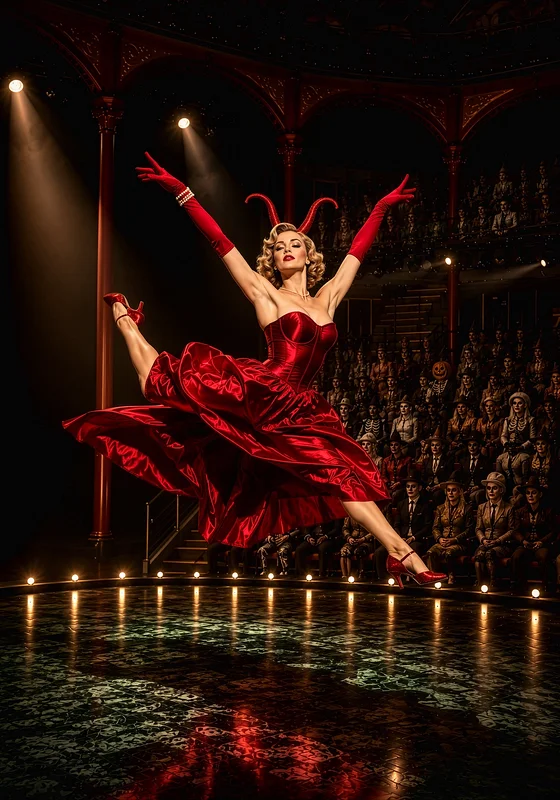
The Ghost Sonata - Spöksonaten, 2026
Digital
50 x 70 cm
3 200 kr
The Ghost Sonata - Spöksonaten
Svensk text på slutet
Introduction
What happens when one of Strindbergs darkest chamber plays ends up in the hands of Anita Ekberg and one of Malmös most notorious ghosts?
At the Hippodrome, Karna Jönsdotter already has a bit of a head start. She haunted the place long before there was a theatre, and now that she and Anita are performing August Strindbergs The Ghost Sonata, she doesnt have to worry about finding the right audience. The auditorium is filled to the last seat with her ghostly acquaintances.
Strindbergs 1907 drama unfolds across three rooms and three acts, from the houses beautiful facade to its innermost darkness. Anita dances the role of the young Lady, first seen from a distance as the Students unattainable ideal, then trapped among the living dead at the ghost supper, and finally revealed as she truly is in the hyacinth room.
For the ballet, Anita and Karna have adapted Beethovens Piano Sonata No. 17 in D minor, Op. 31 No. 2 the sonata Strindberg himself associated with ghost voices and called The Ghost Sonata. Its three movements correspond to the dramas three acts, allowing Strindbergs words to translate into movement.
It begins on the street in front of a beautiful house. Behind one of the windows, a young woman dances among the hyacinths. The Student sees her and believes he has caught sight of the life he has longed for. He does not yet know that he is standing outside a house full of ghosts.
The Ghost Sonata
Behind the glass the hyacinths grow,
A girl moves softly in the light;
The Student watches from below,
And dreams that beauty must be right.
But through the door the shadows creep,
Around the table ghosts remain;
They dine in silence, secrets keep,
While Beethoven begins again.
The masks fall, the old lies wake,
The living haunt the living still;
And every heart must give or take,
As love is bent to someones will.
Deep in the house the flowers breathe,
The Cook steals life from bread and air;
The girl grows pale, the dancers weave
Their tightening circle round her there.
Then suddenly the pattern breaks.
She spreads her arms and leaves the floor;
One final flight is all it takes
The house can hold her nevermore.
And high above the haunted stage,
While Karnas ghosts look on below,
The dying girl escapes her cage
And flies where living cannot go.
Malmö, September 2026
PROLOGUE Karnas Ghost Sonata
In the 18th century, a mill and a brewery stood on the site where Hipp stands today. The brewer Per Nilsson Möller was married to Karna Jönsdotter, who, after giving birth to ten children over ten years, died under mysterious circumstances. When Per remarried Ingeborg from Svenstorp, Karna found no peace.
Soon, hauntings began on Kalendegatan. Karna was said to float along the street, dressed only in her shroud, with dark hollows for eyes. Dogs with glowing jaws were said to have run through the neighbourhoods. Roof tiles flew from the roofs, and people came close to having their skulls crushed. Eventually, Karnas body was dug up, and at the nearby Saint Peters Church, incantations were read over the dead millers wife.
Not even that seems to have helped. At Pers wake, Karnas spirit is said to have returned to invite her husband to a final dance.
The haunting was taken so seriously that for nearly thirty years, during Sunday services in Malmös churches, they prayed the Prayer in Malmö Congregations Against Satans Haunting to protect the city from Karna Möllers revenant. The stories then persisted among old Malmö residents well into the 1900s as the devils haunting on Kalendegatan.
When the Hippodrome later rose on the site, the stories did not disappear. Employees at the theatre have spoken of streaks of ice-cold air through the rooms, doors that open and close on their own, and footsteps across the stage floor when the auditorium is empty. Technical mishaps at premieres have been readily attributed to Hipps theatre ghosts. A technician reported hearing a little girl call for her mother through his headset. Perhaps it was one of Karnas many children still looking for her.
The small elevator next to the stage is also one of the houses peculiarities. It is said to start moving up or down without anyone pressing a button. On one occasion, about twenty-five people were in a meeting in the tech room and, through the opening towards the hall, saw the lift doors open for no apparent reason.
If Karna has now received an entire theatre house on top of her old estate, there is, of course, no reason for her to settle for opening doors and taking the stairs. Together with Anita Ekberg, she has therefore turned August Strindbergs The Ghost Sonata into a ballet. The music is an adaptation of Beethovens Piano Sonata No. 17 in D minor, Op. 31 No. 2, internationally best known as The Tempest. Strindberg himself called the sonata The Ghost Sonata, and it, along with Beethovens so-called Ghost Trio, formed part of the musical associations behind the title of his chamber play from 1907.
Karna has also taken care of the audience. When the curtain rises, Hipp is filled to the last seat with her ghostly acquaintances. They have come to see Anita dance Strindbergs young Lady through the three worlds of the house from the beautiful figure behind the window, through the living dead at the ghost supper, and finally into the innermost hyacinth room.
And who would be better suited to turn The Ghost Sonata into a ballet than a woman whose most famous performance was a dance with a dead man? Two dancing ghosts,
ACT I THE FACADE
Outside the house
The first act of August Strindbergs The Ghost Sonata unfolds on the street in front of a modern, respectable apartment building in Stockholm. It is the morning after a disaster: a house has collapsed nearby, people have been killed, and the young Student has taken part in the rescue efforts. From the outset, the drama is set on the borderland between the living and the dead. The Student can see things that others cannot. Among other things, he sees the Milkmaid, who turns out to be dead.
On the street, he meets the old Director Hummel, a decrepit and enigmatic man in a wheelchair. Hummel knows about the Students family and, step by step, draws him into his own world. He tells him about the people in the beautiful house and lets the Student understand that the respectable facade hides a completely different reality. Hummel seems to know everyones secrets and has his own unresolved ties to those who live there.
But the Student still sees above all the beautiful. Through the house, he catches sight of the Lady, the Colonels young daughter, surrounded by her hyacinths. To him, she quickly becomes the epitome of the world he longs for: youth, beauty, wealth, and love. He observes her from the outside and does not yet know her. Therefore, the Lady he falls in love with is as much his own idea of her as a real woman.
That is the decisive conflict of the first act. The Student stands on the street, seeing a radiant world through the windows, while Hummel already knows what lies behind the walls. What the Student perceives as a home filled with beauty is a house where identities, relationships, and fortunes are built on lies and old wrongs. The act therefore becomes a movement towards the threshold. Hummel opens the way into the house, and the Student allows himself to be enticed across it. He believes he is on his way towards the Lady. In reality, he is on his way into the ghost house.
First movement From the street to the threshold
In Anita Ekbergs and Karnas ballet, the first act is commercialised through the first movement of Beethovens Piano Sonata No. 17 in D minor, Op. 31 No. 2: Largo Allegro. From the first bars, the choreography presents its core idea. Beethoven does not begin with a clear, forward-moving motion, but rather with a slow, questioning arpeggio. The music seems to open a door, then hesitate at what lies on the other side. Thereafter, the Allegro breaks through with a completely different force. The conflict between stillness and sudden movement becomes the ballets central conflict between appearance and reality.
The scene is divided into two worlds. In front of the house, the Student moves among the morning crowd. Behind the illuminated windows, the inhabitants of the house can be glimpsed. They find themselves on the same stage, yet not yet in the same reality.
When Beethoven returns to his slow, almost recitative-like sections, the outer world stops. The dead can then step forward among the living. The Milkmaid moves through the crowd without anyone reacting to her; only the Student follows her with his gaze. Hummel sits almost motionless in his wheelchair, seeming to direct the other peoples movements rather than participating in them himself.
The Lady, however, speaks a different movement language. She is first seen at a distance among the hyacinths. Her dance is light, unbroken, and seemingly unaffected by the jerks and sudden shifts that characterise the world outside. The Student sees her through the window and unconsciously mirrors her movements. They do not yet dance a pas de deux they dance on opposite sides of a wall. When she lifts her arm, he does the same on the street; when she bends over the flowers, he is drawn towards the house. She does not yet know that she is controlling his movements.
But the audience sees something the Student does not. Every time the music darkens, the movements behind the Lady change. Figures pass through the room, linger too long in doorways, or repeat the same movement as if trapped in it. For a moment, the Lady herself seems drawn back from the house before she resumes her light dance. Thus, what will first be revealed in the third act is already planted here: she is not the free being the Student believes he sees.
Towards the end, Hummel gains greater control over the choreography. With subtle movements from the wheelchair, he leads the Student towards the entrance. Beethoven drives the music forward, and its restlessness sweeps along the people on the street. The Student still tries to keep the Lady in sight, even as the distance between them paradoxically narrows, and the threat grows.
When he finally crosses the houses threshold, no dramatic gesture is needed to mark the transition. The facade opens, and for the first time the audience sees the darkness behind the illuminated windows. The Lady withdraws inward, and the Student follows, while Hummel is left alone for a moment between the street and the house, as if he knew all along that the young man had stepped voluntarily among the ghosts.
ACT II THE GHOST SUPPER
Inside the house
In the second act, the border has been crossed. The street and daylight are gone, and the action moves into the houses round salon. The world the Student observed through the windows in the first act is now revealed from the inside. The beautiful home remains, but behind the respectable facade, the lies begin to emerge.
Here, the houses strange company gathers for the so-called ghost supper. The Colonel, his wife, The Mummy, the Lady, and the others sit in an almost absurd silence around the round table, eating their biscuits. The forms of the bourgeois dinner remain, but the people seem already to have lost something of life. The Lady, whom the Student saw in the first act as an unattainable ideal among the hyacinths, now sits right in their midst. She remains mute and proves just as bound to the house as the older generations.
It is Hummel who breaks the stillness. He has come to settle scores with the past and ruthlessly exposes those around him. The Colonels refined existence rests on lies, and beneath the familys respectable surface lie infidelity, debts, fraud, and old dependencies. But when Hummel tries to make himself a judge over the others, the Mummy, the Colonels wife, turns the accusations against him. He too turns out to belong to the same world of guilt and exploitation he sought to expose.
Thus, the ghost supper becomes the dramas great unmasking. The true ghosts are not necessarily the dead, but rather the living who remain trapped in old lies, wrongs, and roles. In the end, the Mummy forces Hummel into the closet where she herself has long hidden from the world. There he dies. The one who led the Student over the houses threshold is gone, but the inward journey continues. Behind the next door, the Lady and the hyacinth room await.
Second movement The dance of the living dead
The second act of Anita Ekbergs and Karnas ballet is carried by Beethovens Adagio, the sonatas slow second movement. After the first movements fierce contrasts, the movement becomes calmer and more controlled, but not safer. On the contrary, the music gives the ghost supper its eerie character: everything unfolds with the solemn precision of people who have performed the same ritual for so long that they no longer know why.
When the curtain rises, the company is already seated around the round table. In the first bars, almost nothing happens. A hand is raised, a biscuit is brought to the mouth, a head is turned, and a napkin is adjusted, after which the same movements begin again. Gradually, it becomes clear that the everyday gestures are choreographed and that each person is trapped in their own little sequence of movements. The ghost supper has become a ballet for people who have forgotten they are dancing.
The Lady retains something of the softness she had behind the window in the first act, but her movements have become smaller and more constrained. When she tries to stand or stretch out an arm, the others seem to pull her back towards the table. The Student tries to approach her, but they do not yet share a real dance. Every time he comes close, the circle of older bodies closes around her, turning the house into a prison.
Hummel stands outside this ritual at first. From his wheelchair, he disrupts the others movement patterns and seems to control them with small, commanding gestures. When he reveals their lies, the revelations take physical form: postures are broken, movements shift, and the closed circle around the table begins to dissolve.
But soon, the choreography turns against him. The Mummy rises and approaches slowly, while Hummels increasingly desperate attempts to master the room give way to the same repeated movements that have held the others captive. The people he has treated like marionettes close in around him and carry him, still sitting in the wheelchair, toward the open closet. To Beethovens calm Adagio, the puppets carry away their puppeteer and the door closes behind him.
Yet Hummels death changes nothing. The company returns to the table, takes their old places, and resumes their small movements. The house continues its ritual as if nothing had happened. Only the Lady breaks the pattern. She rises and goes towards the hyacinth room, and the Student follows as the ghost supper continues behind them.
In the first act, the Student was led from the street into the house. In the second, he is led from the houses public spaces to its innermost. Now he is about to meet the woman he had previously observed only through a window and discover what the house has done to her.
ACT III THE HYACINTH ROOM
Innermost in the house
In the third and final act, the Student has reached the houses innermost room. It is the hyacinth room, the same room he saw from the outside in the first act, where the Lady appeared as the epitome of beauty and of another, happier life. Now there is no pane of glass between them. For the first time, he meets her face to face, and only now does the Lady also find her own voice.
At first, the room seems to confirm the Students dream. The Lady plays the harp among the flowers, and their meeting suggests the possibility of love. The Student still wants to believe that, behind the houses lies, there is something pure that can be saved, and she begins to imagine a future together with the Lady. But the closer he comes to the Lady, the clearer it becomes that even the hyacinth room is part of the sick house.
The Lady is terminally ill and describes a home where people live off and consume one another. This is most clearly personified in the grotesque Cook, who sucks the power from the food and, metaphorically speaking, from the people around her. Hummel is dead, but the order he belonged to lives on. It is this world the Lady has grown up in that has slowly drained her of her life force.
The Students ideal image finally collapses. When he discovers that the Lady cannot match the pure and perfect being he has created of her, his love dream turns to disappointment and accusation. He, too, thereby becomes part of the world that consumes her. The Lady, already dying, cannot bear yet another persons demands and illusions. She sinks away and dies. The death-screen is brought forward and hides her, while the Student, in his final speech, lets her death open towards something other than the poisoned house. The Lady, who, in the first act, was a distant image of life and, in the second, a mute participant among the living dead, leaves the earthly world completely in the third. What, for the Student, becomes the ultimate loss is simultaneously presented as her only possibility for liberation.
Third movement The Ladys liberation
The final act of Anita Ekbergs and Karnas ballet is carried by Beethovens Allegretto, the sonatas third movement. After the ghost suppers slow Adagio, the music is set in motion again. But it is not the first movements dramatic alternation between hesitation and outbursts that returns. Instead, a restless, almost unbroken movement drives the Allegretto forward, and in the ballet this pulse becomes the very image of time and the life force draining out of the Lady.
When the curtain rises, the hyacinth room is bathed in the light the Student remembered from the first act. The Lady sits at the harp, and her first dance reconnects with the light figure he saw through the window. But now he is in the same room. For the first time, their movements can meet and develop into the pas de deux that the two preceding acts have deferred.
At first, the music seems to unite them. The Student adopts the movements the Lady initiates; she responds to him, and for a brief moment, his dream seems to become reality. But Beethovens recurring figures never allow the dance to settle. Every time the couple approaches complete harmony, the restless pulse returns, breaking the movement.
Then the Cook steps in. She need not be made into a literal monster. In the choreography, her vampire nature can be expressed by her never creating her own movements, but instead taking over others. When the Lady stretches out her arm, the Cook completes the movement, leaving the Lady weaker; when the Lady tries to follow the Student, the Cook breaks in and leads her in another direction. She seems not only to suck the power from the Lady but also the very energy from the dance. What in Strindbergs text is expressed through the house and the food becomes, on stage, a physical theft of movement.
The Ladys dance therefore changes gradually. The large, soft movements that connected her with the first acts ideal image become shorter, heavier, and more strained. The Student first tries to support her and bring her back to their shared dance, but as his illusion of her begins to shatter, his movement language also changes. The tenderness that previously drew him towards her becomes harder and more demanding. Their pas de deux transforms from a love encounter into a struggle, not because the Lady fights him, but because she is no longer able to be the woman he demands she be.
In the end, no common dance remains. The Student stands with his preconceptions, while the Lady continues alone, propelled by the Allegrettos relentless momentum. The other figures from the house can return to the rooms edges: the Colonel, the Mummy, the ghost suppers guests, and finally even the dead Hummel. They do not grab her, but their movements circle her like echoes from the two previous acts. The whole house seems to dance through her body.
But here, Anita and Karna let the ballet depart from Strindbergs literal stage directions. In Strindberg, the death-screen is brought before the Lady as life leaves her. In the ballet, the screen instead becomes the final boundary she must cross. As Beethoven drives the movement towards its end, the houses figures gather behind her, and the movements that have held her prisoner for three acts close for the final time. The Lady seems at first to sink under their weight, but instead of disappearing behind the screen, she breaks out of the pattern.
Here, Anita makes her great leap. The body, which has grown increasingly heavy throughout the act, is suddenly released from the floor. With her arms outstretched, she throws herself across the room in a long, almost impossible swan dive, as if the dying Lady has, for a moment, transformed into the free being the Student once believed he saw through the window. The leap is both her death and her liberation; she does not flee the house as a living person but leaves the world that has consumed her life.
When she lands, she does not need to rise again. The death-screen can be slowly brought in front of where she lies as the hyacinth room changes around her. The houses figures halt, their endless movements cease, and the Student is left alone among them. For him, the loss remains. For the Lady, however, the movement has ceased, since she no longer belongs to their world.
Thus, the ballets circle closes. In the first act, the Student saw the Lady through a window and made her his dream. In the second, he saw her trapped among the houses living dead. In the third, he finally met her, but only after his illusion was destroyed could the true Lady emerge sick, exhausted, and dying. And in the ballets final moment, she does the only thing she never could in Strindbergs house: she leaves it.
EPILOGUE From Facade to Liberation
August Strindbergs The Ghost Sonata, written in 1907 and premiered at the Intima Theatre the following year, is one of his most radical chamber plays. In three acts, the drama moves from the street, through the bourgeois houses facade and salons, to the innermost hyacinth room. Simultaneously, another relocation occurs: from the visible to the hidden, from illusion to truth, and from the world of the living to a world where the boundary between the living and the dead has almost ceased.
The Student follows this path because he has seen the Lady through a window and has made her a symbol of all the beauty he believes lies behind the facade. In the first act, she is an unattainable image among the hyacinths; in the second, she sits mute among the living dead at the ghost supper; only in the third does he meet her as a human being and discover that she too has been consumed by the house. Hummel reveals others lies but turns out to be part of them himself. The Mummy lives hidden away from the world, and the Cook becomes the vampire-like image of a home where people suck the power out of each other.
When the Lady finally dies, the Students final illusion falls as well. But, in Strindbergs view, death is not solely a defeat. The death-screen separates her from the earthly world, which has consumed her, and simultaneously opens the possibility of liberation from it. There, the movement that began outside the house closes: the Student has penetrated ever deeper to find the truth, while the Lady, in the end, finds her only way out by leaving this entire world.
It is also for this reason that The Ghost Sonata lends itself so well to ballet. Strindberg constructed his chamber play with a musical sense of motifs, repetition, contrast, and variation, and the title reflects his fascination with Beethoven. In Anita Ekbergs and Karnas version, Beethovens three movements are therefore allowed to carry Strindbergs three acts: LargoAllegro for the allure and the step over the threshold, Adagio for the stagnant world of the ghost supper, and Allegretto for the final, relentless movement towards the Ladys death.
What in Strindbergs text ends behind a death-screen receives its opposite in the ballet. The Lady does not merely sink away but throws herself in her final leap out of the world that held her captive. The woman the Student first saw behind a window finally leaves the house, freeno living human being was capable of leaving it.
Introduktion
Vad händer när ett av Strindbergs mörkaste kammarspel hamnar i händerna på Anita Ekberg och ett av Malmös mest notoriska spöken?
På Hippodromen har Karna Jönsdotter redan ett visst försprång. Hon har hemsökt platsen långt innan det fanns någon teater, och när hon nu tillsammans med Anita ger sig på August Strindbergs Spöksonaten behöver hon inte bekymra sig för att hitta rätt publik. Salongen är fylld till sista plats med hennes spökbekanta.
Strindbergs drama från 1907 rör sig genom tre rum och tre akter, från den vackra fasaden till husets innersta mörker. Anita dansar den unga Fröken, först sedd på avstånd som Studentens ouppnåeliga ideal, sedan fångad bland de levande döda vid spöksupén och slutligen mött som den hon verkligen är i hyacintrummet.
Till baletten har Anita och Karna bearbetat Beethovens pianosonat nr 17 i d-moll, op. 31 nr 2 den sonat som Strindberg själv förknippade med spökröster och kallade Spöksonaten. Dess tre satser följer dramats tre akter och låter Strindbergs ord övergå i rörelse.
Det börjar på gatan framför ett vackert hus. Bakom ett av fönstren dansar en ung kvinna bland hyacinterna. Studenten ser henne och tror att han har fått syn på livet han har längtat efter.
Han vet ännu inte att han står utanför ett hus fullt av spöken.
PROLOG Karnas spöksonat
På 1700-talet låg en kvarn och ett bryggeri på platsen där Hipp ligger idag. Bryggaren Per Nilsson Möller var gift med Karna Jönsdotter, som efter att ha fött tio barn på tio år dog under mystiska omständigheter. När Per gifte om sig med Ingeborg från Svenstorp, fick Karna ingen ro.
Snart började det spöka på Kalendegatan. Karna sades komma svävande längs gatan endast iförd sin liksvepning, med mörka hålor till ögon. Hundar med glödande gap skulle ha sprungit genom kvarteren, takpannor flugit från taken och människor varit nära att få skallen krossad. Till slut grävdes Karnas kropp upp, och i den närbelägna Sankt Petri kyrka lästes besvärjelser över den döda mjölnarhustrun. Inte ens det tycks ha hjälpt. Vid Pers likvaka lär Karnas ande ha återvänt för att bjuda upp sin döde make till en sista dans.
Spökeriet togs på sådant allvar att man under närmare trettio år vid söndagsgudstjänsterna i Malmös kyrkor bad Bön uti Malmö Församlingar emot Satans Spökeri för att värja staden mot Karna Möllers gengångare. Berättelserna levde sedan kvar bland gamla Malmöbor långt in på 1900-talet som det satans spökeriet på Kalendegatan.
När Hippodromen långt senare reste sig på platsen, försvann inte historierna. Anställda på teatern har berättat om stråk av iskyla genom rummen, dörrar som öppnas och stängs av sig själva och fotsteg över scengolvet när salongen är tom. Tekniska missöden vid premiärer har gärna tillskrivits Hipps teaterspöken. En tekniker har berättat att han i sitt headset hörde en liten flicka ropa efter sin mamma. Kanske var det ett av Karnas många barn som fortfarande letade efter henne.
Till husets egendomligheter hör också den lilla hissen intill scenen. Den sägs kunna börja gå upp eller ner utan att någon har tryckt på en knapp. Vid ett tillfälle satt ett tjugofemtal personer i möte i teknikrummet och kunde genom öppningen mot hallen se hissdörren gå upp utan synbar anledning.
Om Karna nu har fått ett helt teaterhus ovanpå sin gamla gård, finns det förstås ingen anledning för henne att nöja sig med att öppna dörrar och ta trapporna.
Tillsammans med Anita Ekberg har hon därför gjort balett av August Strindbergs Spöksonaten. Musiken är en bearbetning av Beethovens pianosonat nr 17 i d-moll, op. 31 nr 2, internationellt mest känd som "The Tempest". Strindberg kallade själv sonaten Spöksonaten, och den hörde, tillsammans med Beethovens så kallade Spöktrio, till de musikaliska associationerna bakom titeln på hans kammarspel från 1907.
Karna har dessutom tagit hand om publiken. När ridån går upp är Hipp fylld till sista plats med hennes spökbekanta. De har kommit för att se Anita dansa Strindbergs unga Fröken genom husets tre världar från den vackra gestalten bakom fönstret, genom spöksupéns levande döda och slutligen in i det innersta hyacintrummet.
Och vem skulle egentligen vara bättre lämpad att göra balett av Spöksonaten än en kvinna vars mest berömda framträdande var en dans med en död man? Två dansande gastar,
AKT I FASADEN
Utanför huset
Den första akten i August Strindbergs Spöksonaten utspelar sig på gatan framför ett modernt och förnämt hyreshus i Stockholm. Det är morgon efter en katastrof: ett hus har rasat i närheten, människor har dödats och den unge studenten har deltagit i räddningsarbetet. Redan från början befinner sig dramat därför i gränslandet mellan de levande och de döda. Studenten kan se sådant som andra inte ser. Bland annat ser han Mjölkflickan, som visar sig tillhöra de döda.
På gatan möter han den gamle direktör Hummel, en skröplig och gåtfull man i rullstol. Hummel känner till Studentens familj och börjar steg för steg dra honom in i sin egen värld. Han berättar om människorna i det vackra huset och låter studenten förstå att den respektabla fasaden döljer en helt annan verklighet. Hummel tycks känna allas hemligheter och har dessutom egna ouppklarade förbindelser med dem som bor där.
Men Studenten ser ännu framför allt det vackra.
Genom huset får han syn på Fröken, Överstens unga dotter, omgiven av sina hyacinter. För honom blir hon nästan omedelbart sinnebilden av den värld han längtar efter: ungdom, skönhet, rikedom och kärlek. Han betraktar henne utifrån och känner henne ännu inte. Därför är den Fröken han förälskar sig i lika mycket hans egen föreställning om henne som en verklig kvinna.
Det är den avgörande motsättningen i första akten. Studenten står på gatan och ser en lysande värld genom fönstren, medan Hummel redan vet vad som finns bakom väggarna. Det Studenten uppfattar som ett hem fyllt av skönhet är ett hus där identiteter, släktskap och förmögenheter bygger på lögner och gamla oförrätter.
Akten blir därför en rörelse mot tröskeln. Hummel öppnar vägen in i huset och Studenten låter sig lockas över den. Han tror att han är på väg mot Fröken. I själva verket är han på väg in i spökhuset.
Första satsen Från gatan till tröskeln
I Anita Ekbergs och Karnas balett gestaltas den första akten genom den första satsen i Beethovens pianosonat nr 17 i d-moll, op. 31 nr 2: Largo Allegro.
Redan de första takterna erbjuder koreografin sin grundidé. Beethoven börjar inte med en självklar, framåtriktad rörelse utan med ett långsamt och frågande arpeggio. Musiken tycks öppna en dörr och sedan tveka inför vad som finns på andra sidan. Därefter bryter Allegro fram med en helt annan kraft. Motsättningen mellan stillhet och plötslig rörelse blir balettens motsättning mellan sken och verklighet.
Scenen är uppdelad i två världar. Framför huset rör sig Studenten bland morgonens människor. Bakom de upplysta fönstren skymtar husets invånare. De befinner sig på samma scen men ännu inte i samma verklighet.
När Beethoven återvänder till sina långsamma, nästan recitativiska avsnitt, stannar den yttre världen upp. De döda kan då träda fram bland de levande. Mjölkflickan rör sig genom folkmassan utan att någon reagerar på henne; endast Studenten följer henne med blicken. Hummel sitter nästan orörlig i sin rullstol och tycks snarare dirigera de andra människornas rörelser än att själv delta i dem.
Fröken får däremot ett helt annat rörelsespråk.
Hon syns först på avstånd bland hyacinterna. Hennes dans är lätt, obruten och till synes opåverkad av de ryckningar och tvära kast som präglar världen utanför. Studenten ser henne genom fönstret och börjar omedvetet upprepa hennes rörelser. De dansar ännu ingen pas de deux de dansar på var sin sida om en vägg. När hon lyfter armen gör han detsamma på gatan; när hon böjer sig över blommorna dras han mot huset. Hon vet ännu inte att hon styr hans rörelser.
Men publiken får samtidigt se något som Studenten inte ser. Varje gång musiken mörknar förändras rörelserna bakom Fröken. Gestalter passerar genom rummet, stannar för länge i dörröppningar eller upprepar samma rörelse som om de vore fångade i den. För ett ögonblick kan Fröken själv tyckas dras tillbaka från huset innan hon återupptar sin lätta dans.
Därmed planteras redan här det som först kommer att avslöjas i tredje akten: hon är inte den fria varelse som Studenten tror sig se.
Mot slutet får Hummel allt större kontroll över koreografin. Med små rörelser från rullstolen leder han Studenten mot entrén. Beethoven driver musiken framåt och människorna på gatan sveps med i dess rastlöshet. Studenten försöker fortfarande hålla Fröken i blickfånget medan avståndet mellan dem paradoxalt nog minskar och hotet växer.
När han slutligen passerar husets tröskel behöver ingen dramatisk gest markera övergången. Fasaden öppnar sig och för första gången ser publiken mörkret bakom de upplysta fönstren. Fröken försvinner inåt och Studenten följer efter, medan Hummel blir ensam kvar ett ögonblick mellan gatan och huset, som om han hela tiden vetat att den unge mannen frivilligt har stigit in bland spökena.
AKT II SPÖKSUPÉN
Inne i huset
I andra akten har gränsen passerats. Gatan och dagsljuset är borta och handlingen har flyttat in i husets runda salong. Den värld som Studenten i första akten betraktade genom fönstren visar sig nu från insidan. Det vackra hemmet finns fortfarande kvar, men bakom den respektabla fasaden börjar lögnerna träda fram.
Här samlas husets märkliga sällskap till den så kallade spöksupén. Översten, hans hustru Mumien, Fröken och de övriga sitter under en närmast absurd tystnad kring det runda bordet och äter sina kex. Den borgerliga middagens former finns kvar, men människorna tycks redan ha förlorat något av livet. Fröken, som Studenten i första akten såg som ett ouppnåeligt ideal bland hyacinterna, sitter nu mitt ibland dem. Hon är fortfarande stum och visar sig vara lika bunden till huset som de äldre generationerna.
Det är Hummel som bryter stillheten. Han har kommit för att göra upp med det förflutna och börjar obarmhärtigt avslöja människorna omkring sig. Överstens förnäma tillvaro vilar på lögner och bakom familjens respektabla yta finns otrohet, skulder, bedrägerier och gamla beroenden. Men när Hummel försöker göra sig till domare över de andra vänder Mumien, Överstens hustru, anklagelserna mot honom. Också han visar sig tillhöra samma värld av skuld och utsugning som han velat avslöja.
Därmed blir spöksupén dramats stora demaskering. De verkliga spökena är inte nödvändigtvis de döda utan människor som fortfarande lever men sitter fast i gamla lögner, oförrätter och roller. Till slut tvingar Mumien Hummel in i garderoben där hon själv länge hållit sig undan världen. Där dör han.
Den som förde Studenten över husets tröskel är borta, men färden inåt fortsätter. Bakom nästa dörr väntar Fröken och hyacintrummet.
Andra satsen De levande dödas dans
Den andra akten i Anita Ekbergs och Karnas balett bärs av Beethovens Adagio, sonatens långsamma andra sats. Efter den första satsens häftiga kontraster blir rörelsen lugnare och mer behärskad, men inte tryggare. Tvärtom ger musiken spöksupén dess kusliga karaktär: allt sker med den högtidliga precisionen hos människor som har utfört samma ritual så länge att de inte längre vet varför.
När ridån går upp sitter sällskapet redan kring det runda bordet. Under de första takterna sker nästan ingenting. En hand lyfts, ett kex förs mot munnen, ett huvud vrids och en servett rättas till, varefter samma rörelser börjar om. Så småningom blir det tydligt att vardagsgesterna är koreograferade och att varje människa sitter fast i sin egen lilla rörelsesekvens. Spöksupén har blivit en balett för människor som har glömt att de dansar.
Fröken behåller något av den mjukhet hon hade bakom fönstret i första akten, men hennes rörelser har blivit mindre och mer begränsade. När hon försöker resa sig eller sträcka ut en arm tycks de andra dra henne tillbaka mot bordet. Studenten försöker närma sig henne, men ännu får de ingen verklig dans tillsammans. Varje gång han kommer nära sluts kretsen av äldre kroppar kring henne och förvandlar huset till ett fängelse.
Hummel står till en början utanför den här ritualen. Från sin rullstol bryter han de andras rörelsemönster och tycks styra dem med små befallande gester. När han avslöjar deras lögner får avslöjandena en kroppslig form: hållningar bryts, rörelser förändras och den slutna cirkeln kring bordet börjar lösas upp.
Men snart vänds koreografin mot honom själv. Mumien reser sig och närmar sig långsamt, medan Hummels alltmer desperata försök att behärska rummet övergår i samma upprepade rörelser som har hållit de andra fångna. De människor han har behandlat som marionetter sluter sig kring honom och för honom, fortfarande sittande i rullstolen, mot den öppna garderoben. Till Beethovens lugna Adagio bär dockorna bort sin dockspelare och dörren sluts bakom honom.
Ändå förändrar Hummels död ingenting. Sällskapet återvänder till bordet, intar sina gamla platser och återupptar sina små rörelser. Huset fortsätter sin ritual som om ingenting hade hänt. Bara Fröken bryter mönstret. Hon reser sig och går mot hyacintrummet och Studenten följer efter medan spöksupén fortsätter bakom dem.
I första akten fördes Studenten från gatan in i huset. I den andra förs han från husets offentliga rum till dess innersta. Nu ska han möta den kvinna han tidigare bara betraktat genom ett fönster och upptäcka vad huset har gjort med henne.
AKT III HYACINTRUMMET
Längst in i huset
I den tredje och sista akten har Studenten nått husets innersta rum. Det är hyacintrummet, samma rum som han i första akten såg utifrån och där Fröken framstod som sinnebilden av skönhet och ett annat, lyckligare liv. Nu finns det ingen fönsterruta mellan dem. För första gången möter han henne på nära håll, och först nu får Fröken också sin egen röst.
Rummet tycks till en början bekräfta Studentens dröm. Fröken spelar harpa bland blommorna och mötet mellan de båda antyder möjligheten till kärlek. Studenten vill fortfarande tro att det bakom husets lögner finns något rent som kan räddas och börjar föreställa sig en framtid tillsammans med henne. Men ju närmare han kommer Fröken, desto tydligare blir det att även hyacintrummet är en del av det sjuka huset.
Fröken är dödssjuk och beskriver ett hem där människorna lever av och förtär varandra. Tydligast personifieras detta av den groteska Kokerskan, som suger kraften ur maten och, bildligt talat, ur människorna omkring sig. Hummel är död, men den ordning han tillhörde lever vidare. Det är denna värld Fröken har vuxit upp i och som långsamt har tömt henne på livskraft.
Studentens idealbild bryter slutligen samman. När han upptäcker att Fröken inte kan motsvara den rena och fullkomliga varelse han själv har skapat av henne, vänder hans kärleksdröm om till besvikelse och anklagelse. Också han blir därmed en del av den värld som förtär henne. Fröken, som redan är döende, förmår inte bära ännu en människas krav och illusioner.
Hon sjunker undan och dör. Dödsskärmen förs fram och döljer henne, medan studenten i sitt sista tal låter hennes död öppna sig mot något annat än det förgiftade huset. Den fröken som i första akten var en avlägsen bild av livet och i den andra en stum deltagare bland de levande döda lämnar i den tredje den jordiska världen helt. Det som för studenten blir den definitiva förlusten antyds samtidigt som hennes enda möjlighet till befrielse.
Tredje satsen Frökens befrielse
Den sista akten i Anita Ekbergs och Karnas balett bärs av Beethovens Allegretto, sonatens tredje sats. Efter spöksupéns långsamma Adagio sätts musiken åter i rörelse. Men det är inte den första satsens dramatiska växling mellan tvekan och utbrott som återkommer. Allegrettot drivs i stället framåt av en rastlös, nästan oavbruten rörelse, och i baletten blir denna puls själva bilden av tiden och livskraften som rinner ur Fröken.
När ridån går upp är hyacintrummet badat i det ljus som Studenten mindes från första akten. Fröken sitter vid harpan och hennes första dans återknyter till den lätta gestalt han såg genom fönstret. Men nu befinner han sig i samma rum. För första gången kan deras rörelser mötas och utvecklas till den pas de deux som de två föregående akterna hela tiden har skjutit framför sig.
Till en början tycks musiken förena dem. Studenten tar upp rörelser som Fröken påbörjar; hon besvarar honom och för ett kort ögonblick förefaller hans dröm kunna bli verklighet. Men Beethovens ständigt återkommande figurer tillåter aldrig dansen att slå sig till ro. Varje gång paret närmar sig fullständig samstämmighet, återkommer den rastlösa pulsen och bryter upp rörelsen.
Då träder Kokerskan in.
Hon behöver inte göras till ett bokstavligt monster. I koreografin kan hennes vampyrnatur uttryckas genom att hon aldrig skapar en egen rörelse utan tar över de andras. När Fröken sträcker ut armen fullföljer Kokerskan rörelsen och lämnar henne svagare; när Fröken försöker följa Studenten bryter Kokerskan in och leder hennes rörelse åt ett annat håll. Hon tycks inte bara suga kraften ur Fröken utan själva energin ur dansen. Det som i Strindbergs text uttrycks genom huset och maten blir på scenen en fysisk stöld av rörelse.
Frökens dans förändras därför gradvis. De stora, mjuka rörelserna som förband henne med första aktens idealbild blir kortare, tyngre och mer ansträngda. Studenten försöker först stödja henne och föra henne tillbaka till deras gemensamma dans, men när hans illusion om henne börjar brista förändras också hans rörelsespråk. Den ömhet som tidigare förde honom mot henne blir hårdare och mer krävande. Deras pas de deux förvandlas från kärleksmöte till kamp, inte därför att Fröken bekämpar honom utan därför att hon inte längre förmår vara den kvinna han kräver att hon ska vara.
Till slut finns det ingen gemensam dans kvar. Studenten står kvar med sina föreställningar, medan Fröken fortsätter ensam, driven av Allegrettots obevekliga rörelse. De andra gestaltningarna från huset kan återvända till rummets utkanter: Översten, Mumien, spöksupéns gäster och till sist även den döde Hummel. De griper henne inte, men deras rörelser återkommer omkring henne som ekon från de två tidigare akterna. Hela huset tycks dansa genom hennes kropp.
Men här låter Anita och Karna baletten lämna Strindbergs bokstavliga scenanvisning.
Hos Strindberg förs dödsskärmen framför Fröken när livet lämnar henne. I baletten blir skärmen i stället den sista gränsen hon måste passera. Medan Beethoven driver satsen mot dess slut, samlas husets gestalter bakom henne, och de rörelser som under tre akter hållit henne fången sluter sig för sista gången. Fröken tycks först sjunka under deras tyngd, men i stället för att försvinna bakom skärmen bryter hon sig loss ur mönstret.
Det är här Anitas stora språng kommer.
Den kropp som under hela akten blivit allt tyngre frigörs plötsligt från golvet. Med armarna utsträckta kastar hon sig genom rummet i ett långt, nästan omöjligt svalhopp, som om den döende Fröken för ett ögonblick har förvandlats till den fria varelse Studenten en gång trodde sig se genom fönstret. Språnget är samtidigt hennes död och hennes befrielse; hon flyr inte ur huset som levande utan lämnar den värld som har förbrukat hennes liv.
När hon landar behöver hon därför inte resa sig igen. Dödsskärmen kan långsamt föras framför den plats där hon ligger medan hyacintrummet förändras omkring henne. Husets gestalter stannar upp, deras ändlösa rörelser upphör och Studenten blir ensam kvar bland dem. För honom återstår förlusten. För Fröken har rörelsen däremot upphört, eftersom hon inte längre tillhör deras värld.
Därmed sluts balettens cirkel. I första akten såg Studenten Fröken genom ett fönster och gjorde henne till sin dröm. I den andra såg han henne fångad bland husets levande döda. I den tredje fick han slutligen möta henne, men först när hans illusion hade förstörts kunde den verkliga Fröken framträda sjuk, utmattad och döende.
Och i balettens sista ögonblick gör hon det enda hon aldrig kunde göra i Strindbergs hus: hon lämnar det.
EPILOG Från fasad till befrielse
August Strindbergs Spöksonaten, skriven 1907 och uruppförd på Intima teatern året därpå, är ett av hans mest radikala kammarspel. I tre akter rör sig dramat från gatan genom det borgerliga husets fasad och salonger till det innersta hyacintrummet. Samtidigt sker en annan förflyttning: från det synliga till det dolda, från illusion till sanning och från de levandes värld till en värld där gränsen mot de döda nästan har upphört.
Studenten följer denna väg därför att han har sett Fröken genom ett fönster och gjort henne till en symbol för allt det vackra han tror finns innanför fasaden. I första akten är hon den ouppnåeliga bilden bland hyacinterna; i den andra sitter hon stum bland de levande döda vid spöksupén; först i den tredje möter han henne som människa och upptäcker att även hon har förtärts av huset. Hummel avslöjar andras lögner men visar sig själv vara en del av dem. Mumien lever undangömd från världen och Kockerskan blir den vampyrartade bilden av ett hem där människorna suger kraften ur varandra.
När Fröken slutligen dör faller därför också Studentens sista illusion. Men döden är hos Strindberg inte enbart ett nederlag. Dödsskärmen skiljer henne från den jordiska världen, som har förbrukat henne, och öppnar samtidigt möjligheten till befrielse från den. Där sluts den rörelse som började utanför huset: Studenten har trängt allt längre in för att finna sanningen, medan Fröken till sist finner sin enda utväg genom att lämna hela denna värld.
Det är också därför som Spöksonaten lämpar sig så väl för balett. Strindberg byggde sitt kammarspel med en musikalisk känsla för motiv, upprepningar, kontraster och variationer och titeln anknyter till hans fascination för Beethoven. I Anita Ekbergs och Karnas version får därför Beethovens tre satser bära Strindbergs tre akter: LargoAllegro för lockelsen och steget över tröskeln, Adagio för spöksupéns stillastående värld och Allegretto för den sista, obevekliga rörelsen mot Frökens död.
Det som hos Strindberg slutar bakom en dödsskärm får i baletten sin motsats. Fröken sjunker inte bara undan utan kastar sig i sitt sista språng ut ur den värld som hållit henne fången. Den kvinna som Studenten först såg bakom ett fönster lämnar till sist huset som ingen levande människa förmår lämna fri.
3 200 kr

Jörgen Thornberg
Malmö
Lite om bilder och mig. Translation in English at the end.
Jag är en nyfiken person som ser allt i bilder, även det jag fäster i ord, gärna tillsammans för bakom alla mina bilder finns en berättelse. Till vissa bilder hör en kortare eller längre novell som följer med bilden.
Bilder berättar historier. Jag omges av naturlig skönhet, intressanta människor och historia var jag än går. Jag använder min kamera för att dokumentera världen och blanda det jag ser med vad jag känner för att fånga den dolda magin.
Mina bilder berättar mina historier. Genom mina bilder, tryck och berättelser. Jag bjuder in dig att ta del av dessa berättelser, in i ditt liv och hem och dela min mycket personliga syn på vår värld. Mer än vad ögat ser. Jag tänker i bilder, drömmer och skriver och pratar om dem; följaktligen måste jag också skapa bilder. De blir vad jag ser, inte nödvändigtvis begränsade till verkligheten. Det finns en bild runt varje hörn. Jag hoppas att du kommer att se vad jag såg och gilla det.
Jag är också en skrivande person och till många bilder hör en kortare eller längre essay. Den följer med tavlan, tryckt på fint papper och med en personlig hälsning från mig.
Flertalet bilder startar sin resa i min kamera. Enkelt förklarat beskriver jag bilden jag ser i mitt inre, upplevd eller fantiserad. Bilden uppstår inom mig redan innan jag fått okularet till ögat. På bråkdelen av ett ögonblick ser jag vad jag vill ha och vad som kan göras med bilden. Här skall jag stoppa in en giraff, stålmannen, Titanic eller vad det är min fantasi finner ut. Ännu märkligare är att jag kommer ihåg minnesbilden långt efteråt när det blir tid att skapa verket. Om jag lyckas eller inte, är upp till betraktaren, oftast präglat av en stråk av svart humor – meningen är att man skall bli underhållen. Mina bilder blir ofta en snackis där de hänger.
Jag föredrar bilder som förmedlar ett budskap i flera lager. Vid första anblicken fylld av feel-good, en vacker utsikt, fint väder, solen skiner, blommor på ängen eller vattnet som ligger förrädiskt spegelblankt. I en sådan bild kan jag gömma min egentliga berättelse, mitt förakt för förtryckare och våldsverkare, rasister och fördomsfulla människor - ett gärna återkommande motiv mer eller mindre dolt i det vackra motivet. Jag försöker förena dem i ett gemensamt narrativ.
Bild och formgivning har löpt som en röd tråd genom livet. Fotokonst känns som en värdig final som jag gärna delar med mig.
Min genre är vid som framgår av mina bilder, temat en blandning av pop- och gatukonst i kollage som kan bestå av hundratals lager. Vissa bilder kan ta veckor, andra någon dag innan det är dags att överlämna resultatet till printverkstaden. Fine Art Prints är digitala fotocollage. I dessa kollage sker rivandet, klippandet, pusslandet, målandet, ritandet och sprayningen digitalt. Det jag monterar in kan vara hundratals år gamla bilder som jag omsorgsfullt frilägger så att de ser ut att vara en del av tavlan men också bilder skapade av mig själv efter min egen fantasi. Därefter besöks printstudion och för vissa bilder numrera en limiterad upplaga (oftast 7 exemplar) och signera för hand. Vissa bilder kan köpas i olika format. Det är bara att fråga efter vilka. Gillar man en bild som är 70x100 men inte har plats på väggen, går den kanske att få i 50x70 cm istället. Frågan är fri.
Metoden Giclée eller Fine Art Print som det också kallas är det moderna sättet för framställning av grafisk konst. Villkoret för denna typ av utskrifter är att en högkvalitativ storformatskrivare används med åldersbeständigt färgpigment och konstnärspapper eller i förekommande fall på duk. Pappret som används möter de krav på livslängd som ställs av museer och gallerier. Normalt säljer jag mina bilder oinramade så att den nya ägaren själv kan bestämma hur de skall se ut, med eller utan passepartout färg på ram, med eller utan glas etc..
Under många år ställde jag bara ut på nätet, i valda grupper och på min egen Facebooksida - https://www.facebook.com/jorgen.thornberg.9
Jag finns också på en egen hemsida som tyvärr inte alltid är uppdaterad – https://www.jth.life/ Där kan du också läsa en del av de berättelser som följer med bilden.
UTSTÄLLNINGAR
Luftkastellet, oktober 2022
Konst i Lund, november 2022
Luftkastellet, mars 2023
Engleson Galleri Caroli, april 2023
Hydra, Greece June 2023
Engleson Galleri Caroli, oktober 2023
Toppen, Höllviken december 2023
Luftkastellet, mars 2024
Torups Galleri, mars 2024
Venice, May 2024
Luftkastellet, oktober 2024
Konst i Advent, December 2024
Galleri Engleson, Caroli December 2024
Jäger & Jansson Galleri, april 2025
A bit about pictures and me.
I'm a curious person who sees everything in pictures, even what I express in words, often combining them, for behind all my pictures lies a story. These narratives, some as short as a single image and others as long as a novel, are the heart and soul of my work.
Pictures tell stories. Wherever I go, I'm surrounded by natural beauty, exciting people, and history. I use my camera to document the world and blend what I see with what I feel to capture the hidden magic.
My images tell my stories. Through my pictures, prints, and narratives, I invite you to partake in these stories in your life and home and share my deeply personal perspective of our world. More than meets the eye. I think in pictures, dream, write, and talk about them; consequently, I must create images too. They become what I see, not necessarily confined to reality. There's a picture around every corner. I hope you'll see what I saw and enjoy it.
I'm also a writer, and many images come with a shorter or longer essay. It accompanies the painting, printed on fine paper with my personal greeting.
Many pictures start their journey on my camera. Simply put, I describe the image I see in my mind, experienced or imagined. The image arises within me even before I bring the eyepiece to my eye. In a fraction of a moment, I see what I want and what can be done with the picture. Here, I'll insert a giraffe, Superman, the Titanic, or whatever my imagination conjures up. Even stranger is that I remember the mental image long after it's time to create the work. Whether I succeed is up to the observer, often imbued with a streak of black humour – the aim is to entertain. My pictures usually become a talking point wherever they hang.
I prefer pictures that convey a message in multiple layers. At first glance, they're filled with feel-good vibes, a beautiful view, lovely weather, the sun shining, flowers in the meadow, or the water lying deceptively calm. But beneath this surface beauty, I often conceal a deeper story, a narrative that challenges societal norms or explores the human condition. I invite you to delve into these hidden narratives and discover the layers of meaning within my work.
Picture and design have been a thread running through my life. Photographic art feels like a fitting finale, and I'm happy to share it.
My genre is varied, as seen in my pictures; the theme is a blend of pop and street art in collages that can consist of hundreds of layers. Some images can take weeks, others just a day before it's time to hand over the result to the print workshop. Fine Art Prints are digital photo collages. In these collages, tearing, cutting, puzzling, painting, drawing, and spraying happen digitally. What I insert can be images hundreds of years old that I carefully extract so they appear to be part of the painting, but also images created by myself, now also generated from my imagination. Next, visit the print studio and, for certain images, number a limited edition (usually 7 copies) and sign them by hand. Some images may be available in other formats. Just ask which ones. If you like an image that's 70x100 but doesn't have space on the wall, you might be able to get it in 50x70 cm instead. The question is open.
The Giclée method, or Fine Art Print as it's also called, is the modern way of producing graphic art. This method ensures the highest quality and longevity of the artwork, using a high-quality large-format printer with archival pigment inks and artist paper or, in some cases, canvas. The paper used meets the longevity requirements set by museums and galleries. I sell my pictures unframed, allowing the new owner to personalise their artwork, confident in the lasting value and quality of the piece.
For many years, I only exhibited online, in selected groups, and on my Facebook page - https://www.facebook.com/jorgen.thornberg.9. I also have my website, which unfortunately is not constantly updated - https://www.jth.life/. You can also read some of the stories accompanying the pictures there.
EXHIBITIONS
Luftkastellet, October 2022
Art in Lund, November 2022
Luftkastellet, March 2023
Engleson Gallery Caroli, April 2023
Hydra, Greece June 2023
Engleson Gallery Caroli, October 2023
Toppen, Höllviken December 2023
Luftkastellet, March 2024
Torup Gallery, March 2024
Venice, May 2024
UTSTÄLLNINGAR
Luftkastellet, oktober 2022
Konst i Lund, november 2022
Luftkastellet, mars 2023
Engleson Galleri Caroli, april 2023
Hydra, Greece June 2023
Engleson Galleri Caroli, oktober 2023
Toppen, Höllviken december 2023
Luftkastellet, mars 2024
Torups Galleri, mars 2024
Venice, May 2024
Luftkastellet, October 2024
Konst i Advent, December 2024
Galleri Engleson, Caroli December 2024
Jäger & Jansson Galleri, April 2025
Utbildning
Autodidakt
Medlem i konstnärsförening
Öppna Sinnen
Med i konstrunda
Konstrundan i Skåne
Utställningar
Luftkastellet, October 2022
Art in Lund, November 2022
Luftkastellet, March 2023
Engleson Gallery Caroli, April 2023
Hydra, Greece June 2023
Engleson Gallery Caroli, October 2023
Toppen, Höllviken December 2023
Luftkastellet, March 2024
Torup Gallery, March 2024
Venice, May 2024