Vi använder cookies för att ge dig bästa möjliga upplevelse. Välj vilka cookies du tillåter.
Läs mer i vår integritetspolicy
Jörgen Thornberg
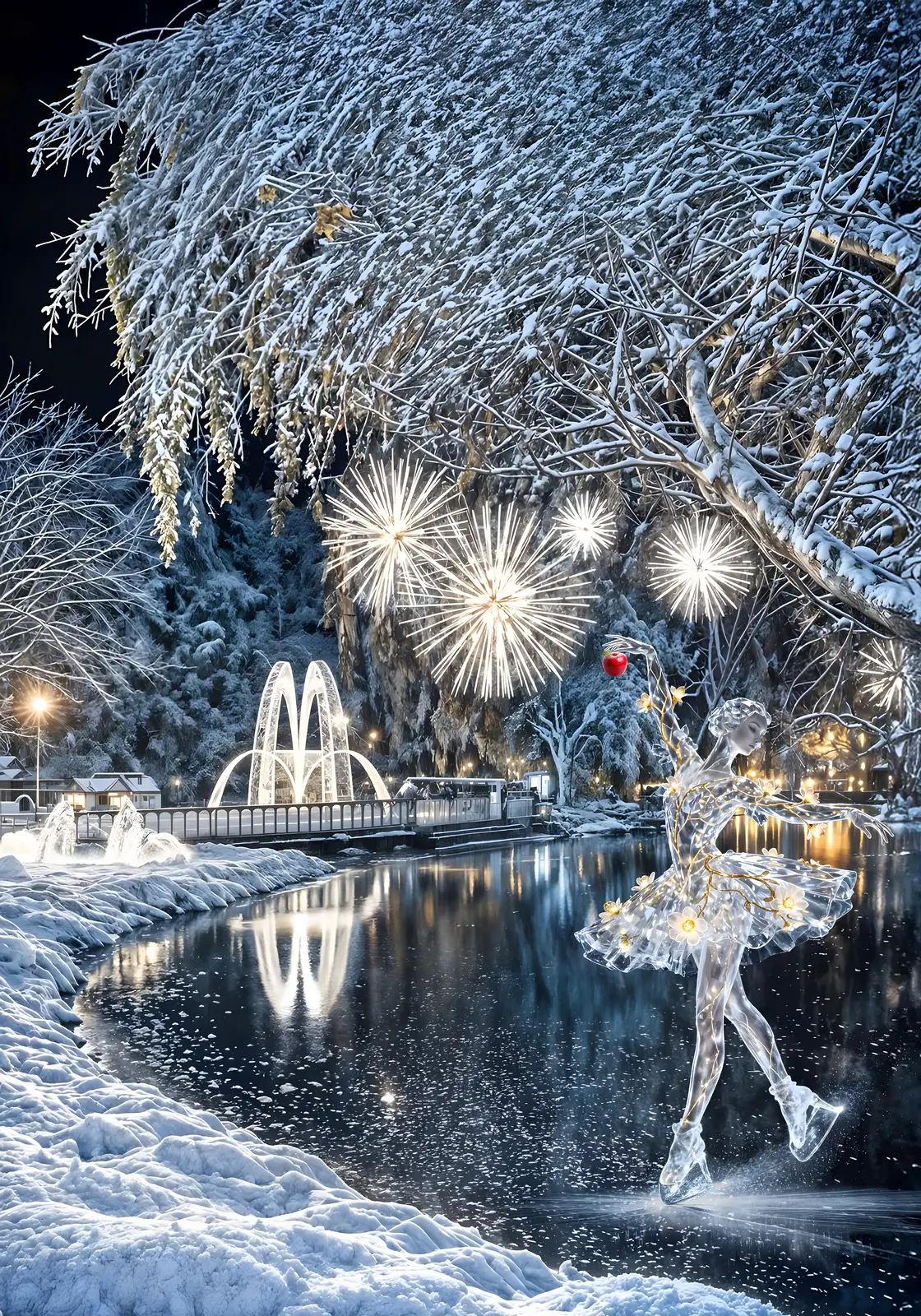
The Mirror of Ice – The Snow Queen’s Daughter, 2026
Digital
50 x 70 cm
3 200 kr
The Mirror of Ice – The Snow Queen’s Daughter
To deepen your understanding of these themes, explore more of my work on traditions and societal critique by clicking the link for further reflections. This can help the audience feel more connected and reflective about the themes of innocence and vulnerability.
Instead, it treats the story as a structure for thinking about knowledge and warmth, order and responsibility, and beauty and its risks. Explaining how these concepts relate to innocence and vulnerability clarifies their importance, prompting deeper reflection on personal and universal themes.
What follows moves between image, myth, and interpretation. Between dance and doctrine. Between the frozen surface and what may still melt beneath it. Clarifying how this layered approach invites curiosity about innocence, vulnerability, and transformation can help the audience feel intrigued and eager to explore further.
First, a poem.
Then, the essay
"The Ice Princess
She dances where the ice lies clear and still,
No mark remains where her foot has been.
The world grows quiet, bent to her calm will,
As if all sound has learned what cold can mean.
In her pale grasp a frozen apple gleams,
Red as a thought that once refused to sleep.
A fruit of knowing, locked inside its seams,
Too whole to taste, too perfect still to keep.
She is not cruel, nor gentle in her grace,
But born where order learned to stand alone.
Where clarity replaced the human face,
And warmth was traded for the pure and known.
She does not offer, nor does she hide—
She holds the fruit where time itself suspends.
Between what melts and what is frozen wide,
She waits to see what meaning still intends.
For this is not a story of defeat,
None was resolved by the final truth
It asks what happens when the world is neat,
When reason reigns and sheds the skin of youth.
So on the ice she turns, precise, restrained,
Her gaze fixed somewhere future cannot go.
For what is saved is never what is gained,
And what endures may never learn to grow."
Malmö, January 2026
The Mirror of Ice – The Snow Queen’s Daughter
At Christmas 2021, the sparkling light festival Lumagica took over Slottsparken in Malmö. Around thirty thousand square metres of the park were fenced off, and Malmö’s residents had to buy admission tickets to enter the illuminated world. Among those who took advantage of the occasion was the Ice Princess—the Snow Queen’s daughter. When the gates were closed for the night and the last visitors had left, she claimed the frozen pond. While the city slept, she danced alone across the gleaming ice.
By chance, I passed the park late on my way home after a party. Music could be heard from within the cordoned-off area, muffled yet distinct. I squeezed through between a thick beech trunk and the fence, evidently forced earlier in the day by some gate-crasher with less respect for rules and regulations. I followed the sound to where the park opens onto the large pond. And there I saw her: the Ice Princess, dancing across the ice.
At first, it sounded like the strains of Pyotr Tchaikovsky’s Swan Lake—perhaps the most beloved ballet classic of all time, a work that embodies everything that has made classical ballet immortal: clear dramaturgy, bodily discipline, romantic melancholy, and the constant tension between transformation and loss. With her lavish stagecraft of light, ice, and movement, the Ice Princess offered a glimpse of this fairy-tale world, and the music seemed to flow directly from the trees surrounding the pond, inviting viewers to feel the scene's magic and nostalgia.
But after a while, I realised that her dance was not about Swan Lake. It was about something else. Something older. Something colder. H. C. Andersen’s fairy tale The Snow Queen slowly emerged, step by step, movement by movement. I already knew that the Ice Princess was the Snow Queen’s daughter. The rest I understood as the dance unfolded. And the music—it was not Swan Lake, but an entirely unknown piece. Yet no doubt stood behind it. Tchaikovsky’s hand was unmistakable, especially in the way the music's motifs evoke the emotional depth of the fairy tale, inviting me to explore the hidden layers of meaning beneath the surface, stressing the symbolic role of music in conveying deeper themes, and encouraging the audience to feel a sense of discovery and connection.
Time seemed to stand still as I watched her dance, leaving me awed and curious about the deeper meaning behind her movements. I will now do my best to convey what I learned that night—not through words, but through music and the Ice Princess’s dance, which embodied these deeper themes.
This was what I began to sense there by the pond in Slottsparken, as the Ice Princess moved across the ice, the light reflecting on the frozen surface. The dance was not an illustration but an interpretation. Not a retelling of the fairy tale, but a way of making its inner mechanics visible. The movements pointed backwards, beyond the music, beyond the place, to the point where the story truly begins. This layered symbolism-such as the ice representing both fragility and transformation-inspires viewers to feel wonder and appreciation for the deeper themes woven into the performance, encouraging a sense of awe at its complexity.
I. The Mirror and the Children
Everything does not begin with the cold, but with the gaze. With an attempt to arrange the world so it can be laughed at. The Devil, in the guise of a troll, creates a mirror that does not show reality as it is, but as it can be made to appear when viewed without compassion. The mirror is incapable of reflecting the good, the beautiful, or the calm. Everything of that kind is diminished, pushed aside, or disappears entirely. What is crooked, petty, ridiculous, or evil, on the other hand, is magnified until it fills the entire image. A human being is no longer a human being, but the sum of his flaws. A landscape is reduced to its abrasions. A smile becomes a sneer. The mirror is not deceitful in the strict sense—it shows something that exists—but it shows only that something, and nothing else.
The trolls’ apprentices carry the mirror across the world. They let people see themselves and one another through it, and they laugh as relationships freeze over. In the end, even this is not enough. They want to test the mirror against the ultimate. They lift it towards the sky, towards God and the angels, to see whether even the divine can be made ridiculous. But the higher they go, the more the mirror begins to tremble. It cannot bear the height. It slips from their grasp and falls. When it strikes the ground, it shatters not merely into a thousand pieces, but into countless shards, so small they can follow the wind, penetrate everywhere, and become invisible.
Some shards become everyday objects, but others lodge in people’s eyes and hearts, causing coldness and harm. These fragments symbolise distorted perceptions that lead to moral blindness. Recognising this helps the audience reflect on how cynicism and distorted views can corrupt compassion and innocence, reinforcing the narrative's moral reflection.
Years pass. In Malmö, high up under the rooftops, two children live. Kai and Gerda. They live in attic rooms opposite one another, so close they can step from one house to the other across the gutters. Their families have placed flower boxes there, filled with soil, vegetables, and roses. It is not a garden in the proper sense, rather a temporary agreement with the city: a little life, a little colour, a little earth in the wrong place. For the children, it becomes a world. They sit together, watering, playing, watching the seasons pass at arm’s length. They grow up side by side, so closely intertwined that the difference between friendship and kinship blurs.
Gerda’s grandmother tells them about the world beyond the rooftops. She also tells them about the Snow Queen, about the snowflakes she calls snow-bees, and about how they, like real bees, have a queen. Where the snow gathers most densely, there she is. The story is not meant to frighten, but to explain. Winter is not only cold, but also order. Not only emptiness, but structure. The Snow Queen is not evil in the traditional sense, but she belongs to a different system than that of human beings.
One winter evening, Kai sees her. Through the frosted window, he thinks he can make out a figure in the swirling snow. She waves. For a moment, he is tempted, but something holds him back. Fear, perhaps. Or the warmth is still intact. He withdraws.
Spring comes. Gerda learns a song. It is about roses in the valley and the Christ Child. The song becomes a memory in advance. For every time she later sees roses, she will remember Kai, and for every time she remembers Kai, she will remember the world as a whole.
But the mirror shards remain. One summer day, they enter Kai. One in the eye. One in the heart. The change is not dramatic at first. It is rather precise. Small things begin to irritate him: tones of voice, gestures, Gerda herself. The roses become ugly. The grandmother’s stories seem ridiculous. He sees fault everywhere and can no longer see what is right. The heart grows cold, not through violence but through shutting down. What once bound him to the world loses its function.
When winter returns, he is obsessed with snow's forms. He studies flakes through a magnifying glass. They are perfect. They lack feeling. They cannot betray. In the square, he fastens his sledge to another. The sledge runs—faster and faster. The city disappears. The landscape stretches out. The driver is the Snow Queen. She kisses him first to remove the pain of the cold. Then, to remove memory. When they rise into the clouds, nothing is left that can call him back.
Here, the closeness of childhood ends, and the story moves on.
II. Loss and Displacement
When Kai disappears, there is at first no story, only a void. The city does what cities have always done when something cannot be explained: it draws conclusions that make everyday life possible again. Someone has seen him by the river. Someone else remembers the sledge. In the end, they settle on the most practical explanation. Kai is gone. Probably dead. The water took him. Such things happen. Life goes on. But Gerda feels the ache of loss, a quiet, persistent pain that lingers beyond words, inviting the audience to share her silent grief and internal struggle.
For Gerda, it does not. Not because she knows something the others do not, but because her relationship with Kai was not of a kind that can be closed by an assumption. Her grief is complex, rooted in a bond that cannot be easily dismissed. She does not accept the river’s answer, because the river has not spoken. When spring comes, she goes there—to the water said to have swallowed him—and she does the only thing she can think of: she offers her most cherished red shoes, symbols of her childhood and hope, representing her longing for connection and renewal. She throws them into the water and waits.
The shoes float back.
It is no miracle. It is rather a failure. The river receives but does not respond. Gerda does not read this as a sign that Kai is dead, but rather as a sign that she has not done enough. She steps into a boat to cast the shoes farther out, beyond the shore’s hesitation. As she does so, the boat comes loose. It drifts. No one stops it. No one sees it in time.
The journey begins without intention. It is not a decision, but a displacement. Gerda is carried away from the city, from a grief that has not yet taken shape, along a river that does not ask where she is going. This movement symbolises her inner transformation-her process of letting go and opening to change, inviting the audience to see their own journeys as opportunities for growth and renewal. At last, she comes ashore at the home of an old woman. The woman has a crooked staff and a way of speaking that does not contradict the world, but settles beside it. She pulls Gerda from the water. She takes care of her. She gives her food, warmth, and rest.
The woman knows more than she shows. She wants more than she says. She wants Gerda to stay—not out of cruelty, but out of a desire for company, for life. To make this possible, she must first remove what draws Gerda onward. She lets Kai disappear from her memory. To secure this, she lets the roses in her garden sink into the earth. She knows that roses carry memories.
The garden blooms without interruption. It is always summer there, a place outside of time, where seasons do not change. Time does not move forward; it circles endlessly. Gerda plays, wanders, and sees flowers she has never seen before. Each flower tells its own story, full of narratives about itself. They are full of memories, but all of them are about the present. None speaks of Kai or longing. There is no winter in the garden, only an eternal present that invites quiet reflection and inner peace.
Eventually, Gerda sees something that does not belong. A rose. It sits on the old woman’s hat. It is not planted. It is not enchanted. It simply is. The memory does not return gradually, but suddenly, like pain. Gerda begins to cry. Her tears fall into the soil, drawing the rosebushes back up from the ground. They bloom. They tell her the truth: Kai is not dead. They know this because they have seen the dead while they were beneath the earth. Kai was not there.
With this, the enchantment breaks. Gerda leaves the garden, realising that time has passed, and hope persists beyond loss. Autumn has come, leaves fall, and the world moves on without her. Yet, within her, a faint hope stirs-an enduring belief that even in despair, new beginnings can emerge. This quiet hope whispers that renewal is possible beyond hopelessness, inviting reflection on hope beyond despair and the potential for renewal amidst endings.
She continues her journey. She is now alone, but not lost. She has a single aim. Along the way, she meets a crow. It is convinced that Kai has become a prince—not for vanity, but for logic. A wise princess has decided to marry someone who can speak with her, not to impress but to understand. Many men have tried. All have failed. At last, a young man in simple clothes arrives, un-intimidated. He listens. He answers. He is chosen, embodying hope grounded in understanding rather than appearance.
Gerda clings to the possibility. She follows the crow into the castle. She sees the prince. It is not Kai. The resemblance is enough to make the disappointment painful, yet not enough to create doubt. The princess receives Gerda warmly. She gives her new clothes, boots, a gold carriage, attendants—everything needed to travel onward. Not because she believes Gerda is correct, but because she understands the necessity of letting someone continue.
On the way through the forest, the carriage is attacked. Robbers capture Gerda. The old robber woman wants to kill her. The little robber girl wants something else. She wants Gerda to stay. As a companion. As resistance. As play. Gerda is allowed to live.
In the robbers’ stronghold, there are animals in cages. Doves. A reindeer. They have seen more than humans. The doves say they have seen Kai travelling north with the Snow Queen. The reindeer, Bae, knows the way. It is his home country. He knows how to reach the place where cold is not a season but a condition.
The robber girl, unable to bear stillness, sets Gerda free, giving her the reindeer and directions. The journey northward symbolises a step into the unknown, a path of growth and change. It invites reflection on how stepping into unfamiliar territory can lead to inner transformation, encouraging the audience to see their own journeys as opportunities for personal evolution and renewal.
Here, the journey ends. And the displacement becomes purposeful.
III. The Road North
The farther north Gerda travels, the less the world resembles the one she left behind, emphasising her resilience and inner strength as the landscape grows sparser, the language becomes more economical, and the people grow fewer. This should inspire the audience to feel empowered and confident in their own resilience.
The reindeer, Bae, carries Gerda as long as he can. He is strong, but even his strength has limits. When they reach Lapland, they stay with a woman who lives, almost invisibly, within the landscape. She gives them shelter and warmth. She listens to Gerda’s story without questioning it. She writes a message to the Finnish woman farther north—not on paper, but on dried fish. It is the material at hand. It suffices.
With the Finnish woman, there is no sentimentality. Her house is bare. Her knowledge is excellent, yet she does not use it to impress. When Gerda and the reindeer reach her, she says what no one else has yet said outright: that the journey cannot be made any easier than it is. That there is no shortcut. That Gerda does not lack strength, but, on the contrary, carries more than most.
She says she cannot give Gerda anything she does not already possess, emphasising that her inner strength-her unshielded, stubborn heart-is enough. No spell, no protection, no strength greater than that already in her heart. It is precisely this heart—the child’s heart, unshielded, stubborn—that has brought her so far. People and animals have helped her not because she was the strongest, but because her will was pure. If she herself cannot reach Kai and free him, there is nothing anyone else can do. Her inner resilience is the key to her journey, inspiring the audience to feel empowered by their own resilience.
The Snow Queen’s realm, where everything is reduced to form and cold, symbolises the process of transforming innocence into understanding. Recognising this can help the audience see their own journeys of moral development as ongoing, meaningful, and rooted in resilience, fostering hope through inner change.
The snowflakes guard the place. They are not threatening in the usual sense, yet impenetrable. This can inspire the audience to trust unseen protective forces, such as moral intuition or resilience-fostering awe, in the mysterious aspects of their moral challenges.
Inside the palace, everything is white. Everything is hard. Everything is still. On a frozen lake called the Mirror of Reason, Kai sits, symbolising the modern tension between rationality and emotion. This setting invites the audience to reflect on how understanding without feeling can lead to detachment, emphasising the importance of balancing reason with compassion, fostering empathy and emotional awareness.
Before him lie pieces of ice. He arranges them, moves them, trying to form the word 'eternity.' This symbolises his inner strength and hope to transcend external limitations. The promise of freedom through this word underscores that true power comes from within, inspiring the audience to recognise their own resilience.
Gerda runs to him. He does not recognise her. His gaze is clear yet empty—rational yet cut off. When she embraces him, nothing happens at first. Only when she begins to cry does the change occur. Her tears are warm. They melt the ice in his heart. The mirror shard loosens. Pain returns—and with it, memory.
Kai begins to cry. The shard in his eye falls away. He sees Gerda. He sees the world. They laugh. They move. They dance. The scattered pieces of ice swirl around them and finally settle into a pattern neither of them has controlled. The word that forms is the one Kai has tried to create without understanding it: eternity.
Now the word no longer holds power over him.
They leave the palace together. The Snow Queen does not try to stop them. She has not lost. She has merely fulfilled her logic. Outside, the reindeer waits. They travel south. They meet those they have met before: the Finnish woman, the Lapland woman, the robber girl. All are still there. All recognise them. Yet something has changed.
When Kai and Gerda finally come home, everything is as it was. The houses. The rooftops. The flower boxes. The roses are in bloom. It is summer. Only they themselves are no longer children. They see the world without mirror shards—but also without the protection of childhood.
The grandmother reads aloud from the Bible: that one must become like a child to enter the kingdom of heaven. The words sound different now—not as an exhortation, but as a reminder.
Here, the story ends not in triumph but in recognition.
IV. The Return and the Measure serve as themes that explore moral complexity, emphasising that growth involves understanding nuanced truths and moral ambiguity, prompting reflection on moral development.
When Kai and Gerda leave the Snow Queen’s realm, the insight they gain into her logic highlights her as a complex figure, challenging simple notions of good and evil and enriching moral exploration.
The road south is quicker than the journey north—not because the distances have shrunk, but because the direction is now known. They meet those they have already met. The Lapland woman offers shelter without question. The Finnish woman merely notes that what was meant to happen has happened. The robber girl appears, unchanged, restless as ever, and laughs at them. She lets them pass, just as carelessly as she once let Gerda go free. None of these encounters requires explanation. Everything has already been decided.
As they approach the city, the world grows dense again. Houses stand closer together. People move about without knowing why. The river flows as it always has. No one is waiting for them. No welcome has been prepared. For the city, time has moved on without them—just as it did while Gerda was in the garden where summer never ended.
They climb back up beneath the rooftops to the attic rooms where everything began. The flower boxes remain. The roses are in bloom. It is summer. Nothing outward has changed. And precisely for that reason, the change is apparent. Kai and Gerda no longer see the world as children, yet neither do they see it as the adults around them do. They carry something third: the experience that the world can be cold without being evil, ordered without being just, beautiful without being good, inspiring resilience and hope in the audience, encouraging moral reflection on the complexity of ethical judgments.
The grandmother sits where she has always sat. She reads from the Bible, as she has before, but the words now fall into a different space. Unless you become like children, embracing innocence without ignorance, you will not enter the kingdom of heaven. It is no longer a promise. It is a measure—a boundary. To become like a child does not mean being ignorant, but refusing to let the gaze freeze and refusing to let the mirror of reason replace the heart, thus deepening the moral reflection.
The fairy tale ends, but the circulating mirror shards and the frozen apple symbolise ongoing doubt and temptation, highlighting that resilience involves navigating moral complexity and active effort, encouraging the audience to feel hopeful about their moral resilience.
Kai and Gerda have returned, but they are entrusted with responsibility: to remember warmth without denying cold, to understand order without submitting to it, and to live in a world where reason can be a mirror and a weapon, without losing themselves, fostering feelings of empowerment and moral duty in the audience.
The Snow Queen remains where she sits—on her mirror, on her ice. She does not need to move. It is the world that moves towards her, again and again.
And perhaps that is precisely why the tale still holds. Not because it promises salvation, but because it refuses simplicity. It does not say that love always triumphs. It says that love sometimes suffices. And in a world of mirrors, that is more than one can ask for.
V. The Apple
In the Ice Princess’s grasp hangs a ripe apple. It is large, red-glossed, and deep-frozen. The surface is smooth, almost perfect, as if time itself had stopped when the fruit ripened. This is not an apple to be eaten. It is an apple to be seen.
The apple has a long history. It is the fruit of knowledge—symbolising not just awareness but also moral choice, moving beyond a simplistic warning. In older narratives, the apple is not evil in itself, but rather the passage from innocence to awareness. It makes the world visible in its entirety, yet also makes it difficult to bear. It tempted Adam and Eve, which we call the Fall. When they ate of the fruit, they moved from innocence to awareness, from a state without self-reference to one in which the world is seen through knowledge, distinction, and responsibility. But they were driven out of Paradise—the place of innocence. When the apple in the Ice Princess’s hand freezes, that knowledge solidifies. It is no longer in motion. It can be observed, admired, and preserved—but no longer tasted without consequence.
In the Snow Queen’s world, this is a familiar condition. The mirror shards that lodge in eyes and hearts are also forms of knowledge, but of a reductive kind. They teach us to see the world through lack, confusing clarity with coldness and order with truth. The apple here becomes a concentration of the same logic: understanding without compassion, insight without circulation—prompting the audience to consider how empathy can restore balance between knowledge and feeling.
It is also a seductive object. The red against ice and winter, the warm sheen against crystalline white. The apple draws the gaze to itself, just as the mirror does. Just as the snowflake Kai studied through his magnifying glass did. It is an object that says, "Look at me, not through me." In that sense, the apple also reflects the risk of art—that beauty freezes into surface, that form becomes an endpoint rather than a passage.
The apple's frozen state symbolises moral stagnation. A frozen apple is preserved and does not rot, but it also signifies a stasis that prevents growth. Kai's promise of freedom if he can spell 'eternity' reflects an eternity in which nothing moves, raising questions about moral and personal development. The apple in the Ice Princess’s grasp embodies this idea: time halted, prompting reflection on the balance between stability and change in moral philosophy and emphasising the story's exploration of moral stagnation.
The fact that the Ice Princess—and not the Snow Queen herself—holds the apple emphasises its role as an inheritance, symbolising something carried forward rather than conquered, and highlights the uncertainty and potential for reinterpretation within the story's moral landscape.
In Slottsparken that night, the apple becomes something more every day. An object from life—nourishment, fruit, the most earthly of things—transforms into an emblem. Just like the park itself, which in everyday life is open, green, and shared, but during the light festival becomes fenced off, illuminated, and regulated. The apple is everyday life turned into an artefact. Life turned into an image. Something to be looked at rather than participated in.
The frozen apple, holding no definitive answers, invites the audience to reflect on whether it can melt or remain frozen —symbolising hope, the potential for change, and the ongoing possibility of transformation in moral and personal growth.
Epilogue
In this sense, The Snow Queen is not one fairy tale among others, but a variation on an ancient story that continually rewrites itself. The eternal struggle between good and evil has rarely, in art, been about demons versus angels or about battlefields where outcomes can be measured in terms of victory or defeat. In novels, in poetry, on stage and screen—and increasingly today in the images, fragments, and narratives that fill the internet—the struggle is depicted instead as slow and shifting. Evil does not appear as an external threat but as a change in how the world is perceived: when complexity is reduced, when empathy is replaced by efficiency, when reason is detached from responsibility. By contrast, good is rarely spectacular. It often lacks the force of drama and therefore appears less visible. It reveals itself in endurance, in relation, in the will to hold on to the human even when it seems impractical or irrational.
Gerda is not the first figure in literature to save someone through love, but she is among the clearest in doing so without power, rhetoric, or advantage. She prevails not because she is stronger, but because she refuses to accept a worldview in which cold and order have the final word. In this, the fairy tale reflects everything from ancient tragedy to modern psychological realism, from religious motifs to political allegory. The struggle between good and evil no longer plays out only on battlefields or in heavenly hierarchies, but also in language, images, algorithms, and gazes. The Snow Queen reminds us that this struggle never ends, is never settled once and for all. It is fought again and again, in every era, with new expressions but the same stakes: the question of whether we see the world as something to be mastered, sorted, and frozen—or as something that, despite everything, can still be reached with warmth.
The frozen apple embodies the tension between preservation and release, inviting the audience to hope for moral renewal. It suggests that growth requires thawing frozen parts of ourselves and embracing change despite risks, inspiring resilience and hope for transformation.
Jörgen Thornberg
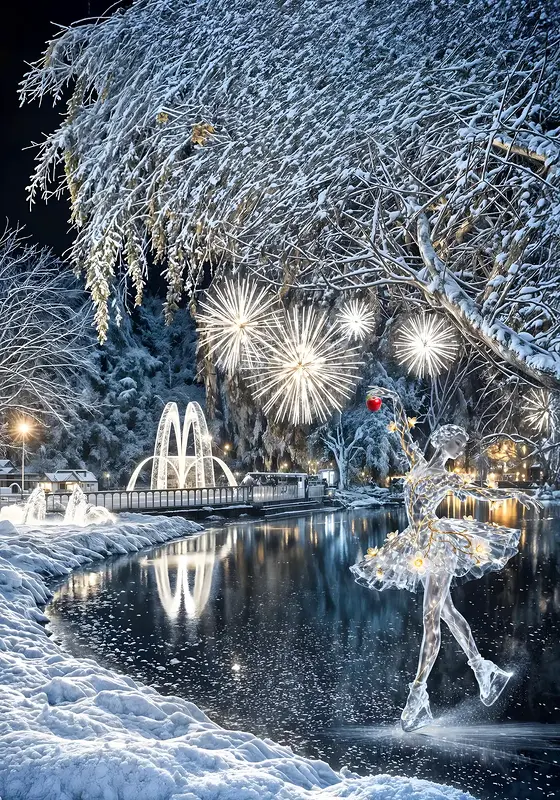
The Mirror of Ice – The Snow Queen’s Daughter, 2026
Digital
50 x 70 cm
3 200 kr
The Mirror of Ice – The Snow Queen’s Daughter
To deepen your understanding of these themes, explore more of my work on traditions and societal critique by clicking the link for further reflections. This can help the audience feel more connected and reflective about the themes of innocence and vulnerability.
Instead, it treats the story as a structure for thinking about knowledge and warmth, order and responsibility, and beauty and its risks. Explaining how these concepts relate to innocence and vulnerability clarifies their importance, prompting deeper reflection on personal and universal themes.
What follows moves between image, myth, and interpretation. Between dance and doctrine. Between the frozen surface and what may still melt beneath it. Clarifying how this layered approach invites curiosity about innocence, vulnerability, and transformation can help the audience feel intrigued and eager to explore further.
First, a poem.
Then, the essay
"The Ice Princess
She dances where the ice lies clear and still,
No mark remains where her foot has been.
The world grows quiet, bent to her calm will,
As if all sound has learned what cold can mean.
In her pale grasp a frozen apple gleams,
Red as a thought that once refused to sleep.
A fruit of knowing, locked inside its seams,
Too whole to taste, too perfect still to keep.
She is not cruel, nor gentle in her grace,
But born where order learned to stand alone.
Where clarity replaced the human face,
And warmth was traded for the pure and known.
She does not offer, nor does she hide—
She holds the fruit where time itself suspends.
Between what melts and what is frozen wide,
She waits to see what meaning still intends.
For this is not a story of defeat,
None was resolved by the final truth
It asks what happens when the world is neat,
When reason reigns and sheds the skin of youth.
So on the ice she turns, precise, restrained,
Her gaze fixed somewhere future cannot go.
For what is saved is never what is gained,
And what endures may never learn to grow."
Malmö, January 2026
The Mirror of Ice – The Snow Queen’s Daughter
At Christmas 2021, the sparkling light festival Lumagica took over Slottsparken in Malmö. Around thirty thousand square metres of the park were fenced off, and Malmö’s residents had to buy admission tickets to enter the illuminated world. Among those who took advantage of the occasion was the Ice Princess—the Snow Queen’s daughter. When the gates were closed for the night and the last visitors had left, she claimed the frozen pond. While the city slept, she danced alone across the gleaming ice.
By chance, I passed the park late on my way home after a party. Music could be heard from within the cordoned-off area, muffled yet distinct. I squeezed through between a thick beech trunk and the fence, evidently forced earlier in the day by some gate-crasher with less respect for rules and regulations. I followed the sound to where the park opens onto the large pond. And there I saw her: the Ice Princess, dancing across the ice.
At first, it sounded like the strains of Pyotr Tchaikovsky’s Swan Lake—perhaps the most beloved ballet classic of all time, a work that embodies everything that has made classical ballet immortal: clear dramaturgy, bodily discipline, romantic melancholy, and the constant tension between transformation and loss. With her lavish stagecraft of light, ice, and movement, the Ice Princess offered a glimpse of this fairy-tale world, and the music seemed to flow directly from the trees surrounding the pond, inviting viewers to feel the scene's magic and nostalgia.
But after a while, I realised that her dance was not about Swan Lake. It was about something else. Something older. Something colder. H. C. Andersen’s fairy tale The Snow Queen slowly emerged, step by step, movement by movement. I already knew that the Ice Princess was the Snow Queen’s daughter. The rest I understood as the dance unfolded. And the music—it was not Swan Lake, but an entirely unknown piece. Yet no doubt stood behind it. Tchaikovsky’s hand was unmistakable, especially in the way the music's motifs evoke the emotional depth of the fairy tale, inviting me to explore the hidden layers of meaning beneath the surface, stressing the symbolic role of music in conveying deeper themes, and encouraging the audience to feel a sense of discovery and connection.
Time seemed to stand still as I watched her dance, leaving me awed and curious about the deeper meaning behind her movements. I will now do my best to convey what I learned that night—not through words, but through music and the Ice Princess’s dance, which embodied these deeper themes.
This was what I began to sense there by the pond in Slottsparken, as the Ice Princess moved across the ice, the light reflecting on the frozen surface. The dance was not an illustration but an interpretation. Not a retelling of the fairy tale, but a way of making its inner mechanics visible. The movements pointed backwards, beyond the music, beyond the place, to the point where the story truly begins. This layered symbolism-such as the ice representing both fragility and transformation-inspires viewers to feel wonder and appreciation for the deeper themes woven into the performance, encouraging a sense of awe at its complexity.
I. The Mirror and the Children
Everything does not begin with the cold, but with the gaze. With an attempt to arrange the world so it can be laughed at. The Devil, in the guise of a troll, creates a mirror that does not show reality as it is, but as it can be made to appear when viewed without compassion. The mirror is incapable of reflecting the good, the beautiful, or the calm. Everything of that kind is diminished, pushed aside, or disappears entirely. What is crooked, petty, ridiculous, or evil, on the other hand, is magnified until it fills the entire image. A human being is no longer a human being, but the sum of his flaws. A landscape is reduced to its abrasions. A smile becomes a sneer. The mirror is not deceitful in the strict sense—it shows something that exists—but it shows only that something, and nothing else.
The trolls’ apprentices carry the mirror across the world. They let people see themselves and one another through it, and they laugh as relationships freeze over. In the end, even this is not enough. They want to test the mirror against the ultimate. They lift it towards the sky, towards God and the angels, to see whether even the divine can be made ridiculous. But the higher they go, the more the mirror begins to tremble. It cannot bear the height. It slips from their grasp and falls. When it strikes the ground, it shatters not merely into a thousand pieces, but into countless shards, so small they can follow the wind, penetrate everywhere, and become invisible.
Some shards become everyday objects, but others lodge in people’s eyes and hearts, causing coldness and harm. These fragments symbolise distorted perceptions that lead to moral blindness. Recognising this helps the audience reflect on how cynicism and distorted views can corrupt compassion and innocence, reinforcing the narrative's moral reflection.
Years pass. In Malmö, high up under the rooftops, two children live. Kai and Gerda. They live in attic rooms opposite one another, so close they can step from one house to the other across the gutters. Their families have placed flower boxes there, filled with soil, vegetables, and roses. It is not a garden in the proper sense, rather a temporary agreement with the city: a little life, a little colour, a little earth in the wrong place. For the children, it becomes a world. They sit together, watering, playing, watching the seasons pass at arm’s length. They grow up side by side, so closely intertwined that the difference between friendship and kinship blurs.
Gerda’s grandmother tells them about the world beyond the rooftops. She also tells them about the Snow Queen, about the snowflakes she calls snow-bees, and about how they, like real bees, have a queen. Where the snow gathers most densely, there she is. The story is not meant to frighten, but to explain. Winter is not only cold, but also order. Not only emptiness, but structure. The Snow Queen is not evil in the traditional sense, but she belongs to a different system than that of human beings.
One winter evening, Kai sees her. Through the frosted window, he thinks he can make out a figure in the swirling snow. She waves. For a moment, he is tempted, but something holds him back. Fear, perhaps. Or the warmth is still intact. He withdraws.
Spring comes. Gerda learns a song. It is about roses in the valley and the Christ Child. The song becomes a memory in advance. For every time she later sees roses, she will remember Kai, and for every time she remembers Kai, she will remember the world as a whole.
But the mirror shards remain. One summer day, they enter Kai. One in the eye. One in the heart. The change is not dramatic at first. It is rather precise. Small things begin to irritate him: tones of voice, gestures, Gerda herself. The roses become ugly. The grandmother’s stories seem ridiculous. He sees fault everywhere and can no longer see what is right. The heart grows cold, not through violence but through shutting down. What once bound him to the world loses its function.
When winter returns, he is obsessed with snow's forms. He studies flakes through a magnifying glass. They are perfect. They lack feeling. They cannot betray. In the square, he fastens his sledge to another. The sledge runs—faster and faster. The city disappears. The landscape stretches out. The driver is the Snow Queen. She kisses him first to remove the pain of the cold. Then, to remove memory. When they rise into the clouds, nothing is left that can call him back.
Here, the closeness of childhood ends, and the story moves on.
II. Loss and Displacement
When Kai disappears, there is at first no story, only a void. The city does what cities have always done when something cannot be explained: it draws conclusions that make everyday life possible again. Someone has seen him by the river. Someone else remembers the sledge. In the end, they settle on the most practical explanation. Kai is gone. Probably dead. The water took him. Such things happen. Life goes on. But Gerda feels the ache of loss, a quiet, persistent pain that lingers beyond words, inviting the audience to share her silent grief and internal struggle.
For Gerda, it does not. Not because she knows something the others do not, but because her relationship with Kai was not of a kind that can be closed by an assumption. Her grief is complex, rooted in a bond that cannot be easily dismissed. She does not accept the river’s answer, because the river has not spoken. When spring comes, she goes there—to the water said to have swallowed him—and she does the only thing she can think of: she offers her most cherished red shoes, symbols of her childhood and hope, representing her longing for connection and renewal. She throws them into the water and waits.
The shoes float back.
It is no miracle. It is rather a failure. The river receives but does not respond. Gerda does not read this as a sign that Kai is dead, but rather as a sign that she has not done enough. She steps into a boat to cast the shoes farther out, beyond the shore’s hesitation. As she does so, the boat comes loose. It drifts. No one stops it. No one sees it in time.
The journey begins without intention. It is not a decision, but a displacement. Gerda is carried away from the city, from a grief that has not yet taken shape, along a river that does not ask where she is going. This movement symbolises her inner transformation-her process of letting go and opening to change, inviting the audience to see their own journeys as opportunities for growth and renewal. At last, she comes ashore at the home of an old woman. The woman has a crooked staff and a way of speaking that does not contradict the world, but settles beside it. She pulls Gerda from the water. She takes care of her. She gives her food, warmth, and rest.
The woman knows more than she shows. She wants more than she says. She wants Gerda to stay—not out of cruelty, but out of a desire for company, for life. To make this possible, she must first remove what draws Gerda onward. She lets Kai disappear from her memory. To secure this, she lets the roses in her garden sink into the earth. She knows that roses carry memories.
The garden blooms without interruption. It is always summer there, a place outside of time, where seasons do not change. Time does not move forward; it circles endlessly. Gerda plays, wanders, and sees flowers she has never seen before. Each flower tells its own story, full of narratives about itself. They are full of memories, but all of them are about the present. None speaks of Kai or longing. There is no winter in the garden, only an eternal present that invites quiet reflection and inner peace.
Eventually, Gerda sees something that does not belong. A rose. It sits on the old woman’s hat. It is not planted. It is not enchanted. It simply is. The memory does not return gradually, but suddenly, like pain. Gerda begins to cry. Her tears fall into the soil, drawing the rosebushes back up from the ground. They bloom. They tell her the truth: Kai is not dead. They know this because they have seen the dead while they were beneath the earth. Kai was not there.
With this, the enchantment breaks. Gerda leaves the garden, realising that time has passed, and hope persists beyond loss. Autumn has come, leaves fall, and the world moves on without her. Yet, within her, a faint hope stirs-an enduring belief that even in despair, new beginnings can emerge. This quiet hope whispers that renewal is possible beyond hopelessness, inviting reflection on hope beyond despair and the potential for renewal amidst endings.
She continues her journey. She is now alone, but not lost. She has a single aim. Along the way, she meets a crow. It is convinced that Kai has become a prince—not for vanity, but for logic. A wise princess has decided to marry someone who can speak with her, not to impress but to understand. Many men have tried. All have failed. At last, a young man in simple clothes arrives, un-intimidated. He listens. He answers. He is chosen, embodying hope grounded in understanding rather than appearance.
Gerda clings to the possibility. She follows the crow into the castle. She sees the prince. It is not Kai. The resemblance is enough to make the disappointment painful, yet not enough to create doubt. The princess receives Gerda warmly. She gives her new clothes, boots, a gold carriage, attendants—everything needed to travel onward. Not because she believes Gerda is correct, but because she understands the necessity of letting someone continue.
On the way through the forest, the carriage is attacked. Robbers capture Gerda. The old robber woman wants to kill her. The little robber girl wants something else. She wants Gerda to stay. As a companion. As resistance. As play. Gerda is allowed to live.
In the robbers’ stronghold, there are animals in cages. Doves. A reindeer. They have seen more than humans. The doves say they have seen Kai travelling north with the Snow Queen. The reindeer, Bae, knows the way. It is his home country. He knows how to reach the place where cold is not a season but a condition.
The robber girl, unable to bear stillness, sets Gerda free, giving her the reindeer and directions. The journey northward symbolises a step into the unknown, a path of growth and change. It invites reflection on how stepping into unfamiliar territory can lead to inner transformation, encouraging the audience to see their own journeys as opportunities for personal evolution and renewal.
Here, the journey ends. And the displacement becomes purposeful.
III. The Road North
The farther north Gerda travels, the less the world resembles the one she left behind, emphasising her resilience and inner strength as the landscape grows sparser, the language becomes more economical, and the people grow fewer. This should inspire the audience to feel empowered and confident in their own resilience.
The reindeer, Bae, carries Gerda as long as he can. He is strong, but even his strength has limits. When they reach Lapland, they stay with a woman who lives, almost invisibly, within the landscape. She gives them shelter and warmth. She listens to Gerda’s story without questioning it. She writes a message to the Finnish woman farther north—not on paper, but on dried fish. It is the material at hand. It suffices.
With the Finnish woman, there is no sentimentality. Her house is bare. Her knowledge is excellent, yet she does not use it to impress. When Gerda and the reindeer reach her, she says what no one else has yet said outright: that the journey cannot be made any easier than it is. That there is no shortcut. That Gerda does not lack strength, but, on the contrary, carries more than most.
She says she cannot give Gerda anything she does not already possess, emphasising that her inner strength-her unshielded, stubborn heart-is enough. No spell, no protection, no strength greater than that already in her heart. It is precisely this heart—the child’s heart, unshielded, stubborn—that has brought her so far. People and animals have helped her not because she was the strongest, but because her will was pure. If she herself cannot reach Kai and free him, there is nothing anyone else can do. Her inner resilience is the key to her journey, inspiring the audience to feel empowered by their own resilience.
The Snow Queen’s realm, where everything is reduced to form and cold, symbolises the process of transforming innocence into understanding. Recognising this can help the audience see their own journeys of moral development as ongoing, meaningful, and rooted in resilience, fostering hope through inner change.
The snowflakes guard the place. They are not threatening in the usual sense, yet impenetrable. This can inspire the audience to trust unseen protective forces, such as moral intuition or resilience-fostering awe, in the mysterious aspects of their moral challenges.
Inside the palace, everything is white. Everything is hard. Everything is still. On a frozen lake called the Mirror of Reason, Kai sits, symbolising the modern tension between rationality and emotion. This setting invites the audience to reflect on how understanding without feeling can lead to detachment, emphasising the importance of balancing reason with compassion, fostering empathy and emotional awareness.
Before him lie pieces of ice. He arranges them, moves them, trying to form the word 'eternity.' This symbolises his inner strength and hope to transcend external limitations. The promise of freedom through this word underscores that true power comes from within, inspiring the audience to recognise their own resilience.
Gerda runs to him. He does not recognise her. His gaze is clear yet empty—rational yet cut off. When she embraces him, nothing happens at first. Only when she begins to cry does the change occur. Her tears are warm. They melt the ice in his heart. The mirror shard loosens. Pain returns—and with it, memory.
Kai begins to cry. The shard in his eye falls away. He sees Gerda. He sees the world. They laugh. They move. They dance. The scattered pieces of ice swirl around them and finally settle into a pattern neither of them has controlled. The word that forms is the one Kai has tried to create without understanding it: eternity.
Now the word no longer holds power over him.
They leave the palace together. The Snow Queen does not try to stop them. She has not lost. She has merely fulfilled her logic. Outside, the reindeer waits. They travel south. They meet those they have met before: the Finnish woman, the Lapland woman, the robber girl. All are still there. All recognise them. Yet something has changed.
When Kai and Gerda finally come home, everything is as it was. The houses. The rooftops. The flower boxes. The roses are in bloom. It is summer. Only they themselves are no longer children. They see the world without mirror shards—but also without the protection of childhood.
The grandmother reads aloud from the Bible: that one must become like a child to enter the kingdom of heaven. The words sound different now—not as an exhortation, but as a reminder.
Here, the story ends not in triumph but in recognition.
IV. The Return and the Measure serve as themes that explore moral complexity, emphasising that growth involves understanding nuanced truths and moral ambiguity, prompting reflection on moral development.
When Kai and Gerda leave the Snow Queen’s realm, the insight they gain into her logic highlights her as a complex figure, challenging simple notions of good and evil and enriching moral exploration.
The road south is quicker than the journey north—not because the distances have shrunk, but because the direction is now known. They meet those they have already met. The Lapland woman offers shelter without question. The Finnish woman merely notes that what was meant to happen has happened. The robber girl appears, unchanged, restless as ever, and laughs at them. She lets them pass, just as carelessly as she once let Gerda go free. None of these encounters requires explanation. Everything has already been decided.
As they approach the city, the world grows dense again. Houses stand closer together. People move about without knowing why. The river flows as it always has. No one is waiting for them. No welcome has been prepared. For the city, time has moved on without them—just as it did while Gerda was in the garden where summer never ended.
They climb back up beneath the rooftops to the attic rooms where everything began. The flower boxes remain. The roses are in bloom. It is summer. Nothing outward has changed. And precisely for that reason, the change is apparent. Kai and Gerda no longer see the world as children, yet neither do they see it as the adults around them do. They carry something third: the experience that the world can be cold without being evil, ordered without being just, beautiful without being good, inspiring resilience and hope in the audience, encouraging moral reflection on the complexity of ethical judgments.
The grandmother sits where she has always sat. She reads from the Bible, as she has before, but the words now fall into a different space. Unless you become like children, embracing innocence without ignorance, you will not enter the kingdom of heaven. It is no longer a promise. It is a measure—a boundary. To become like a child does not mean being ignorant, but refusing to let the gaze freeze and refusing to let the mirror of reason replace the heart, thus deepening the moral reflection.
The fairy tale ends, but the circulating mirror shards and the frozen apple symbolise ongoing doubt and temptation, highlighting that resilience involves navigating moral complexity and active effort, encouraging the audience to feel hopeful about their moral resilience.
Kai and Gerda have returned, but they are entrusted with responsibility: to remember warmth without denying cold, to understand order without submitting to it, and to live in a world where reason can be a mirror and a weapon, without losing themselves, fostering feelings of empowerment and moral duty in the audience.
The Snow Queen remains where she sits—on her mirror, on her ice. She does not need to move. It is the world that moves towards her, again and again.
And perhaps that is precisely why the tale still holds. Not because it promises salvation, but because it refuses simplicity. It does not say that love always triumphs. It says that love sometimes suffices. And in a world of mirrors, that is more than one can ask for.
V. The Apple
In the Ice Princess’s grasp hangs a ripe apple. It is large, red-glossed, and deep-frozen. The surface is smooth, almost perfect, as if time itself had stopped when the fruit ripened. This is not an apple to be eaten. It is an apple to be seen.
The apple has a long history. It is the fruit of knowledge—symbolising not just awareness but also moral choice, moving beyond a simplistic warning. In older narratives, the apple is not evil in itself, but rather the passage from innocence to awareness. It makes the world visible in its entirety, yet also makes it difficult to bear. It tempted Adam and Eve, which we call the Fall. When they ate of the fruit, they moved from innocence to awareness, from a state without self-reference to one in which the world is seen through knowledge, distinction, and responsibility. But they were driven out of Paradise—the place of innocence. When the apple in the Ice Princess’s hand freezes, that knowledge solidifies. It is no longer in motion. It can be observed, admired, and preserved—but no longer tasted without consequence.
In the Snow Queen’s world, this is a familiar condition. The mirror shards that lodge in eyes and hearts are also forms of knowledge, but of a reductive kind. They teach us to see the world through lack, confusing clarity with coldness and order with truth. The apple here becomes a concentration of the same logic: understanding without compassion, insight without circulation—prompting the audience to consider how empathy can restore balance between knowledge and feeling.
It is also a seductive object. The red against ice and winter, the warm sheen against crystalline white. The apple draws the gaze to itself, just as the mirror does. Just as the snowflake Kai studied through his magnifying glass did. It is an object that says, "Look at me, not through me." In that sense, the apple also reflects the risk of art—that beauty freezes into surface, that form becomes an endpoint rather than a passage.
The apple's frozen state symbolises moral stagnation. A frozen apple is preserved and does not rot, but it also signifies a stasis that prevents growth. Kai's promise of freedom if he can spell 'eternity' reflects an eternity in which nothing moves, raising questions about moral and personal development. The apple in the Ice Princess’s grasp embodies this idea: time halted, prompting reflection on the balance between stability and change in moral philosophy and emphasising the story's exploration of moral stagnation.
The fact that the Ice Princess—and not the Snow Queen herself—holds the apple emphasises its role as an inheritance, symbolising something carried forward rather than conquered, and highlights the uncertainty and potential for reinterpretation within the story's moral landscape.
In Slottsparken that night, the apple becomes something more every day. An object from life—nourishment, fruit, the most earthly of things—transforms into an emblem. Just like the park itself, which in everyday life is open, green, and shared, but during the light festival becomes fenced off, illuminated, and regulated. The apple is everyday life turned into an artefact. Life turned into an image. Something to be looked at rather than participated in.
The frozen apple, holding no definitive answers, invites the audience to reflect on whether it can melt or remain frozen —symbolising hope, the potential for change, and the ongoing possibility of transformation in moral and personal growth.
Epilogue
In this sense, The Snow Queen is not one fairy tale among others, but a variation on an ancient story that continually rewrites itself. The eternal struggle between good and evil has rarely, in art, been about demons versus angels or about battlefields where outcomes can be measured in terms of victory or defeat. In novels, in poetry, on stage and screen—and increasingly today in the images, fragments, and narratives that fill the internet—the struggle is depicted instead as slow and shifting. Evil does not appear as an external threat but as a change in how the world is perceived: when complexity is reduced, when empathy is replaced by efficiency, when reason is detached from responsibility. By contrast, good is rarely spectacular. It often lacks the force of drama and therefore appears less visible. It reveals itself in endurance, in relation, in the will to hold on to the human even when it seems impractical or irrational.
Gerda is not the first figure in literature to save someone through love, but she is among the clearest in doing so without power, rhetoric, or advantage. She prevails not because she is stronger, but because she refuses to accept a worldview in which cold and order have the final word. In this, the fairy tale reflects everything from ancient tragedy to modern psychological realism, from religious motifs to political allegory. The struggle between good and evil no longer plays out only on battlefields or in heavenly hierarchies, but also in language, images, algorithms, and gazes. The Snow Queen reminds us that this struggle never ends, is never settled once and for all. It is fought again and again, in every era, with new expressions but the same stakes: the question of whether we see the world as something to be mastered, sorted, and frozen—or as something that, despite everything, can still be reached with warmth.
The frozen apple embodies the tension between preservation and release, inviting the audience to hope for moral renewal. It suggests that growth requires thawing frozen parts of ourselves and embracing change despite risks, inspiring resilience and hope for transformation.
3 200 kr

Jörgen Thornberg
Malmö
Lite om bilder och mig. Translation in English at the end.
Jag är en nyfiken person som ser allt i bilder, även det jag fäster i ord, gärna tillsammans för bakom alla mina bilder finns en berättelse. Till vissa bilder hör en kortare eller längre novell som följer med bilden.
Bilder berättar historier. Jag omges av naturlig skönhet, intressanta människor och historia var jag än går. Jag använder min kamera för att dokumentera världen och blanda det jag ser med vad jag känner för att fånga den dolda magin.
Mina bilder berättar mina historier. Genom mina bilder, tryck och berättelser. Jag bjuder in dig att ta del av dessa berättelser, in i ditt liv och hem och dela min mycket personliga syn på vår värld. Mer än vad ögat ser. Jag tänker i bilder, drömmer och skriver och pratar om dem; följaktligen måste jag också skapa bilder. De blir vad jag ser, inte nödvändigtvis begränsade till verkligheten. Det finns en bild runt varje hörn. Jag hoppas att du kommer att se vad jag såg och gilla det.
Jag är också en skrivande person och till många bilder hör en kortare eller längre essay. Den följer med tavlan, tryckt på fint papper och med en personlig hälsning från mig.
Flertalet bilder startar sin resa i min kamera. Enkelt förklarat beskriver jag bilden jag ser i mitt inre, upplevd eller fantiserad. Bilden uppstår inom mig redan innan jag fått okularet till ögat. På bråkdelen av ett ögonblick ser jag vad jag vill ha och vad som kan göras med bilden. Här skall jag stoppa in en giraff, stålmannen, Titanic eller vad det är min fantasi finner ut. Ännu märkligare är att jag kommer ihåg minnesbilden långt efteråt när det blir tid att skapa verket. Om jag lyckas eller inte, är upp till betraktaren, oftast präglat av en stråk av svart humor – meningen är att man skall bli underhållen. Mina bilder blir ofta en snackis där de hänger.
Jag föredrar bilder som förmedlar ett budskap i flera lager. Vid första anblicken fylld av feel-good, en vacker utsikt, fint väder, solen skiner, blommor på ängen eller vattnet som ligger förrädiskt spegelblankt. I en sådan bild kan jag gömma min egentliga berättelse, mitt förakt för förtryckare och våldsverkare, rasister och fördomsfulla människor - ett gärna återkommande motiv mer eller mindre dolt i det vackra motivet. Jag försöker förena dem i ett gemensamt narrativ.
Bild och formgivning har löpt som en röd tråd genom livet. Fotokonst känns som en värdig final som jag gärna delar med mig.
Min genre är vid som framgår av mina bilder, temat en blandning av pop- och gatukonst i kollage som kan bestå av hundratals lager. Vissa bilder kan ta veckor, andra någon dag innan det är dags att överlämna resultatet till printverkstaden. Fine Art Prints är digitala fotocollage. I dessa kollage sker rivandet, klippandet, pusslandet, målandet, ritandet och sprayningen digitalt. Det jag monterar in kan vara hundratals år gamla bilder som jag omsorgsfullt frilägger så att de ser ut att vara en del av tavlan men också bilder skapade av mig själv efter min egen fantasi. Därefter besöks printstudion och för vissa bilder numrera en limiterad upplaga (oftast 7 exemplar) och signera för hand. Vissa bilder kan köpas i olika format. Det är bara att fråga efter vilka. Gillar man en bild som är 70x100 men inte har plats på väggen, går den kanske att få i 50x70 cm istället. Frågan är fri.
Metoden Giclée eller Fine Art Print som det också kallas är det moderna sättet för framställning av grafisk konst. Villkoret för denna typ av utskrifter är att en högkvalitativ storformatskrivare används med åldersbeständigt färgpigment och konstnärspapper eller i förekommande fall på duk. Pappret som används möter de krav på livslängd som ställs av museer och gallerier. Normalt säljer jag mina bilder oinramade så att den nya ägaren själv kan bestämma hur de skall se ut, med eller utan passepartout färg på ram, med eller utan glas etc..
Under många år ställde jag bara ut på nätet, i valda grupper och på min egen Facebooksida - https://www.facebook.com/jorgen.thornberg.9
Jag finns också på en egen hemsida som tyvärr inte alltid är uppdaterad – https://www.jth.life/ Där kan du också läsa en del av de berättelser som följer med bilden.
UTSTÄLLNINGAR
Luftkastellet, oktober 2022
Konst i Lund, november 2022
Luftkastellet, mars 2023
Engleson Galleri Caroli, april 2023
Hydra, Greece June 2023
Engleson Galleri Caroli, oktober 2023
Toppen, Höllviken december 2023
Luftkastellet, mars 2024
Torups Galleri, mars 2024
Venice, May 2024
Luftkastellet, oktober 2024
Konst i Advent, December 2024
Galleri Engleson, Caroli December 2024
Jäger & Jansson Galleri, april 2025
A bit about pictures and me.
I'm a curious person who sees everything in pictures, even what I express in words, often combining them, for behind all my pictures lies a story. These narratives, some as short as a single image and others as long as a novel, are the heart and soul of my work.
Pictures tell stories. Wherever I go, I'm surrounded by natural beauty, exciting people, and history. I use my camera to document the world and blend what I see with what I feel to capture the hidden magic.
My images tell my stories. Through my pictures, prints, and narratives, I invite you to partake in these stories in your life and home and share my deeply personal perspective of our world. More than meets the eye. I think in pictures, dream, write, and talk about them; consequently, I must create images too. They become what I see, not necessarily confined to reality. There's a picture around every corner. I hope you'll see what I saw and enjoy it.
I'm also a writer, and many images come with a shorter or longer essay. It accompanies the painting, printed on fine paper with my personal greeting.
Many pictures start their journey on my camera. Simply put, I describe the image I see in my mind, experienced or imagined. The image arises within me even before I bring the eyepiece to my eye. In a fraction of a moment, I see what I want and what can be done with the picture. Here, I'll insert a giraffe, Superman, the Titanic, or whatever my imagination conjures up. Even stranger is that I remember the mental image long after it's time to create the work. Whether I succeed is up to the observer, often imbued with a streak of black humour – the aim is to entertain. My pictures usually become a talking point wherever they hang.
I prefer pictures that convey a message in multiple layers. At first glance, they're filled with feel-good vibes, a beautiful view, lovely weather, the sun shining, flowers in the meadow, or the water lying deceptively calm. But beneath this surface beauty, I often conceal a deeper story, a narrative that challenges societal norms or explores the human condition. I invite you to delve into these hidden narratives and discover the layers of meaning within my work.
Picture and design have been a thread running through my life. Photographic art feels like a fitting finale, and I'm happy to share it.
My genre is varied, as seen in my pictures; the theme is a blend of pop and street art in collages that can consist of hundreds of layers. Some images can take weeks, others just a day before it's time to hand over the result to the print workshop. Fine Art Prints are digital photo collages. In these collages, tearing, cutting, puzzling, painting, drawing, and spraying happen digitally. What I insert can be images hundreds of years old that I carefully extract so they appear to be part of the painting, but also images created by myself, now also generated from my imagination. Next, visit the print studio and, for certain images, number a limited edition (usually 7 copies) and sign them by hand. Some images may be available in other formats. Just ask which ones. If you like an image that's 70x100 but doesn't have space on the wall, you might be able to get it in 50x70 cm instead. The question is open.
The Giclée method, or Fine Art Print as it's also called, is the modern way of producing graphic art. This method ensures the highest quality and longevity of the artwork, using a high-quality large-format printer with archival pigment inks and artist paper or, in some cases, canvas. The paper used meets the longevity requirements set by museums and galleries. I sell my pictures unframed, allowing the new owner to personalise their artwork, confident in the lasting value and quality of the piece.
For many years, I only exhibited online, in selected groups, and on my Facebook page - https://www.facebook.com/jorgen.thornberg.9. I also have my website, which unfortunately is not constantly updated - https://www.jth.life/. You can also read some of the stories accompanying the pictures there.
EXHIBITIONS
Luftkastellet, October 2022
Art in Lund, November 2022
Luftkastellet, March 2023
Engleson Gallery Caroli, April 2023
Hydra, Greece June 2023
Engleson Gallery Caroli, October 2023
Toppen, Höllviken December 2023
Luftkastellet, March 2024
Torup Gallery, March 2024
Venice, May 2024
UTSTÄLLNINGAR
Luftkastellet, oktober 2022
Konst i Lund, november 2022
Luftkastellet, mars 2023
Engleson Galleri Caroli, april 2023
Hydra, Greece June 2023
Engleson Galleri Caroli, oktober 2023
Toppen, Höllviken december 2023
Luftkastellet, mars 2024
Torups Galleri, mars 2024
Venice, May 2024
Luftkastellet, October 2024
Konst i Advent, December 2024
Galleri Engleson, Caroli December 2024
Jäger & Jansson Galleri, April 2025
Utbildning
Autodidakt
Medlem i konstnärsförening
Öppna Sinnen
Med i konstrunda
Konstrundan i Skåne
Utställningar
Luftkastellet, October 2022
Art in Lund, November 2022
Luftkastellet, March 2023
Engleson Gallery Caroli, April 2023
Hydra, Greece June 2023
Engleson Gallery Caroli, October 2023
Toppen, Höllviken December 2023
Luftkastellet, March 2024
Torup Gallery, March 2024
Venice, May 2024