Vi använder cookies för att ge dig bästa möjliga upplevelse. Välj vilka cookies du tillåter.
Läs mer i vår integritetspolicy
Jörgen Thornberg
Utan titel, 2025
Digital
50 x 70 cm
3 200 kr
Love is a contagious disease
Love, a concept that has sparked diverse interpretations throughout history, was once regarded as a dreadful disease. However, for much of human history, it was viewed entirely differently: as a sickness. This shift in historical perspectives of love, from a disease to a miracle or a mystery, is a fascinating evolution to explore.
Not merely a metaphorical fever or poetic sigh, but an actual physical ailment – one that could cause sleeplessness, hallucinations, loss of appetite, madness, and even death. From ancient Greece to Freud’s consulting room, from bloodletting to brain scans, the lovesick have wandered through medical history searching for a cure for the most incurable of conditions: longing.
This essay delves into the fascinating realm of love through the lens of medical imagination. We encounter the medieval poets who believed the heart could break, the Renaissance physicians who prescribed melon and pigeon for lust, and early neurologists who mapped heartache onto the brain like a battlefield.
At times hilarious, at times horrifying, the story of love as illness also reveals a story of power—over bodies, over women, over desire itself. This narrative prompts us to ponder the societal implications of when a kiss becomes a crisis, and when passion is purged with leeches or lavender, love is no longer just a feeling. It becomes a diagnosis.
“A Penguin Love Poem
The Love Malady
They said it was a fever,
but fevers tend to fade.
This one burned in silence,
where no thermometer was laid.
A look, a scent, a letter,
a dream that wouldn't die—
It gripped the chest like mourning,
and laughed at every sigh.
The doctors came with leeches,
with potions, chants, and bread,
but none could drain the madness
that blossomed in the head.
They blamed the heart, the liver,
the stars, the time of year.
Some said it was possession.
Some whispered: It is fear.
For what if she won’t see you?
Or has he sworn a vow?
Or what you want is outlawed,
by church or kin or brow?”
Malmö June 2025
Love is a contagious disease.
Love, a concept that has long intrigued scholars and thinkers, has been traditionally viewed as a contagious disease, holding a deep significance that has fascinated for centuries.
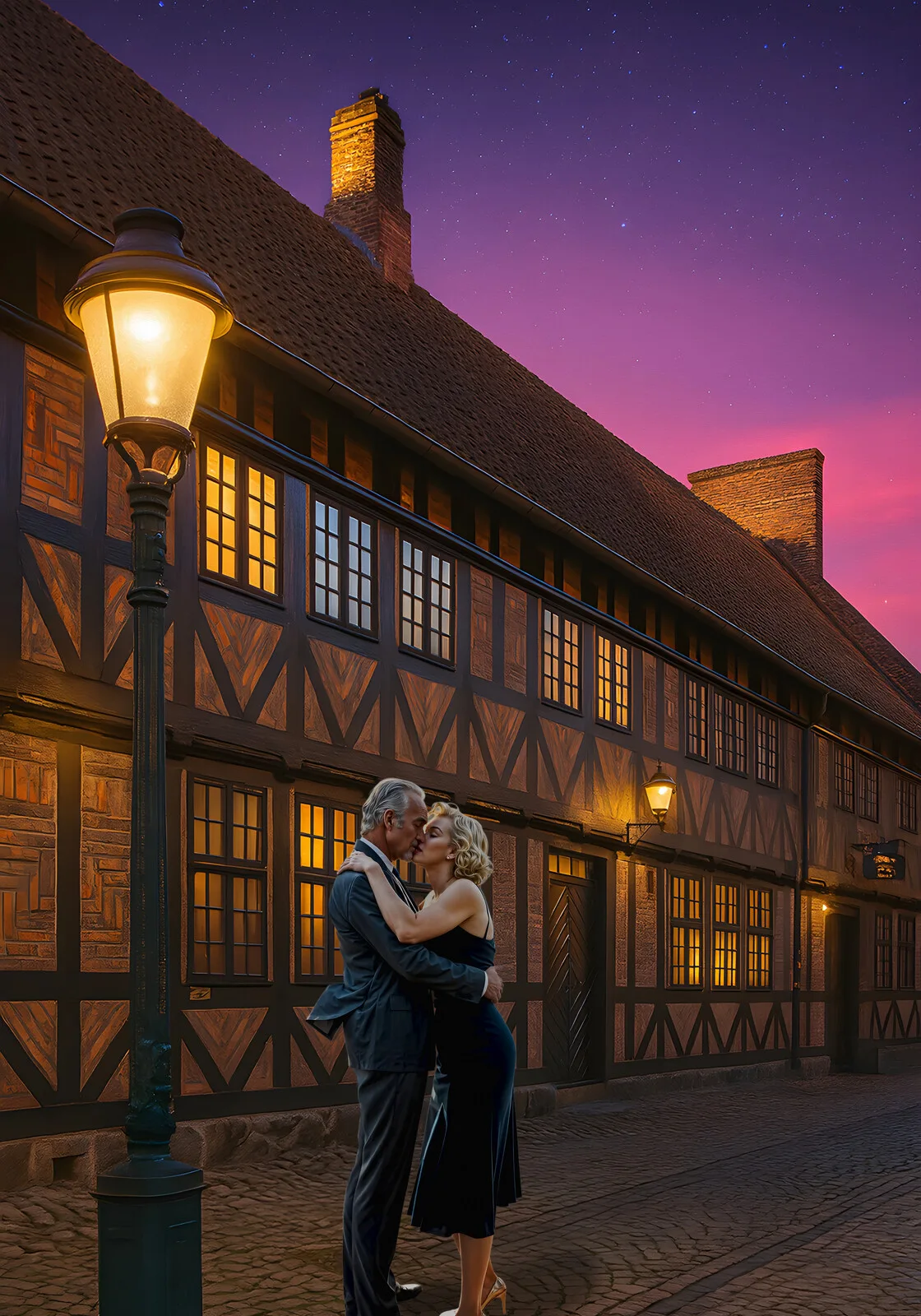
My photograph, taken on a late June evening outside the Faxeska House on Larochegatan in Malmö, may seem innocent. Still, it demonstrates something science has debated for thousands of years: that love is a contagious disease, and it also affects Time-travellers. As a writer deeply interested in the intersection of literature, history, and psychology, I found this subject particularly captivating.
When Marilyn Monroe and Sean Connery met accidentally in Malmö the other day, the affliction struck. They had, in fact, successfully managed to miss each other during their time on Earth.
Marilyn was primarily active in Hollywood, while Sean was involved in British film and television circles before the Bond films gained popularity. Connery rose to fame as Bond just as Monroe passed away. ‘Dr. No premiered in October 1962; Marilyn died in August of the same year. She moved within American elite circles, among film studios and presidential entourages. He was still relatively new to the international spotlight when she was gone. The duo, however, often features in “what if” speculations—what might have happened if Marilyn had lived longer? Perhaps she could have been a Bond girl, a director, or a co-star in some European co-production. But that’s all it is: speculation. Still, when they met, love struck like lightning.
After a cheerful day of sightseeing, they paused outside the romantic half-timbered house, and that’s when love sickness hit. What happened later at the hotel, I’ll save for another time, because now I must explain this matter of love as a disease.
A Contagious Passion
Love, a contagious condition, is not just a matter of the heart. It is written in both stars and casebooks, in the sighs of poetry and the margins of medical science. This blend of literature and science in understanding love is enlightening and makes us appreciate the interdisciplinary approach. In the past, it wasn’t called infatuation—it was called an affliction. A fever, a trance, a state capable of breaking down both body and soul, draining the fluids from one’s veins and triggering the most shameless hallucinations.
Are you pale? Have you lost your appetite? Do you sit staring out the window with a vacant gaze while running your finger around the rim of your teacup for the sixth time in an hour? A 17th-century doctor would have nodded solemnly, taken your pulse, and declared that you were suffering from *melancholia erotica*. And that was no laughing matter.
We may chuckle at the idea today, but for centuries, unrequited love was considered a medical condition. A condition that required both diagnosis and treatment, sometimes with leeches, sometimes with powdered ivory, and, in truly severe cases, with sexual intercourse or clitoridectomy. Love wasn’t just dangerous. It was life-threatening. It ruined appetite, clouded reason, disturbed sleep, and—according to some physicians—could quite literally char the blood and shut down the brain. The severity of these treatments is shocking and makes us empathise with the past understanding of love.
So, how did a feeling become a diagnosis? How could a slight flutter in the chest turn into a condition worthy of confinement? Why did people believe a man who blushed at the sight of a maid was at death’s door?
This is the story of love, not as a literary ideal, but as a medical fact. A journey through the pulse diagnoses of antiquity, the chivalric hopelessness of the Middle Ages, the elixirs of the Renaissance, and the torture-like remedies of the 1600s. It is about fiery glances that must be cooled with ice water, and feelings that could only be treated by bloodletting, diet, or, if one was lucky, sex. These historical perspectives, while seemingly archaic, provide a foundation for our modern understanding of love as a complex emotional and physiological phenomenon.
We start with a case that inspired one of history’s most passionate heart doctors to open his notebooks, sharpen his quill, and pen one of the strangest medical works ever published: ‘Treatise on Love’s Torments and Erotic Melancholy’. This treatise, a medically impressive work, explores the physiological and psychological effects of love as understood in the 17th century.
The Pulse Reveals All – Jacques Ferrand and His Fatal Diagnosis
It was a day in May 1604 when a young man, bearing the weight of the world within his chest, entered the consulting room of Jacques Ferrand in Toulouse. His skin was sallow, his eyes sunken, his posture a reflection of his inner turmoil. He expressed a sense of hopelessness, an inability to sleep, and a loss of taste for life. There were no typical signs of illness, yet he was wasting away.
Ferrand, a physician, professor of medicine, and a pioneer in the study of passion's pathology, leaned in closely. He recognised the blank, expressionless void on the young man’s face instantly. However, the diagnosis wasn’t confirmed until the door swung open and a young maid stepped into the room, employing a unique approach to diagnosing love sickness.
The patient’s pulse quickened. His complexion shifted instantly: from sallow to ghostly white, then to a deep red. His lips moved, but no sound escaped. His gaze froze. It was as if his entire body responded to the girl’s presence faster than his mind could comprehend. Ferrand set down his quill with satisfaction, witnessing science's truth unfold before his very eyes.
This was no ordinary pallor. It wasn’t scurvy, tuberculosis, or even a fever. This was something far worse. The patient was suffering from love sickness—the most treacherous and unpredictable of all known afflictions. And if nothing was done, he could die from it.
When Ferrand later documented the case in his landmark work *Traité de l’essence et guérison de l’amour ou de la mélancolie érotique*, published in 1610, he did not hold back: “The blood shocked the young man deeply and convinced him to heed my advice.” The love-stricken youth had already begun vomiting blood.
The cause of the young man's infatuation was an unattainable romance. He, a nobleman, was in love with a girl of a lower social class. In 17th-century Europe, such a union was not only opposed by personal feelings but also by family, lineage, and social conventions. The entire societal hierarchy formed an insurmountable barrier, leading to the young man's silent suffering and inevitable illness.
Ferrand did not merely observe the condition of love sickness. He saw himself as a physician of both body and soul, and his era. He believed it was his duty to warn against the dangers of passion. His work was not just a medical treatise, but a moral-philosophical manifesto, encouraging reflection on the societal impact of love. Love, he argued, was not a blessing, but a state that demanded discipline, chastity, and sometimes even bloodletting.
And most importantly: vigilance. Because love was not just a feeling—it could be measured. In the pulse. In the colour of the skin. In the breath, the trembling of the body, and the dilation of the pupils. Love was not simply a metaphor—it was a tangible, measurable, and perilous reality.
In the case of the young man, Ferrand recommended fluid regulation, fasting, and treatment with leeches. But the proper cure, of course, was the only one beyond reach: to be with the girl he loved.
So Ferrand did what he could—he bled him.
Ancient Love – Madness in Wave Pulses and Goat Steps
It’s fascinating to consider love as a kind of disease, a unique chapter in medical history—a captivating yet misunderstood phenomenon from a distant era. However, the truth is that lovesickness has deep roots in classical antiquity, where philosophers and doctors laid the foundation for what would become the established science of the centuries. It all began—like so many things—with a question: What happens in the body when we fall in love?
For Socrates, the answer was brutally simple: love is madness. In Phaedrus, he describes eros as divine insanity—something that could, indeed, lift the soul but also easily lead a person to ruin. It was not something to seek out, but neither could it be resisted. It struck like lightning and left reason scorched.
His pupil, Aristotle, was somewhat more methodical in his analysis. He described love as an impulse originating in the heart, moving through the body and gradually developing into desire. Once matured, it would evolve into a state of restlessness, dreams, drifting thoughts, and, as he wisely observed, a particular physical weakness. One sleeps poorly. Forgets to eat. Withdraws from the world.
And most notably, the pulse changes.
The Greek doctor Galen, active in the 2nd century AD, expanded on this idea. Still regarded today as one of the founders of medicine, Galen believed the body was governed by four humours: blood, phlegm, yellow bile, and black bile. These humours were thought to determine a person's health and temperament. Lovesickness was the result of an imbalance, often too much blood and black bile, leading to melancholy, heat, and emotional overexcitement.
But it was the pulse that held the key. Galen claimed he could read a person’s condition as a musician reads sheet music. He described a particular type of pulse as “wave-like”—rising and falling, much like feelings do. Another variation he called “goat pulse”—an uneven, jerky pattern in which a weak heartbeat was followed by a strong one, like a goat that hesitates, then leaps. Anyone with a goat pulse was considered quite seriously afflicted.
These were not just poetic metaphors. For Galen and his followers, this was concrete medicine. They measured the pulse with their fingertips, examined skin tone, eye movements, and voice. They noted whether the patient sighed often or breathed shallowly. Any of these could signal a state of lovestruck madness. Their meticulous observations and care for their patients were unparalleled.
The love-stricken could not cure themselves, as the feeling itself fired the disease. The more one dreamed of the object of desire, the more unbalanced the body became. Sometimes distractions helped—sometimes even that was not enough. Some sufferers sank into quiet sorrow, others raced through life in a feverish state of manic longing. In both cases, it could lead to death. The symptoms of lovesickness included poor sleep, loss of appetite, and withdrawal from social activities.
Ancient physicians, of course, lacked MRI scans or serotonin theories. But they observed the human body. When it no longer obeyed its owner, they deduced that something was seriously wrong. This was not romantic—it was pathology.
We might laugh at the idea of goat pulse today. But when the following message doesn’t arrive, when your stomach knots for no apparent reason, when the night feels too long and the heart beats too fast—perhaps Socrates still has a point. Love makes us a little mad. And has always done so.
Bloodletting, Leeches, and Female Ankles
If love were truly a disease, it would surely need to be curable. That was the logic for centuries. And no remedy was more universal, more reliable, or more bodily and concrete than bloodletting. It was the Swiss Army knife of medicine—used for everything from fevers to infatuation, from gout to gallbladder problems.
Jacques Ferrand, our passionate doctor from Toulouse, had clear instructions. Bloodletting, a common medical practice at the time, was believed to restore the balance of bodily humours. It should be carried out three to four times a year on patients suffering from lovesickness. In men, the blood should ideally be drawn from the left arm, since it is closest to the heart, where feelings originate. In women, it was better to tap the veins at the ankles, as the blood there was thought to carry the hidden mysteries of the female body.
It’s easy to picture a sickly young noblewoman, draped in lace and corset, as a heavily sighing doctor in a ruffled collar inserts a needle into her ankle, carefully measured according to mood and season. Perhaps accompanied by a quiet “It’s for your own good, mademoiselle.”
But there were alternatives for those who didn’t wish to be tapped like a wine cask. They could be given leeches, a form of living bloodletting, small, ringed creatures with a taste for emotionally charged fluids. The diversity and creativity in ancient medicine were truly remarkable.
Leeches were a form of living bloodletting—small, ringed creatures with a taste for emotionally charged fluids. They were applied to the skin, particularly near arteries and sensitive areas, such as behind the ears, at the temples, beneath the breasts, or, for women, along the inner thighs. The leeches sucked until they were sufficiently engorged to fall off, and they were sometimes kept in silver boxes, ready for reuse.
The goal was always the same: to purge the body of excess. To restore the balance of humours. According to Galen and his many followers, all disease—even that which entered through the eyes and poisoned the heart—was caused by a disruption in the body’s inner climate.
Ferrand was not alone in this belief. The French physician Bernard de Gordon, already active in the 14th century, went a step further. He proposed that lovesick patients should be locked up and flogged—“until they smelled bad all over the body.” The scent, he argued, would both repel future objects of affection and neutralise the heat of passion.
There were, however, less brutal methods available. Cupping, for example, is a treatment in which heated glass or metal cups are placed on the skin, often after a small incision has been made. The suction drew the skin upward, extracting blood from the body. It was particularly recommended around the groin and genitals, where the fire of love was said to burn the hottest.
Despite the brutality of the treatment, there were nuances. Ferrand emphasised that the amount of blood drawn should be adapted to the patient’s physique: “If the person has a normal body temperature, is well-built and not too thin, a little extra blood should be taken.” Thus, medical reasoning is blended with something resembling sadistic aesthetics.
These treatments likely did little to ease the feelings truly burning in the patient’s chest. But perhaps they offered a sense of control. Lovesickness, which defied all logic, could at least for a moment be reduced to a fluid to be drained.
And perhaps that was enough.
The Heart’s Torment in Armour – The Romantic Middle Ages
If the physicians of antiquity tried to measure love through pulse and bile, the poets of the Middle Ages sought to transform it into song. Even though love was still regarded as a disease, characterised by symptoms such as imbalance, anxiety, shortness of breath, and faintness, it now began to be refined and transformed into an art form. The pain of the heart was dressed in knightly armour and became honour, loyalty, and heroism.
And at the centre stood unhappy love.
It was not happiness that attracted, but suffering. In the world of the French troubadours and Provençal poets, love was never reciprocated nor consummated. It was longing, torment, and idealisation. The young knight often adored a woman he could never have—be it a married noblewoman, a princess, or someone from a higher sphere. His love became a way of life—a refined form of self-torment, elevated into an art.
The author Marie de France, active in the 12th century, wrote the poignant tale "Les Deux Amants" – The Two Lovers. In it, a young man is not allowed to marry his beloved princess unless he first carries her up a steep mountain. He trains in secret, drinks a potion for strength, but dies from exhaustion just before reaching the top. The princess throws herself upon him and dies of grief—a perfect tragedy—a consummate death by love.
The story was read as both a moral lesson and a practical guide. To die of love was not merely a fate but an ideal.
And this ideal permeated the entire culture of the Middle Ages, from poems and ballads to paintings and plays. Nothing was more exalted than hopeless infatuation, and nothing more moving than the young man who withered away in smouldering silence. Even pain became noble—a form of spiritual refinement.
To love someone who did not love back was thus not a sign of folly but of emotional superiority. The love that could be consummated—with kisses, bodies, everyday life—was trivial, earthly. The love that existed solely in the heart, in dreams, in song, was pure. That love was divine. And so, the sicker one was, the closer one came to the true essence of love.
The young woman was ideally unattainable. The man was prone to suffering in silence. The physical symptoms—paleness, weakness, restlessness—continued to be documented. However, they also became stylistic devices. A pale knight with a vacant gaze and trembling heart was no longer merely a patient; he was a hero.
At the same time, the medical perspectives remained alive. When passion crossed class boundaries, when a nobleman began to love a maid–or vice versa–it was a physician, not a priest, who was summoned. Love was serious. And it could, as in the tales, indeed take people’s lives.
And it was in this world, filled with poets’ tears and matrimonial intrigue, that William Shakespeare in the 1590s wrote the most famous love tragedy of all time: Romeo and Juliet. Two young lovers, separated by their families’ feud, whose feelings burn so fiercely that death becomes the only possible reunion. Their fate is perhaps the most perfect example of lovesickness in literary form – a contagion that enters through the eyes, rushes through the body, devours the soul, and demands its sacrifice.
When we weep over Romeo and Juliet, it is thus not only a tragedy we mourn. It is an ideal, a lost state, where love could truly be a matter of life and death.
The Pathology of Passion – When Emotions Turn Toxic
In the 17th century, love began to take on a new kind of form. It became toxic. Burning. Physical in a very real sense – not just in song and verse, but in veins, in bile, in eyes and brain. Jacques Ferrand and his colleagues no longer saw love as a poetic affliction, but as a medical condition that could be documented in journals, measured, and mapped in flowcharts. And, in the best of cases, cured.
Ferrand had his theory clear: passion enters through the eyes. What one sees as beautiful affects not only the mind but also the body. When desire is awakened, it begins to circulate – first in the heart, then through the bloodstream. And along the way, the feeling burns away the body's fluids, like fire in a poorly insulated pipe system. The result is dehydration. Overheating. And finally – collapse.
It was as if the feeling entered the body, evaporated, condensed, and transformed into vapours that rose toward the head and poisoned the mind, like a baking oven filled with smoke. When these vapours reached the brain, Ferrand wrote, a person lost the ability to think clearly. They became dizzy, anxious, distracted – a wandering mist.
And the longer the illness persisted, the stronger the hallucination became. The lovesick individual began to idealise the object of their longing. The beloved became a being, a ram, a castle in the air. An illusion with perfect skin, an unblemished soul, and a golden gaze. The farther away in reality, the closer in fantasy.
The condition was not initially dangerous, Ferrand claimed. But if allowed to develop, it could lead to severe melancholy, loss of appetite, suicidal thoughts, and in the worst cases: death.
That was why one had to act promptly. As a doctor, one was not to wait for a poetic suicide or a dramatic flight. One had to intervene with bloodletting, diet, fasting, cooling, and discipline. And if nothing else worked, drastic surgical procedures were considered.
But Ferrand didn’t stop there. He also sought evidence. In autopsies, he claimed that some patients had “charred hearts” – blackened, dried out, as if the feeling had indeed left traces of fire in the chest cavity.
He detailed how the eyes of those affected changed. They became soft, protruding – emissitios oculos, as he called them in Latin. And thus, scientifically speaking, not unlike the actor Marty Feldman’s. If Ferrand had lived in our time, he might have regarded the film comedian as a case study in constant infatuation.
The symptoms reappeared: paleness, thinness, deep sighs, restlessness, and a yearning for solitude. The patient withdrew from others, gazed into the distance, and hummed quietly to themselves. It was, Ferrand wrote, a state of “eternal inner motion.” As if the soul were running while the body remained still.
And the most dangerous aspect was this: the lovesick person often refused to be cured. The patient clung to their longing as if it were a treasure, because even though it caused pain, it also gave life meaning. They might lose their appetite but not their obsession. They couldn’t think clearly, but they knew precisely what they had missed.
This made the treatment particularly difficult. How do you help someone who would rather suffer than forget?
The Terrors of Erotic Melancholy
Not all lovesick are alike. Some sigh in window alcoves, others compose poetry. But for a particular group, the condition was not merely painful – it was devastating. They suffered from what Jacques Ferrand called melancholia erotica senilis – erotic melancholy in older men.
They were, according to Ferrand, the most gravely afflicted.
With age, he wrote, a man lost his bodily strength, but not necessarily his capacity for desire. When such longing was awakened late in life, it often gave rise to something violent and dark. The older man became obsessed. He lost his reason, couldn’t sleep, spoke in tongues—and in some cases, Ferrand warned, grew so frenzied he took his own life.
Melancholy seeped through the body like poison. It caused the man to relive old loves, recall voices and scents from his youth, and feel painfully alone in his longing. Some described the condition as an inner werewolf—a disease that changed identity. And it was no coincidence that lycanthropy, the delusion of being a werewolf, was regarded as an extreme form of lovesickness. The afflicted howled at the moon, wandered the forest, and lost the power of speech—Bloodlust instead of passion—or rather, a heightened form of it.
Treatment was brutal. Doctors might open arteries and bleed the patient until he fainted. If that didn’t help, they turned to red-hot iron, pressed to the forehead to cleanse the thoughts. This, according to Ferrand, was a way of restoring balance among the body’s cardinal humours.
But younger men could also be severely affected, especially those with certain physical traits. According to Ferrand, some body types were more prone to succumb to passion’s contagion. A man who was warm-bodied, hairy, ruddy-cheeked, with black curly hair and a booming voice—he was in the danger zone. And if he was also bald, then things were truly dire. Why? Bald, hairy man = much seed = much desire = high risk of passion spiralling out of control.
But lovesickness wasn’t exclusive to men. On the contrary, the more doctors learned about the body, the more they suspected that the female body was not only vulnerable but sometimes even more so. It was said that their sex organs faced inward, inward-facing, inaccessible, enclosed, lingering. This made them both susceptible to desire and challenging to cure.
Women’s sexuality was seen with both horror and fascination. People spoke of "raging lust," of "simmering blood," of hysteria. As a result, treatment often focused on the body, especially the genitals. Ferrand even stated that if a woman’s clitoris was too long and caused “this raging desire and disease,” it had to be removed—surgically, with tongs, without anaesthesia.
It was not just the soul that needed healing. The body had to be tamed through cuts, suction, bloodletting, or surgical intervention. Love was not merely a danger—it was a bodily catastrophe in the making.
And in the midst of all this were those who did not wish to be cured. Those who preferred to cling to their longing rather than be reduced to being healthy but hollow. It is in that space—between ecstasy and ruin—that erotic melancholy stretches out. A place where the heart trembles, the body wanders, and the physician stands with his leeches, pondering: should we suck, pierce, or burn?
The Dietary Circle of Love and the Cookbook of Home Remedies
If bloodletting and leeches didn’t help—and they rarely did—there remained another remedy: diet. For even if love’s source was said to lie in the eyes and the heart, it could, according to the medical logic of the time, be influenced through the stomach. Food was the key to passion’s fluctuations. And to restore balance in a body run wild with desire, one had to eat wisely—or rather, avoid eating wrongly.
So what, then, should one serve the pale noblewoman or the sweaty knight, paralysed by yearning?
Pigeon was highly esteemed. Roast pigeon, lightly seasoned, was believed to reduce sexual desire. Melon, apple, pear, and cherry were also recommended—fruits with remarkable, controlled energy. Alongside: dark bread. Preferably coarse, hard, chewy. It forced the body to work a little harder, thus warding off idle dreams and fleeting fantasies.
But salted fish? Forbidden. Salt was regarded as an inciting substance—a kind of chemical lust—that ignited the blood. The same applied to eggs, sparrow, grouse, and duck—particularly their livers, thought to contain properties that directly influenced mood. Eggs were also symbolically charged, after all. They served as a prelude to reproduction. For the lovesick, they were an unhelpful reminder.
For those truly afflicted, the advice was to fast. A body without food was a body without desire. Ferrand bluntly stated: "When the stomach is empty, no one craves sex." One could manage on water and bread, preferably cold drinks. Coldness, after all, contrasted with passion. Lemon juice, vinegar, and juice from sour apples or ripe grapes were also recommended—anything that cooled the body’s heat.
But diet was only the beginning. Folk remedies offered more effective cures.
A classic remedy was the bath. Not just any bath— but a herbal-infused tub filled with river water, hollyhocks, hops, violets, hempseed, and other cool, fragrant ingredients. The patient should remain in this position for an hour each day, for at least four consecutive days. It was believed to wash away both lust and dreams.
More hands-on methods involved urine. One old remedy called for a drink made from human urine and a drowned lizard. It may sound like a grotesque Harry Potter potion, but it was genuinely intended. Horse dung, burned in the patient’s presence, was also said to have immediate effects—the smell alone was thought to clear the mind.
And if none of this helped, they turned to menstrual blood.
One cure involved sending an ugly woman, dressed in rags, to visit the love-struck man and loudly and vividly explain how repulsive his beloved was. She might be dirty, have festering sores, be flatulent, wet the bed—the more repellent, the better. And as a final touch, the woman could reveal her underpants, stained with dried menstrual blood.
It sounds grotesque, but there was a logic to it: revulsion as an antidote to desire. How could one go on loving someone if the object of one’s dreams suddenly smelled of ammonia and resembled a medieval horror story?
Our Swedish eccentric Sten Broman might have applauded. In a moment of weary irony, he suggested that accordion-yodelling hags be used as a remedy for sexual tension—essentially the same idea, just with a different orchestration.
Those without access to yodelling or human scent shocks could instead focus on climate. Women, it was believed, thrived best in cool rooms. Men, however, should remain in heat—preferably steamy. And perfumes were a firm no—especially musk, which could awaken the body to indecent life.
Love was a fire. It had to be smothered with something. Food, water, urine—or in the worst case: human deterrents.
xxx
Sexuality’s Double Standard – and Intercourse as a Miracle Cure
Among all these leeches, herbs, and foul-smelling therapies, there was only one remedy that truly worked—and was also free. Intercourse. To be with one’s beloved. To be physically united with the object of one’s longing.
It was the simplest solution. And therefore almost always impossible.
In the ancient world, there was no hesitation in recommending it. The Greeks were pragmatic: if desire is tearing through the body, satisfy it. Even Galen, who otherwise advocated balanced humours and carefully orchestrated diets, could admit that sexual intercourse served as a kind of medical valve. Desire had to be released—otherwise, the soul would perish.
But seventeenth-century Europe was a more constrained world. Society had tightened. Morality was laced over the individual like a corset, and nowhere did it squeeze tighter than around the bed, leaving little room for the expression of natural desires.
Jacques Ferrand knew that the most effective treatment for lovesickness was allowing the patient to have sex with the person they loved. However, he couldn’t state this openly. In his book, he tried to frame it in pious terms: “No physician should deny anyone suffering from lovesickness the joy of enjoying the object of their desire, within the bounds of marriage.”
And there lay the problem, for marriage often stood in the way. Lovesickness affected those who couldn't be together—people of different classes, religions, genders, or who were already married to others. Or those who, by all rules, should not feel what they felt.
Thus, intercourse, this supposed miracle cure, became a distant dream—and another source of torment.
Meanwhile, perspectives on sexuality began to change. Doctors grew increasingly interested in the differences between male and female desire, shedding light on the historical evolution of gender studies. Along with this came a new, though somewhat contradictory, idea: that women might experience more pleasure than men.
This, of course, was both an acknowledgement and a challenge. For if women had greater desire, what implications did that have for morality? For control? Ferrand aimed to explain it scientifically: since women endured pregnancy and childbirth, nature had provided them with a compensation—more pleasure—a kind of divine balance sheet.
But this heightened capacity for pleasure was also viewed as a threat. If a woman truly enjoyed herself, who would restrain her? Thus, the image of the passionate, insatiable, unreliable woman was created — a being whose desires needed to be cooled, tamed, and suppressed. Consequently, remedies were often directed at her, including cooling enemas, applying camphor to the genitals, religious education, and surgery.
It was not merely a battle against love — it was a fight for the body. Who owns desire? Who has the right to feel it? And when? This historical struggle for sexual freedom is a compelling narrative that continues to shape our understanding of desire.
The lovesick, regardless of gender, often stood alone with their yearning, surrounded by steam baths, diet lists, moral sermons, and full moons. While the body longed for another remedy — the forbidden, the healing, the naked.
And perhaps it was precisely there—in the enduring intersection between society’s prohibitions and the body’s burning need-that lovesickness found its power. It was not merely a condition. It was a profound and enduring revolt.
From Freud to fMRI – The Resurgence of Science in Love Studies
By the end of the eighteenth century, a gradual shift began to take place. Love—this painful, bodily, bile-stained plague—lost its status as a medical diagnosis. Modern medical science started to separate the body from the soul, feelings from physical humours. The brain and nervous system replaced the bile and pulse. Lovesickness was pushed into the realm of poetry.
But only almost.
For even if doctors stopped bleeding the left arm and attaching leeches to women’s ankles, love refused to let go. It found new pathways—psychology, biology, neurology. And a man named Sigmund Freud once again opened the gates to its persistent and complex nature.
Freud, the father of modern psychoanalysis, proposed that love—and especially infatuation—was not a disease in the traditional sense, but an expression of deep-rooted conflict. The adult emotional life, he argued, was shaped by childhood drives. Desire, frustration, longing, fixations—all of it formed early and blossomed when least expected, like at the sight of a waitress with just the right length of eyelashes.
Love thus became no less mysterious, only more complicated. Now it was to be analysed on couches, dreamed under the blanket of interpretation. And it was no longer called melancholia erotica but frustration. Fixation. Transference. But in practice, the symptoms were the same: insomnia, restlessness, loss of appetite, palpitations, unrealistic fantasies, and a strong urge to crawl into someone’s arms and stay there until the world disappeared.
Throughout the twentieth century, explanations varied. Charles Darwin had already in the 1800s described how pairing in animals—and humans—was based on biological selection: choosing a partner who ensured the survival of the species. Thus, love could also be explained as an evolutionary function. However, this biological basis of love does not diminish its complexity as an emotion, but rather provides a deeper understanding of its nature.
However, that didn’t stop new generations of researchers from returning to the question: what happens in the body when we fall in love?
As technology advanced, the answers emerged in the form of images—brain scans. Utilizing magnetic resonance imaging (MRI) and functional magnetic resonance imaging (fMRI), scientists in the 2000s were able to precisely identify the brain regions that were active when an individual gazed at a photo of their beloved. These findings, both captivating and sobering, marked a significant leap in our understanding of love.
Infatuation was shown to activate the brain’s reward system—the same areas affected by cocaine. Meanwhile, levels of serotonin, a neurotransmitter that influences mood, appetite, and sleep, decreased. That’s why the lovestruck couldn’t eat, couldn’t sleep, and found it hard to think of anything but the object of their longing.
In short, love resembles a drug addiction. An intense, compulsive, euphoric fixation, with withdrawal, rage, and occasional hallucinations when the supply disappears.
British psychologist Frank Tallis took this a step further. In his book "Love Sick: Love as a Mental Illness," he argued that infatuation should be classified as a mental illness. He pointed to patterns of obsessive thoughts, irrational behaviour, euphoria, identity dissolution, and a high relapse rate. Had love not been so culturally accepted, he wrote, it would be treated as a medical condition. This perspective highlights the significant influence of culture and society on our understanding and experience of love.
Even more revealing is that a biological logic seems to underpin the timeframe. According to Tallis, most people stay in love for about two years—just enough time to secure, give birth to, and nurse a child. As always, nature is pragmatic. Love’s madness endures only as long as necessary to pass on the genes.
We are thus wired to go mad—but only for a limited period. The rest is therapy.
The Logic of the Final Sigh
So, what remains to be said, after all this? We have delved into medical journals, peeked into knights’ poetry collections, wandered through the corridors of bloodletting, and emerged on the other side with a serotonin meter in hand. We have seen how love, with its profound impact, has shifted from divine madness to measurable brain activity—and back again.
But the strange thing is not that people once believed love could kill. The peculiar thing is that we still do.
While we may no longer diagnose it as melancholia erotica or prescribe cupping sessions near the genitals, the impact of unrequited love remains palpable. The world loses its vibrancy, food loses its flavor, and our bodies react with a mix of racing hearts and numbness. Love's effects are not just psychological, but physical, felt in the chest, on the skin, and in the gut. And sometimes, in the pulse.
Because at heart, we are not so different from Ferrand’s pale patients or Aristotle’s restless souls. Love can still strike like a fever. It can make us act irrationally, like children, or behave recklessly and vulnerably. It can make us laugh at nothing and cry over a breakfast spoon. In its worst forms, it can turn us into werewolves. And sometimes, into poets. But it's important to remember that love also brings joy, inspiration, and a sense of connection, highlighting its positive aspects.
But perhaps it is not a disease we need to cure. Maybe it is a state we must understand—a human recklessness that makes us human. A bug in the system, but also a kind of code that reveals what we value most. When we long, when we tremble, when we mourn—that’s when we truly live.
They say time heals all wounds. But love has never truly respected the clock. It lives its own life, in its rhythm. It can arrive suddenly, take root slowly, or return when least expected. Like a recurring illness. Like a scent, a glance, a song.
Perhaps the wisest approach to love is not to deny it or romanticize it, but to acknowledge its power. Love has the ability to transform, to inspire, and to devastate. It influences our thoughts, actions, and emotions, and acknowledging this influence is a sign of respect for its profound impact on our lives.
And given what history has told us, it may be just as well to let Frank Tallis have the final word: “Love’s madness lasts precisely as long as it takes for the genes to be passed on. The rest is therapy.”
Let’s give him the last word—and try, as best we can, not to fall in love for the rest of the day.
Jörgen Thornberg
Utan titel, 2025
Digital
50 x 70 cm
3 200 kr
Love is a contagious disease
Love, a concept that has sparked diverse interpretations throughout history, was once regarded as a dreadful disease. However, for much of human history, it was viewed entirely differently: as a sickness. This shift in historical perspectives of love, from a disease to a miracle or a mystery, is a fascinating evolution to explore.
Not merely a metaphorical fever or poetic sigh, but an actual physical ailment – one that could cause sleeplessness, hallucinations, loss of appetite, madness, and even death. From ancient Greece to Freud’s consulting room, from bloodletting to brain scans, the lovesick have wandered through medical history searching for a cure for the most incurable of conditions: longing.
This essay delves into the fascinating realm of love through the lens of medical imagination. We encounter the medieval poets who believed the heart could break, the Renaissance physicians who prescribed melon and pigeon for lust, and early neurologists who mapped heartache onto the brain like a battlefield.
At times hilarious, at times horrifying, the story of love as illness also reveals a story of power—over bodies, over women, over desire itself. This narrative prompts us to ponder the societal implications of when a kiss becomes a crisis, and when passion is purged with leeches or lavender, love is no longer just a feeling. It becomes a diagnosis.
“A Penguin Love Poem
The Love Malady
They said it was a fever,
but fevers tend to fade.
This one burned in silence,
where no thermometer was laid.
A look, a scent, a letter,
a dream that wouldn't die—
It gripped the chest like mourning,
and laughed at every sigh.
The doctors came with leeches,
with potions, chants, and bread,
but none could drain the madness
that blossomed in the head.
They blamed the heart, the liver,
the stars, the time of year.
Some said it was possession.
Some whispered: It is fear.
For what if she won’t see you?
Or has he sworn a vow?
Or what you want is outlawed,
by church or kin or brow?”
Malmö June 2025
Love is a contagious disease.
Love, a concept that has long intrigued scholars and thinkers, has been traditionally viewed as a contagious disease, holding a deep significance that has fascinated for centuries.
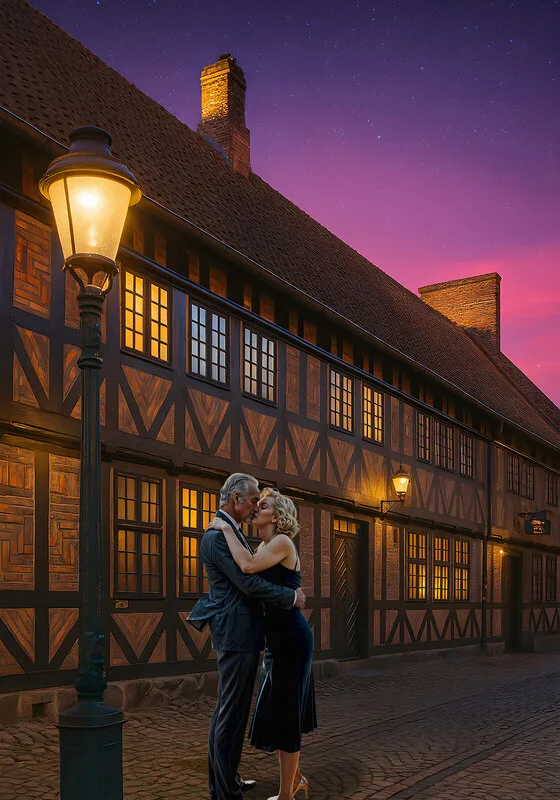
My photograph, taken on a late June evening outside the Faxeska House on Larochegatan in Malmö, may seem innocent. Still, it demonstrates something science has debated for thousands of years: that love is a contagious disease, and it also affects Time-travellers. As a writer deeply interested in the intersection of literature, history, and psychology, I found this subject particularly captivating.
When Marilyn Monroe and Sean Connery met accidentally in Malmö the other day, the affliction struck. They had, in fact, successfully managed to miss each other during their time on Earth.
Marilyn was primarily active in Hollywood, while Sean was involved in British film and television circles before the Bond films gained popularity. Connery rose to fame as Bond just as Monroe passed away. ‘Dr. No premiered in October 1962; Marilyn died in August of the same year. She moved within American elite circles, among film studios and presidential entourages. He was still relatively new to the international spotlight when she was gone. The duo, however, often features in “what if” speculations—what might have happened if Marilyn had lived longer? Perhaps she could have been a Bond girl, a director, or a co-star in some European co-production. But that’s all it is: speculation. Still, when they met, love struck like lightning.
After a cheerful day of sightseeing, they paused outside the romantic half-timbered house, and that’s when love sickness hit. What happened later at the hotel, I’ll save for another time, because now I must explain this matter of love as a disease.
A Contagious Passion
Love, a contagious condition, is not just a matter of the heart. It is written in both stars and casebooks, in the sighs of poetry and the margins of medical science. This blend of literature and science in understanding love is enlightening and makes us appreciate the interdisciplinary approach. In the past, it wasn’t called infatuation—it was called an affliction. A fever, a trance, a state capable of breaking down both body and soul, draining the fluids from one’s veins and triggering the most shameless hallucinations.
Are you pale? Have you lost your appetite? Do you sit staring out the window with a vacant gaze while running your finger around the rim of your teacup for the sixth time in an hour? A 17th-century doctor would have nodded solemnly, taken your pulse, and declared that you were suffering from *melancholia erotica*. And that was no laughing matter.
We may chuckle at the idea today, but for centuries, unrequited love was considered a medical condition. A condition that required both diagnosis and treatment, sometimes with leeches, sometimes with powdered ivory, and, in truly severe cases, with sexual intercourse or clitoridectomy. Love wasn’t just dangerous. It was life-threatening. It ruined appetite, clouded reason, disturbed sleep, and—according to some physicians—could quite literally char the blood and shut down the brain. The severity of these treatments is shocking and makes us empathise with the past understanding of love.
So, how did a feeling become a diagnosis? How could a slight flutter in the chest turn into a condition worthy of confinement? Why did people believe a man who blushed at the sight of a maid was at death’s door?
This is the story of love, not as a literary ideal, but as a medical fact. A journey through the pulse diagnoses of antiquity, the chivalric hopelessness of the Middle Ages, the elixirs of the Renaissance, and the torture-like remedies of the 1600s. It is about fiery glances that must be cooled with ice water, and feelings that could only be treated by bloodletting, diet, or, if one was lucky, sex. These historical perspectives, while seemingly archaic, provide a foundation for our modern understanding of love as a complex emotional and physiological phenomenon.
We start with a case that inspired one of history’s most passionate heart doctors to open his notebooks, sharpen his quill, and pen one of the strangest medical works ever published: ‘Treatise on Love’s Torments and Erotic Melancholy’. This treatise, a medically impressive work, explores the physiological and psychological effects of love as understood in the 17th century.
The Pulse Reveals All – Jacques Ferrand and His Fatal Diagnosis
It was a day in May 1604 when a young man, bearing the weight of the world within his chest, entered the consulting room of Jacques Ferrand in Toulouse. His skin was sallow, his eyes sunken, his posture a reflection of his inner turmoil. He expressed a sense of hopelessness, an inability to sleep, and a loss of taste for life. There were no typical signs of illness, yet he was wasting away.
Ferrand, a physician, professor of medicine, and a pioneer in the study of passion's pathology, leaned in closely. He recognised the blank, expressionless void on the young man’s face instantly. However, the diagnosis wasn’t confirmed until the door swung open and a young maid stepped into the room, employing a unique approach to diagnosing love sickness.
The patient’s pulse quickened. His complexion shifted instantly: from sallow to ghostly white, then to a deep red. His lips moved, but no sound escaped. His gaze froze. It was as if his entire body responded to the girl’s presence faster than his mind could comprehend. Ferrand set down his quill with satisfaction, witnessing science's truth unfold before his very eyes.
This was no ordinary pallor. It wasn’t scurvy, tuberculosis, or even a fever. This was something far worse. The patient was suffering from love sickness—the most treacherous and unpredictable of all known afflictions. And if nothing was done, he could die from it.
When Ferrand later documented the case in his landmark work *Traité de l’essence et guérison de l’amour ou de la mélancolie érotique*, published in 1610, he did not hold back: “The blood shocked the young man deeply and convinced him to heed my advice.” The love-stricken youth had already begun vomiting blood.
The cause of the young man's infatuation was an unattainable romance. He, a nobleman, was in love with a girl of a lower social class. In 17th-century Europe, such a union was not only opposed by personal feelings but also by family, lineage, and social conventions. The entire societal hierarchy formed an insurmountable barrier, leading to the young man's silent suffering and inevitable illness.
Ferrand did not merely observe the condition of love sickness. He saw himself as a physician of both body and soul, and his era. He believed it was his duty to warn against the dangers of passion. His work was not just a medical treatise, but a moral-philosophical manifesto, encouraging reflection on the societal impact of love. Love, he argued, was not a blessing, but a state that demanded discipline, chastity, and sometimes even bloodletting.
And most importantly: vigilance. Because love was not just a feeling—it could be measured. In the pulse. In the colour of the skin. In the breath, the trembling of the body, and the dilation of the pupils. Love was not simply a metaphor—it was a tangible, measurable, and perilous reality.
In the case of the young man, Ferrand recommended fluid regulation, fasting, and treatment with leeches. But the proper cure, of course, was the only one beyond reach: to be with the girl he loved.
So Ferrand did what he could—he bled him.
Ancient Love – Madness in Wave Pulses and Goat Steps
It’s fascinating to consider love as a kind of disease, a unique chapter in medical history—a captivating yet misunderstood phenomenon from a distant era. However, the truth is that lovesickness has deep roots in classical antiquity, where philosophers and doctors laid the foundation for what would become the established science of the centuries. It all began—like so many things—with a question: What happens in the body when we fall in love?
For Socrates, the answer was brutally simple: love is madness. In Phaedrus, he describes eros as divine insanity—something that could, indeed, lift the soul but also easily lead a person to ruin. It was not something to seek out, but neither could it be resisted. It struck like lightning and left reason scorched.
His pupil, Aristotle, was somewhat more methodical in his analysis. He described love as an impulse originating in the heart, moving through the body and gradually developing into desire. Once matured, it would evolve into a state of restlessness, dreams, drifting thoughts, and, as he wisely observed, a particular physical weakness. One sleeps poorly. Forgets to eat. Withdraws from the world.
And most notably, the pulse changes.
The Greek doctor Galen, active in the 2nd century AD, expanded on this idea. Still regarded today as one of the founders of medicine, Galen believed the body was governed by four humours: blood, phlegm, yellow bile, and black bile. These humours were thought to determine a person's health and temperament. Lovesickness was the result of an imbalance, often too much blood and black bile, leading to melancholy, heat, and emotional overexcitement.
But it was the pulse that held the key. Galen claimed he could read a person’s condition as a musician reads sheet music. He described a particular type of pulse as “wave-like”—rising and falling, much like feelings do. Another variation he called “goat pulse”—an uneven, jerky pattern in which a weak heartbeat was followed by a strong one, like a goat that hesitates, then leaps. Anyone with a goat pulse was considered quite seriously afflicted.
These were not just poetic metaphors. For Galen and his followers, this was concrete medicine. They measured the pulse with their fingertips, examined skin tone, eye movements, and voice. They noted whether the patient sighed often or breathed shallowly. Any of these could signal a state of lovestruck madness. Their meticulous observations and care for their patients were unparalleled.
The love-stricken could not cure themselves, as the feeling itself fired the disease. The more one dreamed of the object of desire, the more unbalanced the body became. Sometimes distractions helped—sometimes even that was not enough. Some sufferers sank into quiet sorrow, others raced through life in a feverish state of manic longing. In both cases, it could lead to death. The symptoms of lovesickness included poor sleep, loss of appetite, and withdrawal from social activities.
Ancient physicians, of course, lacked MRI scans or serotonin theories. But they observed the human body. When it no longer obeyed its owner, they deduced that something was seriously wrong. This was not romantic—it was pathology.
We might laugh at the idea of goat pulse today. But when the following message doesn’t arrive, when your stomach knots for no apparent reason, when the night feels too long and the heart beats too fast—perhaps Socrates still has a point. Love makes us a little mad. And has always done so.
Bloodletting, Leeches, and Female Ankles
If love were truly a disease, it would surely need to be curable. That was the logic for centuries. And no remedy was more universal, more reliable, or more bodily and concrete than bloodletting. It was the Swiss Army knife of medicine—used for everything from fevers to infatuation, from gout to gallbladder problems.
Jacques Ferrand, our passionate doctor from Toulouse, had clear instructions. Bloodletting, a common medical practice at the time, was believed to restore the balance of bodily humours. It should be carried out three to four times a year on patients suffering from lovesickness. In men, the blood should ideally be drawn from the left arm, since it is closest to the heart, where feelings originate. In women, it was better to tap the veins at the ankles, as the blood there was thought to carry the hidden mysteries of the female body.
It’s easy to picture a sickly young noblewoman, draped in lace and corset, as a heavily sighing doctor in a ruffled collar inserts a needle into her ankle, carefully measured according to mood and season. Perhaps accompanied by a quiet “It’s for your own good, mademoiselle.”
But there were alternatives for those who didn’t wish to be tapped like a wine cask. They could be given leeches, a form of living bloodletting, small, ringed creatures with a taste for emotionally charged fluids. The diversity and creativity in ancient medicine were truly remarkable.
Leeches were a form of living bloodletting—small, ringed creatures with a taste for emotionally charged fluids. They were applied to the skin, particularly near arteries and sensitive areas, such as behind the ears, at the temples, beneath the breasts, or, for women, along the inner thighs. The leeches sucked until they were sufficiently engorged to fall off, and they were sometimes kept in silver boxes, ready for reuse.
The goal was always the same: to purge the body of excess. To restore the balance of humours. According to Galen and his many followers, all disease—even that which entered through the eyes and poisoned the heart—was caused by a disruption in the body’s inner climate.
Ferrand was not alone in this belief. The French physician Bernard de Gordon, already active in the 14th century, went a step further. He proposed that lovesick patients should be locked up and flogged—“until they smelled bad all over the body.” The scent, he argued, would both repel future objects of affection and neutralise the heat of passion.
There were, however, less brutal methods available. Cupping, for example, is a treatment in which heated glass or metal cups are placed on the skin, often after a small incision has been made. The suction drew the skin upward, extracting blood from the body. It was particularly recommended around the groin and genitals, where the fire of love was said to burn the hottest.
Despite the brutality of the treatment, there were nuances. Ferrand emphasised that the amount of blood drawn should be adapted to the patient’s physique: “If the person has a normal body temperature, is well-built and not too thin, a little extra blood should be taken.” Thus, medical reasoning is blended with something resembling sadistic aesthetics.
These treatments likely did little to ease the feelings truly burning in the patient’s chest. But perhaps they offered a sense of control. Lovesickness, which defied all logic, could at least for a moment be reduced to a fluid to be drained.
And perhaps that was enough.
The Heart’s Torment in Armour – The Romantic Middle Ages
If the physicians of antiquity tried to measure love through pulse and bile, the poets of the Middle Ages sought to transform it into song. Even though love was still regarded as a disease, characterised by symptoms such as imbalance, anxiety, shortness of breath, and faintness, it now began to be refined and transformed into an art form. The pain of the heart was dressed in knightly armour and became honour, loyalty, and heroism.
And at the centre stood unhappy love.
It was not happiness that attracted, but suffering. In the world of the French troubadours and Provençal poets, love was never reciprocated nor consummated. It was longing, torment, and idealisation. The young knight often adored a woman he could never have—be it a married noblewoman, a princess, or someone from a higher sphere. His love became a way of life—a refined form of self-torment, elevated into an art.
The author Marie de France, active in the 12th century, wrote the poignant tale "Les Deux Amants" – The Two Lovers. In it, a young man is not allowed to marry his beloved princess unless he first carries her up a steep mountain. He trains in secret, drinks a potion for strength, but dies from exhaustion just before reaching the top. The princess throws herself upon him and dies of grief—a perfect tragedy—a consummate death by love.
The story was read as both a moral lesson and a practical guide. To die of love was not merely a fate but an ideal.
And this ideal permeated the entire culture of the Middle Ages, from poems and ballads to paintings and plays. Nothing was more exalted than hopeless infatuation, and nothing more moving than the young man who withered away in smouldering silence. Even pain became noble—a form of spiritual refinement.
To love someone who did not love back was thus not a sign of folly but of emotional superiority. The love that could be consummated—with kisses, bodies, everyday life—was trivial, earthly. The love that existed solely in the heart, in dreams, in song, was pure. That love was divine. And so, the sicker one was, the closer one came to the true essence of love.
The young woman was ideally unattainable. The man was prone to suffering in silence. The physical symptoms—paleness, weakness, restlessness—continued to be documented. However, they also became stylistic devices. A pale knight with a vacant gaze and trembling heart was no longer merely a patient; he was a hero.
At the same time, the medical perspectives remained alive. When passion crossed class boundaries, when a nobleman began to love a maid–or vice versa–it was a physician, not a priest, who was summoned. Love was serious. And it could, as in the tales, indeed take people’s lives.
And it was in this world, filled with poets’ tears and matrimonial intrigue, that William Shakespeare in the 1590s wrote the most famous love tragedy of all time: Romeo and Juliet. Two young lovers, separated by their families’ feud, whose feelings burn so fiercely that death becomes the only possible reunion. Their fate is perhaps the most perfect example of lovesickness in literary form – a contagion that enters through the eyes, rushes through the body, devours the soul, and demands its sacrifice.
When we weep over Romeo and Juliet, it is thus not only a tragedy we mourn. It is an ideal, a lost state, where love could truly be a matter of life and death.
The Pathology of Passion – When Emotions Turn Toxic
In the 17th century, love began to take on a new kind of form. It became toxic. Burning. Physical in a very real sense – not just in song and verse, but in veins, in bile, in eyes and brain. Jacques Ferrand and his colleagues no longer saw love as a poetic affliction, but as a medical condition that could be documented in journals, measured, and mapped in flowcharts. And, in the best of cases, cured.
Ferrand had his theory clear: passion enters through the eyes. What one sees as beautiful affects not only the mind but also the body. When desire is awakened, it begins to circulate – first in the heart, then through the bloodstream. And along the way, the feeling burns away the body's fluids, like fire in a poorly insulated pipe system. The result is dehydration. Overheating. And finally – collapse.
It was as if the feeling entered the body, evaporated, condensed, and transformed into vapours that rose toward the head and poisoned the mind, like a baking oven filled with smoke. When these vapours reached the brain, Ferrand wrote, a person lost the ability to think clearly. They became dizzy, anxious, distracted – a wandering mist.
And the longer the illness persisted, the stronger the hallucination became. The lovesick individual began to idealise the object of their longing. The beloved became a being, a ram, a castle in the air. An illusion with perfect skin, an unblemished soul, and a golden gaze. The farther away in reality, the closer in fantasy.
The condition was not initially dangerous, Ferrand claimed. But if allowed to develop, it could lead to severe melancholy, loss of appetite, suicidal thoughts, and in the worst cases: death.
That was why one had to act promptly. As a doctor, one was not to wait for a poetic suicide or a dramatic flight. One had to intervene with bloodletting, diet, fasting, cooling, and discipline. And if nothing else worked, drastic surgical procedures were considered.
But Ferrand didn’t stop there. He also sought evidence. In autopsies, he claimed that some patients had “charred hearts” – blackened, dried out, as if the feeling had indeed left traces of fire in the chest cavity.
He detailed how the eyes of those affected changed. They became soft, protruding – emissitios oculos, as he called them in Latin. And thus, scientifically speaking, not unlike the actor Marty Feldman’s. If Ferrand had lived in our time, he might have regarded the film comedian as a case study in constant infatuation.
The symptoms reappeared: paleness, thinness, deep sighs, restlessness, and a yearning for solitude. The patient withdrew from others, gazed into the distance, and hummed quietly to themselves. It was, Ferrand wrote, a state of “eternal inner motion.” As if the soul were running while the body remained still.
And the most dangerous aspect was this: the lovesick person often refused to be cured. The patient clung to their longing as if it were a treasure, because even though it caused pain, it also gave life meaning. They might lose their appetite but not their obsession. They couldn’t think clearly, but they knew precisely what they had missed.
This made the treatment particularly difficult. How do you help someone who would rather suffer than forget?
The Terrors of Erotic Melancholy
Not all lovesick are alike. Some sigh in window alcoves, others compose poetry. But for a particular group, the condition was not merely painful – it was devastating. They suffered from what Jacques Ferrand called melancholia erotica senilis – erotic melancholy in older men.
They were, according to Ferrand, the most gravely afflicted.
With age, he wrote, a man lost his bodily strength, but not necessarily his capacity for desire. When such longing was awakened late in life, it often gave rise to something violent and dark. The older man became obsessed. He lost his reason, couldn’t sleep, spoke in tongues—and in some cases, Ferrand warned, grew so frenzied he took his own life.
Melancholy seeped through the body like poison. It caused the man to relive old loves, recall voices and scents from his youth, and feel painfully alone in his longing. Some described the condition as an inner werewolf—a disease that changed identity. And it was no coincidence that lycanthropy, the delusion of being a werewolf, was regarded as an extreme form of lovesickness. The afflicted howled at the moon, wandered the forest, and lost the power of speech—Bloodlust instead of passion—or rather, a heightened form of it.
Treatment was brutal. Doctors might open arteries and bleed the patient until he fainted. If that didn’t help, they turned to red-hot iron, pressed to the forehead to cleanse the thoughts. This, according to Ferrand, was a way of restoring balance among the body’s cardinal humours.
But younger men could also be severely affected, especially those with certain physical traits. According to Ferrand, some body types were more prone to succumb to passion’s contagion. A man who was warm-bodied, hairy, ruddy-cheeked, with black curly hair and a booming voice—he was in the danger zone. And if he was also bald, then things were truly dire. Why? Bald, hairy man = much seed = much desire = high risk of passion spiralling out of control.
But lovesickness wasn’t exclusive to men. On the contrary, the more doctors learned about the body, the more they suspected that the female body was not only vulnerable but sometimes even more so. It was said that their sex organs faced inward, inward-facing, inaccessible, enclosed, lingering. This made them both susceptible to desire and challenging to cure.
Women’s sexuality was seen with both horror and fascination. People spoke of "raging lust," of "simmering blood," of hysteria. As a result, treatment often focused on the body, especially the genitals. Ferrand even stated that if a woman’s clitoris was too long and caused “this raging desire and disease,” it had to be removed—surgically, with tongs, without anaesthesia.
It was not just the soul that needed healing. The body had to be tamed through cuts, suction, bloodletting, or surgical intervention. Love was not merely a danger—it was a bodily catastrophe in the making.
And in the midst of all this were those who did not wish to be cured. Those who preferred to cling to their longing rather than be reduced to being healthy but hollow. It is in that space—between ecstasy and ruin—that erotic melancholy stretches out. A place where the heart trembles, the body wanders, and the physician stands with his leeches, pondering: should we suck, pierce, or burn?
The Dietary Circle of Love and the Cookbook of Home Remedies
If bloodletting and leeches didn’t help—and they rarely did—there remained another remedy: diet. For even if love’s source was said to lie in the eyes and the heart, it could, according to the medical logic of the time, be influenced through the stomach. Food was the key to passion’s fluctuations. And to restore balance in a body run wild with desire, one had to eat wisely—or rather, avoid eating wrongly.
So what, then, should one serve the pale noblewoman or the sweaty knight, paralysed by yearning?
Pigeon was highly esteemed. Roast pigeon, lightly seasoned, was believed to reduce sexual desire. Melon, apple, pear, and cherry were also recommended—fruits with remarkable, controlled energy. Alongside: dark bread. Preferably coarse, hard, chewy. It forced the body to work a little harder, thus warding off idle dreams and fleeting fantasies.
But salted fish? Forbidden. Salt was regarded as an inciting substance—a kind of chemical lust—that ignited the blood. The same applied to eggs, sparrow, grouse, and duck—particularly their livers, thought to contain properties that directly influenced mood. Eggs were also symbolically charged, after all. They served as a prelude to reproduction. For the lovesick, they were an unhelpful reminder.
For those truly afflicted, the advice was to fast. A body without food was a body without desire. Ferrand bluntly stated: "When the stomach is empty, no one craves sex." One could manage on water and bread, preferably cold drinks. Coldness, after all, contrasted with passion. Lemon juice, vinegar, and juice from sour apples or ripe grapes were also recommended—anything that cooled the body’s heat.
But diet was only the beginning. Folk remedies offered more effective cures.
A classic remedy was the bath. Not just any bath— but a herbal-infused tub filled with river water, hollyhocks, hops, violets, hempseed, and other cool, fragrant ingredients. The patient should remain in this position for an hour each day, for at least four consecutive days. It was believed to wash away both lust and dreams.
More hands-on methods involved urine. One old remedy called for a drink made from human urine and a drowned lizard. It may sound like a grotesque Harry Potter potion, but it was genuinely intended. Horse dung, burned in the patient’s presence, was also said to have immediate effects—the smell alone was thought to clear the mind.
And if none of this helped, they turned to menstrual blood.
One cure involved sending an ugly woman, dressed in rags, to visit the love-struck man and loudly and vividly explain how repulsive his beloved was. She might be dirty, have festering sores, be flatulent, wet the bed—the more repellent, the better. And as a final touch, the woman could reveal her underpants, stained with dried menstrual blood.
It sounds grotesque, but there was a logic to it: revulsion as an antidote to desire. How could one go on loving someone if the object of one’s dreams suddenly smelled of ammonia and resembled a medieval horror story?
Our Swedish eccentric Sten Broman might have applauded. In a moment of weary irony, he suggested that accordion-yodelling hags be used as a remedy for sexual tension—essentially the same idea, just with a different orchestration.
Those without access to yodelling or human scent shocks could instead focus on climate. Women, it was believed, thrived best in cool rooms. Men, however, should remain in heat—preferably steamy. And perfumes were a firm no—especially musk, which could awaken the body to indecent life.
Love was a fire. It had to be smothered with something. Food, water, urine—or in the worst case: human deterrents.
xxx
Sexuality’s Double Standard – and Intercourse as a Miracle Cure
Among all these leeches, herbs, and foul-smelling therapies, there was only one remedy that truly worked—and was also free. Intercourse. To be with one’s beloved. To be physically united with the object of one’s longing.
It was the simplest solution. And therefore almost always impossible.
In the ancient world, there was no hesitation in recommending it. The Greeks were pragmatic: if desire is tearing through the body, satisfy it. Even Galen, who otherwise advocated balanced humours and carefully orchestrated diets, could admit that sexual intercourse served as a kind of medical valve. Desire had to be released—otherwise, the soul would perish.
But seventeenth-century Europe was a more constrained world. Society had tightened. Morality was laced over the individual like a corset, and nowhere did it squeeze tighter than around the bed, leaving little room for the expression of natural desires.
Jacques Ferrand knew that the most effective treatment for lovesickness was allowing the patient to have sex with the person they loved. However, he couldn’t state this openly. In his book, he tried to frame it in pious terms: “No physician should deny anyone suffering from lovesickness the joy of enjoying the object of their desire, within the bounds of marriage.”
And there lay the problem, for marriage often stood in the way. Lovesickness affected those who couldn't be together—people of different classes, religions, genders, or who were already married to others. Or those who, by all rules, should not feel what they felt.
Thus, intercourse, this supposed miracle cure, became a distant dream—and another source of torment.
Meanwhile, perspectives on sexuality began to change. Doctors grew increasingly interested in the differences between male and female desire, shedding light on the historical evolution of gender studies. Along with this came a new, though somewhat contradictory, idea: that women might experience more pleasure than men.
This, of course, was both an acknowledgement and a challenge. For if women had greater desire, what implications did that have for morality? For control? Ferrand aimed to explain it scientifically: since women endured pregnancy and childbirth, nature had provided them with a compensation—more pleasure—a kind of divine balance sheet.
But this heightened capacity for pleasure was also viewed as a threat. If a woman truly enjoyed herself, who would restrain her? Thus, the image of the passionate, insatiable, unreliable woman was created — a being whose desires needed to be cooled, tamed, and suppressed. Consequently, remedies were often directed at her, including cooling enemas, applying camphor to the genitals, religious education, and surgery.
It was not merely a battle against love — it was a fight for the body. Who owns desire? Who has the right to feel it? And when? This historical struggle for sexual freedom is a compelling narrative that continues to shape our understanding of desire.
The lovesick, regardless of gender, often stood alone with their yearning, surrounded by steam baths, diet lists, moral sermons, and full moons. While the body longed for another remedy — the forbidden, the healing, the naked.
And perhaps it was precisely there—in the enduring intersection between society’s prohibitions and the body’s burning need-that lovesickness found its power. It was not merely a condition. It was a profound and enduring revolt.
From Freud to fMRI – The Resurgence of Science in Love Studies
By the end of the eighteenth century, a gradual shift began to take place. Love—this painful, bodily, bile-stained plague—lost its status as a medical diagnosis. Modern medical science started to separate the body from the soul, feelings from physical humours. The brain and nervous system replaced the bile and pulse. Lovesickness was pushed into the realm of poetry.
But only almost.
For even if doctors stopped bleeding the left arm and attaching leeches to women’s ankles, love refused to let go. It found new pathways—psychology, biology, neurology. And a man named Sigmund Freud once again opened the gates to its persistent and complex nature.
Freud, the father of modern psychoanalysis, proposed that love—and especially infatuation—was not a disease in the traditional sense, but an expression of deep-rooted conflict. The adult emotional life, he argued, was shaped by childhood drives. Desire, frustration, longing, fixations—all of it formed early and blossomed when least expected, like at the sight of a waitress with just the right length of eyelashes.
Love thus became no less mysterious, only more complicated. Now it was to be analysed on couches, dreamed under the blanket of interpretation. And it was no longer called melancholia erotica but frustration. Fixation. Transference. But in practice, the symptoms were the same: insomnia, restlessness, loss of appetite, palpitations, unrealistic fantasies, and a strong urge to crawl into someone’s arms and stay there until the world disappeared.
Throughout the twentieth century, explanations varied. Charles Darwin had already in the 1800s described how pairing in animals—and humans—was based on biological selection: choosing a partner who ensured the survival of the species. Thus, love could also be explained as an evolutionary function. However, this biological basis of love does not diminish its complexity as an emotion, but rather provides a deeper understanding of its nature.
However, that didn’t stop new generations of researchers from returning to the question: what happens in the body when we fall in love?
As technology advanced, the answers emerged in the form of images—brain scans. Utilizing magnetic resonance imaging (MRI) and functional magnetic resonance imaging (fMRI), scientists in the 2000s were able to precisely identify the brain regions that were active when an individual gazed at a photo of their beloved. These findings, both captivating and sobering, marked a significant leap in our understanding of love.
Infatuation was shown to activate the brain’s reward system—the same areas affected by cocaine. Meanwhile, levels of serotonin, a neurotransmitter that influences mood, appetite, and sleep, decreased. That’s why the lovestruck couldn’t eat, couldn’t sleep, and found it hard to think of anything but the object of their longing.
In short, love resembles a drug addiction. An intense, compulsive, euphoric fixation, with withdrawal, rage, and occasional hallucinations when the supply disappears.
British psychologist Frank Tallis took this a step further. In his book "Love Sick: Love as a Mental Illness," he argued that infatuation should be classified as a mental illness. He pointed to patterns of obsessive thoughts, irrational behaviour, euphoria, identity dissolution, and a high relapse rate. Had love not been so culturally accepted, he wrote, it would be treated as a medical condition. This perspective highlights the significant influence of culture and society on our understanding and experience of love.
Even more revealing is that a biological logic seems to underpin the timeframe. According to Tallis, most people stay in love for about two years—just enough time to secure, give birth to, and nurse a child. As always, nature is pragmatic. Love’s madness endures only as long as necessary to pass on the genes.
We are thus wired to go mad—but only for a limited period. The rest is therapy.
The Logic of the Final Sigh
So, what remains to be said, after all this? We have delved into medical journals, peeked into knights’ poetry collections, wandered through the corridors of bloodletting, and emerged on the other side with a serotonin meter in hand. We have seen how love, with its profound impact, has shifted from divine madness to measurable brain activity—and back again.
But the strange thing is not that people once believed love could kill. The peculiar thing is that we still do.
While we may no longer diagnose it as melancholia erotica or prescribe cupping sessions near the genitals, the impact of unrequited love remains palpable. The world loses its vibrancy, food loses its flavor, and our bodies react with a mix of racing hearts and numbness. Love's effects are not just psychological, but physical, felt in the chest, on the skin, and in the gut. And sometimes, in the pulse.
Because at heart, we are not so different from Ferrand’s pale patients or Aristotle’s restless souls. Love can still strike like a fever. It can make us act irrationally, like children, or behave recklessly and vulnerably. It can make us laugh at nothing and cry over a breakfast spoon. In its worst forms, it can turn us into werewolves. And sometimes, into poets. But it's important to remember that love also brings joy, inspiration, and a sense of connection, highlighting its positive aspects.
But perhaps it is not a disease we need to cure. Maybe it is a state we must understand—a human recklessness that makes us human. A bug in the system, but also a kind of code that reveals what we value most. When we long, when we tremble, when we mourn—that’s when we truly live.
They say time heals all wounds. But love has never truly respected the clock. It lives its own life, in its rhythm. It can arrive suddenly, take root slowly, or return when least expected. Like a recurring illness. Like a scent, a glance, a song.
Perhaps the wisest approach to love is not to deny it or romanticize it, but to acknowledge its power. Love has the ability to transform, to inspire, and to devastate. It influences our thoughts, actions, and emotions, and acknowledging this influence is a sign of respect for its profound impact on our lives.
And given what history has told us, it may be just as well to let Frank Tallis have the final word: “Love’s madness lasts precisely as long as it takes for the genes to be passed on. The rest is therapy.”
Let’s give him the last word—and try, as best we can, not to fall in love for the rest of the day.
3 200 kr

Jörgen Thornberg
Malmö
Lite om bilder och mig. Translation in English at the end.
Jag är en nyfiken person som ser allt i bilder, även det jag fäster i ord, gärna tillsammans för bakom alla mina bilder finns en berättelse. Till vissa bilder hör en kortare eller längre novell som följer med bilden.
Bilder berättar historier. Jag omges av naturlig skönhet, intressanta människor och historia var jag än går. Jag använder min kamera för att dokumentera världen och blanda det jag ser med vad jag känner för att fånga den dolda magin.
Mina bilder berättar mina historier. Genom mina bilder, tryck och berättelser. Jag bjuder in dig att ta del av dessa berättelser, in i ditt liv och hem och dela min mycket personliga syn på vår värld. Mer än vad ögat ser. Jag tänker i bilder, drömmer och skriver och pratar om dem; följaktligen måste jag också skapa bilder. De blir vad jag ser, inte nödvändigtvis begränsade till verkligheten. Det finns en bild runt varje hörn. Jag hoppas att du kommer att se vad jag såg och gilla det.
Jag är också en skrivande person och till många bilder hör en kortare eller längre essay. Den följer med tavlan, tryckt på fint papper och med en personlig hälsning från mig.
Flertalet bilder startar sin resa i min kamera. Enkelt förklarat beskriver jag bilden jag ser i mitt inre, upplevd eller fantiserad. Bilden uppstår inom mig redan innan jag fått okularet till ögat. På bråkdelen av ett ögonblick ser jag vad jag vill ha och vad som kan göras med bilden. Här skall jag stoppa in en giraff, stålmannen, Titanic eller vad det är min fantasi finner ut. Ännu märkligare är att jag kommer ihåg minnesbilden långt efteråt när det blir tid att skapa verket. Om jag lyckas eller inte, är upp till betraktaren, oftast präglat av en stråk av svart humor – meningen är att man skall bli underhållen. Mina bilder blir ofta en snackis där de hänger.
Jag föredrar bilder som förmedlar ett budskap i flera lager. Vid första anblicken fylld av feel-good, en vacker utsikt, fint väder, solen skiner, blommor på ängen eller vattnet som ligger förrädiskt spegelblankt. I en sådan bild kan jag gömma min egentliga berättelse, mitt förakt för förtryckare och våldsverkare, rasister och fördomsfulla människor - ett gärna återkommande motiv mer eller mindre dolt i det vackra motivet. Jag försöker förena dem i ett gemensamt narrativ.
Bild och formgivning har löpt som en röd tråd genom livet. Fotokonst känns som en värdig final som jag gärna delar med mig.
Min genre är vid som framgår av mina bilder, temat en blandning av pop- och gatukonst i kollage som kan bestå av hundratals lager. Vissa bilder kan ta veckor, andra någon dag innan det är dags att överlämna resultatet till printverkstaden. Fine Art Prints är digitala fotocollage. I dessa kollage sker rivandet, klippandet, pusslandet, målandet, ritandet och sprayningen digitalt. Det jag monterar in kan vara hundratals år gamla bilder som jag omsorgsfullt frilägger så att de ser ut att vara en del av tavlan men också bilder skapade av mig själv efter min egen fantasi. Därefter besöks printstudion och för vissa bilder numrera en limiterad upplaga (oftast 7 exemplar) och signera för hand. Vissa bilder kan köpas i olika format. Det är bara att fråga efter vilka. Gillar man en bild som är 70x100 men inte har plats på väggen, går den kanske att få i 50x70 cm istället. Frågan är fri.
Metoden Giclée eller Fine Art Print som det också kallas är det moderna sättet för framställning av grafisk konst. Villkoret för denna typ av utskrifter är att en högkvalitativ storformatskrivare används med åldersbeständigt färgpigment och konstnärspapper eller i förekommande fall på duk. Pappret som används möter de krav på livslängd som ställs av museer och gallerier. Normalt säljer jag mina bilder oinramade så att den nya ägaren själv kan bestämma hur de skall se ut, med eller utan passepartout färg på ram, med eller utan glas etc..
Under många år ställde jag bara ut på nätet, i valda grupper och på min egen Facebooksida - https://www.facebook.com/jorgen.thornberg.9
Jag finns också på en egen hemsida som tyvärr inte alltid är uppdaterad – https://www.jth.life/ Där kan du också läsa en del av de berättelser som följer med bilden.
UTSTÄLLNINGAR
Luftkastellet, oktober 2022
Konst i Lund, november 2022
Luftkastellet, mars 2023
Engleson Galleri Caroli, april 2023
Hydra, Greece June 2023
Engleson Galleri Caroli, oktober 2023
Toppen, Höllviken december 2023
Luftkastellet, mars 2024
Torups Galleri, mars 2024
Venice, May 2024
Luftkastellet, oktober 2024
Konst i Advent, December 2024
Galleri Engleson, Caroli December 2024
Jäger & Jansson Galleri, april 2025
A bit about pictures and me.
I'm a curious person who sees everything in pictures, even what I express in words, often combining them, for behind all my pictures lies a story. These narratives, some as short as a single image and others as long as a novel, are the heart and soul of my work.
Pictures tell stories. Wherever I go, I'm surrounded by natural beauty, exciting people, and history. I use my camera to document the world and blend what I see with what I feel to capture the hidden magic.
My images tell my stories. Through my pictures, prints, and narratives, I invite you to partake in these stories in your life and home and share my deeply personal perspective of our world. More than meets the eye. I think in pictures, dream, write, and talk about them; consequently, I must create images too. They become what I see, not necessarily confined to reality. There's a picture around every corner. I hope you'll see what I saw and enjoy it.
I'm also a writer, and many images come with a shorter or longer essay. It accompanies the painting, printed on fine paper with my personal greeting.
Many pictures start their journey on my camera. Simply put, I describe the image I see in my mind, experienced or imagined. The image arises within me even before I bring the eyepiece to my eye. In a fraction of a moment, I see what I want and what can be done with the picture. Here, I'll insert a giraffe, Superman, the Titanic, or whatever my imagination conjures up. Even stranger is that I remember the mental image long after it's time to create the work. Whether I succeed is up to the observer, often imbued with a streak of black humour – the aim is to entertain. My pictures usually become a talking point wherever they hang.
I prefer pictures that convey a message in multiple layers. At first glance, they're filled with feel-good vibes, a beautiful view, lovely weather, the sun shining, flowers in the meadow, or the water lying deceptively calm. But beneath this surface beauty, I often conceal a deeper story, a narrative that challenges societal norms or explores the human condition. I invite you to delve into these hidden narratives and discover the layers of meaning within my work.
Picture and design have been a thread running through my life. Photographic art feels like a fitting finale, and I'm happy to share it.
My genre is varied, as seen in my pictures; the theme is a blend of pop and street art in collages that can consist of hundreds of layers. Some images can take weeks, others just a day before it's time to hand over the result to the print workshop. Fine Art Prints are digital photo collages. In these collages, tearing, cutting, puzzling, painting, drawing, and spraying happen digitally. What I insert can be images hundreds of years old that I carefully extract so they appear to be part of the painting, but also images created by myself, now also generated from my imagination. Next, visit the print studio and, for certain images, number a limited edition (usually 7 copies) and sign them by hand. Some images may be available in other formats. Just ask which ones. If you like an image that's 70x100 but doesn't have space on the wall, you might be able to get it in 50x70 cm instead. The question is open.
The Giclée method, or Fine Art Print as it's also called, is the modern way of producing graphic art. This method ensures the highest quality and longevity of the artwork, using a high-quality large-format printer with archival pigment inks and artist paper or, in some cases, canvas. The paper used meets the longevity requirements set by museums and galleries. I sell my pictures unframed, allowing the new owner to personalise their artwork, confident in the lasting value and quality of the piece.
For many years, I only exhibited online, in selected groups, and on my Facebook page - https://www.facebook.com/jorgen.thornberg.9. I also have my website, which unfortunately is not constantly updated - https://www.jth.life/. You can also read some of the stories accompanying the pictures there.
EXHIBITIONS
Luftkastellet, October 2022
Art in Lund, November 2022
Luftkastellet, March 2023
Engleson Gallery Caroli, April 2023
Hydra, Greece June 2023
Engleson Gallery Caroli, October 2023
Toppen, Höllviken December 2023
Luftkastellet, March 2024
Torup Gallery, March 2024
Venice, May 2024
UTSTÄLLNINGAR
Luftkastellet, oktober 2022
Konst i Lund, november 2022
Luftkastellet, mars 2023
Engleson Galleri Caroli, april 2023
Hydra, Greece June 2023
Engleson Galleri Caroli, oktober 2023
Toppen, Höllviken december 2023
Luftkastellet, mars 2024
Torups Galleri, mars 2024
Venice, May 2024
Luftkastellet, October 2024
Konst i Advent, December 2024
Galleri Engleson, Caroli December 2024
Jäger & Jansson Galleri, April 2025
Utbildning
Autodidakt
Medlem i konstnärsförening
Öppna Sinnen
Med i konstrunda
Konstrundan i Skåne
Utställningar
Luftkastellet, October 2022
Art in Lund, November 2022
Luftkastellet, March 2023
Engleson Gallery Caroli, April 2023
Hydra, Greece June 2023
Engleson Gallery Caroli, October 2023
Toppen, Höllviken December 2023
Luftkastellet, March 2024
Torup Gallery, March 2024
Venice, May 2024