Vi använder cookies för att ge dig bästa möjliga upplevelse. Välj vilka cookies du tillåter.
Läs mer i vår integritetspolicy
Jörgen Thornberg
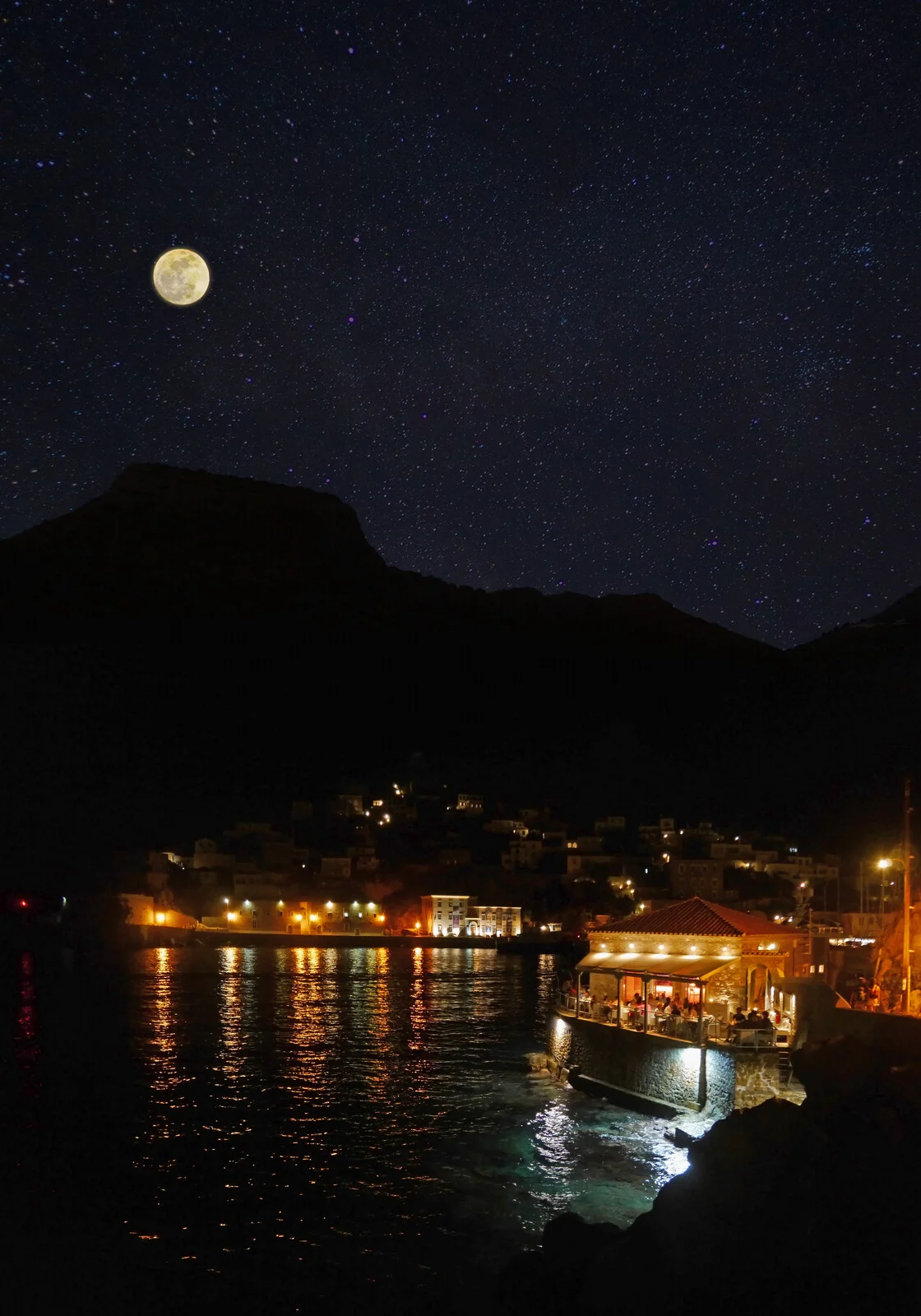
Gender Swap in the Universe - From She to He, 2024
Digital
50 x 70 cm
Steal Me a Full Moon
Steal Me a full and tipsy Moon
And let me dance among the stars,
That’s what the old man crooned,
As he took what was once ours.
He slipped into the night,
With a twinkle in his eye,
Said, “This moon is mine tonight,”
And left the goddess high and dry.
Selene, robbed of her glow,
Watched as he floated away,
“Old man, don’t you know,
This is not how we play?”
With a wink and a grin,
She cast her lunar spell,
“Return what’s always been,
Or in darkness, you shall dwell.”
The old man shivered,
As the moonlight turned cold,
He quivered and delivered,
The moon, back in her hold.
Selene laughed with delight,
As her moon returned to shine,
“Next time, old man, think twice,
This moon will always be mine!”
Hydra, August 2024
Under the full moon's soft glow, Selene, my new acquaintance, the moon goddess, and I sat comfortably in our corner at Amalour, drinks in hand. The August night was still in the 30s, and the conversation flowed naturally, filled with myth, humour, and the kind of banter that occurs when curiosity meets ancient wisdom. It was like stepping into a storybook, with Selene as my guide through the moon's many tales.
“If you and most moon deities are goddesses,” I began, swirling my glass thoughtfully, “why do people call it the ‘Man in the Moon’?”
Selene’s eyes twinkled with a knowing light as she smiled. “Ah, the ‘Man in the Moon.’ It’s one of those ideas woven into many different cultures, all interpreting the same face we see in the moon’s light.”
She leaned back slightly, her drink catching the moonlight, creating a light ripple. “In many cultures, people have seen faces or figures on the moon's surface, shapes created by the dark lunar maria and lighter highlands. These pareidolic images led to the idea of the ‘Man in the Moon.’”
I nodded, intrigued. “So, where did these stories begin?”
“Well,” Selene said, her tone both instructive and playful, “let’s start with Europe. There’s a tale that a man was banished to the moon as punishment for some crime. The details vary—some say he was gathering sticks on the Sabbath and was punished for breaking the holy day. Others claim he was a thief, caught stealing sheep, and condemned to wander the Earth’s orbit forever. Then there’s the medieval Christian tradition that the man is Cain, the Wanderer, cursed to circle the Earth for eternity.”
“Cain?” I said, raising an eyebrow. “The first murderer?”
She nodded, her expression more solemn. “Yes, Cain. Dante Alighieri even alludes to him in his *Inferno* when he writes about Cain being confined on the moon. It’s a haunting image.”
I leaned forward, recalling the lines.
“For now doth Cain with fork of thorns confine
On either hemisphere, touching the wave
Beneath the towers of Seville. Yesternight
The moon was round.”
Selene smiled at my recollection. “Exactly. Dante also questions the dark spots on the moon in his ‘Paradise’ when he writes:
“But tell, I pray thee, whence the gloomy spots
Upon this body, which below on earth
Give rise to talk of Cain in fabling quaint?”
“It’s fascinating,” I said, taking another sip, “how even in such epic poetry, the moon finds its place. Dante was a relist.”
Selene’s smile turned playful again. “And then, of course, there’s the more lighthearted side. In some European traditions, the ‘Man in the Moon’ is thought to enjoy a good drink—especially claret. There’s even an old ballad that says, ‘Our man in the moon drinks claret, with raw beef, turnip, and carrot.’”
I chuckled at the thought. “A celestial tavern-goer. I can picture that.”
“But it doesn’t stop there,” she continued. “You see, in Norse mythology—”
“Oh, I know this one!” I interrupted, a bit excited. “The Vikings believed that Máni was the male personification of the Moon, right? He drives a chariot across the sky, always pursued by the wolf Hati, who will eventually catch him at Ragnarök, the world's end. He’s history’s first drunk driver.”
Selene nodded approvingly. “Exactly. In Scandinavian folklore, the ‘Man in the Moon’ is often said to be a bit tipsy, with a slightly red nose. That’s likely a nod to the Vikings’ infamous feasts, where mead flowed until no soul could stand. A tradition, I hear, that some Scandinavians still cherish. Do you?” she asked with a teasing glint in her eye.
I laughed, shaking my head. “No, most of us today are the exceptions to that former rule.”
“Good to know,” Selene replied, clearly amused.
“I prefer to focus on quality rather than quantity,” I said, raising my glass.
Selene nodded approvingly. “Exactly. And while that’s a dramatic image, it shows how cultures have intertwined their fears and stories with the moon’s journey across the sky. The Chinese also have a drink or two on the moon..." Selene added and smiled indulgently.
“What about the Chinese?” I asked, eager to hear more.
“Ah, in Chinese mythology, it’s Chang’e who finds herself on the moon,” Selene said, her voice softening. “She drank too much of an immortality potion and ended up stranded there, sometimes accompanied by the Moon Rabbit, who pounds the elixir of life.”
"A drinking Roger Rabbit," I said, thinking of the movie. "But who is he drinking with?"
“With Chang'e, my cousin, the Chinese moon goddess known for her story of immortality. According to the legend, she was the wife of the archer Hou Yi, who saved the world by shooting down nine of ten suns. As a reward, Hou Yi was given an elixir of immortality, but Chang'e, either out of curiosity or to protect it, drank the potion herself. As a result, she was carried up to the moon, where she has lived ever since.
She’s not alone, though—her companion is the Jade Rabbit, often depicted as constantly pounding the elixir of life in a mortar. The two have become inseparable figures in Chinese mythology. Chang'e and the Jade Rabbit are celebrated during the Mid-Autumn Festival, when families come together to honour the moon. The festival is filled with traditions like sharing mooncakes and lighting lanterns, all in reverence to Chang'e and her story. So, while it might not be the wild partying of a "drinking Roger Rabbit," Chang'e and the Jade Rabbit have shared a long and enduring companionship on the moon.
I grinned. “The Moon Rabbit—that’s a recurring figure in many myths, isn’t it?”
“It is,” she confirmed. “And in another Chinese tale, there’s Wu Gang, a man doomed to chop down a tree on the moon that never stays down. A bit like Sisyphus and his boulder.”
“That sounds exhausting,” I said, shaking my head.
“Eternal tasks usually are,” she replied with a knowing smile.
“And what about the Haida people?” I asked, leaning in closer.
“In Haida mythology,” Selene explained, “the ‘Man in the Moon’ is actually a boy who was taken to the moon as punishment. His father had told him that the moonlight would help him gather sticks, but the boy ridiculed the moon instead. The moon then took him away to teach him a lesson.”
“Tough love,” I said, smiling.
“Very,” she agreed, a twinkle in her eye. “And in Japanese mythology, they have a whole tribe of spiritual beings living on the moon. ‘The Tale of the Bamboo Cutter’ tells the story of Princess Kaguya, who returns to the moon after living on Earth.”
“Fascinating how every culture sees something different,” I mused. “What about Vietnamese mythology?”
“In Vietnam,” Selene began, “the Man in the Moon is called Cuội. He was a woodcutter who ended up on the moon after his magical banyan tree uprooted itself. He grabbed onto its roots and was taken to the moon, where he now lives with the Moon Lady and the Jade Rabbit.”
“And they descend to Earth during the Mid-Autumn Festival, right?” I asked, showing off a bit of my knowledge.
“Exactly,” she said, clearly pleased. “During Tết Trung Thu, children celebrate with lanterns and mooncakes, honouring these lunar legends.”
“And what about Latvia?” I asked, curious about a story I’d heard once.
“Oh, that one’s a bit cheeky,” Selene smirked. “It’s about two maidens who went to collect water after leaving the sauna. One admired the beauty of the moon, while the other, unimpressed, declared her buttocks were more beautiful. She then mooned the moon, literally. As punishment, the moon deity or perhaps Dievs, depending on the version, placed her on the moon for everyone to see—with her backside prominently displayed.”
I couldn’t help but burst out laughing. “That’s a moon story I’ll never forget.”
Selene laughed along with me, her voice carrying the warmth of shared humour. “The moon has seen it all,” she said, her eyes gleaming with amusement. “From the solemn to the silly, every culture finds something familiar in that glowing orb.”
“And that’s what makes it so universal,” I added, feeling a deeper connection to the stories we had just shared.
“Precisely,” Selene agreed. “The moon may be seen as masculine in some stories, feminine in others, or even as a rabbit or a boy. But in every culture, it’s a mirror of our imagination, reflecting our hopes, fears, and sometimes our mischief.”
Selene and I continued to sip our drinks as the conversation effortlessly glided from one topic to another. “Speaking of myths and legends,” I began, leaning in with a grin, “the theatre of the ancient world must have had a lot to say about the moon. The Greeks and Romans were always intertwining their gods with drama, weren’t they? The moon's portrayal in their drama is a fascinating aspect of their rich history in literature and art.”
Selene nodded, her eyes sparkling with the memories of ages past. “Indeed. The ancient Greeks were masters of blending the divine with the dramatic. The moon often appeared as a symbol of mystery and change. It was central to many tragedies and comedies alike. Euripides and Sophocles, for example, wove the presence of the moon into the backdrop of their plays, using its phases to symbolise the passage of time and the emotional states of their characters.”
I smiled, imagining the grand theatres of ancient Greece, the moon shining above as actors performed tales of gods and mortals. “And the Romans picked up where the Greeks left off, didn’t they? In his Metamorphoses, Ovid writes extensively about the moon, casting it as both a witness to and a participant in the transformations of gods and humans alike.”
Selene’s voice grew a bit more animated as she continued. “Ovid’s works are filled with references to the moon—how it affects the tides, influences emotions, and serves as a silent observer of the dramatic changes in the world. It’s fascinating how he gave the moon such a powerful role in his stories.”
“And then there’s the medieval period,” I added, thinking aloud. “The songs and poems of that time often used the moon to symbolise unattainable love or divine beauty. Troubadours would sing under the moonlight, their voices carrying tales of chivalry and romance.”
Selene laughed softly. “Yes, the moon has always been the perfect companion for those longing hearts. Even in Shakespeare’s time, the moon was a central figure. Who could forget the famous line from A Midsummer Night’s Dream? ‘The moon, methinks, looks with a watery eye, And when she weeps, weeps every little flower.’ These timeless lines make us appreciate the moon's enduring influence in literature.”
“Ah, the Bard himself,” I said, raising my glass in tribute. “Shakespeare certainly knew how to weave the moon into his tales of love, madness, and magic. And speaking of magic, we can’t forget the leap to modern times. One of the very first films ever made was about the moon—A Trip to the Moon by Georges Méliès. That image of the rocket sticking out of the moon’s eye is iconic.”
Selene grinned, her voice filled with amusement. “Oh, Méliès truly captured the imagination of an entire generation with that film. It was a whimsical and fantastical portrayal of the moon, showing how deeply embedded it is in the human psyche.”
"I will never forget the scene in the movie when they land on the moon, and the rocket, a projectile shot from a giant cannon on Earth, drills into the Man in the Moon's eye. He doesn’t look happy."
Selene chuckled. “Indeed, the moon is a place of solemn myths and playful stories, and it will continue to be a beacon for all kinds of creativity.”
Selene and I continued our lively discussion, the moonlight casting a serene glow over our table at Amalour. Our conversation had meandered through the myths of ancient worlds, and now it seemed only natural to bring up the arts that the moon had inspired over the centuries.
“And speaking of the arts,” I said, “the moon hasn’t just been a muse for theatre and poetry. Music, too, has always had a special relationship with the moon. From the operas of the 18th and 19th centuries, where the moon often symbolised mystery and romance, to classical compositions that sought to capture its ethereal beauty.”
Selene smiled knowingly. “Yes, music has long been enchanted by the moon’s presence. Think of Beethoven’s ‘Moonlight Sonata,’ which so beautifully captures the stillness and introspection that the moon evokes. Or Debussy’s ‘Clair de Lune,’ perhaps one of the most famous pieces ever written about the moon, with its delicate, shimmering notes that seem to dance with the moonlight itself.”
“Exactly,” I nodded, letting the melody of those pieces play in my mind. “And in more modern times, we’ve seen the moon inspire everything from jazz to pop music. During the space race, Sinatra’s ‘Fly Me to the Moon’ became an anthem, and Neil Young’s haunting ‘Harvest Moon,’ which feels like an intimate serenade to the moon itself.”
“Not to mention all the film soundtracks,” Selene added. “So many movies about the moon are accompanied by unforgettable scores, blending music and visual art to make the moon seem even more magical.”
“And speaking of movies,” I continued, “we can't overlook films like Moonstruck. Cher’s performance against the backdrop of a full moon captured the idea of love’s madness and beauty perfectly. It’s a film that reminds us just how much the moon influences our emotions and actions.”
Selene laughed lightly, her voice carrying the warmth of shared amusement. “Oh, Moonstruck is a perfect example of how the moon can be both a symbol of romantic chaos and a gentle guide through it.”
“And let’s not forget how the moon continues to inspire filmmakers today,” I added, leaning back in my chair. “From 2001: A Space Odyssey to Moon with Sam Rockwell, and even First Man, the story of Neil Armstrong—modern cinema keeps returning to the moon as a source of wonder, mystery, and exploration.”
Selene nodded thoughtfully. “It’s incredible. How the moon has been a muse for many forms of art—whether in ancient drama, medieval songs, Renaissance plays, classical music, or modern films. It shows that no matter how much time passes, the moon remains a timeless source of inspiration.”
I grinned, and the conversation felt both light-hearted and profound. “And speaking of inspiration, that brings us back to Chang’e. While it might not be the wild partying of a ‘drinking Roger Rabbit,’ Chang’e and the Jade Rabbit have shared a long, enduring companionship on the moon.”
Selene chuckled; her laughter was soft and melodic. “Indeed, the moon is a place of solemn myths and playful stories, and it will continue to be a beacon for all kinds of creativity.”
We both sat back, letting the conversation drift with the night breeze, the full moon above glowing brighter with every story we uncovered.
The conversation faded into a comfortable silence as we both took in the full moon above, now seeming even more vibrant with the richness of the stories it carried.
Jörgen Thornberg
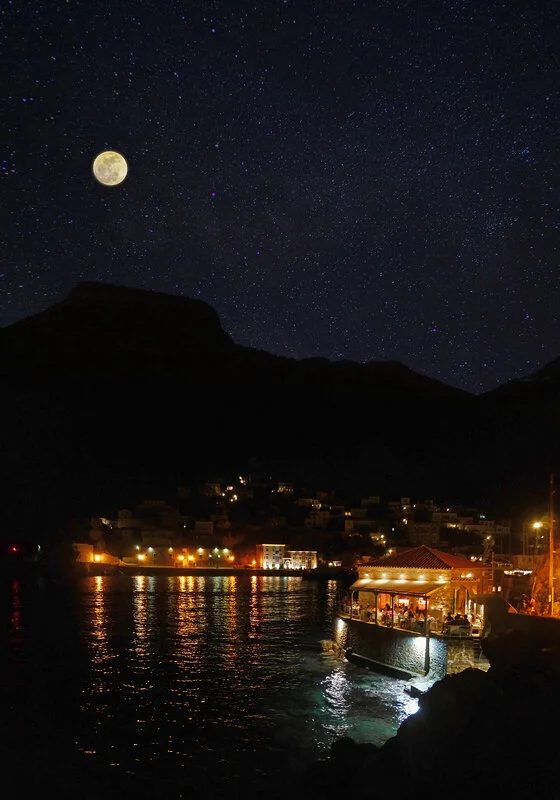
Gender Swap in the Universe - From She to He, 2024
Digital
50 x 70 cm
Steal Me a Full Moon
Steal Me a full and tipsy Moon
And let me dance among the stars,
That’s what the old man crooned,
As he took what was once ours.
He slipped into the night,
With a twinkle in his eye,
Said, “This moon is mine tonight,”
And left the goddess high and dry.
Selene, robbed of her glow,
Watched as he floated away,
“Old man, don’t you know,
This is not how we play?”
With a wink and a grin,
She cast her lunar spell,
“Return what’s always been,
Or in darkness, you shall dwell.”
The old man shivered,
As the moonlight turned cold,
He quivered and delivered,
The moon, back in her hold.
Selene laughed with delight,
As her moon returned to shine,
“Next time, old man, think twice,
This moon will always be mine!”
Hydra, August 2024
Under the full moon's soft glow, Selene, my new acquaintance, the moon goddess, and I sat comfortably in our corner at Amalour, drinks in hand. The August night was still in the 30s, and the conversation flowed naturally, filled with myth, humour, and the kind of banter that occurs when curiosity meets ancient wisdom. It was like stepping into a storybook, with Selene as my guide through the moon's many tales.
“If you and most moon deities are goddesses,” I began, swirling my glass thoughtfully, “why do people call it the ‘Man in the Moon’?”
Selene’s eyes twinkled with a knowing light as she smiled. “Ah, the ‘Man in the Moon.’ It’s one of those ideas woven into many different cultures, all interpreting the same face we see in the moon’s light.”
She leaned back slightly, her drink catching the moonlight, creating a light ripple. “In many cultures, people have seen faces or figures on the moon's surface, shapes created by the dark lunar maria and lighter highlands. These pareidolic images led to the idea of the ‘Man in the Moon.’”
I nodded, intrigued. “So, where did these stories begin?”
“Well,” Selene said, her tone both instructive and playful, “let’s start with Europe. There’s a tale that a man was banished to the moon as punishment for some crime. The details vary—some say he was gathering sticks on the Sabbath and was punished for breaking the holy day. Others claim he was a thief, caught stealing sheep, and condemned to wander the Earth’s orbit forever. Then there’s the medieval Christian tradition that the man is Cain, the Wanderer, cursed to circle the Earth for eternity.”
“Cain?” I said, raising an eyebrow. “The first murderer?”
She nodded, her expression more solemn. “Yes, Cain. Dante Alighieri even alludes to him in his *Inferno* when he writes about Cain being confined on the moon. It’s a haunting image.”
I leaned forward, recalling the lines.
“For now doth Cain with fork of thorns confine
On either hemisphere, touching the wave
Beneath the towers of Seville. Yesternight
The moon was round.”
Selene smiled at my recollection. “Exactly. Dante also questions the dark spots on the moon in his ‘Paradise’ when he writes:
“But tell, I pray thee, whence the gloomy spots
Upon this body, which below on earth
Give rise to talk of Cain in fabling quaint?”
“It’s fascinating,” I said, taking another sip, “how even in such epic poetry, the moon finds its place. Dante was a relist.”
Selene’s smile turned playful again. “And then, of course, there’s the more lighthearted side. In some European traditions, the ‘Man in the Moon’ is thought to enjoy a good drink—especially claret. There’s even an old ballad that says, ‘Our man in the moon drinks claret, with raw beef, turnip, and carrot.’”
I chuckled at the thought. “A celestial tavern-goer. I can picture that.”
“But it doesn’t stop there,” she continued. “You see, in Norse mythology—”
“Oh, I know this one!” I interrupted, a bit excited. “The Vikings believed that Máni was the male personification of the Moon, right? He drives a chariot across the sky, always pursued by the wolf Hati, who will eventually catch him at Ragnarök, the world's end. He’s history’s first drunk driver.”
Selene nodded approvingly. “Exactly. In Scandinavian folklore, the ‘Man in the Moon’ is often said to be a bit tipsy, with a slightly red nose. That’s likely a nod to the Vikings’ infamous feasts, where mead flowed until no soul could stand. A tradition, I hear, that some Scandinavians still cherish. Do you?” she asked with a teasing glint in her eye.
I laughed, shaking my head. “No, most of us today are the exceptions to that former rule.”
“Good to know,” Selene replied, clearly amused.
“I prefer to focus on quality rather than quantity,” I said, raising my glass.
Selene nodded approvingly. “Exactly. And while that’s a dramatic image, it shows how cultures have intertwined their fears and stories with the moon’s journey across the sky. The Chinese also have a drink or two on the moon..." Selene added and smiled indulgently.
“What about the Chinese?” I asked, eager to hear more.
“Ah, in Chinese mythology, it’s Chang’e who finds herself on the moon,” Selene said, her voice softening. “She drank too much of an immortality potion and ended up stranded there, sometimes accompanied by the Moon Rabbit, who pounds the elixir of life.”
"A drinking Roger Rabbit," I said, thinking of the movie. "But who is he drinking with?"
“With Chang'e, my cousin, the Chinese moon goddess known for her story of immortality. According to the legend, she was the wife of the archer Hou Yi, who saved the world by shooting down nine of ten suns. As a reward, Hou Yi was given an elixir of immortality, but Chang'e, either out of curiosity or to protect it, drank the potion herself. As a result, she was carried up to the moon, where she has lived ever since.
She’s not alone, though—her companion is the Jade Rabbit, often depicted as constantly pounding the elixir of life in a mortar. The two have become inseparable figures in Chinese mythology. Chang'e and the Jade Rabbit are celebrated during the Mid-Autumn Festival, when families come together to honour the moon. The festival is filled with traditions like sharing mooncakes and lighting lanterns, all in reverence to Chang'e and her story. So, while it might not be the wild partying of a "drinking Roger Rabbit," Chang'e and the Jade Rabbit have shared a long and enduring companionship on the moon.
I grinned. “The Moon Rabbit—that’s a recurring figure in many myths, isn’t it?”
“It is,” she confirmed. “And in another Chinese tale, there’s Wu Gang, a man doomed to chop down a tree on the moon that never stays down. A bit like Sisyphus and his boulder.”
“That sounds exhausting,” I said, shaking my head.
“Eternal tasks usually are,” she replied with a knowing smile.
“And what about the Haida people?” I asked, leaning in closer.
“In Haida mythology,” Selene explained, “the ‘Man in the Moon’ is actually a boy who was taken to the moon as punishment. His father had told him that the moonlight would help him gather sticks, but the boy ridiculed the moon instead. The moon then took him away to teach him a lesson.”
“Tough love,” I said, smiling.
“Very,” she agreed, a twinkle in her eye. “And in Japanese mythology, they have a whole tribe of spiritual beings living on the moon. ‘The Tale of the Bamboo Cutter’ tells the story of Princess Kaguya, who returns to the moon after living on Earth.”
“Fascinating how every culture sees something different,” I mused. “What about Vietnamese mythology?”
“In Vietnam,” Selene began, “the Man in the Moon is called Cuội. He was a woodcutter who ended up on the moon after his magical banyan tree uprooted itself. He grabbed onto its roots and was taken to the moon, where he now lives with the Moon Lady and the Jade Rabbit.”
“And they descend to Earth during the Mid-Autumn Festival, right?” I asked, showing off a bit of my knowledge.
“Exactly,” she said, clearly pleased. “During Tết Trung Thu, children celebrate with lanterns and mooncakes, honouring these lunar legends.”
“And what about Latvia?” I asked, curious about a story I’d heard once.
“Oh, that one’s a bit cheeky,” Selene smirked. “It’s about two maidens who went to collect water after leaving the sauna. One admired the beauty of the moon, while the other, unimpressed, declared her buttocks were more beautiful. She then mooned the moon, literally. As punishment, the moon deity or perhaps Dievs, depending on the version, placed her on the moon for everyone to see—with her backside prominently displayed.”
I couldn’t help but burst out laughing. “That’s a moon story I’ll never forget.”
Selene laughed along with me, her voice carrying the warmth of shared humour. “The moon has seen it all,” she said, her eyes gleaming with amusement. “From the solemn to the silly, every culture finds something familiar in that glowing orb.”
“And that’s what makes it so universal,” I added, feeling a deeper connection to the stories we had just shared.
“Precisely,” Selene agreed. “The moon may be seen as masculine in some stories, feminine in others, or even as a rabbit or a boy. But in every culture, it’s a mirror of our imagination, reflecting our hopes, fears, and sometimes our mischief.”
Selene and I continued to sip our drinks as the conversation effortlessly glided from one topic to another. “Speaking of myths and legends,” I began, leaning in with a grin, “the theatre of the ancient world must have had a lot to say about the moon. The Greeks and Romans were always intertwining their gods with drama, weren’t they? The moon's portrayal in their drama is a fascinating aspect of their rich history in literature and art.”
Selene nodded, her eyes sparkling with the memories of ages past. “Indeed. The ancient Greeks were masters of blending the divine with the dramatic. The moon often appeared as a symbol of mystery and change. It was central to many tragedies and comedies alike. Euripides and Sophocles, for example, wove the presence of the moon into the backdrop of their plays, using its phases to symbolise the passage of time and the emotional states of their characters.”
I smiled, imagining the grand theatres of ancient Greece, the moon shining above as actors performed tales of gods and mortals. “And the Romans picked up where the Greeks left off, didn’t they? In his Metamorphoses, Ovid writes extensively about the moon, casting it as both a witness to and a participant in the transformations of gods and humans alike.”
Selene’s voice grew a bit more animated as she continued. “Ovid’s works are filled with references to the moon—how it affects the tides, influences emotions, and serves as a silent observer of the dramatic changes in the world. It’s fascinating how he gave the moon such a powerful role in his stories.”
“And then there’s the medieval period,” I added, thinking aloud. “The songs and poems of that time often used the moon to symbolise unattainable love or divine beauty. Troubadours would sing under the moonlight, their voices carrying tales of chivalry and romance.”
Selene laughed softly. “Yes, the moon has always been the perfect companion for those longing hearts. Even in Shakespeare’s time, the moon was a central figure. Who could forget the famous line from A Midsummer Night’s Dream? ‘The moon, methinks, looks with a watery eye, And when she weeps, weeps every little flower.’ These timeless lines make us appreciate the moon's enduring influence in literature.”
“Ah, the Bard himself,” I said, raising my glass in tribute. “Shakespeare certainly knew how to weave the moon into his tales of love, madness, and magic. And speaking of magic, we can’t forget the leap to modern times. One of the very first films ever made was about the moon—A Trip to the Moon by Georges Méliès. That image of the rocket sticking out of the moon’s eye is iconic.”
Selene grinned, her voice filled with amusement. “Oh, Méliès truly captured the imagination of an entire generation with that film. It was a whimsical and fantastical portrayal of the moon, showing how deeply embedded it is in the human psyche.”
"I will never forget the scene in the movie when they land on the moon, and the rocket, a projectile shot from a giant cannon on Earth, drills into the Man in the Moon's eye. He doesn’t look happy."
Selene chuckled. “Indeed, the moon is a place of solemn myths and playful stories, and it will continue to be a beacon for all kinds of creativity.”
Selene and I continued our lively discussion, the moonlight casting a serene glow over our table at Amalour. Our conversation had meandered through the myths of ancient worlds, and now it seemed only natural to bring up the arts that the moon had inspired over the centuries.
“And speaking of the arts,” I said, “the moon hasn’t just been a muse for theatre and poetry. Music, too, has always had a special relationship with the moon. From the operas of the 18th and 19th centuries, where the moon often symbolised mystery and romance, to classical compositions that sought to capture its ethereal beauty.”
Selene smiled knowingly. “Yes, music has long been enchanted by the moon’s presence. Think of Beethoven’s ‘Moonlight Sonata,’ which so beautifully captures the stillness and introspection that the moon evokes. Or Debussy’s ‘Clair de Lune,’ perhaps one of the most famous pieces ever written about the moon, with its delicate, shimmering notes that seem to dance with the moonlight itself.”
“Exactly,” I nodded, letting the melody of those pieces play in my mind. “And in more modern times, we’ve seen the moon inspire everything from jazz to pop music. During the space race, Sinatra’s ‘Fly Me to the Moon’ became an anthem, and Neil Young’s haunting ‘Harvest Moon,’ which feels like an intimate serenade to the moon itself.”
“Not to mention all the film soundtracks,” Selene added. “So many movies about the moon are accompanied by unforgettable scores, blending music and visual art to make the moon seem even more magical.”
“And speaking of movies,” I continued, “we can't overlook films like Moonstruck. Cher’s performance against the backdrop of a full moon captured the idea of love’s madness and beauty perfectly. It’s a film that reminds us just how much the moon influences our emotions and actions.”
Selene laughed lightly, her voice carrying the warmth of shared amusement. “Oh, Moonstruck is a perfect example of how the moon can be both a symbol of romantic chaos and a gentle guide through it.”
“And let’s not forget how the moon continues to inspire filmmakers today,” I added, leaning back in my chair. “From 2001: A Space Odyssey to Moon with Sam Rockwell, and even First Man, the story of Neil Armstrong—modern cinema keeps returning to the moon as a source of wonder, mystery, and exploration.”
Selene nodded thoughtfully. “It’s incredible. How the moon has been a muse for many forms of art—whether in ancient drama, medieval songs, Renaissance plays, classical music, or modern films. It shows that no matter how much time passes, the moon remains a timeless source of inspiration.”
I grinned, and the conversation felt both light-hearted and profound. “And speaking of inspiration, that brings us back to Chang’e. While it might not be the wild partying of a ‘drinking Roger Rabbit,’ Chang’e and the Jade Rabbit have shared a long, enduring companionship on the moon.”
Selene chuckled; her laughter was soft and melodic. “Indeed, the moon is a place of solemn myths and playful stories, and it will continue to be a beacon for all kinds of creativity.”
We both sat back, letting the conversation drift with the night breeze, the full moon above glowing brighter with every story we uncovered.
The conversation faded into a comfortable silence as we both took in the full moon above, now seeming even more vibrant with the richness of the stories it carried.

Jörgen Thornberg
Malmö
Lite om bilder och mig. Translation in English at the end.
Jag är en nyfiken person som ser allt i bilder, även det jag fäster i ord, gärna tillsammans för bakom alla mina bilder finns en berättelse. Till vissa bilder hör en kortare eller längre novell som följer med bilden.
Bilder berättar historier. Jag omges av naturlig skönhet, intressanta människor och historia var jag än går. Jag använder min kamera för att dokumentera världen och blanda det jag ser med vad jag känner för att fånga den dolda magin.
Mina bilder berättar mina historier. Genom mina bilder, tryck och berättelser. Jag bjuder in dig att ta del av dessa berättelser, in i ditt liv och hem och dela min mycket personliga syn på vår värld. Mer än vad ögat ser. Jag tänker i bilder, drömmer och skriver och pratar om dem; följaktligen måste jag också skapa bilder. De blir vad jag ser, inte nödvändigtvis begränsade till verkligheten. Det finns en bild runt varje hörn. Jag hoppas att du kommer att se vad jag såg och gilla det.
Jag är också en skrivande person och till många bilder hör en kortare eller längre essay. Den följer med tavlan, tryckt på fint papper och med en personlig hälsning från mig.
Flertalet bilder startar sin resa i min kamera. Enkelt förklarat beskriver jag bilden jag ser i mitt inre, upplevd eller fantiserad. Bilden uppstår inom mig redan innan jag fått okularet till ögat. På bråkdelen av ett ögonblick ser jag vad jag vill ha och vad som kan göras med bilden. Här skall jag stoppa in en giraff, stålmannen, Titanic eller vad det är min fantasi finner ut. Ännu märkligare är att jag kommer ihåg minnesbilden långt efteråt när det blir tid att skapa verket. Om jag lyckas eller inte, är upp till betraktaren, oftast präglat av en stråk av svart humor – meningen är att man skall bli underhållen. Mina bilder blir ofta en snackis där de hänger.
Jag föredrar bilder som förmedlar ett budskap i flera lager. Vid första anblicken fylld av feel-good, en vacker utsikt, fint väder, solen skiner, blommor på ängen eller vattnet som ligger förrädiskt spegelblankt. I en sådan bild kan jag gömma min egentliga berättelse, mitt förakt för förtryckare och våldsverkare, rasister och fördomsfulla människor - ett gärna återkommande motiv mer eller mindre dolt i det vackra motivet. Jag försöker förena dem i ett gemensamt narrativ.
Bild och formgivning har löpt som en röd tråd genom livet. Fotokonst känns som en värdig final som jag gärna delar med mig.
Min genre är vid som framgår av mina bilder, temat en blandning av pop- och gatukonst i kollage som kan bestå av hundratals lager. Vissa bilder kan ta veckor, andra någon dag innan det är dags att överlämna resultatet till printverkstaden. Fine Art Prints är digitala fotocollage. I dessa kollage sker rivandet, klippandet, pusslandet, målandet, ritandet och sprayningen digitalt. Det jag monterar in kan vara hundratals år gamla bilder som jag omsorgsfullt frilägger så att de ser ut att vara en del av tavlan men också bilder skapade av mig själv efter min egen fantasi. Därefter besöks printstudion och för vissa bilder numrera en limiterad upplaga (oftast 7 exemplar) och signera för hand. Vissa bilder kan köpas i olika format. Det är bara att fråga efter vilka. Gillar man en bild som är 70x100 men inte har plats på väggen, går den kanske att få i 50x70 cm istället. Frågan är fri.
Metoden Giclée eller Fine Art Print som det också kallas är det moderna sättet för framställning av grafisk konst. Villkoret för denna typ av utskrifter är att en högkvalitativ storformatskrivare används med åldersbeständigt färgpigment och konstnärspapper eller i förekommande fall på duk. Pappret som används möter de krav på livslängd som ställs av museer och gallerier. Normalt säljer jag mina bilder oinramade så att den nya ägaren själv kan bestämma hur de skall se ut, med eller utan passepartout färg på ram, med eller utan glas etc..
Under många år ställde jag bara ut på nätet, i valda grupper och på min egen Facebooksida - https://www.facebook.com/jorgen.thornberg.9
Jag finns också på en egen hemsida som tyvärr inte alltid är uppdaterad – https://www.jth.life/ Där kan du också läsa en del av de berättelser som följer med bilden.
UTSTÄLLNINGAR
Luftkastellet, oktober 2022
Konst i Lund, november 2022
Luftkastellet, mars 2023
Engleson Galleri Caroli, april 2023
Hydra, Greece June 2023
Engleson Galleri Caroli, oktober 2023
Toppen, Höllviken december 2023
Luftkastellet, mars 2024
Torups Galleri, mars 2024
Venice, May 2024
Luftkastellet, oktober 2024
Konst i Advent, December 2024
Galleri Engleson, Caroli December 2024
Jäger & Jansson Galleri, april 2025
A bit about pictures and me.
I'm a curious person who sees everything in pictures, even what I express in words, often combining them, for behind all my pictures lies a story. These narratives, some as short as a single image and others as long as a novel, are the heart and soul of my work.
Pictures tell stories. Wherever I go, I'm surrounded by natural beauty, exciting people, and history. I use my camera to document the world and blend what I see with what I feel to capture the hidden magic.
My images tell my stories. Through my pictures, prints, and narratives, I invite you to partake in these stories in your life and home and share my deeply personal perspective of our world. More than meets the eye. I think in pictures, dream, write, and talk about them; consequently, I must create images too. They become what I see, not necessarily confined to reality. There's a picture around every corner. I hope you'll see what I saw and enjoy it.
I'm also a writer, and many images come with a shorter or longer essay. It accompanies the painting, printed on fine paper with my personal greeting.
Many pictures start their journey on my camera. Simply put, I describe the image I see in my mind, experienced or imagined. The image arises within me even before I bring the eyepiece to my eye. In a fraction of a moment, I see what I want and what can be done with the picture. Here, I'll insert a giraffe, Superman, the Titanic, or whatever my imagination conjures up. Even stranger is that I remember the mental image long after it's time to create the work. Whether I succeed is up to the observer, often imbued with a streak of black humour – the aim is to entertain. My pictures usually become a talking point wherever they hang.
I prefer pictures that convey a message in multiple layers. At first glance, they're filled with feel-good vibes, a beautiful view, lovely weather, the sun shining, flowers in the meadow, or the water lying deceptively calm. But beneath this surface beauty, I often conceal a deeper story, a narrative that challenges societal norms or explores the human condition. I invite you to delve into these hidden narratives and discover the layers of meaning within my work.
Picture and design have been a thread running through my life. Photographic art feels like a fitting finale, and I'm happy to share it.
My genre is varied, as seen in my pictures; the theme is a blend of pop and street art in collages that can consist of hundreds of layers. Some images can take weeks, others just a day before it's time to hand over the result to the print workshop. Fine Art Prints are digital photo collages. In these collages, tearing, cutting, puzzling, painting, drawing, and spraying happen digitally. What I insert can be images hundreds of years old that I carefully extract so they appear to be part of the painting, but also images created by myself, now also generated from my imagination. Next, visit the print studio and, for certain images, number a limited edition (usually 7 copies) and sign them by hand. Some images may be available in other formats. Just ask which ones. If you like an image that's 70x100 but doesn't have space on the wall, you might be able to get it in 50x70 cm instead. The question is open.
The Giclée method, or Fine Art Print as it's also called, is the modern way of producing graphic art. This method ensures the highest quality and longevity of the artwork, using a high-quality large-format printer with archival pigment inks and artist paper or, in some cases, canvas. The paper used meets the longevity requirements set by museums and galleries. I sell my pictures unframed, allowing the new owner to personalise their artwork, confident in the lasting value and quality of the piece.
For many years, I only exhibited online, in selected groups, and on my Facebook page - https://www.facebook.com/jorgen.thornberg.9. I also have my website, which unfortunately is not constantly updated - https://www.jth.life/. You can also read some of the stories accompanying the pictures there.
EXHIBITIONS
Luftkastellet, October 2022
Art in Lund, November 2022
Luftkastellet, March 2023
Engleson Gallery Caroli, April 2023
Hydra, Greece June 2023
Engleson Gallery Caroli, October 2023
Toppen, Höllviken December 2023
Luftkastellet, March 2024
Torup Gallery, March 2024
Venice, May 2024
UTSTÄLLNINGAR
Luftkastellet, oktober 2022
Konst i Lund, november 2022
Luftkastellet, mars 2023
Engleson Galleri Caroli, april 2023
Hydra, Greece June 2023
Engleson Galleri Caroli, oktober 2023
Toppen, Höllviken december 2023
Luftkastellet, mars 2024
Torups Galleri, mars 2024
Venice, May 2024
Luftkastellet, October 2024
Konst i Advent, December 2024
Galleri Engleson, Caroli December 2024
Jäger & Jansson Galleri, April 2025
Utbildning
Autodidakt
Medlem i konstnärsförening
Öppna Sinnen
Med i konstrunda
Konstrundan i Skåne
Utställningar
Luftkastellet, October 2022
Art in Lund, November 2022
Luftkastellet, March 2023
Engleson Gallery Caroli, April 2023
Hydra, Greece June 2023
Engleson Gallery Caroli, October 2023
Toppen, Höllviken December 2023
Luftkastellet, March 2024
Torup Gallery, March 2024
Venice, May 2024