Vi använder cookies för att ge dig bästa möjliga upplevelse. Välj vilka cookies du tillåter.
Läs mer i vår integritetspolicy
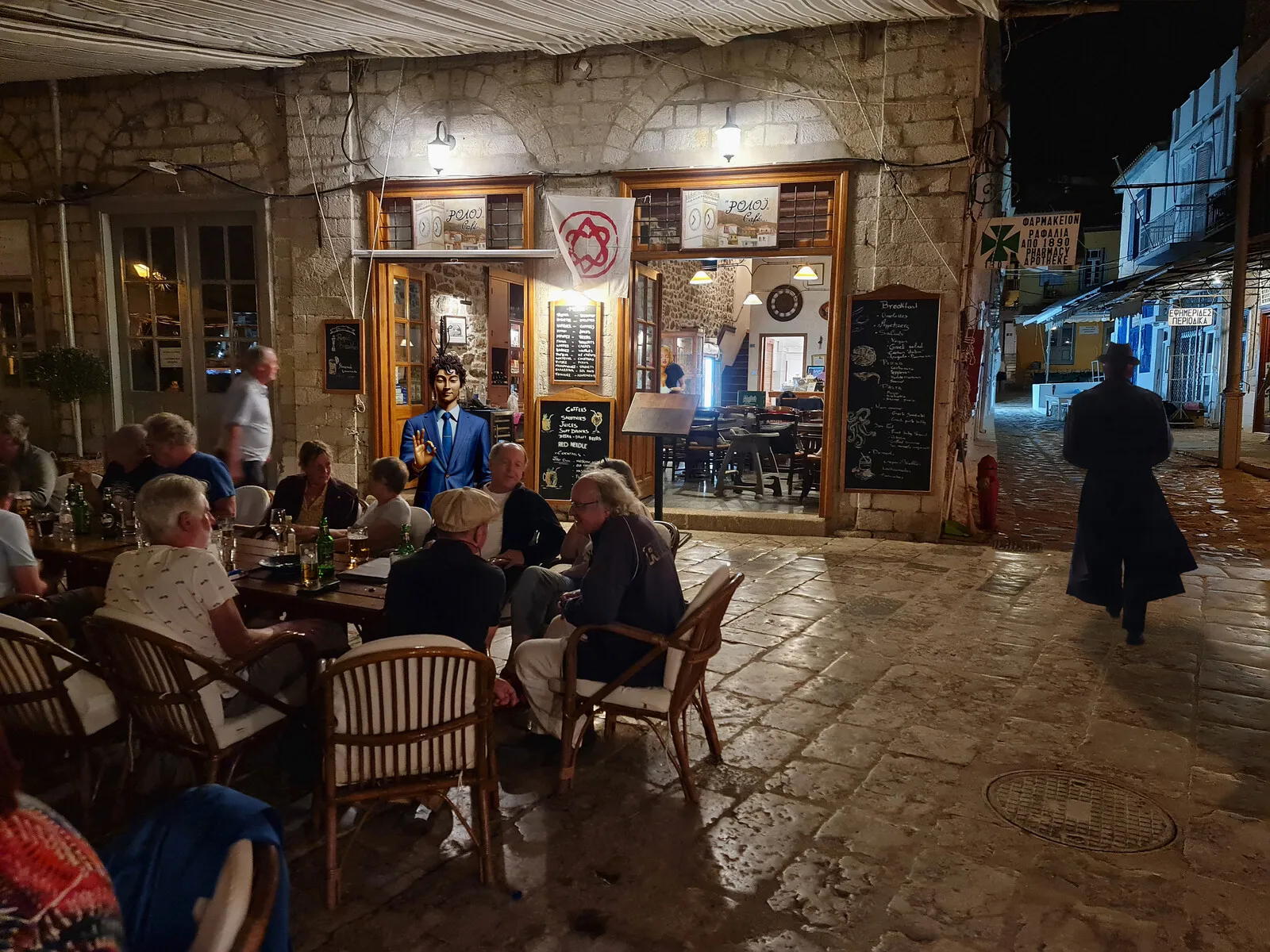
Jörgen Thornberg
Leaving the Table, Out of the Game, 2023
Digital
70 x 50 cm
I'm leaving the table
I'm out of the game
I don't know the people
In your picture frame
If I ever loved you, oh no, no
It's a crying shame
If I ever loved you
If I knew your name
Reconciliation is a central theme in Leonard Cohen's poetry. "Leaving the Table" sounds vintage Cohen, jazzy in nature, a poignant, country-tinged ballad with the singer seemingly confronting his mortality. Album. It's one of his last songs. It reached our ears from his album 'You Want It Darker' only weeks before he departed. Posthumously, the song was decorated with an animated video with Leonard, who appears to be dancing in a grand old time between buildings and amongst the clouds. He did that last night on Hydra as well.
Leonard's departure from Roloi, a singalong honouring him, was poignant. He was adorned in a long covering overcoat that fluttered as he walked, representing his transition. The northerly wind, a bit cold yesterday, as it often can be in the spring before the sea warms up, seemed to echo the bittersweetness of the occasion. Two guitars accompanied Leonard, the leaving guest of honour, adding a musical backdrop to his departure. A few steps into the narrow Votsi alley between Roloi and Tassos, he began to dance and took off from the cobblestones, a metaphorical act of defiance against the laws of nature. He disappeared into the darkness at Ostria, but Leonard's fans continued to sing rhyming blame and game, a testament to his enduring legacy.
As Leonard had just departed, a mysterious figure materialised. This enigmatic man, dressed in a sharp, deep blue suit with a matching tie and sporting Buddha's iconic hairstyle, held his hand at chest height. In Buddhism, this hand gesture is known as the Vitarka Mudra pose, symbolising the teaching of Buddha. Interestingly, Leonard was also attired in a similar suit. This parallel between the enigmatic man and Leonard, adorned in the same suit and assuming the same hand gesture, could be interpreted as a symbolic representation of Leonard's transition into enlightenment or wisdom as he leaves behind his mortal existence.
These hand signs, known as mudras, are integral to Buddhist rituals and are often depicted in images of Buddhas, bodhisattvas, tantric deities, and other Buddhist figures. Among the myriad of mudras, the teaching of Buddha is one of the most significant, as Leonard had just discovered. However, before I could delve deeper into this intriguing topic, the man vanished, leaving only speculation and a lingering sense of mystery.
The Vitarka Mudra, a hand gesture that symbolises the transmission of teaching and wisdom in Buddhism, was the pose the man had assumed. His right arm was slightly bent at the elbow, his hand held at chest level, palm facing outward. The thumb and index finger formed a perfect circle, representing the wheel of law, while the other fingers extended upwards. This pose, a common sight in statues and images of the Buddha, seemed to encapsulate the act of teaching and discussion, a symbol of profound wisdom and enlightenment.
Leonard, a master of capturing the intricacies of the human experience through his profound and introspective lyrics, delves into themes of love, loss, transformation, and self-discovery in 'Leaving the Table '. The song offers poignant reflections on the complexities of relationships and our choices in navigating life's ever-changing landscape. We must not forget that Roloi means something to Leonard. We talk about the old Katsikas, the combined grocery shop and bar where he and Marianne spent so much time. It was also a place full of drama, enough to fill many more books than are already published. The scene was in the 1960s, like today outside and the casting, the clients from all parts of the world.
Don't miss the whole story; you will understand more about love, loss, and transformation.
"Leaving the Table, being out of the Game." With Leonard gone and the conclusion in our hands, we take his words to heart. The song reflects on the bittersweet realisation that specific chapters of life must come to an end. It speaks of stepping away from a relationship or situation that no longer serves one's well-being or happiness. His haunting voice and melancholic melody emphasise the emotional weight of letting go as he navigates the delicate process of disentangling from a past love.
Through introspective verses such as "I'm leaving the table, I'm out of the game / I don't know the people in your picture frame," Leonard encapsulates the essence of the human experience— the recognition that sometimes we must detach ourselves from what was once familiar to find solace and personal growth. This song serves as a reminder that endings can be transformative, leading to newfound strength, wisdom, and self-discovery.
A Journey of Departure
The song sets a contemplative tone from its opening lines, as Leonard's voice weaves a tale of detachment and moving on. His words speak to the universal experience of bidding farewell to relationships, aspirations, or phases of life that no longer serve our well-being. Through poignant verses like "I don't need a lover / the wretched beast is tame," Leonard explores the transformative power of disentangling oneself from what once defined us, leading to newfound strength and personal growth.
Acceptance and Resignation
As the song progresses, Leonard's lyrics evoke a sense of acceptance and resignation. Lines such as "I'm leaving the table, I'm out of the game / I don't know the people in your picture frame" emphasise the willingness to let go of the past and embrace the uncertainties of the future. Leonard's melancholic melody and the sombre instrumentation create a poignant atmosphere, reflecting the emotional weight of bidding farewell to what was once familiar.
The Transformative Power of Letting Go
Leonard's message is clear: departing from a particular chapter of life can catalyse personal growth and self-discovery. His poetic craftsmanship unveils a sense of liberation and resilience in lines like 'I don't need a reason for what I became / I've got these excuses, they're tired and lame.' Through these lyrics, he encourages listeners to embrace the transformative power of letting go, even facing uncertainty or discomfort, a powerful and reflective message.
Navigating the Complexities of Loss
Leonard subtly touches upon the complexities of loss. It conveys a delicate balance between acknowledging the pain of departure and finding solace in the opportunities that lie ahead. The song recognises the emotional toll of parting ways, yet it also suggests that relinquishing attachments can create space for new experiences and personal reinvention.
A poignant testament
'Leaving the Table' is a poignant testament to Leonard Cohen's ability to explore profound emotions and themes through his poetic songwriting. He also wants us not to forget that life is a series of transitions, and bidding farewell to what was once familiar is necessary for growth and self-discovery.
Last night at Roloi, we had many reasons to reflect on our experiences of departure, acceptance, and the transformative power of letting go. We are getting close to the end of the Cohen week on Hydra, and people split up. 'Leaving the Table' remains a timeless music that continues to resonate, offering solace and wisdom to all navigating life's inevitable transitions. On the surface, it is as simple as a ferry to Piraeus, a taxi ride to the airport and an international journey, but in reality, it is a transition we know no more about than what the flight ticket says. A 'Goodbye' can be an 'au Revoir or 'See you down the road' in eternity, as Leonard wished Marianne. We never know if a transition is the final one. Leonard knew about his departure when he wrote 'Leaving the Table'. It was inescapable. That makes his words extra fascinating.
The lyrics also take on a more playful and ironic tone, reflecting on the inherent challenges of navigating the complexities of love and relationships. In this song, Leonard seems to let go of conflict or battle with an unspecified person. He is 'leaving the table', perhaps because, having grown older, Leonard no longer feels the need to fight. Please make up your mind.
You don't need a lawyer
I'm not making a claim
You don't need to surrender
I'm not taking aim
I don't need a lover, no, no, no
The wretched beast is tame
I don't need a lover
So, blow out the flame
There's nobody missing,
There is no reward
Little by little
We're cutting the cord
We're spending the treasure, oh no, no
That love cannot afford
I know you can feel it
The sweetness restored
I don't need a reason
For what I became
I've got these excuses
They're tired, and they're lame
I don't need a pardon, no no, no no, no
There's no one left to blame
I'm leaving the table
I'm out of the game
I'm leaving the table
I'm out of the game
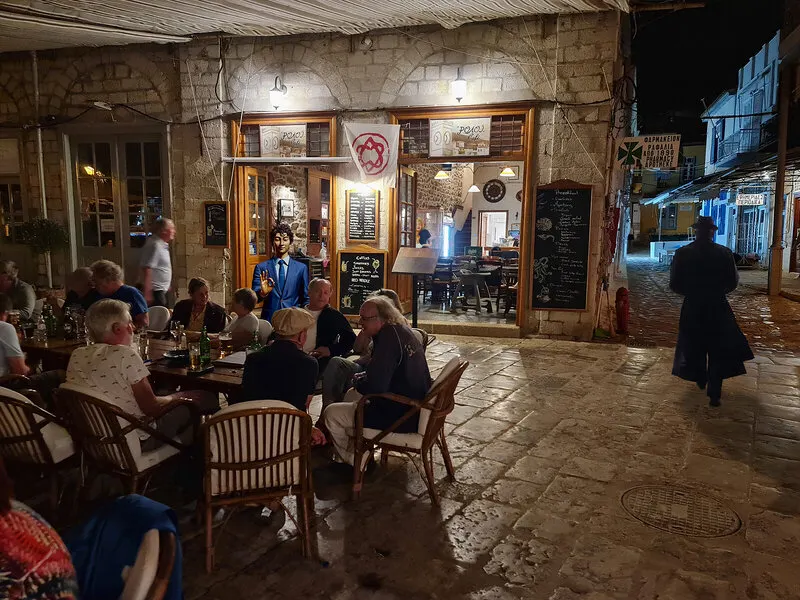
Jörgen Thornberg
Leaving the Table, Out of the Game, 2023
Digital
70 x 50 cm
I'm leaving the table
I'm out of the game
I don't know the people
In your picture frame
If I ever loved you, oh no, no
It's a crying shame
If I ever loved you
If I knew your name
Reconciliation is a central theme in Leonard Cohen's poetry. "Leaving the Table" sounds vintage Cohen, jazzy in nature, a poignant, country-tinged ballad with the singer seemingly confronting his mortality. Album. It's one of his last songs. It reached our ears from his album 'You Want It Darker' only weeks before he departed. Posthumously, the song was decorated with an animated video with Leonard, who appears to be dancing in a grand old time between buildings and amongst the clouds. He did that last night on Hydra as well.
Leonard's departure from Roloi, a singalong honouring him, was poignant. He was adorned in a long covering overcoat that fluttered as he walked, representing his transition. The northerly wind, a bit cold yesterday, as it often can be in the spring before the sea warms up, seemed to echo the bittersweetness of the occasion. Two guitars accompanied Leonard, the leaving guest of honour, adding a musical backdrop to his departure. A few steps into the narrow Votsi alley between Roloi and Tassos, he began to dance and took off from the cobblestones, a metaphorical act of defiance against the laws of nature. He disappeared into the darkness at Ostria, but Leonard's fans continued to sing rhyming blame and game, a testament to his enduring legacy.
As Leonard had just departed, a mysterious figure materialised. This enigmatic man, dressed in a sharp, deep blue suit with a matching tie and sporting Buddha's iconic hairstyle, held his hand at chest height. In Buddhism, this hand gesture is known as the Vitarka Mudra pose, symbolising the teaching of Buddha. Interestingly, Leonard was also attired in a similar suit. This parallel between the enigmatic man and Leonard, adorned in the same suit and assuming the same hand gesture, could be interpreted as a symbolic representation of Leonard's transition into enlightenment or wisdom as he leaves behind his mortal existence.
These hand signs, known as mudras, are integral to Buddhist rituals and are often depicted in images of Buddhas, bodhisattvas, tantric deities, and other Buddhist figures. Among the myriad of mudras, the teaching of Buddha is one of the most significant, as Leonard had just discovered. However, before I could delve deeper into this intriguing topic, the man vanished, leaving only speculation and a lingering sense of mystery.
The Vitarka Mudra, a hand gesture that symbolises the transmission of teaching and wisdom in Buddhism, was the pose the man had assumed. His right arm was slightly bent at the elbow, his hand held at chest level, palm facing outward. The thumb and index finger formed a perfect circle, representing the wheel of law, while the other fingers extended upwards. This pose, a common sight in statues and images of the Buddha, seemed to encapsulate the act of teaching and discussion, a symbol of profound wisdom and enlightenment.
Leonard, a master of capturing the intricacies of the human experience through his profound and introspective lyrics, delves into themes of love, loss, transformation, and self-discovery in 'Leaving the Table '. The song offers poignant reflections on the complexities of relationships and our choices in navigating life's ever-changing landscape. We must not forget that Roloi means something to Leonard. We talk about the old Katsikas, the combined grocery shop and bar where he and Marianne spent so much time. It was also a place full of drama, enough to fill many more books than are already published. The scene was in the 1960s, like today outside and the casting, the clients from all parts of the world.
Don't miss the whole story; you will understand more about love, loss, and transformation.
"Leaving the Table, being out of the Game." With Leonard gone and the conclusion in our hands, we take his words to heart. The song reflects on the bittersweet realisation that specific chapters of life must come to an end. It speaks of stepping away from a relationship or situation that no longer serves one's well-being or happiness. His haunting voice and melancholic melody emphasise the emotional weight of letting go as he navigates the delicate process of disentangling from a past love.
Through introspective verses such as "I'm leaving the table, I'm out of the game / I don't know the people in your picture frame," Leonard encapsulates the essence of the human experience— the recognition that sometimes we must detach ourselves from what was once familiar to find solace and personal growth. This song serves as a reminder that endings can be transformative, leading to newfound strength, wisdom, and self-discovery.
A Journey of Departure
The song sets a contemplative tone from its opening lines, as Leonard's voice weaves a tale of detachment and moving on. His words speak to the universal experience of bidding farewell to relationships, aspirations, or phases of life that no longer serve our well-being. Through poignant verses like "I don't need a lover / the wretched beast is tame," Leonard explores the transformative power of disentangling oneself from what once defined us, leading to newfound strength and personal growth.
Acceptance and Resignation
As the song progresses, Leonard's lyrics evoke a sense of acceptance and resignation. Lines such as "I'm leaving the table, I'm out of the game / I don't know the people in your picture frame" emphasise the willingness to let go of the past and embrace the uncertainties of the future. Leonard's melancholic melody and the sombre instrumentation create a poignant atmosphere, reflecting the emotional weight of bidding farewell to what was once familiar.
The Transformative Power of Letting Go
Leonard's message is clear: departing from a particular chapter of life can catalyse personal growth and self-discovery. His poetic craftsmanship unveils a sense of liberation and resilience in lines like 'I don't need a reason for what I became / I've got these excuses, they're tired and lame.' Through these lyrics, he encourages listeners to embrace the transformative power of letting go, even facing uncertainty or discomfort, a powerful and reflective message.
Navigating the Complexities of Loss
Leonard subtly touches upon the complexities of loss. It conveys a delicate balance between acknowledging the pain of departure and finding solace in the opportunities that lie ahead. The song recognises the emotional toll of parting ways, yet it also suggests that relinquishing attachments can create space for new experiences and personal reinvention.
A poignant testament
'Leaving the Table' is a poignant testament to Leonard Cohen's ability to explore profound emotions and themes through his poetic songwriting. He also wants us not to forget that life is a series of transitions, and bidding farewell to what was once familiar is necessary for growth and self-discovery.
Last night at Roloi, we had many reasons to reflect on our experiences of departure, acceptance, and the transformative power of letting go. We are getting close to the end of the Cohen week on Hydra, and people split up. 'Leaving the Table' remains a timeless music that continues to resonate, offering solace and wisdom to all navigating life's inevitable transitions. On the surface, it is as simple as a ferry to Piraeus, a taxi ride to the airport and an international journey, but in reality, it is a transition we know no more about than what the flight ticket says. A 'Goodbye' can be an 'au Revoir or 'See you down the road' in eternity, as Leonard wished Marianne. We never know if a transition is the final one. Leonard knew about his departure when he wrote 'Leaving the Table'. It was inescapable. That makes his words extra fascinating.
The lyrics also take on a more playful and ironic tone, reflecting on the inherent challenges of navigating the complexities of love and relationships. In this song, Leonard seems to let go of conflict or battle with an unspecified person. He is 'leaving the table', perhaps because, having grown older, Leonard no longer feels the need to fight. Please make up your mind.
You don't need a lawyer
I'm not making a claim
You don't need to surrender
I'm not taking aim
I don't need a lover, no, no, no
The wretched beast is tame
I don't need a lover
So, blow out the flame
There's nobody missing,
There is no reward
Little by little
We're cutting the cord
We're spending the treasure, oh no, no
That love cannot afford
I know you can feel it
The sweetness restored
I don't need a reason
For what I became
I've got these excuses
They're tired, and they're lame
I don't need a pardon, no no, no no, no
There's no one left to blame
I'm leaving the table
I'm out of the game
I'm leaving the table
I'm out of the game

Jörgen Thornberg
Malmö
Lite om bilder och mig. Translation in English at the end.
Jag är en nyfiken person som ser allt i bilder, även det jag fäster i ord, gärna tillsammans för bakom alla mina bilder finns en berättelse. Till vissa bilder hör en kortare eller längre novell som följer med bilden.
Bilder berättar historier. Jag omges av naturlig skönhet, intressanta människor och historia var jag än går. Jag använder min kamera för att dokumentera världen och blanda det jag ser med vad jag känner för att fånga den dolda magin.
Mina bilder berättar mina historier. Genom mina bilder, tryck och berättelser. Jag bjuder in dig att ta del av dessa berättelser, in i ditt liv och hem och dela min mycket personliga syn på vår värld. Mer än vad ögat ser. Jag tänker i bilder, drömmer och skriver och pratar om dem; följaktligen måste jag också skapa bilder. De blir vad jag ser, inte nödvändigtvis begränsade till verkligheten. Det finns en bild runt varje hörn. Jag hoppas att du kommer att se vad jag såg och gilla det.
Jag är också en skrivande person och till många bilder hör en kortare eller längre essay. Den följer med tavlan, tryckt på fint papper och med en personlig hälsning från mig.
Flertalet bilder startar sin resa i min kamera. Enkelt förklarat beskriver jag bilden jag ser i mitt inre, upplevd eller fantiserad. Bilden uppstår inom mig redan innan jag fått okularet till ögat. På bråkdelen av ett ögonblick ser jag vad jag vill ha och vad som kan göras med bilden. Här skall jag stoppa in en giraff, stålmannen, Titanic eller vad det är min fantasi finner ut. Ännu märkligare är att jag kommer ihåg minnesbilden långt efteråt när det blir tid att skapa verket. Om jag lyckas eller inte, är upp till betraktaren, oftast präglat av en stråk av svart humor – meningen är att man skall bli underhållen. Mina bilder blir ofta en snackis där de hänger.
Jag föredrar bilder som förmedlar ett budskap i flera lager. Vid första anblicken fylld av feel-good, en vacker utsikt, fint väder, solen skiner, blommor på ängen eller vattnet som ligger förrädiskt spegelblankt. I en sådan bild kan jag gömma min egentliga berättelse, mitt förakt för förtryckare och våldsverkare, rasister och fördomsfulla människor - ett gärna återkommande motiv mer eller mindre dolt i det vackra motivet. Jag försöker förena dem i ett gemensamt narrativ.
Bild och formgivning har löpt som en röd tråd genom livet. Fotokonst känns som en värdig final som jag gärna delar med mig.
Min genre är vid som framgår av mina bilder, temat en blandning av pop- och gatukonst i kollage som kan bestå av hundratals lager. Vissa bilder kan ta veckor, andra någon dag innan det är dags att överlämna resultatet till printverkstaden. Fine Art Prints är digitala fotocollage. I dessa kollage sker rivandet, klippandet, pusslandet, målandet, ritandet och sprayningen digitalt. Det jag monterar in kan vara hundratals år gamla bilder som jag omsorgsfullt frilägger så att de ser ut att vara en del av tavlan men också bilder skapade av mig själv efter min egen fantasi. Därefter besöks printstudion och för vissa bilder numrera en limiterad upplaga (oftast 7 exemplar) och signera för hand. Vissa bilder kan köpas i olika format. Det är bara att fråga efter vilka. Gillar man en bild som är 70x100 men inte har plats på väggen, går den kanske att få i 50x70 cm istället. Frågan är fri.
Metoden Giclée eller Fine Art Print som det också kallas är det moderna sättet för framställning av grafisk konst. Villkoret för denna typ av utskrifter är att en högkvalitativ storformatskrivare används med åldersbeständigt färgpigment och konstnärspapper eller i förekommande fall på duk. Pappret som används möter de krav på livslängd som ställs av museer och gallerier. Normalt säljer jag mina bilder oinramade så att den nya ägaren själv kan bestämma hur de skall se ut, med eller utan passepartout färg på ram, med eller utan glas etc..
Under många år ställde jag bara ut på nätet, i valda grupper och på min egen Facebooksida - https://www.facebook.com/jorgen.thornberg.9
Jag finns också på en egen hemsida som tyvärr inte alltid är uppdaterad – https://www.jth.life/ Där kan du också läsa en del av de berättelser som följer med bilden.
UTSTÄLLNINGAR
Luftkastellet, oktober 2022
Konst i Lund, november 2022
Luftkastellet, mars 2023
Engleson Galleri Caroli, april 2023
Hydra, Greece June 2023
Engleson Galleri Caroli, oktober 2023
Toppen, Höllviken december 2023
Luftkastellet, mars 2024
Torups Galleri, mars 2024
Venice, May 2024
Luftkastellet, oktober 2024
Konst i Advent, December 2024
Galleri Engleson, Caroli December 2024
Jäger & Jansson Galleri, april 2025
A bit about pictures and me.
I'm a curious person who sees everything in pictures, even what I express in words, often combining them, for behind all my pictures lies a story. These narratives, some as short as a single image and others as long as a novel, are the heart and soul of my work.
Pictures tell stories. Wherever I go, I'm surrounded by natural beauty, exciting people, and history. I use my camera to document the world and blend what I see with what I feel to capture the hidden magic.
My images tell my stories. Through my pictures, prints, and narratives, I invite you to partake in these stories in your life and home and share my deeply personal perspective of our world. More than meets the eye. I think in pictures, dream, write, and talk about them; consequently, I must create images too. They become what I see, not necessarily confined to reality. There's a picture around every corner. I hope you'll see what I saw and enjoy it.
I'm also a writer, and many images come with a shorter or longer essay. It accompanies the painting, printed on fine paper with my personal greeting.
Many pictures start their journey on my camera. Simply put, I describe the image I see in my mind, experienced or imagined. The image arises within me even before I bring the eyepiece to my eye. In a fraction of a moment, I see what I want and what can be done with the picture. Here, I'll insert a giraffe, Superman, the Titanic, or whatever my imagination conjures up. Even stranger is that I remember the mental image long after it's time to create the work. Whether I succeed is up to the observer, often imbued with a streak of black humour – the aim is to entertain. My pictures usually become a talking point wherever they hang.
I prefer pictures that convey a message in multiple layers. At first glance, they're filled with feel-good vibes, a beautiful view, lovely weather, the sun shining, flowers in the meadow, or the water lying deceptively calm. But beneath this surface beauty, I often conceal a deeper story, a narrative that challenges societal norms or explores the human condition. I invite you to delve into these hidden narratives and discover the layers of meaning within my work.
Picture and design have been a thread running through my life. Photographic art feels like a fitting finale, and I'm happy to share it.
My genre is varied, as seen in my pictures; the theme is a blend of pop and street art in collages that can consist of hundreds of layers. Some images can take weeks, others just a day before it's time to hand over the result to the print workshop. Fine Art Prints are digital photo collages. In these collages, tearing, cutting, puzzling, painting, drawing, and spraying happen digitally. What I insert can be images hundreds of years old that I carefully extract so they appear to be part of the painting, but also images created by myself, now also generated from my imagination. Next, visit the print studio and, for certain images, number a limited edition (usually 7 copies) and sign them by hand. Some images may be available in other formats. Just ask which ones. If you like an image that's 70x100 but doesn't have space on the wall, you might be able to get it in 50x70 cm instead. The question is open.
The Giclée method, or Fine Art Print as it's also called, is the modern way of producing graphic art. This method ensures the highest quality and longevity of the artwork, using a high-quality large-format printer with archival pigment inks and artist paper or, in some cases, canvas. The paper used meets the longevity requirements set by museums and galleries. I sell my pictures unframed, allowing the new owner to personalise their artwork, confident in the lasting value and quality of the piece.
For many years, I only exhibited online, in selected groups, and on my Facebook page - https://www.facebook.com/jorgen.thornberg.9. I also have my website, which unfortunately is not constantly updated - https://www.jth.life/. You can also read some of the stories accompanying the pictures there.
EXHIBITIONS
Luftkastellet, October 2022
Art in Lund, November 2022
Luftkastellet, March 2023
Engleson Gallery Caroli, April 2023
Hydra, Greece June 2023
Engleson Gallery Caroli, October 2023
Toppen, Höllviken December 2023
Luftkastellet, March 2024
Torup Gallery, March 2024
Venice, May 2024
UTSTÄLLNINGAR
Luftkastellet, oktober 2022
Konst i Lund, november 2022
Luftkastellet, mars 2023
Engleson Galleri Caroli, april 2023
Hydra, Greece June 2023
Engleson Galleri Caroli, oktober 2023
Toppen, Höllviken december 2023
Luftkastellet, mars 2024
Torups Galleri, mars 2024
Venice, May 2024
Luftkastellet, October 2024
Konst i Advent, December 2024
Galleri Engleson, Caroli December 2024
Jäger & Jansson Galleri, April 2025
Utbildning
Autodidakt
Medlem i konstnärsförening
Öppna Sinnen
Med i konstrunda
Konstrundan i Skåne
Utställningar
Luftkastellet, October 2022
Art in Lund, November 2022
Luftkastellet, March 2023
Engleson Gallery Caroli, April 2023
Hydra, Greece June 2023
Engleson Gallery Caroli, October 2023
Toppen, Höllviken December 2023
Luftkastellet, March 2024
Torup Gallery, March 2024
Venice, May 2024