Vi använder cookies för att ge dig bästa möjliga upplevelse. Välj vilka cookies du tillåter.
Läs mer i vår integritetspolicy
Jörgen Thornberg
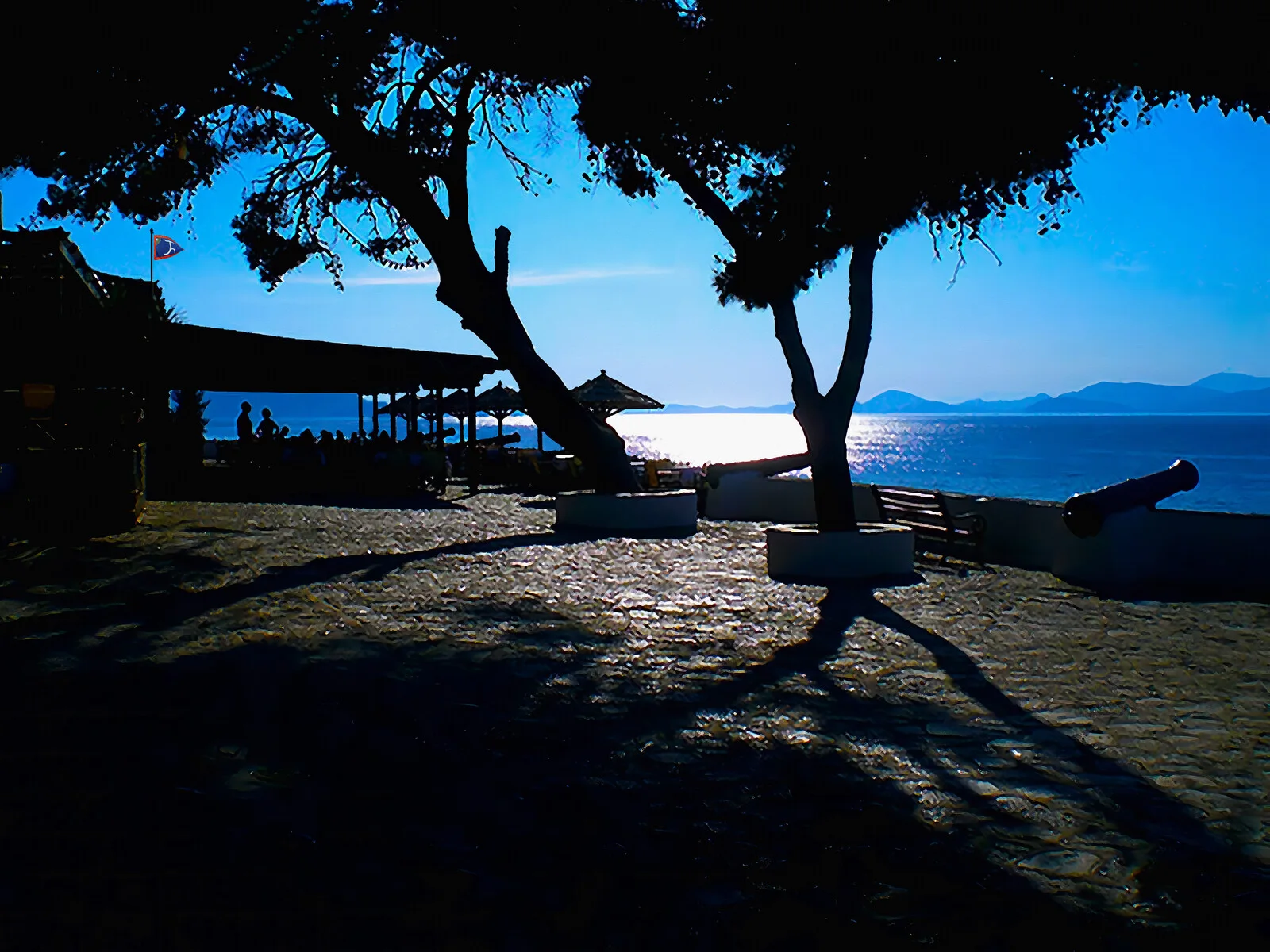
A Blue Day at Sunset, 2023
Digital
70 x 50 cm
A Blue Day at Sunset
A blue day at sunset, at Hydra’s edge,
Where the sea meets sky, a solemn pledge,
Sun dips low, paints waves with gold,
In twilight's embrace, stories unfold.
At Sunset Restaurant by the sea’s embrace,
Tranquillity reigns, a serene place,
Blue hues blend with the evening's light,
A calming balm as day turns to night.
In the Western world, blue hues convey,
Feelings of peace at the end of the day,
The sky and ocean, vast and grand,
Invoke serenity as dreams expand.
But blue also sings of a softer tune,
Of melancholy nights under the moon,
‘Feeling Blue,’ the heart’s quiet song,
A colour for those who feel they belong.
In the sky’s expanse so wide,
Where azure dreams and clouds reside,
Blue whispers secrets of the day,
A canvas where the spirits play.
The ocean’s depth, a sapphire hue,
Reflects the sky, the purest blue,
Waves that dance with graceful ease,
A tranquil balm, a soul’s appease.
The twilight hour’s gentle glow,
As stars in indigo bestow,
A promise of the night’s embrace,
Where blue and dreams entwine in space.
The blue of eyes, a window clear,
To depths of thought, to love sincere,
A gaze that holds the heart’s own song,
In blue, where silent words belong.
In fields where cornflowers bloom,
A cerulean touch dispels the gloom,
A whisper of the earth’s delight,
In blue, the world is pure and bright.
A painter’s brush, a poet’s line,
In blue, the worlds of art entwine,
A colour vast, profound, and true,
In every shade, a life anew.
From morning’s light to evening’s grace,
In blue, we find our secret place,
A hue that soothes, a hue that cheers,
In blue, the heart forgets its fears.
“The sun is up, the sky is blue; It's beautiful, and so are you,” sang John Lennon.
In the Western world, blue frequently embodies feelings of tranquillity and serenity. It represents the hue of the sky and the ocean, which often evoke a sense of peace and soothing. Additionally, blue is usually employed to depict melancholy or sadness, as exemplified in 'Feeling Blue.' A scene like this from Sunset Restaurant can evoke a sense of calm, serenity, and poignant emotions. Perhaps you are about to leave the island the next day, or you recall moments when you were here with someone who has departed. The notion that it might be the last time can be distressing, casting a shadow over the breathtaking view as your eyes well up with tears. However, consider that your emotions are right for you now, so allow your blue self a moment for yourself. This discussion of blue in different art forms, such as painting, sculpture, and photography, provides a deeper understanding of the colour's artistic significance, inviting you to explore the emotional depth it can evoke.
Blue, being a relatively rare colour, has a fascinating linguistic history. For instance, it was the last colour to be coined as a term in the English language. The idea of blue as the colour for boys began after World War II when manufacturers aimed to sell more clothes by creating separate clothing lines for boys and girls. The pigment Prussian blue, known for its ability to make perfect copies of drawings, is used by architects to reproduce their designs, giving rise to the term' blueprints.' This linguistic evolution of the term 'blue' in different languages, such as French, German, and Spanish, provides a deeper understanding of the colour's cultural and historical significance.
Blue, due to its scarcity in nature, has a unique history. It's absent in cave paintings from 20,000 years ago, and the Ancient Greeks lacked a term for it. The ancient Egyptians, however, held the blue semiprecious stone Lapis lazuli in high regard, leading to the prevalence of blue in their language and clothing. In ancient Rome, it was seen as the colour of barbarians, evoking a sense of a nomadic existence or a lack of rootedness. This absence of blue in ancient cultures, such as the Greeks and the Romans, underscores its unique history and cultural significance, inviting you to delve deeper into its intriguing evolution.
Blue has significant symbolism in various religions. For instance, in Christianity, blue is associated with the Virgin Mary. In the Renaissance, nobody was more important than the Virgin Mary. Because she was almost always painted wearing blue, the colour became synonymous with purity, humility, and the divine. This religious symbolism of blue, which extends to other religions such as Hinduism and Buddhism, provides a deeper understanding of its spiritual significance, inviting you to reflect on its profound meaning.
Artists in the Renaissance era had to meticulously grind the semi-precious stone lapis lazuli to create ultramarine, the rich blue pigment that defines numerous Renaissance artworks. The costliness of ultramarine was such that certain paintings remained incomplete, as painters couldn't afford to acquire more pigment. Yet, Titian became renowned for his opulent application of ultramarine, as exemplified in his painting of Bacchus and Ariadne, where an expansive blue sky dominates. This context not only underscores Blue's cultural and historical significance in art but also its profound emotional impact on the viewer, a testament to the power of color in evoking feelings and emotions.
Blue has commanded admiration in various cultural contexts. For instance, Chinese blue and white porcelain has been highly regarded since the 9th century. By the 14th century, China had commenced mass production of exquisitely delicate, translucent white and blue porcelain in Jingdezhen. Known as 'blue and white ware,' it employed cobalt procured from trade routes stretching to Persia. Remarkably, cobalt was twice as precious as gold. Following its creation, porcelain found its way back to the Middle East through trade. Many of these splendid pieces merged Chinese porcelain techniques with Islamic patterns. From the mid-17th century onward, the Dutch adopted this approach in their Delft Blue porcelain. These examples of blue in different cultural contexts, such as China, the Middle East, and the Netherlands, not only highlight its diverse cultural significance but also its rich historical legacy, making it a fascinating subject of study for history enthusiasts.
Blue symbolises confidence and authority in a noninvasive and objective manner. Unlike red, blue is non-threatening, fostering peace, dependability, and security. Its slow physiological response also makes it the colour of creativity. Light blue shades enhance concentration, and dark blue hues stimulate thought processes, making blue a colour that influences our environment and minds. This detailed explanation of blue's physiological and psychological effects better connects with the audience's interest in psychology, providing a more comprehensive understanding of the colour's impact on our mental state.
The feelings associated with blue can be paradoxical, adding to its intriguing nature. Since the sky and bodies of water are blue, the colour is often associated with calmness and serenity. However, blue is also the colour of sadness, as expressed in the phrase 'feeling blue.' The genre of blues music focuses on the loss of money and love. Blue also suppresses the appetite since blue in food is often a sign of poison or spoilage. These examples of blue in nature and human experiences provide a more vivid understanding of the colour's emotional and psychological impact, highlighting its complex and multifaceted nature.
The Ancient Egyptians created the first blue pigment around 2,200 B.C. They heated a mixture of sand, ground limestone and copper-containing minerals like malachite or azurite at a high temperature. This process created an opaque blue glass that was crushed and combined with a thickening agent to make glaze and paint. This detailed historical context about the creation of the first blue pigment highlights its historical significance and impact on the development of art and culture.
Indigo, a blue dye for textiles, came from the crop Indigofera tinctoria, which was abundant enough that blue became common in the international textile trade. Today, synthetic indigo creates the dye for blue jeans and other clothing. There are two artificial blue colours for food, but who wants their fish tinted blue despite living all its life in the blue?
Is this story blue? Not at all. It’s not an indelicate or dirty one, not a humorous anecdote or remark intended to provoke laughter; it is a serious attempt to go behind the colour. But the colour blue can indicate a dirty story, as a blue joke.
In Western culture, the colour blue often embodies tranquillity and peacefulness. It's reminiscent of the vast sky and the serene ocean, both symbols of calmness. Additionally, blue is commonly associated with melancholy or sadness, as expressed in the phrase 'feeling blue.' This cultural significance of blue, which also extends to other cultures such as Eastern and African cultures, provides a deeper understanding of its cultural impact and its role in shaping societal norms and values.
Blue has played a significant role in fashion trends. For instance, true blue is a rarity in nature, prompting the cultivation of blue flowers through genetic modification and selective breeding. Interestingly, blue was one of the later colours to be formally named in English. The idea of assigning blue to boys gained traction after World War II when clothing manufacturers aimed to boost sales by creating distinct clothing lines for boys and girls. The pigment Prussian blue, known for its ability to replicate drawings precisely, is used by architects to reproduce their designs, giving rise to the term' blueprints.' This historical context of blue in fashion trends provides a deeper understanding of the colour's cultural and historical significance.
Due to its scarcity in nature, blue has a relatively shorter historical presence compared to other colours. It's absent in cave paintings from 20,000 years ago, and the Ancient Greeks didn't even have a dedicated term for the colour blue. Ancient Egyptians held the blue semiprecious stone Lapis lazuli in high regard, which led to the widespread use of blue in their language and attire. In contrast, ancient Romans viewed blue as the colour of the uncivilised, evoking notions of rootlessness or lack of steadfastness.
While blue was primarily reserved for royalty for many centuries, its popularity expanded around 431 AD. The Catholic Church depicted the Virgin Mary in a blue robe, imbuing the colour with positive connotations.
Blue is a discreet and objective symbol of confidence and authority. In contrast to red, blue exudes a non-threatening aura that nurtures peace, reliability, and a sense of security. Thanks to its calming effect on the body's physiological responses, blue is also linked to creativity. Pale blue shades enhance focus, while deeper blue tones stimulate cognitive processes.
The emotions associated with the colour blue can be paradoxical. Given the sky and bodies of water, blue is often tied to serenity and tranquillity. Being surrounded by blue environments can even lower blood pressure and heart rate. However, blue is also synonymous with sadness, giving rise to the expression "feeling blue." The blues music genre, for instance, centres on themes of loss, be it money or love. Additionally, blue can diminish appetite, likely due to the historical association of blue in food with poison or spoilage. Alongside grey, blue is often associated with lower moods, particularly sadness. Yet, the specific shade of blue can influence the emotional response it evokes. A study conducted in 2017 revealed that dark blue was most closely linked to feelings of depression.
The Ancient Egyptians were pioneers in creating blue pigments around 2,200 B.C. They achieved this by heating a blend of sand, crushed limestone, and copper-containing minerals such as malachite or azurite at high temperatures. This process resulted in opaque blue glass, which was crushed and combined with a thickening agent to produce glaze and paint.
Indigo, a blue dye for textiles, originated from the Indigofera tinctoria plant. Its abundance contributed to the widespread use of blue in the global textile trade. Today, synthetic indigo is the dye source for blue jeans and various clothing items. Two artificial blue colours exist in food, one derived from indigo.
'Jeans' is an abbreviation of "blue jeans," a creation attributed to Jacob Davis and Levi Strauss in 1873. The term 'jeans' for pants originates from the Italian city of Genoa, where cotton corduroy, referred to as either 'jean' or 'Jeane,' was produced. The Republic of Genoa extensively exported these jeans across Europe.
Is this narrative tinged with blue? Not at all. It isn't a crude or risqué tale or a humorous anecdote designed to elicit laughter. It's a sincere endeavour to delve into the essence of the colour. Nevertheless, it's worth noting that the colour blue has often been associated with risqué stories, as indicated by the term "blue joke."
What's blue and doesn't weigh much? Light blue
Jörgen Thornberg
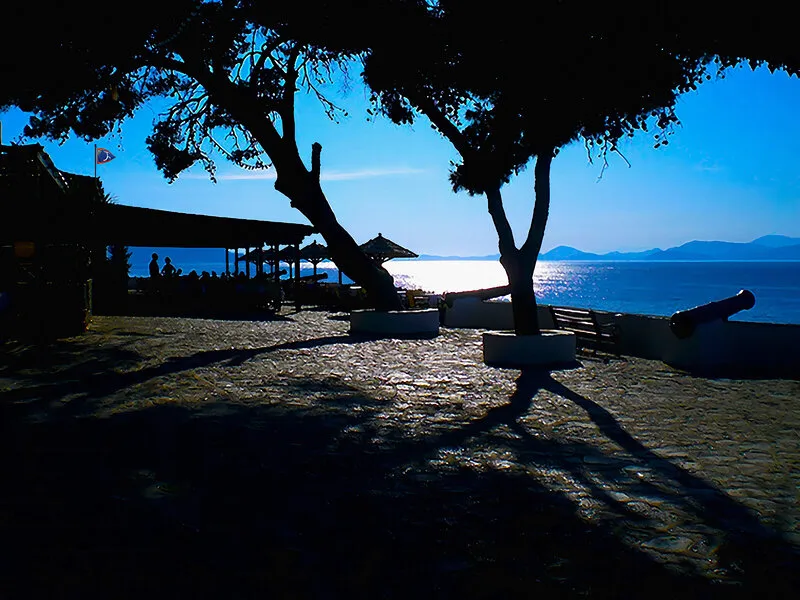
A Blue Day at Sunset, 2023
Digital
70 x 50 cm
A Blue Day at Sunset
A blue day at sunset, at Hydra’s edge,
Where the sea meets sky, a solemn pledge,
Sun dips low, paints waves with gold,
In twilight's embrace, stories unfold.
At Sunset Restaurant by the sea’s embrace,
Tranquillity reigns, a serene place,
Blue hues blend with the evening's light,
A calming balm as day turns to night.
In the Western world, blue hues convey,
Feelings of peace at the end of the day,
The sky and ocean, vast and grand,
Invoke serenity as dreams expand.
But blue also sings of a softer tune,
Of melancholy nights under the moon,
‘Feeling Blue,’ the heart’s quiet song,
A colour for those who feel they belong.
In the sky’s expanse so wide,
Where azure dreams and clouds reside,
Blue whispers secrets of the day,
A canvas where the spirits play.
The ocean’s depth, a sapphire hue,
Reflects the sky, the purest blue,
Waves that dance with graceful ease,
A tranquil balm, a soul’s appease.
The twilight hour’s gentle glow,
As stars in indigo bestow,
A promise of the night’s embrace,
Where blue and dreams entwine in space.
The blue of eyes, a window clear,
To depths of thought, to love sincere,
A gaze that holds the heart’s own song,
In blue, where silent words belong.
In fields where cornflowers bloom,
A cerulean touch dispels the gloom,
A whisper of the earth’s delight,
In blue, the world is pure and bright.
A painter’s brush, a poet’s line,
In blue, the worlds of art entwine,
A colour vast, profound, and true,
In every shade, a life anew.
From morning’s light to evening’s grace,
In blue, we find our secret place,
A hue that soothes, a hue that cheers,
In blue, the heart forgets its fears.
“The sun is up, the sky is blue; It's beautiful, and so are you,” sang John Lennon.
In the Western world, blue frequently embodies feelings of tranquillity and serenity. It represents the hue of the sky and the ocean, which often evoke a sense of peace and soothing. Additionally, blue is usually employed to depict melancholy or sadness, as exemplified in 'Feeling Blue.' A scene like this from Sunset Restaurant can evoke a sense of calm, serenity, and poignant emotions. Perhaps you are about to leave the island the next day, or you recall moments when you were here with someone who has departed. The notion that it might be the last time can be distressing, casting a shadow over the breathtaking view as your eyes well up with tears. However, consider that your emotions are right for you now, so allow your blue self a moment for yourself. This discussion of blue in different art forms, such as painting, sculpture, and photography, provides a deeper understanding of the colour's artistic significance, inviting you to explore the emotional depth it can evoke.
Blue, being a relatively rare colour, has a fascinating linguistic history. For instance, it was the last colour to be coined as a term in the English language. The idea of blue as the colour for boys began after World War II when manufacturers aimed to sell more clothes by creating separate clothing lines for boys and girls. The pigment Prussian blue, known for its ability to make perfect copies of drawings, is used by architects to reproduce their designs, giving rise to the term' blueprints.' This linguistic evolution of the term 'blue' in different languages, such as French, German, and Spanish, provides a deeper understanding of the colour's cultural and historical significance.
Blue, due to its scarcity in nature, has a unique history. It's absent in cave paintings from 20,000 years ago, and the Ancient Greeks lacked a term for it. The ancient Egyptians, however, held the blue semiprecious stone Lapis lazuli in high regard, leading to the prevalence of blue in their language and clothing. In ancient Rome, it was seen as the colour of barbarians, evoking a sense of a nomadic existence or a lack of rootedness. This absence of blue in ancient cultures, such as the Greeks and the Romans, underscores its unique history and cultural significance, inviting you to delve deeper into its intriguing evolution.
Blue has significant symbolism in various religions. For instance, in Christianity, blue is associated with the Virgin Mary. In the Renaissance, nobody was more important than the Virgin Mary. Because she was almost always painted wearing blue, the colour became synonymous with purity, humility, and the divine. This religious symbolism of blue, which extends to other religions such as Hinduism and Buddhism, provides a deeper understanding of its spiritual significance, inviting you to reflect on its profound meaning.
Artists in the Renaissance era had to meticulously grind the semi-precious stone lapis lazuli to create ultramarine, the rich blue pigment that defines numerous Renaissance artworks. The costliness of ultramarine was such that certain paintings remained incomplete, as painters couldn't afford to acquire more pigment. Yet, Titian became renowned for his opulent application of ultramarine, as exemplified in his painting of Bacchus and Ariadne, where an expansive blue sky dominates. This context not only underscores Blue's cultural and historical significance in art but also its profound emotional impact on the viewer, a testament to the power of color in evoking feelings and emotions.
Blue has commanded admiration in various cultural contexts. For instance, Chinese blue and white porcelain has been highly regarded since the 9th century. By the 14th century, China had commenced mass production of exquisitely delicate, translucent white and blue porcelain in Jingdezhen. Known as 'blue and white ware,' it employed cobalt procured from trade routes stretching to Persia. Remarkably, cobalt was twice as precious as gold. Following its creation, porcelain found its way back to the Middle East through trade. Many of these splendid pieces merged Chinese porcelain techniques with Islamic patterns. From the mid-17th century onward, the Dutch adopted this approach in their Delft Blue porcelain. These examples of blue in different cultural contexts, such as China, the Middle East, and the Netherlands, not only highlight its diverse cultural significance but also its rich historical legacy, making it a fascinating subject of study for history enthusiasts.
Blue symbolises confidence and authority in a noninvasive and objective manner. Unlike red, blue is non-threatening, fostering peace, dependability, and security. Its slow physiological response also makes it the colour of creativity. Light blue shades enhance concentration, and dark blue hues stimulate thought processes, making blue a colour that influences our environment and minds. This detailed explanation of blue's physiological and psychological effects better connects with the audience's interest in psychology, providing a more comprehensive understanding of the colour's impact on our mental state.
The feelings associated with blue can be paradoxical, adding to its intriguing nature. Since the sky and bodies of water are blue, the colour is often associated with calmness and serenity. However, blue is also the colour of sadness, as expressed in the phrase 'feeling blue.' The genre of blues music focuses on the loss of money and love. Blue also suppresses the appetite since blue in food is often a sign of poison or spoilage. These examples of blue in nature and human experiences provide a more vivid understanding of the colour's emotional and psychological impact, highlighting its complex and multifaceted nature.
The Ancient Egyptians created the first blue pigment around 2,200 B.C. They heated a mixture of sand, ground limestone and copper-containing minerals like malachite or azurite at a high temperature. This process created an opaque blue glass that was crushed and combined with a thickening agent to make glaze and paint. This detailed historical context about the creation of the first blue pigment highlights its historical significance and impact on the development of art and culture.
Indigo, a blue dye for textiles, came from the crop Indigofera tinctoria, which was abundant enough that blue became common in the international textile trade. Today, synthetic indigo creates the dye for blue jeans and other clothing. There are two artificial blue colours for food, but who wants their fish tinted blue despite living all its life in the blue?
Is this story blue? Not at all. It’s not an indelicate or dirty one, not a humorous anecdote or remark intended to provoke laughter; it is a serious attempt to go behind the colour. But the colour blue can indicate a dirty story, as a blue joke.
In Western culture, the colour blue often embodies tranquillity and peacefulness. It's reminiscent of the vast sky and the serene ocean, both symbols of calmness. Additionally, blue is commonly associated with melancholy or sadness, as expressed in the phrase 'feeling blue.' This cultural significance of blue, which also extends to other cultures such as Eastern and African cultures, provides a deeper understanding of its cultural impact and its role in shaping societal norms and values.
Blue has played a significant role in fashion trends. For instance, true blue is a rarity in nature, prompting the cultivation of blue flowers through genetic modification and selective breeding. Interestingly, blue was one of the later colours to be formally named in English. The idea of assigning blue to boys gained traction after World War II when clothing manufacturers aimed to boost sales by creating distinct clothing lines for boys and girls. The pigment Prussian blue, known for its ability to replicate drawings precisely, is used by architects to reproduce their designs, giving rise to the term' blueprints.' This historical context of blue in fashion trends provides a deeper understanding of the colour's cultural and historical significance.
Due to its scarcity in nature, blue has a relatively shorter historical presence compared to other colours. It's absent in cave paintings from 20,000 years ago, and the Ancient Greeks didn't even have a dedicated term for the colour blue. Ancient Egyptians held the blue semiprecious stone Lapis lazuli in high regard, which led to the widespread use of blue in their language and attire. In contrast, ancient Romans viewed blue as the colour of the uncivilised, evoking notions of rootlessness or lack of steadfastness.
While blue was primarily reserved for royalty for many centuries, its popularity expanded around 431 AD. The Catholic Church depicted the Virgin Mary in a blue robe, imbuing the colour with positive connotations.
Blue is a discreet and objective symbol of confidence and authority. In contrast to red, blue exudes a non-threatening aura that nurtures peace, reliability, and a sense of security. Thanks to its calming effect on the body's physiological responses, blue is also linked to creativity. Pale blue shades enhance focus, while deeper blue tones stimulate cognitive processes.
The emotions associated with the colour blue can be paradoxical. Given the sky and bodies of water, blue is often tied to serenity and tranquillity. Being surrounded by blue environments can even lower blood pressure and heart rate. However, blue is also synonymous with sadness, giving rise to the expression "feeling blue." The blues music genre, for instance, centres on themes of loss, be it money or love. Additionally, blue can diminish appetite, likely due to the historical association of blue in food with poison or spoilage. Alongside grey, blue is often associated with lower moods, particularly sadness. Yet, the specific shade of blue can influence the emotional response it evokes. A study conducted in 2017 revealed that dark blue was most closely linked to feelings of depression.
The Ancient Egyptians were pioneers in creating blue pigments around 2,200 B.C. They achieved this by heating a blend of sand, crushed limestone, and copper-containing minerals such as malachite or azurite at high temperatures. This process resulted in opaque blue glass, which was crushed and combined with a thickening agent to produce glaze and paint.
Indigo, a blue dye for textiles, originated from the Indigofera tinctoria plant. Its abundance contributed to the widespread use of blue in the global textile trade. Today, synthetic indigo is the dye source for blue jeans and various clothing items. Two artificial blue colours exist in food, one derived from indigo.
'Jeans' is an abbreviation of "blue jeans," a creation attributed to Jacob Davis and Levi Strauss in 1873. The term 'jeans' for pants originates from the Italian city of Genoa, where cotton corduroy, referred to as either 'jean' or 'Jeane,' was produced. The Republic of Genoa extensively exported these jeans across Europe.
Is this narrative tinged with blue? Not at all. It isn't a crude or risqué tale or a humorous anecdote designed to elicit laughter. It's a sincere endeavour to delve into the essence of the colour. Nevertheless, it's worth noting that the colour blue has often been associated with risqué stories, as indicated by the term "blue joke."
What's blue and doesn't weigh much? Light blue

Jörgen Thornberg
Malmö
Lite om bilder och mig. Translation in English at the end.
Jag är en nyfiken person som ser allt i bilder, även det jag fäster i ord, gärna tillsammans för bakom alla mina bilder finns en berättelse. Till vissa bilder hör en kortare eller längre novell som följer med bilden.
Bilder berättar historier. Jag omges av naturlig skönhet, intressanta människor och historia var jag än går. Jag använder min kamera för att dokumentera världen och blanda det jag ser med vad jag känner för att fånga den dolda magin.
Mina bilder berättar mina historier. Genom mina bilder, tryck och berättelser. Jag bjuder in dig att ta del av dessa berättelser, in i ditt liv och hem och dela min mycket personliga syn på vår värld. Mer än vad ögat ser. Jag tänker i bilder, drömmer och skriver och pratar om dem; följaktligen måste jag också skapa bilder. De blir vad jag ser, inte nödvändigtvis begränsade till verkligheten. Det finns en bild runt varje hörn. Jag hoppas att du kommer att se vad jag såg och gilla det.
Jag är också en skrivande person och till många bilder hör en kortare eller längre essay. Den följer med tavlan, tryckt på fint papper och med en personlig hälsning från mig.
Flertalet bilder startar sin resa i min kamera. Enkelt förklarat beskriver jag bilden jag ser i mitt inre, upplevd eller fantiserad. Bilden uppstår inom mig redan innan jag fått okularet till ögat. På bråkdelen av ett ögonblick ser jag vad jag vill ha och vad som kan göras med bilden. Här skall jag stoppa in en giraff, stålmannen, Titanic eller vad det är min fantasi finner ut. Ännu märkligare är att jag kommer ihåg minnesbilden långt efteråt när det blir tid att skapa verket. Om jag lyckas eller inte, är upp till betraktaren, oftast präglat av en stråk av svart humor – meningen är att man skall bli underhållen. Mina bilder blir ofta en snackis där de hänger.
Jag föredrar bilder som förmedlar ett budskap i flera lager. Vid första anblicken fylld av feel-good, en vacker utsikt, fint väder, solen skiner, blommor på ängen eller vattnet som ligger förrädiskt spegelblankt. I en sådan bild kan jag gömma min egentliga berättelse, mitt förakt för förtryckare och våldsverkare, rasister och fördomsfulla människor - ett gärna återkommande motiv mer eller mindre dolt i det vackra motivet. Jag försöker förena dem i ett gemensamt narrativ.
Bild och formgivning har löpt som en röd tråd genom livet. Fotokonst känns som en värdig final som jag gärna delar med mig.
Min genre är vid som framgår av mina bilder, temat en blandning av pop- och gatukonst i kollage som kan bestå av hundratals lager. Vissa bilder kan ta veckor, andra någon dag innan det är dags att överlämna resultatet till printverkstaden. Fine Art Prints är digitala fotocollage. I dessa kollage sker rivandet, klippandet, pusslandet, målandet, ritandet och sprayningen digitalt. Det jag monterar in kan vara hundratals år gamla bilder som jag omsorgsfullt frilägger så att de ser ut att vara en del av tavlan men också bilder skapade av mig själv efter min egen fantasi. Därefter besöks printstudion och för vissa bilder numrera en limiterad upplaga (oftast 7 exemplar) och signera för hand. Vissa bilder kan köpas i olika format. Det är bara att fråga efter vilka. Gillar man en bild som är 70x100 men inte har plats på väggen, går den kanske att få i 50x70 cm istället. Frågan är fri.
Metoden Giclée eller Fine Art Print som det också kallas är det moderna sättet för framställning av grafisk konst. Villkoret för denna typ av utskrifter är att en högkvalitativ storformatskrivare används med åldersbeständigt färgpigment och konstnärspapper eller i förekommande fall på duk. Pappret som används möter de krav på livslängd som ställs av museer och gallerier. Normalt säljer jag mina bilder oinramade så att den nya ägaren själv kan bestämma hur de skall se ut, med eller utan passepartout färg på ram, med eller utan glas etc..
Under många år ställde jag bara ut på nätet, i valda grupper och på min egen Facebooksida - https://www.facebook.com/jorgen.thornberg.9
Jag finns också på en egen hemsida som tyvärr inte alltid är uppdaterad – https://www.jth.life/ Där kan du också läsa en del av de berättelser som följer med bilden.
UTSTÄLLNINGAR
Luftkastellet, oktober 2022
Konst i Lund, november 2022
Luftkastellet, mars 2023
Engleson Galleri Caroli, april 2023
Hydra, Greece June 2023
Engleson Galleri Caroli, oktober 2023
Toppen, Höllviken december 2023
Luftkastellet, mars 2024
Torups Galleri, mars 2024
Venice, May 2024
Luftkastellet, oktober 2024
Konst i Advent, December 2024
Galleri Engleson, Caroli December 2024
Jäger & Jansson Galleri, april 2025
A bit about pictures and me.
I'm a curious person who sees everything in pictures, even what I express in words, often combining them, for behind all my pictures lies a story. These narratives, some as short as a single image and others as long as a novel, are the heart and soul of my work.
Pictures tell stories. Wherever I go, I'm surrounded by natural beauty, exciting people, and history. I use my camera to document the world and blend what I see with what I feel to capture the hidden magic.
My images tell my stories. Through my pictures, prints, and narratives, I invite you to partake in these stories in your life and home and share my deeply personal perspective of our world. More than meets the eye. I think in pictures, dream, write, and talk about them; consequently, I must create images too. They become what I see, not necessarily confined to reality. There's a picture around every corner. I hope you'll see what I saw and enjoy it.
I'm also a writer, and many images come with a shorter or longer essay. It accompanies the painting, printed on fine paper with my personal greeting.
Many pictures start their journey on my camera. Simply put, I describe the image I see in my mind, experienced or imagined. The image arises within me even before I bring the eyepiece to my eye. In a fraction of a moment, I see what I want and what can be done with the picture. Here, I'll insert a giraffe, Superman, the Titanic, or whatever my imagination conjures up. Even stranger is that I remember the mental image long after it's time to create the work. Whether I succeed is up to the observer, often imbued with a streak of black humour – the aim is to entertain. My pictures usually become a talking point wherever they hang.
I prefer pictures that convey a message in multiple layers. At first glance, they're filled with feel-good vibes, a beautiful view, lovely weather, the sun shining, flowers in the meadow, or the water lying deceptively calm. But beneath this surface beauty, I often conceal a deeper story, a narrative that challenges societal norms or explores the human condition. I invite you to delve into these hidden narratives and discover the layers of meaning within my work.
Picture and design have been a thread running through my life. Photographic art feels like a fitting finale, and I'm happy to share it.
My genre is varied, as seen in my pictures; the theme is a blend of pop and street art in collages that can consist of hundreds of layers. Some images can take weeks, others just a day before it's time to hand over the result to the print workshop. Fine Art Prints are digital photo collages. In these collages, tearing, cutting, puzzling, painting, drawing, and spraying happen digitally. What I insert can be images hundreds of years old that I carefully extract so they appear to be part of the painting, but also images created by myself, now also generated from my imagination. Next, visit the print studio and, for certain images, number a limited edition (usually 7 copies) and sign them by hand. Some images may be available in other formats. Just ask which ones. If you like an image that's 70x100 but doesn't have space on the wall, you might be able to get it in 50x70 cm instead. The question is open.
The Giclée method, or Fine Art Print as it's also called, is the modern way of producing graphic art. This method ensures the highest quality and longevity of the artwork, using a high-quality large-format printer with archival pigment inks and artist paper or, in some cases, canvas. The paper used meets the longevity requirements set by museums and galleries. I sell my pictures unframed, allowing the new owner to personalise their artwork, confident in the lasting value and quality of the piece.
For many years, I only exhibited online, in selected groups, and on my Facebook page - https://www.facebook.com/jorgen.thornberg.9. I also have my website, which unfortunately is not constantly updated - https://www.jth.life/. You can also read some of the stories accompanying the pictures there.
EXHIBITIONS
Luftkastellet, October 2022
Art in Lund, November 2022
Luftkastellet, March 2023
Engleson Gallery Caroli, April 2023
Hydra, Greece June 2023
Engleson Gallery Caroli, October 2023
Toppen, Höllviken December 2023
Luftkastellet, March 2024
Torup Gallery, March 2024
Venice, May 2024
UTSTÄLLNINGAR
Luftkastellet, oktober 2022
Konst i Lund, november 2022
Luftkastellet, mars 2023
Engleson Galleri Caroli, april 2023
Hydra, Greece June 2023
Engleson Galleri Caroli, oktober 2023
Toppen, Höllviken december 2023
Luftkastellet, mars 2024
Torups Galleri, mars 2024
Venice, May 2024
Luftkastellet, October 2024
Konst i Advent, December 2024
Galleri Engleson, Caroli December 2024
Jäger & Jansson Galleri, April 2025
Utbildning
Autodidakt
Medlem i konstnärsförening
Öppna Sinnen
Med i konstrunda
Konstrundan i Skåne
Utställningar
Luftkastellet, October 2022
Art in Lund, November 2022
Luftkastellet, March 2023
Engleson Gallery Caroli, April 2023
Hydra, Greece June 2023
Engleson Gallery Caroli, October 2023
Toppen, Höllviken December 2023
Luftkastellet, March 2024
Torup Gallery, March 2024
Venice, May 2024