Vi använder cookies för att ge dig bästa möjliga upplevelse. Välj vilka cookies du tillåter.
Läs mer i vår integritetspolicy
Jörgen Thornberg
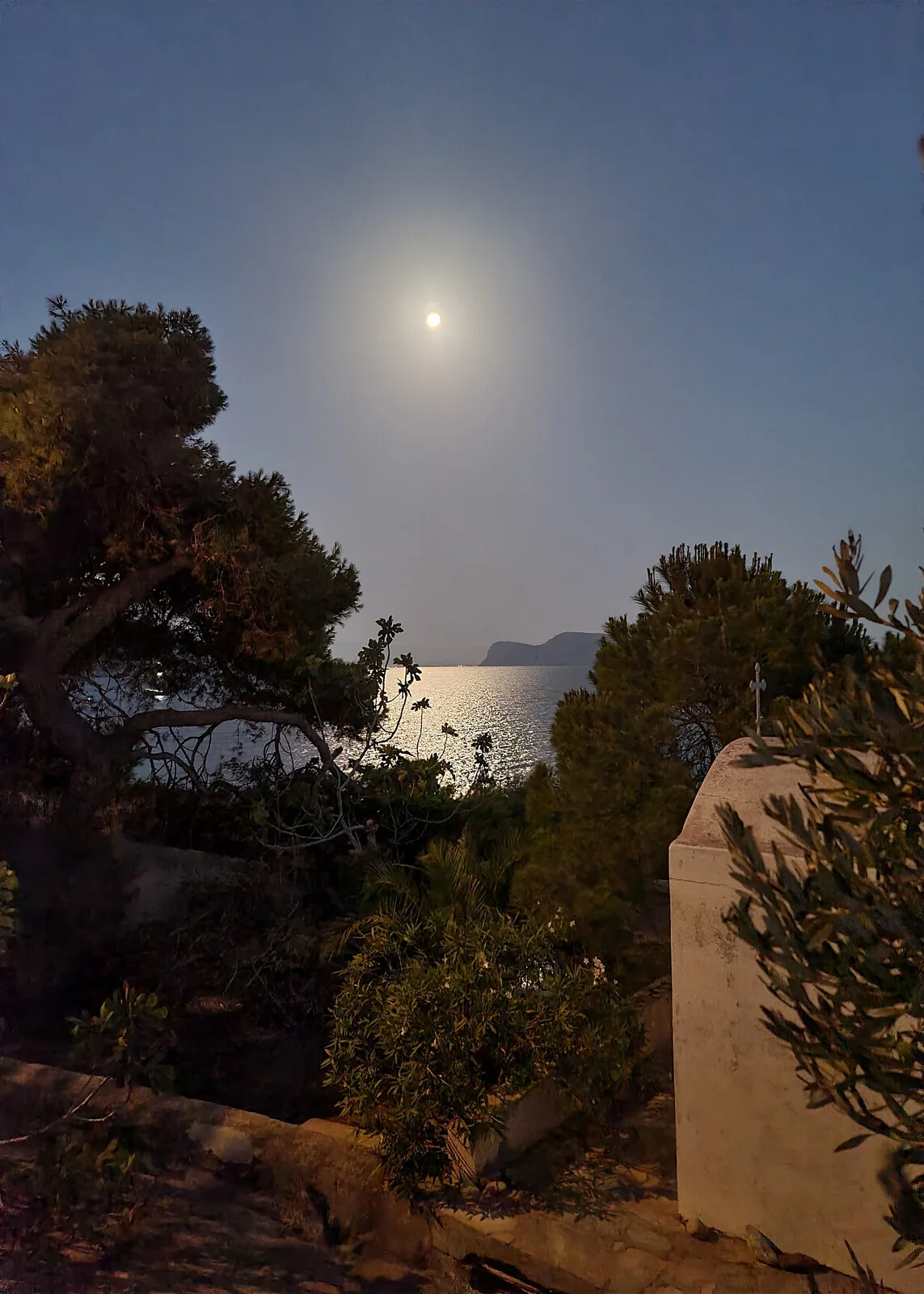
The moon giving light to early walkers at 6.33, 2023
Digital
50 x 70 cm
The Early Birds
In the hush before the dawn's first light,
Where shadows wane and flee the night,
The early birds begin their flight,
Embracing morning's tender might.
With wings of promise, hearts of gold,
They rise while dreams are still retold,
Through mists and dews, both brave and bold,
Their song's a tale that's yet untold.
The world asleep, in slumber's keep,
While they, the vigilant, do leap,
Through skies where silent secrets seep,
They chase the stars that dreams may reap.
Their eyes perceive what others miss,
The nascent sun's awakening kiss,
In whispered winds, a gentle bliss,
They find the day in night's abyss.
These pioneers of dawn's embrace,
First to glimpse the sun's bright face,
In stillness, they set the pace,
A morning hymn, a sacred grace.
But in their flight, they bear the weight,
Of being first, a daunting fate,
For those who come yet hesitates,
To follow trails, the dawn creates.
With intuition sharp and clear,
They sense the trends that draw so near,
In every note, they sing sincere,
A prescient tune for all to hear.
Yet not all see with eyes so kind,
The gifts that early birds may find,
For some, their presence, unrefined,
Breeds envy in the narrow mind.
But let us learn from those who soar,
To seize the dawn and explore,
To take the path and so much more,
That early birds have flown before.
For in their wake, we too may rise,
To greet the day with open eyes,
And find within the morning skies,
A world anew, a sweet surprise.
My image forming the story's basis is a full moon in September at 6:33 in the morning, hanging over the eternally reclining goddess on her island of Dokos. At that moment, alone on the road between Plakes, where I had turned around, and Vlychos, I felt like an early bird. The poem I wrote arrived home a little past seven, so you must excuse some of the lines.
The concept of 'early bird' is deeply ingrained in our culture, symbolising those who rise early and often achieve success. The saying, 'The early bird catches the worm,' encapsulates the spirit of these early risers, who seize the day's opportunities and often think ahead of their time. Whether they are industrialists, craftsmen, artists, writers, or even tech innovators, early birds significantly impact their respective fields, setting the stage for future breakthroughs. This essay not only explores the world of early birds, from historical figures like Benjamin Franklin and Leonardo da Vinci to modern-day innovators like Elon Musk and Jeff Bezos but also underscores the continued relevance of the early bird ethos in our modern world.
The Historical Context of Early Birds
Early birds have long been celebrated for their discipline and productivity, a tradition that dates back to ancient civilisations. In these societies, the routines of daily life were often dictated by the cycles of the sun, with early rising being a necessity for farmers and labourers. This natural rhythm of waking with the dawn laid the foundation for the association of early rising with productivity and success, a perception that continues to influence our modern world.
Benjamin Franklin, one of the most notable early birds in history, famously stated, 'Early to bed and early to rise makes a man healthy, wealthy, and wise.' Franklin's dedication to early rising and his structured daily schedule exemplifies the belief that early risers are more likely to achieve success. His contributions to science, politics, and literature, including the discovery of electricity, the founding of the United States, and the writing of 'Poor Richard's Almanack,' testify to how early rising can correlate with prolific output and innovation.
Leonardo da Vinci, a historical figure who embodied the early bird ethos, was known for his insatiable curiosity and prolific work ethic. His detailed journals reveal that he practised a polyphasic sleep schedule, taking short naps daily and night to maximise productivity. Despite not amassing great wealth from his art or his predictions of flight, Leonardo led a relatively comfortable life compared to many other artists and inventors of his time. This glimpse into his personal life humanises him and underscores the challenges and rewards of being an early bird.
Leonardo was mainly employed at noble courts and earned between 1000 and 2000 gold ducats annually, 3.5-7kg pure gold. That corresponds to today's approximately 1.7 - 3.3 million euro purchasing power. In addition, there were gifts of land and other trade goods. While life there was comfortable, it was still modest, rural, and simple. The Vinci family did not live in luxury.
The Early Birds of the Industrial Revolution
The Industrial Revolution brought about a new breed of early birds—industrialists and inventors who capitalised on the opportunities of the rapidly changing economic landscape. These individuals often rose before dawn to oversee their factories and workshops, driven by the relentless pursuit of efficiency and innovation. In the modern era, we see similar examples of early birds in the tech industry, such as Elon Musk, known for his 100-hour workweeks and early morning meetings, and Jeff Bezos, who starts his day with a high-intensity workout.
One such figure is Thomas Edison, whose work ethic and innovative spirit led to the invention of the phonograph, the motion picture camera, and the electric light bulb. Edison famously remarked, "Genius is one per cent inspiration and ninety-nine per cent perspiration," highlighting the importance of hard work and persistence, traits often associated with early risers.
However, the story of Nikola Tesla, Edison's contemporary and rival, is a poignant reminder that being an early bird and an innovator does not always guarantee financial success or recognition. Tesla's groundbreaking work in alternating current (AC) and wireless transmission of energy revolutionised the field of electrical engineering, yet he died impoverished and relatively obscure. Tesla's story underscores that early birds often pave the way for future advancements, even if they do not always reap the rewards.
Early Birds in Art and Literature
The world of art and literature is also rich with examples of early birds whose innovative thinking and dedication to their craft have left an indelible mark. One such figure is Vincent van Gogh, who produced over 2,000 artworks, including around 860 oil paintings, despite struggling with mental illness and financial instability. Van Gogh's commitment to his work, often rising early to capture the light of the day, contributed to his unique and influential style, even though he only gained widespread recognition posthumously.
In literature, the early bird ethos can be seen in the lives of many prolific writers. Haruki Murakami, for instance, is known for his strict routine of waking up at 4 a.m. to write, followed by a run and a swim. This disciplined approach has enabled Murakami to produce a significant body of work, blending surrealism with everyday life.
Another literary early bird is Maya Angelou, who would wake up early and rent a hotel room to write, free from the distractions of home. Her dedication to her craft resulted in an extensive oeuvre that included memoirs, poetry, and essays, contributing significantly to American literature and civil rights.
The Double-Edged Sword of Being an Early Bird
While early birds are often celebrated for their foresight and productivity, their tendency to be ahead of their time can also be a double-edged sword. The market or society is not always ready to embrace their innovations, leading to frustration and sometimes financial ruin. Yet, the story of the early bird is one of remarkable resilience, with the understanding that true innovation requires time to be appreciated fully. Their ability to bounce back from setbacks and continue pushing the boundaries of their fields despite the challenges is truly admirable.
One prominent example is the tale of Johannes Gutenberg, the printing press inventor. Despite revolutionising the dissemination of information and knowledge, Gutenberg faced numerous financial difficulties and legal battles, ultimately losing control of his printing business. Only after his death was his invention's true impact fully recognised. This underscores early birds' profound societal influence, even if their contributions are not immediately acknowledged. Their work shapes our world, and it's crucial to understand and appreciate their role in our history.
Similarly, the Wright brothers, Orville and Wilbur, faced significant scepticism and legal challenges in their quest to develop and patent their flying machine. Their perseverance eventually paid off, but not without considerable personal and financial sacrifices.
The Role of Followers in the Success of Early Birds
While early birds often blaze the trail, their success depends on the followers who recognise and build upon their innovations. These followers, sometimes more adept at navigating the commercial landscape, can help bring early innovations to the broader market. In this way, the narrative of early birds becomes a collective effort, with each individual playing a crucial role. This highlights the importance of community and collaboration in fostering innovation, making the audience feel part of this collective effort.
An early bird can also be someone with solid intuition, blending knowledge with an ability to anticipate trends and sense what is coming, looking around the corner. This can apply to various fields, including politics.
It is not always favourable to be an early bird. It can be more peaceful to talk about grandchildren and the weather if it's decent. Many people feel threatened, inferior, or uncomfortable around early birds; some even become envious. They are often regarded as know-it-alls despite probably just wanting to help and not trying to appear superior.
It's unfortunate, but the best approach is to benefit from early birds, follow their leads, listen, and selectively adopt what works best for oneself. This is how many have become wealthy—not always the early bird, but those who have followed them. The early bird is often already moving towards the next goal and rarely has the time to become rich or wait for applause.
Warren Buffett, for example, is renowned not for inventing new technologies but for his ability to identify and invest in undervalued companies. Buffett's success as one of the world's wealthiest individuals illustrates how those who come after the early birds can capitalise on their innovations, refining and scaling them to achieve widespread impact.
Another example is Steve Jobs, who, while a visionary in his own right, also excelled at recognising and integrating existing technologies in innovative ways. Jobs' ability to see the potential in Xerox PARC's graphical user interface and mouse technology led to the development of the Macintosh computer, a cornerstone of Apple's success.
The Perception of Early Birds in Different Fields
The perception of early birds varies across different fields, influenced by the nature of the work and the industry's culture. Early risers are often seen as go-getters in the corporate world, with companies like Apple and General Motors known for their early-start corporate cultures. This association between early rising and productivity has led to the proliferation of "morning routines" among successful executives, who tout the benefits of waking up early to exercise, meditate, and plan their day.
Early birds are often respected for their dedication and discipline in craftsmanship and trade. Artisans who rise early to perfect their craft embody the values of hard work and mastery. This respect for early risers is evident in the tradition of bakers and farmers, whose workday begins long before dawn to ensure fresh produce and baked goods for their communities.
However, in the creative arts, the perception of early birds can be more nuanced. While some artists and writers, like those mentioned earlier, thrive on early rising, others find their inspiration in the quiet hours of the night. The "night owl" notion is equally celebrated in the creative community, illustrating that innovation and creativity are not confined to any particular time of day.
The Challenges of Being an Early Bird
Despite the many advantages of being an early bird, there are also significant challenges. Early risers often face societal resistance and scepticism, mainly when their ideas are ahead of their time. This resistance can lead to isolation and frustration as early birds struggle to find an audience or market for their innovations.
Moreover, the pressure to constantly be ahead of the curve can lead to burnout and exhaustion. The relentless pursuit of new ideas and the drive to stay ahead can affect an individual's mental and physical health. This is particularly true in the fast-paced world of technology and startups, where the rapid pace of innovation can create a relentless cycle of pressure and stress.
The story of Nikola Tesla serves as a cautionary tale in this regard. Despite his immense contributions to science and technology, Tesla's relentless drive and visionary ideas often left him financially unstable and isolated. His struggles highlight the importance of balance and support for early birds, who may need to temper their drive with self-care and realistic expectations.
Conclusion
Early birds rise before dawn, act ahead of time, and drive innovation and progress across various fields. From historical figures like Benjamin Franklin and Leonardo da Vinci to modern-day innovators like Steve Jobs and Warren Buffett, early risers have shaped the world with foresight and dedication. However, the journey of an early bird is not without its challenges, including societal resistance, financial instability, and the risk of burnout.
To truly appreciate and benefit from the contributions of early birds, society must recognise and support these individuals, providing the resources and encouragement needed to bring their visionary ideas to fruition. By understanding the unique challenges and rewards of being an early bird, we can create an environment where innovation and progress can thrive, benefiting us all.
In the end, whether it's the ancient Greek coins bearing the image of Taras riding a dolphin or the modern entrepreneurs reshaping our world, early birds will continue to lead the way, illuminating the path for others to follow. As we celebrate their achievements, let us remember the importance of balance, support, and collaboration in ensuring their visionary ideas can take flight.
Jörgen Thornberg
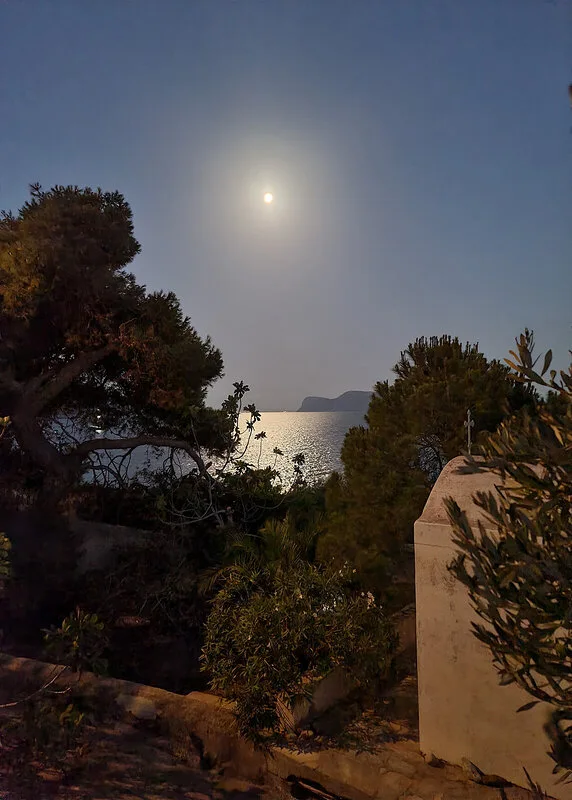
The moon giving light to early walkers at 6.33, 2023
Digital
50 x 70 cm
The Early Birds
In the hush before the dawn's first light,
Where shadows wane and flee the night,
The early birds begin their flight,
Embracing morning's tender might.
With wings of promise, hearts of gold,
They rise while dreams are still retold,
Through mists and dews, both brave and bold,
Their song's a tale that's yet untold.
The world asleep, in slumber's keep,
While they, the vigilant, do leap,
Through skies where silent secrets seep,
They chase the stars that dreams may reap.
Their eyes perceive what others miss,
The nascent sun's awakening kiss,
In whispered winds, a gentle bliss,
They find the day in night's abyss.
These pioneers of dawn's embrace,
First to glimpse the sun's bright face,
In stillness, they set the pace,
A morning hymn, a sacred grace.
But in their flight, they bear the weight,
Of being first, a daunting fate,
For those who come yet hesitates,
To follow trails, the dawn creates.
With intuition sharp and clear,
They sense the trends that draw so near,
In every note, they sing sincere,
A prescient tune for all to hear.
Yet not all see with eyes so kind,
The gifts that early birds may find,
For some, their presence, unrefined,
Breeds envy in the narrow mind.
But let us learn from those who soar,
To seize the dawn and explore,
To take the path and so much more,
That early birds have flown before.
For in their wake, we too may rise,
To greet the day with open eyes,
And find within the morning skies,
A world anew, a sweet surprise.
My image forming the story's basis is a full moon in September at 6:33 in the morning, hanging over the eternally reclining goddess on her island of Dokos. At that moment, alone on the road between Plakes, where I had turned around, and Vlychos, I felt like an early bird. The poem I wrote arrived home a little past seven, so you must excuse some of the lines.
The concept of 'early bird' is deeply ingrained in our culture, symbolising those who rise early and often achieve success. The saying, 'The early bird catches the worm,' encapsulates the spirit of these early risers, who seize the day's opportunities and often think ahead of their time. Whether they are industrialists, craftsmen, artists, writers, or even tech innovators, early birds significantly impact their respective fields, setting the stage for future breakthroughs. This essay not only explores the world of early birds, from historical figures like Benjamin Franklin and Leonardo da Vinci to modern-day innovators like Elon Musk and Jeff Bezos but also underscores the continued relevance of the early bird ethos in our modern world.
The Historical Context of Early Birds
Early birds have long been celebrated for their discipline and productivity, a tradition that dates back to ancient civilisations. In these societies, the routines of daily life were often dictated by the cycles of the sun, with early rising being a necessity for farmers and labourers. This natural rhythm of waking with the dawn laid the foundation for the association of early rising with productivity and success, a perception that continues to influence our modern world.
Benjamin Franklin, one of the most notable early birds in history, famously stated, 'Early to bed and early to rise makes a man healthy, wealthy, and wise.' Franklin's dedication to early rising and his structured daily schedule exemplifies the belief that early risers are more likely to achieve success. His contributions to science, politics, and literature, including the discovery of electricity, the founding of the United States, and the writing of 'Poor Richard's Almanack,' testify to how early rising can correlate with prolific output and innovation.
Leonardo da Vinci, a historical figure who embodied the early bird ethos, was known for his insatiable curiosity and prolific work ethic. His detailed journals reveal that he practised a polyphasic sleep schedule, taking short naps daily and night to maximise productivity. Despite not amassing great wealth from his art or his predictions of flight, Leonardo led a relatively comfortable life compared to many other artists and inventors of his time. This glimpse into his personal life humanises him and underscores the challenges and rewards of being an early bird.
Leonardo was mainly employed at noble courts and earned between 1000 and 2000 gold ducats annually, 3.5-7kg pure gold. That corresponds to today's approximately 1.7 - 3.3 million euro purchasing power. In addition, there were gifts of land and other trade goods. While life there was comfortable, it was still modest, rural, and simple. The Vinci family did not live in luxury.
The Early Birds of the Industrial Revolution
The Industrial Revolution brought about a new breed of early birds—industrialists and inventors who capitalised on the opportunities of the rapidly changing economic landscape. These individuals often rose before dawn to oversee their factories and workshops, driven by the relentless pursuit of efficiency and innovation. In the modern era, we see similar examples of early birds in the tech industry, such as Elon Musk, known for his 100-hour workweeks and early morning meetings, and Jeff Bezos, who starts his day with a high-intensity workout.
One such figure is Thomas Edison, whose work ethic and innovative spirit led to the invention of the phonograph, the motion picture camera, and the electric light bulb. Edison famously remarked, "Genius is one per cent inspiration and ninety-nine per cent perspiration," highlighting the importance of hard work and persistence, traits often associated with early risers.
However, the story of Nikola Tesla, Edison's contemporary and rival, is a poignant reminder that being an early bird and an innovator does not always guarantee financial success or recognition. Tesla's groundbreaking work in alternating current (AC) and wireless transmission of energy revolutionised the field of electrical engineering, yet he died impoverished and relatively obscure. Tesla's story underscores that early birds often pave the way for future advancements, even if they do not always reap the rewards.
Early Birds in Art and Literature
The world of art and literature is also rich with examples of early birds whose innovative thinking and dedication to their craft have left an indelible mark. One such figure is Vincent van Gogh, who produced over 2,000 artworks, including around 860 oil paintings, despite struggling with mental illness and financial instability. Van Gogh's commitment to his work, often rising early to capture the light of the day, contributed to his unique and influential style, even though he only gained widespread recognition posthumously.
In literature, the early bird ethos can be seen in the lives of many prolific writers. Haruki Murakami, for instance, is known for his strict routine of waking up at 4 a.m. to write, followed by a run and a swim. This disciplined approach has enabled Murakami to produce a significant body of work, blending surrealism with everyday life.
Another literary early bird is Maya Angelou, who would wake up early and rent a hotel room to write, free from the distractions of home. Her dedication to her craft resulted in an extensive oeuvre that included memoirs, poetry, and essays, contributing significantly to American literature and civil rights.
The Double-Edged Sword of Being an Early Bird
While early birds are often celebrated for their foresight and productivity, their tendency to be ahead of their time can also be a double-edged sword. The market or society is not always ready to embrace their innovations, leading to frustration and sometimes financial ruin. Yet, the story of the early bird is one of remarkable resilience, with the understanding that true innovation requires time to be appreciated fully. Their ability to bounce back from setbacks and continue pushing the boundaries of their fields despite the challenges is truly admirable.
One prominent example is the tale of Johannes Gutenberg, the printing press inventor. Despite revolutionising the dissemination of information and knowledge, Gutenberg faced numerous financial difficulties and legal battles, ultimately losing control of his printing business. Only after his death was his invention's true impact fully recognised. This underscores early birds' profound societal influence, even if their contributions are not immediately acknowledged. Their work shapes our world, and it's crucial to understand and appreciate their role in our history.
Similarly, the Wright brothers, Orville and Wilbur, faced significant scepticism and legal challenges in their quest to develop and patent their flying machine. Their perseverance eventually paid off, but not without considerable personal and financial sacrifices.
The Role of Followers in the Success of Early Birds
While early birds often blaze the trail, their success depends on the followers who recognise and build upon their innovations. These followers, sometimes more adept at navigating the commercial landscape, can help bring early innovations to the broader market. In this way, the narrative of early birds becomes a collective effort, with each individual playing a crucial role. This highlights the importance of community and collaboration in fostering innovation, making the audience feel part of this collective effort.
An early bird can also be someone with solid intuition, blending knowledge with an ability to anticipate trends and sense what is coming, looking around the corner. This can apply to various fields, including politics.
It is not always favourable to be an early bird. It can be more peaceful to talk about grandchildren and the weather if it's decent. Many people feel threatened, inferior, or uncomfortable around early birds; some even become envious. They are often regarded as know-it-alls despite probably just wanting to help and not trying to appear superior.
It's unfortunate, but the best approach is to benefit from early birds, follow their leads, listen, and selectively adopt what works best for oneself. This is how many have become wealthy—not always the early bird, but those who have followed them. The early bird is often already moving towards the next goal and rarely has the time to become rich or wait for applause.
Warren Buffett, for example, is renowned not for inventing new technologies but for his ability to identify and invest in undervalued companies. Buffett's success as one of the world's wealthiest individuals illustrates how those who come after the early birds can capitalise on their innovations, refining and scaling them to achieve widespread impact.
Another example is Steve Jobs, who, while a visionary in his own right, also excelled at recognising and integrating existing technologies in innovative ways. Jobs' ability to see the potential in Xerox PARC's graphical user interface and mouse technology led to the development of the Macintosh computer, a cornerstone of Apple's success.
The Perception of Early Birds in Different Fields
The perception of early birds varies across different fields, influenced by the nature of the work and the industry's culture. Early risers are often seen as go-getters in the corporate world, with companies like Apple and General Motors known for their early-start corporate cultures. This association between early rising and productivity has led to the proliferation of "morning routines" among successful executives, who tout the benefits of waking up early to exercise, meditate, and plan their day.
Early birds are often respected for their dedication and discipline in craftsmanship and trade. Artisans who rise early to perfect their craft embody the values of hard work and mastery. This respect for early risers is evident in the tradition of bakers and farmers, whose workday begins long before dawn to ensure fresh produce and baked goods for their communities.
However, in the creative arts, the perception of early birds can be more nuanced. While some artists and writers, like those mentioned earlier, thrive on early rising, others find their inspiration in the quiet hours of the night. The "night owl" notion is equally celebrated in the creative community, illustrating that innovation and creativity are not confined to any particular time of day.
The Challenges of Being an Early Bird
Despite the many advantages of being an early bird, there are also significant challenges. Early risers often face societal resistance and scepticism, mainly when their ideas are ahead of their time. This resistance can lead to isolation and frustration as early birds struggle to find an audience or market for their innovations.
Moreover, the pressure to constantly be ahead of the curve can lead to burnout and exhaustion. The relentless pursuit of new ideas and the drive to stay ahead can affect an individual's mental and physical health. This is particularly true in the fast-paced world of technology and startups, where the rapid pace of innovation can create a relentless cycle of pressure and stress.
The story of Nikola Tesla serves as a cautionary tale in this regard. Despite his immense contributions to science and technology, Tesla's relentless drive and visionary ideas often left him financially unstable and isolated. His struggles highlight the importance of balance and support for early birds, who may need to temper their drive with self-care and realistic expectations.
Conclusion
Early birds rise before dawn, act ahead of time, and drive innovation and progress across various fields. From historical figures like Benjamin Franklin and Leonardo da Vinci to modern-day innovators like Steve Jobs and Warren Buffett, early risers have shaped the world with foresight and dedication. However, the journey of an early bird is not without its challenges, including societal resistance, financial instability, and the risk of burnout.
To truly appreciate and benefit from the contributions of early birds, society must recognise and support these individuals, providing the resources and encouragement needed to bring their visionary ideas to fruition. By understanding the unique challenges and rewards of being an early bird, we can create an environment where innovation and progress can thrive, benefiting us all.
In the end, whether it's the ancient Greek coins bearing the image of Taras riding a dolphin or the modern entrepreneurs reshaping our world, early birds will continue to lead the way, illuminating the path for others to follow. As we celebrate their achievements, let us remember the importance of balance, support, and collaboration in ensuring their visionary ideas can take flight.

Jörgen Thornberg
Malmö
Lite om bilder och mig. Translation in English at the end.
Jag är en nyfiken person som ser allt i bilder, även det jag fäster i ord, gärna tillsammans för bakom alla mina bilder finns en berättelse. Till vissa bilder hör en kortare eller längre novell som följer med bilden.
Bilder berättar historier. Jag omges av naturlig skönhet, intressanta människor och historia var jag än går. Jag använder min kamera för att dokumentera världen och blanda det jag ser med vad jag känner för att fånga den dolda magin.
Mina bilder berättar mina historier. Genom mina bilder, tryck och berättelser. Jag bjuder in dig att ta del av dessa berättelser, in i ditt liv och hem och dela min mycket personliga syn på vår värld. Mer än vad ögat ser. Jag tänker i bilder, drömmer och skriver och pratar om dem; följaktligen måste jag också skapa bilder. De blir vad jag ser, inte nödvändigtvis begränsade till verkligheten. Det finns en bild runt varje hörn. Jag hoppas att du kommer att se vad jag såg och gilla det.
Jag är också en skrivande person och till många bilder hör en kortare eller längre essay. Den följer med tavlan, tryckt på fint papper och med en personlig hälsning från mig.
Flertalet bilder startar sin resa i min kamera. Enkelt förklarat beskriver jag bilden jag ser i mitt inre, upplevd eller fantiserad. Bilden uppstår inom mig redan innan jag fått okularet till ögat. På bråkdelen av ett ögonblick ser jag vad jag vill ha och vad som kan göras med bilden. Här skall jag stoppa in en giraff, stålmannen, Titanic eller vad det är min fantasi finner ut. Ännu märkligare är att jag kommer ihåg minnesbilden långt efteråt när det blir tid att skapa verket. Om jag lyckas eller inte, är upp till betraktaren, oftast präglat av en stråk av svart humor – meningen är att man skall bli underhållen. Mina bilder blir ofta en snackis där de hänger.
Jag föredrar bilder som förmedlar ett budskap i flera lager. Vid första anblicken fylld av feel-good, en vacker utsikt, fint väder, solen skiner, blommor på ängen eller vattnet som ligger förrädiskt spegelblankt. I en sådan bild kan jag gömma min egentliga berättelse, mitt förakt för förtryckare och våldsverkare, rasister och fördomsfulla människor - ett gärna återkommande motiv mer eller mindre dolt i det vackra motivet. Jag försöker förena dem i ett gemensamt narrativ.
Bild och formgivning har löpt som en röd tråd genom livet. Fotokonst känns som en värdig final som jag gärna delar med mig.
Min genre är vid som framgår av mina bilder, temat en blandning av pop- och gatukonst i kollage som kan bestå av hundratals lager. Vissa bilder kan ta veckor, andra någon dag innan det är dags att överlämna resultatet till printverkstaden. Fine Art Prints är digitala fotocollage. I dessa kollage sker rivandet, klippandet, pusslandet, målandet, ritandet och sprayningen digitalt. Det jag monterar in kan vara hundratals år gamla bilder som jag omsorgsfullt frilägger så att de ser ut att vara en del av tavlan men också bilder skapade av mig själv efter min egen fantasi. Därefter besöks printstudion och för vissa bilder numrera en limiterad upplaga (oftast 7 exemplar) och signera för hand. Vissa bilder kan köpas i olika format. Det är bara att fråga efter vilka. Gillar man en bild som är 70x100 men inte har plats på väggen, går den kanske att få i 50x70 cm istället. Frågan är fri.
Metoden Giclée eller Fine Art Print som det också kallas är det moderna sättet för framställning av grafisk konst. Villkoret för denna typ av utskrifter är att en högkvalitativ storformatskrivare används med åldersbeständigt färgpigment och konstnärspapper eller i förekommande fall på duk. Pappret som används möter de krav på livslängd som ställs av museer och gallerier. Normalt säljer jag mina bilder oinramade så att den nya ägaren själv kan bestämma hur de skall se ut, med eller utan passepartout färg på ram, med eller utan glas etc..
Under många år ställde jag bara ut på nätet, i valda grupper och på min egen Facebooksida - https://www.facebook.com/jorgen.thornberg.9
Jag finns också på en egen hemsida som tyvärr inte alltid är uppdaterad – https://www.jth.life/ Där kan du också läsa en del av de berättelser som följer med bilden.
UTSTÄLLNINGAR
Luftkastellet, oktober 2022
Konst i Lund, november 2022
Luftkastellet, mars 2023
Engleson Galleri Caroli, april 2023
Hydra, Greece June 2023
Engleson Galleri Caroli, oktober 2023
Toppen, Höllviken december 2023
Luftkastellet, mars 2024
Torups Galleri, mars 2024
Venice, May 2024
Luftkastellet, oktober 2024
Konst i Advent, December 2024
Galleri Engleson, Caroli December 2024
Jäger & Jansson Galleri, april 2025
A bit about pictures and me.
I'm a curious person who sees everything in pictures, even what I express in words, often combining them, for behind all my pictures lies a story. These narratives, some as short as a single image and others as long as a novel, are the heart and soul of my work.
Pictures tell stories. Wherever I go, I'm surrounded by natural beauty, exciting people, and history. I use my camera to document the world and blend what I see with what I feel to capture the hidden magic.
My images tell my stories. Through my pictures, prints, and narratives, I invite you to partake in these stories in your life and home and share my deeply personal perspective of our world. More than meets the eye. I think in pictures, dream, write, and talk about them; consequently, I must create images too. They become what I see, not necessarily confined to reality. There's a picture around every corner. I hope you'll see what I saw and enjoy it.
I'm also a writer, and many images come with a shorter or longer essay. It accompanies the painting, printed on fine paper with my personal greeting.
Many pictures start their journey on my camera. Simply put, I describe the image I see in my mind, experienced or imagined. The image arises within me even before I bring the eyepiece to my eye. In a fraction of a moment, I see what I want and what can be done with the picture. Here, I'll insert a giraffe, Superman, the Titanic, or whatever my imagination conjures up. Even stranger is that I remember the mental image long after it's time to create the work. Whether I succeed is up to the observer, often imbued with a streak of black humour – the aim is to entertain. My pictures usually become a talking point wherever they hang.
I prefer pictures that convey a message in multiple layers. At first glance, they're filled with feel-good vibes, a beautiful view, lovely weather, the sun shining, flowers in the meadow, or the water lying deceptively calm. But beneath this surface beauty, I often conceal a deeper story, a narrative that challenges societal norms or explores the human condition. I invite you to delve into these hidden narratives and discover the layers of meaning within my work.
Picture and design have been a thread running through my life. Photographic art feels like a fitting finale, and I'm happy to share it.
My genre is varied, as seen in my pictures; the theme is a blend of pop and street art in collages that can consist of hundreds of layers. Some images can take weeks, others just a day before it's time to hand over the result to the print workshop. Fine Art Prints are digital photo collages. In these collages, tearing, cutting, puzzling, painting, drawing, and spraying happen digitally. What I insert can be images hundreds of years old that I carefully extract so they appear to be part of the painting, but also images created by myself, now also generated from my imagination. Next, visit the print studio and, for certain images, number a limited edition (usually 7 copies) and sign them by hand. Some images may be available in other formats. Just ask which ones. If you like an image that's 70x100 but doesn't have space on the wall, you might be able to get it in 50x70 cm instead. The question is open.
The Giclée method, or Fine Art Print as it's also called, is the modern way of producing graphic art. This method ensures the highest quality and longevity of the artwork, using a high-quality large-format printer with archival pigment inks and artist paper or, in some cases, canvas. The paper used meets the longevity requirements set by museums and galleries. I sell my pictures unframed, allowing the new owner to personalise their artwork, confident in the lasting value and quality of the piece.
For many years, I only exhibited online, in selected groups, and on my Facebook page - https://www.facebook.com/jorgen.thornberg.9. I also have my website, which unfortunately is not constantly updated - https://www.jth.life/. You can also read some of the stories accompanying the pictures there.
EXHIBITIONS
Luftkastellet, October 2022
Art in Lund, November 2022
Luftkastellet, March 2023
Engleson Gallery Caroli, April 2023
Hydra, Greece June 2023
Engleson Gallery Caroli, October 2023
Toppen, Höllviken December 2023
Luftkastellet, March 2024
Torup Gallery, March 2024
Venice, May 2024
UTSTÄLLNINGAR
Luftkastellet, oktober 2022
Konst i Lund, november 2022
Luftkastellet, mars 2023
Engleson Galleri Caroli, april 2023
Hydra, Greece June 2023
Engleson Galleri Caroli, oktober 2023
Toppen, Höllviken december 2023
Luftkastellet, mars 2024
Torups Galleri, mars 2024
Venice, May 2024
Luftkastellet, October 2024
Konst i Advent, December 2024
Galleri Engleson, Caroli December 2024
Jäger & Jansson Galleri, April 2025
Utbildning
Autodidakt
Medlem i konstnärsförening
Öppna Sinnen
Med i konstrunda
Konstrundan i Skåne
Utställningar
Luftkastellet, October 2022
Art in Lund, November 2022
Luftkastellet, March 2023
Engleson Gallery Caroli, April 2023
Hydra, Greece June 2023
Engleson Gallery Caroli, October 2023
Toppen, Höllviken December 2023
Luftkastellet, March 2024
Torup Gallery, March 2024
Venice, May 2024