Vi använder cookies för att ge dig bästa möjliga upplevelse. Välj vilka cookies du tillåter.
Läs mer i vår integritetspolicy
Jörgen Thornberg
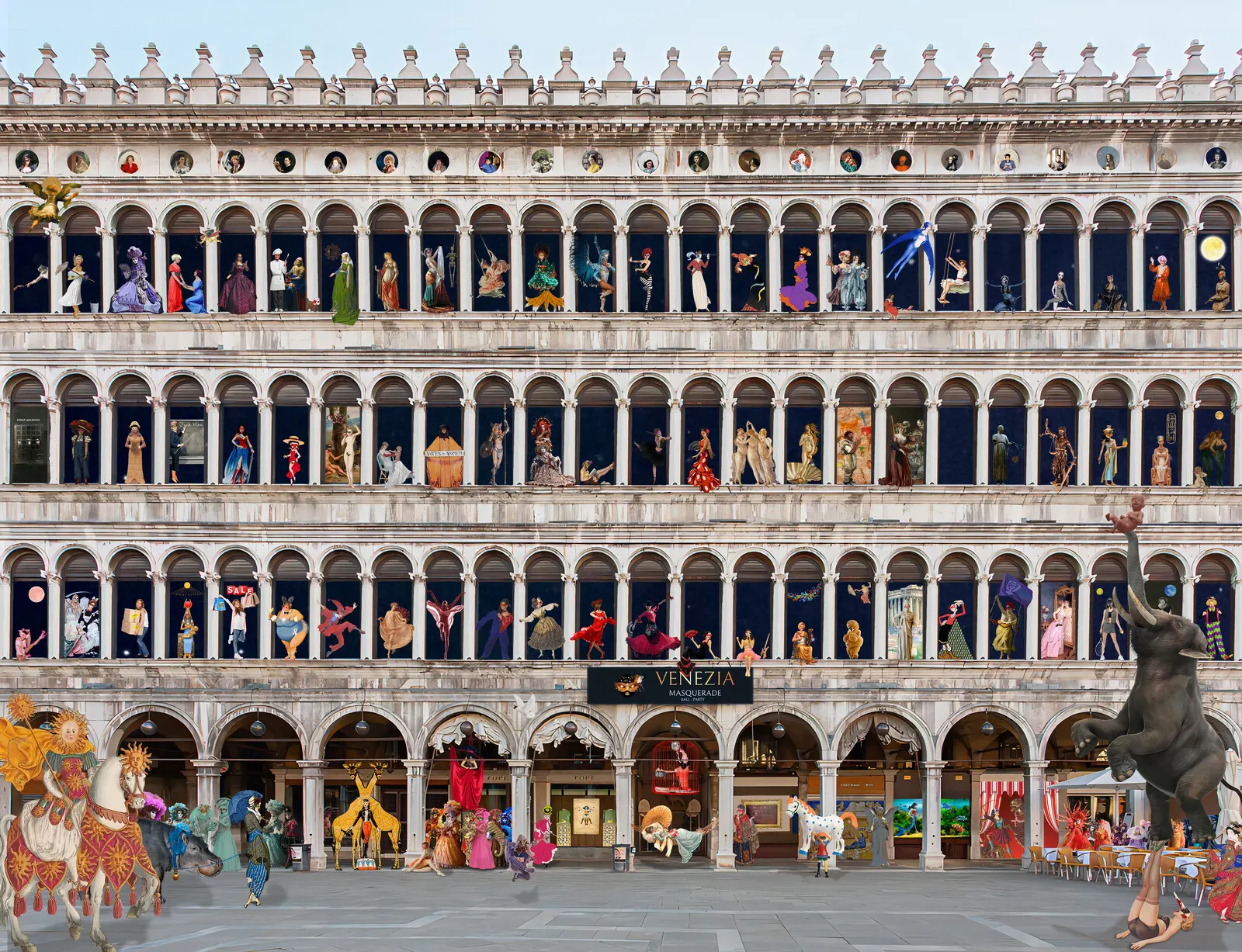
Yet another woman - En kvinna till eller Det är kvinnan bakom allt, 2022
Digital
100 x 70 cm
5 200 kr
Women have been present throughout history, making themselves more prominent than many have thought or wanted to believe. One could go as far as to say it's the woman behind everything. Not only does she create life, carrying it within her, but she also brings forth the new and ensures its survival. Cleverly enough, she has made a man believe he was first. Michelangelo made a deliberate mistake when he decorated the ceiling of the Sistine Chapel. The customer is always right. It wasn't Adam who should have reached out his hand to meet God's, for Eve was already there, and her nails were already painted. Throughout history, she has worked and been influenced from divine status to rulership, even outside the home. My painting 'Yet Another Woman' shows a hundred and fourteen images of how things were. Creating the picture took three hundred hours, but it was worth it for the woman.
March 1st, in the year of Grace 2022, was a special day in many ways. Carnevale di Venezia finished on this Shrove Tuesday ("Martedì Grasso") or Mardi Gras, the liveliest and busiest day during the carnival. The final weekend had culminated in some of the festival's best events, and Venice was packed with people from all times. Time-travelers who had come down from their stars for this celebrated occasion blended in among today's festive visitors.
The Procuratie Vecchie, a five-hundred-year-old architectural marvel on the northern side of St. Mark's Square, was the centre of attention on this special day. In a nod to the occasion, the architect Jacopo Sansovino had added an extra floor to accommodate all women. This architectural feat was symbolic, honouring women's contributions throughout history. Each window arch on the facade showcased tableaux with women portraying themselves in scenes from natural history, further emphasising the theme of gender equality.
The Venetian Republic, also known as La Serenissima or "the Most Serene Republic," thrived from the late seventh century until 1797, spanning a remarkable thousand years of cosmopolitanism, progressiveness, and innovation. As an independent city-state, Venice's unique geographical location distinguished it from the rest of Europe, serving as a bridge between East and West and embracing borrowed elements from diverse cultures. This, coupled with its status as an improbable centre of culture and wealth, transformed the Venetian Republic into a fertile ground for new ideas, fostering an unparalleled freedom of thought that empowered individuals, particularly women, to generate visionary works despite societal apprehensions.
Of course, Veronica Franco was present, the most celebrated cortigiana onesta in the Venetian Republic. In the fifteenth century, she asserted that women were equally as capable as men. So did her contemporary Moderata Fonte, a woman who challenged women’s subservience, becoming a very early champion of gender equality. Sara Copia Sullam established herself in the early seventeenth century as a woman with strong theological, philosophical, and literary ideas. She was also Jewish, which did not make it any easier. In the same century, Barbara Strozzi made a name for herself as a gifted literary and musical mind. She was uniquely able to package her artistic skills with a proto-feminist spin.
Veronica Franco, Moderata Fonte, Sara Copia Sullam, Arcangela Tarabotti, and Barbara Strozzi were 16th-century female risk-takers. The Venetian Republic provided the framework for them to work within, but each individually contributed intellect and artistry that provoked discussion of gender equality and proto-feminist notions. It was a celebration that had to happen. The week after was March 8th, International Women's Day so that the party would continue.
Many are the tableaux women stage in my picture. The first, following the Bible's timeline, is creation. Depicted by Michelangelo in the Sistine Chapel's ceiling, but as the patron, he got everything wrong. When God decisively stretches out his index finger to meet his creation, it's not Adam's finger he meets, but Eve's slender hand already adorned with painted nails. Biologically, it must have been the female gender; motherhood must have been the first in evolution.
The observer encounters a hundred and fourteen different roles that women have played thus far, as far back as we can trace her through time. This painting becomes a topic of conversation wherever it hangs. Everyone is looking for their own favorite among the images within the image. Is she a ruler or a subject, Pharaoh Hatshepsut - Egypt's most powerful woman, Isis, saint or whore, genius or superwoman Catwoman, Pippi Longstocking lifting her horse, a successful artist in the 18th century, or equally as influential as the Neanderthal women who painted caves long before Homo sapiens appeared in Europe. Was she a muse or one of the graces or the beautiful Venus, newly created standing naked on a scallop shell, a successful violinist or a cancan dancer. We encounter women in windows normally filled with men as warriors, artists, queens, preachers, and commanders or seducers. Suffragettes and Doris Day, a contradiction in two neighboring windows. Emma Goldman thrown into prison for her cause. Isis, who two thousand years before the Christian Madonna, sits with Osiris in her lap, the same metaphor as Mary and the baby Jesus. A plump woman loves her body so much that she dresses up as a Playboy bunny with bunny ears and the drink White Lady in hand. Marianne storms the barricades with the feminist flag held high, in defiance of the men's tricolor. A female narcissist loves herself so much that she kisses her reflection. A woman carrying an elephant on her legs feels entirely natural when seen in a picture. Not only does she empty men but also a raging tiger. If a woman sits in a red cage, it is locked from the inside because she wants to be left alone. Da Vinci's perfect Vitruvian woman hangs like a poster on the ground floor where Venice's carnival is in full swing. Tamers and agitators and the woman as sun goddess riding her mare.
The painting depicts three, or possibly two and a half, men: the mega-artist Dame Edna with his purple hairstyle, whatever they are; God as men claims he exists and is a he; and Adam sitting frightened and cowering in a window, hiding behind Eve and the serpent. He wouldn't have eaten the forbidden apple without being a henpecked hero. The woman strolling in St. Mark's Square with her pet, a hippopotamus with a silk bow, shows that size isn't the most important thing.
The painting also portrays an image that tells more than a thousand words about a woman's rise and fall and why. The Enigma of Hatshepsut, the mighty and victorious female pharaoh, is a tale of power, erasure, and gender war in Ancient Egypt.
Some are worth celebrating a little extra. In the annals of ancient Egypt, there existed a woman whose name once commanded reverence and awe: Hatshepsut, the Pharaoh who defied convention and ascended to the throne in a time when men ruled unchallenged. Her story is unparalleled power and achievement, yet it is also one of deliberate erasure and obscurity.
Hatshepsut's rise to power was nothing short of extraordinary. In a society where women were relegated to subordinate roles, she dared to defy tradition and assume the mantle of leadership. As Pharaoh, she wielded authority with wisdom and grace, overseeing a golden age of prosperity and innovation in the land of the Nile.
Under her reign, Egypt flourished like never before. Wars were won, trade routes expanded, and monumental building projects dotted the landscape. From the towering temples of Luxor to the majestic obelisks of Karnak, Hatshepsut's mark on history was indelible, her legacy eternal.
Yet, despite her many achievements, Hatshepsut's legacy was soon tarnished by the machinations of those who sought to undermine her authority. Upon her death, her successor, Thutmose III, embarked on a campaign of erasure, systematically removing all traces of her reign from the annals of history.
Statues were defaced, inscriptions were chiselled away, and her name was stricken from official records. It was as if Hatshepsut had never existed, and her memory consigned to oblivion by the very man she had entrusted with her legacy.
But even as her name faded from memory, the echoes of Hatshepsut's greatness persisted. Hidden in forgotten corners of ancient temples and buried beneath layers of sand and silt, fragments of her story endured, waiting to be unearthed by intrepid archaeologists centuries later.
Today, Hatshepsut stands as a symbol of resilience and defiance, a testament to the enduring power of women throughout history. Her story serves as a reminder that even in the face of erasure and obscurity, the legacy of those who dare to challenge the status quo can never truly be extinguished.
Hatshepsut's story resonates as a beacon of hope and inspiration in a world where women continue to fight for recognition and equality. Her journey from obscurity to immortality is a testament to the enduring strength of the human spirit and the timeless quest for justice and equality.
If Lysistrata had been flesh and blood, she would have been one of the first feminists. Lysistrata is a comedy by Aristophanes, written in 411 BC, which revolves around Lysistrata, who, along with almost all the women in Athens and Sparta, goes on a sex strike to end the Peloponnesian War, which had been raging for twenty years when the play was written. Lysistrata persuades Greek women to deny their husbands and lovers all sexual relations, often formulated as going on a sex strike, to force the men to negotiate peace—the tactic results in an escalation of the war between the sexes.
The piece is very outspoken, and with the constant sexual references, it has been considered offensive by some. Aristophanes must have had a model, a woman, who was then this early feminist. Aristophanes' "Lysistrata" is a satirical exploration of gender roles in ancient Greece. By empowering women to take charge of their sexuality and using it as a political tool, Aristophanes challenges traditional notions of femininity and masculinity. The play Lysistrata is a comic satire on the warring states during the Peloponnesian War. The satirical comedy is an attack on the warmongering men of Athens and Sparta and not necessarily an expression of improved conditions for women. Perhaps Aristophanes used the woman as an absurd tool to halt an unpopular war.
Aristophanes infused protofeminist ideals into Lysistrata and its mission for peace in Greece. Initially, Aristophanes acknowledged women's particular influence in ancient Greek society and leveraged it to their advantage by withholding sexual pleasure from men, traditionally seen as a motivator for their actions, thus subverting the established power dynamics. Furthermore, Aristophanes intended the play to be public rather than private, exposing the concept of a female-led uprising to a male audience and society at large. Presenting a comedy predominantly led by female characters was a rarity, as such sets typically shared the storyline spotlight with male characters. Despite some viewing Lysistrata's comedic nature as inherently absurd, the portrayal of women challenging existing social norms and structures within a comedic framework filled with impactful female characters suggests the introduction of protofeminist values by Aristophanes.
In Ancient Greece, women were confined to specific roles, excluding them from participating in activities such as warfare. However, the resourceful Lysistrata capitalised on perceived female influence to influence the war's outcome and secure peace for their benefit. While some argue that women aimed to restore their husbands' return and reinstate male-led society, the reality is that they wielded their power to achieve their objectives, a rarity in ancient Greek literature. The play's outset delineates predetermined roles for women, yet Lysistrata defies conventions by challenging gendered behaviour to achieve a goal all present women support.
Aristophanes' play challenged norms prevalent in theatrical acts of the time, particularly regarding women's representation. Despite the predominantly male audience and performers, the dialogues centralise women, a departure from traditional heroic narratives dominated by men. Addressing topics like marital rape within a comedic theme, though possibly familiar, is not commonly found in Ancient Greek literature, suggesting a nuanced approach intended for female audience members to comprehend the context and struggle. By introducing themes of societal change through conversation and dialogue, even in a context where the audience's reaction may have been laughter due to its predominantly male composition, Aristophanes initiated discourse within society.
The character composition in Lysistrata is noteworthy for its predominantly female cast compared to other contemporary works. While some argue that men were the primary decision-makers in Ancient Greece, the fervor displayed by women, led by Lysistrata, contradicts traditional gender structures. Women refuse to yield when men attempt to regain control, exhibiting defiance and challenging societal norms regarding gender roles. Despite being portrayed by male actors, the women in Lysistrata exhibit defiance and refuse to remain passive while men perpetuate war efforts, a departure from the norm in contemporary theater. Aristophanes' inclusion of a female-dominated cast with impactful roles in the storyline underscores his introduction of protofeminist values in Lysistrata.
Ancient literature and mythology, such as Euripides' Medea, have become closely associated with the feminist movement and interpreted as icons of feminism. Ancient literature plays an essential role in feminist theory and scholarly study. Olympe de Gouges is regarded as one of the first feminists.
Movements to broaden women's rights began much earlier than the 20th century. In her book The Second Sex, Simone de Beauvoir wrote that the first woman to "take up her pen in defence of her sex" was Christine de Pizan in the 15th century.[9] Other "proto-feminists" working in the 15th-17th centuries include Heinrich Cornelius Agrippa, Modesta di Pozzo di Forzi, Anne Bradstreet and François Poullain de la Barre.[9] Ancient literature and mythology, such as Euripides' Medea, have become closely associated with the feminist movement and interpreted as icons of feminism. Ancient literature plays a vital role in feminist theory and scholarly study.[10] Olympe de Gouges is regarded as one of the first feminists. She published a pamphlet named Déclaration des Droits de la Femme et de la Citoyenne ("Declaration of the Rights of Woman and the [Female] Citizen") as a response to Déclaration des Droits de l'Homme et du Citoyen ("Declaration of the Rights of Man and the [Male] Citizen") in 1791.[11]
In the UK, Mary Wollstonecraft, an early feminist, published A Vindication of the Rights of Women in 1792, promoting the then-radical idea that women should be educated on the same level as their male peers. The word feminism was first coined in 1837 by French philosopher Charles Fourier (as féminisme). She was here for the celebration, of course.
Most feminists agree on five basic principles—working to increase equality, expanding human choice, eliminating gender stratification, ending sexual violence, and promoting sexual freedom. Let the fight continue and show more tableaux.
Jörgen Thornberg
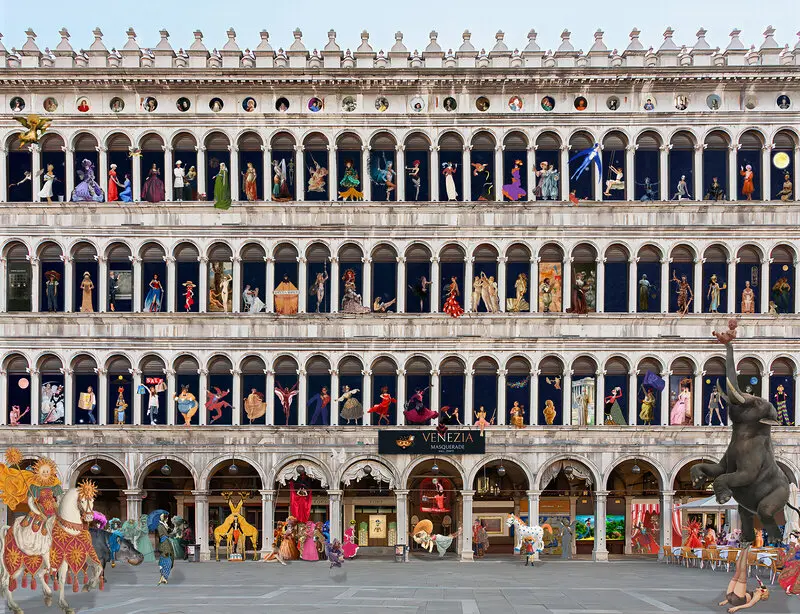
Yet another woman - En kvinna till eller Det är kvinnan bakom allt, 2022
Digital
100 x 70 cm
5 200 kr
Women have been present throughout history, making themselves more prominent than many have thought or wanted to believe. One could go as far as to say it's the woman behind everything. Not only does she create life, carrying it within her, but she also brings forth the new and ensures its survival. Cleverly enough, she has made a man believe he was first. Michelangelo made a deliberate mistake when he decorated the ceiling of the Sistine Chapel. The customer is always right. It wasn't Adam who should have reached out his hand to meet God's, for Eve was already there, and her nails were already painted. Throughout history, she has worked and been influenced from divine status to rulership, even outside the home. My painting 'Yet Another Woman' shows a hundred and fourteen images of how things were. Creating the picture took three hundred hours, but it was worth it for the woman.
March 1st, in the year of Grace 2022, was a special day in many ways. Carnevale di Venezia finished on this Shrove Tuesday ("Martedì Grasso") or Mardi Gras, the liveliest and busiest day during the carnival. The final weekend had culminated in some of the festival's best events, and Venice was packed with people from all times. Time-travelers who had come down from their stars for this celebrated occasion blended in among today's festive visitors.
The Procuratie Vecchie, a five-hundred-year-old architectural marvel on the northern side of St. Mark's Square, was the centre of attention on this special day. In a nod to the occasion, the architect Jacopo Sansovino had added an extra floor to accommodate all women. This architectural feat was symbolic, honouring women's contributions throughout history. Each window arch on the facade showcased tableaux with women portraying themselves in scenes from natural history, further emphasising the theme of gender equality.
The Venetian Republic, also known as La Serenissima or "the Most Serene Republic," thrived from the late seventh century until 1797, spanning a remarkable thousand years of cosmopolitanism, progressiveness, and innovation. As an independent city-state, Venice's unique geographical location distinguished it from the rest of Europe, serving as a bridge between East and West and embracing borrowed elements from diverse cultures. This, coupled with its status as an improbable centre of culture and wealth, transformed the Venetian Republic into a fertile ground for new ideas, fostering an unparalleled freedom of thought that empowered individuals, particularly women, to generate visionary works despite societal apprehensions.
Of course, Veronica Franco was present, the most celebrated cortigiana onesta in the Venetian Republic. In the fifteenth century, she asserted that women were equally as capable as men. So did her contemporary Moderata Fonte, a woman who challenged women’s subservience, becoming a very early champion of gender equality. Sara Copia Sullam established herself in the early seventeenth century as a woman with strong theological, philosophical, and literary ideas. She was also Jewish, which did not make it any easier. In the same century, Barbara Strozzi made a name for herself as a gifted literary and musical mind. She was uniquely able to package her artistic skills with a proto-feminist spin.
Veronica Franco, Moderata Fonte, Sara Copia Sullam, Arcangela Tarabotti, and Barbara Strozzi were 16th-century female risk-takers. The Venetian Republic provided the framework for them to work within, but each individually contributed intellect and artistry that provoked discussion of gender equality and proto-feminist notions. It was a celebration that had to happen. The week after was March 8th, International Women's Day so that the party would continue.
Many are the tableaux women stage in my picture. The first, following the Bible's timeline, is creation. Depicted by Michelangelo in the Sistine Chapel's ceiling, but as the patron, he got everything wrong. When God decisively stretches out his index finger to meet his creation, it's not Adam's finger he meets, but Eve's slender hand already adorned with painted nails. Biologically, it must have been the female gender; motherhood must have been the first in evolution.
The observer encounters a hundred and fourteen different roles that women have played thus far, as far back as we can trace her through time. This painting becomes a topic of conversation wherever it hangs. Everyone is looking for their own favorite among the images within the image. Is she a ruler or a subject, Pharaoh Hatshepsut - Egypt's most powerful woman, Isis, saint or whore, genius or superwoman Catwoman, Pippi Longstocking lifting her horse, a successful artist in the 18th century, or equally as influential as the Neanderthal women who painted caves long before Homo sapiens appeared in Europe. Was she a muse or one of the graces or the beautiful Venus, newly created standing naked on a scallop shell, a successful violinist or a cancan dancer. We encounter women in windows normally filled with men as warriors, artists, queens, preachers, and commanders or seducers. Suffragettes and Doris Day, a contradiction in two neighboring windows. Emma Goldman thrown into prison for her cause. Isis, who two thousand years before the Christian Madonna, sits with Osiris in her lap, the same metaphor as Mary and the baby Jesus. A plump woman loves her body so much that she dresses up as a Playboy bunny with bunny ears and the drink White Lady in hand. Marianne storms the barricades with the feminist flag held high, in defiance of the men's tricolor. A female narcissist loves herself so much that she kisses her reflection. A woman carrying an elephant on her legs feels entirely natural when seen in a picture. Not only does she empty men but also a raging tiger. If a woman sits in a red cage, it is locked from the inside because she wants to be left alone. Da Vinci's perfect Vitruvian woman hangs like a poster on the ground floor where Venice's carnival is in full swing. Tamers and agitators and the woman as sun goddess riding her mare.
The painting depicts three, or possibly two and a half, men: the mega-artist Dame Edna with his purple hairstyle, whatever they are; God as men claims he exists and is a he; and Adam sitting frightened and cowering in a window, hiding behind Eve and the serpent. He wouldn't have eaten the forbidden apple without being a henpecked hero. The woman strolling in St. Mark's Square with her pet, a hippopotamus with a silk bow, shows that size isn't the most important thing.
The painting also portrays an image that tells more than a thousand words about a woman's rise and fall and why. The Enigma of Hatshepsut, the mighty and victorious female pharaoh, is a tale of power, erasure, and gender war in Ancient Egypt.
Some are worth celebrating a little extra. In the annals of ancient Egypt, there existed a woman whose name once commanded reverence and awe: Hatshepsut, the Pharaoh who defied convention and ascended to the throne in a time when men ruled unchallenged. Her story is unparalleled power and achievement, yet it is also one of deliberate erasure and obscurity.
Hatshepsut's rise to power was nothing short of extraordinary. In a society where women were relegated to subordinate roles, she dared to defy tradition and assume the mantle of leadership. As Pharaoh, she wielded authority with wisdom and grace, overseeing a golden age of prosperity and innovation in the land of the Nile.
Under her reign, Egypt flourished like never before. Wars were won, trade routes expanded, and monumental building projects dotted the landscape. From the towering temples of Luxor to the majestic obelisks of Karnak, Hatshepsut's mark on history was indelible, her legacy eternal.
Yet, despite her many achievements, Hatshepsut's legacy was soon tarnished by the machinations of those who sought to undermine her authority. Upon her death, her successor, Thutmose III, embarked on a campaign of erasure, systematically removing all traces of her reign from the annals of history.
Statues were defaced, inscriptions were chiselled away, and her name was stricken from official records. It was as if Hatshepsut had never existed, and her memory consigned to oblivion by the very man she had entrusted with her legacy.
But even as her name faded from memory, the echoes of Hatshepsut's greatness persisted. Hidden in forgotten corners of ancient temples and buried beneath layers of sand and silt, fragments of her story endured, waiting to be unearthed by intrepid archaeologists centuries later.
Today, Hatshepsut stands as a symbol of resilience and defiance, a testament to the enduring power of women throughout history. Her story serves as a reminder that even in the face of erasure and obscurity, the legacy of those who dare to challenge the status quo can never truly be extinguished.
Hatshepsut's story resonates as a beacon of hope and inspiration in a world where women continue to fight for recognition and equality. Her journey from obscurity to immortality is a testament to the enduring strength of the human spirit and the timeless quest for justice and equality.
If Lysistrata had been flesh and blood, she would have been one of the first feminists. Lysistrata is a comedy by Aristophanes, written in 411 BC, which revolves around Lysistrata, who, along with almost all the women in Athens and Sparta, goes on a sex strike to end the Peloponnesian War, which had been raging for twenty years when the play was written. Lysistrata persuades Greek women to deny their husbands and lovers all sexual relations, often formulated as going on a sex strike, to force the men to negotiate peace—the tactic results in an escalation of the war between the sexes.
The piece is very outspoken, and with the constant sexual references, it has been considered offensive by some. Aristophanes must have had a model, a woman, who was then this early feminist. Aristophanes' "Lysistrata" is a satirical exploration of gender roles in ancient Greece. By empowering women to take charge of their sexuality and using it as a political tool, Aristophanes challenges traditional notions of femininity and masculinity. The play Lysistrata is a comic satire on the warring states during the Peloponnesian War. The satirical comedy is an attack on the warmongering men of Athens and Sparta and not necessarily an expression of improved conditions for women. Perhaps Aristophanes used the woman as an absurd tool to halt an unpopular war.
Aristophanes infused protofeminist ideals into Lysistrata and its mission for peace in Greece. Initially, Aristophanes acknowledged women's particular influence in ancient Greek society and leveraged it to their advantage by withholding sexual pleasure from men, traditionally seen as a motivator for their actions, thus subverting the established power dynamics. Furthermore, Aristophanes intended the play to be public rather than private, exposing the concept of a female-led uprising to a male audience and society at large. Presenting a comedy predominantly led by female characters was a rarity, as such sets typically shared the storyline spotlight with male characters. Despite some viewing Lysistrata's comedic nature as inherently absurd, the portrayal of women challenging existing social norms and structures within a comedic framework filled with impactful female characters suggests the introduction of protofeminist values by Aristophanes.
In Ancient Greece, women were confined to specific roles, excluding them from participating in activities such as warfare. However, the resourceful Lysistrata capitalised on perceived female influence to influence the war's outcome and secure peace for their benefit. While some argue that women aimed to restore their husbands' return and reinstate male-led society, the reality is that they wielded their power to achieve their objectives, a rarity in ancient Greek literature. The play's outset delineates predetermined roles for women, yet Lysistrata defies conventions by challenging gendered behaviour to achieve a goal all present women support.
Aristophanes' play challenged norms prevalent in theatrical acts of the time, particularly regarding women's representation. Despite the predominantly male audience and performers, the dialogues centralise women, a departure from traditional heroic narratives dominated by men. Addressing topics like marital rape within a comedic theme, though possibly familiar, is not commonly found in Ancient Greek literature, suggesting a nuanced approach intended for female audience members to comprehend the context and struggle. By introducing themes of societal change through conversation and dialogue, even in a context where the audience's reaction may have been laughter due to its predominantly male composition, Aristophanes initiated discourse within society.
The character composition in Lysistrata is noteworthy for its predominantly female cast compared to other contemporary works. While some argue that men were the primary decision-makers in Ancient Greece, the fervor displayed by women, led by Lysistrata, contradicts traditional gender structures. Women refuse to yield when men attempt to regain control, exhibiting defiance and challenging societal norms regarding gender roles. Despite being portrayed by male actors, the women in Lysistrata exhibit defiance and refuse to remain passive while men perpetuate war efforts, a departure from the norm in contemporary theater. Aristophanes' inclusion of a female-dominated cast with impactful roles in the storyline underscores his introduction of protofeminist values in Lysistrata.
Ancient literature and mythology, such as Euripides' Medea, have become closely associated with the feminist movement and interpreted as icons of feminism. Ancient literature plays an essential role in feminist theory and scholarly study. Olympe de Gouges is regarded as one of the first feminists.
Movements to broaden women's rights began much earlier than the 20th century. In her book The Second Sex, Simone de Beauvoir wrote that the first woman to "take up her pen in defence of her sex" was Christine de Pizan in the 15th century.[9] Other "proto-feminists" working in the 15th-17th centuries include Heinrich Cornelius Agrippa, Modesta di Pozzo di Forzi, Anne Bradstreet and François Poullain de la Barre.[9] Ancient literature and mythology, such as Euripides' Medea, have become closely associated with the feminist movement and interpreted as icons of feminism. Ancient literature plays a vital role in feminist theory and scholarly study.[10] Olympe de Gouges is regarded as one of the first feminists. She published a pamphlet named Déclaration des Droits de la Femme et de la Citoyenne ("Declaration of the Rights of Woman and the [Female] Citizen") as a response to Déclaration des Droits de l'Homme et du Citoyen ("Declaration of the Rights of Man and the [Male] Citizen") in 1791.[11]
In the UK, Mary Wollstonecraft, an early feminist, published A Vindication of the Rights of Women in 1792, promoting the then-radical idea that women should be educated on the same level as their male peers. The word feminism was first coined in 1837 by French philosopher Charles Fourier (as féminisme). She was here for the celebration, of course.
Most feminists agree on five basic principles—working to increase equality, expanding human choice, eliminating gender stratification, ending sexual violence, and promoting sexual freedom. Let the fight continue and show more tableaux.
5 200 kr

Jörgen Thornberg
Malmö
Lite om bilder och mig. Translation in English at the end.
Jag är en nyfiken person som ser allt i bilder, även det jag fäster i ord, gärna tillsammans för bakom alla mina bilder finns en berättelse. Till vissa bilder hör en kortare eller längre novell som följer med bilden.
Bilder berättar historier. Jag omges av naturlig skönhet, intressanta människor och historia var jag än går. Jag använder min kamera för att dokumentera världen och blanda det jag ser med vad jag känner för att fånga den dolda magin.
Mina bilder berättar mina historier. Genom mina bilder, tryck och berättelser. Jag bjuder in dig att ta del av dessa berättelser, in i ditt liv och hem och dela min mycket personliga syn på vår värld. Mer än vad ögat ser. Jag tänker i bilder, drömmer och skriver och pratar om dem; följaktligen måste jag också skapa bilder. De blir vad jag ser, inte nödvändigtvis begränsade till verkligheten. Det finns en bild runt varje hörn. Jag hoppas att du kommer att se vad jag såg och gilla det.
Jag är också en skrivande person och till många bilder hör en kortare eller längre essay. Den följer med tavlan, tryckt på fint papper och med en personlig hälsning från mig.
Flertalet bilder startar sin resa i min kamera. Enkelt förklarat beskriver jag bilden jag ser i mitt inre, upplevd eller fantiserad. Bilden uppstår inom mig redan innan jag fått okularet till ögat. På bråkdelen av ett ögonblick ser jag vad jag vill ha och vad som kan göras med bilden. Här skall jag stoppa in en giraff, stålmannen, Titanic eller vad det är min fantasi finner ut. Ännu märkligare är att jag kommer ihåg minnesbilden långt efteråt när det blir tid att skapa verket. Om jag lyckas eller inte, är upp till betraktaren, oftast präglat av en stråk av svart humor – meningen är att man skall bli underhållen. Mina bilder blir ofta en snackis där de hänger.
Jag föredrar bilder som förmedlar ett budskap i flera lager. Vid första anblicken fylld av feel-good, en vacker utsikt, fint väder, solen skiner, blommor på ängen eller vattnet som ligger förrädiskt spegelblankt. I en sådan bild kan jag gömma min egentliga berättelse, mitt förakt för förtryckare och våldsverkare, rasister och fördomsfulla människor - ett gärna återkommande motiv mer eller mindre dolt i det vackra motivet. Jag försöker förena dem i ett gemensamt narrativ.
Bild och formgivning har löpt som en röd tråd genom livet. Fotokonst känns som en värdig final som jag gärna delar med mig.
Min genre är vid som framgår av mina bilder, temat en blandning av pop- och gatukonst i kollage som kan bestå av hundratals lager. Vissa bilder kan ta veckor, andra någon dag innan det är dags att överlämna resultatet till printverkstaden. Fine Art Prints är digitala fotocollage. I dessa kollage sker rivandet, klippandet, pusslandet, målandet, ritandet och sprayningen digitalt. Det jag monterar in kan vara hundratals år gamla bilder som jag omsorgsfullt frilägger så att de ser ut att vara en del av tavlan men också bilder skapade av mig själv efter min egen fantasi. Därefter besöks printstudion och för vissa bilder numrera en limiterad upplaga (oftast 7 exemplar) och signera för hand. Vissa bilder kan köpas i olika format. Det är bara att fråga efter vilka. Gillar man en bild som är 70x100 men inte har plats på väggen, går den kanske att få i 50x70 cm istället. Frågan är fri.
Metoden Giclée eller Fine Art Print som det också kallas är det moderna sättet för framställning av grafisk konst. Villkoret för denna typ av utskrifter är att en högkvalitativ storformatskrivare används med åldersbeständigt färgpigment och konstnärspapper eller i förekommande fall på duk. Pappret som används möter de krav på livslängd som ställs av museer och gallerier. Normalt säljer jag mina bilder oinramade så att den nya ägaren själv kan bestämma hur de skall se ut, med eller utan passepartout färg på ram, med eller utan glas etc..
Under många år ställde jag bara ut på nätet, i valda grupper och på min egen Facebooksida - https://www.facebook.com/jorgen.thornberg.9
Jag finns också på en egen hemsida som tyvärr inte alltid är uppdaterad – https://www.jth.life/ Där kan du också läsa en del av de berättelser som följer med bilden.
UTSTÄLLNINGAR
Luftkastellet, oktober 2022
Konst i Lund, november 2022
Luftkastellet, mars 2023
Engleson Galleri Caroli, april 2023
Hydra, Greece June 2023
Engleson Galleri Caroli, oktober 2023
Toppen, Höllviken december 2023
Luftkastellet, mars 2024
Torups Galleri, mars 2024
Venice, May 2024
Luftkastellet, oktober 2024
Konst i Advent, December 2024
Galleri Engleson, Caroli December 2024
Jäger & Jansson Galleri, april 2025
A bit about pictures and me.
I'm a curious person who sees everything in pictures, even what I express in words, often combining them, for behind all my pictures lies a story. These narratives, some as short as a single image and others as long as a novel, are the heart and soul of my work.
Pictures tell stories. Wherever I go, I'm surrounded by natural beauty, exciting people, and history. I use my camera to document the world and blend what I see with what I feel to capture the hidden magic.
My images tell my stories. Through my pictures, prints, and narratives, I invite you to partake in these stories in your life and home and share my deeply personal perspective of our world. More than meets the eye. I think in pictures, dream, write, and talk about them; consequently, I must create images too. They become what I see, not necessarily confined to reality. There's a picture around every corner. I hope you'll see what I saw and enjoy it.
I'm also a writer, and many images come with a shorter or longer essay. It accompanies the painting, printed on fine paper with my personal greeting.
Many pictures start their journey on my camera. Simply put, I describe the image I see in my mind, experienced or imagined. The image arises within me even before I bring the eyepiece to my eye. In a fraction of a moment, I see what I want and what can be done with the picture. Here, I'll insert a giraffe, Superman, the Titanic, or whatever my imagination conjures up. Even stranger is that I remember the mental image long after it's time to create the work. Whether I succeed is up to the observer, often imbued with a streak of black humour – the aim is to entertain. My pictures usually become a talking point wherever they hang.
I prefer pictures that convey a message in multiple layers. At first glance, they're filled with feel-good vibes, a beautiful view, lovely weather, the sun shining, flowers in the meadow, or the water lying deceptively calm. But beneath this surface beauty, I often conceal a deeper story, a narrative that challenges societal norms or explores the human condition. I invite you to delve into these hidden narratives and discover the layers of meaning within my work.
Picture and design have been a thread running through my life. Photographic art feels like a fitting finale, and I'm happy to share it.
My genre is varied, as seen in my pictures; the theme is a blend of pop and street art in collages that can consist of hundreds of layers. Some images can take weeks, others just a day before it's time to hand over the result to the print workshop. Fine Art Prints are digital photo collages. In these collages, tearing, cutting, puzzling, painting, drawing, and spraying happen digitally. What I insert can be images hundreds of years old that I carefully extract so they appear to be part of the painting, but also images created by myself, now also generated from my imagination. Next, visit the print studio and, for certain images, number a limited edition (usually 7 copies) and sign them by hand. Some images may be available in other formats. Just ask which ones. If you like an image that's 70x100 but doesn't have space on the wall, you might be able to get it in 50x70 cm instead. The question is open.
The Giclée method, or Fine Art Print as it's also called, is the modern way of producing graphic art. This method ensures the highest quality and longevity of the artwork, using a high-quality large-format printer with archival pigment inks and artist paper or, in some cases, canvas. The paper used meets the longevity requirements set by museums and galleries. I sell my pictures unframed, allowing the new owner to personalise their artwork, confident in the lasting value and quality of the piece.
For many years, I only exhibited online, in selected groups, and on my Facebook page - https://www.facebook.com/jorgen.thornberg.9. I also have my website, which unfortunately is not constantly updated - https://www.jth.life/. You can also read some of the stories accompanying the pictures there.
EXHIBITIONS
Luftkastellet, October 2022
Art in Lund, November 2022
Luftkastellet, March 2023
Engleson Gallery Caroli, April 2023
Hydra, Greece June 2023
Engleson Gallery Caroli, October 2023
Toppen, Höllviken December 2023
Luftkastellet, March 2024
Torup Gallery, March 2024
Venice, May 2024
UTSTÄLLNINGAR
Luftkastellet, oktober 2022
Konst i Lund, november 2022
Luftkastellet, mars 2023
Engleson Galleri Caroli, april 2023
Hydra, Greece June 2023
Engleson Galleri Caroli, oktober 2023
Toppen, Höllviken december 2023
Luftkastellet, mars 2024
Torups Galleri, mars 2024
Venice, May 2024
Luftkastellet, October 2024
Konst i Advent, December 2024
Galleri Engleson, Caroli December 2024
Jäger & Jansson Galleri, April 2025
Utbildning
Autodidakt
Medlem i konstnärsförening
Öppna Sinnen
Med i konstrunda
Konstrundan i Skåne
Utställningar
Luftkastellet, October 2022
Art in Lund, November 2022
Luftkastellet, March 2023
Engleson Gallery Caroli, April 2023
Hydra, Greece June 2023
Engleson Gallery Caroli, October 2023
Toppen, Höllviken December 2023
Luftkastellet, March 2024
Torup Gallery, March 2024
Venice, May 2024