Vi använder cookies för att ge dig bästa möjliga upplevelse. Välj vilka cookies du tillåter.
Läs mer i vår integritetspolicy
Jörgen Thornberg
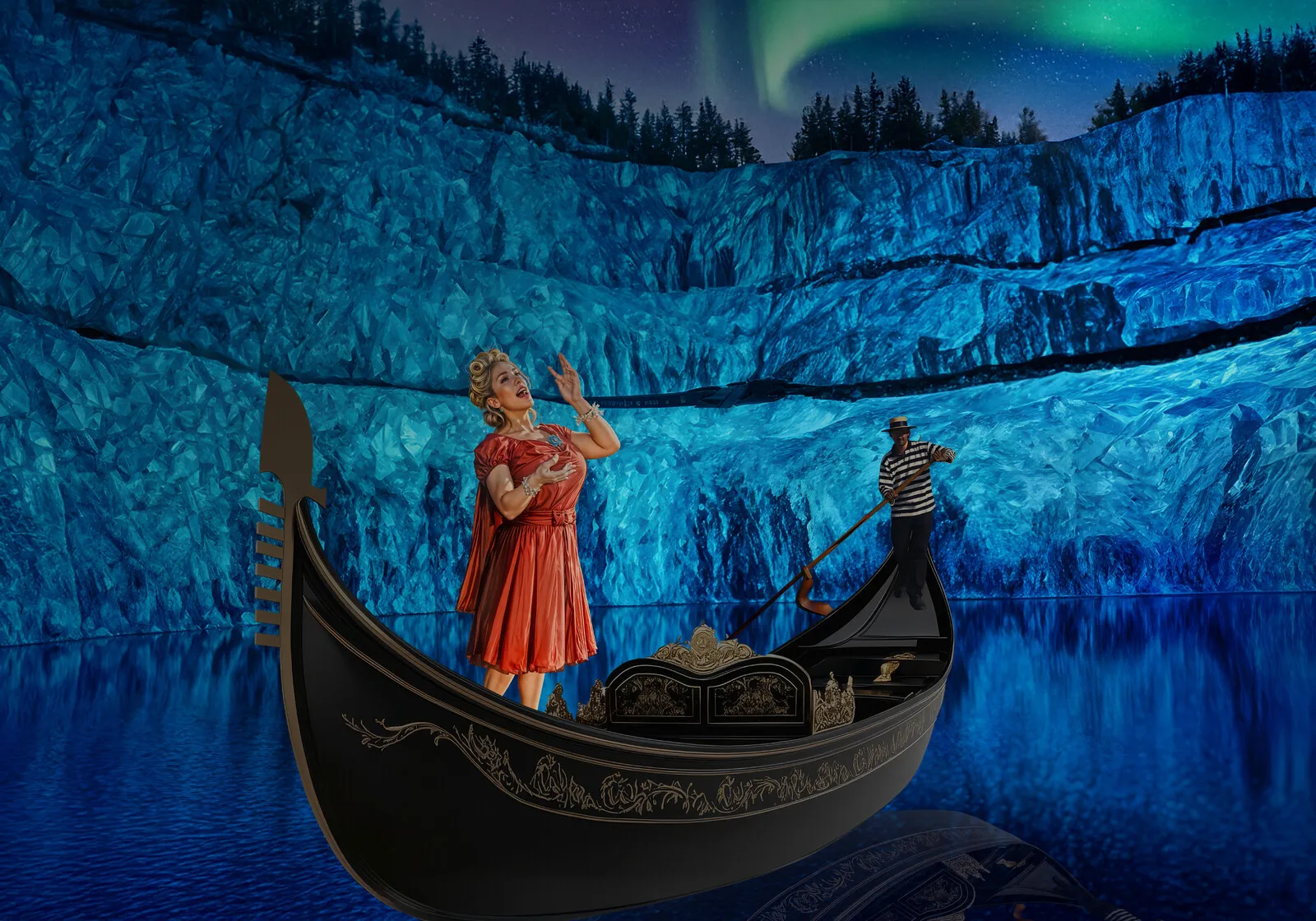
Bianca, Prima Donna Assoluta, 2025
Digital
70 x 50 cm
3 200 kr
Bianca, Prima Donna Assoluta
When the Diva sings, the Stones listen. Some voices soothe, others seduce, and some stir revolutions. But then, some voices crack stone, both literally and metaphorically. One such voice does not belong to a real-world soprano but to the fictional – and formidable – Bianca Castafiore, Hergé’s flamboyant opera diva whose high notes can shatter glass, patience, and perhaps even the fourth wall.
What starts as a comic device – a parody of operatic excess – becomes, in Dalhalla’s echoing basin, something more: a reflection on the power of sound, the myth of Jericho, and the mysterious ways in which art continues to shake both cliffs and beliefs.
If you're intrigued by this story, I invite you to explore more of my published work by clicking the link.
https://www.konst.se/jorgen-thornberg
“O Bianca, Diva of Echo
With emerald eyes and soaring C,
she steps forth – a storm, a spree.
From Tintin’s page to Dalhalla’s stage,
she wraps the crowd in vocal rage.
In brocade cloak and feathered hat,
she cracks the glass with this and that.
A goblet bursts, a wall gives way –
but Bianca stands, resplendent, fey.
She sings not for the meek of heart,
nor those who whisper in the dark.
She sings for love, for art, for flame,
for the captain scorning her name.
Haddock hides, he stuffs his ears,
she calls him “Paddock,” to his tears.
Yet still the world must laugh and cheer,
as Bianca rules the upper sphere.
So rise, great voice from Venice born,
you Jericho wind in soprano form.
For if a wall must fall and break –
then let it fall for Castafiore’s sake!”
Malmö July 2025
When Dalhalla’s Cliff Wall Fell for Castafiore – An Aria with Too Many Decibels
In the biblical story of Jericho, it was not the expected swords or battering rams that brought down the city walls, but the unexpected power of sound, carried by trumpets. Seven times the Israelites encircled the walls, blowing their horns, and on the seventh day, with a prolonged blast, the impregnable barrier collapsed. A myth, perhaps. As far as we know – but we cannot be certain, for it fell, as archaeologists have confirmed. And such events still occur, now and then, in our own time. This unexpected power of sound, much like Bianca's performance, can bring down barriers and captivate us in ways we never imagined.
When Bianca Castafiore, “the Milanese Nightingale,” stepped out of the pages of Tintin and took the stage at Dalhalla – the Dalarna amphitheatre nestled in a limestone quarry – she was set to perform selections from famous operas with links to Venice. The surprise of her performance in this unique setting was a delightful shock for the audience, sparking a sense of intrigue and engagement. The vast basin of Dalhalla can indeed evoke the Italian city of Venice, with its canals. Fittingly, the organisers had acquired an authentic gondola and a genuine gondolier, both from Stockholm, which the good people of Dalarna accepted with stoic grace.
Bianca began softly, with an aria from ‘Il Campiello’ by Wolf-Ferrari, a comic opera filled with charming soprano pieces but lacking any truly dramatic showstoppers. The audience could sit in quiet confidence, their benches steady, anticipating the storm that was about to break.
Nor did “No word from Tom.” (Anne Trulove) from Stravinsky’s ‘The Rake’s Progress’ cause any shudders. The aria is beautiful and technically challenging, but it offers more neoclassical clarity than tumult.
Number three, however, genuinely tugged at the heartstrings: “Ave Maria” (Desdemona) from Verdi’s ‘Otello’ – a beautiful yet serene aria that fit the venue’s acoustics perfectly—a soft, personal prayer, not an aria to shatter walls but to soften hearts and bring a sense of calm to the audience.
A few more lyrical pieces passed gently, revealing that Bianca was more impressive than her reputation suggested—at least if one pays less attention to the mutterings of that old soak, Captain Haddock.
Then came a piece that was both moving and powerful, yet it was not the bombastic force one might expect. The aria “Morrò, ma prima in grazia” (Amelia) from Verdi’s ‘Un ballo in maschera’ leans more towards the lyrical. Still, it is an aria of internal turmoil, a complexity that adds depth to the performance.
At the Seventh Aria, All Hell Broke Loose – Bianca Unleashed Every Decibel of Her Thunderous Voice, Leaving the Audience in Awe
With the seventh aria, however, all hell broke loose as Bianca unleashed every last decibel of her thunderous voice. Even for those unacquainted with opera, the title printed in the programme might have sounded alarming: “Suicidio!” from the fourth act of La Gioconda, Amilcare Ponchielli’s hauntingly beautiful opera.
This is a dramatically intense aria for a soprano, and that is an understatement. La Gioconda, heartbroken and resolved to sacrifice herself for love, erupts in a desperate death aria. It requires immense volume, a wide emotional range, and technical mastery. Once again, Donna Castafiore surpassed her reputation from the comic books and summoned power from her knees. Veritodiva – this is the aria for sopranos who can drown an orchestra, evoking a profound emotional response from the audience.
It wasn’t just that Bianca could shatter glass – chunks of Dalhalla’s cliff wall came crashing down, Jericho-style.
Bianca braced herself, lifted her chin, planted her feet, and drew a breath so deep that the gondola trembled, waves rolled across the basin, and then she released her most ferocious high C with such frenzy that the cliffs quivered. The windows of the nearby restaurant shattered—right down to the last seltzer glass—and the glass panes rattled to the centre of Rättvik. Somewhere in the distant haze, the remaining ruins of Jericho may have sighed and finally crumbled. Half a province emptied of wolves, bears, and wolverines—the last of them vanishing in silence and without regret.
History is filled with such voices. Marian Anderson, who sang on the steps of the Lincoln Memorial in defiance of racist bans. Paul Robeson, whose bass notes resonated through iron curtains and ideologies. Our own Birgit Nilsson, whose Scania-born fire cut through Wagnerian orchestras and iron-fisted impresarios alike. And then there's Bianca Castafiore, a fictional character who, in her own right, joins the ranks of these legendary voices. Her voice doesn’t just fill concert halls – it shatters boundaries, leaving a lasting impact on the history of opera.
For those who, by chance, don’t know who Bianca Castafiore is – nicknamed “the Milanese Nightingale” – she is a fictional character in The Adventures of Tintin, the beloved comic series by Belgian artist Hergé. She is an opera singer who appears repeatedly across the globe in one adventure after another. Although revered by the public, most of the main characters find her voice shrill and excessively loud – none more so than Captain Haddock, who, ironically, is the object of Castafiore’s unwavering affection. She also has a habit of hopelessly mispronouncing people’s names, referring to him as “Hammock,” “Paddock,” and even “Fatstock” instead of “Haddock.”
Castafiore is depicted with comedic flair as narcissistic, whimsical, absent-minded, and endlessly talkative – but she also shows moments of generosity, deep charm, and an iron will beneath all the fuss.
Opera, Glass, and Jericho – When Castafiore Sings, Walls Tremble
Opera, a subject that both bored and amused Hergé, found its humorous reflection in his creation of Bianca Castafiore. She, like the art form itself, is designed to elicit chuckles from the reader.
Castafiore is renowned for shattering glass with her voice – a recurring gag in many Tintin albums.
The most evident example is in ‘The Castafiore Emerald’ (Les Bijoux de la Castafiore, 1963), where her high C during the “Jewel Song” from Faust is so intense that it causes glass to break. During her concert at Dalhalla, the myth came to life: her voice cracked a cliff face, sending fragments tumbling into the water. The audience burst into applause, convinced it was part of the performance.
Acoustic science has confirmed the power of sound to shatter glass and cause buildings to tremble. But more awe-inspiring than its physical effects is the emotional impact of a voice that can evoke awe, hesitation, tears, or belief.
The cries at Jericho were about faith. Castafiore’s voice, while it may carry a hint of hubris, also embodies art’s unyielding desire to be heard, to move, and to shake the foundations of our beliefs.
Jörgen Thornberg
Bianca, Prima Donna Assoluta, 2025
Digital
70 x 50 cm
3 200 kr
Bianca, Prima Donna Assoluta
When the Diva sings, the Stones listen. Some voices soothe, others seduce, and some stir revolutions. But then, some voices crack stone, both literally and metaphorically. One such voice does not belong to a real-world soprano but to the fictional – and formidable – Bianca Castafiore, Hergé’s flamboyant opera diva whose high notes can shatter glass, patience, and perhaps even the fourth wall.
What starts as a comic device – a parody of operatic excess – becomes, in Dalhalla’s echoing basin, something more: a reflection on the power of sound, the myth of Jericho, and the mysterious ways in which art continues to shake both cliffs and beliefs.
If you're intrigued by this story, I invite you to explore more of my published work by clicking the link.
https://www.konst.se/jorgen-thornberg
“O Bianca, Diva of Echo
With emerald eyes and soaring C,
she steps forth – a storm, a spree.
From Tintin’s page to Dalhalla’s stage,
she wraps the crowd in vocal rage.
In brocade cloak and feathered hat,
she cracks the glass with this and that.
A goblet bursts, a wall gives way –
but Bianca stands, resplendent, fey.
She sings not for the meek of heart,
nor those who whisper in the dark.
She sings for love, for art, for flame,
for the captain scorning her name.
Haddock hides, he stuffs his ears,
she calls him “Paddock,” to his tears.
Yet still the world must laugh and cheer,
as Bianca rules the upper sphere.
So rise, great voice from Venice born,
you Jericho wind in soprano form.
For if a wall must fall and break –
then let it fall for Castafiore’s sake!”
Malmö July 2025
When Dalhalla’s Cliff Wall Fell for Castafiore – An Aria with Too Many Decibels
In the biblical story of Jericho, it was not the expected swords or battering rams that brought down the city walls, but the unexpected power of sound, carried by trumpets. Seven times the Israelites encircled the walls, blowing their horns, and on the seventh day, with a prolonged blast, the impregnable barrier collapsed. A myth, perhaps. As far as we know – but we cannot be certain, for it fell, as archaeologists have confirmed. And such events still occur, now and then, in our own time. This unexpected power of sound, much like Bianca's performance, can bring down barriers and captivate us in ways we never imagined.
When Bianca Castafiore, “the Milanese Nightingale,” stepped out of the pages of Tintin and took the stage at Dalhalla – the Dalarna amphitheatre nestled in a limestone quarry – she was set to perform selections from famous operas with links to Venice. The surprise of her performance in this unique setting was a delightful shock for the audience, sparking a sense of intrigue and engagement. The vast basin of Dalhalla can indeed evoke the Italian city of Venice, with its canals. Fittingly, the organisers had acquired an authentic gondola and a genuine gondolier, both from Stockholm, which the good people of Dalarna accepted with stoic grace.
Bianca began softly, with an aria from ‘Il Campiello’ by Wolf-Ferrari, a comic opera filled with charming soprano pieces but lacking any truly dramatic showstoppers. The audience could sit in quiet confidence, their benches steady, anticipating the storm that was about to break.
Nor did “No word from Tom.” (Anne Trulove) from Stravinsky’s ‘The Rake’s Progress’ cause any shudders. The aria is beautiful and technically challenging, but it offers more neoclassical clarity than tumult.
Number three, however, genuinely tugged at the heartstrings: “Ave Maria” (Desdemona) from Verdi’s ‘Otello’ – a beautiful yet serene aria that fit the venue’s acoustics perfectly—a soft, personal prayer, not an aria to shatter walls but to soften hearts and bring a sense of calm to the audience.
A few more lyrical pieces passed gently, revealing that Bianca was more impressive than her reputation suggested—at least if one pays less attention to the mutterings of that old soak, Captain Haddock.
Then came a piece that was both moving and powerful, yet it was not the bombastic force one might expect. The aria “Morrò, ma prima in grazia” (Amelia) from Verdi’s ‘Un ballo in maschera’ leans more towards the lyrical. Still, it is an aria of internal turmoil, a complexity that adds depth to the performance.
At the Seventh Aria, All Hell Broke Loose – Bianca Unleashed Every Decibel of Her Thunderous Voice, Leaving the Audience in Awe
With the seventh aria, however, all hell broke loose as Bianca unleashed every last decibel of her thunderous voice. Even for those unacquainted with opera, the title printed in the programme might have sounded alarming: “Suicidio!” from the fourth act of La Gioconda, Amilcare Ponchielli’s hauntingly beautiful opera.
This is a dramatically intense aria for a soprano, and that is an understatement. La Gioconda, heartbroken and resolved to sacrifice herself for love, erupts in a desperate death aria. It requires immense volume, a wide emotional range, and technical mastery. Once again, Donna Castafiore surpassed her reputation from the comic books and summoned power from her knees. Veritodiva – this is the aria for sopranos who can drown an orchestra, evoking a profound emotional response from the audience.
It wasn’t just that Bianca could shatter glass – chunks of Dalhalla’s cliff wall came crashing down, Jericho-style.
Bianca braced herself, lifted her chin, planted her feet, and drew a breath so deep that the gondola trembled, waves rolled across the basin, and then she released her most ferocious high C with such frenzy that the cliffs quivered. The windows of the nearby restaurant shattered—right down to the last seltzer glass—and the glass panes rattled to the centre of Rättvik. Somewhere in the distant haze, the remaining ruins of Jericho may have sighed and finally crumbled. Half a province emptied of wolves, bears, and wolverines—the last of them vanishing in silence and without regret.
History is filled with such voices. Marian Anderson, who sang on the steps of the Lincoln Memorial in defiance of racist bans. Paul Robeson, whose bass notes resonated through iron curtains and ideologies. Our own Birgit Nilsson, whose Scania-born fire cut through Wagnerian orchestras and iron-fisted impresarios alike. And then there's Bianca Castafiore, a fictional character who, in her own right, joins the ranks of these legendary voices. Her voice doesn’t just fill concert halls – it shatters boundaries, leaving a lasting impact on the history of opera.
For those who, by chance, don’t know who Bianca Castafiore is – nicknamed “the Milanese Nightingale” – she is a fictional character in The Adventures of Tintin, the beloved comic series by Belgian artist Hergé. She is an opera singer who appears repeatedly across the globe in one adventure after another. Although revered by the public, most of the main characters find her voice shrill and excessively loud – none more so than Captain Haddock, who, ironically, is the object of Castafiore’s unwavering affection. She also has a habit of hopelessly mispronouncing people’s names, referring to him as “Hammock,” “Paddock,” and even “Fatstock” instead of “Haddock.”
Castafiore is depicted with comedic flair as narcissistic, whimsical, absent-minded, and endlessly talkative – but she also shows moments of generosity, deep charm, and an iron will beneath all the fuss.
Opera, Glass, and Jericho – When Castafiore Sings, Walls Tremble
Opera, a subject that both bored and amused Hergé, found its humorous reflection in his creation of Bianca Castafiore. She, like the art form itself, is designed to elicit chuckles from the reader.
Castafiore is renowned for shattering glass with her voice – a recurring gag in many Tintin albums.
The most evident example is in ‘The Castafiore Emerald’ (Les Bijoux de la Castafiore, 1963), where her high C during the “Jewel Song” from Faust is so intense that it causes glass to break. During her concert at Dalhalla, the myth came to life: her voice cracked a cliff face, sending fragments tumbling into the water. The audience burst into applause, convinced it was part of the performance.
Acoustic science has confirmed the power of sound to shatter glass and cause buildings to tremble. But more awe-inspiring than its physical effects is the emotional impact of a voice that can evoke awe, hesitation, tears, or belief.
The cries at Jericho were about faith. Castafiore’s voice, while it may carry a hint of hubris, also embodies art’s unyielding desire to be heard, to move, and to shake the foundations of our beliefs.
3 200 kr

Jörgen Thornberg
Malmö
Lite om bilder och mig. Translation in English at the end.
Jag är en nyfiken person som ser allt i bilder, även det jag fäster i ord, gärna tillsammans för bakom alla mina bilder finns en berättelse. Till vissa bilder hör en kortare eller längre novell som följer med bilden.
Bilder berättar historier. Jag omges av naturlig skönhet, intressanta människor och historia var jag än går. Jag använder min kamera för att dokumentera världen och blanda det jag ser med vad jag känner för att fånga den dolda magin.
Mina bilder berättar mina historier. Genom mina bilder, tryck och berättelser. Jag bjuder in dig att ta del av dessa berättelser, in i ditt liv och hem och dela min mycket personliga syn på vår värld. Mer än vad ögat ser. Jag tänker i bilder, drömmer och skriver och pratar om dem; följaktligen måste jag också skapa bilder. De blir vad jag ser, inte nödvändigtvis begränsade till verkligheten. Det finns en bild runt varje hörn. Jag hoppas att du kommer att se vad jag såg och gilla det.
Jag är också en skrivande person och till många bilder hör en kortare eller längre essay. Den följer med tavlan, tryckt på fint papper och med en personlig hälsning från mig.
Flertalet bilder startar sin resa i min kamera. Enkelt förklarat beskriver jag bilden jag ser i mitt inre, upplevd eller fantiserad. Bilden uppstår inom mig redan innan jag fått okularet till ögat. På bråkdelen av ett ögonblick ser jag vad jag vill ha och vad som kan göras med bilden. Här skall jag stoppa in en giraff, stålmannen, Titanic eller vad det är min fantasi finner ut. Ännu märkligare är att jag kommer ihåg minnesbilden långt efteråt när det blir tid att skapa verket. Om jag lyckas eller inte, är upp till betraktaren, oftast präglat av en stråk av svart humor – meningen är att man skall bli underhållen. Mina bilder blir ofta en snackis där de hänger.
Jag föredrar bilder som förmedlar ett budskap i flera lager. Vid första anblicken fylld av feel-good, en vacker utsikt, fint väder, solen skiner, blommor på ängen eller vattnet som ligger förrädiskt spegelblankt. I en sådan bild kan jag gömma min egentliga berättelse, mitt förakt för förtryckare och våldsverkare, rasister och fördomsfulla människor - ett gärna återkommande motiv mer eller mindre dolt i det vackra motivet. Jag försöker förena dem i ett gemensamt narrativ.
Bild och formgivning har löpt som en röd tråd genom livet. Fotokonst känns som en värdig final som jag gärna delar med mig.
Min genre är vid som framgår av mina bilder, temat en blandning av pop- och gatukonst i kollage som kan bestå av hundratals lager. Vissa bilder kan ta veckor, andra någon dag innan det är dags att överlämna resultatet till printverkstaden. Fine Art Prints är digitala fotocollage. I dessa kollage sker rivandet, klippandet, pusslandet, målandet, ritandet och sprayningen digitalt. Det jag monterar in kan vara hundratals år gamla bilder som jag omsorgsfullt frilägger så att de ser ut att vara en del av tavlan men också bilder skapade av mig själv efter min egen fantasi. Därefter besöks printstudion och för vissa bilder numrera en limiterad upplaga (oftast 7 exemplar) och signera för hand. Vissa bilder kan köpas i olika format. Det är bara att fråga efter vilka. Gillar man en bild som är 70x100 men inte har plats på väggen, går den kanske att få i 50x70 cm istället. Frågan är fri.
Metoden Giclée eller Fine Art Print som det också kallas är det moderna sättet för framställning av grafisk konst. Villkoret för denna typ av utskrifter är att en högkvalitativ storformatskrivare används med åldersbeständigt färgpigment och konstnärspapper eller i förekommande fall på duk. Pappret som används möter de krav på livslängd som ställs av museer och gallerier. Normalt säljer jag mina bilder oinramade så att den nya ägaren själv kan bestämma hur de skall se ut, med eller utan passepartout färg på ram, med eller utan glas etc..
Under många år ställde jag bara ut på nätet, i valda grupper och på min egen Facebooksida - https://www.facebook.com/jorgen.thornberg.9
Jag finns också på en egen hemsida som tyvärr inte alltid är uppdaterad – https://www.jth.life/ Där kan du också läsa en del av de berättelser som följer med bilden.
UTSTÄLLNINGAR
Luftkastellet, oktober 2022
Konst i Lund, november 2022
Luftkastellet, mars 2023
Engleson Galleri Caroli, april 2023
Hydra, Greece June 2023
Engleson Galleri Caroli, oktober 2023
Toppen, Höllviken december 2023
Luftkastellet, mars 2024
Torups Galleri, mars 2024
Venice, May 2024
Luftkastellet, oktober 2024
Konst i Advent, December 2024
Galleri Engleson, Caroli December 2024
Jäger & Jansson Galleri, april 2025
A bit about pictures and me.
I'm a curious person who sees everything in pictures, even what I express in words, often combining them, for behind all my pictures lies a story. These narratives, some as short as a single image and others as long as a novel, are the heart and soul of my work.
Pictures tell stories. Wherever I go, I'm surrounded by natural beauty, exciting people, and history. I use my camera to document the world and blend what I see with what I feel to capture the hidden magic.
My images tell my stories. Through my pictures, prints, and narratives, I invite you to partake in these stories in your life and home and share my deeply personal perspective of our world. More than meets the eye. I think in pictures, dream, write, and talk about them; consequently, I must create images too. They become what I see, not necessarily confined to reality. There's a picture around every corner. I hope you'll see what I saw and enjoy it.
I'm also a writer, and many images come with a shorter or longer essay. It accompanies the painting, printed on fine paper with my personal greeting.
Many pictures start their journey on my camera. Simply put, I describe the image I see in my mind, experienced or imagined. The image arises within me even before I bring the eyepiece to my eye. In a fraction of a moment, I see what I want and what can be done with the picture. Here, I'll insert a giraffe, Superman, the Titanic, or whatever my imagination conjures up. Even stranger is that I remember the mental image long after it's time to create the work. Whether I succeed is up to the observer, often imbued with a streak of black humour – the aim is to entertain. My pictures usually become a talking point wherever they hang.
I prefer pictures that convey a message in multiple layers. At first glance, they're filled with feel-good vibes, a beautiful view, lovely weather, the sun shining, flowers in the meadow, or the water lying deceptively calm. But beneath this surface beauty, I often conceal a deeper story, a narrative that challenges societal norms or explores the human condition. I invite you to delve into these hidden narratives and discover the layers of meaning within my work.
Picture and design have been a thread running through my life. Photographic art feels like a fitting finale, and I'm happy to share it.
My genre is varied, as seen in my pictures; the theme is a blend of pop and street art in collages that can consist of hundreds of layers. Some images can take weeks, others just a day before it's time to hand over the result to the print workshop. Fine Art Prints are digital photo collages. In these collages, tearing, cutting, puzzling, painting, drawing, and spraying happen digitally. What I insert can be images hundreds of years old that I carefully extract so they appear to be part of the painting, but also images created by myself, now also generated from my imagination. Next, visit the print studio and, for certain images, number a limited edition (usually 7 copies) and sign them by hand. Some images may be available in other formats. Just ask which ones. If you like an image that's 70x100 but doesn't have space on the wall, you might be able to get it in 50x70 cm instead. The question is open.
The Giclée method, or Fine Art Print as it's also called, is the modern way of producing graphic art. This method ensures the highest quality and longevity of the artwork, using a high-quality large-format printer with archival pigment inks and artist paper or, in some cases, canvas. The paper used meets the longevity requirements set by museums and galleries. I sell my pictures unframed, allowing the new owner to personalise their artwork, confident in the lasting value and quality of the piece.
For many years, I only exhibited online, in selected groups, and on my Facebook page - https://www.facebook.com/jorgen.thornberg.9. I also have my website, which unfortunately is not constantly updated - https://www.jth.life/. You can also read some of the stories accompanying the pictures there.
EXHIBITIONS
Luftkastellet, October 2022
Art in Lund, November 2022
Luftkastellet, March 2023
Engleson Gallery Caroli, April 2023
Hydra, Greece June 2023
Engleson Gallery Caroli, October 2023
Toppen, Höllviken December 2023
Luftkastellet, March 2024
Torup Gallery, March 2024
Venice, May 2024
UTSTÄLLNINGAR
Luftkastellet, oktober 2022
Konst i Lund, november 2022
Luftkastellet, mars 2023
Engleson Galleri Caroli, april 2023
Hydra, Greece June 2023
Engleson Galleri Caroli, oktober 2023
Toppen, Höllviken december 2023
Luftkastellet, mars 2024
Torups Galleri, mars 2024
Venice, May 2024
Luftkastellet, October 2024
Konst i Advent, December 2024
Galleri Engleson, Caroli December 2024
Jäger & Jansson Galleri, April 2025
Utbildning
Autodidakt
Medlem i konstnärsförening
Öppna Sinnen
Med i konstrunda
Konstrundan i Skåne
Utställningar
Luftkastellet, October 2022
Art in Lund, November 2022
Luftkastellet, March 2023
Engleson Gallery Caroli, April 2023
Hydra, Greece June 2023
Engleson Gallery Caroli, October 2023
Toppen, Höllviken December 2023
Luftkastellet, March 2024
Torup Gallery, March 2024
Venice, May 2024