Vi använder cookies för att ge dig bästa möjliga upplevelse. Välj vilka cookies du tillåter.
Läs mer i vår integritetspolicy
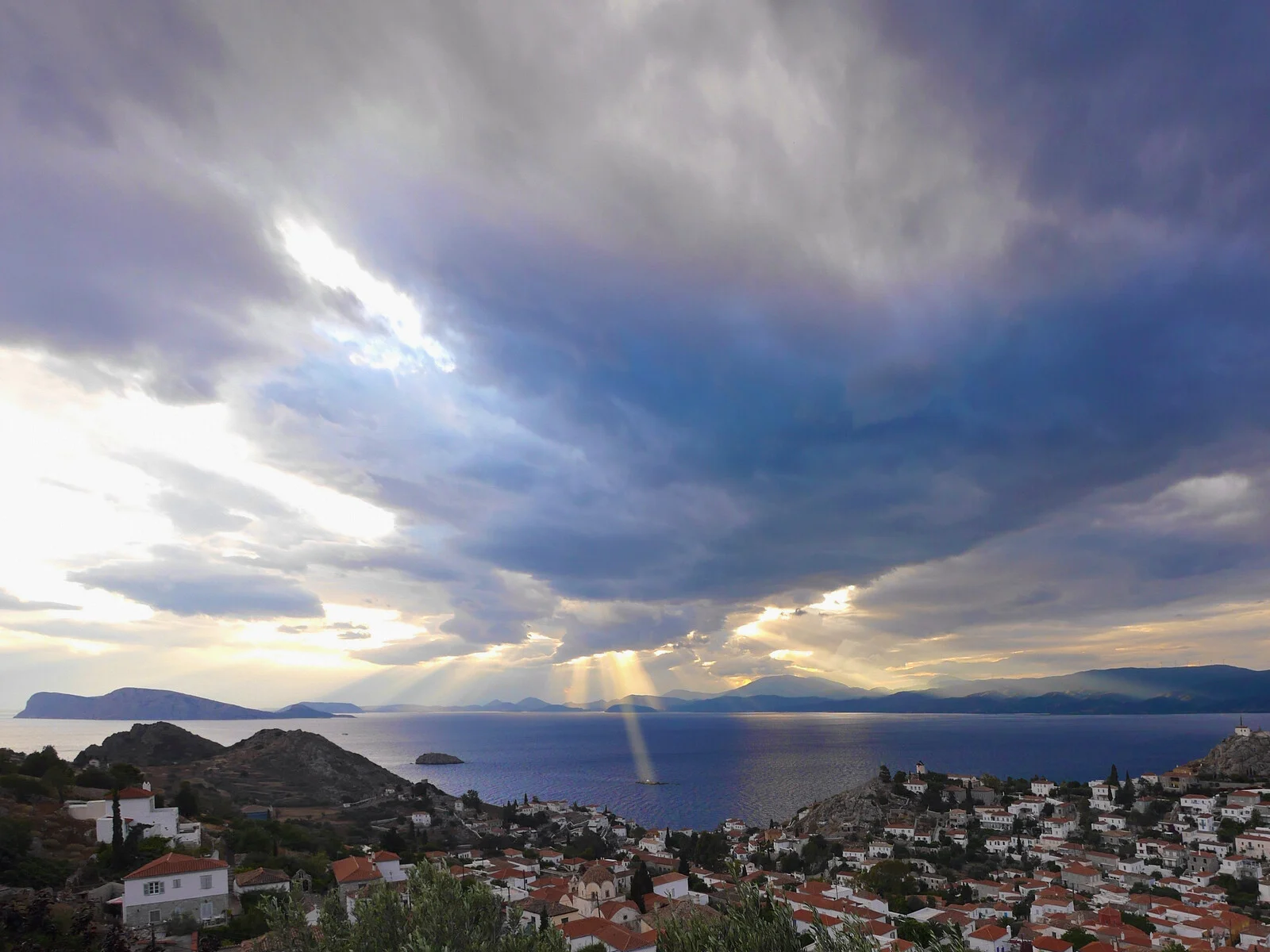
Jörgen Thornberg
The day the light got in, 2021
Digital
70 x 50 cm
Beneath a sky dense and grey,
heavy clouds seem here to stay.
But look, a miracle unfolds,
As tiny cracks, the light upholds.
Through gaps, the sunbeam's grace,
Dances down, lights up a place.
Each ray a whisper, soft and bright,
Saying, "Hold on, there's still light."
Leonard's words, a timeless hymn,
"There is a crack in everything."
From the heavens, light pours in,
Chasing shadows, lifting sin.
So do not fret, dear weary soul,
Though darkness takes its toll.
For every shadow, every plight,
Yields to the sun, the coming light.
Lords of darkness must all retreat,
As hope descends on golden feet.
And soon, the world will brightly spin,
With light where cracks let love seep in.
It was July 30th of last year, and fittingly, the weather had been cloudy as the UN General Assembly declared World Day Against Trafficking in Persons. There had been occasional breaks in the clouds, hinting at hope. At precisely 19:48, a gap opened, and a beam of light shone on Saint Nikolaos Holy Chapel in Hydra Strait. The tiny whitewashed chapel with its arched roof lies on a rocky reef just off Kamini Harbor on the coast of Hydra. Although it is closed, it is often used for weddings.
The spotlight from above illuminated the chapel for several minutes, serving as a reminder of the critical day. Trafficking and human trafficking are serious crimes and violations of human rights. Every year, tens of thousands of women, children, and men fall victim to traffickers. Almost every country in the world is affected by trafficking, whether it is within the country, a journey to another country, or the destination itself. Most countries have national laws against human trafficking, yet people still fall victim to this heinous crime. To combat this horrendous crime, significant global efforts are required. July 30th is a day to raise awareness and combat human trafficking. For UNICEF, the day highlights the importance of protecting children, in particular, from this type of exploitation and crime. Saint Nicholas, the chapel's patron saint, is a central figure in this fight. The spotlight from above could hardly have been a coincidence.
Saint Nicholas is the patron saint of sailors, merchants, archers, repentant thieves, children, brewers, pawnbrokers, toymakers, unmarried people, students in various European cities and countries, and victims of human trafficking. As was typical for early Christian saints, his reputation evolved among the pious, and his legendary habit of secret gift-giving gave rise to the traditional model of Santa Claus ("Saint Nick") through Sinterklaas.
In most people's minds, Saint Nicholas is the one who brings Christmas, all the gifts, and a festive setting for the year's biggest holiday. In Protestant countries, Father Christmas in his red suit and hat, with a whiff of alcohol in his white beard, accompanied by his elves and reindeer, has taken his place. However, these jolly older men are celebrated alongside each other in most places. The best gift Saint Nicholas and Father Christmas could give humanity would be a Christmas present daily in the form of people freed from their traffickers.
In one of the earliest attested and most famous incidents from Nicholas's life, he is said to have rescued three girls from being forced into prostitution by dropping a sack of gold coins through the window of their house each night for three nights so their father could pay a dowry for each of them. Where is Nicholas today with all the cases of trafficking in Europe? Is he hiding in his chapel off Hydra? Did the one who controlled the spotlight intend to wake the saint? Saint Nicholas is needed more than ever to protect innocent girls who fall into the hands of cruel traffickers. Human trafficking should be seen as a form of gender-based violence that primarily affects women and girls.
Trafficking: A Modern Plague with Ancient Roots
Trafficking in persons is a grave violation of human rights and a pressing global issue that affects millions of people worldwide. It is a modern plague, but its roots can be traced back to ancient times. This article explores the current state of human trafficking while also delving into its historical origins and evolution.
The Modern Reality of Trafficking
In today's world, human trafficking manifests in various forms, including forced labour, sexual exploitation, domestic servitude, and child soldiering. According to the International Labour Organization (ILO), there are an estimated 25 million victims of human trafficking globally. These individuals are often lured by false promises of employment, education, or a better life, only to find themselves trapped in a cycle of exploitation and abuse.
Key Statistics:
- 71% of trafficking victims are women and girls.
- 25% of trafficking victims are children.
- Human trafficking is a lucrative business, generating approximately $150 billion annually.
Common Types of Trafficking:
1. Sex Trafficking: Involves forcing individuals into prostitution or other forms of sexual exploitation.
2. Labor Trafficking: Involves forcing individuals to work in industries such as agriculture, construction, and manufacturing under threat or coercion.
3. Domestic Servitude: Involves forcing individuals to work in private households under abusive conditions.
4. Child Trafficking: Involves exploiting children for labour, prostitution, or as child soldiers.
Historical Context of Trafficking
While human trafficking is often viewed as a modern issue, its roots run deep into human history. Ancient civilisations, including Mesopotamia, Egypt, Greece, and Rome, all practised forms of slavery and exploitation that can be seen as precursors to modern trafficking.
Mesopotamia and Egypt:
In Mesopotamia and Egypt, slavery was an integral part of society. War captives, debtors, and criminals were often enslaved and forced to work under harsh conditions. These early forms of bondage laid the groundwork for systemic exploitation.
Ancient Greece and Rome:
The Greeks and Romans also practised slavery on a large scale. In Rome, enslaved people were used for various purposes, from household servants to labourers in mines and fields. The Roman economy heavily depended on slave labour, and the treatment of slaves was often brutal and dehumanising.
The Evolution of Human Trafficking
Throughout the Middle Ages and into the modern era, the transatlantic slave trade marked one of the darkest chapters in human history. Millions of Africans were forcibly transported to the Americas, where they were sold into slavery and forced to work on plantations. This period highlighted the commodification of human beings and the immense suffering inflicted upon trafficked individuals.
Key Historical Events:
- Transatlantic Slave Trade (16th - 19th Century): Over 12 million Africans were trafficked to the New World, where they were subjected to inhumane conditions and forced labour.
- Abolition Movements (18th - 19th Century): Activists like William Wilberforce in the UK and Frederick Douglass in the US fought tirelessly to end the slave trade and slavery.
Modern Efforts to Combat Trafficking
International efforts to combat human trafficking have intensified in the 20th and 21st centuries. Through its Office on Drugs and Crime (UNODC), the United Nations has been at the forefront of these efforts, advocating for stronger laws, better victim protection, and increased international cooperation.
Key International Agreements:
- The Palermo Protocol (2000): A protocol to prevent, suppress, and punish trafficking in persons, especially women and children. It is a landmark international agreement that provides a comprehensive framework for addressing trafficking.
- The Trafficking Victims Protection Act (TVPA) (2000): A US law that provides tools to combat trafficking and protect victims.
Non-Governmental Organisations (NGOs):
Organisations like Polaris, the International Justice Mission (IJM), and Anti-Slavery International play crucial roles in rescuing victims, providing rehabilitation services, and advocating for policy changes.
The Role of Technology in Modern Trafficking
In the digital age, traffickers have adapted to new technologies to exploit victims. Social media and online platforms are often used to recruit and exploit individuals, making it even more challenging to combat trafficking. However, technology also offers new tools for detection and prevention, such as data analytics and AI-driven monitoring systems.
The Path Forward
To effectively combat human trafficking, a multifaceted approach is necessary. This includes:
- Strengthening Laws and Enforcement: Ensuring laws are in place to prosecute traffickers and protect victims.
- Raising Awareness: Educating the public about the signs of trafficking and how to report it.
- Supporting Victims: Providing comprehensive support services, including legal aid, medical care, and psychological support.
- International Cooperation: Enhancing collaboration between countries to combat cross-border trafficking.
Conclusion
Human trafficking is a complex and profoundly entrenched issue that requires global cooperation and sustained effort to eradicate. By understanding its historical roots and recognising the modern realities, we can develop more effective strategies to combat this heinous crime and protect the millions of individuals who fall victim to it yearly. Through continued advocacy, education, and international collaboration, there is hope for a future where human trafficking is no longer a tragic reality.
As Leonard Cohen sings in his 'Anthem' one of his most memorable songs.
"Ring the bells that still can ring
Forget your perfect offering
There is a crack, a crack in everything
That's how the light gets in."
What a chorus line! What a call to rise! We all have bells that we can ring; we can rise and ring the bells against abuse, trafficking, violence, fraud, corruption, coercion, and lies. Leonard speaks of the bells that still can ring, highlighting how easily we can be silenced, our bells laid down, our voices lost, not by external force but by our fear, weakness, or feelings of defeat.
In Leonard's words — "Forget your perfect offering" — lies the reminder that striving for perfection is not what matters. Leonard tells us that we might think we possess the antidote, the cure, the simple solution to every obstacle. We do not! So, let go of the notion that we can fix the fundamental flaws in everything, what some call sin. But remember, even God has faltered throughout the years. Innocent lives are still lost every day.
The devil and his followers may have crafted wicked plans for the world. The struggle between good and evil has existed since the beginning of time. But we know how the story ends: Evil cannot triumph in the grand scheme, only in isolated battles. Even now, if you open your eyes, you will see, as Leonard does, many cracks in the dark side's designs.
The Bible is replete with tales where evil does not thrive. What a man sows, he will also reap. Wherever we see a crack, it will widen, allowing daylight to flood in. Evil can only survive in the shadows and will never withstand the light of day.
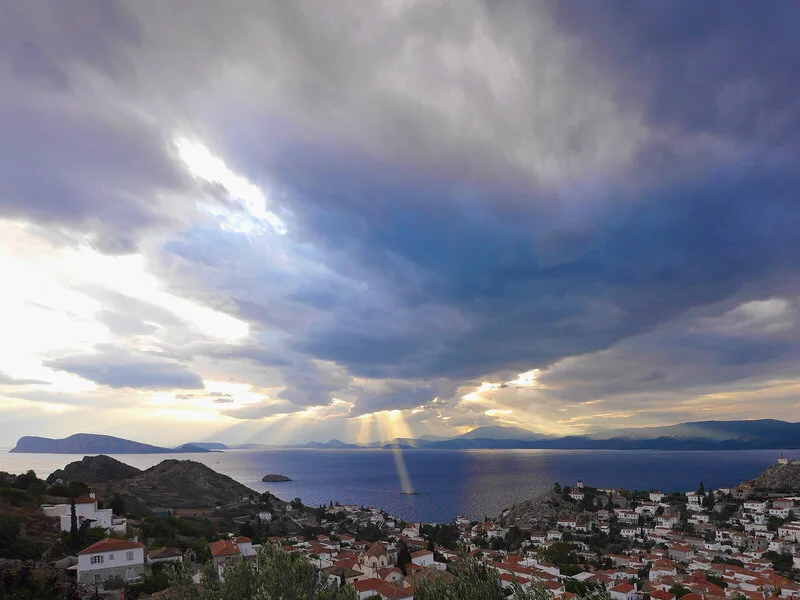
Jörgen Thornberg
The day the light got in, 2021
Digital
70 x 50 cm
Beneath a sky dense and grey,
heavy clouds seem here to stay.
But look, a miracle unfolds,
As tiny cracks, the light upholds.
Through gaps, the sunbeam's grace,
Dances down, lights up a place.
Each ray a whisper, soft and bright,
Saying, "Hold on, there's still light."
Leonard's words, a timeless hymn,
"There is a crack in everything."
From the heavens, light pours in,
Chasing shadows, lifting sin.
So do not fret, dear weary soul,
Though darkness takes its toll.
For every shadow, every plight,
Yields to the sun, the coming light.
Lords of darkness must all retreat,
As hope descends on golden feet.
And soon, the world will brightly spin,
With light where cracks let love seep in.
It was July 30th of last year, and fittingly, the weather had been cloudy as the UN General Assembly declared World Day Against Trafficking in Persons. There had been occasional breaks in the clouds, hinting at hope. At precisely 19:48, a gap opened, and a beam of light shone on Saint Nikolaos Holy Chapel in Hydra Strait. The tiny whitewashed chapel with its arched roof lies on a rocky reef just off Kamini Harbor on the coast of Hydra. Although it is closed, it is often used for weddings.
The spotlight from above illuminated the chapel for several minutes, serving as a reminder of the critical day. Trafficking and human trafficking are serious crimes and violations of human rights. Every year, tens of thousands of women, children, and men fall victim to traffickers. Almost every country in the world is affected by trafficking, whether it is within the country, a journey to another country, or the destination itself. Most countries have national laws against human trafficking, yet people still fall victim to this heinous crime. To combat this horrendous crime, significant global efforts are required. July 30th is a day to raise awareness and combat human trafficking. For UNICEF, the day highlights the importance of protecting children, in particular, from this type of exploitation and crime. Saint Nicholas, the chapel's patron saint, is a central figure in this fight. The spotlight from above could hardly have been a coincidence.
Saint Nicholas is the patron saint of sailors, merchants, archers, repentant thieves, children, brewers, pawnbrokers, toymakers, unmarried people, students in various European cities and countries, and victims of human trafficking. As was typical for early Christian saints, his reputation evolved among the pious, and his legendary habit of secret gift-giving gave rise to the traditional model of Santa Claus ("Saint Nick") through Sinterklaas.
In most people's minds, Saint Nicholas is the one who brings Christmas, all the gifts, and a festive setting for the year's biggest holiday. In Protestant countries, Father Christmas in his red suit and hat, with a whiff of alcohol in his white beard, accompanied by his elves and reindeer, has taken his place. However, these jolly older men are celebrated alongside each other in most places. The best gift Saint Nicholas and Father Christmas could give humanity would be a Christmas present daily in the form of people freed from their traffickers.
In one of the earliest attested and most famous incidents from Nicholas's life, he is said to have rescued three girls from being forced into prostitution by dropping a sack of gold coins through the window of their house each night for three nights so their father could pay a dowry for each of them. Where is Nicholas today with all the cases of trafficking in Europe? Is he hiding in his chapel off Hydra? Did the one who controlled the spotlight intend to wake the saint? Saint Nicholas is needed more than ever to protect innocent girls who fall into the hands of cruel traffickers. Human trafficking should be seen as a form of gender-based violence that primarily affects women and girls.
Trafficking: A Modern Plague with Ancient Roots
Trafficking in persons is a grave violation of human rights and a pressing global issue that affects millions of people worldwide. It is a modern plague, but its roots can be traced back to ancient times. This article explores the current state of human trafficking while also delving into its historical origins and evolution.
The Modern Reality of Trafficking
In today's world, human trafficking manifests in various forms, including forced labour, sexual exploitation, domestic servitude, and child soldiering. According to the International Labour Organization (ILO), there are an estimated 25 million victims of human trafficking globally. These individuals are often lured by false promises of employment, education, or a better life, only to find themselves trapped in a cycle of exploitation and abuse.
Key Statistics:
- 71% of trafficking victims are women and girls.
- 25% of trafficking victims are children.
- Human trafficking is a lucrative business, generating approximately $150 billion annually.
Common Types of Trafficking:
1. Sex Trafficking: Involves forcing individuals into prostitution or other forms of sexual exploitation.
2. Labor Trafficking: Involves forcing individuals to work in industries such as agriculture, construction, and manufacturing under threat or coercion.
3. Domestic Servitude: Involves forcing individuals to work in private households under abusive conditions.
4. Child Trafficking: Involves exploiting children for labour, prostitution, or as child soldiers.
Historical Context of Trafficking
While human trafficking is often viewed as a modern issue, its roots run deep into human history. Ancient civilisations, including Mesopotamia, Egypt, Greece, and Rome, all practised forms of slavery and exploitation that can be seen as precursors to modern trafficking.
Mesopotamia and Egypt:
In Mesopotamia and Egypt, slavery was an integral part of society. War captives, debtors, and criminals were often enslaved and forced to work under harsh conditions. These early forms of bondage laid the groundwork for systemic exploitation.
Ancient Greece and Rome:
The Greeks and Romans also practised slavery on a large scale. In Rome, enslaved people were used for various purposes, from household servants to labourers in mines and fields. The Roman economy heavily depended on slave labour, and the treatment of slaves was often brutal and dehumanising.
The Evolution of Human Trafficking
Throughout the Middle Ages and into the modern era, the transatlantic slave trade marked one of the darkest chapters in human history. Millions of Africans were forcibly transported to the Americas, where they were sold into slavery and forced to work on plantations. This period highlighted the commodification of human beings and the immense suffering inflicted upon trafficked individuals.
Key Historical Events:
- Transatlantic Slave Trade (16th - 19th Century): Over 12 million Africans were trafficked to the New World, where they were subjected to inhumane conditions and forced labour.
- Abolition Movements (18th - 19th Century): Activists like William Wilberforce in the UK and Frederick Douglass in the US fought tirelessly to end the slave trade and slavery.
Modern Efforts to Combat Trafficking
International efforts to combat human trafficking have intensified in the 20th and 21st centuries. Through its Office on Drugs and Crime (UNODC), the United Nations has been at the forefront of these efforts, advocating for stronger laws, better victim protection, and increased international cooperation.
Key International Agreements:
- The Palermo Protocol (2000): A protocol to prevent, suppress, and punish trafficking in persons, especially women and children. It is a landmark international agreement that provides a comprehensive framework for addressing trafficking.
- The Trafficking Victims Protection Act (TVPA) (2000): A US law that provides tools to combat trafficking and protect victims.
Non-Governmental Organisations (NGOs):
Organisations like Polaris, the International Justice Mission (IJM), and Anti-Slavery International play crucial roles in rescuing victims, providing rehabilitation services, and advocating for policy changes.
The Role of Technology in Modern Trafficking
In the digital age, traffickers have adapted to new technologies to exploit victims. Social media and online platforms are often used to recruit and exploit individuals, making it even more challenging to combat trafficking. However, technology also offers new tools for detection and prevention, such as data analytics and AI-driven monitoring systems.
The Path Forward
To effectively combat human trafficking, a multifaceted approach is necessary. This includes:
- Strengthening Laws and Enforcement: Ensuring laws are in place to prosecute traffickers and protect victims.
- Raising Awareness: Educating the public about the signs of trafficking and how to report it.
- Supporting Victims: Providing comprehensive support services, including legal aid, medical care, and psychological support.
- International Cooperation: Enhancing collaboration between countries to combat cross-border trafficking.
Conclusion
Human trafficking is a complex and profoundly entrenched issue that requires global cooperation and sustained effort to eradicate. By understanding its historical roots and recognising the modern realities, we can develop more effective strategies to combat this heinous crime and protect the millions of individuals who fall victim to it yearly. Through continued advocacy, education, and international collaboration, there is hope for a future where human trafficking is no longer a tragic reality.
As Leonard Cohen sings in his 'Anthem' one of his most memorable songs.
"Ring the bells that still can ring
Forget your perfect offering
There is a crack, a crack in everything
That's how the light gets in."
What a chorus line! What a call to rise! We all have bells that we can ring; we can rise and ring the bells against abuse, trafficking, violence, fraud, corruption, coercion, and lies. Leonard speaks of the bells that still can ring, highlighting how easily we can be silenced, our bells laid down, our voices lost, not by external force but by our fear, weakness, or feelings of defeat.
In Leonard's words — "Forget your perfect offering" — lies the reminder that striving for perfection is not what matters. Leonard tells us that we might think we possess the antidote, the cure, the simple solution to every obstacle. We do not! So, let go of the notion that we can fix the fundamental flaws in everything, what some call sin. But remember, even God has faltered throughout the years. Innocent lives are still lost every day.
The devil and his followers may have crafted wicked plans for the world. The struggle between good and evil has existed since the beginning of time. But we know how the story ends: Evil cannot triumph in the grand scheme, only in isolated battles. Even now, if you open your eyes, you will see, as Leonard does, many cracks in the dark side's designs.
The Bible is replete with tales where evil does not thrive. What a man sows, he will also reap. Wherever we see a crack, it will widen, allowing daylight to flood in. Evil can only survive in the shadows and will never withstand the light of day.

Jörgen Thornberg
Malmö
Lite om bilder och mig. Translation in English at the end.
Jag är en nyfiken person som ser allt i bilder, även det jag fäster i ord, gärna tillsammans för bakom alla mina bilder finns en berättelse. Till vissa bilder hör en kortare eller längre novell som följer med bilden.
Bilder berättar historier. Jag omges av naturlig skönhet, intressanta människor och historia var jag än går. Jag använder min kamera för att dokumentera världen och blanda det jag ser med vad jag känner för att fånga den dolda magin.
Mina bilder berättar mina historier. Genom mina bilder, tryck och berättelser. Jag bjuder in dig att ta del av dessa berättelser, in i ditt liv och hem och dela min mycket personliga syn på vår värld. Mer än vad ögat ser. Jag tänker i bilder, drömmer och skriver och pratar om dem; följaktligen måste jag också skapa bilder. De blir vad jag ser, inte nödvändigtvis begränsade till verkligheten. Det finns en bild runt varje hörn. Jag hoppas att du kommer att se vad jag såg och gilla det.
Jag är också en skrivande person och till många bilder hör en kortare eller längre essay. Den följer med tavlan, tryckt på fint papper och med en personlig hälsning från mig.
Flertalet bilder startar sin resa i min kamera. Enkelt förklarat beskriver jag bilden jag ser i mitt inre, upplevd eller fantiserad. Bilden uppstår inom mig redan innan jag fått okularet till ögat. På bråkdelen av ett ögonblick ser jag vad jag vill ha och vad som kan göras med bilden. Här skall jag stoppa in en giraff, stålmannen, Titanic eller vad det är min fantasi finner ut. Ännu märkligare är att jag kommer ihåg minnesbilden långt efteråt när det blir tid att skapa verket. Om jag lyckas eller inte, är upp till betraktaren, oftast präglat av en stråk av svart humor – meningen är att man skall bli underhållen. Mina bilder blir ofta en snackis där de hänger.
Jag föredrar bilder som förmedlar ett budskap i flera lager. Vid första anblicken fylld av feel-good, en vacker utsikt, fint väder, solen skiner, blommor på ängen eller vattnet som ligger förrädiskt spegelblankt. I en sådan bild kan jag gömma min egentliga berättelse, mitt förakt för förtryckare och våldsverkare, rasister och fördomsfulla människor - ett gärna återkommande motiv mer eller mindre dolt i det vackra motivet. Jag försöker förena dem i ett gemensamt narrativ.
Bild och formgivning har löpt som en röd tråd genom livet. Fotokonst känns som en värdig final som jag gärna delar med mig.
Min genre är vid som framgår av mina bilder, temat en blandning av pop- och gatukonst i kollage som kan bestå av hundratals lager. Vissa bilder kan ta veckor, andra någon dag innan det är dags att överlämna resultatet till printverkstaden. Fine Art Prints är digitala fotocollage. I dessa kollage sker rivandet, klippandet, pusslandet, målandet, ritandet och sprayningen digitalt. Det jag monterar in kan vara hundratals år gamla bilder som jag omsorgsfullt frilägger så att de ser ut att vara en del av tavlan men också bilder skapade av mig själv efter min egen fantasi. Därefter besöks printstudion och för vissa bilder numrera en limiterad upplaga (oftast 7 exemplar) och signera för hand. Vissa bilder kan köpas i olika format. Det är bara att fråga efter vilka. Gillar man en bild som är 70x100 men inte har plats på väggen, går den kanske att få i 50x70 cm istället. Frågan är fri.
Metoden Giclée eller Fine Art Print som det också kallas är det moderna sättet för framställning av grafisk konst. Villkoret för denna typ av utskrifter är att en högkvalitativ storformatskrivare används med åldersbeständigt färgpigment och konstnärspapper eller i förekommande fall på duk. Pappret som används möter de krav på livslängd som ställs av museer och gallerier. Normalt säljer jag mina bilder oinramade så att den nya ägaren själv kan bestämma hur de skall se ut, med eller utan passepartout färg på ram, med eller utan glas etc..
Under många år ställde jag bara ut på nätet, i valda grupper och på min egen Facebooksida - https://www.facebook.com/jorgen.thornberg.9
Jag finns också på en egen hemsida som tyvärr inte alltid är uppdaterad – https://www.jth.life/ Där kan du också läsa en del av de berättelser som följer med bilden.
UTSTÄLLNINGAR
Luftkastellet, oktober 2022
Konst i Lund, november 2022
Luftkastellet, mars 2023
Engleson Galleri Caroli, april 2023
Hydra, Greece June 2023
Engleson Galleri Caroli, oktober 2023
Toppen, Höllviken december 2023
Luftkastellet, mars 2024
Torups Galleri, mars 2024
Venice, May 2024
Luftkastellet, oktober 2024
Konst i Advent, December 2024
Galleri Engleson, Caroli December 2024
Jäger & Jansson Galleri, april 2025
A bit about pictures and me.
I'm a curious person who sees everything in pictures, even what I express in words, often combining them, for behind all my pictures lies a story. These narratives, some as short as a single image and others as long as a novel, are the heart and soul of my work.
Pictures tell stories. Wherever I go, I'm surrounded by natural beauty, exciting people, and history. I use my camera to document the world and blend what I see with what I feel to capture the hidden magic.
My images tell my stories. Through my pictures, prints, and narratives, I invite you to partake in these stories in your life and home and share my deeply personal perspective of our world. More than meets the eye. I think in pictures, dream, write, and talk about them; consequently, I must create images too. They become what I see, not necessarily confined to reality. There's a picture around every corner. I hope you'll see what I saw and enjoy it.
I'm also a writer, and many images come with a shorter or longer essay. It accompanies the painting, printed on fine paper with my personal greeting.
Many pictures start their journey on my camera. Simply put, I describe the image I see in my mind, experienced or imagined. The image arises within me even before I bring the eyepiece to my eye. In a fraction of a moment, I see what I want and what can be done with the picture. Here, I'll insert a giraffe, Superman, the Titanic, or whatever my imagination conjures up. Even stranger is that I remember the mental image long after it's time to create the work. Whether I succeed is up to the observer, often imbued with a streak of black humour – the aim is to entertain. My pictures usually become a talking point wherever they hang.
I prefer pictures that convey a message in multiple layers. At first glance, they're filled with feel-good vibes, a beautiful view, lovely weather, the sun shining, flowers in the meadow, or the water lying deceptively calm. But beneath this surface beauty, I often conceal a deeper story, a narrative that challenges societal norms or explores the human condition. I invite you to delve into these hidden narratives and discover the layers of meaning within my work.
Picture and design have been a thread running through my life. Photographic art feels like a fitting finale, and I'm happy to share it.
My genre is varied, as seen in my pictures; the theme is a blend of pop and street art in collages that can consist of hundreds of layers. Some images can take weeks, others just a day before it's time to hand over the result to the print workshop. Fine Art Prints are digital photo collages. In these collages, tearing, cutting, puzzling, painting, drawing, and spraying happen digitally. What I insert can be images hundreds of years old that I carefully extract so they appear to be part of the painting, but also images created by myself, now also generated from my imagination. Next, visit the print studio and, for certain images, number a limited edition (usually 7 copies) and sign them by hand. Some images may be available in other formats. Just ask which ones. If you like an image that's 70x100 but doesn't have space on the wall, you might be able to get it in 50x70 cm instead. The question is open.
The Giclée method, or Fine Art Print as it's also called, is the modern way of producing graphic art. This method ensures the highest quality and longevity of the artwork, using a high-quality large-format printer with archival pigment inks and artist paper or, in some cases, canvas. The paper used meets the longevity requirements set by museums and galleries. I sell my pictures unframed, allowing the new owner to personalise their artwork, confident in the lasting value and quality of the piece.
For many years, I only exhibited online, in selected groups, and on my Facebook page - https://www.facebook.com/jorgen.thornberg.9. I also have my website, which unfortunately is not constantly updated - https://www.jth.life/. You can also read some of the stories accompanying the pictures there.
EXHIBITIONS
Luftkastellet, October 2022
Art in Lund, November 2022
Luftkastellet, March 2023
Engleson Gallery Caroli, April 2023
Hydra, Greece June 2023
Engleson Gallery Caroli, October 2023
Toppen, Höllviken December 2023
Luftkastellet, March 2024
Torup Gallery, March 2024
Venice, May 2024
UTSTÄLLNINGAR
Luftkastellet, oktober 2022
Konst i Lund, november 2022
Luftkastellet, mars 2023
Engleson Galleri Caroli, april 2023
Hydra, Greece June 2023
Engleson Galleri Caroli, oktober 2023
Toppen, Höllviken december 2023
Luftkastellet, mars 2024
Torups Galleri, mars 2024
Venice, May 2024
Luftkastellet, October 2024
Konst i Advent, December 2024
Galleri Engleson, Caroli December 2024
Jäger & Jansson Galleri, April 2025
Utbildning
Autodidakt
Medlem i konstnärsförening
Öppna Sinnen
Med i konstrunda
Konstrundan i Skåne
Utställningar
Luftkastellet, October 2022
Art in Lund, November 2022
Luftkastellet, March 2023
Engleson Gallery Caroli, April 2023
Hydra, Greece June 2023
Engleson Gallery Caroli, October 2023
Toppen, Höllviken December 2023
Luftkastellet, March 2024
Torup Gallery, March 2024
Venice, May 2024